


1,99 €
Mehr erfahren.
- Herausgeber: Bu Classics Books
- Kategorie: Sachliteratur, Reportagen, Biografien
- Sprache: Englisch
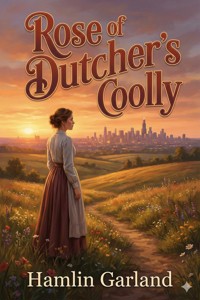
Leaving behind the plow for the pen, a young man chronicles the vanishing lifestyle of the agrarian Midwest, exposing the grueling reality of farm life while chasing the elusive dream of becoming a writer.
Das E-Book können Sie in Legimi-Apps oder einer beliebigen App lesen, die das folgende Format unterstützen:
Veröffentlichungsjahr: 2026
Ähnliche












CHAPTER I
Home from the War
All of this universe known to me in the year 1864 was bounded by the wooded hills of a little Wisconsin coulee, and its center was the cottage in which my mother was living alone—my father was in the war. As I project myself back into that mystical age, half lights cover most of the valley. The road before our doorstone begins and ends in vague obscurity—and Granma Green's house at the fork of the trail stands on the very edge of the world in a sinister region peopled with bears and other menacing creatures. Beyond this point all is darkness and terror.
It is Sunday afternoon and my mother and her three children, Frank, Harriet and I (all in our best dresses) are visiting the Widow Green, our nearest neighbor, a plump, jolly woman whom we greatly love. The house swarms with stalwart men and buxom women and we are all sitting around the table heaped with the remains of a harvest feast. The women are "telling fortunes" by means of tea-grounds. Mrs. Green is the seeress. After shaking the cup with the grounds at the bottom, she turns it bottom side up in a saucer. Then whirling it three times to the right and three times to the left, she lifts it and silently studies the position of the leaves which cling to the sides of the cup, what time we all wait in breathless suspense for her first word.
"A soldier is coming to you!" she says to my mother. "See," and she points into the cup. We all crowd near, and I perceive a leaf with a stem sticking up from its body like a bayonet over a man's shoulder. "He is almost home," the widow goes on. Then with sudden dramatic turn she waves her hand toward the road, "Heavens and earth!" she cries. "There's Richard now!"
We all turn and look toward the road, and there, indeed, is a soldier with a musket on his back, wearily plodding his way up the low hill just north of the gate. He is too far away for mother to call, and besides I think she must have been a little uncertain, for he did not so much as turn his head toward the house. Trembling with excitement she hurries little Frank into his wagon and telling Hattie to bring me, sets off up the road as fast as she can draw the baby's cart. It all seems a dream to me and I move dumbly, almost stupidly like one in a mist....
We did not overtake the soldier, that is evident, for my next vision is that of a blue-coated figure leaning upon the fence, studying with intent gaze our empty cottage. I cannot, even now, precisely divine why he stood thus, sadly contemplating his silent home,—but so it was. His knapsack lay at his feet, his musket was propped against a post on whose top a cat was dreaming, unmindful of the warrior and his folded hands.
He did not hear us until we were close upon him, and even after he turned, my mother hesitated, so thin, so hollow-eyed, so changed was he. "Richard, is that you?" she quaveringly asked.
His worn face lighted up. His arms rose. "Yes, Belle! Here I am," he answered.
Nevertheless though he took my mother in his arms, I could not relate him to the father I had heard so much about. To me he was only a strange man with big eyes and care-worn face. I did not recognize in him anything I had ever known, but my sister, who was two years older than I, went to his bosom of her own motion. She knew him, whilst I submitted to his caresses rather for the reason that my mother urged me forward than because of any affection I felt for him. Frank, however, would not even permit a kiss. The gaunt and grizzled stranger terrified him.
"Come here, my little man," my father said.—"My little man!" Across the space of half-a-century I can still hear the sad reproach in his voice. "Won't you come and see your poor old father when he comes home from the war?"
"My little man!" How significant that phrase seems to me now! The war had in very truth come between this patriot and his sons. I had forgotten him—the baby had never known him.
Frank crept beneath the rail fence and stood there, well out of reach, like a cautious kitten warily surveying an alien dog. At last the soldier stooped and drawing from his knapsack a big red apple, held it toward the staring babe, confidently calling, "Now, I guess he'll come to his poor old pap home from the war."
The mother apologized. "He doesn't know you, Dick. How could he? He was only nine months old when you went away. He'll go to you by and by."
The babe crept slowly toward the shining lure. My father caught him despite his kicking, and hugged him close. "Now I've got you," he exulted.
Then we all went into the little front room and the soldier laid off his heavy army shoes. My mother brought a pillow to put under his head, and so at last he stretched out on the floor the better to rest his tired, aching bones, and there I joined him.
"Oh, Belle!" he said, in tones of utter content. "This is what I've dreamed about a million times."
Frank and I grew each moment more friendly and soon began to tumble over him while mother hastened to cook something for him to eat. He asked for "hot biscuits and honey and plenty of coffee."
That was a mystic hour—and yet how little I can recover of it! The afternoon glides into evening while the soldier talks, and at last we all go out to the barn to watch mother milk the cow. I hear him ask about the crops, the neighbors.—The sunlight passes. Mother leads the way back to the house. My father follows carrying little Frank in his arms.
He is a "strange man" no longer. Each moment his voice sinks deeper into my remembrance. He is my father—that I feel ringing through the dim halls of my consciousness. Harriet clings to his hand in perfect knowledge and confidence. We eat our bread and milk, the trundle-bed is pulled out, we children clamber in, and I go to sleep to the music of his resonant voice recounting the story of the battles he had seen, and the marches he had made.
The emergence of an individual consciousness from the void is, after all, the most amazing fact of human life and I should like to spend much of this first chapter in groping about in the luminous shadow of my infant world because, deeply considered, childish impressions are the fundamentals upon which an author's fictional out-put is based; but to linger might weary my reader at the outset, although I count myself most fortunate in the fact that my boyhood was spent in the midst of a charming landscape and during a certain heroic era of western settlement.
The men and women of that far time loom large in my thinking for they possessed not only the spirit of adventurers but the courage of warriors. Aside from the natural distortion of a boy's imagination I am quite sure that the pioneers of 1860 still retained something broad and fine in their action, something a boy might honorably imitate.
The earliest dim scene in my memory is that of a soft warm evening. I am cradled in the lap of my sister Harriet who is sitting on the door-step beneath a low roof. It is mid-summer and at our feet lies a mat of dark-green grass from which a frog is croaking. The stars are out, and above the high hills to the east a mysterious glow is glorifying the sky. The cry of the small animal at last conveys to my sister's mind a notion of distress, and rising she peers closely along the path. Starting back with a cry of alarm, she calls and my mother hurries out. She, too, examines the ground, and at last points out to me a long striped snake with a poor, shrieking little tree-toad in its mouth. The horror of this scene fixes it in my mind. My mother beats the serpent with a stick. The mangled victim hastens away, and the curtain falls.
I must have been about four years old at this time, although there is nothing to determine the precise date. Our house, a small frame cabin, stood on the eastern slope of a long ridge and faced across a valley which seemed very wide to me then, and in the middle of it lay a marsh filled with monsters, from which the Water People sang night by night. Beyond was a wooded mountain.
This doorstone must have been a favorite evening seat for my sister, for I remember many other delicious gloamings. Bats whirl and squeak in the odorous dusk. Night hawks whiz and boom, and over the dark forest wall a prodigious moon miraculously rolls. Fire-flies dart through the grass, and in a lone tree just outside the fence, a whippoorwill sounds his plaintive note. Sweet, very sweet, and wonderful are all these!
The marsh across the lane was a sinister menacing place even by day for there (so my sister Harriet warned me) serpents swarmed, eager to bite runaway boys. "And if you step in the mud between the tufts of grass," she said, "you will surely sink out of sight."—At night this teeming bog became a place of dank and horrid mystery. Bears and wolves and wildcats were reported as ruling the dark woods just beyond—only the door yard and the road seemed safe for little men—and even there I wished my mother to be within immediate call.
My father who had bought his farm "on time," just before the war, could not enlist among the first volunteers, though he was deeply moved to do so, till his land was paid for—but at last in 1863 on the very day that he made the last payment on the mortgage, he put his name down on the roll and went back to his wife, a soldier.
I have heard my mother say that this was one of the darkest moments of her life and if you think about it you will understand the reason why. My sister was only five years old, I was three and Frank was a babe in the cradle. Broken hearted at the thought of the long separation, and scared by visions of battle my mother begged the soldier not to go; but he was of the stern stuff which makes patriots—and besides his name was already on the roll, therefore he went away to join Grant's army at Vicksburg. "What sacrifice! What folly!" said his pacifist neighbors—"to leave your wife and children for an idea, a mere sentiment; to put your life in peril for a striped silken rag." But he went. For thirteen dollars a month he marched and fought while his plow rusted in the shed and his cattle called to him from their stalls.
My conscious memory holds nothing of my mother's agony of waiting, nothing of the dark days when the baby was ill and the doctor far away—but into my subconscious ear her voice sank, and the words Grant, Lincoln, Sherman, "furlough," "mustered out," ring like bells, deep-toned and vibrant. I shared dimly in every emotional utterance of the neighbors who came to call and a large part of what I am is due to the impressions of these deeply passionate and poetic years.
Dim pictures come to me. I see my mother at the spinning wheel, I help her fill the candle molds. I hold in my hands the queer carding combs with their crinkly teeth, but my first definite connected recollection is the scene of my father's return at the close of the war.
I was not quite five years old, and the events of that day are so commingled with later impressions,—experiences which came long after—that I cannot be quite sure which are true and which imagined, but the picture as a whole is very vivid and very complete.
Thus it happened that my first impressions of life were martial, and my training military, for my father brought back from his two years' campaigning under Sherman and Thomas the temper and the habit of a soldier.
He became naturally the dominant figure in my horizon, and his scheme of discipline impressed itself almost at once upon his children.
I suspect that we had fallen into rather free and easy habits under mother's government, for she was too jolly, too tender-hearted, to engender fear in us even when she threatened us with a switch or a shingle. We soon learned, however, that the soldier's promise of punishment was swift and precise in its fulfillment. We seldom presumed a second time on his forgetfulness or tolerance. We knew he loved us, for he often took us to his knees of an evening and told us stories of marches and battles, or chanted war-songs for us, but the moments of his tenderness were few and his fondling did not prevent him from almost instant use of the rod if he thought either of us needed it.
His own boyhood had been both hard and short. Born of farmer folk in Oxford County, Maine, his early life had been spent on the soil in and about Lock's Mills with small chance of schooling. Later, as a teamster, and finally as shipping clerk for Amos Lawrence, he had enjoyed three mightily improving years in Boston. He loved to tell of his life there, and it is indicative of his character to say that he dwelt with special joy and pride on the actors and orators he had heard. He could describe some of the great scenes and repeat a few of the heroic lines of Shakespeare, and the roll of his deep voice as he declaimed, "Now is the winter of our discontent made glorious summer by this son of York," thrilled us—filled us with desire of something far off and wonderful. But best of all we loved to hear him tell of "Logan at Peach Tree Creek," and "Kilpatrick on the Granny White Turnpike."
He was a vivid and concise story-teller and his words brought to us (sometimes all too clearly), the tragic happenings of the battlefields of Atlanta and Nashville. To him Grant, Lincoln, Sherman and Sheridan were among the noblest men of the world, and he would not tolerate any criticism of them.
Next to his stories of the war I think we loved best to have him picture "the pineries" of Wisconsin, for during his first years in the State he had been both lumberman and raftsman, and his memory held delightful tales of wolves and bears and Indians.
He often imitated the howls and growls and actions of the wild animals with startling realism, and his river narratives were full of unforgettable phrases like "the Jinny Bull Falls," "Old Moosinee" and "running the rapids."
He also told us how his father and mother came west by way of the Erie Canal, and in a steamer on the Great Lakes, of how they landed in Milwaukee with Susan, their twelve-year-old daughter, sick with the smallpox; of how a farmer from Monticello carried them in his big farm wagon over the long road to their future home in Green county and it was with deep emotion that he described the bitter reception they encountered in the village.
It appears that some of the citizens in a panic of dread were all for driving the Garlands out of town—then up rose old Hugh McClintock, big and gray as a grizzly bear, and put himself between the leader of the mob and its victims, and said, "You shall not lay hands upon them. Shame on ye!" And such was the power of his mighty arm and such the menace of his flashing eyes that no one went further with the plan of casting the new comers into the wilderness.
Old Hugh established them in a lonely cabin on the edge of the village, and thereafter took care of them, nursing grandfather with his own hands until he was well. "And that's the way the McClintocks and the Garlands first joined forces," my father often said in ending the tale. "But the name of the man who carried your Aunt Susan in his wagon from Milwaukee to Monticello I never knew."
I cannot understand why that sick girl did not die on that long journey over the rough roads of Wisconsin, and what it all must have seemed to my gentle New England grandmother I grieve to think about. Beautiful as the land undoubtedly was, such an experience should have shaken her faith in western men and western hospitality. But apparently it did not, for I never heard her allude to this experience with bitterness.
In addition to his military character, Dick Garland also carried with him the odor of the pine forest and exhibited the skill and training of a forester, for in those early days even at the time when I began to remember the neighborhood talk, nearly every young man who could get away from the farm or the village went north, in November, into the pine woods which covered the entire upper part of the State, and my father, who had been a raftsman and timber cruiser and pilot ever since his coming west, was deeply skilled with axe and steering oars. The lumberman's life at that time was rough but not vicious, for the men were nearly all of native American stock, and my father was none the worse for his winters in camp.
His field of action as lumberman was for several years, in and around Big Bull Falls (as it was then called), near the present town of Wausau, and during that time he had charge of a crew of loggers in winter and in summer piloted rafts of lumber down to Dubuque and other points where saw mills were located. He was called at this time, "Yankee Dick, the Pilot."
As a result of all these experiences in the woods, he was almost as much woodsman as soldier in his talk, and the heroic life he had led made him very wonderful in my eyes. According to his account (and I have no reason to doubt it) he had been exceedingly expert in running a raft and could ride a canoe like a Chippewa. I remember hearing him very forcefully remark, "God forgot to make the man I could not follow."
He was deft with an axe, keen of perception, sure of hand and foot, and entirely capable of holding his own with any man of his weight. Amid much drinking he remained temperate, and strange to say never used tobacco in any form. While not a large man he was nearly six feet in height, deep-chested and sinewy, and of dauntless courage. The quality which defended him from attack was the spirit which flamed from his eagle-gray eyes. Terrifying eyes they were, at times, as I had many occasions to note.
As he gathered us all around his knee at night before the fire, he loved to tell us of riding the whirlpools of Big Bull Falls, or of how he lived for weeks on a raft with the water up to his knees (sleeping at night in his wet working clothes), sustained by the blood of youth and the spirit of adventure. His endurance even after his return from the war, was marvellous, although he walked a little bent and with a peculiar measured swinging stride—the stride of Sherman's veterans.
As I was born in the first smoke of the great conflict, so all of my early memories of Green's coulee are permeated with the haze of the passing war-cloud. My soldier dad taught me the manual of arms, and for a year Harriet and I carried broom-sticks, flourished lath sabers, and hammered on dishpans in imitation of officers and drummers. Canteens made excellent water-bottles for the men in the harvest fields, and the long blue overcoats which the soldiers brought back with them from the south lent many a vivid spot of color to that far-off landscape.
All the children of our valley inhaled with every breath this mingled air of romance and sorrow, history and song, and through those epic days runs a deep-laid consciousness of maternal pain. My mother's side of those long months of waiting was never fully delineated, for she was natively reticent and shy of expression. But piece by piece in later years I drew from her the tale of her long vigil, and obtained some hint of the bitter anguish of her suspense after each great battle.
It is very strange, but I cannot define her face as I peer back into those childish times, though I can feel her strong arms about me. She seemed large and quite middle-aged to me, although she was in fact a handsome girl of twenty-three. Only by reference to a rare daguerreotype of the time am I able to correct this childish impression.
Our farm lay well up in what is called Green's coulee, in a little valley just over the road which runs along the LaCrosse river in western Wisconsin. It contained one hundred and sixty acres of land which crumpled against the wooded hills on the east and lay well upon a ridge to the west. Only two families lived above us, and over the height to the north was the land of the red people, and small bands of their hunters used occasionally to come trailing down across our meadow on their way to and from LaCrosse, which was their immemorial trading point.
Sometimes they walked into our house, always without knocking—but then we understood their ways. No one knocks at the wigwam of a red neighbor, and we were not afraid of them, for they were friendly, and our mother often gave them bread and meat which they took (always without thanks) and ate with much relish while sitting beside our fire. All this seemed very curious to us, but as they were accustomed to share their food and lodging with one another so they accepted my mother's bounty in the same matter-of-fact fashion.
Once two old fellows, while sitting by the fire, watched Frank and me bringing in wood for the kitchen stove, and smiled and muttered between themselves thereat. At last one of them patted my brother on the head and called out admiringly, "Small pappoose, heap work—good!" and we were very proud of the old man's praise.
CHAPTER II
The McClintocks
The members of my mother's family must have been often at our home during my father's military service in the south, but I have no mental pictures of them till after my father's homecoming in '65. Their names were familiar—were, indeed, like bits of old-fashioned song. "Richard" was a fine and tender word in my ear, but "David" and "Luke," "Deborah" and "Samantha," and especially "Hugh," suggested something alien as well as poetic.
They all lived somewhere beyond the hills which walled our coulee on the east, in a place called Salem, and I was eager to visit them, for in that direction my universe died away in a luminous mist of unexplored distance. I had some notion of its near-by loveliness for I had once viewed it from the top of the tall bluff which stood like a warder at the gate of our valley, and when one bright morning my father said, "Belle, get ready, and we'll drive over to Grandad's," we all became greatly excited.
In those days people did not "call," they went "visitin'." The women took their knitting and stayed all the afternoon and sometimes all night. No one owned a carriage. Each family journeyed in a heavy farm wagon with the father and mother riding high on the wooden spring seat while the children jounced up and down on the hay in the bottom of the box or clung desperately to the side-boards to keep from being jolted out. In such wise we started on our trip to the McClintocks'.
The road ran to the south and east around the base of Sugar Loaf Bluff, thence across a lovely valley and over a high wooded ridge which was so steep that at times we rode above the tree tops. As father stopped the horses to let them rest, we children gazed about us with wondering eyes. Far behind us lay the LaCrosse valley through which a slender river ran, while before us towered wind-worn cliffs of stone. It was an exploring expedition for us.
The top of the divide gave a grand view of wooded hills to the northeast, but father did not wait for us to enjoy that. He started the team on the perilous downward road without regard to our wishes, and so we bumped and clattered to the bottom, all joy of the scenery swallowed up in fear of being thrown from the wagon.
The roar of a rapid, the gleam of a long curving stream, a sharp turn through a pair of bars, and we found ourselves approaching a low unpainted house which stood on a level bench overlooking a river and its meadows.
"There it is. That's Grandad's house," said mother, and peering over her shoulder I perceived a group of people standing about the open door, and heard their shouts of welcome.
My father laughed. "Looks as if the whole McClintock clan was on parade," he said.
It was Sunday and all my aunts and uncles were in holiday dress and a merry, hearty, handsome group they were. One of the men helped my mother out and another, a roguish young fellow with a pock-marked face, snatched me from the wagon and carried me under his arm to the threshold where a short, gray-haired smiling woman was standing. "Mother, here's another grandson for you," he said as he put me at her feet.
She greeted me kindly and led me into the house, in which a huge old man with a shock of perfectly white hair was sitting with a Bible on his knee. He had a rugged face framed in a circle of gray beard and his glance was absent-minded and remote. "Father," said my grandmother, "Belle has come. Here is one of her boys."
Closing his book on his glasses to mark the place of his reading he turned to greet my mother who entered at this moment. His way of speech was as strange as his look and for a few moments I studied him with childish intentness. His face was rough-hewn as a rock but it was kindly, and though he soon turned from his guests and resumed his reading no one seemed to resent it.
Young as I was I vaguely understood his mood. He was glad to see us but he was absorbed in something else, something of more importance, at the moment, than the chatter of the family. My uncles who came in a few moments later drew my attention and the white-haired dreamer fades from this scene.
The room swarmed with McClintocks. There was William, a black-bearded, genial, quick-stepping giant who seized me by the collar with one hand and lifted me off the floor as if I were a puppy just to see how much I weighed; and David, a tall young man with handsome dark eyes and a droop at the outer corner of his eyelids which gave him in repose a look of melancholy distinction. He called me and I went to him readily for I loved him at once. His voice pleased me and I could see that my mother loved him too.
From his knee I became acquainted with the girls of the family. Rachel, a demure and sweet-faced young woman, and Samantha, the beauty of the family, won my instant admiration, but Deb, as everybody called her, repelled me by her teasing ways. They were all gay as larks and their hearty clamor, so far removed from the quiet gravity of my grandmother Garland's house, pleased me. I had an immediate sense of being perfectly at home.
There was an especial reason why this meeting should have been, as it was, a joyous hour. It was, in fact, a family reunion after the war. The dark days of sixty-five were over. The Nation was at peace and its warriors mustered out. True, some of those who had gone "down South" had not returned. Luke and Walter and Hugh were sleeping in The Wilderness, but Frank and Richard were safely at home and father was once more the clarion-voiced and tireless young man he had been when he went away to fight. So they all rejoiced, with only a passing tender word for those whose bodies filled a soldier's nameless grave.
There were some boys of about my own age, William's sons, and as they at once led me away down into the grove, I can say little of what went on in the house after that. It must have been still in the warm September weather for we climbed the slender leafy trees and swayed and swung on their tip-tops like bobolinks. Perhaps I did not go so very high after all but I had the feeling of being very close to the sky.
The blast of a bugle called us to dinner and we all went scrambling up the bank and into the "front room" like a swarm of hungry shotes responding to the call of the feeder. Aunt Deb, however shooed us out into the kitchen. "You can't stay here," she said. "Mother'll feed you in the kitchen."
Grandmother was waiting for us and our places were ready, so what did it matter? We had chicken and mashed potato and nice hot biscuit and honey—just as good as the grown people had and could eat all we wanted without our mothers to bother us. I am quite certain about the honey for I found a bee in one of the cells of my piece of comb, and when I pushed my plate away in dismay grandmother laughed and said, "That is only a little baby bee. You see this is wild honey. William got it out of a tree and didn't have time to pick all the bees out of it."
At this point my memories of this day fuse and flow into another visit to the McClintock homestead which must have taken place the next year, for it is my final record of my grandmother. I do not recall a single word that she said, but she again waited on us in the kitchen, beaming upon us with love and understanding. I see her also smiling in the midst of the joyous tumult which her children and grandchildren always produced when they met. She seemed content to listen and to serve.
She was the mother of seven sons, each a splendid type of sturdy manhood, and six daughters almost equally gifted in physical beauty. Four of the sons stood over six feet in height and were of unusual strength. All of them—men and women alike—were musicians by inheritance, and I never think of them without hearing the sound of singing or the voice of the violin. Each of them could play some instrument and some of them could play any instrument. David, as you shall learn, was the finest fiddler of them all. Grandad himself was able to play the violin but he no longer did so. "'Tis the Devil's instrument," he said, but I noticed that he always kept time to it.
Grandmother had very little learning. She could read and write of course, and she made frequent pathetic attempts to open her Bible or glance at a newspaper—all to little purpose, for her days were filled from dawn to dark with household duties.
I know little of her family history. Beyond the fact that she was born in Maryland and had been always on the border, I have little to record. She was in truth overshadowed by the picturesque figure of her husband who was of Scotch-Irish descent and a most singular and interesting character.
He was a mystic as well as a minstrel. He was an "Adventist"—that is to say a believer in the Second Coming of Christ, and a constant student of the Bible, especially of those parts which predicted the heavens rolling together as a scroll, and the destruction of the earth. Notwithstanding his lack of education and his rude exterior, he was a man of marked dignity and sobriety of manner. Indeed he was both grave and remote in his intercourse with his neighbors.
He was like Ezekiel, a dreamer of dreams. He loved the Old Testament, particularly those books which consisted of thunderous prophecies and passionate lamentations. The poetry of Isaiah, The visions of The Apocalypse, formed his emotional outlet, his escape into the world of imaginative literature. The songs he loved best were those which described chariots of flaming clouds, the sound of the resurrection trump—or the fields of amaranth blooming "on the other side of Jordan."
As I close my eyes and peer back into my obscure childish world I can see him sitting in his straight-backed cane-bottomed chair, drumming on the rungs with his fingers, keeping time to some inaudible tune—or chanting with faintly-moving lips the wondrous words of John or Daniel. He must have been at this time about seventy years of age, but he seemed to me as old as a snow-covered mountain.
My belief is that Grandmother did not fully share her husband's faith in The Second Coming but upon her fell the larger share of the burden of entertainment when Grandad made "the travelling brother" welcome. His was an open house to all who came along the road, and the fervid chantings, the impassioned prayers of these meetings lent a singular air of unreality to the business of cooking or plowing in the fields.
I think he loved his wife and children, and yet I never heard him speak an affectionate word to them. He was kind, he was just, but he was not tender. With eyes turned inward, with a mind filled with visions of angel messengers with trumpets at their lips announcing "The Day of Wrath," how could he concern himself with the ordinary affairs of human life?
Too old to bind grain in the harvest field, he was occasionally intrusted with the task of driving the reaper or the mower—and generally forgot to oil the bearings. His absent-mindedness was a source of laughter among his sons and sons-in-law. I've heard Frank say: "Dad would stop in the midst of a swath to announce the end of the world." He seldom remembered to put on a hat even in the blazing sun of July and his daughters had to keep an eye on him to be sure he had his vest on right-side out.
Grandmother was cheerful in the midst of her toil and discomfort, for what other mother had such a family of noble boys and handsome girls? They all loved her, that she knew, and she was perfectly willing to sacrifice her comfort to promote theirs. Occasionally Samantha or Rachel remonstrated with her for working so hard, but she only put their protests aside and sent them back to their callers, for when the McClintock girls were at home, the horses of their suitors tied before the gate would have mounted a small troop of cavalry.
It was well that this pioneer wife was rich in children, for she had little else. I do not suppose she ever knew
CHAPTER III
The Home in the Coulee
Our postoffice was in the village of Onalaska, situated at the mouth of the Black River, which came down out of the wide forest lands of the north. It was called a "boom town" for the reason that "booms" or yards for holding pine logs laced the quiet bayou and supplied several large mills with timber. Busy saws clamored from the islands and great rafts of planks and lath and shingles were made up and floated down into the Mississippi and on to southern markets.
It was a rude, rough little camp filled with raftsmen, loggers, mill-hands and boomsmen. Saloons abounded and deeds of violence were common, but to me it was a poem. From its position on a high plateau it commanded a lovely southern expanse of shimmering water bounded by purple bluffs. The spires of LaCrosse rose from the smoky distance, and steamships' hoarsely giving voice suggested illimitable reaches of travel. Some day I hoped my father would take me to that shining market-place whereto he carried all our grain.
In this village of Onalaska, lived my grandfather and grandmother Garland, and their daughter Susan, whose husband, Richard Bailey, a quiet, kind man, was held in deep affection by us all. Of course he could not quite measure up to the high standards of David and William, even though he kept a store and sold candy, for he could neither kill a bear, nor play the fiddle, nor shoot a gun—much less turn hand-springs or tame a wild horse, but we liked him notwithstanding his limitations and were always glad when he came to visit us.
Even at this time I recognized the wide differences which separated the McClintocks from the Garlands. The fact that my father's people lived to the west and in a town helped to emphasize the divergence.
All the McClintocks were farmers, but grandfather Garland was a carpenter by trade, and a leader in his church which was to him a club, a forum and a commercial exchange. He was a native of Maine and proud of the fact. His eyes were keen and gray, his teeth fine and white, and his expression stern. His speech was neat and nipping. As a workman he was exact and his tools were always in perfect order. In brief he was a Yankee, as concentrated a bit of New England as was ever transplanted to the border. Hopelessly "sot" in all his eastern ways, he remained the doubter, the critic, all his life.
We always spoke of him with formal precision as Grandfather Garland, never as "Grandad" or "Granpap" as we did in alluding to Hugh McClintock, and his long prayers (pieces of elaborate oratory) wearied us, while those of Grandad, which had the extravagance, the lyrical abandon of poetry, profoundly pleased us. Grandfather's church was a small white building in the edge of the village, Grandad's place of worship was a vision, a cloud-built temple, a house not made with hands.
The contrast between my grandmothers was equally wide. Harriet Garland was tall and thin, with a dark and serious face. She was an invalid, and confined to a chair, which stood in the corner of her room. On the walls within reach of her hand hung many small pockets, so ordered that she could obtain her sewing materials without rising. She was always at work when I called, but it was her habit to pause and discover in some one of her receptacles a piece of candy or a stick of "lickerish root" which she gave to me "as a reward for being a good boy."
She was always making needle rolls and thimble boxes and no doubt her skill helped to keep the family fed and clothed.
Notwithstanding all divergence in the characters of Grandmother Garland and Grandmother McClintock, we held them both in almost equal affection. Serene, patient, bookish, Grandmother Garland brought to us, as to her neighbors in this rude river port, some of the best qualities of intellectual Boston, and from her lips we acquired many of the precepts and proverbs of our Pilgrim forbears.
Her influence upon us was distinctly literary. She gloried in New England traditions, and taught us to love the poems of Whittier and Longfellow. It was she who called us to her knee and told us sadly yet benignly of the death of Lincoln, expressing only pity for the misguided assassin. She was a constant advocate of charity, piety, and learning. Always poor, and for many years a cripple, I never heard her complain, and no one, I think, ever saw her face clouded with a frown.
Our neighbors in Green's Coulee were all native American. The first and nearest, Al Randal and his wife and son, we saw often and on the whole liked, but the Whitwells who lived on the farm above us were a constant source of comedy to my father. Old Port, as he was called, was a mild-mannered man who would have made very little impression on the community, but for his wife, a large and rather unkempt person, who assumed such man-like freedom of speech that my father was never without an amusing story of her doings.
She swore in vigorous pioneer fashion, and dominated her husband by force of lung power as well as by a certain painful candor. "Port, you're an old fool," she often said to him in our presence. It was her habit to apologize to her guests, as they took their seats at her abundant table, "Wal, now, folks, I'm sorry, but there ain't a blank thing in this house fit for a dawg to eat—" expecting of course to have everyone cry out, "Oh, Mrs. Whitwell, this is a splendid dinner!" which they generally did. But once my father took her completely aback by rising resignedly from the table—"Come, Belle," said he to my mother, "let's go home. I'm not going to eat food not fit for a dog."
The rough old woman staggered under this blow, but quickly recovered. "Dick Garland, you blank fool. Sit down, or I'll fetch you a swipe with the broom."
In spite of her profanity and ignorance she was a good neighbor and in time of trouble no one was readier to relieve any distress in the coulee. However, it was upon Mrs. Randal and the widow Green that my mother called for aid, and I do not think Mrs. Whitwell was ever quite welcome even at our quilting bees, for her loud voice silenced every other, and my mother did not enjoy her vulgar stories.—Yes, I can remember several quilting bees, and I recall molding candles, and that our "company light" was a large kerosene lamp, in the glass globe of which a strip of red flannel was coiled. Probably this was merely a device to lengthen out the wick, but it made a memorable spot of color in the room—just as the watch-spring gong in the clock gave off a sound of fairy music to my ear. I don't know why the ring of that coil had such a wondrous appeal, but I often climbed upon a chair to rake its spirals with a nail in order that I might float away on its "dying fall."
Life was primitive in all the homes of the coulee. Money was hard to get. We always had plenty to eat, but little in the way of luxuries. We had few toys
CHAPTER IV
Father Sells the Farm
Green's Coulee was a delightful place for boys. It offered hunting and coasting and many other engrossing sports, but my father, as the seasons went by, became thoroughly dissatisfied with its disadvantages. More and more he resented the stumps and ridges which interrupted his plow. Much of his quarter-section remained unbroken. There were ditches to be dug in the marsh and young oaks to be uprooted from the forest, and he was obliged to toil with unremitting severity. There were times, of course, when field duties did not press, but never a day came when the necessity for twelve hours' labor did not exist.
Furthermore, as he grubbed or reaped he remembered the glorious prairies he had crossed on his exploring trip into Minnesota before the war, and the oftener he thought of them the more bitterly he resented his up-tilted, horse-killing fields, and his complaining words sank so deep into the minds of his sons that for years thereafter they were unable to look upon any rise of ground as an object to be admired.
It irked him beyond measure to force his reaper along a steep slope, and he loathed the irregular little patches running up the ravines behind the timbered knolls, and so at last like many another of his neighbors he began to look away to the west as a fairer field for conquest. He no more thought of going east than a liberated eagle dreams of returning to its narrow cage. He loved to talk of Boston, to boast of its splendor, but to live there, to earn his bread there, was unthinkable. Beneath the sunset lay the enchanted land of opportunity and his liberation came unexpectedly.
Sometime in the spring of 1868, a merchant from LaCrosse, a plump man who brought us candy and was very cordial and condescending, began negotiations for our farm, and in the discussion of plans which followed, my conception of the universe expanded. I began to understand that "Minnesota" was not a bluff but a wide land of romance, a prairie, peopled with red men, which lay far beyond the big river. And then, one day, I heard my father read to my mother a paragraph from the county paper which ran like this, "It is reported that Richard Garland has sold his farm in Green's Coulee to our popular grocer, Mr. Speer. Mr. Speer intends to make of it a model dairy farm."
This intention seemed somehow to reflect a ray of glory upon us, though I fear it did not solace my mother, as she contemplated the loss of home and kindred. She was not by nature an emigrant,—few women are. She was content with the pleasant slopes, the kindly neighbors of Green's Coulee. Furthermore, most of her brothers and sisters still lived just across the ridge in the valley of the Neshonoc, and the thought of leaving them for a wild and unknown region was not pleasant.
To my father, on the contrary, change was alluring. Iowa was now the place of the rainbow, and the pot of gold. He was eager to push on toward it, confident of the outcome. His spirit was reflected in one of the songs which we children particularly enjoyed hearing our mother sing, a ballad which consisted of a dialogue between a husband and wife on this very subject of emigration. The words as well as its wailing melody still stir me deeply, for they lay hold of my sub-conscious memory—embodying admirably the debate which went on in our home as well as in the homes of other farmers in the valley,—only, alas! our mothers did not prevail.
It begins with a statement of unrest on the part of the husband who confesses that he is about to give up his plow and his cart—
Away to Colorado a journey I'll go,
For to double my fortune as other men do,
While here I must labor each day in the field
And the winter consumes all the summer doth yield.
To this the wife replies:
Dear husband, I've noticed with a sorrowful heart
That you long have neglected your plow and your cart,
Your horses, sheep, cattle at random do run,
And your new Sunday jacket goes every day on.
Oh, stay on your farm and you'll suffer no loss,
For the stone that keeps rolling will gather no moss.
But the husband insists:
Oh, wife, let us go; Oh, don't let us wait;
I long to be there, and I long to be great,
While you some fair lady and who knows but I
May be some rich governor long 'fore I die,
Whilst here I must labor each day in the field,
And the winter consumes all the summer doth yield.
But wife shrewdly retorts:
Dear husband, remember those lands are so dear
They will cost you the labor of many a year.
Your horses, sheep, cattle will all be to buy,
You will hardly get settled before you must die.
Oh, stay on the farm,—etc.
The husband then argues that as in that country the lands are all cleared to the plow, and horses and cattle not very dear, they would soon be rich. Indeed, "we will feast on fat venison one-half of the year." Thereupon the wife brings in her final argument:
Oh, husband, remember those lands of delight
Are surrounded by Indians who murder by night.
Your house will be plundered and burnt to the ground
While your wife and your children lie mangled around.
This fetches the husband up with a round turn:
Oh, wife, you've convinced me, I'll argue no more,
I never once thought of your dying before.
I love my dear children although they are small
And you, my dear wife, I love greatest of all.
Refrain (both together)
We'll stay on the farm and we'll suffer no loss
For the stone that keeps rolling will gather no moss.
This song was not an especial favorite of my father. Its minor strains and its expressions of womanly doubts and fears were antipathetic to his sanguine, buoyant, self-confident nature. He was inclined to ridicule the conclusions of its last verse and to say that the man was a molly-coddle—or whatever the word of contempt was in those days. As an antidote he usually called for "O'er the hills in legions, boys," which exactly expressed his love of exploration and adventure.
This ballad which dates back to the conquest of the Allegheny mountains opens with a fine uplifting note,
Cheer up, brothers, as we go
O'er the mountains, westward ho,
Where herds of deer and buffalo
Furnish the fare.
and the refrain is at once a bugle call and a vision:
Then o'er the hills in legions, boys,
Fair freedom's star
Points to the sunset regions, boys,
Ha, ha, ha-ha!
and when my mother's clear voice rose on the notes of that exultant chorus, our hearts responded with a surge of emotion akin to that which sent the followers of Daniel Boone across the Blue Ridge, and lined the trails of Kentucky and Ohio with the canvas-covered wagons of the pioneers.
A little farther on in the song came these words,
When we've wood and prairie land,
Won by our toil,
We'll reign like kings in fairy land,
Lords of the soil!
which always produced in my mind the picture of a noble farm-house in a park-like valley, just as the line, "Well have our rifles ready, boys," expressed the boldness and self-reliance of an armed horseman.




