


Erhalten Sie Zugang zu diesem und mehr als 300000 Büchern ab EUR 5,99 monatlich.
- Herausgeber: Nick Hern Books
- Kategorie: Poesie und Drama
- Serie: NHB Modern Plays
- Sprache: Englisch
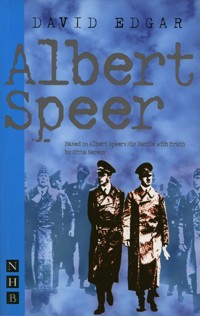
A panoramic historical drama about the man whose devotion to Hitler blinded him to the worst crime of the twentieth century, drawing closely on Gita Sereny's definitive and magisterial biography of Albert Speer. Plucked from obscurity to be Hitler's architect and Minister of War, Albert Speer became the second most powerful man in Nazi Germany and the closest Hitler had to a friend. Having narrowly escaped hanging at Nuremberg, Speer emerged from twenty years at Spandau gaol, as he thought, a changed man. But even as he publishes his bestselling accounts of the Third Reich, the extent of his complicity in Nazi crimes returns to haunt him – and his long-suffering family. David Edgar's play Albert Speer was first performed in the Lyttelton auditorium of the National Theatre, London, in May 2000.
Sie lesen das E-Book in den Legimi-Apps auf:
Seitenzahl: 185
Veröffentlichungsjahr: 2016
Das E-Book (TTS) können Sie hören im Abo „Legimi Premium” in Legimi-Apps auf:
Ähnliche
















David Edgar
ALBERT SPEER
based on the book Albert Speer: His Battle with the Truthby Gitta Sereny
NICK HERN BOOKS
London
www.nickhernbooks.co.uk
Contents
Title Page
Dedication
Author’s Note
Original Production
Epigraph
Characters
Albert Speer
Afterword
Appendix:
Principal Characters
Chronology of the Third Reich 1933–45
About the Author
Copyright and Performing Rights Information
To Stephanie
AUTHOR’S NOTE
Gitta Sereny’sAlbert Speer: His Battle with Truthis a 720-page book, written with the utmost historical rigour, about a man whose long life was dominated by the defining event of the twentieth century. In order to write a stage play based on this work I have had to conflate characters, combine scenes and concentrate the incidents on which they are based.
As ever, the aim of this is better to reveal the truth. This is a vulnerable procedure in a play based on a biography in which the truth is pursued but also questioned. I am hugely grateful for the chance to retell the story Gitta Sereny has told so authoritatively in her book. For the consequences of doing so in a very different medium, I am responsible.
In addition to Gitta Sereny herself, I am indebted to Michael Eaton and Hilary Norrish for their contribution to the shape and content of the play as it developed through treatment into draft. As with our earlier stage collaboration,Nicholas Nickleby, Trevor Nunn had an immense influence on the structure, substance and meaning of the text, both before and during rehearsals.
Finally, two practical notes. In order to counter the notion that Nazism could only have happened in a foreign language, I’ve anglicised most of the ranks and titles in the play. The ones left in German are those for which an English translation is misleading: ‘Führer’ doesn’t mean the same as ‘Leader’, ‘Gauleiter’ implies something different from ‘Governor’, and while ‘Herr’ does mean ‘Mr’ it is often used in conjunction with other titles in a way which sounds odd to an English ear. Second, where lines are broken in the text, I have indicated the point at which the next character interrupts by a slash. The rest of the first character’s line does not have to be completed: it is there to provide some overlap but also to indicate to the actor where the interrupted sentence was going.
David Edgar, May 2000
Albert Speer was first performed on the Lyttelton Stage at the National Theatre, London, on 16 May 2000. Press night was 25 May. The cast, in order of appearance, was:
Albert Speer
Alex Jennings
Nuremberg Prosecutor
William Gaunt
Nuremberg Judge
John Nolan
Spandau Prison, 1947
French Officer
Patrick Baladi
Russian Director
Charles Millham
Nuremberg Judge
John Nolan
Guard
Stephen Ballantyne
Soviet Guard
Patrick Marlowe
Konstantin von Neurath,
Pip Donaghy
foreign minister
Admiral Karl Dönitz
Martin Chamberlain
Baldur von Schirach
David Weston
Hitler Youth leader
Rudolf Hess
Hitler’s Deputy
Sylvester Morand
Walther Funk,
Iain Mitchell
economics minister
Admiral Erich Raeder
Benny Young
Georges Casalis,
Jonathan Cullen
Calvinist pastor
Germany and the Occupied Territories, 1931–45
Rudolf Wolters, architect
Simon Day
Hans Tessenow, architect
Pip Donaghy
Architecture students
Patrick Baladi,
Stephen Ballantyne,
Giles Smith,
Chris Vance
Adolf Hitler
Roger Allam
Colonel Nicolas von Below,
Adrian Penketh
adjutant
Karl Hanke, party official,
Iain Mitchell
later Gauleiter
Margret Speer, Speer’s wife
Jessica Turner
Anne-Marie Wittenberg,
Christine Kavanagh
later Kempf,
Speer’s secretary
Julius Schaub, adjutant
John Nolan
Dr Fritz Todt,
Pip Donaghy
Minister of Armaments
Speer’s Father
William Gaunt
Frau Maria von Below
Imogen Slaughter
Eva Braun
Cathryn Bradshaw
Frau Anni Brandt
Tilly Blackwood
First Adjutant
Stephen Ballantyne
Fräulein Johanna Wolf,
Sally Ann Burnett
secretary
Second Adjutant
Charles Millham
Fräulein Christa Schröder,
Elizabeth Conboy
secretary
Theodor Ganzenmüller,
Patrick Baladi
railway official
Major in Ukraine
Benny Young
Ukrainian Tufties
Chloe Angharad,
Sally-Ann Burnett,
Elizabeth Conboy,
Imogen Slaughter
Speer Construction Workers
Patrick Marlowe,
Martin Chamberlain,
Giles Smith,
Chris Vance
State Secretary,
John Nolan
Ministry of Armaments
His Assistant
David Weston
Ernst, Speer’s brother
Stephen Ballantyne
Dr Professor Friedrich Koch
David Weston
Heinrich Himmler
Benny Young
Germany and England, 1966–81
Hans Flachsner,
Speer’s lawyer
Pressmen
Martin Chamberlain,
Charles Millham,
John Nolan,
David Weston,
Chris Vance,
Benny Young
Heckler
Iain Mitchell
Albert Speer’s son
Stephen Ballantyne
Hilde Schramm,
Cathryn Bradshaw
Speer’s daughter
Ulf Schramm, her husband
Iain Mitchell
Ruth, Albert’s wife
Sally Ann Burnett
Arnold, Speer’s son
Chris Vance
Fritz, Speer’s son
Giles Smith
Margret Nissen,
Elizabeth Conboy
Speer’s daughter
Hans Nissen, her husband
Adrian Penketh
Ernst, Speer’s son
Patrick Marlowe
Waitresses
Chloe Angharad,
Imogen Slaughter
Wolf-Jobst Siedler,
William Gaunt
Speer’s publisher
Mrs Winteringham
Tilly Blackwood
Publishers
Elizabeth Conboy,
Charles Millham
Chair of University Meeting
Sally-Ann Burnett
Hecklers
Stephen Ballantyne,
Chris Vance,
David Weston
Questioners
Patrick Marlowe,
Elizabeth Conboy,
John Nolan,
Martin Chamberlain,
Benny Young
Robert Raphael Geis
Pip Donaghy
Rabbi
David, his assistant
Patrick Baladi
Hotel Waiter
Patrick Marlowe
Director
Trevor Nunn
Set Designer
Ian MacNeil
Costume Designer
Joan Wadge
Lighting Designer
Rick Fisher
Video Design
Chris Laing
Music
Steven Edis
Movement Director
Kate Flatt
Sound Designer
Chris Shutt
Company Voice Work
Patsy Rodenburg
Associate Set Designer
Paul Atkinson
O, would that I had never seen Wittenberg, never read book! and what wonders I have done,all Germany can witness, yea, all the world; for which Faustus has lost both Germany and the world, and must remain in hell for ever.
Christopher Marlowe,Dr Faustus, last scene
For the commission to do a great building, I would have sold my soul like Faust. Now I had found my Mephistopheles. He seemed no less engaging than Goethe’s.
Albert Speer,Inside the Third Reich
CHARACTERS
Albert SPEER
Nuremberg PROSECUTOR Nuremberg JUDGE
Spandau Prison, 1947
FRENCH OFFICER RUSSIAN DIRECTOR GUARD SOVIET GUARD Konstantin von NEURATH, foreign minister Admiral Karl DÖNITZ Baldur von SCHIRACH, Hitler Youth leader Rudolf HESS, Hitler’s Deputy Walther FUNK, economics minister Admiral Erich RAEDER Georges CASALIS, Calvinist pastor
Germany and the Occupied Territories, 1931–45
Rudolf WOLTERS, architect Hans TESSENOW, architect Adolf HITLER Karl HANKE, party official, later Gauleiter MARGRET Speer, Speer’s wife ANNEMARIE Wittenberg (later Kempf), Speer’s secretary Colonel Nicolas VON BELOW, adjutant Julius SCHAUB, adjutant Dr Fritz TODT, Minister of Armaments Speer’s FATHER FRAU Maria VON BELOW EVA BRAUN FRAU Anni BRANDT Two young ADJUTANTS (at the Berghof) FRÄULEIN Johanna WOLF, secretary FRÄULEIN Christa SCHRÖDER, secretary Theodor GANZENMÜLLER, railway official MAJOR in Ukraine Six members SPEER construction SQUAD STATE SECRETARY, Ministry of Armaments His ASSISTANT ERNST, Speer’s brother DR Professor Friedrich KOCH Heinrich HIMMLER, Reichsführer-SS
Germany and England, 1966–81
Hans FLACHSNER, Speer’s lawyer ALBERT, Speer’s son HILDE Schramm, Speer’s daughter ULF Schramm, her husband RUTH, Albert’s wife ARNOLD, Speer’s son FRITZ, Speer’s son MARGRET (JNR) Nissen, Speer’s daughter HANS Nissen, her husband ERNST (JNR), Speer’s son Wolf-Jobst SIEDLER, Speer’s publisher MRS WINTERINGHAM Young PUBLISHERS CHAIR of University Meeting Two HECKLERS Five QUESTIONERS Robert Raphael GEIS, Rabbi DAVID, his assistant
Architecture Students, Ukrainian Tufties, Staff Officers, Adjutants, Pressmen and Hecklers, Publishers and Partygoers, Audience at University Meeting
ACT ONE
‘For five years I lived in this world of plans,and in spite of all their defects and absurdities I still cannot entirely tear myself away from it all’.
Albert Speer,Inside the Third Reich
ACT ONE
1.1.1 Heidelberg, 1970s
Around 70 years old,ALBERT SPEERsits in a chair, sleeping and dreaming. He remembers the charges and sentences passed at the Nuremberg trial of the Nazi leaders.
PROSECUTOR. The Defendant Speer – between 1932 and 1945 was: A member of the Nazi Party, Reichsleiter, member of the Reichstag, Reich Minister for Armaments and Munitions, \ Chief of the Organization Todt, General Plenipotentiary for Armaments in the Office of the Four Year Plan, and Chairman of the Armaments Council.
JUDGE. In accordance with Article 27 of the Charter, the International Military Tribunal will now pronounce the sentences on the defendants convicted in this indictment. Defendant Joachim von Ribbentrop, on the counts of the indictment on which you have been convicted, the Tribunal sentences you to death by hanging. Defendant Ernst Kaltenbrunner, the Tribunal sentences you to death by hanging.
PROSECUTOR. The defendant Speer used the foregoing positions and his personal influence in such a manner that: \ He participated in the military and economic planning and preparation of the Nazi conspirators for Wars of aggression and Wars in Violation of International Treaties, Agreements, and Assurances set forth in Count One and Count Two of the Indictment . . .
JUDGE. Defendant Julius Streicher, the Tribunal sentences you to death by hanging.
PROSECUTOR. . . . and he authorized, directed, and participated in the War Crimes set forth in Count Three of the Indictment . . .
JUDGE. Defendant Fritz Sauckel, the Tribunal sentences you to death by hanging.
PROSECUTOR. . . . and the Crimes against Humanity set forth in Count Four of the Indictment, including more particularly the abuse and exploitation of human beings for forced labour in the conduct of aggressive war.
JUDGE. Defendant Albert Speer! On the counts of the indictment on which you have been convicted, the Tribunal sentences you to death by hanging!
SPEERwakes in terrible agitation.
SPEER. Not – yet.
1.2.1 Spandau, 18 July 1947
TheRUSSIAN DIRECTORand aFRENCH OFFICERandGUARDSawait prisoners in a reception hall in Spandau prison. Seven concentration camp uniforms set out. A door opens and aGUARDadmits Konstantin vonNEURATH,wearing shabby civilian clothes.
RUSSIAN DIRECTOR (from a list, toNEURATH,emphatically, but with terrible pronunciation). Konstantin von Neurath. Foreign Minister. Fifteen year.
FRENCH OFFICER. On admission, the prisoners will undress completely. Prisoners will be addressed by their convict number, in no circumstances by name.
RUSSIAN DIRECTOR. Now you are Number one.
NEURATHundresses.KARL DÖNITZis admitted.
Grand Admiral Karl Dönitz: ten year. Number Two.
DÖNITZundresses. Baldur vonSCHIRACHis admitted.
Baldur von Schirach. Hitler youth leader, twenty year. Number Three.
SCHIRACHundresses.HESSis admitted.
RUSSIAN DIRECTOR. Ah. Hess. Hitler Deputy, till 1941. Sentence to life. Is number four.
HESSdoesn’t undress.SPEERadmitted. He is 42.
RUSSIAN DIRECTOR. Albert Speer, Arm Minister, 20 year.
SPEERsizes up the situation.
RUSSIAN DIRECTOR. I say a lucky man.
GUARD (shouts toHESS). Undress!
RUSSIAN DIRECTOR. His number five.
HESSandSPEERbegin to undress. We sense hostility from the otherPRISONERStoSPEER. WalterFUNKis admitted.
RUSSIAN DIRECTOR (toFUNKandRAEDER). Walter Funk, Reichsminister for Economics. Number six, for life.
ErichRAEDERis admitted.
And Admiral Erich Raeder is number seven. Also life.
As the laterPRISONERSfinish undressing, theFRENCH OFFICERcontinues to read out the rules.GUARDSgesture to them to go and dress in the concentration camp uniforms.HESSis swaying.
FRENCH OFFICER. The discipline of the institution requires that prisoners should adopt a standing position whenever approached or in the presence of prison officers. They will salute by standing at attention at the same time removing their headgear.
HESSgestures to theGUARDwho goes to speak to him. AGUARDgoes and whispers to him.
The prisoners may approach an officer or warder only if ordered to do so or if they want to make a request.
RUSSIAN DIRECTOR (in Russian). Ftchyom tam dela? [What’s the problem?]
GUARD (nodding toHESS). This man says he will faint.
RUSSIAN DIRECTOR (Russian). Poost syadit. [Let him sit down.]
GUARD(toHESS). You must sit down.
HESSsits on the floor. The otherPRISONERScontinue to dress.
FRENCH OFFICER (continues). Prisoners shall at all times wear the clothing provided for them. Imprisonment shall be in the form of solitary confinement. Approaching any window – including those in the cells – is strictly prohibited. The Prisoners may not talk or associate with one another except with special dispensation from the Directorate. However religious services and walks in open air will be carried out together.
RUSSIAN DIRECTOR. Form line!
ThePRISONERSform up in their concentration camp uniforms.
RUSSIAN DIRECTOR (Russian). Zaklyutchyonnym vazzmozhina boodit intiressna oozznat shto etoo adezhdoo nasseeli oozniki konstlagirey. [The Prisoners may be interested to learn that these clothes were worn by prisoners in concentration camps.]
GUARD (translates). The Prisoners must like to know that these cloths are worn by prisoners in concentration camp.
No response from thePRISONERS.
RUSSIAN DIRECTOR (Russian). Im shto, ni panyatna? [Do they understand that?]
GUARD (translates). Do you understand?
ThePRISONERSgive slight nods.HESSnods and is helped to his feet.
RUSSIAN OFFICER. So, gentlemen. Welcome to Spandau.
As theDIRECTOR,OFFICER,GUARDSandPRISONERSleave, and the next scene is set up,SPEERspeaks out front.
SPEER. You ask me how I felt? That I was getting what I deserved.
What, did I really feel that? Well, my feelings then were complex. I am putting them in simple terms for you.
But I can assure you, at that moment, nothing could have been better designed to make me feel very humble indeed.
1.2.2 Spandau, October 1947
GEORGES CASALIShas come in to a double cell which has been appointed for use as a chapel. He carries a suitcase. There is one table and the cell lavatory.CASALIS, a young Calvinist pastor, opens the case, takes out a wooden cross and places it on the table. He takes out a Bible and finds himself a black cassock. He takes off his jacket and is putting the cassock on when he hears the rumble of an approaching congregation.
He hurries to finish dressing as aSOVIET GUARDleads inRAEDER, FUNK, DÖNITZ, SCHIRACH, NEURATHandSPEER, dragging chairs. There is a moment when theSOVIET GUARDand theSIX PRISONERSstand watching aYOUNG MANhaving a fight with his cassock.CASALISwins, looks round for someone he recognises and holds out his hand toDÖNITZ.
CASALIS. Herr Dönitz.
After a moment,DÖNITZputs his chair upright and shakesCASALIS’s hand.
(To the next man.)Herr Schirach?
SCHIRACH. Yes.
Shake hands.
CASALIS(toFUNK). And – Raeder?
FUNK. Funk.
CASALIS. Herr Funk.
FUNK (shaking hands, nodding to the next man). Raeder.
RAEDER. Admiral Raeder.
CASALIS (shaking hands). How do you do. And . . . Herr von Neurath.
NEURATHshakes, pleased thatCASALISused the ‘von’.
And of course, Herr . . .
SPEER. Speer.
CASALIS. Herr Speer.
Shakes hands. To theGUARD.
Herr Hess?
TheGUARDis baffled.
NEURATH (Russian). Nommerr chetyrree. [Number Four.]
SOVIET GUARD. He is in cell. No religion. ‘Mumbo jumbo’.
He indicates by the universal gesture thatHESSis mad.
CASALIS. Please gentlemen be seated.
ThePRISONERSsit on their chairs. TheSOVIETGUARDsits on the lavatory.
My name is Georges Casalis. I minister to the Protestant French community here in Berlin. I was asked if I would be prepared to serve as pastor to the prisoners of Spandau, on the grounds I fear of my linguistic rather than my spiritual skills.
No laugh.
So, as required of me: your regular Saturday dose of mumbo jumbo.
No laugh.
The text on which I wish to speak today is taken from Luke’s gospel: ‘While he was in a certain city, there came a man full of leprosy – ’
ThePRISONERSglance at each other.
‘ – and when he saw Jesus he fell on his face and begged him: Lord, if you will, make me clean.’
SCHIRACHa bark of a laugh.DÖNITZleans over and whispers toFUNK.
Now, you may ask, why I have chosen this passage to discuss with you today.
ThePRISONERSare chuntering.CASALISlooks up from his notes, deciding to confront the atmosphere directly.
But before I say anything more to you, I sense that you have something you want to say to me.
RAEDERstands. TheSOVIETGUARDstands too.
RAEDER. Herr Pastor, we must protest.
CASALIS. Uh – why?
RAEDER. It is entirely inappropriate to address us in this way.
CASALIS. In what \ way?
FUNK. As lepers.
CASALIS. Ah.
Slight pause.SCHIRACHstands.
SCHIRACH. We are here not as criminals, but because we have been unjustly condemned.
DÖNITZ (stands). As men who only did their military duty.
FUNK (stands). Therefore we protest, in the strongest possible terms.
RAEDER. And if our protest should prove ineffective –
NEURATH. – we shall take official action.
A moment of standoff.NEURATHstands.SPEERstands.
CASALIS. Gentlemen –
DÖNITZ. And so good morning, Herr Pastor.
DÖNITZleads the group, picking up their chairs and dragging them to the exit.
SOVIET GUARD. You want be take to cell?
DÖNITZ. ‘We want be take to cell’.
SPEERis following the group.
CASALIS. But gentlemen –
TheGUARDcalls up the corridor to otherGUARDS.
SOVIET GUARD (in Russian). Kapitan Razzinskiy! Mne noozhna vasha pomashch! Dvaa tchelaveka! [Captain Rozinsky! I need your help! Two men!]
CASALIS. But, gentlemen, I don’t know what to do.
ThePRISONERSlook back at him, a little contemptuously.
If the words of the Bible are an offence to you, how can I be of help?
The otherGUARDSarrive.
I had hoped we were to set out on a journey, to find common ground between us and our inner selves. Tomorrow, I shall deliver the sermon I have not delivered here, to my own congregation. Next week I planned to speak to you and then to them from Mark: ‘Those who are well have no need of a physician’.
He puts the Bible and the cross in the suitcase, and slams it shut.
That is, to anyone who wants to hear me.
RAEDER. We shall see.
DÖNITZleads thePRISONERSout.SPEERlingers. When the others have gone, theSOVIET GUARDgestures for him to follow.SPEERdemurs.CASALISis picking up his suitcase.
SPEER. Well, that put the cat among the pigeons.
CASALISrealises thatSPEERwants to speak to him. He puts down his suitcase.
CASALIS. That was not of course \ my intention –
SPEER. You should however pay no attention to that little spectacle.
CASALIS. I fear \ that’s not as easy –
SPEER. Your sermonsshouldupset us. You should not spare anybody’s feelings.
CASALIS. No. Well, thank you.
Pause.
Herr Speer, would you like to join your comrades?
SPEER. Oh, come now, Herr Pastor. You have done your homework. You know that even if I saw those gentlemen as comrades, they would hardly think that way of me.
Pause.
CASALIS (toGUARD). Please, leave us for a moment.
After a beat, theGUARDunderstands, and leaves, shutting and locking the door behind him.
Your defence at Nuremberg: Your position in the government was merely technical. You made no ideological statements. You were aware that people were evacuated but you had no idea that they were being systematically put to death.
SPEER. But nevertheless . . .
CASALIS. Nevertheless it was your duty to assume your share of the responsibility for the catastrophe of the world war. Insofar as Hitler gave you orders and you obeyed them you must share the blame.
SPEER. Well done.
CASALIS (aware of being patronised). Well, thank you.
SPEER. So it will be no surprise that number five is hardly number one in the affections of his fellow-prisoners.
CASALIS. No.
SPEER. In the same way as I would imagine you are hardly popular with your associates.
CASALIS. I beg your pardon?
SPEER. I wondered what your comrades in the French Resistance think about your present ministry?
CASALIS. You’ve done your homework too.
SPEERacknowledges with a gesture.
I think they are suspicious of its premise.
SPEERlooks questioningly.
Which is, that the greatest sinner can repent. And now Herr Speer, I think you should tell me what you want to say or go back to your cell.
Pause.
SPEER. I want to know if they are right. You spoke about a journey to becoming someone else. I wondered if you felt that anyone can leave their past behind, and become a different man. Or if there are crimes – and criminals – so terrible there is no price too high for them to pay.
CASALIS. What is the past self that you want to leave behind?
SPEER. The man who thinks it’s possible to be merely technical.
CASALIS. And what price do you think your crimes deserve?
SPEER. That is the question.
Slight pause.
CASALIS. Herr Speer. I don’t think I am looking at a man who wished he’d died at Nuremberg.
SPEERlooks questioning.
But perhaps . . . a man who thinks he ought to have wanted to die.
Slight pause.
And yes. The crimes for which you took responsibility were terrible. In the scale of justice, maybe, for a judge, a jury, yes, there is no price too high. But I am not a lawyer, I am not here to judge, to probe or to interrogate. I am a priest, and as such I am not concerned with balancing your suffering against the suffering for which you were undoubtedly responsible. All I see before me is an individual soul. Alone, alive, and thus, yes, capable of change.
SPEER. And is this a journey I must make alone?
Pause.
CASALIS. Not if you’d prefer to walk in company.
Slight pause.
But only if you tell the truth, to me and to yourself. For although it’s possible that a man be born again, to do so he must confront the truth of what he was before.
1.3.1 Germany, 1920s
SPEERout front:
SPEER. And so I tried to do so. Starting with my childhood, how at school I shone at mathematics, how my father nevertheless persuaded me to follow him into an architectural career. And how despite, yes, some initial disappointment, this course of study took me from provincial Heidelberg to Munich, to new interests and new friends.
EnterRUDOLF WOLTERS, a couple of years older thanSPEER, now in his 20s. He tossesSPEERhis informal 1930s clothes, into whichSPEERchanges, as:
WOLTERS. Say, you know your problem, Albert? You don’t do any work, you dress like a tramp, you’re always late and you can’t draw. Correct those faults, and you might make something of yourself in architecture.
SPEER (toCASALIS). Which of course was absolutely \ true.




