


Erhalten Sie Zugang zu diesem und mehr als 300000 Büchern ab EUR 5,99 monatlich.
- Herausgeber: Miles-Verlag
- Kategorie: Abenteuer, Thriller, Horror
- Sprache: Englisch
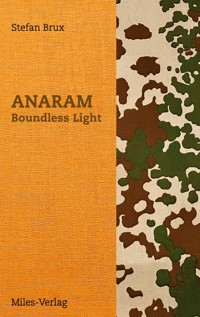
Anaram is an Afghan girl whose name means Boundless Light. One morning, in the turmoil of the Afghanistan conflict in the 2000s, she is seriously injured and receives first aid from German Bundeswehr soldiers. Anaram's father is fighting on the Taliban side and arrives at the scene together with two other Taliban fighters. By chance, the situation is captured by a war reporter. The resulting photo goes on to win the prize for best war photograph of the year. In a series of fictional short stories, the author sketches the personal and emotional backgrounds of the protagonists. The lamenting mother who fears losing her last child to the war. German soldiers who have left their civilian lives for an overseas deployment where they are involved in violent skirmishes and suffer physical and psychological injuries. Taliban and the inhabitants of a valley who are trying to survive somewhere in northern Afghanistan. The book was published in German in 2022 and translated into English by Katie Truslove.
Sie lesen das E-Book in den Legimi-Apps auf:
Seitenzahl: 110
Veröffentlichungsjahr: 2023
Das E-Book (TTS) können Sie hören im Abo „Legimi Premium” in Legimi-Apps auf:
Ähnliche









Contents
Trigger warning
Prologue
The award ceremony
Jenny
The old jihadist
Aziz
The German squad leader
Feldwebel Mathias ‘Cluster’ Kaufmann
The desperate mother
Amira
The evil Taliban
Baran
The thoughtful soldier
Frank ‘Cudgel’ Kennert
The helping soldier
Robert ‘Moses’ Voigt
The angry soldier
Sven ‘Bulgarian’ Kovac
The kneeling Taliban
Navid, Anaram’s father
The injured child
Anaram, Boundless Light
The way home
Epilogue
Postface
Acknowledgements
Terms and abbreviations
References
Trigger warning
The following text deals with the psychological and physical consequences of war, violence, injury, suicide and death. It depicts fictional events in the context of the Bundeswehr’s (German armed forces’) mission in Afghanistan.
Please be mindful and decide for yourself if you feel strong enough to consider these issues today.
Can anyone who has not suffered heat and cold in the world know the value of man?
Kjatibi Rumi
For Kerstin
Prologue
The editorial meeting has already been going for three hours and now the peripheral issues have come to the fore: traffic jams on the motorways at the start of the school holidays, a department store gone bust, speed limits, football and perhaps a little bit about the Bundeswehr. Afghanistan is on the agenda again; yes – there are new photos from AP. Which one shall we choose? There’s too much face and not enough war on that one. That one there is too stark, these two are more like it. Okay, what do you think? Children’s drama or school opening? All right, we’ll go for the drama. Any questions? Then let’s finish up.
The award ceremony
One year later, it is a warm evening in Berlin. Summer is coming to an end and people are returning from their holidays by the sea and in the mountains, reddened by the sun. The social events of the approaching autumn are upon us and today the prize for the best war photograph of the past year is being awarded. White tables are laid with nibbles and drinks, colourful dresses are on display and greetings are exchanged. Snippets of conversation drift over from others at the table, who are talking about their children, their holiday, their upcoming visit to the opera and their beloved in-laws.
Rays from the lowering sun flood through the windows and into the foyer. Significance slowly seeps into the conversations and the atmosphere becomes more sober as the beginning of the official part of the evening approaches.
What is intended as a tribute to war reporters and an intellectual reflection about the suffering in our world is in fact not devoid of a certain cynicism. Here, the winner is chosen in a competition that can only exist because bombs fall, houses burn, children scream and people kill people; and because there are media outlets and their reporters who cover this, take photos, document it and take risks in the hope of being able to change something. And because there are people who, as soldiers from government forces, rebels, insurgents or as holy warriors, oppose each other in the current conflicts. And because there are people who have to survive in the wrong place at the wrong time. And because there are helpers who, as White Helmets, doctors and medics, go to exactly those places that everyone else wants to leave. All these people build a bridge between the theatres of horror and the soft armchairs from which the news is watched and colourful websites are read.
The event begins and well-phrased speeches are given. The simmering conflicts in Africa and the Middle East are addressed and the smaller wars in the rest of the world don’t go unmentioned. Press photographers, journalists, publishers, politicians, military officers, clerics and all those who in some way feel connected to the topic now listen to the remarks. Finally, the presentation of the war photos begins. Some of the photos are in black and white, which is even more disturbing.
Many of the photographs show the faces of people in the greatest distress, contorted with pain or utterly bewildered. Destroyed neighbourhoods, drone images of tattered streets and scattered corpses are found in the pictures, as well as images of fleeing children, soldiers in combat and the wounded in field hospitals. After the nibbles and prosecco in the foyer, the image of a chaotic and self-destructive world develops ever more in people’s minds. Unfettered violence, which is somehow far away and appears strangely staged, for amidst the chaos a photographer stood by, held the camera, considered the depth of focus, calculated the backlight and finally pressed the shutter in precisely that moment which seemed as predictable as it was inevitable.
The winning photo is now projected across the entire width and height of the hall. Everyone in the room can see the details clearly and the work unfurls its powerful effect. A quiet murmur goes through the hall. This photograph is in colour and very dramatic. Concealing nothing, it shows more than the eye and the mind want to grasp all at once.
There are nine people in the picture, carefully arranged as in a large painting. On the lefthand side are three Afghan fighters in simple clothing, partly bloodstained, worn and dirty. They have traditional caps on their heads and look over the dusty barrels of their worn-out, Soviet-made assault rifles. Their weapons look like old work tools, like jagged spades. Their faces are tense and marked by hunger, dust and fatigue. Opposite them stand three German soldiers. They are well-fed and look bulky in their flak jackets; modern steel helmets and functional uniforms complete their combat gear. They too have their dusty assault rifles trained on the enemy. Their expressions are also harried and stressed. At first glance, they seem highly focused and determined, but this merely conceals the fact that they too are tired and thirsty, battleweary and nearing the limits of their capabilities. In the middle of the picture is a little girl lying in the dust. Her clothes are saturated with blood and the ground around the child has turned red. Until a few seconds ago the girl was bleeding profusely from a large wound on her neck. To her left, the girl’s desperate mother is kneeling and does not take her panicked eyes off her child. Her hands cling to the black hem of her daughter’s dress.
Opposite her kneels a soldier from the Bundeswehr medical corps, who has just staunched the bleeding and is now bandaging the neck of the now very pale and unconscious child.
On the medic’s left arm, above the protective badge with the red cross, is a colourful sew-on patch. It is round and has a steel-blue background - one of those blues which can only be seen from the top of very high mountains when the sun is shining and the view stretches deep into the universe. The patch has a wide black border and depicts a red cross in the middle.
A sun-golden curl winds around the cross and fine letters are embroidered with white thread on the black border:
JENNY I’d walk straight through the bullet
Jenny
‘the future is a bullet with my name on it which has to hit me and it’s up to me how I catch it with my head with my arse with my hand or with my cheek will it hit me like a torpedo or will it hit me like a kiss…’
Gerhard Gundermann
Song ‘Die Zukunft’ (The Future)1
Two suntanned young men are sitting at the foot of a vertical rock face with climbing equipment spread around them. Each munching on an apple, they look down further into the valley basin. They set out from here an hour ago and worked their way up the sandstone. It was a wonderful route in the warm evening sun, and their reward was a lovely summit experience with a clear view over the surrounding rocks. Now they are satisfied, exhausted and looking forward to a cold beer and a quiet summer’s evening by the campfire at home. Suddenly, they hear voices above them, which is not out of the ordinary as many hikers frequent this area too, perhaps a little unusual at this time of day so close to sunset, but not odd.
The voices come from some Bundeswehr soldiers doing their medical training, who have been out all day in the summer heat. They have not been together long but are already a small sworn-in community of very young comrades, energetic and motivated.
The day is due to be rounded off with a short break at the edge of the rocky ridge in the light of the setting sun before a short march in dusk and darkness back to the assembly point. One of the soldiers is called Jenny and with her golden curls, bright eyes and cheerful disposition she is the sunshine of the troop. It has been a very long, tiring day even for Jenny. She has not drunk quite enough today and is exhausted and unsteady on her feet.
As she tries to sit down close to the cliff edge with her food rations and water bottle in her hand, she trips over a small root, falls headlong and slides over the ever-steepening rocks searching desperately for a hold.
The two climbers hear a clattering sound above them followed by a short scream and then see a bundle in camouflage come crashing down the rock face towards them. Cracking and screaming, the body crashes into the crown of a pine tree jutting out of the middle of the rock face. It slows down a bit, then whooshes into the next tree and is whirled around.
Finally, and with a hideous thud, the body hits the soft mossy forest floor not far from the two climbers. The body does not move. Piercing cries rain down from above: ‘Jenny!!! JENY!!! JEEEEENYYYYYYYY!!!!!’ Several heads appear over the cliff edge. ‘JENNYYYYY!’ The two climbers jump up and run falteringly to the lifeless body. Stumbling over the moss and roots, they cross the slope reaching Jenny a few seconds later. Motionless and with her head bloodied, she is unconscious and one of her legs lies twisted unnaturally against a stone. Blood runs out of her trouser leg. ‘HOW IS SHE? IS SHE ALIVE?’ shouts a panic-stricken man’s voice from above. Robert, one of the two climbers, feels her pulse and calls up: ‘There’s a pulse, but it’s weak!’. ‘MOBILE?’ is shouted from above. ‘What?’ replies Robert. ‘Do you have a mobile? The number!’ comes the response from above. ‘Yes! 0-17-7-...’ Shortly afterwards Robert’s phone rings and he quickly plugs his headphones into his ears to free his hands.
‘Feldwebel Kossak here. How is she? We’re medics, how can we get down to you?’ ‘Erm, without climbing equipment you won’t make it down here very quickly at all. The nearest path goes down behind you into the valley and then back up here into the basin – but that would take you a good half hour.’ ‘All right, I’ll send half my people. How is she?’ ‘No idea, but she is unresponsive, pulse and breathing weak, bleeding heavily from her leg and lying somewhat awkwardly … back, pelvis, leg or something.’ ‘I need more precision!’ ‘More precision about what?’ ‘How exactly is she lying, what is her pulse? Where is the blood coming from?’
‘She’s not moving. The blood is dripping out of her trouser leg.’ ‘CUT IT OPEN! NOW!! WHERE IS THE BLOOD COMING FROM? HOW MUCH?’ ‘It’s okay, I’m doing it. You say something too, Dirk.’ But Dirk says nothing, he is in complete shock sitting helplessly next to Robert and Jenny’s motionless body. Nonetheless, he now hands over his penknife and Robert cuts open Jenny’s trouser leg. Her thigh is broken just above her right knee, the splintered bone juts out through her gapingly lacerated skin and blood spurts fitfully from the wound. ‘Holy shit!’ ‘What does that mean?’ ‘Right thigh. An open fracture, that’s where the blood is coming from.’ ‘Dirk, the belt – we must staunch it.’ ‘What are you doing?’ ‘We’re staunching the thigh, stopping the bleeding!’ ‘Good. I’ve called for a rescue helicopter.’ ‘Great idea. Where will it land?’ ‘We’re sorting that out now.’ ‘She’s not doing well.’ ‘What does that mean?’ ‘Her pulse is getting weaker and she is very pale. Her lips are turning purple.’ ‘You must give her mouth-to-mouth resuscitation! Now!’ ‘Where should the helicopter land? Dirk, any ideas? Hey, snap out of it!’ ‘MOUTH-TO-MOUTH! NOW!’ ‘She’s bleeding to death.’ ‘She must not bleed to death! What blood type are you?’ Dirk replies: ‘B positive’ and Robert replies: ‘Zero negative and what about her? What’s her blood type? ‘IT’S ON HER IDENTITY TAG!’ ‘Zero negative. Jenny, it may not feel that way right now, but today is your lucky day.’ A small parcel now comes flying down from above. ‘I’ll explain to you what you have to do,’ shouts Feldwebel Kossak over the phone. A few




