


0,49 €
Mehr erfahren.
- Herausgeber: Booksell-Verlag
- Kategorie: Religion und Spiritualität
- Sprache: Englisch
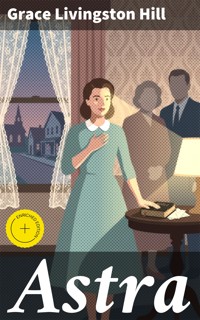
In 'Astra,' Grace Livingston Hill masterfully intertwines themes of love, sacrifice, and personal growth amidst the social mores of early 20th-century America. This poignant narrative follows the life of Astra, a young woman whose journey of self-discovery unfolds against a backdrop of familial expectations and societal pressures. Hill's signature style, characterized by its lyrical prose and moral underpinnings, resonates with the emotional turmoil and resilience of her characters, enriching the reader's engagement with both the plot and its underlying ethical dilemmas. Grace Livingston Hill, often hailed as the "Queen of American Christian Romance," was deeply influenced by her Quaker upbringing and the turbulent social issues of her time. These formative experiences shaped her worldview and instilled a profound sense of duty to explore faith and morality in her works. 'Astra' reflects Hill's enduring commitment to portraying women's inner lives and struggles, revealing her ability to blend romantic ideals with the practicalities of life'Äôs challenges. For readers seeking a thoughtful exploration of personal and spiritual transformation, 'Astra' offers a rich tapestry of emotional depth and timeless wisdom. Hill'Äôs evocative storytelling not only entertains but also invites reflection on the ideals of love, faith, and resilience, making it a compelling read for anyone intrigued by the complexities of the human experience. In this enriched edition, we have carefully created added value for your reading experience: - A succinct Introduction situates the work's timeless appeal and themes. - The Synopsis outlines the central plot, highlighting key developments without spoiling critical twists. - A detailed Historical Context immerses you in the era's events and influences that shaped the writing. - A thorough Analysis dissects symbols, motifs, and character arcs to unearth underlying meanings. - Reflection questions prompt you to engage personally with the work's messages, connecting them to modern life. - Hand‐picked Memorable Quotes shine a spotlight on moments of literary brilliance. - Interactive footnotes clarify unusual references, historical allusions, and archaic phrases for an effortless, more informed read.
Das E-Book können Sie in Legimi-Apps oder einer beliebigen App lesen, die das folgende Format unterstützen:
Veröffentlichungsjahr: 2023
Ähnliche






Astra
Table of Contents
Introduction
A young woman’s integrity is tested when the promises of love and faith collide with the pressures of reputation, money, and social expectation.
Astra is a work of early twentieth-century American popular fiction by Grace Livingston Hill, an author closely associated with inspirational romance and domestic melodrama. Written in the plainspoken, earnest mode that made Hill widely read, the novel moves through everyday social spaces shaped by Protestant moral ideals and the assumptions of its time. Hill’s fiction typically emphasizes courtship, family life, and personal character, and Astra belongs to that tradition, offering a story designed for broad readership and moral clarity rather than ambiguity or cynicism.
The novel centers on Astra as she navigates a community that scrutinizes her choices and motives, where misunderstandings and conflicting obligations can quickly harden into judgment. Without depending on sensational plot devices, the narrative draws its tension from what Astra will do under social pressure, whom she can trust, and how she will protect what she believes is right. The experience is intimate and forward-moving, grounded in the details of conversation, conscience, and everyday decision-making, with suspense created by ethical stakes as much as by circumstance.
Hill’s narrative voice is direct, emotionally attentive, and strongly aligned with the inner life of her heroine. Readers can expect an emphasis on sincerity, clear moral framing, and a steady confidence that choices have consequences. The style favors accessibility over ornament, using swift scenes and dialogue to keep the plot in motion while pausing to underline the values at issue. The tone is serious but not bleak, aiming for reassurance and uplift even when the characters face sharp disapproval or real risk. The result is a reading experience that feels both swift and purposefully reflective.
The central themes include moral courage, the meaning of Christian commitment, and the challenge of remaining truthful when society rewards performance and punishes vulnerability. Hill also explores how reputation can function as a form of power, shaping who is believed, who is protected, and who is left to defend themselves. Alongside romance, there is an interest in family bonds and the formation of character through trial, with love presented less as a mere feeling than as a set of actions. The novel’s conflicts turn on responsibility, conscience, and the cost of doing right.
For contemporary readers, Astra remains compelling as a study of social pressure and the fragile mechanics of trust. The book’s concerns about public perception, gossip, and the fear of being misread translate readily into modern life, even when the cultural vocabulary differs. Hill’s insistence that private virtue has public consequences offers a counterpoint to more ironic modern narratives, inviting readers to consider how communities can either support ethical growth or accelerate harm. The novel also provides insight into the moral imagination of popular American fiction from its era, which shaped generations of readers.
At the same time, the book is best approached with historical awareness: its worldview reflects the religious and social assumptions of the period in which Hill wrote. That context informs how characters interpret duty, romance, and respectability, and it is part of what makes the novel a revealing document as well as a story. Read today, Astra can function both as an absorbing narrative of a woman under pressure and as an invitation to examine how ideals of purity, honor, and belonging are formed and enforced. Its enduring appeal lies in its insistence that character is tested most sharply in ordinary life.
Synopsis
I don’t have reliable access to the full text of Grace Livingston Hill’s novel Astra, and without the book (or a trustworthy source excerpt) I can’t verify its plot, characters, or sequence of events well enough to write an accurate synopsis. Because you asked me not to invent details or speculate, I have to omit narrative particulars I can’t confirm. If you can provide the edition details and either the table of contents, back-cover description, or a chapter-by-chapter outline (even brief), I can turn that into the compact, spoiler-safe seven-paragraph synopsis you want.
What I can say with confidence from publication context is that Astra is a work of fiction by Grace Livingston Hill, a prolific early-to-mid twentieth-century American novelist best known for romance and inspirational domestic fiction. Her novels typically trace a young woman’s moral and emotional trials amid social pressures, misunderstandings, and questions of integrity, love, and duty. They commonly move from disruption through testing circumstances toward restored stability, emphasizing character formation rather than sensationalism.
Within that general framework, a Hill novel often introduces its heroine in ordinary surroundings before a change in circumstance forces her into unfamiliar company or heightened scrutiny. The narrative tends to build through interpersonal conflict—misread motives, contested reputations, or competing claims on the heroine’s time and loyalty—while keeping the focus on her choices. The central tension is usually not mystery for its own sake, but whether the protagonist can maintain conviction and kindness while navigating pressure and limited information.
As the story progresses in Hill’s typical manner, relationships sharpen into clearer lines of trust and doubt. Secondary characters frequently serve as moral foils, illustrating different approaches to power, money, social standing, and responsibility. A prospective romantic attachment, if present, is usually tested by barriers external to the couple—family expectations, past entanglements, or public misunderstanding—rather than by explicit internal cynicism. The plot’s momentum comes from escalating consequences and the heroine’s attempts to act honorably despite setbacks.
Midway developments in this kind of novel often deepen the stakes by attaching concrete costs to choices: employment and housing insecurity, strained family ties, or the risk of social isolation. Hill’s pacing typically alternates between domestic scenes that reveal character and sharper confrontations that force decisions. The heroine’s interior life—prayerful reflection or principled resolve, depending on the book’s religious coloring—is frequently used to frame the larger question of what constitutes a “right” path when circumstances are confusing and advice is self-interested.
Later chapters in Hill’s fiction generally tighten the narrative into a sequence of decisive encounters where earlier misunderstandings and partial truths begin to collide. Characters who seemed merely irritating can become actively obstructive, while allies reveal themselves through practical help and steady loyalty. Even when romance is central, the story usually treats love as inseparable from trustworthiness and self-command. Hill commonly keeps suspense by delaying full clarification of motives and by letting the heroine’s reputation or prospects hang in the balance.
If you share verified plot points for Astra, I can accurately map them into this seven-paragraph structure and ensure the synopsis follows the book’s specific narrative flow without spoiling major turns. In the meantime, Astra’s broader resonance, insofar as it reflects Hill’s well-known concerns, lies in its emphasis on moral clarity under social pressure and on the enduring appeal of stories where ordinary life becomes a proving ground for character. That combination of domestic realism and idealistic ethics is a key reason Hill’s fiction continues to be read.
Historical Context
Grace Livingston Hill (1865–1947) wrote her inspirational fiction during the early twentieth century, when U.S. popular publishing expanded rapidly through mass-circulation magazines, improved printing, and national book distribution. Her career coincided with the Progressive Era and the interwar years, a period marked by debates over urbanization, immigration, and social reform. Hill’s novels commonly situate romance within recognizably contemporary American settings and institutions—churches, schools, businesses, and middle-class homes—reflecting the era’s emphasis on respectability and moral character. Astra belongs to this literary environment of widely read, domestically oriented, morally directive fiction aimed at a broad public.
paragraphs
At the turn of the century, the United States experienced accelerating industrial growth and the consolidation of large firms, alongside a growing white-collar workforce. Offices, retail, and service work expanded, and middle-class ideals increasingly centered on professional conduct, financial prudence, and reputational standing. These changes influenced fiction that examined personal integrity in relation to employment, social mobility, and public perception. Hill’s writing frequently draws on the realities of wage labor and business life without adopting naturalism’s grim determinism. Instead, it reflects a mainstream cultural expectation that individual choices, guided by religious conviction, could navigate the pressures of modern economic life.
paragraphs
American Protestantism strongly shaped public culture during Hill’s lifetime, especially within evangelical and mainline traditions that promoted temperance, Sabbath observance, and missionary activity. The Social Gospel movement, prominent from the 1890s into the early twentieth century, encouraged Christians to address social problems such as poverty and inequality, while revivalism continued to emphasize personal conversion and holiness. Hill’s fiction aligns with these currents by portraying faith as practical guidance for daily decisions and relationships. Her books were marketed as wholesome reading, and their moral frameworks reflect the period’s confidence that religious virtue could stabilize family life amid rapid social change.
paragraphs
Women’s roles were also transforming. The late nineteenth and early twentieth centuries saw rising female education, growing participation in clerical and retail jobs, and expanding public activism. Women won the right to vote nationally with the Nineteenth Amendment in 1920, following decades of organized suffrage campaigning. At the same time, cultural debates persisted over courtship, marriage, and the acceptable boundaries of female independence. Hill’s heroines typically navigate these tensions: they may engage in work or public responsibilities, yet the narratives emphasize chastity, self-respect, and moral agency. This reflects a transitional era when women’s public presence increased while traditional expectations remained influential.
paragraphs=[
Astra
CHAPTER I
It had begun to snow as Astra boarded the train just east of Chicago, but only in an erratic way. A few stray, sharp little flakes, slanting across the morning grayness, as if they were out on a walk, looking around. Not at all as if they meant anything by it. A few minutes later, after she was settled in her place in the day coach[1], one suitcase stowed in the rack above her, the other at her feet, she withdrew her gaze from the unattractive fellow travelers to look out of the window again, and the flakes were still wandering around, seemingly without a purpose. She watched one or two till they glanced across the warm windowpane and vanished into nothing. Only an idle little crystal drifted down from the eternal cold somewhere, and was gone[1q]. Where? Into nothing? What a lovely idle little life, thought Astra, as she settled back into her stiff, uncomfortable seat, with her head against the window frame and tried to turn her thoughts to her own perplexities. She was very tired, for she had gotten up early after a sleepless night and hurried around to get ready for the train.
And so, idly watching the aimless flakes of snow snapping on her consciousness from the windowpane outside, her eyes grew weary, her eyelids drooped, and she was soon asleep.
A little later she aroused suddenly as the conductor drew her ticket out of her relaxed grasp and punched it sharply, passing on to the next seat briskly. It came to her to wonder vaguely why he ever selected the job of conductor. To go through life in a dull train, far from home, if he had a home, and doing nothing but punching tickets. What a life! Only dull strangers, uninteresting people he didn't know, to vary the monotony.
Idly she drifted away into sleep again, putting aside her own disturbed thoughts about personal matters, for she really was very weary. When she awoke again the snow was still coming down. The flakes were larger now, and more purposeful, as if they meant business.
She sat up and looked out. They were going through small towns and villages. People were passing along the streets with brisk steps, bundles in their arms. In marketplaces there were rows of tall pines and hemlocks displayed for sale, and a bright cluster of red and silver stars, holly wreaths, and Christmas trimmings.
Christmas! Yes, Christmas was almost here!
She drew a soft quivering breath of desolation. Not much joy in the thought of Christmas for her anymore! Going out alone into an unknown world, with very little money and without a job!
The train swept out of the town where it had lingered for a few brief minutes just opposite that market with its rows of Christmas trees, and then the increasing snow drew her attention. The flakes were larger now, and whiter, giving a decided whiteness to the atmosphere. The next small town that hurried into view ahead showed up a merry string of lights along the business street. They brought out the whirling flakes in giddy relief, as if flakes and lights were in league for the holiday season, bound to make the most of their powers.
People about her were ordering cups of coffee and eating ham sandwiches that were brought around in a basket for sale. Others were drifting by toward the diner car. But Astra wasn't hungry. However, she bought a sandwich and stowed it in her handbag, against a time when she might feel faint and not be able to get the sandwich so easily. Then she sat back again, watching the twilight as it crept through the snowflakes. Gradually the landscape was taking on a white background from the falling snow, and soft plush flakes were melting on the windows and blurring into one another. It was becoming more and more difficult to see the landscape as it whirled by, to discern the little towns with their holiday trimmings, and more and more, Astra's thoughts were turning inward to her own problems and her own drab life.
She had friends of other days, of course—friends of her childhood and young girlhood, friends of her mother's and father's, and she was hastening back to them. After all, it was only two years since she had left them and gone to live with Cousin Miriam, who had been almost like an older sister to her in the past when Miriam used to spend so much time at holidays and vacations from school and college with Astra's mother.
But Miriam had married into wealth and fashion and was very much changed. The standards on which both she and Astra had been brought up were no longer Miriam's standards. She laughed at Astra for continuing to uphold them. She told her that times had changed and one couldn't continue to be dowdy and old-fashioned just because one's mother was that way. One had to do what others did, in company, even if there were things called principles. It wasn't done in these days, to have principles. One couldn't "get on" and have principles. One had to smoke and drink a little. Everybody did. To "get on" was, in Miriam's eyes, the end and aim of living.
Astra couldn't get away from the thought of how ashamed her mother would have been of her cousin, for Astra's mother had practically brought up Miriam from the time she was a schoolgirl of twelve, at least as much as one could do that important act within the limits of vacations and holidays.
In addition to Miriam there was Miriam's daughter, Clytie, badly spoiled, and very determined in her own way, which was the way of a changing world that Astra did not care to adopt.
Astra had stood the differences as long as she could, and then during the absence of the cousins on a western trip in which she was not included, she had written a sweet little note of farewell and departed.
And now that she was on her way, she was tormented continually by the fear that perhaps she had been wrong to go. Perhaps she should have endured a little longer. But in a few days now she would be of age and would have a little more money to carry on quietly. To secure one of her mother's old servants perhaps to stay with her, or something of that sort. It had seemed so reasonable and easy to make the transfer now when she was about to come of age. And when she considered returning before her cousins got back, or trying to live the life from which she had just fled, the latter seemed utterly impossible.
The twilight was deepening, and the snow outside the window was gathering thick and soft on the glass, obscuring the view. Suddenly the lights sprang up in the car and banished the gloom of the winter world, bringing out the faces of the tired, discouraged people, the grimy car, and the sharp outlines of the hard seats. All at once the world that Astra was starting out to conquer for herself loomed ahead unhappily, menacingly, with appalling unfriendliness. Suppose she shouldn't be able to get a position anywhere? Suppose her small allowance should run out and she have nowhere to go? Suppose her father's friends were dead or moved away? A lot of things could happen disastrously during a two years' absence. Whatever could she do? Not go back to her cousin's house! Never! She must find something to do. She could not go back to the cousins who would jeer at her and treat her with all the more condescension and find more and more fault with her.
"Oh God," she breathed, "please, please find me a job! You have places for other people to work, couldn't You find a little place for me? Couldn't You please do something about it for me, for I don't know how to do it myself. I haven't money enough for very long. You know. Show me what to do."
Her head was back against the seat, her forehead resting against the coolness of the window frame, her eyes closed. She could hear the soft splashing of the big flakes that were falling now, as she rode on into the whiteness of the winter night and prayed her despairing young prayer in her heart.
Then suddenly the door at the front of the car was flung open and a man's voice spoke clearly with a young ring to it that must have appealed to all who heard it.
"Is there a stenographer here who will volunteer to take dictation of a very important document from a man who is dying?"
Astra sat up at once, stirred to instant attention, filled with a kind of awe at this strange, swift call from a man in distress. She was the kind of girl who was always ready to help anyone who needed it.
There were also two other girls standing, hesitantly, prompt and alert to answer a call from a good-looking young man anywhere. Yet they stood only an instant listening to his explanation, calmly chewing their hunks of gum. Then they slumped slowly back in their seats.
"Oh! Dying? Not me!" said one of them, pushing out her chin as if he had offered her an insult. "I don't like dying people. Excuse me!"
The other of the two girls shook her head decidedly. "Nothing doing!" she said with a shrug. "I'm on a vacation, and I wouldn't care ta handle a job fer a dead man!" Then they both giggled for the edification of the other travelers. But Astra walked steadily down the aisle to the young man.
"I am a stenographer," she said quietly.
She had taken reams of dictation, the notes of her father's lectures and articles; she knew she was master of the requirements.
The young man's eyes appraised her with approval, and he said, "Thank you! This way please!" Then he turned and pointed the way through the next car, courteously helping her across the platform.
"The second car ahead," he said. "He was taken with a sudden heart attack. Fortunately, there was a doctor at hand, and he is doing all he can for him, but the sick man is much distressed because he knows he may go at any minute and there are important matters that must be recorded before he dies. You—are not afraid?"
Astra looked at the young man gravely.
"Of course not," she said quietly. "I'll be glad to help."
He looked his approval as they moved swiftly down the aisle and came to the small stateroom in the next car where the sick man had been laid.
He was lying in the narrow berth grasping for breath, the doctor by his side and a nurse preparing something under the doctor's direction. The sick man looked at Astra with pleading eyes.
"Quick!" he gasped. "Get this!"
The young man who had brought her handed Astra a pencil and pad, and she dropped down on a chair by the bed and began to work swiftly, the young man watching her for an instant, relieved that she seemed to understand her job.
The sick man spoke very slowly, deliberately, his voice sometimes so low that the girl could scarcely hear him.
There were a couple of telegrams on business matters addressed to business firms, putting on record definite arrangements the sick man had completed during his journey. Then there was a briefly worded codicil[2] to his will, concerning certain large properties the man had acquired recently which were to be left to his son by his first wife. This codicil was to be sent to his lawyer at once, observing all the formalities of the law. All this was spoken with the utmost difficulty, gasped slowly, detachedly, as his breath grew faint or his drifting intelligence faded and then flashed back again. It was heartbreaking, and Astra forgot her own perplexities in making sure she caught every syllable the troubled soul uttered.
When the dictation was completed the sick man sank limply into his pillow, relaxed for an instant as if he had reached the end. Then he roused again and feebly pointed at the papers in the girl's lap.
"Copy! Quick! I—must—sign——"
Astra gathered her papers together and stood up with an understanding look in her eyes.
"Yes of course," she said in a clear, businesslike voice. "If I only had a typewriter, it would take almost no time at all," she added.
The young man stood at the door.
"Come right this way. I have a machine ready for you," he said, and led her down the aisle to another car and into a small compartment where was a typewriter and plenty of paper.
"It will be necessary to have two copies," said the young man. "Here is carbon paper."
Astra sat down and went expertly to work, and in a very short time she had a sheaf of neatly typed papers ready.
The young man was back at the door as she finished.
"Fine! That was quick work. I didn't expect you'd be quite done yet," he said. "We'll go right back. The doctor has given him a stimulant, hoping to make those signatures possible. We'll have to be witnesses, of course."
The patient lay with bright, restless eyes on the door as they entered, and a relieved look came into his face as he saw them.
The doctor and nurse arranged a bedside table, tilted so that the patient could see what he was writing, and they placed the papers one by one upon it and watched the trembling hand trace feebly the name that had been a power in the business world for many years.
It was very still in the little stateroom. Only the noise of the rushing train could be heard. Astra glanced at the windows, covered thickly now with snow, shutting out the darkness of the outside world, with only now and then a faint, fleeting splash of color—red or yellow or green—as the train flashed through a lighted town.
And now the signatures were finished, the last few strokes evidently a tremendous effort as the lagging heart sought to keep the muscles doing their duty to the end, and then the poor brain fagged as the last stroke was made, and the man slumped back to the pillow, the limp hand dropped to his side, the grasp on the pen relaxed, and the pen snapped away to the floor, its duty done.
The young man recovered the pen. Astra dropped down in her chair where she had sat for dictation and began to get the papers in shape for the witnesses.
The doctor, with his finger on the sick man's pulse, was giving attention to his patient, the nurse removing the bed table, straightening the covers.
Then the sick man's eyes opened anxiously, as if there were one more command he must give. His lips were stiff, but he murmured with a wry twist one word. "Witnesses!" He tried to motion toward the papers, but his hand dropped uselessly on the bed. He looked at the doctor pleadingly and the doctor bowed.
"Yes sir! I'll sign as a witness!" Turning, he stooped over the little table that had been placed beside Astra and wrote his name clearly, hastily, on each paper. The sick man's glance went to the others, and one by one they all signed their names: Astra, the young man, and the nurse. Then the sick man drew a deep sigh and closed his eyes with finality, as if he felt he had done everything and was content.
The doctor and nurse did their best, but a gray shadow was stealing over the man's face. He scarcely seemed to be breathing.
Astra, after signing her name as a witness, gathered the papers up carefully, laid them together on the table, and sat there watching that dying face, a little at a loss to know just what was expected of her next. The young man and the doctor had stepped outside in the corridor and were talking in low tones. The nurse was mixing something from a bottle in a glass. Then suddenly the sick man opened his eyes and looked up, and his face was filled with anguish.
"Pray!" he murmured, almost inaudibly.
The nurse was on the alert at once with a spoonful of medicine.
"Pray!" she said snappily. "You want someone should make a prayer? Well, I'll ask the doctor to get a preacher."
She stepped to the door and murmured something to the doctor, but the sick man cast an anguished glance toward Astra.
"Can't you—pray?" he gasped. "I can't—wait!"
His breath was almost gone, and the girl sensed his desperation. Swiftly, she dropped back to the chair again and bent her head, her lips not far from the dying man's ear, and began to pray in a clear young voice.
"Oh heavenly Father, Thou didst so love the whole world that though all of us were sinners, Thou didst send Thine own dear Son to take our sins upon Himself and die on the cross to pay our penalty, so that all who would believe on Him might be saved. Hear us now as we cry to Thee for this soul in need. Give him faith to believe in what Thou hast done for him. May he rest in Thy strength and know that Thou wilt put Thine arms around him and guide him into the Light. Give him Thy peace in his soul as he trusts in what the precious blood of Jesus has done for him. Make him know that he has nothing to do but trust Thee. We ask it in the name of Jesus our Savior, Amen."
"Amen!" came a soft murmur from the dying lips.
Then suddenly a loud, disagreeable voice boomed into the solemnity of the little room, where the voice of prayer still lingered.
"Well, really! What's the meaning of all this? George Faber, what are you doing in here, I'd like to know?"
Astra looked up and saw a tall, imposing woman, smartly turned out and groomed to the last hair. Lipstick and rouge and expensive powder combined to give her a lovely baby complexion that somehow only made her look older and very hard. She was looking straight at Astra with cold, hostile eyes.
Yet so sacred had been the scene through which Astra had just passed that she did not at first take in that this hostility was directed toward herself.
The doctor had suddenly arrived, with a warning hand flung up for silence, but the woman paid no attention and boomed on.
"I go into the diner to get my dinner and leave my husband in his seat because he said he didn't want any dinner! Just stubbornness that he wouldn't eat! And then I come back and find him gone! And when I at last track him down, I find him in bed with a whole mob around him! And this designing young woman—who is she?—whining around and putting over some sort of pious act. Who is she?—I demand to know!"
But the last of the question was smothered by the doctor's hand firmly laid across the woman's lips as he and the nurse grasped her arms and forced her out of the room into the corridor, closing the door sharply behind her.
After that things were a bit confused. The sick man's eyes were closed. He looked like death. Had he heard that awful voice maligning him?
Astra stood at one side, the papers with the dictation grasped in her hands, her frightened eyes on the sick man. Was he living yet?
Then the door opened and the young man beckoned her to come out. The woman seemed to have disappeared for the moment.
The young man drew Astra over to an unoccupied section and made her sit down.
"Shall I take these papers for the time being?" he said, and she surrendered them thankfully. He slipped them inside his briefcase.
"Mr. Faber seemed to be anxious that no one else came in on this side. He told me that before I came after you," he said in explanation of his care.
"Now will you sit here for a few minutes until I can scout around and find out the possibilities? I suppose these telegrams ought to get off at once. There's a Western Union man on board. Just stay here and I'll see what can be done. I won't be long."
He hurried away, and Astra sat there staring at the great white flakes that were coming down like miniature blankets lapping over each other on the windowpanes. The warm train seemed so protected from the darkness that had come down while she had been busy. There seemed a great quiet sadness all about her as she sat thinking of the little tragedy. She had a strange feeling that God had been in that stateroom while she had been praying for the dying man, and He had heard her prayer. She seemed still to hear the echo of that whispered "Amen!" as if it were the heartfelt assent of the man's passing soul. And it seemed a strange thing that it had been so arranged that she should have been the one to answer that cry from a dying man.
She wondered, was he gone yet? It surely had seemed like the end. Her own sorrowful experience when her father died had taught her to know the signs. And it had really seemed to give him relief to leave those messages behind. She was glad she had been able to help.
Then she heard a door open sharply at the extreme other end of the car, and footsteps, silken stirrings, sounded down the corridor. Suddenly there was the smart lady coming stormily down toward her, battle in her eyes.
She sighted Astra almost at once and fixed her cold blue gaze upon her, coming on with evident intention to do her worst.
Now she was upon her, standing in front of her with the attitude of an officer of the law come to bring her to justice.
"Who are you?" she demanded, and her voice rose again. "And what were you doing in my husband's stateroom, you shameless creature, you?"




