


Erhalten Sie Zugang zu diesem und mehr als 300000 Büchern ab EUR 5,99 monatlich.
- Herausgeber: Titan Books
- Kategorie: Abenteuer, Thriller, Horror
- Sprache: Englisch
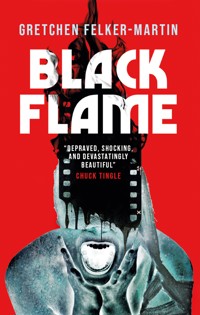
A queer horror novella about the occult, cult cinema, queer desires and other things left on the cutting room floor. Perfect for fans of Paul Tremblay and Cassandra Khaw. From the USA Today bestselling author of Cuckoo Ellen, a deeply closeted lesbian spends all her time in solitude, restoring films at a failing archive in 1980s New York City. When a group of German academics present her with a print of an infamous exploitation film believed to have been destroyed during the Holocaust, Ellen finds herself forced to confront her own repressed sexuality. And the more she works on the restoration, the more obsessed she becomes with its depictions of occult practices and queer debauchery. She's soon convinced that the depraved acts portrayed in the film are not fiction, but reality. And that they're happening to her.
Sie lesen das E-Book in den Legimi-Apps auf:
Seitenzahl: 268
Veröffentlichungsjahr: 2025
Das E-Book (TTS) können Sie hören im Abo „Legimi Premium” in Legimi-Apps auf:
Ähnliche



















Contents
Cover
Title Page
Leave us a Review
Copyright
Dedication
The Baroness
Technical Selection
The Negative
Emulsion
Duplication
Nitrate
The Can
The Second Cut
Artifact
The Reel
Editing
Nostromo
Wealth and Secret Knowledge
Final Cut
Epilogue
Acknowledgments
About The Author
“Nasty, erotic, kinky, vicious, suspenseful… Felker-Martin uses the trope of the cursed movie and creates something utterly unique that manages to horrify, beguile, and empower in equal measure. If you are going to read one horror book this year, make it this one.”
JOHANNA VAN VEEN, author of My Darling Dreadful Thing
“Black Flame is a literary razor blade raked right over the reader’s eyeballs, Un Chien Adalouing the shit out us with nearly every page. Gretchen Felker-Martin is ready for her close-up, and this book further testifies to her blood red reign as horror’s enfant terrible.”
CLAY MCLEOD CHAPMAN, author of Wake Up and Open Your Eyes
“Felker-Martin’s stunning prose is equal parts grotesque and lyrical as she turns an unflinching gaze on the extremes of compulsion and desire on the way to a truly devastating climax. The story threads the difficult needle of presenting unsympathetic characters and complicated relationships without compromising its vision, and the results are spectacular.”
PUBLISHERS WEEKLY (STARRED review)
Also by Gretchen Felker-Martinand available from Titan Books
CUCKOO
LEAVE US A REVIEW
We hope you enjoy this book – if you did we would really appreciate it if you can write a short review. Your ratings really make a difference for the authors, helping the books you love reach more people.
You can rate this book, or leave a short review here:
Amazon.co.uk,
Goodreads,
Waterstones,
or your preferred retailer.
Black Flame
Hardback edition ISBN: 9781835414040
E-book edition ISBN: 9781835414057
Published by Titan Books
A division of Titan Publishing Group Ltd
144 Southwark Street, London SE1 0UP
www.titanbooks.com
First edition: November 2025
10 9 8 7 6 5 4 3 2 1
This is a work of fiction. All of the characters, organizations, and events portrayed in this novel are either products of the author’s imagination or are used fictitiously. Any resemblance to actual persons, living or dead (except for satirical purposes), is entirely coincidental.
© Gretchen Felker-Martin 2025
Gretchen Felker-Martin asserts the moral right to be identified as the author of this work.
No part of this publication may be reproduced, stored in a retrieval system, or transmitted, in any form or by any means without the prior written permission of the publisher, nor be otherwise circulated in any form of binding or cover other than that in which it is published and without a similar condition being imposed on the subsequent purchaser.
A CIP catalogue record for this title is available from the British Library.
EU RP (for authorities only)eucomply OÜ, Pärnu mnt. 139b-14, 11317 Tallinn, [email protected], +3375690241
Designed and typeset in Change 11.5/16pt by Rich Mason.
For
Danny and Halina
We have such sights to show you!
—CLIVE BARKER, THE HELLBOUND HEART
Sometimes, watching a movie is a bit like being raped.
—LUIS BUÑUEL, MY LAST SIGH
STATEN ISLAND1985
The Baroness stepped forward, head thrown back and nostrils flared, bloody knife raised high. Her pancake makeup seemed to blaze in the garish glow, and as she raised the severed head—a silly prop, really, just wax and papier-mâché and some sort of fake blood oozing from the neck—Ellen forced herself to take a breath. This kind of thing always made her think of Freddie, made her think of the midnight shoot and their fight and that long, terrible drive home after they’d broken up. She wiped the sweat from her upper lip with her handkerchief. On the projector screen the Baroness was laughing, spots flickering on the print. It was in rough shape. Badly degraded. It went to black mid-shot, the projector hissing.
Their visitor from Berlin’s Institut für Filmerhaltung, a plump and professorial man by the name of Josef Haas, pushed himself back from the conference table and popped to his feet as the projector wound down. For a moment he was bathed in its silvery-white glow, his ruddy cheeks and graying push-broom mustache rendered demonic by harsh shadows, and then the light clicked out, the overhead fluorescents came on with a whining buzz, and he was just a short, fat man in rumpled clothes again. He smiled warmly and began to speak.
“Incredible, isn’t it? Still captivating fifty years later. We’d believed it was lost, most likely burned after the SS raided Bartok’s country house in thirty-five—a crackdown on so-called degenerate artists—until liquidators found the negative and a selection of varyingly intact release prints stored in the attic of a foreclosed apartment unit belonging to one Ernst Schlemecher, a former Nazi party official living under an assumed name. The whole place was packed to the rafters with wigs and riding crops and ivory dildos—that sort of thing. During the war he managed a warehouse where the SS stored evidence against undesirables, most of it eventually burned or forgotten, but as conditions in Berlin deteriorated he was able to smuggle out a great deal of subversive material. One wonders how he might have felt about playing such a central role in returning Bartok’s work to the public eye, but as fate would have it, he spent the last weeks of his life in a vegetative state.”
“A queer Nazi,” Phillip chuckled, shaking his head as he flipped his notebook shut and capped his pen. “Jesus.”
Haas looked uncomfortable. Ellen wondered if he was gay. Her palms itched at the thought. It wasn’t that she didn’t like gays; it was just that they unsettled her, made her feel trapped and nauseous and panicked. A dog locked in a hot car. They’d taken enough of her life. Your own fault, said a small, nasty voice in the back of her head. You’re sick. Wrong.
William Shrier cleared his throat, breaking the tension and drawing all eyes to the head of the table. “Incredible, yes.” He was a big man in his midsixties, red-faced and fleshy with enormous hands and a nearsighted squint. A haze of cigarette smoke swirled around his gray-suited bulk. He’d helmed the Path Foundation since well before Ellen’s time. “And far from our usual remit. We restore American films here, Mr. Haas. Significant American films.”
No one said out loud that the last such film, White Knight, directed in 1911 by avowed Klansman Richard Truett Cathy, was the reason the Path was taking private inquiries at all, but the knowledge hung in the air like a bad smell. They’d lost contract after contract in the week after the story broke, ferreted out by Rachel Feldman at the Times. They were on life support now, kept afloat by fringe lunatics and academic contracts with universities too big and too old to care about a little bad press. Modern conservatives didn’t make movies. They didn’t care about movies. There was no money coming from the Buckleys and Limbaughs of the world, no matter how quickly they’d rushed to the barricades during the height of the scandal.
“Publicity will be largely on the German end,” said Haas. “This is a film of the utmost importance to world cinema, Herr Shrier. It would also go a considerable way toward demonstrating your sympathy to the Jewish people.”
Mr. Shrier pursed his lips. Ellen glanced at the Institut projectionist, respooling the reel. She didn’t want to work on this. The Baroness was ugly. Disturbing. Men in drag performing bizarre occult rituals. Beasts and devils of papier-mâché and rubber cavorting on soundstages made to resemble wooded glades. Lascivious bodies grinding and touching. Needles pulling skin. They needed the money, would probably have to shutter the whole Foundation without it, but she found herself staring hard at Mr. Shrier, hoping that he’d turn it down.
The woman sitting to Haas’s right, Willa Katz, smirked a little as she knocked a cigarette from a pack of Camels and plucked it with her cherry-red lips. She was maybe forty—Bartok’s niece, or his great-niece. Ellen couldn’t remember. She blew smoke, white clouds of it from her mouth and nostrils swirling together. “A million dollars,” she said. Her English was thickly accented. A mill-yun doll-hairs. “If it’s—kā tu to saki? If it’s good work, bonus of two hundred thousand.”
That wiped the smile off Phillip’s face. Ellen just stared, not really believing what she’d heard. No one in archival science had that kind of money to blow on a single restoration. Not the BFI, not the Academy, not Wolfson. It was enough to keep the lights on for another six months, and if it did wash the bad taste out of the industry’s mouth it would put them on strong footing to reclaim lost grants, find new backing, do all the things Ellen had listened to Tanya in Accounts Payable tear her hair out over since the White Knight debacle. Everyone at the table fell silent.
Ellen wished that Mr. Shrier would turn it down anyway, would send it somewhere else. Maybe give it to Scorsese, for the archive he was trying to fund. Let him try to sell America on demons and crazed Jewish drag queens. It was shlock. Garbage. It frightened her. This kind of thing could hurt people.
Mr. Shrier’s brow furrowed. He leaned forward, his big hands clasped on the tabletop. “Mrs. Katz, with all due respect, why isn’t the Institut handling this restoration itself?”
“There are certain . . . tensions in Berlin,” said Haas. “Right-wing radicals. Critics of Mr. Bartok’s work among the city’s social elite. Mrs. Katz is concerned about the possibility of censorship. Or sabotage.”
“We do have an opening in our pipeline next week,” said Tanya, stepping deftly into the uncomfortable silence. She turned a page in the binder laid out in front of her. “Here. Once the Robin Hood prints ship back to Warner Brothers.”
“If we agree,” said Mr. Shrier tightly, greed and distaste at war on his broad features, “any announcement of our involvement will have to wait until after our board convenes next month.”
Mrs. Katz exhaled a thin stream of smoke. She sucked some back into her nostrils. “You Americans. So sensitive.” She tapped ash into the ceramic dish in front of her. “Labi. Fine.”
There was a lot of back-and-forth after that. Delivery timeline, different film-cleaning solutions, international copyright. Tedious. They hadn’t needed Ellen after all. They so rarely did outside the lab. She sat in silence as Mr. Shrier explained the plot of The Iceman Cometh’s Broadway adaptation to a bemused-looking Haas, thinking of the Baroness’s wild stare and bloodied hands, of the flickering torchlight throwing her shadow vast upon the walls of her ruinous castle. Her job now.
She would just have to grin and bear it.
* * *
“Ellie works in film,” said Ellen’s father as he cut his New York strip into neat, identical cubes. The meat was gray; Brad Kramer never ate anything without first ensuring it was totally devoid of both color and moisture. “She restores the classics. Aren’t you working on that Reagan picture, El? Angel Face?”
“Angels Wash Their Faces,” said Ellen, picking listlessly at her mesclun salad. She hated eating at Le Hollandaise. Everything on the Brooklyn bistro’s menu felt like it was trying to outsmart her, and winning. “That was years ago, Daddy. We have a few things in process now. We’re getting a new—”
“Interesting stuff,” said Brad. “Don’t you think, Jesse?”
Jesse Cavill, Ellen’s dinner companion, smiled. He was a small man, an inch or two shorter than Ellen, with neat, dark hair and a narrow face. “Absolutely, Mr. Kramer. My father always says, without art, what would this city be?”
“Boston,” said Ellen’s mother, Janet, dropping first one olive and then another into her third martini of the evening.
Everyone laughed. Ellen felt as though she were stuck in an aquarium, looking out at herself as she ate and made small talk. Jesse was her mother’s idea, the son of old bridge friends. They’d played together summers in Montauk, apparently, but Ellen had no memory of it. She remembered finding a dead dogfish on the beach at the point, its cold, black eye staring up at her, a rotten fish reek wafting from its open mouth. She remembered her cousins Madison and Morgan holding her under the surf, Maddie’s hand on the back of her neck. She remembered going to the Chester with her father to see The French Connection. Gene Hackman sweating in the dark as he stripped the French guy’s car, fingers probing its oiled crevices. Jesse Cavill was just a name. A color. A smell she couldn’t quite recall.
After dinner, as Ellen’s parents waited for the valet to bring their car around, Jesse asked if he could walk her home. He took her arm and led her down the sidewalk through the falling snow. Snow, on December 1. The city already looked like a postcard. Freddie had loved to hold her arm in public, though it had always made Ellen nervous.
Someone will see. It could get back to my parents.
And you’re ashamed of me.
No—not—I’m not—
Spoiled white girl out here playing house. I don’t know what the fuck I was thinking.
Freddie, don’t—
The crowd thinned as they turned down Grand off of Dean, walking under the LIRR. Pigeons roosted on the beams, cooing in the quiet between trains. Their droppings blanketed the steel. Their molted feathers drifted in the air. Jesse pushed her gently back against a bridge support and rose up to kiss her. It was timid. Awkward. His mouth tasted of the Shiraz they’d had with dinner, and of some bitter, acrid lip balm. His hands lingered near her arms, fingertips brushing the sleeves of her wool coat. A car whipped past behind him, the wind ruffling their hair and sending fresh snow swirling around their feet. He broke the kiss, smiling sheepishly. There was a deep, sucking need in his eyes.
“Thank you,” said Ellen.
He hovered behind her as she unlocked the front door of the brownstone where she lived. He came up the stairs like a small, nervous dog, eyes darting to and fro, nostrils twitching at the smell of incense in the air. In bed he was hesitant and fretful, pawing at her with his slender fingers, his soft palms. A few times he said, “Um, could you . . .” in a plaintive voice, but trailed off without finishing. When he softened inside her he would reach down and work himself frantically, the head of his circumcised penis rubbing against her inner thigh.
Will you fuck me?
Freddie’s long, sculpted features smeared and shifted in her memory, like oil on glass.
I don’t use it like that.
Jesse came on her leg with a thin, whimpering grunt. A little more wetted the sheets. For a moment something very much like hatred flashed across his features, but then without warning he ducked his face between her legs and poked the tip of his tongue at her vulva. The phantom taste of his lip balm filled her mouth. He kept a tight grip on her thighs as he licked at her, never making more than a moment’s contact. His saliva cooled on her skin. He clambered over her leg and came to lie beside her, his big blue eyes alive with excitement.
“I’ve never done that before,” he whispered, as though sharing a delicious secret. “Did you come?”
She stared at the ceiling, wishing there was something—a stain, water damage, a whorl in the plaster—to let herself dissolve into. It would have been more bearable than lying there next to his need as it swelled to cover her, as it pressed itself against her skin and slopped over the edges of her double bed, as it climbed the window like a slime mold following a trail of sugar. She thought of the Baroness in her iron and leather bustier, her hair slicked down beneath a backswept headdress, eyes like Norma Desmond’s staring deep and mad into the camera.
“Yes.”
The Brickworks had never made bricks. Ellen wasn’t sure how it had gotten its name, except maybe that it was made of red brick and looked a little like a factory. Long and narrow, it stretched for nearly a block along the Kill Van Kull and towered six stories high. A half mile of offices, restaurants, gas stations, and ports insulated the building from the island’s suburbs, which meant getting up at five to beat the rush across the Verrazzano-Narrows, the sky still dark, the air so cold the insides of Ellen’s nostrils froze before she reached the bodega on the corner.
A sausage, egg, and cheese on an onion bagel. A pack of Camels. A copy of the Times. Rattling along the streets on her first bus as shopkeepers rolled up their aluminum doors and unlocked their security gates. Babies crying in their mothers’ arms. Men looking at her. Edging closer. A transfer at Sunset Park, the sun just up and blinding white, and then a second bus, this one much quieter, across the dizzying bridge over the Narrows, New York Harbor flashing like a silver mirror on her right.
Ellen was early today. She stepped off her last transfer and into the warm, ozone-smelling updraft of a subway vent, her quilted winter coat rustling in the wind. Molly sat where she always did, leaning against the wall in the recessed and unused security entrance to the old glove factory, her good leg and the stump of her right hidden within a blue sleeping bag patched with peeling duct tape. She broke into a smile when she caught sight of Ellen among the other disembarking passengers. “There’s my girl,” she croaked.
Ellen dropped onto the stoop beside the other woman, handing over the brown paper bodega bag she’d carried from Brooklyn. Molly had a Camel in her mouth and lit within five seconds. She sucked deep lungfuls between bites of her sandwich. “How are things at the shelter?” Ellen asked.
A plume of smoke. The crowd from the bus had nearly dispersed. Molly sniffed. “Bad,” she said. “Getting worse. You see the president, tell him come on down to Our Lady, I want to talk to him. See if he knows what to do with these babies dying. Least it’s warm.” Molly fell silent for a moment. Worry creased the corners of her cloudy eyes. “Bless you, honey. You all right? Still got all your teeth?”
“Top and bottom,” said Ellen, smiling a little.
“And the blues?”
“Better,” Ellen lied. She stood, smoothing the front of her coat. “You should quit those things, Molly.”
“You read the news?” Molly tapped the front page of the Times. A nightclub burning in black and white. Eighty-three dead. She blew a smoke ring. It wavered through the air until it met the updraft of the vent and blew apart in ribbons of pale gray. “Maybe you should start.”
* * *
Phillip was already in the lab by the time Ellen made it up to the fourth floor and scrubbed in. She could hear his music through the thin foam insulation of his Walkman’s headphones. Elvis singing “Don’t Be Cruel,” his voice tinny and far away. She thought she remembered that song playing in her father’s Coupe de Ville as Jacob and Mallory bickered on either side of her in the big back seat. A trip somewhere, the summer of ’62 or ’63. She’d loved to watch her father’s big hand on the steering wheel, so steady and assured. Seagulls wheeling over water somewhere. Oyster Bay? She’d always hated Elvis.
She headed to her examination bench, where the final reel of The Adventures of Robin Hood awaited her. The idiots at Warner had run it threaded wrong God knew how many times; all three reels were covered in minute cuts and scratches, to say nothing of the dirt and grime and fingerprints that still needed to be removed. She sighed, considered ducking out for a fresh coffee from the break room on four, and then reached grimly for the paper cup half-full of yesterday’s she’d left on the little collapsible table beside her chair and sipped at it. Cold. Burnt. She set it down, pulled on a pair of latex gloves, checked the notations she’d made in her project log listing every imperfection still to be rectified, and put her foot on the selector pedal under the bench, advancing the frames slowly. The frame counter on the back of the bench ticked up. There. Errol Flynn stared back at her through the magnifying lens from a soundstage Sherwood Forest, his eyes bisected by a little slit. Probably a flange had done it. Once she’d dealt with the last tears the final reel would be ready for the ultrasonic cleaner.
Ellen bent low over the magnifying lens, which spanned the bench’s three tracks from front to back. With fine-tipped tweezers she gently teased the edges of the cut out from where they’d curled under, smoothing them flat with a gloved fingertip. The new adhesive tape was much better than the old Dow stuff, which had tended to wrinkle, but still it took precision to bring the cut together without bowing the three frames it crossed. It would show, but with the neg in such poor shape and no known release prints any better off, it was the best they were going to get. Anyway the whole project was aimed at a VHS rerelease, so nobody really cared what it looked like. She cut the tape on the dispenser’s lip and pressed it carefully into place. Errol Flynn’s eyes were whole again, except for a needle-thin line where the cut had been. She crossed out the entry for 2–3206–9 in her log and advanced the print.
The faint warble of Phillip’s music faded from Ellen’s awareness as she lost herself in the reel. Work was the only place she felt like herself. Everything else ran together. Her parents, Jesse, dinner at her sister’s in Sands Point, the bus, the LIRR, the subway roaring through the dark. At her desk it felt like reality slowed down enough that she could take it in, that its problems could be fixed, its inhabitants understood and predicted. Things were so much simpler in celluloid.
For a split second, she remembered the little movie she’d shot on Fire Island, the only time she and Freddie had ever really gone out together. Freddie’s dark eyes, wide and frightened and excited. Freddie’s perfect lips, stained from eating strawberries. The little roll of her belly spilling over her bikini bottoms, the most erotic thing Ellen had seen before or since.
Ellen forced the memories down. She’d been sick then. Confused. Dr. Decker had helped her see that. It had felt good to throw off convention in college, to play the firebrand and scream at her parents about Israel and Apartheid and the prison industrial complex, but heroin felt good, too, at least early on. Then it started eating through you. Everywhere you looked you saw injustice, struggle, another fight to pick, and none of it changed anything. None of it meant anything. One big, selfish ego trip, and it was never enough. People still called you rich girl behind your back, still asked you why you didn’t cut your parents off, why you didn’t boycott this, protest that, use this word instead of that word on your sign for the march.
In the lab, Ellen’s problems were known and clean and simple. Her brain and hands offered up solutions without conscious effort, applying solvents and removing debris, transforming clutter into clarity. She took Errol Flynn, all ripped apart and fuzzed with little motes and smears of darkness, and turned him back into a smirking knave in bloused sleeves and a feathered cap. The kind of man her parents dreamed she’d marry. The kind of man she dreamed of marrying, she reminded herself as she spot-cleaned around another tear before taping it. The kind of man who would touch her in ways she’d never felt before, whose lips and fingers and private parts would awaken all her body’s dead, cold places.
You’re killing me, her mother had said. We’ll never hold your children. It will kill your father. And Bubbe, all she went through, think what this will do to her.
Sometimes she almost made herself believe it, in the mental haze of solvents and adhesive fumes after a long day bent over a reel, that the right man could make her feel alive as nothing in the past thirteen years had done. More often she knew she would lie still and cold beneath a thousand Jesse Cavills as they squirmed and trembled on top of her, set there like dolls by her parents, by their parents. Sometimes the thought that any baby she had would be like her intruded at the edges of her consciousness. What would happen to it, if it were?
Are you saying something happened to you? You got better. That’s all. Dr. Decker fixed you. He opened you up and drained all that pus and stinking sewage, and it became another woman and went off to do whatever evil things those women do. It left you clean, and whole. And empty.
She pressed the pedal, advancing the reel another frame. Another. Flynn’s smile disappeared into a ragged, widening tear that stretched to the reel’s end.
Some things couldn’t be fixed.
* * *
The ultrasonic cleaner, a sort of glass-fronted tower the size and shape of an armoire, loomed at the far end of its own room adjoining the lab, its solution tank lit from within so that a watery amber light played over the tiled walls. There was a faint whiff of trichloroethane in the air, a sweet and dreamy smell, like fresh-baked ladyfingers cooling on the counter, but not enough to worry Ellen. The vents were always on in here, a hollow, booming whine of distant fan blades sucking gases up and out of the room. A few years back Norman Wilkes, a technician at the Kodak lab in Baltimore, had died when a blocked vent stopped drawing air while he was working overnight. By the time he realized something was wrong he’d been too dizzy to escape the room, too winded to call for help. They’d found him the next morning in a puddle of his own cold piss, the big Lipsner cleaner still whirring away at the cartoon he’d threaded. Donald Duck chopping down a tree while Chip and Dale looked on, mouths open in silent horror.
Ellen unlocked the pneumatic glass doors of the cabinet. Inside, the top half of the cleaner consisted of two cams and a foot-wide metal frame containing staggered vertical rows of padded wheels. The frame hung from a chain a little like a bicycle’s attached to a small motor that would lower it into the tank of trichloroethane once the film was threaded. She took the reel out of its case and locked it into the right-hand cam, then ran the film painstakingly back and forth through the padded cleaning wheels before clamping the tail, six feet of blank film attached to allow the rest of the reel to move freely through the machine, to the smaller left-hand cam. It took nearly a quarter of an hour to thread all three hundred feet, and by the time she was through she felt a little lightheaded.
She closed and locked the cleaner with a sigh and peeled off her gloves, wrinkling her nose at the feeling of latex tugging at her skin. She set the machine and crouched to watch as it began to unspool, the frame sinking into the chlorine solution, the film playing out through the amber liquid. The buffing wheels spun up with a throaty whir. In a few days the print would be duped and the new master sent back to Warner Brothers, probably to be neglected and torn apart by idiots again.
Errol Flynn flickered through the amber gloom, dirt swirling black around him.
* * *
It was dark out when she left the Brickworks a few minutes after six, passing first through the empty lab. Phillip always left a little before five. A biting wind blew in off the Kill Van Kull and there was no sign of Molly at the bus stop. Ellen felt a pang of guilt; she’d meant to bring the other woman lunch, but it had slipped her mind. She boarded her bus and unfolded the newspaper she’d bought that morning, paging past the headlines without reading them.
Arts and Culture, her regular weeknight date. There was a Carpenter double feature playing at the Rosewood in half an hour. Halloween and The Thing. She chewed her lip. She was tired, but the idea of going home to her cold, empty apartment held no appeal, and she knew she wouldn’t sleep. She kept thinking of The Baroness. Those wide, staring eyes. That blazing pancake makeup. Those strong, long-fingered hands gripping the hair of her victim’s severed head. Ellen shivered, folding the paper. Sleet pounded the bus’s windows. Its wheels hissed through the mounded slush and grayish snow. The other passengers swayed in their seats beneath the dim overheads, looking out into the dark.
By the time she reached the Rosewood, two stops and three blocks later, she was damp and half-frozen, her fingers stiff, her nose itching with the cold. She got her tickets and went to the restroom to warm herself under the hand dryer, hanging her coat on one and holding her hands under the other until her knotted joints began to relax a little. It wasn’t until she was cleaning her fogged glasses over the sink that she heard the noise from the stall farthest from the door. Soft, insistent little sounds. A gasp. A whimper. A low voice, speaking quickly.
Ellen froze, the tap still running. Without meaning to she found herself creeping step by careful step across the tiled floor until she was close enough to press an ear to the enameled steel door of the stall.
“. . . make you my dog,” whispered a woman’s husky voice. “Sleep at my feet, lick my hand, come when I call you.”
A second voice, tremulous. High. “Please, Princess. Please.”
“Do you want it?”
“More than anything.”
The sound of a zipper.
“Get on your knees.”
Ellen jerked her head away as if burned, a fierce blush rising in her cheeks. She snatched up her coat and ran out of the restroom, making a beeline for the main theater across the carpeted lobby with its rococo molding and glass-fronted concession counter. Get on your knees. The voice hissed like a snake, slithering around and around in shrinking circles in her head as she joined the light crowd going up the steps and shuffled through the dark to take a seat beside a fat, bearded man in a newsboy cap and Jets windbreaker. She folded her coat over her lap, picturing chapped lips an inch from an ear festooned with piercings. Get on your knees.
“Let’s All Go to the Lobby” began as the rest of the audience filed in, chattering and tearing open candy wrappers while they took their seats. Popcorn and soda and boxes of candy strutted on-screen, singing in their old-timey voices. Buy us. Eat us. It struck Ellen as grisly, suddenly. Some wit in the back popped a bottle of champagne, sending the cork flying across the room and nearly giving Ellen a heart attack.
“You all right?” asked the man beside her, sounding genuinely worried. Ellen only nodded. Her heart raced.
Do you want it?
The commercials started. Dennis Hopper. F. Murray Abraham in lace cuffs and silken hose. It all passed in a blur. Before Ellen knew it they were well into the first movie, Donald Pleasance directing his haunted gaze to left of camera. “I met him fifteen years ago,” he said, his tone hushed. “I was told there was nothing left; no reason, no conscience, no understanding in even the most rudimentary sense of life or death, of good or evil, right or wrong.”
A smeared, distorted white mask drifting through the dark. A knife. A pretty brunette screaming.
Do you want it?




