


Erhalten Sie Zugang zu diesem und mehr als 300000 Büchern ab EUR 5,99 monatlich.
- Herausgeber: Robert Hale
- Kategorie: Abenteuer, Thriller, Horror
- Sprache: Englisch
English aristocrat Born Gallant is riding to Dodge City to meet up with old friends, when he is attacked and left to die. Initially relieved when rescued by a lawman and his posse, Gallant's fortunes take a turn for the worse when his apparent rescuers accuse him of murder. A witness has sworn that he saw him stab the Kansas senator, and it seems certain that Gallant will hang for a murder he did not commit. Gallant's old friends newspaperman Stick McCrae and lawyer Melody Lake are able to rescue him from this predicament, but disaster after disaster befall the trio as it becomes increasingly apparent that several people want him dead. A web of political intrigue and vengeance is uncovered, but will Gallant be able to unmask the true murderer before he himself becomes a victim?
Sie lesen das E-Book in den Legimi-Apps auf:
Seitenzahl: 171
Veröffentlichungsjahr: 2016
Das E-Book (TTS) können Sie hören im Abo „Legimi Premium” in Legimi-Apps auf:
Ähnliche















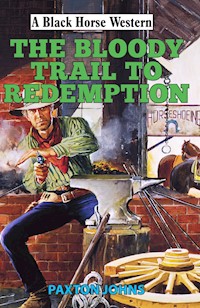
The Bloody Trail to Redemption
English aristocrat Born Gallant is riding to Dodge City to meet up with old friends, when he is attacked and left to die. Initially relieved when rescued by a lawman and his posse, Gallant’s fortunes take a turn for the worse when his apparent rescuers accuse him of murder. A witness has sworn that he saw him stab the Kansas senator, and it seems certain that Gallant will hang for a murder he did not commit.
Gallant’s old friends journalist Stick McCrae and lawyer Melody Lake are able to rescue him from this predicament, but disaster after disaster befall the trio as it becomes increasingly apparent that several people want him dead. A web of political intrigue and vengeance is uncovered, but will Gallant be able to unmask the true murderer before he himself becomes a victim?
By the same author
Encounter at Salvation Creek
The Killing of Jericho Slade
The Bloody Trail to Redemption
Paxton Johns
ROBERT HALE
© Paxton Johns 2016
First published in Great Britain 2016
ISBN 978-0-7198-2173-8
The Crowood Press
The Stable Block
Crowood Lane
Ramsbury
Marlborough
Wiltshire SN8 2HR
www.crowood.com
Robert Hale is an imprint of The Crowood Press
The right of Paxton Johns to be identified as author of this work has been asserted by him
in accordance with the Copyright, Designs and Patents Act 1988
Chapter One
For Born Gallant, the steep ride down through thick woodland some five miles to the south of Dodge City brought back emotional memories, and led to unaccustomed reappraisal and reflection.
It did not for one moment occur to him that it would quickly lead to confrontations with violent men that would test his mettle to its limits.
He had always considered himself to be a hard man with a deceptively mild appearance. A wolf in sheep’s clothing. The kind of swashbuckling character who had taken hard knocks playing polo across the green sward of England, then donned the topi and khaki drill of a British cavalry regiment and practised the same horsemanship – replacing the long-handled mallet with a loaded musket – on the barren plains of the Indian sub-continent.
Now it was another untamed frontier, yet the scorching heat filtering down through the canopy of leaves inevitably reminded him of those searing Indian plains and bloody encounters with mutinous sepoys. The similarity did not end with the climate: since relinquishing the title of Lord Gallant of Kent and taking a one-way ticket on a tramp steamer crossing the Atlantic, he had been involved in several violent skirmishes in this wild land to the West of the Mississippi River.
He was a crack shot with rifle and pistol, an excellent swordsman who was also a dangerous opponent in a knife fight. When it suited him, he adopted an aristocratic English accent to confuse lawmen and outlaws by playing the upper-class twit. The time gained had more than once saved his life in the Wild West. Even so, he might have come a cropper on several occasions had it not been for the help of Kansas newspaperman Stick McCrae and the delightful young Melody Lake. But he had prevailed, had emerged from the gunsmoke of battle unscathed and without staining the grass of the American West with his blue blood. Well, the occasional drip here and there, he thought, with a buccaneering grin. Nothing fatal, or he wouldn’t be atop a fine horse, in these damn sweltering woods, doing some serious thinking – what?
The big gelding he had bought from a livery barn in Wichita was picking its own way down the slope through tangled undergrowth and a treacherous carpet of dead leaves. Gallant’s lean frame was tipped back in the saddle. The reins were held loosely in his gloved hands, his sharp blue eyes ranging from side to side. His was a ride with a dual purpose. The first part was to spend time in Dodge with Stick and Melody, and the second had followed naturally; leaving the trail to cut through the woods was a minor inconvenience, but he had been here before. Six months ago? He’d escaped by the skin of his teeth from a Dodge City posse after the killing of Jericho Slade, led a poor kid he’d rescued from a necktie party to what Gallant had considered to be safety – and it had all gone wrong.
There. His eyes, narrowed now, had lost all warmth.
A few yards down the hill he had spotted the tree where the kid, Billie Flint, had taken a rifle bullet in the back. The youngster’s body had lost all strength. He had sagged against that tree, then gone down, his eyes glazed in death. On foot, knowing there was nothing he could do for the kid, Gallant had clawed his way uphill. He’d pulled away from the lawmen, gaining precious yards. Over the ridge he had flung himself into a dry gully and buried himself under dead leaves.
The talk he heard, as the men searched to the very edge of his hiding-place, told him that if he was found, he would die. So he had waited until he heard the men move away, then worked his way back down a stony creek-bed on the outskirts of the woods. There, with the image of the dying Billie Flint driving him on, he had with considerable violence taken care of the man left on guard.
Somewhere, far down the slope, a horse whinnied.
Memories fluttered away like frightened birds. Gallant, now moving away from the tree where Flint had died, felt a twinge of unease. At once he knew it was illogical. Sight of the tree, the sickening memory of blood-soaked clothes, of a young man’s eyes filming as he breathed his last – all this had put his nerves on edge. The woods were hot, airless, oppressive. Gave a person the jitters. Put the wind up a man, but for no reason.
And yet ...
The creek was away to his left.
He turned his horse and rode out of the woods. Away from the shelter of the trees he was hit by the full force of the midday sun. The gelding’s hoofs rattled on the loose stones. Dust rose from a water course that in winter would be a raging torrent but was now like a gully in the Sahara desert. It sloped down, snaking along the edge of the trees.
Memory again came flooding back to chill Gallant’s soul.
The last time he had come down this slope he had been on foot. That had made his descent much quieter. The lawman leading the posse had left a man with the horses. He was waiting at the bottom of the slope, away from the trees, his back turned as he paced and smoked a cigarette: there for the taking. Gallant had pounced like a cougar, suffered a bloody nose for his trouble but he’d ground the man’s face into the soft earth until he went limp, unconscious – or dead.
On this occasion his luck seemed to have run out.
Born Gallant cursed softly.
There were two of them. Tough characters on horseback, their rifles flashing in the sun. Hard eyes were fixed on Gallant. He drew rein, pinned by the aim of the rifles’ muzzles. One of the men, tall, unshaven, flashed a glance at his companion. He, stockier, with muscles that strained his shirt and vest, was nodding slowly. They had waited, followed with sharp ears the noise of a horseman’s descent through the woods and down the dry creek. For all they knew it could have been anyone: a drifter, a saddle tramp, a hunter heading for home.
But the silent exchange of glances told Gallant that he had been identified. They did know who he was. More than that, they had been expecting him; even in that moment when he thought it quite possible that his life hung by a slender thread, he wondered how that could be.
The heat beat down. No words were spoken. The silence was tense. It was as if the two men were again waiting.
Won’t last, Gallant thought, mind racing. But what could he do. He’d heard the horse whinny, damn it, a warning he should have heeded. But he had not been expecting trouble. And now...?
Ignoring the rifles he twisted in the saddle. He was still on the creek’s rocky bed. There were two ways he could go. Back, and risk taking a couple of bullets between the shoulder blades. Or forward, charging at the two men like a crazed steer in the hope that the shock of the move would see them freeze for long enough to allow him through to the open grassland, where in any race he would fancy his chances.
Then stones rattled higher up the creek. The net tightened, then closed as a third man came into view. He was raw-boned, rangy, riding a proud chestnut thoroughbred gelding. Beneath a flat-crowned black hat, dark-brown hair liberally streaked with grey tumbled to his shoulders. His face appeared to have been carved from rock by a chisel that had cut with bold strokes and left the edges of cheekbones and jaw unfinished. His eyes were of that kind of blue that appears white in certain lights and can be confused with blindness. In certain situations that would be an advantage, Gallant thought, when this man clearly needed none: the horse he rode told of money in the bank, and even the stupidest of men with little experience of life would know that they were looking at a killer.That’s the rub, Gallant thought ruefully. The only way out of this might have been to ride straight across the dry creek. But the far bank was fully eight feet high with a deep and crumbling undercut; now, even without that insurmountable obstacle, this man’s sudden appearance meant that it was far too late for flight.
‘A pleasure to meet you gents on this fine summer’s day,’ Gallant said jauntily, ‘but afraid I can’t hang about chewing the fat. Places to go, things to do, don’t you know, got a journalist pal—’
‘Shut up.’
The first words. They came from the new arrival, and cracked like a whip. Even as the thought came to Gallant, he saw that this lean, hungry-looking man bearing the stink of death was carrying just that: his hands were folded easy on the saddle horn, but in those gloved fists there was a wicked-looking rawhide whip. The handle was a foot of plaited leather, probably with a core of hardwood. The short lash tapered from the handle, hung straight down, the tip brushing the man’s left boot. It was weighted by what appeared to be a big knot tied to prevent the leather from fraying.
Ghastly implement of torture, Gallant thought, thinking bleakly of the cat o’ nine tails that on the Indian plains had tickled more than one soldier’s shoulders. This whip was about to dish out some of the same, no doubt. But why? Well, his was not to reason why, his was but to do or die, and so on and so forth. It seemed that a straight fight was out of the question. He had his six-gun, a rifle in its saddle boot, but going for either of them would be suicide. Deciding that the best he could do would be to make ’em think he was short of a few brain cells – put ’em off guard – he dug deep but could come up with nothing better than a foolish grin.
The man on the thoroughbred shook his head, met the grin with a derisive half-smile. He transferred the whip in his left hand. With his right he drew his six-gun, and thumbed back the hammer.
‘I’ll keep him covered,’ he said to the two gunmen, ‘but take care. This feller’s cunning and dangerous, as my poor brother would confirm if he had breath in his body and could talk from the inside of a coffin.’ He let the words hang in the heat, watching Gallant as if waiting for a response. Then, realizing nothing was forthcoming, he said, ‘All right, put away your rifles and get him strung up.’
Not a chance, old boy, Gallant thought, teeth gritted. Nobody’s stringing me up, so it’s now or never, up and at ’em.
With a jerk of both heels he raked the gelding with his spurs.
The horse squealed in protest, then shot forward. Gallant drove his mount straight at the two gunmen. But there his plan fell apart. The move had been expected, the distance to be covered was too great. The men had time to ease their horses to one side. They separated, leaving an inviting gap. Even as Gallant seized the moment and spurred between them he knew he had been outfoxed. The rifle held by the leaner of the two men was a silvery blur as he swung it at Gallant’s head and knocked him out of the saddle.
Chapter Two
Consciousness returned to Gallant with a blaze of agony that was pure-white heat. The sun was high overhead, a little way behind him, but they had taken away his hat and his thick blond hair was a hot skullcap torturing his scalp. Under that cap his head ached fiercely from the blow that had knocked him senseless. He’d been stripped to the waist, shirt and plain hide vest ripped from his body. His torso and face were burning. The intense glare was turning his closed eyelids bright pink.
Gasping for air, struggling to breathe, he realized he was hanging by his arms. Rawhide thongs were biting into his wrists. He could feel the warm trickle of blood. The extreme position and his own dead weight were restricting the movement of his ribs, his diaphragm. Relief could come only by taking the weight off his arms. That was impossible. Try as he might, he could not touch the ground with his toes. He gave that up, tensed his arm and shoulder muscles and pulled his body higher. For a few moments there was blessed relief. Then the strain became too great. Mentally and physically he sagged. Once again, drawing breath became nigh on impossible.
Gallant opened his eyes.
He was facing the undulating grassland that he knew stretched away to the rails of the Atchison, Topeka and Santa Fe railroad, and the town of Dodge City. His eyelids fluttered. In front of him, two silent watchful men on horseback. Two? Hadn’t there been three? He forced his hanging body into a twisting mid-air dance that brought a stifled groan from between clenched teeth. He could see left, then right. No third man. Locking his shoulders to stop the twisting, the pain clearing his head and bringing back memory, he squinted at the men in front of him.
One was the unshaven, leaner of the two gunmen. He was looking away, appearing uninterested as he smoked a cigarette. The other was the big man on the thoroughbred gelding. But his demeanour, too, had changed. The confidence was there in abundance, but no longer was he snapping curt instructions while holding Gallant at the point of a gun. The opulent-looking, bone-handled pistol was back in its holster. His hands were folded on the saddle horn.
Not only watchful, but waiting, Gallant thought.
For what?
And where the hell was his whip?
The answer, like the return of consciousness, came in a blaze of agony as the lash cracked across Gallant’s naked back and the big knot curled around his ribs and bit into his chest.
He had no awareness of the passing of time. At some point in the vicious flogging his body closed down, sensitive nerve ends deadened in a pure survival instinct. From the comfortable refuge in his brain to which his consciousness had fled, Gallant was vaguely aware that the man standing behind him to wield the whip was placing each cruel stroke with care. Choosing unmarked skin. Raising ugly red weals, no doubt, but not drawing blood. The aim was to inflict the maximum pain without leaving permanent scars, Gallant thought. But why the torture? And why did the big man on the thoroughbred want him to live?
The beating came to an end. For what seemed like an eternity there had been a stroke of the whip, a space, then another stroke. Then Gallant, eyes closed, lids gummed by salt sweat, became aware that after the last stroke there was just the space. Then voices came to him as mumblings, the words indistinguishable. His nostrils flared to the tang of cigarette smoke. Someone laughed. There was the cooling sound of water splashing from a flask, awakening Gallant to his terrible thirst, and he moaned and licked dry lips with a tongue already swelling.
Bridles jingled. There was what sounded like a gruff command. Hoofs beat on the hard ground, faded. As the three men rode away, Gallant was enveloped in silence. It was broken by the buzz of insects, the flutter of birds’ wings, their excited twittering as they returned to perch in the branches of trees covering the hillside at his back.
But it was the other birds that worried Gallant, those big birds that soared and circled at a great height, had sharp eyes and hooked beaks and were uncannily sensitive to the smell of impending death.
As he slowly emerged from the mental hibernation that had enabled him to come through a beating that might have put a fatal strain on weaker hearts, Gallant was again assailed by pain. From his bleeding wrists to his impossibly stretched and strained shoulders, from his throbbing head to a back that felt as if it had been dragged repeatedly across rusty barbed wire, he was in torment.
Treatment was needed for all the wounds deliberately, callously inflicted, but there was none available. Escape was impossible. His wrists were bound with rawhide: had they soaked the leather first, knowing it would dry and tighten? His feet were swinging well clear of ground; his body was too damn heavy for tortured muscles to lift. He’d hang there, then; suffer, until help arrived or Hell froze over. That icy thought cheerfully reminded him that while the flogging had not brought him close to death, the searing sun might finish the job. Or perhaps not. Time had moved on. The sun had drifted south, and Gallant was now hanging in the shadows cast by the trees at his back.
Time then, to wait and endure. And wonder. Wonder for however many hours lay ahead just how and why three armed and dangerous men could have been lying in wait for him at the end of a ride that was never a secret, but had not been discussed with friend or foe.
Nevertheless his intention to ride had become known to men of ill will.
Where had he inadvertently revealed his plan?
As far as the dazed and suffering Gallant could work out it would be pointless sending his thoughts further down his back trail than to Wichita. Once that decision had been made his mind found some focus and the answer leaped out at him with the speed of a striking rattler.
Passing through that stinking hell-hole of a cattle town he had eaten in a familiar smoke-filled café close to Rowdy Joe’s dance hall, had skimmed through the latest edition of the Wichita City Eagle, had then wiped his hands on the newspaper and moved on to the Buckhorn saloon. There, drink in hand and one foot on the brass rail, he had got into conversation with a rough-looking character who’d drunk enough to make standing difficult. However, though one hand kept a tight grip on the oak bar, beneath the sweat-stained black Stetson the man’s eyes were clear and intelligent. He’d studied Gallant without turning his head, watching his reflection in the ornate, fly-blown mirror. Then he’d nodded thoughtfully.
‘Englishman,’ he said. ‘Name of Gallant. Saw you in Dodge, read about you in the Dodge Times.’
‘Not saying you’re right or wrong,’ Gallant said, ‘but aren’t you somewhat garrulous for a Westerner? Conversation before introduction, that sort of thing. Likely to put you in a spot of bother if the listener takes offence, wouldn’t you say?’
‘And you say I’m garrulous?’ The man turned to face him. ‘Yeah, I know what that word means. Used to work alongside Stick McCrae on the Kansas City Star. Come to think of it, your name cropped up there. Both times I heard it, you were in trouble with the law.’
‘Actually, old chap,’ Gallant said, ‘the law was having some trouble with me.’
‘A big ’breed died at Salvation Creek; a while after that a lawman name of Dolan got his comeuppance in Dodge. I hear he lost a leg, which annoyed him somewhat. You’re poison, feller, so why stick around?’
‘Is that a threat?’
‘Hell, no. I told you, I use a pen, not a gun.’
‘Words are your business?’
‘Right. I tell stories.’
‘Juggle fact and fiction till indistinguishable? Something tells me I should take anything you say with a pinch of salt.’
‘Which is a polite way of calling me a liar.’
The man tossed back another shot of whiskey, pursed his lips, beckoned for a refill.
‘Nobody stays long in Wichita,’ he went on after some thought. ‘Give or take a mile here and there, this town’s ’bout as far south of Ellsworth as it is to the east of Dodge City. Can’t recall the name Gallant connected to violent death in Ellsworth, so either you’re losing your touch, or there’s no excitement. My money says you’re heading for Dodge.’
‘The newspaperman with no name rolls the dice. Is he a winner?’
‘It’s Chet Eagan.’
‘Well, Eagan, you’ve won but there’s no story in it for you. I’ll be in Dodge looking up your old colleague, McCrae. On the way – seeing as I’m in the area – I’ll cut through woods to the south of the town where a young man died.’




