


0,99 €
Mehr erfahren.
- Herausgeber: Maria Peitcheva
- Kategorie: Geisteswissenschaft
- Sprache: Englisch
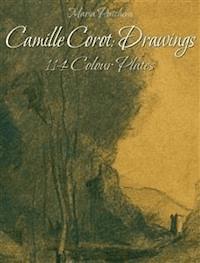
Jean Baptiste Camille Corot was French painter and draftsman. Of the painters classed in the Barbizon school it is probable that Corot will live the longest, and will continue to occupy the highest position. In his first style he painted traditionally and “tight” — that is to say, with minute exactness, clear outlines, and with absolute definition of objects throughout. After his fiftieth year his methods changed to breadth of tone and an approach to poetic power, and from 1865 onward, his manner of painting became full of “mystery” and poetry. In artistic circles of Paris he was acknowledged as one of the five or six greatest landscape painters the world has ever seen, along with Hobbema, Claude, Turner and Constable. Besides landscapes, of which he painted several hundred, Corot produced a number of figure pictures which are much prized but he executed a few etchings and pencil sketches.
Das E-Book können Sie in Legimi-Apps oder einer beliebigen App lesen, die das folgende Format unterstützen:
Veröffentlichungsjahr: 2016
Ähnliche
Camille Corot: Drawings
114 Colour Plates
By Maria Peitcheva
First Edition
*****
Camille Corot: Drawings
114 Colour Plates
*****
Copyright © 2015 by Maria Peitcheva
Foreword
Jean Baptiste Camille Corot was French painter and draftsman, born in Paris, in a house on the Quai by the rue du Bac, on the 26th of July 1796. His family was wealthy bourgeois, and whatever may have been the experience of some of his artistic colleagues, he never, throughout his life, felt the want of money. He was educated at Rouen and was afterwards apprenticed to a draper, but hated commercial life and despised what he called its “business tricks,” yet he faithfully remained in it until he was twenty-six, when his father at last consented to his adopting the profession of art. Corot learned little from his masters. He visited Italy on three occasions: two of his Roman studies are now in the Louvre. He was a regular contributor to the Salon during his lifetime, and in 1846 was decorated with the cross of the Legion of Honour. He was promoted to be officer in 1867. His many friends considered nevertheless that he was officially neglected, and in 1874, only a short time before his death, they presented him with a gold medal. He died in Paris, on the 22nd of February 1875, and was buried at Père Lachaise.
Of the painters classed in the Barbizon school it is probable that Corot will live the longest, and will continue to occupy the highest position. His art is more individual than Rousseau’s, whose works are more strictly traditional; more poetic than that of Daubigny, who is, however, Corot’s greatest contemporary rival; and in every sense more beautiful than J. F. Millet, who thought more of stern truth than of aesthetic feeling.
Corot’s works are somewhat arbitrarily divided into periods, but the point of division is never certain, as he often completed a picture years after it had been begun. In his first style he painted traditionally and “tight” — that is to say, with minute exactness, clear outlines, and with absolute definition of objects throughout. After his fiftieth year his methods changed to breadth of tone and an approach to poetic power, and about twenty years later, say from 1865 onwards, his manner of painting became full of “mystery” and poetry. In the last ten years of his work he became the Père Corot of the artistic circles of Paris, in which he was regarded with personal affection, and he was acknowledged as one of the five or six greatest landscape painters the world has ever seen, along with Hobbema, Claude, Turner and Constable.
During the last few years of his life he earned large sums by his pictures, which became greatly sought after. Besides landscapes, of which he painted several hundred, Corot produced a number of figure pictures which are much prized. These were mostly studio pieces, executed probably with a view to keep his hand in with severe drawing, rather than with the intention of producing pictures. Yet many of them are fine in composition, and in all cases the colour is remarkable for its strength and purity. Corot also executed a few etchings and pencil sketches.
Drawings and Etchings
Nu D'homme
1834, Charcoal And Pencil Heightened With White On Paper
Landscape With Cows
Pen And Ink Over Pencil On Paper
Detail
Artist Painting, Probably In Ronciglione
Pencil On Paper
Le Martinet Near Montpellier
1836, Pen And Black Ink, Graphite On Light Blue Laid Paper
Detail
Landscape In A Storm
1860, Black Chalk On Wove Paper
Femme Dans Un Paysage
Brush And Ink And Wash On Paper




