


Erhalten Sie Zugang zu diesem und mehr als 300000 Büchern ab EUR 5,99 monatlich.
- Herausgeber: Cinnamon Press
- Kategorie: Abenteuer, Thriller, Horror
- Sprache: Englisch
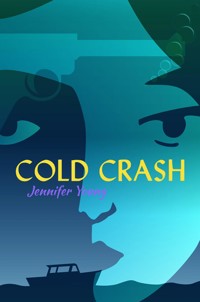
For archaeologist Maxine 'Max' Falkland, life in early-50s London is difficult enough as she tries to move on from the death of her brother, an RAF pilot shot down over Korea. But, when she meets John Knox things get more complicated, before they get outright dangerous. Flying her light plane to Scotland, Max overhears whispered arguments in Russian coming from the next-door room and sees lights across the moors that appear to answer flashes from the sea. Add the mysterious malfunction of her plane and she has a lot to confide when she encounters the enigmatic Richard Ash, a local landowner and recluse. But when Knox unexpectedly reappears and a dive goes disastrously wrong, Max must act fast as she finds herself in the middle of a Soviet military plot. An accomplished debut novel from a US voice writing in the UK, Cold Crash is fast-paced with enthralling characters and perfect detail.
Sie lesen das E-Book in den Legimi-Apps auf:
Seitenzahl: 349
Veröffentlichungsjahr: 2017
Das E-Book (TTS) können Sie hören im Abo „Legimi Premium” in Legimi-Apps auf:
Ähnliche














Contents
Title page
Copyright
Acknowledgements
Dedication
Prologue
Chapter 1
Chapter 2
Chapter 3
Chapter 4
Chapter 5
Chapter 6
Chapter 7
Chapter 8
Chapter 9
Chapter 10
Chapter 11
Chapter 12
Chapter 13
Chapter 14
Chapter 15
Chapter 16
Chapter 17
Chapter 18
Chapter 19
Chapter 20
Chapter 21
COLD CRASH
JENNIFER YOUNG
Published by Cinnamon Press
Meirion House,
Tanygrisiau,
Blaenau Ffestiniog
Gwynedd LL41 3SU
www.cinnamonpress.com
The right of Jennifer Young to be identified as author of this work has been asserted by her in accordance with the Copyright, Designs and Patent Act, 1988. © 2017 Jennifer Young.
ISBN 978-1-78864-026-8
British Library Cataloguing in Publication Data. A CIP record for this book can be obtained from the British Library.
All rights reserved. No part of this publication may be reproduced, stored in a retrieval system, or transmitted in any form or by any means, electronic, mechanical, photocopying, recording or otherwise without the prior written permission of the publishers. This book may not be lent, hired out, resold or otherwise disposed of by way of trade in any form of binding or cover other than that in which it is published, without the prior consent of the publishers.
Designed and typeset in Garamond by Cinnamon Press. Cover design by Adam Craig © Adam Craig.
Cinnamon Press is represented by Inpress and by the Welsh Books Council in Wales. Printed in Poland.
The publisher gratefully acknowledges the support of the Welsh Books Council.
Acknowledgements
This novel wouldn’t be possible without my wonderful husband Joe Flatman. We dreamed up Max together over drinks at our local pub one rainy Saturday. Joe has endlessly listened, given advice and supported me throughout every stage of the novel’s development. He’s also been a fantastic archaeological and historical consultant! Thanks are owed to Cathy Young for being a superb reader, to Martin Flatman for steam train advice and to Bela, Simon, Bertie and JLD Hughes and Kyra Larkin for moral support (and babysitting). Thanks also to Frances Flatman and Dave Young for their encouragement.
Jan Fortune has been the most amazing mentor I could ever imagine. She brings such warmth to the process of editing and writing, and even allowed a two-year-old Zoe and Joe to come with me to a writing retreat in Wales. Thanks to everyone at Cinnamon Press, particularly the Debut Novel Prize judges, and to Adam Craig for the cover design. The School of Humanities at the University of Hertfordshire, especially Jeremy Ridgman, supported the writing of the novel as well as my mentorship with Cinnamon Press.
Finally, this work owes an enormous debt to my grandparents JW McCombs, Jr (1925-2015) and Rebecca Ann Towell McCombs (1927-2009) and their teaching across my life.
Information about Honor Frost’s first dive was drawn from her book Under the Mediterranean: Marine Antiquities (London: Routledge, 1963).
Dedication quote from Ellie Stoneley, 2015.
To my daughter Zoe Anne Young Flatman
‘…this time’s our time, just me and you’.
Prologue
The blade nestled on the seabed beneath the crushed kelp. Had anyone else seen it in the thousand years since a storm washed it overboard from its Viking ship? Or had it slid out of a man’s dying grip as the vessel tipped into the water? Max tilted her neck, fighting the constriction of her suit, and a finger of icy water cascaded down her spine. She yelped against her mouthpiece, but the sound simply absorbed into her bubbling expiration. Her crayon floated away on its string. She reached out to recapture it, the slow movement of her arm, encased in black rubber, still baffling her. She had rendered the sword fragment as accurately as she could in thick gloves. On land, her drawing would have been precise.
She let the current drift her away from the area of bruised kelp. Half an hour in this murkiness. Time to surface, wrap herself in a blanket and consume as much coffee as the thermos contained. The damage to the kelp looked recent. Whatever caused it had to be bigger than her plane, and unlike the Viking ship, it had not remained on the seabed long. Her fin brushed over the waving fronds, and another dull glint emerged. Max forced herself lower and parted the long leaves. A blade, yes, but one not forged by Viking hands.
It matched the one strapped to her right thigh, but instead of being shiny and new this knife’s handle bore dents and scrapes of long use. The water gave a startling crispness to the shape imprinted on its side. Worn, partial, but a letter. And not a Roman letter.
A tiny space remained on her tablet, and she made a rougher, faster sketch of the knife. The half letter she drew enlarged, positioning it beside the knife, and then she hooked the tablet on her weight belt. Thirty-five minutes underwater, but still she hesitated. The Viking sword needed to stay in situ. But this? This couldn’t be more than ten years old.
The knife slid easily into the sheath on her leg, and she kicked her way towards the surface. The shadow of her boat broke, shuddered and reformed. Max floated, staring at the silhouette above. Maybe it always shifted like that. The down line she held stayed constant. She blinked. One mass. She continued to ascend, tracing her hand along the rope.
On the surface, Max spat out her mouthpiece and gulped air. Air that didn’t taste like rubber, that she could inhale and exhale without the cacophony of noise underwater. How could Victor prefer diving to land archaeology? The grey clouds overhead matched the dark water breaking around her as she treaded water.
‘Shame we missed each other in London, Dr Falkland.’
Max shuddered. His conversational voice couldn’t reach the half-mile from shore. She could dive back down, escape—hide—but for how long? Maybe fifteen minutes of air remained. Pale sunlight glinted against her mask, and then she saw him. John Knox leaned against the wheelhouse of her boat.
‘How did you find me?’ she asked. If her voice wavered, well, the wind blowing against her wet hood and making her teeth chatter, would make anyone’s teeth chatter. Her tablet knocked against her leg, tapping the blade. He would see the sketches. More to the point, he’d see the knife’s Cyrillic letter.
‘Guess how many pretty American women rent boats on the Isle of Mull in April.’
‘I’m not American.’ She peeled off her mask, the chill assaulting her eyes. Smoke curled from his cigarette. The narrow shape disrupting the left side of his blue jumper had to be a gun. She detached her tablet and kept it under the shadowy water.
‘You sound it.’
His own accent had blurred into neutrality, a generic American that couldn’t be pinpointed to a single state or region. Was anything about this man honest?
‘I’d appreciate it if you kindly got the hell off my boat.’ Her cold fingers worked to tie the tablet by its crayon’s string to the line, but she had to bite off one glove to manage it.
‘What are you doing?’ He stepped towards the ladder and flicked his cigarette overboard, towards the small sailboat moored to her boat.
Her tablet plummeted, but at least he wouldn’t reach it. She unfastened her weight belt quickly and heaved it over the side of the boat. He jerked his boot out of the way just in time.
‘Not nice, Dr Falkland.’
‘Bad aim.’
He reached his hand towards her. No sign of the gun. With a deep breath, she put her ungloved hand into the heat of his.
Chapter 1
Max touched the pad of her white-gloved thumb to her index finger. White. Six months of black, and now one day of white.
Tudor portraits with flat, serious faces lined the walls of the meeting room. Had wars been more straightforward in the Tudor period? Max specialised in Vikings, but surely the Tudors had called their wars wars, not police actions.
The President of the Society of Antiquaries cleared his throat. ‘And now the primary business of the meeting, a paper entitled “Viking Age Settlement Patterns in the North Sea Region: Cardigan, Newport and Fishguard”, given by fellow Professor Stephen Seaborn.’
As the lights dimmed and the slide projector whirred to life, Max fixed her gaze on the blur of Professor Seaborn’s glasses. She would not think of George. This related to her work, her professional life. She folded her hands precisely, as the first slide clunked into place. By the third, she dug in her handbag uselessly for paper as she disagreed with every statement Professor Seaborn made. How had he made professor with this pitiable level of interpretation of Viking artefacts? She shouldn’t have packed her bag for the theatre. Her father silently passed her a handkerchief, so she forced herself to sit still for the rest of the talk, knotting her fingers around the crisp linen.
The lecture ended, with coughs and rustlings, and the lights rose. Max shot her hand up, but the President called on every ungloved male hand rather than hers.
‘As we are running a bit late, I believe this should be the last question.’ He indicated an academic from Cambridge. That professor didn’t ask a question at all—he droned about his own work, neither Viking nor Welsh. The speaker got away with no challenges. She handed her father his handkerchief.
‘Sherry?’ her father asked. ‘What was your question?’
‘Questions.’ They stepped into the marbled entry hall from the formal meeting room. ‘Specifically about methodology, to begin with, and then his interpretation of...’
‘Max!’
They both turned, but the elderly gentleman bearing down on them clearly wanted her father. She let her hand slide from her father’s sleeve and crossed the brass lamp embedded in the floor. She threaded her way through fellows whose suits smelled of stale wool. Professor Seaborn eventually would make his way into the other room. George would tell her how boring the whole thing was and demand they leave to find alcohol other than sherry.
The books here languished behind glass doors. She hadn’t had the nerve to try them, but they must be locked. She had visited the library upstairs, to check a few things for her PhD, but tonight was the first meeting she’d attended. Observed. She did not take part. The Society did admit female fellows, but she was too young, too junior. The steward, resplendent in a blue and red coat, pointed out the sweet, medium and dry sherries, deepening from straw to dark honey in the small stemware. She stripped off her gloves and selected a glass of dry.
‘I believe you wanted to ask Professor Seaborn something, Miss…?’
‘Doctor,’ she corrected, almost before she registered the slow cadence of his Southern accent. The way the question didn’t lilt up as high as it would from a British man. ‘Max Falkland.’
‘John Knox.’ He picked up a glass, sweet. His lips pursed as he sipped.
She hid a smile. ‘Mister or doctor?’ His erect posture suggested he’d seen military service, but that encompassed the vast majority of men in their late twenties she met. The grey suit implied that his service had finished.
‘Mister.’
‘Are you a fellow?’ Beyond Mr Knox’s elbow, Max saw Professor Seaborn come into the room, surrounded by other fellows. ‘Mr Knox...’ She glanced back as he replaced his glass, his hands tan against the white tablecloth. Did she have to carry every bit of the conversation? If she could ease away from the table... but his fingers closed around a silver cigarette lighter. Thick fingers, with clean, broad fingernails.
‘He said you always had questions.’ A small smile cracked his serious face.
‘I beg your pardon?’
‘Maxine.’ Very few people called her Maxine, and only one would be here. Edward, her PhD supervisor, reached between them to pick up a medium sherry. ‘What did you want to ask? Seaborn could have been your external examiner, you know. Have you met him? Did your father bring you?’
‘Excuse me,’ Mr Knox said. His fingers brushed her arm so lightly she thought she imagined it, and then Mr John Knox was gone.
Edward did not fall into the unwashed archaeologist category. His suits were as neat as Mortimer Wheeler’s, and his reputation for far better manners with his female students had certainly been borne out across the three years of her PhD.
‘Now, have you sent out your thesis to publishers yet?’ Edward asked.
The crowd around her seemed entirely made up of men in their fifties or over, and not one stood as tall as Mr Knox.
‘Job applications?’
‘I don’t need a job. I need...’ She bowed her head, but fought to keep her shoulders straight. She could be looking down at the table, the crisp white cloth.
‘Everyone goes down a bit after they finish their PhD. And you have had a difficult time.’
‘No more than lots of people in the war.’ She blinked at the dampness that was not tears. ‘Do you know that man I was just speaking to?’
‘You need to do something. Apply for a job. Establish a routine.’
‘I wonder who he came with.’ Guests could attend a Society meeting only with an introduction from a fellow. And introductions were minuted. She’d written her own name in the book next to her father’s, her sloping M so similar to his. But the book had been taken into the meeting.
‘Maxine, you’ve been a very promising PhD student. Are you really just going to subside into your parents’ home and eventually marry some worthy man who won’t be able to talk to you properly?’
Max looked up. He’d never said so much about her. ‘I’m promising?’
‘That’s what you took away from that? Look, I’m sure it’s your duty to carry on the line or something, but you could have a real academic’s life. I’m going to Denmark for fieldwork next month. Victor Westfield may be there too—come with us. It’d do you good to get out of the library.’
‘I can’t carry on the line.’ The clap of Professor Seaborn’s hand landing on Edward’s shoulder obscured her voice. Max concentrated on the sherry pooled in the bottom point of her glass as Edward and Professor Seaborn exchanged pleasantries and compliments. A grey sleeve joggled into view behind Professor Seaborn, but the suit adorned a man who had to be nearly ninety.
‘Stephen, may I present Dr Falkland? Newly minted, no corrections,’ Edward said.
Max finally got to raise her issue with his methodology, but before she and Professor Seaborn could progress to a dispute over interpretation, someone tapped her arm. A definite tap, not a brush.
‘Your mother will be cross if we’re late for the curtain,’ her father said. ‘Hallo, Edward.’
‘You must be very proud, Lord Bartlemas.’ They both smiled, and for once, the smile went all the way to her father’s eyes. That hadn’t even happened when she came home after her successful viva.
‘Now, we must go.’ A coat hung over her father’s arm. He’d taken some other woman’s coat, and now he’d have to put it... but the champagne coloured coat was hers. Not the black one she’d worn all winter long. This grosgrain silk suited late spring, with its freshness of air. And her mother had insisted. Max forced her own polite smile, even for the man who knew nothing about interpreting Viking archaeology, and then she crossed the brass lamp again. Her father pulled the heavy wooden door open, and they stepped out into the cool evening air.
‘You disagreed with everything he said.’
‘I believe his name is his name. And the title wasn’t too bad.’ Her father held the pale coat out for her, and the fabric settled over her arms. ‘We could walk.’ Sitting in the meeting, sitting in the taxi, sitting in the theatre.
‘Don’t be ridiculous. Besides, we’ll be late.’
‘And Mother would fuss.’
She stayed silent as they walked over the paving stones of the courtyard of Burlington House and out onto Piccadilly. The lights of Fortnum and Mason blazed. Bottles stacked in the window promoted new liquid shampoos, ones her mother no doubt already owned. Something had turned up in her bathroom, but she hadn’t read the package yet. Only her shoes remained black. Max had tried to refuse wearing mourning in the first place. But now...
‘Max?’ Her father stood next to an open taxi door. ‘Coming, darling?’
She slid into the taxi and her father climbed in beside her. ‘Theatre Royal, Drury Lane, please.’
‘Off to that South Pacific, are you? My missus wants me to take her,’ the taxi driver said.
‘We’re meeting mine there.’
Even the thought of Nancy Falkland being called anyone’s ‘missus’ couldn’t raise a smile.
‘Max, there were other questions that couldn’t be asked. And someday you’ll give a paper, and not long after that you’ll be made a fellow.’
Max nodded. They sat in silence. ‘It’s not that. I, I didn’t recognise my coat.’
Her father gave her hand three slow pats and a squeeze. ‘Hmm. I wonder, would we be the first father-daughter pair of fellows in the history of the Society? No, surely Frederic Kenyon and Kathleen have beaten us.’
She let him talk about taking on the obligations of being a fellow of the Society of Antiquaries of London, while she leaned into the taxi’s upholstery and stared at the lights of Shaftesbury Avenue.
‘Do you know anyone named John Knox?’ she asked. ‘American. Southern.’
‘The tall chap you were talking to over sherry?’
‘Was he tall?’
‘You noticed the accent but not his height? Nothing wrong with fancying an American. Worked for me.’ Her father laughed, a real laugh that eased some of the stress out of her shoulders, far more than his squeeze of her hand had.
The taxi pulled up outside the theatre next to the full-sized posters of Mary Martin washing her hair. Vivian had brought the Broadway recording to London, so Max already knew all the songs. She had heard them over and over again in Vivian’s flat while Max tried to coax the first words out of the sticky-fingered Bobby. She had ambitions for her godson to start speaking with basic archaeology terms, or at the very least ‘Max’, rather than the chorus of ‘Nothing Like a Dame’.
Her mother she had no trouble recognising, despite her periwinkle blue coat. With her blonde hair coiled high, Nancy Falkland had managed to make mourning look stylish. Back in colour, she looked beautiful.
‘You’re late,’ Mother said. Her grip on her husband’s hand mollified the slight scold.
Dad consulted his wrist. ‘Eight minutes to the curtain. Plenty of time.’
‘Oh Max, all those lovely new clothes and you wear grey.’
‘Your magazines say grey is in this season,’ Max said.
‘I thought you’d want to wear colour again.’
Max followed her parents into the theatre and up the stairs.
Why had they picked a wartime piece set in a hot country for their first outing? She laughed along with the audience at the dancing, but the chorus boy soldiers’ fake New York accents grated. Nothing like... John Knox. Mr John Knox. Her parents both went to the lavatories at the interval, and she went to the bar to order drinks. In the queue, with ‘Some Enchanted Evening’ soaring in her mind, she idly listened to the chatter around her.
She reached the bar and opened her patent handbag, but a male hand placed a tumbler in front of her. An inch of smooth brown liquid filled the glass.
‘I’m sorry...’
‘It’s already ordered, miss.’ The barman turned to the couple behind her.
Her handbag’s snap resonated too loudly. She closed her numbed fingers around the glass. Maybe her father... but he always ordered her champagne at the interval.
‘My apologies that it isn’t Oban.’ John Knox placed just the correct amount of pressure on her elbow to steer her away from the bar, then immediately withdrew his hand. ‘Still, better than sherry.’
‘You chose your sherry poorly.’ She sipped the whiskey. ‘Thank you.’ Without touching her, he guided them—shepherded her—through the crush of people to a small gap against the far wall. People simply shifted out of his way. He placed his own glass, also whiskey, on the narrow ledge next to them.
Max clenched her glass. ‘Who are you, Mr John Knox?’ Handsome, in his way, if you liked square-jawed, blue-eyed men with perfectly done dark hair. Max had seen—had danced with—too many of them in New York to find them attractive.
‘Just an American in London.’
‘Who knows my preferred whiskey.’ Nor did he judge her for drinking it.
‘And that your plane is a Beechcraft Bonanza, and you have a strong line in asking questions.’
‘Yet I know nothing about you except that you are Southern. Virginia?’
‘North Carolina.’ The small smile emerged again. ‘I can share, see? You should drink your whiskey. The intermission won’t last much longer. Still driving the DB2?’ He reached into his coat pocket. ‘Cigarette?’
‘Your sources didn’t tell you I don’t smoke?’ The case went back in his pocket. ‘You should, however, if you wish.’
‘Darling, your father is at the bar.’ Her mother’s perfume announced her presence a half-second before her soft touch landed on Max’s shoulder. ‘Oh, I beg your pardon,’ she said smoothly, although Max knew not a modicum of a chance existed that Nancy Falkland had not noticed that her daughter was speaking to a man.
‘Mother, John Knox. Mr Knox, my mother, Lady Bartlemas.’
‘It’s very nice to meet you, ma’am.’ He reached towards her hand, but her mother turned it into a shake.
‘I like to shake hands with fellow Americans. How do...’
‘I, ah, encountered Mr Knox at the Society of Antiquaries this evening.’ And now he was here. Buying her a drink.
‘I knew your son, ma’am. I was very sorry to hear about your loss.’
Max’s glass froze at her lips. Her car, her plane, her whiskey. He knew George.
‘Thank you,’ her mother said, pitch perfect as always. Her father arrived, carrying only two glasses of champagne. He’d noticed too.
‘Darling, this is John Knox. He served with George.’ Nancy managed it without a hitch in her voice. Max could not have. The lights dipped for the end of the interval.
Dad shook his hand too. ‘Very nice to meet you. You must join us for supper afterwards. It would be nice...’ Her father trailed off for only a second. ‘It would be good to talk.’
‘Yes, sir.’
Max stared at John Knox’s shoes. Tie shoes, not those new slip ons, and highly polished. The way ‘sir’ left his lips so sharply, he certainly had served. But he was old enough to have served in the real war, not the police action her brother had gone off to.
Her mother sipped her wine. ‘Are you enjoying the play?’
The lights dipped again, and people pressed towards the theatre doors.
‘Shall we meet in the lobby?’ her father asked.
It was settled around her, in a quick blur. Did he smile a goodbye? He certainly murmured good evening, his Southern accent dripping over the soft, barely pronounced g.
When her back was finally towards him, she tossed back a huge swallow of the whiskey. Its burn soothed her.
‘He seems charming,’ Mother said.
‘You think most Americans are charming.’ Her father corralled her mother’s drink and returned it to the bar. Max placed her tumbler beside their flutes.
How did they not rage? Shout? How did they just move on? Her friends did too, the other pilots in the Air Transport Auxiliary. Six of them had lost their husbands and kept on flying. But that was a proper war, not like... She took a deep breath and climbed the stairs behind her mother’s swaying skirt. Maybe her mother gripped her father’s hand a little too tightly as they proceeded along the narrow walkway towards the theatre doors. Max glanced over the railing, as always. The first time she flew, she’d felt this same frisson from her childhood, looking down the three storeys to the lobby floor below. The smallness of the enormous adults. Tonight she saw perfectly sculpted hair above broad grey shoulders. A slight pause to light a cigarette, to place a hat on black hair, and then polished shoes walked out the front door.
Max rose while the audience still applauded. George had no one to rescue him in Korea. No Emile. How much better to have him come home with some Korean woman? Max shook herself, the tiny silver tips on the shoestring bows on her bodice tinkling almost imperceptibly. She slid into her coat as her father held her mother’s blue one.
‘He’s quite handsome,’ Mother said. ‘Polite.’
‘Emile?’ Max asked.
‘Mr Knox, silly.’
‘Your mother will have you engaged before the evening is out, Max.’
‘I’m not interested in him!’ Her mother’s quick glance told her she’d spoken too sharply. ‘He didn’t tell me. About knowing George. He just kept talking...’
‘Very few young men bring up deceased relatives when paying court.’ Her father held the door of the box for her, and his hand trembled against the frame.
The last thing she needed was an evening of stories about George, about war, perhaps even about the day he died. Or worse, those questions not being answered, while her mother watched every flicker of eyelashes, every turn of her wrist for signs.
‘I have a dreadful headache,’ she said as they descended to the lobby. ‘I’ll take a taxi home.’
‘You need food. Of course you get headaches when you drink whiskey and sherry and don’t eat the cakes at the Society,’ Dad said.
‘I’ll have something at home.’
‘Max, it will be rude.’ Her mother gripped her forearm.
‘I’m going home.’ She kissed her mother’s cheek to soften it. ‘Enjoy the evening.’
‘Well, we’ll wait here. Mr Knox will be disappointed.’
Max let a tight smile move her cheeks, and then she stepped out into blessedly cool air. She closed her eyes, the shadow of a headache beginning to form.
‘Dr Falkland.’
Did the man follow her everywhere? ‘My parents are inside. I’m afraid I have a headache, so...’
‘I was just coming to apologise. I’ve been called away on an unavoidable matter, and I’m afraid I won’t be able to join you for supper.’
‘Is that why you skipped the second act?’ He blinked. ‘Or did you see the play at all? No matter what my parents may think, you aren’t flirting with me. But you are following me. Now, if you’ll excuse me.’
‘What makes you think I’m not flirting with you?’ He lit a cigarette with thick fingers.
‘Everything about you, what you say—I don’t know what you want from me.’
He exhaled, the thin stream of smoke floating away under the yellow street lights. ‘If I were following you, wouldn’t I take up the offer of supper?’
‘There is no offer of supper from me. Good evening.’ She turned away from him. A taxi. She needed a taxi.
‘Aren’t you bored staying in London, Dr Falkland?’
‘Finishing my thesis was hardly boring.’ It had been though; those awful days of retyping, editing, the frustration of finding a mistake halfway through a page and the way it knocked on to the pages beyond. She stepped towards the curb, but too many people waited for taxis. The street stayed empty.
‘I doubt your brother would have wanted you to do this.’
Max started walking. Mr Knox kept pace with her, slowing his stride to allow for her high heels. ‘I don’t want to talk about George.’ No one did. ‘Mr Knox from North Carolina, please leave me alone.’
‘Certainly. Excuse me.’
Her heels clicked ahead, and his heavier tread stopped. Max continued around the corner. A lit taxi. She waved, and it pulled over. At least he didn’t rush to open her door. The taxi turned by the theatre, and Mr Knox lifted his hand in a wave as she passed.
Max readied her keys in the taxi. No one would expect her home so early, and she slipped in the front door unnoticed. She climbed the stairs to her room and flung the damned champagne coat on the floor. Her heels followed. She paced, trying her best to ignore the family photos on her dresser. The summer stretched before her, endless parties and theatre trips with her mother parading suitors past her.
The carpet felt soft against her stockinged knees as she reached under the bed, then stretched to grasp the edge of a box. Dust adorned its surface, despite the regular cleaning her room received. She hoisted it onto the counterpane. Once this box had held only items from her own war days. Her Air Transport Auxiliary uniform, letters, a napkin that that pilot—Peter—had doodled on in a club. The day she came home to the news of George, she’d added all his letters and crushed the leather of her flight jacket over them. She hadn’t touched her plane since.
The rational voice of Edward sounded in her ears, reminding her that digs needed plans, funding, survey. She dropped the jacket on the bed and dug under the mass of letters with George’s scrawl, until she found a scrap of paper, the back pebbled with tiny bumps. A two by three-inch map of the British Isles, one she’d carried in her wallet throughout the war. She’d pricked a pin in the location of each RAF base where she’d landed a plane while in the ATA. Her nail traced over Norfolk, but discarded it. Too close to her parents’ country house, to memories of George. Northwards. Somewhere isolated. If she wanted loads of people, she could stay in London. Scotland. The Hebrides. Maybe Mull, too small to see properly on this map. Something had been done there in ‘49 or ‘50, but wasn’t it only a dive expedition? And for a Spanish ship, not anything Viking.
The shearling lining of her flight jacket over her dinner dress felt like an embrace. She’d fly to Mull.
Chapter 2
Max parked her car a block away from Bar Italia on Greek Street. She tilted the rear-view mirror to reapply red lipstick. She had liberated it from her make up case this morning, tossing back in the pastel pink she’d worn all winter. She settled her sunglasses and locked the door.
Her heels clicked along the pavement with purpose. Victor whistled as she rounded the corner of Old Compton Street.
‘Snappy. Kiddo, you haven’t looked like this...’ he trailed off, looking down at his shoe.
She brushed the red skirt of her dress and smiled. ‘A while.’ She would not dwell on it. Victor wore pale trousers, slacks, she’d read in her mother’s magazine, and a pink plaid shirt. ‘Very springy, this.’ Max touched his sleeve.
‘So you ring me saying “come to Scotland” and now you turn up in splendour. When did you decide this?’
‘Last night.’ Based on Edward’s promptings, not Mr Knox’s. ‘I bet Emma would rather go home to Scotland than Denmark with Edward’s lot.’
Victor grinned. ‘Mull is hardly home to a Glasgow lass. Come on, I’ll get the coffees; you get seats.’ He held the door and the heady aroma washed over her.
She wriggled past the crowd at the bar. All the seats were taken. But the chatter and the sharp, jagged laughter—how she’d missed this. Nowhere she went with her parents got this loud just from talking.
A couple near the back pushed their cups and saucers away, and Max manoeuvred past three women wearing too much perfume, heavy even in the smoke, a man in a dark suit and a couple of teenagers. Nearly George’s age, but Max didn’t slow. She arrived as the couple rose, perched on the still warm red leather stool and plonked her handbag on the other, the one closer to the bar.
She opened her notebook and extracted a pen from her bag. She’d ring the airfield about her plane this afternoon. They’d need a place to stay. Proper clothes. The low mirror that ran along the counter reflected the white collar on her red dress. It had arrived in her grandmother’s last parcel from New York, along with tinned meats, sugar and chocolate. She’d talk her mother into letting her raid the food before Monday.
Fuel. Film, and the kit to process it. Boots. Victor’s diving gear, if Emma had agreed he could come along.
She glanced towards the counter to see Victor deep in conversation with a man wearing even paler slacks. Victor, without Emma, came across as a wildly flamboyant man consistently dressed in the latest styles. She’d seen a lot of people rapidly reassess him when he was with his solid Scottish wife, including her own father.
What else did they need? Her pen tapped its reflection in the mirror, and then she doodled a plane in the margin of the paper. The opening strains of ‘Unforgettable’ sounded loud over the conversation, and yet she didn’t wince. When she heard the soft drop of a Southern accent, she did. Ridiculous. Lots of Americans came to get coffee at Bar Italia, and London surely hosted more than one Southerner. She leaned over her notebook to draw another plane. She would not look up into the mirror. Neither to check her lipstick nor the men around her. A blue suited man brushed past her, and she resisted glancing up. Her record player, and any albums other than South Pacific, for the end of the day.
‘One might suggest you are following me.’ His drawl preceded his finger landing on the wing of the first plane she had drawn. ‘I got here first. You don’t even have a drink.’
‘I’ve been coming here since they opened.’ She nudged his finger away with the nib of her pen, imprinting a small black mark on his tanned skin.
‘Hey.’ He took out a handkerchief from his inside pocket.
‘Stay out of my notebook.’ She smiled as she tilted her head up towards him. He stopped rubbing the ink mark, and his eyes traced from her face to her dress and back up to her lips. Maybe her mother was right—he was flirting.
Until he frowned at his inky finger. ‘Flying off somewhere?’
‘Possibly.’
‘You took my advice.’
‘My supervisor’s advice.’ Max rested her chin on her palm. A piece of paper lay against the red Formica bar. As he saw her looking, he smoothly slid his saucer over to cover it. ‘Are you ready to admit you followed me?’
‘I would call it living in London.’
She opened her mouth, but Victor placed a coffee in front of her. She moved her handbag off his seat.
‘Sorry, the queue was horrific.’
‘The queue was shorter before you started talking to that man.’
‘Fashion, kiddo. Introduce me?’
‘John Knox, Victor Westfield.’ They shook hands over her notebook. Mr Knox’s face didn’t register any change, and she grudgingly let him rise a notch in her estimation. ‘Victor’s an archaeologist, and I have simply no idea what Mr Knox does. But he is interested in archaeology, or else he wouldn’t have gone to the lecture at the Society of Antiquaries.’
‘A well-rounded gentleman should have many interests,’ Mr Knox said.
He dropped his handkerchief to cover the small scrap of the paper not hidden by the saucer. His left hand rested on the crease in his grey trousers. No wedding band. She would not think about that.
‘But in my working life, I sit in a dull office in Fleet Street. Ah.’ The same blue suited man brought two cups towards Mr Knox. ‘My colleague, Mark Fuller. Mark, meet archaeologists Dr Maxine Falkland and Victor Westfield.’ Max felt a tremor of pleasure at the title. Mark Fuller nodded and put the coffees down. ‘Excuse me.’ Mr Knox swivelled away from them, tugging the paper far out of Max’s sightline. They whispered too low for her to hear.
‘Handsome,’ Victor mouthed to her. She poked him and pushed the notebook in front of him.
‘What else do we need to buy?’ She put her pen down. ‘You are going, right?’
‘Emma’s back tonight. I’m sure she’ll agree, as long as she can come along.’ He grinned. ‘Her cooking is better than ours anyway.’
‘True.’
‘You’re coming to her welcome home party tomorrow night, right?’ He touched her sleeve. ‘I’m assuming this means you can go out again?’
Max nodded. ‘She’s been away nearly two months, right?’ Emma’s departure date would have played a bigger part in her life before she locked herself away in the townhouse.
‘Just over nine weeks—I’ll spare you the precise number of days. But it was a big restoration. Good money too.’
‘Oh. I’m paying for all this, by the way. And a salary.’ Edward would have paid him in Denmark.
‘Yeah, I figured.’ He lit a cigarette and examined her list again.
Victor, of all her archaeologist friends, had never seemed bothered by her money. ‘Good. Fuel and film, I can do. What about your diving stuff? Shall I fly it up?’
‘You’re going to fly all the way to Scotland?’
‘I’ll need the plane to do surveys.’ Victor pulled out his own notebook and pen, and they divvied up her list quickly. What Max couldn’t fit in the plane, Emma and Victor would drive up.
‘You know you’re going to want to dive too,’ Victor said. ‘I’ll teach you. Good archaeology up there. How are you at sewing, beyond samplers extolling aristocratic virtues?’
Max laughed. ‘Really? Samplers?’
Victor waved his hand towards her. ‘You aren’t shaped like the average military diver. Buy some rubber, heavy thread, some glue—I’ll make a list—and sew away. Emma made herself a dive suit, easy.’
‘I’ll think about it.’ She stood. ‘Another coffee?’
He nodded, turning a page in his notebook, and wrote rapidly in blue ink.
Mark Fuller walked past her as she rocked on her heels in the queue. He didn’t speak to her, but they’d barely been introduced. She listened to the hum of the espresso machine. John Knox would go past her any minute, and… he didn’t. She ordered two espressos and watched the white shirted man wrest the small metal tubs out by the handles and dump them hard against a bin. The tap, tap of filling it with ground beans. She would not look, but she did. John Knox and Victor spoke rapidly, Victor without his usual effusive hand gestures. He pushed a sheet of paper towards John Knox, which Mr Knox slid into his jacket pocket.
And then, as if they had just met, they shook hands and John Knox walked towards the bar. Towards her. As he came closer, she smiled and let the crush of people push her a bit closer to him. ‘Where will you follow me to next?’ she asked.
‘Depends. Where are you headed?’
Her fingers skimmed the smooth wool of his coat. She tugged gently and saw a smidgen of blue ink.
‘It’s good that you have a PhD to fall back on.’ His hand closed around her wrist, and she released the paper. ‘You’d make a terrible thief.’ He pushed a card into her other hand. ‘If you wanted my number, you merely needed to ask.’
‘I wasn’t… it’s very crowded here.’
He leaned down, until she smelled smoke and coffee. His smoke, his coffee, distinct from what filled the room. His breath touched her ear, as hot as his grasp on her wrist. ‘Wear red more often.’ She stared at his grey lapels, the black tie. Not at his face. He dropped her hand, and she watched him walk out of the cafe.
‘Miss, miss.’ The man in the white shirt motioned to the cups in front of her. ‘Your coffees.’
‘Thank you.’ The card’s left corner had crumpled. She smoothed it. John Knox, Universal Dispatch, London. Foreign Manager. The printed phone number had been scratched through, and another scrawled under it in black.
She knew Victor’s handwriting well enough to know that the loops she’d seen could easily form a double L. Mull? She slid the card into her pocket, and carried the two cups and saucers to the table.
‘You looked quite cosy,’ Victor said.
‘Leave it. Please.’ He’d hound forever if he suspected even a hint of interest. And how could she ask what he gave Mr Knox and it not sound like interest? ‘When did you leave the Navy again?’ Max stared at Victor’s fountain pen, the blue ink smeared on the nib. What had he written?
‘Why do you ask?’ Victor fumbled in his pocket and lit another cigarette.
He rarely smoked two so quickly. ‘I just wondered if you did the Tobermory dive in ’50. The article I read last night said it was Navy frogmen. But I didn’t remember you going up to Scotland.’
‘They let a reservist come play too. I was only there for a couple of weeks.’ He unfolded an Ordnance Survey map on the counter. ‘So if we plan on staying here, where will you want to fly? I’d like to have a look in this bay…’
Max took a deep breath. She’d known Victor for four years. How could one strange American make her doubt one of her best friends?




