


0,99 €
Mehr erfahren.
- Herausgeber: Maria Peitcheva
- Kategorie: Geisteswissenschaft
- Sprache: Englisch
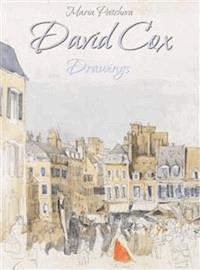
David Cox (1783 – 1859) was an English landscape painter, one of the most important members of the Birmingham School of landscape artists and an early precursor of impressionism. He is considered one of the greatest English landscape painters, and a major figure of the Golden age of English watercolor. Although most popularly known for his works in watercolor, he also painted over 300 works in oil towards the end of his career. A group of young artists working in Cox's watercolour style emerged well before his death, including William Bennett, David Hall McKewan and Cox's son David Cox Jr. His pupils included Birmingham architectural artist, Allen Edward Everitt.
Das E-Book können Sie in Legimi-Apps oder einer beliebigen App lesen, die das folgende Format unterstützen:
Veröffentlichungsjahr: 2015
Ähnliche
David Cox: Drawings
By Maria Peitcheva
First Edition
*****
David Cox: Drawings
*****
Copyright © 2015 by Maria Peitcheva
Foreword
David Cox (1783 – 1859) was an English landscape painter, one of the most important members of the BirminghamSchool of landscape artists and an early precursor of impressionism. He is considered one of the greatest English landscape painters, and a major figure of the Golden age of English watercolor. Although most popularly known for his works in watercolor, he also painted over 300 works in oil towards the end of his career.
In the spring of 1811 Cox made a small number of notable works in oils during a visit to Hastings with his family. It is not known why he didn't continue working in this medium at the time, but the five known surviving examples were described in 1969 as "surely some of the most brilliant examples of the genre in England"
Cox reached artistic maturity after his move to Hereford in 1814. Although only two major watercolors can confidently be traced to the period between Cox's arrival in the town and the end of the decade, both of these – Butcher's Row, Hereford of 1815 and Lugg Meadows, near Hereford of 1817 – mark advances on his earlier work.
Cox's later work produced after his move to Birmingham in 1841 was marked by simplification, abstraction and a stripping down of detail. His art of the period combined the breadth and weight characteristic of the earlier English watercolour school, together with a boldness and freedom of expression comparable to later impressionism. His concern with capturing the fleeting nature of weather, atmosphere and light was similar to that of John Constable, but Cox stood apart from the older painter's focus on capturing material detail, instead employing a high degree of generalisation and a focus on overall effect.
The quest for character over precision in representing nature was an established characteristic of the Birmingham School of landscape artists with which Cox had been associated early in his life, and as early as 1810 Cox's work had been criticised for its "sketchiness of finish" and "cloudy confusion of objects", which were held to betray "the coarseness of scene-painting". During the 1840s and 1850s Cox took this "peculiar manner" to new extremes, incorporating the techniques of the sketch into his finished works to a far greater degree.
Cox's watercolor technique of the 1840s was sufficiently different from his earlier methods to need explanation to his son in 1842, despite the fact that his son had been helping him teach and paint since 1827. The materials used for his later works in watercolour also differed from his earlier periods: he used black chalk instead of graphite pencil as his primary drawing medium, and the rough and absorbent "Scotch" wrapping paper for which he became well-known – both of these were related to his development of a rougher and freer style
By the 1840s Cox, alongside Peter De Wint and Copley Fielding, had become recognised as one of the leading figures of the English landscape watercolour style of the first half of the 19th century. This judgement was complicated by reaction to the rougher and bolder style of Cox's later Birmingham work, which was widely ignored or condemned. While by this time De Wint and Fielding were essentially continuing in a long-established tradition, Cox was creating a new one.
A group of young artists working in Cox's watercolour style emerged well before his death, including William Bennett, David Hall McKewan and Cox's son David Cox Jr.His pupils included Birmingham architectural artist, Allen Edward Everitt.
Drawings
Dover
1832, Watercolor
Detail
Wales, Landscape
Watercolor
Detail
A French Market Place
Watercolor
Detail
A Mountainous View, North Wales
Watercolor
Detail
A Religious Procession
Watercolor




