


Erhalten Sie Zugang zu diesem und mehr als 300000 Büchern ab EUR 5,99 monatlich.
- Herausgeber: Musaicum Books
- Kategorie: Religion und Spiritualität
- Sprache: Englisch
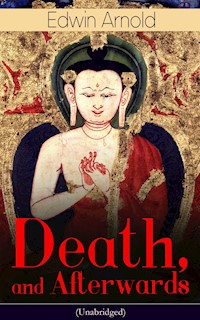
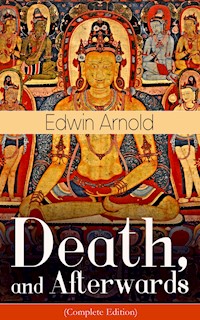
In Edwin Arnold's philosophical work 'Death, and Afterwards', the author explores the concept of death and the possibilities of life beyond. Written in a lyrical and introspective style, Arnold delves into various religious and spiritual beliefs surrounding death, offering a contemplative look at what lies beyond the mortal realm. Drawing inspiration from Eastern philosophies and Western literature, the book provides readers with a thought-provoking journey into the unknown. Arnold's poetic language and profound insights add depth to the exploration of this universal human experience. 'Death, and Afterwards' stands out as a literary work that transcends time and culture, inviting readers to ponder life's ultimate mystery. Edwin Arnold, a British poet and journalist, was known for his deep interest in Eastern religions and philosophies. His background in journalism and spiritual studies likely influenced his exploration of existential questions in 'Death, and Afterwards'. Readers interested in poetry, philosophy, and spirituality would find 'Death, and Afterwards' a captivating and enlightening read, shedding light on the mysteries of life and death. In this enriched edition, we have carefully created added value for your reading experience: - A succinct Introduction situates the work's timeless appeal and themes. - The Synopsis outlines the central plot, highlighting key developments without spoiling critical twists. - A detailed Historical Context immerses you in the era's events and influences that shaped the writing. - A thorough Analysis dissects symbols, motifs, and character arcs to unearth underlying meanings. - Reflection questions prompt you to engage personally with the work's messages, connecting them to modern life. - Hand‐picked Memorable Quotes shine a spotlight on moments of literary brilliance. - Interactive footnotes clarify unusual references, historical allusions, and archaic phrases for an effortless, more informed read.
Sie lesen das E-Book in den Legimi-Apps auf:
Seitenzahl: 50
Veröffentlichungsjahr: 2017
Das E-Book (TTS) können Sie hören im Abo „Legimi Premium” in Legimi-Apps auf:
Ähnliche


DEATH, AND AFTERWARDS
Published by
Books
Table of Contents
Death, and Afterwards
Æsch. Suppl.
“Unto this day it doth my hertë boote That I have had my worlde, as in my time.”
Chaucer.
“Never the spirit was born, the spirit will cease to be never;
Never was time it was not; End and Beginning are dreams!
Birthless and deathless and changeless remaineth the spirit for ever;
Death hath not touched it at all, dead though the house of it seems!”
The Song Celestial.
Man is not by any means convinced as yet of his immortality. All the great religions have in concert, more or less positively, affirmed it to him; but no safe logic proves it, and no entirely accepted voice from some farther world proclaims it. There is a restless instinct, an unquenchable hope, a silent discontent with the very best of transitory pleasures, which perpetually disturb his scepticism or shake his resignation; but only a few feel quite certain that they will never cease to exist. The vast majority either put the question aside, being! absorbed in the pursuits of life; or grow weary of meditating it without result; or incline to ! think, not without melancholy satisfaction, that the death of the body brings an end to the I individual. Of these, the happiest and most useful in their generation are the healthy-minded ones who are too full of vigor or too much busied with pleasure or duty, to trouble themselves about death and its effects. The most enviable are such as find, or affect to find, in the authority or the arguments of any extant religion, sufficing demonstration of a future existence. And perhaps the most foolish are those who, following ardent researches of science, learn so little at the knees of their "star-eyed" mistress as to believe those forces which are called intellect, emotion, and will, capable of extinction, while they discover and declare the endless conservation of motion and matter.
If we were all sure, what a difference it would make! A simple "yes," pronounced by the edict of immensely developed science; one word from the lips of some clearly accredited herald sent on convincing authority, would turn nine-tenths of the sorrows of earth into glorious joys, and abolish quite as large a proportion of the faults and vices of man kind. Men and women are naturally good; it is fear, and the feverish passion to get as much as possible out of the brief span of mortal years, which breed most human offences. And many noble and gentle souls, which will not stoop to selfish sins, even because life is short, live prisoners, as it were, in their condemned cells of earth, under what they deem a sentence from which there is no appeal, waiting in sad but courageous incertitude the last day of their incarceration; afraid to love, to rejoice, to labour, and to hope, lest love shall end in eternal parting, gladness in cheer less dust, generous toils in the irony of results effaced, and hope itself in a vast and scornful denial. What a change if all these could really believe that they are cherished guests in an intermediate mansion of a benign universe, not doomed captives in one of its mournful dungeons! How happy as well as fair and attractive this planet would become if it were not a doctrine, not a theory, not a poetic dream, but a fact seen and accepted, that Death arrives, not like "Monsieur de Paris," to strip the criminal, to clip his collar and hair, and lop away from him life and love and delight; but as a mother lulling her children to sleep, so that they may wake ready for play in the fresh morning; as the gentlest angel of all the many ministers of man, bringing him far more than birth ever brought; and leading him by a path as full of miracles of soft arrangement, and as delicately contrived for his benefit as is the process of birth itself, to heights of advanced existence, simple, nevertheless, in their turn and order as are the first drops of the breast-milk of his mother, and neither more nor less wonderful!




