


6,99 €
Mehr erfahren.
- Herausgeber: Open Book Publishers
- Sprache: Englisch
In Decolonial Ecologies: The Reinvention of Natural History in Latin American Art, Joanna Page illuminates the ways in which contemporary artists in Latin America are reinventing historical methods of collecting, organizing, and displaying nature in order to develop new aesthetic and political perspectives on the past and the present.
Page brings together an entirely new corpus of artistic projects from Argentina, Brazil, Chile, Colombia, Ecuador, Mexico, and Peru that engage critically and creatively with forms as diverse as the medieval bestiary, baroque cabinets of curiosities, atlases created by European travellers to the New World, the floras and herbaria composed by eighteenth- and nineteenth-century naturalists, and the dioramas designed for natural history museums. She explores how artists develop decolonial and post-anthropocentric perspectives on the collections and expeditions that were central to the evolution of European natural history. Their works forge a critique of the rationalizing approach to nature taken by modern Western science, reconnecting it with forms of popular, indigenous and spiritual knowledge and experience that it has systematically excluded since the Enlightenment.
Drawing on photography, video, illustration, sculpture, and installation, this vividly illustrated and lucidly written book (also available in premium quality in hardback edition) explores how these artworks might also deconstruct the apocalyptic visions of environmental change that often dominate Western thought, developing a renewed understanding of alternative ways in which humans might co-inhabit the natural world.
Das E-Book können Sie in Legimi-Apps oder einer beliebigen App lesen, die das folgende Format unterstützen:
Veröffentlichungsjahr: 2023
Ähnliche




















Decolonial Ecologies
Decolonial Ecologies
The Reinvention of Natural History in Latin American Art
Joanna Page
https://www.openbookpublishers.com
©2023 Joanna Page
This work is licensed under a Creative Commons Attribution-NonCommercial-NoDerivatives 4.0 International (CC BY-NC-ND 4.0). This license allows you to copy and distribute the material in any medium or format in unadapted form only, for noncommercial purposes only, and only so long as attribution is given to the creator (but not in any way that suggests that they endorse you or your use of the work). Attribution should include the following information:
Joanna Page, Decolonial Ecologies: The Reinvention of Natural History in Latin American Art. Cambridge, UK: Open Book Publishers, 2023, https://doi.org/10.11647/OBP.0339
Copyright and permissions for the reuse of many of the images included in this publication may differ from the above. Copyright and permissions information for images is provided separately in the List of Illustrations.
Further details about CC BY-NC-ND licenses are available at: https://creativecommons.org/licenses/by-nc-nd/4.0/
All external links were active at the time of publication unless otherwise stated and have been archived via the Internet Archive Wayback Machine at https://archive.org/web
Every effort has been made to identify and contact copyright holders and any omission or error will be corrected if notification is made to the publisher.
ISBN Paperback: 978-1-80064-973-6
ISBN Hardback: 978-1-80064-974-3
ISBN Digital (PDF): 978-1-80064-975-0
ISBN Digital ebook (EPUB): 978-1-80064-976-7
ISBN XML: 978-1-80064-978-1
ISBN HTML: 978-1-80064-979-8
DOI: 10.11647/OBP.0339
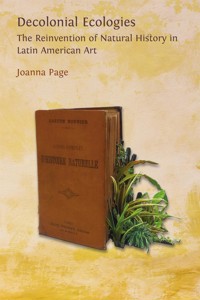
Cover image by Rodrigo Arteaga, ‘D’Histoire naturelle’ from Botánica sistemática (2015). Book intervened with plants and earth. Carmen Araujo Arte, Caracas, Venezuela. Photograph by the artist. Background image: Mona Eendra. Flowers beside Yellow Wall, February 15, 2017, https://unsplash.com/photos/vC8wj_Kphak
Cover design by Jeevanjot Kaur Nagpal
Para Clara Kriger, con afecto y amistad
Contents
List of Illustrationsix
Acknowledgments xvii
Introduction
1. Bestiaries and the Art of Cryptozoology
2. New Cabinets of Curiosities63
3. Floras, Herbaria, and Botanical Illustration93
4. Retracing Voyages of Science and Conquest137
5. Albums, Atlases, and their Afterlives163
6. Taxidermy and Natural History Dioramas201
Conclusion237
Bibliography249
Index267
List of Illustrations
Fig. 1.1
Édgar Cano, ‘Cronotopo’ from Animalia, written by Rafael Toriz and illustrated by Édgar Cano (Mexico City: Vanilla Planifolia, 2015), 15.
30
Fig. 1.2
Édgar Cano, ‘La jirafa’ from Animalia, written by Rafael Toriz and illustrated by Édgar Cano (Mexico City: Vanilla Planifolia, 2015), 17.
32
Fig. 1.3
Édgar Cano, ‘Ahuizotl’ from Animalia, written by Rafael Toriz and illustrated by Édgar Cano (Mexico City: Vanilla Planifolia, 2015), 76.
34
Fig. 1.4
Édgar Cano, ‘Merovingio’ from Animalia, written by Rafael Toriz and illustrated by Édgar Cano (Mexico City: Vanilla Planifolia, 2015), 91.
39
Fig. 1.5
Claudio Andrés Salvador Francisco Romo Torres, ‘El perezoso’ (detail) from Bestiario: Animales reales fantásticos, written by Juan Nicolás Padrón and illustrated by Claudio Andrés Salvador Francisco Romo Torres (Santiago: LOM Ediciones, 2008), 48.
41
Fig. 1.6
Claudio Andrés Salvador Francisco Romo Torres, ‘Sinsimito’ from Bestiario mexicano, trans. Federico Taibi (Modena: Logosedizione, 2018), 9.
43
Fig. 1.7
Claudio Andrés Salvador Francisco Romo Torres, ‘Waay Pop’ from Bestiario mexicano, trans. Federico Taibi (Modena: Logosedizione, 2018), 37.
45
Fig. 1.8
Claudio Andrés Salvador Francisco Romo Torres, ‘Waay Pop’ from Bestiario mexicano, trans. Federico Taibi (Modena: Logosedizione, 2018), 38.
45
Fig. 1.9
Walmor Corrêa, Curupira from Unheimlich: Imaginário popular brasileiro (2005). Acrylic and graphic on canvas, 195 x 130 cm.
51
Fig. 1.10
Walmor Corrêa, Pinguisch from Natureza perversa (2003). Acrylic and graphite on canvas, 80 x 80 cm (photograph by Fabio del Re).
53
Fig. 1.11
Walmor Corrêa, Teiniaguá, vista dorsal from Salamanca do Jarau (2013). Acrylic and graphite on canvas, 90 x 110 cm (photograph by Hugo Curti).
58
Fig. 2.1
Installation view of Pablo La Padula, Zoología fantástica (2018). Centro de Arte y Naturaleza, Museo de la Universidad Nacional de Tres de Febrero, Buenos Aires, Argentina (photograph courtesy of the Museo de la Universidad de Tres de Febrero).
65
Fig. 2.2
Francesco Calzolari’s cabinet, as shown in the frontispiece to Benedetto Ceruti, Musaeum Franc. Calceolari iun. Veronensis (1622).
67
Fig. 2.3
Installation view of Pablo La Padula, Zoología fantástica (2018). Centro de Arte y Naturaleza, Museo de la Universidad Nacional de Tres de Febrero, Buenos Aires, Argentina (photograph by Gabriela Schevach, courtesy of REV magazine).
68
Fig. 2.4
Installation view of Pablo La Padula, Zoología fantástica (2018). Centro de Arte y Naturaleza, Museo de la Universidad Nacional de Tres de Febrero, Buenos Aires, Argentina (photograph by the artist).
68
Fig. 2.5
Installation view of Pablo La Padula,Teatro científico(2020). Fundación Federico Jorge Klemm, Buenos Aires, Argentina (photograph by the artist).
74
Fig. 2.6
Installation view of Cristian Villavicencio, Selecciones (2019). Arte Actual Flacso, Quito, Ecuador (photograph by the artist).
78
Fig. 2.7
Installation view of Cristian Villavicencio, Selecciones. Exhibited as part of Tecnologías de la experiencia in the 15th Bienal de Cuenca, Ecuador (2021) (photograph by Ricardo Bohórquez).
78
Fig. 2.8
Still from video produced by Cristian Villavicencio for Dimensiones paralelas(2017). Fundación BilbaoArte Fundazioa, Bilbao, Spain.
80
Fig. 2.9
Installation view of Cristian Villavicencio, Especímenes, two-channel video projection from Dimensiones paralelas (2017). Fundación BilbaoArte Fundazioa, Bilbao, Spain (photograph by the artist).
80
Fig. 2.10
Cristian Villavicencio, Megatherium, shown without the glass dome with which it was exhibited, from Dimensiones paralelas (2017). Fundación BilbaoArte Fundazioa, Bilbao (photograph by the artist).
82
Fig. 2.11
Cristian Villavicencio, Jardín from Dimensiones paralelas (2017). Fundación BilbaoArte Fundazioa, Bilbao, Spain (photograph by the artist).
83
Fig. 2.12
Cristian Villavicencio and Agata Mergler, Haptic Cameras—4 simultaneous cameras (2016) (photograph by Cristian Villavicencio).
85
Fig. 2.13
Installation view of Cristian Villavicencio, Tecnologías de la experiencia (2021). Tecnologías de la experiencia (video, back wall); Silbato, 50.0 cm x 40.0 cm x 50.0 cm (back left); Espejo sonoro, 160 cm x 40 cm x 40 cm (back right); Resonar/excavar(foreground). 15th Cuenca Bienal, Cuenca, Ecuador (photograph by Ricardo Bohórquez).
88
Fig. 3.1
Alberto Baraya, Taxones Tabatinga(2014) from the Herbario de plantas artificiales. Found object “Made in China,” photography and drawing on cardboard, 56.0 x 82.0 cm (photograph by the artist).
98
Fig. 3.2
Alberto Baraya, Borrachero doble (Double Devil’s Trumpet, 2014) from the Herbario de plantas artificiales. Found object “Made in China,” photography and drawing on cardboard, 112.0 x 82.0 cm (photograph by the artist).
100
Fig. 3.3
Juan Francisco Mancera, Giganton. Datura from the Drawings of the Royal Botanical Expedition to the New Kingdom of Granada. Image from the digitalization project of the drawings of the Royal Botanical Expedition to the New Kingdom of Granada (1783–1816) directed by José Celestino Mutis: www.rjb.csic.es/icones/mutis. Real Jardín Botánico-CSIC. Reproduced by kind permission of the Real Jardín Botánico.
101
Fig. 3.4
Alberto Baraya, Cacao, beso de cacao (2018) from the Tumaco Expedition, Herbario de plantas artificiales. Found object, drawing and photography on cardboard (photograph by the artist).
103
Fig. 3.5
Eulalia de Valdenebro, photograph of cactus from Del páramo al desierto, 19–21(2009). 50 x 70 cm.
107
Fig. 3.6
Eulalia de Valdenebro, photograph of climbing plant from Del páramo al desierto, 19–21 (2009). 50 x 70 cm.
107
Fig. 3.7
Eulalia de Valdenebro, sketch from Del páramo al desierto, 19–21 (2009). 30 x 25 cm (photograph by the artist).
109
Fig. 3.8
Eulalia de Valdenebro, Heterogéneas/Criminales (2012). Watercolour on paper for heterogeneous seeds, digital reproduction from original in watercolour for homogeneous seeds (GMO), 120 x 60 cm (photograph by the artist).
110
Fig. 3.9
Eulalia de Valdenebro, Frailejonmetría comparada esc 1:1(2020). Watercolour on paper, 240 x 160 cm.
113
Fig. 3.10
Eulalia de Valdenebro, Mapa de relaciones táctiles esc 1:1 (2020). Ink prints on paper. 160 x 160 cm.
114
Fig. 3.11
Installation view of María Fernanda Cardoso, On the Marriages of Plants (2018) from Human non Human. Powerhouse Museum, Sydney, Australia (photograph by Carlos Velásquez).
118
Fig. 3.12
Installation view of María Fernanda Cardoso, On the Marriages of Plants (2018) from Human non Human. Powerhouse Museum, Sydney, Australia (photograph by Carlos Velásquez).
118
Fig. 3.13
Installation view of María Fernanda Cardoso, On the Marriages of Plants (2018) from Human non Human. Powerhouse Museum, Sydney, Australia (photograph by Carlos Velásquez).
121
Fig. 4.1
Alberto Baraya, Orquídea Vanda y 4 antropometrías artificiales (2013) from the Herbario de plantas artificiales. Found object, photograph and drawing on cardboard, 60 x 45 x 5 cm (photograph by the artist).
139
Fig. 4.2
Hermann Burmeister, El Rio Paraná entre el Diamante y el Rio Carcaranal, from Vues pittoresques de la République Argentine: XIV planches avec 36 figures, dessinées la plupart d’après nature et accompagnées de descriptions (1881), Plate III, Figure 5. Reproduced by kind permission of Cambridge University Library.
148
Fig. 4.3
Hermann Burmeister, La Punta Gorda en el Rio Paraná y el pueblo Diamante, from Vues pittoresques de la République Argentine: XIV planches avec 36 figures, dessinées la plupart d’après nature et accompagnées de descriptions(1881), Plate III, Figure 6. Reproduced by kind permission of Cambridge University Library.
149
Fig. 4.4
Facundo de Zuviría, black and white photograph from Paraná Ra’anga: Imagen del Paraná(2010–2013). 16.6 x 24 cm.
151
Fig. 4.5
Facundo de Zuviría, black and white photograph from Paraná Ra’anga: Imagen del Paraná(2010–2013). 16.6 x 24 cm.
151
Fig. 4.6
Still from Laura Glusman, Ambá. Una especie de paraíso (2010). Video available at https://www.youtube.com/watch?v=YHXY9A-KPgY
152
Fig. 5.1
Rodrigo Arteaga, Atlas de la historia física y política de Chile (2015–2016). Intervened cut-out illustrations, wooden structure, 140 x 120 x 8 cm. Sobering Galerie, Paris (photograph by the artist).
169
Fig. 5.2
Rodrigo Arteaga, from Botánica sistemática(2015). Book intervened with plants and earth. Carmen Araujo Arte, Caracas (photograph by the artist).
170
Fig. 5.3
Still from video of performance by Tiago Sant’Ana, Refino #3(2017) (image provided by the artist).
174
Fig. 5.4
Still from video of performance by Tiago Sant’Ana, Refino #4(2017) (image provided by the artist).
174
Fig. 5.5
Claudia Coca, four drawings from Joyas remotas (2020) from the Tempestadesseries (2015–2023). Charcoal and pastel on linen, 50 x 35 cm (photograph by the artist).
178
Fig. 5.6
Alexander von Humboldt, The Chimborazo seen from the Plateau of Tapia. Plate from Vues des Cordillères et monumens des peuples indigènes de l’Amérique (1810). Wellcome Collection. Attribution 4.0 International (CC BY 4.0).
183
Fig. 5.7
Oscar Santillán, Lost Star(2012–2013). 18 x 13 x 3 cm (photograph by Jhoeko). Courtesy of Jhoeko, Nest (The Hague) and the artist.
185
Fig. 5.8
Herbarium created by Fabiano Kueva. Installation view of Archivo Alexander von Humboldt, 250 Jahre Jung: Celebrating Alexander von Humboldt’s Birthday, Humboldt Forum, Berlin, 13–14 September 2019 (photograph by David von Becker).
189
Fig. 5.9
Still from Fabiano Kueva, Humboldt 2.0(2011–2012). Video (image provided by the artist).
191
Fig. 5.10
Still from Fabiano Kueva, Ensayo geopoético (2011–2019). Video (image provided by the artist).
194
Fig. 5.11
Still from Fabiano Kueva, Ensayo geopoético (2011–2019). Video (image provided by the artist).
195
Fig. 5.12
Still from Fabiano Kueva, Humboldt 2.0(2011–2012). Video (image provided by the artist).
196
Fig. 5.13
Friedrich Georg Weitsch, Alexander von Humboldt und Aimé Bonpland am Fuß des Vulkans Chimborazo(1806). Public Domain, via Wikimedia Commons, https://commons.wikimedia.org/wiki/File:Humboldt-Bonpland_Chimborazo.jpg
197
Fig. 5.14
Cabinet created by Fabiano Kueva. Installation view of Archivo Alexander von Humboldt, 250 Jahre Jung: Celebrating Alexander von Humboldt’s Birthday, Humboldt Forum, Berlin, 13–14 September 2019 (photograph by David von Becker).
199
Fig. 6.1
Daniel Malva, Mandrillus Sphinx, photograph from Natural History Museum (2013). 80 x 53.3 cm.
206
Fig. 6.2
Daniel Malva, Elephas maximus: fetus, photograph from Natural History Museum (2009). 30 x 20 cm.
207
Fig. 6.3
Daniel Malva, series of photographs of hearts, from Natural History Museum (from left to right): Caiman Latirostris, Equus Caballus, Homo Sapiens, Chrysocyon Brachyurus, Canis Lupus-Familiaris, Panthera Leo. 30 x 20 cm. As exhibited in a solo show entitled OJardim, Galeria Mezanino, São Paulo, Brazil, 2017 (photograph by the artist).
208
Fig. 6.4
Still from video produced by Adriana Bustos, Paisajes del alma (2011). Video available at https://vimeo.com/688169765
210
Fig. 6.5
Installation view of Rodrigo Arteaga, Moorland from This Path, One Time, Long Ago (2018). Potteries Museum & Art Gallery PMAG, Stoke-on-Trent, United Kingdom (photograph by the artist).
214
Fig. 6.6
Installation view of Rodrigo Arteaga, The Victorian HousefromThis Path, One Time, Long Ago (2018). Potteries Museum & Art Gallery PMAG, Stoke-on-Trent, United Kingdom (photograph by the artist).
216
Fig. 6.7
Installation view of Rodrigo Arteaga, Natural Selection (2017). AirSpace Gallery, Stoke-on-Trent, United Kingdom (photograph by the artist).
217
Fig. 6.8
Installation view of Pablo La Padula, Sala de Escape fromMuseo liberado (2021). Museo Nacional de Historia Natural, Montevideo, Uruguay (photograph by Elena Téliz and Maite Silva, Espacio de Arte Contemporáneo).
220
Fig. 6.9
Installation view of Pablo La Padula, Sala de CapturafromMuseo liberado (2021). Museo Nacional de Historia Natural, Montevideo, Uruguay (photograph by Elena Téliz and Maite Silva, Espacio de Arte Contemporáneo).
221
Fig. 6.10
Installation view of Pablo La Padula, Sala de Captura from Museo liberado (2021). Museo Nacional de Historia Natural, Montevideo, Uruguay (photograph by Elena Téliz and Maite Silva, Espacio de Arte Contemporáneo).
221
Fig. 6.11
Walmor Corrêa, forged pilot’s licence, Sporophila Beltoni(2018). Instituto Ling, Porto Alegre, Brazil (photograph by artist).
227
Fig. 6.12
Walmor Corrêa, diorama from Para onde vão os pássaros quando morrem? (2012). Plastic, taxidermy, paint, resin, paper and glass, 60 x 20 cm (photograph by Letícia Remião).
231
Fig. 6.13
Walmor Corrêa, scene from Você que faz versos (2010). Instituto Goethe de Porto Alegre, Porto Alegre, Brazil (photograph by Letícia Remião).
233
Fig. 6.14
Installation view of Grupo Etcétera, Diorama, Museo del Neo Extractivismo(2021). Centro Cultural Kirchner, Buenos Aires, Argentina (photograph by the author).
235
Acknowledgments
This book was originally conceived several years ago, finding its moment when another had to be delayed due to pandemic-related travel bans. As an in-between project, it was intended to be modest in scale and scope. Perhaps inevitably, it grew, as I discovered a corpus that was much richer and more diverse than I had initially expected and found new and fascinating interlocutors in the many artists I met in person or online. My first and most important thanks goes to them, for taking the time to share their ideas with me with such openness and enthusiasm. Their artistic and ethical commitment has been a continual source of inspiration.
A large part of this book was written during two terms of research leave from my post at the University of Cambridge, and I would like to thank colleagues there who took on some of my teaching, examining, and other responsibilities during this time, including Pedro Mendes Loureiro, Emily Price, Geoffrey Maguire, Rory O’Bryen, Geoffrey Kantaris, and Carlos Fonseca. Oliver Wilson-Nunn provided invaluable assistance in the preparation of the images for publication.
I would like to thank Cambridge University Library for its outstanding support for researchers, from tracking down elusive texts to finding inventive ways of providing access to its collections, even during the deepest pandemic. I also gratefully acknowledge the support of the British Academy in funding pre-pandemic fieldwork.
A final word of thanks to Alessandra Tosi and everyone else at Open Book Publishers. It is an honour to publish with a press that is so radically committed to ensuring open access for readers and authors, and to creating an infrastructure that allows other publishers to do the same.
Introduction
© 2023 Joanna Page, CC BY-NC-ND 4.0 https://doi.org/10.11647/OBP.0339.08
A white gallery wall is marked out at intervals to a length of twenty-five feet. Stretching out above, black capital letters stamp out the phrase “el cocodrilo de Humboldt no es el cocodrilo de Hegel” (Humboldt’s crocodile is not Hegel’s). Near the end on the left, a crocodile’s eye appears on a monitor; at the right, another shows its tail. José Alejandro Restrepo’s installation comments on a disagreement between two towering European figures whose influential writings on Latin America have significantly shaped the region’s place in world history. For Hegel, whose theory of world history excluded both America and Africa as lands without a past, America’s animals showed “the same inferiority” as its human inhabitants. Although its lions, tigers and crocodiles were similar to their Old World equivalents, they were “in every respect smaller, weaker, and less powerful.”1 This quotation from Hegel is reproduced on the gallery wall, alongside another from Humboldt that criticizes Hegel’s “ignorance” and asserts that the “poor weak crocodiles” he has dismissed measure no fewer than twenty-five feet in length.2 Both Hegel’s sneering description of the continent’s feeble crocodiles and Humboldt’s impassioned exaggeration of their size fade into irrelevance as the real crocodile, manifestly absent, fixes the viewer in a stare and closes its eye in a wink.
Restrepo’s El cocodrilo de Humboldt no es el cocodrilo de Hegel (1994) draws ironic attention to the frequent mistakes and misrepresentations present in European narratives about Latin America as well as to their enduring power. Hegel was expounding on the views of the French naturalist Georges-Louis Leclerc, Comte de Buffon, whose descriptions of the inferiority of nature in the New World gave rise to theories of degeneracy that were to be widely adopted for decades to come. Other texts and images produced by Europeans and their descendents since 1492 have depicted Latin America as a lost paradise, a source of unimaginable riches, and a land of barbarism or exoticism. As a scientist of the Enlightenment, Humboldt dedicated much energy to correcting misconceptions through patient empirical observation and measurement; however, his work continued to be deeply influenced by the assumptions of previous travellers to the continent and by Romantic conceptions of peoples, landscapes, and the unity of nature.
Restrepo’s installation demonstrates how readily the natural world is caught up in—and obscured by—broader cultural and political debates, and never more so than in colonial and postcolonial contexts. Bruno Bosteels reminds us that Hegel’s scholarship cannot be separated from imperial politics: that both his dialectic method and his world-historical system must be understood as “provincial self-legitimations of Europe’s colonial ambitions.”3 Even the universal science envisioned by Humboldt, who is often read as progressive in his more enlightened attitudes toward indigenous people and his criticism of slavery, is based on practices of appropriation and accumulation that were made possible by colonialism and in turn paved the way for the increasing dominance of Western scientific models, the erasure of alternative approaches to the natural world, and the wholesale commodification and exploitation of nature under global capitalism.
This book is about images, ideas, and practices relating to Latin America that have emerged through the work of natural historians since the European colonization of the region, and how these have been recovered, contested, reworked, or replaced in recent art projects by Latin American artists. Many of these artists return to historical methods of collecting, organizing, and displaying nature, including the medieval bestiary, baroque cabinets of curiosities, the albums and atlases created by European travellers to the New World, taxidermy and natural history dioramas, as well as the floras and herbaria composed by eighteenth- and nineteenth-century naturalists. They do so in order to engage critically and creatively with these genres and archives, developing perspectives that may be described as decolonial and post-anthropocentric.
The artworks they produce forge a critique of modern Western science’s abstraction and rationalization of nature. They hark back to pre-Enlightenment encounters between different kinds of knowledge and practice that were more fluid and holistic, or engage with indigenous philosophies that typically emphasize relations of interdependence and reciprocity between humans and the rest of the natural world. They expose a historical complicity between the natural sciences, colonialism, and capitalism, seeking to reconnect science with those forms of popular, indigenous, and spiritual knowledge and experience that it has systematically excluded since the eighteenth century. Their return to earlier scientific and artistic forms of representation also introduces folds in time, looping back to former genres and their contexts and rehabilitating “older” styles and imaginaries in ways that challenge an understanding of the cumulative advance of knowledge. I will argue that the folds these artworks create also become part of a broader critique of the modern, humanist, linear conceptions of temporality that often remain central to contemporary thought about environmental change and the Anthropocene. My readings of these artistic projects will also focus on how they combat the apocalyptic visions of environmental change that often dominate Western media, drawing on recent findings in biology, ecology, and environmental history to promote a renewed understanding of the resilience of the natural world and of alternative, more collaborative, ways in which humans might co-inhabit it.
Natural History and Empire
Since Columbus famously spied mermaids near the coast of Hispaniola on 8 January 1493, European descriptions of the flora and fauna of the New World have been spiced with marvels and misconceptions of all kinds. Reports on colonial expeditions portrayed American nature as fabulously prodigious; amid their many errors, however, these accounts significantly expanded what was known in Europe about the animals, plants, and minerals of the Americas. Colonial administrations made use of this knowledge in extensive mining, engineering, and agricultural operations that would extract American riches for European benefit. The many atlases, albums, bestiaries, floras, chronicles, encyclopaedias, and expedition reports compiled by colonial scientists can also be read as sites of encounter at which European and indigenous cosmologies and systems of knowledge came into contact, leading in some cases to fruitful exchanges and in others to epistemic violence.
It was to its colonies that Spain turned for resources to stem the political and economic decline that had begun in the seventeenth century; its mining operations there in particular became the principal source of finance to cover the costs of its wars in Europe, although botany was also of high economic importance.4 In the quest to exploit America’s natural resources, natural history took on a powerful role as a key instrument in fulfilling the Crown’s ambitions.5 This new alliance between European expansion, scientific exploration, and commercial exploitation was cemented in the great scientific expeditions to Latin America, many of which took place in the second half of the eighteenth century.
These expeditions aimed to produce an exhaustive survey of the colonies’ natural resources and to map coastlines and borders with a view to their consolidation and defence. European expeditions to the New World in the eighteenth and nineteenth centuries were typically long in duration (many spanning a decade or more). They brought together a great number of experts and artisans with different specialisms: Europeans collaborated with criollos (people of Spanish descent born in the colonies) and indigenous people with expertise in mining, hydrology, or botany, whose contribution to the vast expansion of knowledge about the natural world that took place in these centuries is only now being more fully recognized.6 Many scholars have described these expeditions as a second conquest of the region, with the difference that “no se trata de descubrir, conquistar y poblar, sino de observar, describir y explotar” (it was not about discovering, conquering, and populating, but about observing, describing, and exploiting).7 Further surveys were commissioned by the newly independent republics of Latin America in the nineteenth century. As well as fostering a sense of national identity through the study of natural history, these expeditions also had the aim of extending state power over indigenous communities and more rural regions further from the nation’s principal cities.
Artists often worked intensively alongside naturalists in these expeditions. This was particularly the case in Spanish America: over twelve thousand images were produced for the natural history expeditions conducted by Spain in the eighteenth century.8 Given the challenges involved in collecting, preserving, and transporting plants and animals across the Atlantic, illustrations were essential to the circulation of knowledge and the growth of natural history and the more modern disciplines to which it gave rise. Many of these illustrations were not published at the time, reaching only a few specialist eyes.9 But they were nevertheless instrumental in shaping how botanical and zoological knowledge were to be constructed, giving prominence to visual epistemology as “a way of knowing based on observation and representation.”10 The important role of artists in producing knowledge has been recognized in a raft of fascinating studies, such as Mauricio Nieto Olarte’s Remedios para el imperio: Historia natural y la apropiación del nuevo mundo (2006), Daniela Bleichmar’s Visible Empire: Botanical Expeditions and Visual Culture in the Hispanic Enlightenment (2012), José Ramón Marcaida López’s Arte y ciencia en el barroco español: Historia natural, coleccionismo y cultural visual (2014), and several texts co-authored by Marcaida López and Juan Pimentel.11 I draw on these studies in Chapter Three in particular, which traces how contemporary artists contest the extractive, dissociative vision of the natural world that emerges in botanical art produced for the great Spanish American expeditions of the eighteenth and nineteenth centuries.
It is perhaps surprising that many recent art projects have found a source of inspiration rather than a target of critique in the texts and images created by Spanish and Portuguese missionaries and explorers in the early colonial period. Walmor Corrêa’s close engagement with the letters and chronicles of Padre José de Anchieta (1534–1597), for example, or the naming of the protagonists of Claudio Romo’s El álbum de la flora imprudente (2007) and Herbolaria memorabile (2021) after Fray Bernardino de Sahagún (1499–1590), are homages to these figures, seeing in them approaches and values that might even serve us in our own era. Anchieta, a Jesuit missionary, was a committed naturalist and a dedicated scholar of Tupi, even composing poetry and theatre in the language as well as publishing its first grammar. Corrêa’s work conveys Anchieta’s fascination with indigenous and popular legends and the natural wonders he related in copious letters to his superiors. The Franciscan friar Sahagún, a pioneering ethnographer, compiled the extraordinary Historia general de las cosas de la Nueva España (General History of the Things of New Spain, 1540–1590). Sahagún’s manuscript is unparalleled in the early colonial period, both for the scope and depth of its engagement with indigenous cultures and the collaborative nature of its composition: he spent decades interviewing town elders and many sections were written or compiled by Nahua students. Romo’s fictional Sahagún thus revives an approach to studying the New World that was much more pluralistic than many of the treatises that were to follow.
Natural History and the Enlightenment
In this way, many of these early voyages become emblematic of a more genuine form of cultural exchange and an interest in diverse systems of thought and knowledge that were to disappear in later periods, and specifically in the Enlightenment. It was the Enlightenment’s quest to develop a universal scientific language—which could account for natural phenomena from a supposedly objective, neutral, distanced position and resolve the inconsistencies and uncertainties that arose from the use of local, everyday languages—that would have the greatest impact on indigenous knowledge in Latin America. This search for what the Colombian philosopher Santiago Castro-Gómez calls the “punto cero de observación” (zero-point of observation) would involve the active substitution of multiple forms of knowledge often practised in indigenous communities with “una sola forma única y verdadera de conocer el mundo: la suministrada por la racionalidad científico-técnica de la modernidad” (one single and reliable form of knowing the world: that which is supplied by the techno-scientific rationality of modernity).12 Modern science did not only serve the economic needs of Europe through the commercialization of crops in the colonies; at the hands of criollo elites it also, Castro-Gómez argues, became an instrument of social control via epistemicide, the suppression of indigenous forms of knowledge.13
To understand the role of Enlightenment philosophies and practices in Latin America requires us to pluralize and globalize European accounts of modernity. In company with other Latin American decolonial thinkers such as Aníbal Quijano and Walter Mignolo, Castro-Gómez affirms that the Enlightenment was not born in Europe and then disseminated around the globe: it developed at multiple sites as a result of the encounter between Europe and its colonies.14 While the role played by indigenous knowledge in the construction of European natural history was significant, it has been systematically unacknowledged: in global histories of science, the names of renowned European scientists have almost entirely supplanted those of indigenous experts who served as their guides and interlocutors. Yet the colonization of the New World produced fundamental changes in scientific practices in the metropolis. It was the newness of many phenomena found in the colonies that gave impetus to the decline in authority of classical texts on natural history in Europe and the rise of experimental techniques that are associated with Enlightenment science. The differences that early travellers found between Old World and New World animals challenged dominant (theological) ideas about the creation of the world. As Marcaida López points out, the lack of texts on New World nature led to an increased emphasis on observation, experimentation, description, and classification, which opened up new pathways for the study of the natural world that did not rely, as had been the tradition, on knowledge gained from books.15
In the Enlightenment’s search for an objective language with which to describe the natural world, vision acquired primacy. Indeed, as Foucault contends, sight became “natural history’s condition of possibility.”16 Techniques of microscopy and illustration were used in the Enlightenment to render lines and forms more visible for the purposes of classification and characterization. The isolation of forms from their surroundings not only made them clearer and more available to study; it strengthened the illusion of objectivity and the perception that nature was a thing apart from ourselves. Senses other than sight were generally eliminated from descriptions from the eighteenth century onwards as they were too variable and too subjective.17 A critique of the abstractive, universalizing vision of modern science has also been extensively developed by European and Anglophone scholars such as Donna Haraway, Mary Louise Pratt, and Isabelle Stengers. As Haraway contends, “there is no unmediated photograph or passive camera obscura in scientific accounts of bodies and machines; there are only highly specific visual possibilities, each with a wonderfully detailed, active, partial way of organizing worlds.” Our pictures of the world should not, she proposes, be “allegories of infinite mobility and interchangeability,” but of “elaborate specificity and difference.”18 For Haraway, a feminist science—which would also, in many ways, be a decolonized science—would recognize that “Vision is always a question of the power to see—and perhaps of the violence implicit in our visualizing practices.”19
Latin American artists have more recently challenged the primacy of the visual in natural history by creating installations that engage with other senses, expanding our possible forms of interaction with the natural world. The importance of the taxonomies developed by natural historians of the Enlightenment lies not only in “what they make it possible to see,” but also what they “screen off,” which for Foucault was the anatomy of organisms and the functions of their systems.20 What they also masked, we might add, is the organism’s relations within a complex, dynamic ecosystem, into which we are also fully integrated. This relational understanding of the natural world is the focus of many of the artworks discussed in this volume.
Decolonizing Natural History
Within the Latin American context, decolonial critiques of science have often taken the form of exposing the inequalities obscured by the “internationalization” of science (in the work of Oscar Varsavsky and Pablo Kreimer, for example), questioning the state’s uncritical “transplantation” of ideas from the Global North (Diego Hurtado) or uncovering the unrecognized contributions made by indigenous knowledge-producers to global science (Jorge Cañizares-Esguerra).21 Elements of all of these forms of critique are evident in the artworks discussed in this volume. Their principal aims in returning to previous methods of classifying and displaying nature, however, are to question the notion of a universal science and to diversify and pluralize epistemologies beyond the narrow strictures that have characterized modern Western science since the Enlightenment. If natural history since the eighteenth century has often sought to neutralize the position of the observer, to standardize names and to universalize systems of measurement, the artists featured in this book place value instead on the contingent, the local, and the plural, along with the apocryphal and that which exceeds the limits of rational knowledge. Returning to technologies of knowledge that were often designed to yield greater objectivity and universalism, they adapt these for different purposes: to re-entwine natural history with human history, to historicize a timeless and universal nature, and to reconnect modern science with those forms of knowledge it has marginalized since the eighteenth century.
One of the ways in which artists have sought to challenge and expand the limits of modern scientific rationality is to return to premodern accounts of the natural world. These take us back to the pluri-perspectivism of mediaeval and early modern science. The plants and animals depicted in these more recent works often hail, in a similar manner, from an enchanted realm of hyperbolic affects and affinities. Classical and mediaeval marvels and monsters are resurrected as an alternative to the rationalization and standardization of farmed animals and monoculture crops. In this context, re-enchanting nature becomes a critical act, a defence of diversity and exceptionality, reversing “the shift from sensory impact to a rationalizing nomenclature,” which was also, Barbara Stafford observes, “a move from the extraordinary to the ordinary.”22 In his use of the marvellous, for example, Claudio Romo proposes “una relación más emotiva con el entorno y no sólo como una bodega de recursos” (a more emotional relation with the environment and not only as a storehouse of resources).23Cryptozoology in his work becomes a technique to restore magic and wonder to a world that many perceive to have lost its mystique.24 The appeal to wonder and marvels in the work of Romo, Corrêa and others becomes part of a critique of the limitations of Enlightenment rationality. As Lorraine Daston and Katherine Park argue, wonder in the mediaeval and early modern ages was “a cognitive passion, as much about knowing as about feeling,” registering “a breached boundary, a classification subverted.”25 Only since the Enlightenment has wonder become “disreputable” and “redolent of the popular, the amateurish, and the childish.”26 Just as importantly, as I will show, these artists’ inclusion of fables and the fantastic is a recommitment to represent animal life, not as a thing apart from us, but as deeply entwined with human culture.
The practice of natural history in the Western world has been thoroughly intertextual, involving a close engagement with previous texts as much as direct observation; indeed, the Enlightenment’s increasing emphasis on empirical evidence did not immediately replace reference to classical thinkers. Works by Romo, Corrêa, and Rafael Toriz (see Chapter One) are consciously intertextual in a way that reveals much about the evolution of modern zoology and the continued influence, through to the eighteenth century, of philosophers from the ancient world. The visions of nature forged in classical philosophy did not only mould the incipient disciplines of botany and zoology, but also significantly shaped visions of the New World. Like many Renaissance thinkers and natural historians, early Spanish chroniclers such as José de Acosta and Gonzalo Fernández de Oviedo y Valdés drew heavily on classical writers (Herodotus, Pliny and Aristotle) in their writings on America. Karl Enenkel finds that the flourishing of early modern zoology was paradoxically accompanied by a heightened interest in monsters; early modern zoologists were still strongly influenced in this respect by thinkers from antiquity (such as Pliny) and the Middle Ages (including Albertus Magnus). In this period, the literary tradition continued to be “the most important source of biological knowledge” and the authority of such writers “frequently outshone the evidence of empirical observation.”27
This is nowhere more evident than in European accounts of the New World, which were often composed by scholars who had never travelled to Latin America on the basis of the journals and letters of those who had actually been there. For the writers of these descriptions and reports, “the relation between books and Nature, between words and natural phenomena or living beings, was so close that to talk or write about them was, in effect, to talk and write about what others had talked and written about.”28Corrêa, Romo, Fabiano Kueva, Tiago Sant’Ana and other artists emphasize this iterative, citational dynamic as a way of recognizing the foundational role played by such texts in creating lasting visions of Latin America, as well as pointing out the errors they perpetuated. But intertextual techniques of this kind also become an important means of historicizing ideas of nature. If the “chief use” of history, for Hume, was “only to discover the constant and universal principles of human nature,”29 for more recent artists, uncovering and adding to the palimpsestic nature of knowledge about the New World becomes a way of drawing attention to how knowledge is constructed, by whom, and for whom.
The folding-in of different times and temporalities that we may observe in recent reworkings of mediaeval bestiaries or cabinets of curiosities is also characteristic of artistic projects that re-enact the journeys of European explorers and scientists. These repetitions and recreations contest representations of nature as timeless; they also demonstrate how human relationships with the natural world have changed considerably from time to time and place to place. They allow us to see, as Raymond Williams famously observed, that “the idea of nature contains, though often unnoticed, an extraordinary amount of human history.”30 In the artworks I study in this book, this act of historicizing natural history encompasses both a critique of the past (and its legacies for the present) and a gesture toward the possibility of an alternative future. The critique is directed toward the reckless exploitation of natural resources in Latin America, both by imperial powers and independent republics, which has carried in its train not only environmental disaster but the violent dispossession of millions of the region’s human inhabitants to make room for vast plantations and mines. The more utopian gesture lies in the recovery of different, more collaborative, ways in which humans have created relationships with the rest of the natural world, allowing us to envision alternative futures.
Decolonial Perspectives on Environmental Change
I argue that the artworks presented in this book offer decolonial perspectives on environmental change and environmental futures. Perhaps most obviously, the relationships they trace between colonialism, capitalist acquisition, and the commodification of nature help us understand that today’s environmental crisis is not the result of over-population or industrialization, but is more deeply rooted in the constitution of the modern colonial-capitalist world system, in which cheap labour and natural resources extracted from certain regions of the world have funded unsustainable development in others. Understanding the historical relationship between empire and environmental change is a crucial first step toward grasping the enormous geopolitical transition that might be needed to address global warming or ecological destruction effectively.
A vital contribution made by many Latin American thinkers to Anthropocene debates stems from their insistence that today’s ecological crises have little to do with ecology. Enrique Leff, a Mexican economist and environmentalist, argues that the global environmental crisis has been generated by the economic and judicial order of modernity, which is based on an instrumental rationality, and which continues to govern the processes of globalization.31 Some European scholars are in agreement. Ulrich Beck argues that “climate politics is precisely not about climate but about transforming the basic concepts and institutions of first, industrial, nation-state modernity.”32 Instead, many current responses look for technological and economic solutions in ways that will simply perpetuate the current global order. Dominant responses to anthropogenic environmental change in the West often oscillate between scenarios in which humans would dramatically increase their intervention into the natural world—for example, through the technocratic management of CO2 and geoengineering projects designed to remove greenhouse gases from the atmosphere—or, at the other end of the spectrum, entirely remove themselves from areas set aside for conservation. Both approaches simply reinforce the division between nature and culture that has led to environmental decline in the first place, setting humans above or apart from natural processes that they would seek either to govern more completely or to allow to revert to some Edenic state before human intervention.
Beck and other sociologists and geographers over the past decade have called for a repoliticization of the Anthropocene, arguing that ecological change should be framed within political, social, and ethical questions as well as technological and economic ones. Erik Swyngedouw calls attention to the “post-political” nature of “the consensual scripting of climate change imaginaries, arguments and policies.”33 This consensus leaves no room for political debate: it “forestalls the articulation of divergent, conflicting, and alternative trajectories of future environmental possibilities and assemblages.”34 In this context, “Disagreement is allowed, but only with respect to the choice of technologies, the mix of organizational fixes, the detail of the managerial adjustments, and the urgency of their timing and implementation, not with respect to the socio-political framing of present and future natures.”35Political ecology in Latin America, which draws on traditional indigenous knowledge and practices (among other sources), presents itself precisely as a challenge to the current consensus and a source of alternative approaches to sustainability that acknowledge the deep interconnections between ecology, ontology, culture, and politics.
Perhaps the most paralysing of Anthropocene discourses is the belief that human intervention in nature is necessarily damaging. For Beck, the gloomy stories told by environmentalists reinforce a sense that “nature is something separate from, and something victimized by, human beings. This paradigm defines ecological problems as inevitable consequences of human violations of nature.”36 Calls to protect nature from human impact often reinforce a sense of its passivity, as if its delicate balance could only be restored through the large-scale reduction of human activity. Conservation biology, invasion biology, and restoration ecology, which have collectively been dubbed “Edenic sciences,” posit a pure and original state of nature beyond human interference to which we should return in our quest to prevent even greater losses of biodiversity in the future.37
One way that the artists discussed in this book reframe Anthropocene debates is by putting humans—sometimes literally—back into the picture. Pristine nature is largely an invention of European Romanticism; its existence has been robustly discredited by ecological studies in recent decades, including those that have focused on the ecological changes wrought in Amazon forests by indigenous people over millennia before the arrival of Europeans (see Chapter Three). Although the environmental impact of colonial societies in the Americas was often considerably higher (see Chapter Four), to underestimate the importance of precolonial change is to minimize the capacity of indigenous societies to transform their environments; this perceived incapacity was an argument frequently made to justify colonialism. It is also to ignore the very different models of cohabitation with other species within a shared environment that traditional indigenous communities have developed. Studying the extent of precolonial environmental change does not diminish a critique of the devastating impact of colonialism, I argue, but effectively repoliticizes decisions that are made today and in the future. As Ursula Heise contends, the fact that “Nature never really was separate from human society” means that “whatever baseline for a desirable nature the environmentalist movement sets for itself needs to be chosen from different cultural models and preferences rather than grounding itself simply on the idea of minimal human presence and impact.”38
Projects undertaken by several contemporary Latin American artists map out how we might challenge hegemonic, Western paradigms of conservation, replacing them with a focus on coexistence, collaboration, and co-evolution. They also demonstrate how dominant discourses of the Anthropocene—and particularly those that posit a future environmental apocalypse—may actually serve the interests of Western globalism and universalism. In Chapter Four, for example, I explore decolonial perspectives on the “global time” of the Anthropocene, which may be understood as a covert means of reinforcing (Western) universalism. I examine texts and images that bring to light the past extinctions that are often erased in discourses of the Anthropocene, which win urgent attention by locating environmental disasters in a future still to come or only just starting to unfold. A decolonial approach to the temporality of environmental change would also be attentive to the challenge of navigating the disjunction between the temporality of Western technomodernity and that of complex natural systems, such as river basins, finding new modes of dwelling in habitats that are subject to periodic change.
Leff calls for a new kind of environmental knowledge that would draw on knowledges and subjectivities that have been marginalized by Western rationalism. This knowledge should not be reduced to the simplifying, objectifying, commodifying approaches to environmental crisis that are commonly found in the natural and social sciences.39 The artists discussed in this book find multiple ways to expand environmental knowledge beyond the limits of modern science, in order to reconnect laboratory findings with social, political, cultural, and spiritual realms of experience. These may involve the conscious mixing of scientific and popular visual idioms, the promotion of premodern or non-Western conceptions of the natural world, and an engagement with precolonial, colonial, and postcolonial myths and legends. Many of these artworks challenge the apocalyptic imaginaries that are common in Western depictions of environmental catastrophe. For Haraway, a corollary of the fact that natural history and (more recently) the biological sciences have developed within a capitalist, patriarchal framework is that nature has been “theorized and constructed on the basis of scarcity and competition.”40 In this context, to emphasize abundance, reciprocity and successful co-evolution is not only to offer a more positive and hopeful environmental future, but to carve out a feminist and decolonial perspective on environmental change.
An Overview of the Book
Chapter One, “Bestiaries and the Art of Cryptozoology,” focuses on artworks and illustrated texts that have reworked the enormously popular mediaeval genre of the bestiary for more contemporary ends. Many twentieth-century Latin American writers—including Jorge Luis Borges, Silvina Ocampo, Juan José Arreola and Wilson Bueno—experimented with the form of the bestiary, adapting it to the fantastic genre or for the purposes of satire. This chapter focuses on the work of twenty-first-century writers and artists who draw on the themes and forms of the medieval bestiary in order to revitalize pre-Hispanic legends, to construct an alternative modernity that embraces plural ontologies, and to explore the changing relationship between humans and animals in the Anthropocene.
The act of (re)imagining extinct and mythical animals takes on a particular poignancy in the context of the current rapid decline in biodiversity across the world. Indeed, as I argue throughout this chapter, the mediaeval bestiary gains a new resonance in the context of global ecological crisis. It offers ways of thinking about the natural world that have been excised from the modern, rationalist, Western standpoint, challenging ideas about human exceptionalism and promoting a view of the universe as intimately interconnected within relationships of reciprocity. At the hands of contemporary writers and artists such as Rafael Toriz and Edgar Cano (Mexico), Claudio Romo (Chile) and Walmor Corrêa (Brazil), Latin American bestiaries of the twenty-first century challenge dominant images of a depleted, fragile natural world, responding to the need to re-enchant nature in the face of its rationalization and commodification in Western modernity, to revalorize indigenous and popular approaches, and to reconnect animals with human social, cultural, and spiritual lives.
My second chapter, “New Cabinets of Curiosities,” presents artistic projects that have revisited the cabinets of curiosities that were fashionable in Europe in the sixteenth century, predating the more systematized approach to collecting and displaying nature that was to characterize the Enlightenment. Cabinets of curiosities employed visual analogies and other effects to raise ontological questions about the natural world and the relationship between art and nature. Pablo La Padula (Argentina) and Cristian Villavicencio (Ecuador/Spain) interrogate the politics of such collections, developing a critique of the relationships that underpin them, between colonialism, capitalist accumulation, and the commodification of nature.
Renaissance cabinets did, however, allow for more creative and diverse entanglings of nature and culture than were permitted in the more systematic collections of the eighteenth century that were to replace them. In his reassemblings of natural history collections, Villavicencio reflects on the link between microscopes (among other technologies of vision) and a commitment to a distanced, “objective” vision that became central to modern scientific techniques. Both La Padula and Villavicencio create opportunities for alternative encounters with the natural world that are embodied and subjective. Like Yuk Hui’s concept of “cosmotechnics,” these allow us to explore “the different relations between the human and technics inherited from different mythologies and cosmologies” and therefore to generate plural accounts of technological modernity.41
Chapter Three, “Floras, Herbaria, and Botanical Illustration,” brings us fully into the era of Enlightenment taxonomies. New World plants were exhaustively catalogued in the floras and herbaria produced by the great scientific expeditions led by European naturalists in the eighteenth and nineteenth centuries, such as the Royal Botanical Expedition to New Granada (1783–1816), directed by José Celestino Mutis. Species were primarily illustrated in a way that would allow their identification according to Linnaean taxonomies. Three contemporary artists from Colombia—Alberto Baraya, María Fernanda Cardoso, and Eulalia de Valdenebro—have reworked the Enlightenment norms of botanical illustration in order to draw attention to their many erasures and to chart environmental change over the past two centuries. Baraya’s Herbario de plantas artificiales(2002–) celebrates the anomalies and aberrations that were smoothed out in the European quest for a universal system of classification, exposing the relationship between modern Western science and the dynamics of economic and cultural dispossession. De Valdenebro’s seed collections contrast the homogenization and commercialization of transgenic varieties with the greater biodiversity of native seeds, whose cultivation has unfolded within a much higher degree of reciprocity between humans and their environment. In On the Marriages of Plants (2018), Cardoso reflects on Linnaeus’s use of sexual terms borrowed from the human world in her exploration of more recent research into reciprocal relationships between plants, insects, and humans.
I bring these projects into dialogue with a selection of illustrations by Abel Rodríguez (Mogaje Guihu), an artist whose work preserves the ancestral knowledge of the Nonuya and Muinane communities in the Colombian Amazon. Contrasting with Linnaean abstraction, Rodríguez’s drawings and paintings depict rainforest ecosystems in ways that cast light on Amazonian concepts of cohabitation and the co-constitution of human and nonhuman subjects. These enter into conflict with two dominant Western paradigms: extraction, on the one hand, and conservation, on the other.
“Retracing Voyages of Science and Conquest,” my fourth chapter, focuses on how artists and researchers have re-performed journeys and expeditions as a form of epistemological and aesthetic practice. This allows them to highlight changes and continuities in landscapes and relationships with the natural world, staging a complex interplay of temporalities. A major interdisciplinary and collaborative project discussed here is the Paraná Ra’angaexpedition (Argentina, 2010), led by Graciela Silvestri and others. Around sixty Spanish and Latin American artists and researchers from different fields retraced the journey undertaken by Pedro de Mendoza in 1536, sailing from the new settlement of Buenos Aires to the interior of the continent, up the rivers Paraná and Paraguay, to found Asunción. Rather than a voyage of conquest, theirs was one that aimed to reinvigorate the riverine culture of Argentina’s Litoral region, a socionatural landscape that has been significantly transformed since that first Spanish expedition and is being further changed as a result of a megascale engineering project.
My reading of the texts and images produced by participants in the Paraná Ra’angaexpedition highlights how they engage with the divergent temporalities of the river. These works carry a critique, I argue, not only of the collusion between global capitalism and environmental destruction, but also of the temporality of the Anthropocene itself. In its linearity and apocalypticism, Anthropocene time as it is constructed in the West often ignores past environmental catastrophes that have already produced the extinction of whole communities and livelihoods. The future tense employed to describe ecological apocalypse also furthers the interests of globalism and economic liberalism by deepening the subjugation of those regions that have already experienced cataclysmic changes to Western technology and scientific rationalism.
Chapter Five, “Albums, Atlases and their Afterlives,” is divided into two parts. The first discusses art projects that intervene directly into the books and other materials created by travelling European naturalists of the later colonial period, whose conception of nature has so thoroughly shaped representations of Latin America’s landscapes. I explore projects by Rodrigo Arteaga (Chile), Antonio Bermúdez (Colombia), Claudia Coca (Peru), Tiago Sant’Ana (Brazil), Oscar Santillán (Ecuador), and others that stage material interventions or performances in relation to the printed images, atlases, albums, and catalogues that recorded the findings of scientific expeditions in the eighteenth and nineteenth centuries. As well as combating the particular images of Latin America forged in these works, these artists reflect more broadly on the affordances of different material technologies—such as printing, engravings, and the book—used to create and disseminate knowledge.
The second part of the chapter brings together projects that engage with the scientific, commercial, and artistic afterlives of the iconic images that emerged from Humboldt’s journey across the Americas (1799–1804). Bermúdez demonstrates how Humboldt’s images of Latin American landscapes—such as the famous views of the Chimborazo—live on through different kinds of cultural mediation and commercial accumulation. The relationship between Humboldt’s science and extractivism in Latin America, suggested in a poetic mode by Santillán, is explicitly developed in the expansive Archivo Humboldt(2011–), a set of performances, documentation, and (mock) archives created by Fabiano Kueva (Ecuador). These remediations and re-enactments recuperate archives of all kinds for decolonial purposes, reworking them in ways that decentre the ocularcentric, logocentric bias of Western modernity while exploring the power of published words and images to represent the colonial other.
The final chapter, “Taxidermy and Natural History Dioramas,” selects works that engage with the art and science of taxidermy and the construction of dioramas for museums of the late nineteenth and twentieth centuries. While many artists have rejected taxidermy, given its association with cruelty toward animals, some have reclaimed the practice with the purpose of drawing attention to histories of animal objectification or rethinking human-animal relations. Recent recourses to taxidermy among Latin American artists have provided an opportunity to question of the exhibition practices of natural history museums, while exploring alternative ways of thinking about ecology and the environment. The projects I discuss in this chapter by Daniel Malva (Brazil), Adriana Bustos (Argentina), Rodrigo Arteaga (Chile), Walmor Corrêa (Brazil), and Pablo La Padula (Argentina) remediate, recycle or reuse taxidermy animals within new forms of diorama that construct a critical dialogue with Eurocentric conceptions of nature. They create “afterlives” for taxidermy animals that are held in tension between nature and culture or science and popular myth; they also demonstrate how taxidermy may—paradoxically—be deployed to restore animal agency and to create narratives that are less anthropocentric.
From the Decolonial Neobaroque to Environmental Democracy and the Humanization of Nature
In reworking historical forms and genres, the projects discussed throughout this book create folds in time that trouble linear temporalities, cast new perspectives on the past, and allow us to envision alternative futures. In the conclusion, I relate this argument to Deleuze’s observations about the centrality of the “fold” as the “operative function” of the Baroque, proposing that these artworks may be approached as instances of a decolonial neobaroque.42 Many of the artists explored here stage a tactical return to baroque imaginaries, invoking the historical co-option of the baroque in Latin America as an instrument for anticolonial and anti-institutional expression, while redeploying its excess, heterogeneity, and performativity to explore post-anthropocentric perspectives on science and the living world. Reading their work as part of a decolonial neobaroque highlights ways in which they construct alternative modernities that are less exclusionary, while nevertheless remaining in close dialogue with European scientific, literary, and visual traditions. I mark key differences between the neobaroque in Latin America, a category proposed by several scholars that shares many characteristics with the disembedding effects of postmodernism’s subversion of authority and linear narratives, and the decolonial neobaroque I propose, which is more often a form of historical re-embedding, with the specific aim of constructing a critique of Enlightment epistemologies and Eurocentric modernity.
The ontological and epistemological pluralism to which the decolonial neobaroque is committed also underpins Leff’s concept of environmental democracy, which establishes the right of different communities to inhabit biocultural worlds through different rationalities.43 This approach challenges the “one-world” solutions to environmental change that have most often been pursued by Western scientists and engineers. One of those rationalities—one that is explored recurrently by the Latin American artists in this book—is founded on a belief in the fundamental non-separation of humans from the rest of the natural world. If for many Western environmental thinkers and conservationists the “humanization” of nature is to be denounced and reversed, in these artworks (and the philosophies they draw on), the act of (re)humanizing or (re)socializing nature may constitute a more profound response to environmental crisis.
Artists and Curators: A Note
The artists whose projects feature in this book cannot be described as a generation or a movement. Several decades separate the youngest from the oldest; they come from entirely different disciplinary backgrounds (or none). Some of them have travelled extensively and are internationally known, while the work of others is much more grounded in local or regional contexts. Walmor Corrêa is wholly self-taught, while others (including Édgar Cano, Laura Glusman, Claudio Romo, Rodrigo Arteaga) have graduated from degrees in photography, sculpture, or fine arts. Few of them have even a low level of insertion into the commercial art world: most sustain their work through other means. Some (like Cristian Villavicencio, María Fernanda Cardoso, Eulalia de Valdenebro) have chosen to develop their artistic work through a PhD programme; some combine artistic practice with university teaching. Pablo La Padula is a research scientist by profession; others (like Daniel Malva) also have a scientific background or (like Oscar Santillán) have collaborated extensively with scientists.
Some of the artists studied here (Alberto Baraya or Abel Rodríguez, for example) have developed a substantial oeuvre based on the themes of ecology, nature, and natural history, while others (including Adriana Bustos and Fabiano Kueva) engage with the discourses of natural history as part of a broader exploration of the (colonial) geopolitics of knowledge. Other artists are principally known for their work on other subjects, such as urban culture (Facundo de Zuviría), Afro-Brazilian identities (Tiago Sant’Ana) or race and gender (Claudia Coca). All of them share an interest in exploring how the discipline of natural history as it developed in imperial Europe has served expansionism and extractivism (together with other kinds of resource exploitation), resulting in widespread environmental crisis, but also in how the particular ways in which natural history has perceived and ordered the natural world might be redeemed for very different purposes.
The critical and often reflexive exploration conducted by these artists into the relationship between natural history and the visual arts has been facilitated and promoted by the work of renowned curators in and beyond Latin America. Of the many who would deserve a mention here, chief among them might be José Roca, the Artistic Director of FLORA ars+natura, an independent space in Bogotá that curates exhibitions, runs seminars, and hosts residencies. Other very important exhibition spaces in Latin America for the artists discussed in this book include the Laboratorio Arte Alameda in Mexico City, directed for over a decade by Tania Aedo, and the Centro de Arte y Naturaleza run by the Universidad Nacional Tres de Febrero in Buenos Aires, under the artistic direction of Diana B. Wechsler. The figure of Humboldt has inspired several significant exhibitions, particularly in commemoration of the 250th anniversary of his birthday, including La naturaleza de las cosas: Humboldt, idas y venidas (The Nature of Things: Humboldt, Back and Forth), curated by Halim Badawi at the Museo de Arte de la Universidad Nacional de Colombia (2019), which included works by José Alejandro Restrepo, Antonio Bermúdez, and Óscar Santillán, and 250 Jahre Jung: Celebrating Alexander von Humboldt’s Birthday at the Humboldt Forum in Berlin (2019), which displayed works by Fabiano Kueva, Abel Rodríguez, and José Alejandro Restrepo, among many others.
The art projects brought together in this book should be regarded as a corpus in formation: many of the




