


0,49 €
Niedrigster Preis in 30 Tagen: 1,99 €
Niedrigster Preis in 30 Tagen: 1,99 €
Mehr erfahren.
- Herausgeber: DigiCat
- Kategorie: Religion und Spiritualität
- Sprache: Englisch
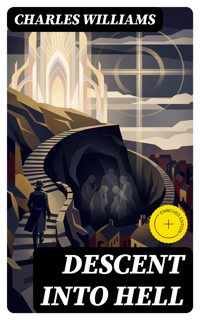
Charles Williams' "Descent into Hell" delves into the intricate themes of sacrifice, redemption, and the nature of evil through a blend of supernatural elements and psychological exploration. Set against the backdrop of early 20th-century England, Williams employs a distinctly lyrical and evocative prose style, inviting readers into a richly textured world that grapples with metaphysical concerns. Drawing upon Christian symbolism and the philosophical underpinnings of his own belief system, the narrative draws parallels between the internal struggles of the characters and the external manifestations of their choices, creating a profound commentary on the human condition and the eternal battle between light and darkness. A prominent figure of the Inklings, alongside C.S. Lewis and J.R.R. Tolkien, Charles Williams possessed a deep theological insight and a fascination with the occult, elements that heavily influenced his writing. His own spiritual journey and experiences as an Anglican lay theologian shaped his exploration of faith and morality, which are vividly illuminated in "Descent into Hell." Williams' unique worldview and rich intellectual background inform the intricate characterizations and the philosophical inquiries woven throughout the narrative. This compelling work is highly recommended for readers interested in literature that transcends conventional boundaries, merging fantasy with profound theological concepts. Those who appreciate rich allegory and psychological depth will find "Descent into Hell" an essential addition to their literary exploration, offering both an engaging narrative and a challenging meditation on life, death, and the choices that define our humanity. In this enriched edition, we have carefully created added value for your reading experience: - A succinct Introduction situates the work's timeless appeal and themes. - The Synopsis outlines the central plot, highlighting key developments without spoiling critical twists. - A detailed Historical Context immerses you in the era's events and influences that shaped the writing. - A thorough Analysis dissects symbols, motifs, and character arcs to unearth underlying meanings. - Reflection questions prompt you to engage personally with the work's messages, connecting them to modern life. - Hand‐picked Memorable Quotes shine a spotlight on moments of literary brilliance. - Interactive footnotes clarify unusual references, historical allusions, and archaic phrases for an effortless, more informed read.
Das E-Book können Sie in Legimi-Apps oder einer beliebigen App lesen, die das folgende Format unterstützen:
Veröffentlichungsjahr: 2022
Ähnliche








Descent into Hell
Table of Contents
Introduction
At once domestic and apocalyptic, Descent into Hell turns a quiet English hillside into a theater where the solitude we cherish becomes the abyss we dread, where imagination breeds either communion or captivity, and where the only ladder out is the costly art of bearing one another’s burdens, so that ordinary decisions about love, fear, and truth reveal themselves as descents or ascents in the soul, the pageant of local history becomes a mirror for unseen realities, and the lives of neighbors interlace to test whether selfhood is saved by possession and control or by consent and shared responsibility.
First published in 1937, Charles Williams’s novel belongs to the tradition of the supernatural or metaphysical fiction that threads spiritual drama through everyday life. The action unfolds in an English suburb clustered around a prominent hill, as residents prepare a historical pageant that will dramatize episodes from the place’s past. Without leaving parlors, lanes, and rehearsal halls, the narrative discovers a second topography under the familiar one, where choices take on sacramental weight and time layers upon itself. Williams’s concerns are theological, psychological, and artistic at once, yet the book reads as a compact, unsettling story rather than a treatise.
At the pageant’s center stands Peter Stanhope, a poet and dramatist whose art and courtesy make him a quiet gravitational force among the organizers. Alongside him move Pauline Anstruther, a young woman suffocated by a persistent fear she cannot rationalize, and Lawrence Wentworth, a historian whose frustrated desire turns inward and takes on a disturbing life of its own, including the appearance of an uncanny double that flatters his isolation. Williams parcels their stories in lucid, controlled prose that can pivot without warning from drawing-room civility to visionary intensity, sustaining a tone both compassionate and grave as the ordinary grows numinous.
The novel’s governing idea is co-inherence, a mutual indwelling by which persons may truly share one another’s burdens without absorption or loss. Williams imagines this not as metaphor only but as a practical discipline that must be consented to and practiced within concrete relationships. The pageant becomes a proving ground for such consent, setting small acts of generosity and evasion against a background of layered time in which past and present touch. As characters learn to accept or refuse help, the hill itself seems to disclose a structure of meanings beneath the soil, and ethical choices take on ontological consequence.
Equally central is Williams’s analysis of imagination—its power to make real communion possible and its danger when misdirected toward private phantoms. The book traces how self-love can substitute an image for a person, feeding on fantasy until the self is sealed off from reciprocity. That enclosure is the descent of the title: not a sudden catastrophe, but a progressive tightening, a delighted consent to isolation that masquerades as mastery. Against it, the narrative proposes attention, charity, and the humility of receiving aid, practices that unmask illusions and return desire to the difficult, liberating encounter with what is other than oneself.
Readers encounter a structure that alternates quiet social scenes with sudden irruptions of the strange, building unease less through shocks than through a steady accumulation of correspondences. Williams’s prose is ceremonious yet agile, and his chapter architecture encourages reflection, often placing visionary passages beside ordinary errands so the one re-interprets the other. The result is less a puzzle to be decoded than a mode of attention to be learned. Names, tasks, and noises on the hill recur with altered resonance, and the pageant’s rehearsals keep returning the community to questions of memory, sacrifice, and the difference between imitation and participation.
In an age of curated selves and algorithmic enclosures, this novel’s discernment about the intoxicating pleasures of isolation feels newly diagnostic. Its account of fear, too, speaks to contemporary anxieties: rather than pathologizing dread or romanticizing it, Williams treats fear as something that can be shared, diminished, and transformed through responsible community. The book matters because it refuses both cynicism and sentimentality, insisting that metaphysical truths are verified in neighborly practice. It offers no escapism; instead, it suggests a demanding art by which imagination serves love. To read it now is to receive a stern, humane education in how to belong.
Synopsis
Descent into Hell, Charles Williams’s theological fantasy novel first published in 1937, unfolds in a suburban community clustered on a hill where neighbors organize a historical pageant. The preparations draw together artists and townspeople, including the poet Peter Stanhope, the anxious young Pauline Anstruther, and the ambitious scholar Laurence Wentworth. As rehearsals advance, personal crises surface alongside the pageant’s scenes, and ordinary routines begin to intersect with experiences that feel uncanny. The narrative situates its drama within familiar social rhythms—committee meetings, rehearsals, visits—while quietly suggesting that another order of reality presses upon them, shaping choices that will matter intensely.
Pauline is beset by recurring terror linked to the appearance of her own likeness, a double that seems to anticipate her movements and waits for her at lonely moments. She does not know what it signifies, only that its approach drains her strength and disorients her days. Her attempts to manage the fear alone tighten its grip, turning errands and rehearsals into ordeals. Williams traces her inner life precisely, showing how dread narrows attention and isolates the sufferer from friends who might help. The pageant’s pressures and the town’s gossip complicate her secrecy, and the fear’s timing threatens to break her resolve.
Peter Stanhope, a seasoned poet involved with the pageant, gradually recognizes Pauline’s distress and introduces a discipline he calls the bearing of burdens. He proposes that fear, like other weights, can be exchanged within a community through freely consented love, so that one person carries another’s load. The idea is neither technique nor magic but a moral act of trust. For Pauline, this means considering whether to allow someone else to accept the shock that overtakes her at the double’s approach. For Peter, it requires attention, humility, and steadiness. Their conversations orient the novel toward charity as an operative, not sentimental, power.
Across town, Laurence Wentworth struggles with professional resentment and wounded pride, nursing comparisons that leave him embittered. Seeking consolation, he cultivates a private fantasy of companionship that answers to his desires while making no demands on him. The imagined figure grows more vivid as he withdraws from colleagues and neighbors, displacing the awkwardness of real relationships with a controlled, inward world. Williams connects this retreat to a refusal of exchange: Wentworth will not give or receive burdens, preferring a self-contained satisfaction. The more he turns inward, the more he treats others as inconveniences, and the less he can recognize warnings that his course is perilous.
The pageant becomes the town’s crucible, staging episodes from local history with costumes, sets, and civic pride. In rehearsal and performance, time seems porous, as memory and imagination gather with unusual intensity around the hill. Some participants sense presences that do not fit the day’s schedule, and commonplace sights take on a charged significance. These moments are not mere theatrical thrills; they probe how the living relate to their dead, to their predecessors’ joys and wrongs, and to a community larger than any audience. The pageant’s shared labor presses each character to choose either deeper solidarity or further withdrawal.
As the performance nears, Pauline’s encounters with the double intensify, forcing a decision about whether to entrust her fear to another. Peter’s counsel remains steady, but the act must be hers, and its consequences will be intimate rather than spectacular. Wentworth, by contrast, redoubles his inward turn, preferring the company of the image he commands to the unpredictable claims of neighbors. The converging paths reshape what the pageant means for each of them. Without altering the town’s ordinary calendar, the story brings hidden commitments to the surface, where they begin to yield their natural outcomes in ways both quiet and decisive.
Descent into Hell endures for its stark articulation of co-inherence—the mutual sharing of life—and its diagnosis of the loneliness that follows self-enclosure. Williams situates supernatural experience within suburban routines, suggesting that the decisive battles of good and evil occur in consent, attention, and the willingness to carry another’s weight. The novel’s restraint keeps its wonders and terrors intimate, and its closing movement affirms that choices about love and fear reverberate beyond individual psychology. Without relying on spectacle or easy moralizing, it proposes a vision of community founded on exchange, leaving readers with a quietly demanding image of charity’s saving reach.
Historical Context
Charles Williams’s Descent into Hell appeared in 1937, in the late interwar years of Britain. Williams, a longtime editor at the Oxford University Press’s London offices at Amen House, set the story in a contemporary English suburb identified by its hill, parish, and civic committee life. A community is mounting a historical pageant, a popular form of local celebration, and the preparation provides the book’s social frame. The milieu is recognizably outer London: new streets, commuters, and voluntary associations that stitched suburban life together. The time and place position the narrative amid ordinary institutions—church, council, and stage—rather than exotic locales, anchoring its supernatural concerns in everyday England.
The novel emerged amid the unsettled politics and economics of 1930s Britain. The Great Depression left persistent unemployment and fueled public demonstrations such as the 1936 Jarrow March. Abroad, Mussolini’s invasion of Ethiopia and the Spanish Civil War heightened fears of totalitarian violence; at home, the British Union of Fascists staged rallies met by resistance at Cable Street in 1936. The Abdication Crisis that year unsettled national identity, while debate over rearmament and air-raid precautions made future conflict feel imminent. This climate of apprehension and moral testing forms the book’s horizon, inflecting its interest in courage, evasion, and the costs of private and civic responsibility.
Religious and literary crosscurrents in Britain shaped Williams’s approach. The Anglo-Catholic revival, heir to the nineteenth‑century Oxford Movement, had energized parish ritual and theology in London by the 1930s. Figures like T. S. Eliot, who was received into the Church of England in 1927 and staged Murder in the Cathedral in 1935, helped normalize explicitly religious art in mainstream culture; Dorothy L. Sayers’s festival dramas followed suit. Williams soon articulated his key theological ideas in essays such as He Came Down from Heaven (1938), especially the doctrine of co‑inherence—mutual indwelling and exchange—grounded in the Pauline injunction to bear one another's burdens, which the novel dramatizes in contemporary settings.
The novel’s organizing event—the mounting of a local historical pageant—belongs to a documented cultural fashion. From Louis N. Parker’s Sherborne Pageant (1905) onward, large‑scale amateur pageants spread across Britain, peaking before the Second World War. These spectacles mobilized committees, choirs, and whole neighborhoods to reenact civic histories in outdoor settings, cultivating communal pride in expanding towns and suburbs. By the 1930s, pageants were a familiar feature of English summers, and prominent writers and composers, including Ralph Vaughan Williams, occasionally supplied scripts or music. Williams’s choice of a pageant situates his story within a recognizable civic ritual, highlighting the interplay between performance, memory, and the obligations of collaboration.
Interwar readers were steeped in traditions that made the supernatural a legitimate literary register. The Society for Psychical Research, founded in 1882, sustained public debate about apparitions, dreams, and survival, while authors such as M. R. James, Algernon Blackwood, and Arthur Machen had established a respected English ghost‑story canon. At the same time, psychoanalysis gained a foothold in Britain through the British Psycho‑Analytical Society (founded in 1919), and its language of repression, desire, and doubling filtered into popular discourse. Williams draws on both currents: the uncanny is treated seriously, not sensationally, and questions about the self, fear, and imagination are framed as moral and spiritual choices rather than mere shocks.
Williams’s professional and intellectual position informed his fiction’s texture. Employed at Oxford University Press from 1908, he worked in the London office among printers, scholars, and authors, absorbing a culture of exacting editorial craft. Earlier associations with A. E. Waite’s Fellowship of the Rosy Cross oriented him toward a Christianized mysticism attentive to symbols and rites. By the mid‑1930s he had published several novels that blended metaphysics with contemporary settings, establishing the pattern later dubbed 'theological thrillers'. His friendship with C. S. Lewis began in 1936 through correspondence; he would only join Lewis’s Oxford circle during the war, but shared interests in myth, doctrine, and popular narrative were already clear.
The novel’s suburban milieu reflects interwar transformations in England’s built and social landscape. New rail and bus links extended 'Metro-land' around London, while housing acts of 1919 and 1924 encouraged semi‑detached estates and garden suburbs. These districts fostered volunteer societies—amateur theatricals, parish guilds, historical associations—that coordinated pageants and fêtes. They also lived with the memory of the Great War: most communities kept rolls of the dead, Armistice ceremonies were routine, and discussions of duty and sacrifice were commonplace. Williams stages his story within this fabric, where neighborliness and committee work coexist with anonymity, testing whether communal forms can answer modern loneliness and fear.
In this context, Descent into Hell can be read as both a product of and a commentary on its time. It harnesses popular forms—civic pageant, suburban realism, the English ghost story—to confront interwar anxieties about identity, authority, and suffering. Williams’s theological emphasis on co‑inherence counters the period’s temptations toward solipsism and flight from obligation, urging an ethic of bearing and exchange within ordinary communities. Without relying on topical reportage, the book translates the decade’s debates—about fear, responsibility, and the worth of persons—into a spiritual drama. Its critique of isolation and its affirmation of shared burdens mirror a society searching for resilient forms of solidarity.




