



1,99 €
Niedrigster Preis in 30 Tagen: 0,00 €
Niedrigster Preis in 30 Tagen: 0,00 €
Mehr erfahren.
- Herausgeber: Musaicum Books
- Kategorie: Sachliteratur, Reportagen, Biografien
- Sprache: Englisch
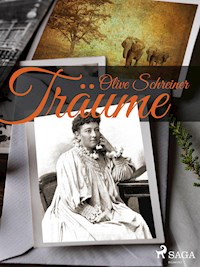
In Olive Schreiner's 'Dreams', the reader is taken on a thought-provoking journey through the author's exploration of the subconscious mind and the profound insights that can be uncovered through dreams. Written in a poetic and philosophical style, Schreiner delves into the complexities of human emotions, fears, and desires, presenting a deeply introspective look at the inner workings of the human psyche. Set against the backdrop of late 19th century literature, 'Dreams' stands out as a unique and poignant work that continues to captivate readers with its timeless themes of self-discovery and introspection. Olive Schreiner, a prominent South African writer and feminist, drew upon her own experiences and observations of society to craft 'Dreams'. Her progressive views on gender equality and social justice are evident in the themes explored in the book, as Schreiner challenges traditional norms and beliefs through her thought-provoking narratives. 'Dreams' reflects Schreiner's deep understanding of the human condition and her ability to articulate universal truths in a profound and impactful manner. For readers interested in delving into the depths of the human psyche and exploring the mysteries of the subconscious mind, Olive Schreiner's 'Dreams' offers a captivating and intellectually stimulating read that will leave a lasting impression. With its lyrical prose and thought-provoking themes, this book is a must-read for anyone seeking a profound and enriching literary experience. In this enriched edition, we have carefully created added value for your reading experience: - A comprehensive Introduction outlines these selected works' unifying features, themes, or stylistic evolutions. - A Historical Context section situates the works in their broader era—social currents, cultural trends, and key events that underpin their creation. - A concise Synopsis (Selection) offers an accessible overview of the included texts, helping readers navigate plotlines and main ideas without revealing critical twists. - A unified Analysis examines recurring motifs and stylistic hallmarks across the collection, tying the stories together while spotlighting the different work's strengths. - Reflection questions inspire deeper contemplation of the author's overarching message, inviting readers to draw connections among different texts and relate them to modern contexts. - Lastly, our hand‐picked Memorable Quotes distill pivotal lines and turning points, serving as touchstones for the collection's central themes.
Das E-Book können Sie in Legimi-Apps oder einer beliebigen App lesen, die das folgende Format unterstützen:
Veröffentlichungsjahr: 2020
Ähnliche



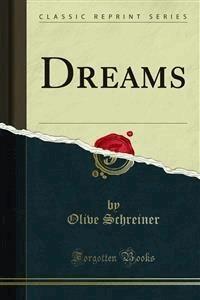

Dreams
Published by
Books
Table of Contents
Introduction
Dreams is a single-author collection of short allegories by the South African writer Olive Schreiner. It gathers eleven self-contained prose pieces that are neither complete novels nor dramatic works, but concentrated visions designed to be read individually and in sequence. The present volume follows the author’s arrangement from the titles given here, inviting readers to encounter each dream as an episode in a sustained meditation rather than as fragments of a larger narrative. Together these pieces form a compact, essential portion of Schreiner’s imaginative writing, presenting core concerns that recur throughout her career in a distilled, lyrical, and reflective mode.
Although unified by the rubric of dreams, the texts move across adjacent forms: allegory, parable, prose poem, and visionary sketch. Schreiner’s narrator often frames an experience of heightened consciousness and then stages encounters with personified forces, moral figures, or emblematic landscapes. Dialogue appears sparingly, argument and image interpenetrate, and the cadence leans toward lyric meditation rather than plot-driven storytelling. The pieces are brief, deliberately shaped, and hospitable to rereading; they stand between fiction and essay without settling into either. Readers can recognize the economy of short story craft, the compression of aphoristic essay, and the symbolic architecture of fable working together.
Across the collection, unifying themes emerge with clarity: the longing for freedom, the cost of love, the testing of conscience, and the search for truth amid social constraint. Schreiner’s images—the desert, the sea-shore, enclosed gardens, a ruined sanctuary, a bed lit by morning—serve as moral landscapes where choice is dramatized. Her interest in women’s emancipation and human solidarity is expressed through emblematic trials rather than polemic, and her ethical imagination turns private feeling into public question. Personifications such as Life or Love bring abstraction into intimate proximity, while the recurrent movement from enclosure to open country figures the arduous passage from bondage to autonomy.
The sequence opens with a remembrance of a lost happiness and the question of whether it can be recovered. A pursuit follows in The Hunter, where the chase for an elusive creature becomes a test of endurance and desire. The Gardens of Pleasure imagines walled spaces of delight whose apparent ease exposes a subtler confinement. In a Far-Off World transports the dreamer to a distant realm to weigh what matters when familiar measures fall away. Three Dreams in a Desert, framed beneath a mimosa tree, offers visionary scenes that turn on the contrast between captivity and the hard road toward freedom.
A Dream of Wild Bees listens to an ominous music that gathers in a household and stirs questions about responsibility and foreknowledge. In a Ruined Chapel contemplates a broken place of worship where love and unforgiveness seem irreconcilable and must be judged anew. Life’s Gifts stages an encounter with a great giver whose offerings arrive under challenging names, asking the seeker to choose. The Artist’s Secret considers what an artist withholds and why reticence can be an ethic. I Thought I Stood records the unease of standing at a threshold of judgment. The Sunlight Lay Across My Bed closes on illumination as visitation.
Stylistically, the pieces are spare yet musical, their sentences carrying a measured rhythm that recalls oral tale and sermon while remaining resolutely modern. Schreiner favors archetypal figures, emblems, and iterative structures that allow motifs to return with altered force, producing resonance across the sequence. The landscape of southern Africa—especially the stark desert—enters not as background but as moral topography. Readers who know her novel The Story of an African Farm or her later social thought will recognize the same preoccupations condensed here: inward integrity, the labor of care, skepticism toward coercive authority, and a persistent, questioning hope for women and for humankind.
The continuing significance of Dreams lies in its clarity and brevity: complex ethical and social questions are made graspable without losing depth. The allegories have been read within feminist traditions and within broader reflections on conscience, work, and love, yet they resist single-issue reduction. They invite solitary, meditative reading and communal discussion alike, allowing different generations to find fresh emphases. This collection presents the pieces together so that their echoes can be heard: the chase and the garden, the desert road and the chapel, the bees and the sunlight. Approached as living parables, they become companions for thought rather than answers.
Historical Context
Dreams was published in London in 1890 by Olive Schreiner, a South African-born writer whose formative years in the Eastern Cape informed the collection's stark landscapes and moral allegories. Composed largely during her 1880s stay in Britain, the pieces move between Cape deserts and metropolitan debates, compressing political and spiritual argument into parable-like scenes. The book followed her breakthrough The Story of an African Farm (1883), which had already positioned her as a major colonial voice within Victorian letters. Against that backdrop, Dreams distills the tensions of empire, religion, and gender that animated Anglo-South African culture on the eve of the 1890s.
Schreiner grew up in a missionary household—her father a German-born minister, her mother of English evangelical stock—amid the Calvinist and Nonconformist currents of the Cape. The Victorian crisis of faith, catalyzed by Charles Darwin’s On the Origin of Species (1859) and debates around biblical criticism, shaped her rejection of doctrinal certainty. In Dreams, the spare, chapel-like settings and disputations over guilt, forgiveness, and love reflect that climate of religious contention. At the same time, the move from dogma to an ethical Christianity aligned her with liberal theologians and freethinkers, enabling a reception that was admiring in reformist circles yet troubling to orthodox reviewers.
Across late Victorian Britain, a nascent New Woman movement challenged coverture, sexual double standards, and restricted employment. The repeal of the Contagious Diseases Acts in 1886 and the organizing of suffrage societies offered a visible backdrop to Schreiner’s feminist parables. Living in London from 1881, she engaged reform networks that included Havelock Ellis and Edward Carpenter, absorbing debates on sex reform and women’s labour sharpened by Ibsen’s A Doll’s House (1879). The allegories of female pilgrimage and renunciation in Three Dreams in a Desert, Life’s Gifts, and The Artist’s Secret translated those controversies into austere images that could cross denominational and class boundaries.
In southern Africa the diamond rush at Kimberley from 1867 and the Witwatersrand gold discoveries of 1886 transformed politics, producing vast urban camps and the consolidation of mining capital under figures like Cecil Rhodes and the 1888 formation of De Beers. Though Dreams predates Schreiner’s overt anti-imperialist polemics, its ascetic landscapes and parables of pursuit and possession—such as the Hunter and the Gardens of Pleasure—register suspicion toward acquisitive desire and the uses of force that underpinned extractive modernity. Readers attuned to the political economy of the Cape could recognize in her dream-visions a critique of wealth, spectacle, and instrumentalized human relationships.
The memory of frontier conflict haunted Schreiner’s generation: the Anglo-Zulu War of 1879 and the First Anglo-Boer War of 1880–81 followed decades of intermittent fighting in the Eastern Cape. Violence, militarized masculinity, and civil religion saturated public life and schoolbooks. Against that background, her symbolic trials—visible in A Dream of Wild Bees or the visionary judgment of I Thought I Stood—recast heroism as inner discipline rather than conquest. The insistence on forgiveness and love in In a Ruined Chapel contrasted with prevailing narratives of righteous retaliation, a gesture that later marked her as a principled pacifist when South African politics hardened in the 1890s.
Dreams emerged from a vibrant Anglo-European print culture that circulated essays, tales, and polemics through monthly reviews and cheap series. Several pieces first appeared in late-1880s British periodicals before being gathered for publication, and the concise allegorical form travelled readily across journals and lecture platforms. Schreiner’s London connections—with ethical socialists clustered around the Fellowship of the New Life and interlocutors such as Havelock Ellis and Edward Carpenter—framed the book’s humane collectivism. Early reception mirrored the era’s divides: reformers praised its moral severity and compassion, while conservative critics disparaged its skepticism and its unapologetic advocacy of women’s independence and sexual candor.
The collection also participates in a long English-language dream-vision tradition—from Bunyan’s Pilgrim’s Progress to fin-de-siècle symbolist sketches—while relocating it to the Karoo’s arid vastness. Schreiner’s spare prose, attentive to light and geological time, turns South African landscape into moral topography; pieces like Under a Mimosa-Tree and The Sunlight Lay Across My Bed yoke private epiphany to planetary scale. Ruskinian attention to ethical seeing and Carlylean moral exhortation mix with secularized biblical cadence. This hybrid idiom helped metropolitan readers encounter colonial nature as a stage for universal questions of duty, art, and joy, rather than as mere scenery for imperial adventure.




