


2,99 €
Mehr erfahren.
- Herausgeber: John Davis
- Kategorie: Gesellschafts- und Liebesromane
- Sprache: Englisch
Are you overwhelmed by a child who constantly complains, whines, or acts impulsively? Do you find yourself caught in endless battles, struggling to maintain peace and harmony in your home? Effective Parenting of a Constantly Complaining Child is your essential guide to transforming those challenging behaviors into opportunities for growth, connection, and positive change.
In this insightful and practical book, you’ll discover:
Proven Strategies: Learn how to address the root causes of complaining and impulsiveness, helping your child develop emotional intelligence, patience, and self-control.
Expert Advice: Gain access to the wisdom of an expert in parenting and family relationships, offering detailed guidance on setting boundaries, communicating effectively, and managing impulsive behavior.
Real-Life Case Studies: Be inspired by success stories from other parents who have successfully turned around their child’s challenging behaviors using the strategies outlined in this book.
Practical Tools: From creating behavior logs to implementing role-playing exercises, you’ll find a wealth of practical tools to help you navigate everyday situations with confidence and calm.
Long-Term Solutions: Prepare your child for future success by cultivating resilience, emotional maturity, and positive social skills that will serve them well into adolescence and beyond.
Whether you’re dealing with frequent public meltdowns, endless whining, or impulsive outbursts, Effective Parenting of a Constantly Complaining Child offers the support and solutions you need to create a more peaceful, loving, and cooperative family environment. Empower yourself with the knowledge and strategies to guide your child through their most challenging behaviors and foster a stronger, healthier parent-child relationship.
Start your journey toward effective, compassionate parenting today—and watch as your child transforms into a more confident, well-adjusted individual.
Das E-Book können Sie in Legimi-Apps oder einer beliebigen App lesen, die das folgende Format unterstützen:
Veröffentlichungsjahr: 2024
Ähnliche




















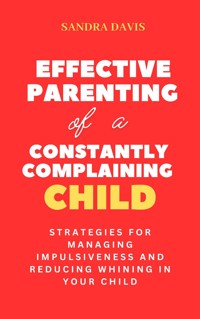
Effective Parenting of a Constantly Complaining Child
Strategies for Managing Impulsiveness and Reducing Whining in Your Child
Sandra Davis
Copyright ©
Sandra Davis
© 2024 United Kingdom
All rights reserved. No part of this book may be reproduced or modified in any form, including photocopying, recording, or by any information storage and retrieval system, without permission in writing from the publisher.
Table of Contents
Title Page
Copyright Page
Introduction
The Psychology Behind Complaining and Impulsiveness
Identifying the Patterns
Building Emotional Intelligence
Setting Boundaries and Expectations
Communication Strategies for Reducing Whining
Managing Impulsiveness in Everyday Situations
Strengthening the Parent-Child Relationship
Dealing with Setbacks and Challenges
Encouraging Long-Term Positive Behavior
Real-Life Case Studies and Success Stories
Conclusion
Introduction
Parenting is a journey filled with joy, challenges, and countless moments of growth—both for the child and the parent.
Yet, one of the most trying aspects of this journey is navigating the turbulent waters of a constantly complaining, impulsive child.
A child who demands immediate gratification and responds to unmet desires with endless whining can test the patience and resolve of even the most seasoned parent.
However, within these challenges lies an incredible opportunity for transformation—both for your child and your relationship with them.
––––––––
Understanding the Complaining Child
Complaining is often misunderstood as mere dissatisfaction or a tactic to get attention.
But beneath the surface, a child’s complaints are a complex expression of unmet needs, frustrations, and an immature way of navigating emotions.
Complaining is a signal—a cry for help, for understanding, for boundaries, and for guidance.
For the impulsive child, who struggles with waiting, taking turns, or controlling immediate desires, complaining becomes a natural outlet for their emotional and mental overwhelm.
They want what they want, and when reality doesn't align with their expectations, the response is often swift and loud.
Understanding your child’s behavior requires empathy, patience, and a willingness to look beyond the surface.
It’s about recognizing that complaints and impulsiveness are not reflections of a child’s character or a parent’s failure, but rather a normal part of development that, with the right approach, can be guided into more positive channels.
The Impact of Impulsiveness and Whining on Family Dynamics
When a child’s impulsiveness and whining become a regular part of daily life, it can create a ripple effect that impacts the entire family.
Sibling relationships may become strained, parental frustration may rise, and the home environment may shift from one of harmony to one of tension.
In these moments, it’s easy to feel overwhelmed, to question your parenting abilities, or to worry about the future.
But it’s important to remember that every challenge presents an opportunity for growth.
The impact of these behaviors on family dynamics can serve as a catalyst for change—a chance to reassess, to realign, and to reaffirm the values and principles that guide your parenting.
By addressing impulsiveness and whining with understanding, consistency, and love, you can not only reduce the frequency of these behaviors but also strengthen the bonds within your family.
The process of managing these challenges can bring about a deeper connection, greater resilience, and a more peaceful home environment.
Setting the Stage for Effective Parenting
Effective parenting in the face of a constantly complaining, impulsive child is not about quick fixes or harsh discipline.
It’s about laying a foundation of trust, communication, and mutual respect. It’s about equipping your child with the tools they need to manage their emotions, to delay gratification, and to express themselves in healthier ways.




