


Erhalten Sie Zugang zu diesem und mehr als 300000 Büchern ab EUR 5,99 monatlich.
- Herausgeber: Robert Hale
- Kategorie: Abenteuer, Thriller, Horror
- Sprache: Englisch
Fark Seaton comes to the aid of old timer Utah Red when he and his flock of sheep are attacked. Who is responsible? The evidence seems to point towards Mitch Montgomery and his Lazy Ladder outfit, but as tension mounts and the bullets fly, Seaton is not so sure. What is the role of Nash Brandon, owner of the Mill Iron? Could Seaton's interest in Montgomery's daughter, Maisie, be clouding his judgement? Fark and Utah go undercover to solve the mystery. When the sparks of anger finally blaze into uncontrolled fury, the answers at last begin to emerge.
Sie lesen das E-Book in den Legimi-Apps auf:
Seitenzahl: 182
Veröffentlichungsjahr: 2016
Das E-Book (TTS) können Sie hören im Abo „Legimi Premium” in Legimi-Apps auf:
Ähnliche



















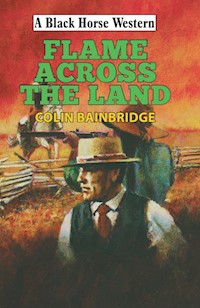
Flame Across the Land
Fark Seaton comes to the aid of old timer Utah Red when he and his flock of sheep are attacked. Who is responsible? The evidence seems to point towards Mitch Montgomery and his Lazy Ladder outfit, but as tension mounts and the bullets fly, Seaton is not so sure. What is the role of Nash Brandon, owner of the Mill Iron? Could Seaton’s interest in Montgomery’s daughter, Maisie, be clouding his judgement?
Fark and Utah go undercover to solve the mystery. When the sparks of anger finally blaze into uncontrolled fury, the answers at last begin to emerge.
By the same author
Guns of Wrath
Back from Boot Hill
Tough Justice
Buzzard Roost
Gila Monster
Hoofbeats West
Desolation Wells
Pack Rat
Coyote Falls
Shotgun Messenger
Six-Gun Nemesis
North to Montana
Blood on the Range
Flame Across the Land
Colin Bainbridge
ROBERT HALE
© Colin Bainbridge 2016
First published in Great Britain 2016
ISBN 978-0-7198-2174-5
The Crowood Press
The Stable Block
Crowood Lane
Ramsbury
Marlborough
Wiltshire SN8 2HR
www.crowood.com
Robert Hale is an imprint of The Crowood Press
The right of Colin Bainbridge to be identified as author of this work has been asserted by him
in accordance with the Copyright, Designs and Patents Act 1988
Chapter One
Fark Seaton was bent down in the water panning when he saw the oldster coming down the trail, riding on a brown-and-white pinto. He stood up to his full six feet and watched as he approached.
‘Well I’ll be a goddamn polecat,’ he muttered. ‘If it ain’t old Utah Red.’ The oldster stopped and dismounted, a little stiffly.
‘Howdy, Utah,’ Seaton remarked. ‘I sure didn’t expect to see you again for a whiles.’
The old timer stroked the skewbald’s head. ‘Me neither,’ he replied. ‘I figured you’d be gone by this time.’
‘You ain’t far wrong. I’ve just about decided this prospectin’ ain’t any kind of a life,’ Seaton said. He splashed out of the stream. ‘Who’s taking care of those sheep?’ he added.
‘The company was supposed to be keepin’ me in supplies but I ain’t seen anyone. In the end I figured, if I needed supplies, I’d have to go and get them myself.’ Utah paused, looking at Seaton with a quizzical expression.
‘It’s a ways to go to town,’ Seaton said. He threw the pan he was holding to one side. ‘I reckon you could probably use some coffee.’
‘I sure could,’ the oldster responded.
They walked across to where Seaton’s tent stood by a clump of willows. The embers of a fire were still smouldering and it took no time at all for Seaton to build it up again and replace the tripod from which he hung a battered kettle. When the coffee was ready he filled two tin cups with the thick black liquid. The oldster was about to take his first sip when Seaton produced a worn flask.
‘Somethin’ to stiffen it up a little,’ he said. They sat quietly for a while, savouring the coffee, till Seaton spoke again.
‘That leg of yours seems to have got worse since last time I saw you,’ he said.
Utah glanced down at his leg and stroked it with his hand.
‘I guess I’m just gettin’ older,’ he said.
‘How did you come by it anyway?’
‘It’s a legacy from the war. Not the last one, you understand. The one in Mexico. But it ain’t nothin’ much.’ He took another swallow.
‘Anyhow,’ he continued, ‘it don’t come as any surprise to me to find you ain’t found nothin’. I told you the whole place is worked out. I tried that game myself – more than once. The way I figure it, there was never anythin’ here in the first place.’
Seaton didn’t reply but instead got to his feet and went inside the tent, reappearing after a few moments with a leather pouch tied with a drawstring. Opening it, he handed it to the oldster.
‘Go on, take a look,’ he said.
Utah peered inside. ‘Holy cow!’ he exclaimed. ‘You have struck lucky!’
‘I don’t know what it’s worth. Maybe not much. Either way, I ain’t concerned. Take it if you like.’
Utah looked at him disbelievingly and then shook his head as he handed the gold dust back. ‘Thanks,’ he said, ‘but that’s yours.’ He raised his head and glanced towards the tent. ‘Howsomever,’ he continued, ‘you could sure do me a big favour.’
Seaton smiled. ‘I’ve got supplies,’ he said. ‘You’re welcome to take what you need.’
‘I’d sure appreciate that. I won’t take much. Just enough to see me through till the supply wagon comes through.’
‘How do you know it is comin’? After all, it ain’t appeared yet.’
‘It’ll come,’ Utah replied. ‘I guess it just got delayed somehow.’
They finished their mugs of coffee and Seaton refilled them. ‘What did you say was the name of the company you’re workin’ for?’ he asked.
‘You know, I ain’t rightly sure. They operate out of a building in Lindenberg.’
‘And how long are you contracted for?’
‘Spring and summer. Six months.’
Seaton thought for a moment, calculating from the last time he had seen the oldster. ‘You’re not halfway through yet,’ he said.
‘I don’t know. I guess not. A man kinda loses track of time up in those hills.’ They continued talking for a while till the coffee was finished and then Utah got to his feet.
‘OK if I take a look and borrow some of those supplies?’ he asked.
‘Go right on ahead. Take what you need. In fact, take the lot.’
‘I couldn’t do that,’ the oldster replied.
‘You’d be doin’ me a favour,’ Seaton said.
‘But what will you do?’
‘Like I say, I’ve had about enough of prospectin’.’
‘You can’t give up now.’
‘Nope. I’ve given it a try and it ain’t for me. Tell you what. When you’ve finished lookin’ after those sheep, why don’t you take over my claim?’
The oldster’s face creased in a snaggle-toothed grin. ‘It’s a nice offer,’ he said, ‘but I’m gettin’ too old for that game.’
‘It can’t be harder than herdin’ sheep.’
‘Sheep are alive. There’s a big difference.’
Seaton didn’t argue the point. When Utah had taken what he needed he helped him load the supplies on the skewbald.
‘I owe you,’ the oldster said. He climbed awkwardly into the saddle and shook hands with Seaton.
‘Mind how you go,’ Seaton said.
‘I guess I can take care of myself after all these years,’ Utah replied. Seaton looked him in the face.
‘Yeah, maybe so,’ he said.
Utah spoke some words to the horse and it began to amble forward. Seaton watched as the pinto climbed slowly up the trail until eventually it disappeared from view. Then he bent down and picked up his pan and was about to step back into the stream when he uttered a low oath and flung the pan away again, this time into the water. He stepped up on to the bank and made his way back to his tent. In no time at all he had dismantled it and removed all traces of ever having been there. He stood for a while, looking around and wondering what to do with his equipment. It didn’t amount to much but he didn’t see much point in lugging it back to town. In the end he ploughed back into the water to retrieve his pan. Adding it to the rest of his gear, he wrapped it in the tent and stacked it beneath an overhang of the stream bank. Then he saddled up his horse, which was tethered at a little distance, and stepped into the leather. His days as a prospector were over.
He made camp that night and rode the chestnut mare into Lindenberg late the following morning. He left the horse at the livery stable, booked a room for a couple of nights at the Exchange Hotel and then made his way to the barber shop. The place was empty and he took a seat as the barber stropped his razor.
‘Passin’ through?’ the barber remarked.
‘Yeah.’
The barber began to lather his face. ‘I don’t know what your plans are,’ he said, ‘but if it’s work you’re lookin’ for, there are jobs to be had at Nash Brandon’s spread.’
‘Nash Brandon?’
The man paused for a moment in his ministrations.
‘I can see you must be a stranger round these parts if you ain’t heard of Nash Brandon,’ he said. ‘Hell, he’s the biggest ranch-owner in the county. Owns a place called the Mill Iron not too far out of town. Likes to ride a big palomino.’
‘Thanks for the tip. I’ll bear it in mind.’
‘Rumour has it he intends runnin’ for mayor. I’d say that was only the start of it. The way I see it, it’s his for the askin’. Hell, he’ll be aimin’ for the Senate before too long. He’s very influential with the Cattle Ranch and Land Company, and that goes a long way.’ The barber stopped long enough to draw the razor along Seaton’s chin-line before resuming.
‘Some folks say it’d be a good thing for the town. Me, I ain’t so sure.’
Whether he intended elaborating on the theme Seaton was not to know, because just at that juncture the bell above the outer door jangled and another customer came in. After he had greeted the newcomer, the barber continued talking but it was of a more desultory nature, and Seaton was not inclined to make conversation. It was a relief when the barber had finished and he stepped back out into the sunlight, cropped and clean-shaven. Leaning against a stanchion, he took the opportunity to observe the town.
It was much like others he had seen or spent time in, with one main street lined with false-fronted buildings. It was not long after midday and the place had a sleepy look. Not many people moved about and the awnings were pulled down over those stores that had one. A few tethered horses flicked lazily at flies with their tails; a one-horse buggy was standing outside the millinery shop and a freight wagon stood outside the main emporium with its ox team lying under their yokes in the dust. Seaton suddenly felt thirsty. There were several saloons lining the main drag and, selecting the nearest one, the Blue Front, he stepped down from the boardwalk and began to walk towards it.
He hadn’t gone far when the peace was suddenly shattered by gunshots and whooping and a trio of horsemen appeared at a junction further along. They were firing their six-guns randomly into the air but that didn’t prevent a stray bullet from shattering the upstairs window of a building. Seaton’s instant reaction was to draw his own gun as he flung himself sideways in order to get out of the way of the oncoming horsemen, taking shelter behind a water trough. The riders swept by, finally drawing their mounts almost to their haunches outside the Blue Front where they dismounted and tied the horses to the hitch-rack. Raising their weapons, they fired a few more rounds into the sky before finally placing them back in their holsters and crashing their way into the saloon.
Seaton got to his feet, moved quickly across to their tethered horses and bent down to see if they carried any markings. For some reason it came as no surprise to him to see that they carried a Mill Iron brand. Sounds of loud, raucous laughter were spilling from the saloon and he was about to step inside when he heard a commotion and looked up to see a trio of people milling about outside the grocery store. The buggy was still there but it was standing at a crazy angle and sideways to the street. He quickly realized that the horse must have been skittered by the gunshots and reared up in the traces. The group consisted of an elderly woman and a man who was gesticulating and who was obviously the shopkeeper. It was the third person, however, who arrested his attention.
She looked about twenty and was wearing a checked gingham dress, which did nothing to hide her figure. For a moment he hesitated and then made his way across. The young woman was standing quietly while the shopkeeper fussed and the older woman shouted frantically.
‘Where’s the marshal? Where’s Marshal Braithwaite?’
Taking control of the situation, he calmed the horse before pulling the buggy straight and upright again with a heave of his muscles. When he had done so, he turned to the young woman and raised his Stetson.
‘It’s OK,’ he said, ‘no real harm done.’
The woman looked up at him and smiled.
‘How did you know it was my buggy?’ she said in a lilting tone.
‘Just an educated guess,’ he replied.
She gave him a look which he couldn’t interpret and then turned to the shopkeeper.
‘Could you have my purchases brought out and placed in the buggy?’ she said.
‘Of course. Right away, Miss Maisie,’ he replied.
The older woman had ceased calling for the marshal and instead was intoning against the recklessness of the riders whose noise had scared the horse.
‘It’s about time somethin’ was done,’ she said. ‘One of these days it’ll be somethin’ more serious.’
Seaton looked across the street towards the Blue Front saloon. ‘Probably just a few youngsters lettin’ off steam,’ he said. ‘Still, I reckon someone ought to have a word with ’em.’
‘They need more than that. They need dealin’ with.’
Seaton turned to her. ‘As a matter of fact, where is the marshal?’ he asked.
‘Don’t ask me. All I know is that he never seems to be there when he’s needed.’
Seaton glanced again towards the saloon. The shouts and laughter that had been emanating from it seemed to have temporarily subsided. He was about to take a step in its direction when he was halted by the voice of the younger woman.
‘I’d leave it,’ she remarked. ‘As you said, no real harm has been done and things seem to have quieted down.’
Seaton felt he had a personal score to settle with the rowdies and his inclination was to go across to the saloon and confront them, but he saw the sense in what the young woman was saying. There was a possibility that things might boil over and he certainly didn’t want to take the risk of involving her in anything. Just at that instant the shopkeeper appeared, followed by a freckle-faced, jug-eared boy of about ten, each carrying a pile of foodstuffs which they began to place carefully in the buggy.
‘Thank you, Mr Candless,’ the woman said, ‘and you too, Andy.’ From somewhere she produced a coin, which she pressed into the boy’s hand. Then she turned to Seaton.
‘Thank you, too,’ she said. Seaton didn’t know what to reply and instead put out a hand to help her up into the buggy. When she was seated he had a sudden inspiration.
‘If you need any assistance,’ he began to mutter, ‘I don’t know . . . maybe I could. . . .’
‘It’s all right, Mr . . .’ She paused in turn.
‘Seaton,’ he added.
‘It’s all right, Mr Seaton. I’m quite recovered from the shock. Besides, I haven’t far to go.’
‘If you’re quite sure, ma’am.’
She looked at him and gave another smile, then raised the whip and flicked it over the horse’s head. The buggy began to roll down the street, raising a thin cloud of dust. Seaton wasn’t aware he was watching it till the voice of the old lady cut in.
‘Don’t worry,’ she said. ‘Miss Montgomery will be perfectly safe. She can look after herself as well as anyone. She’s a regular visitor to town; not to the clothing store or Johnson’s Millinery, as you might expect, but always to stock up on groceries and supplies.’
‘Does she live in Lindenberg?’
‘Just out of town. Her father owns the Lazy Ladder. She was born and bred there. I knew her mother.’
‘Are you sure you’ll be OK?’ Seaton asked.
‘Thank you for asking, young man,’ she said. ‘I’ll be fine.’
The shopkeeper and the boy had gone back inside. There seemed to be nothing else to do except say his goodbye, so raising his hat again and mumbling a few words he turned and began to make his way back in the direction of the hotel. As he passed the saloon, he halted for a few moments, deliberating whether to go inside. In the normal course of events he wouldn’t have hesitated, but something held him back; it was a vague feeling almost of loyalty, as if he owed it to the young woman to do as she had suggested and let it ride. He didn’t understand it, but it was enough for him to carry on walking.
He spent the next couple of days hanging about town, some of it in the Blue Front saloon, but he saw no sign of the riders from the Mill Iron. He got into the habit of taking his meals at an eating house with the grandiose title of the Broadway Coffee Shop and called by the livery stables several times to check on his horse. He would have gone to the Assay Office but that particular establishment was defunct, from which he deduced that he had indeed been lucky in finding any traces of gold and that it was unlikely he would have found much more even if he had stayed. He did some shopping for new duds and was solicited more than once, gently turning down the offers. His hotel room had a small balcony from which he got some pleasure watching the activities in the street below but by the evening of the second day he had had enough. He was bored, and even the possibility of seeing Maisie Montgomery again was not enough to persuade him to stay any longer.
As he lay on his bed that night, looking up at the ceiling and blowing smoke rings in the air into the early hours of the morning, he found himself thinking of old Utah Red. He had an image of the oldster riding away on the skewbald, making his lone way into the hills where his sheep would be lost without their shepherd. Utah probably imagined he had a good, respected job, but Seaton knew that wasn’t the case. This was cow country and sheepmen were held in very low regard. That was probably why he had been taken on in the first place: because no one else would do it. Cattlemen hated sheep. As far as the ranchers were concerned, sheep ruined the land. They didn’t graze like cattle did, but cropped it down to the roots, or so they claimed. So what did that signify with regard to the oldster? Thinking about the situation, Seaton began to grow more and more concerned. Given the way things were, the oldster had put himself in the way of danger, returning to his solitary vigil. As dawn began to break, Seaton realized what he must do. Arriving at the livery stable as soon as it was open, he saddled the chestnut, placed his Winchester in its scabbard, and rode out to look for the old man.
He didn’t know exactly where the oldster was to be found, except that he was somewhere in the hills. The obvious thing to do was to begin the search at the point where he had last seen Utah, which was his own camp by the stream. It was late in the afternoon when he got there. He had done a good job of clearing the site. A passing traveller would never have realized anyone had been there. He was tempted to set up camp on the same spot but decided to carry on further. When he had gone a little way beyond where he had seen the last of the oldster, he got down from his horse and examined the ground for traces of the skewbald’s sign and saw enough to make him think he had found it. However, he couldn’t be sure. Tracking wasn’t one of his strong points and other people had passed through. There were animal tracks too. He decided that the best thing would be to follow the lie of the land. Any trail would follow the line of least resistance and he would carry on that way until he saw good reason to turn aside.
He climbed back into leather and carried on riding while the sun sank lower in the sky till eventually it was a fading yellow ball poised just above the line of the western hills. At that point he decided to call a halt. As the shadows descended, he first tended to the horse and then built a fire. He laid slabs of bacon in the skillet and made coffee with water from a nearby run-off. By the time he had eaten, darkness had fallen. A cool wind blew down from the ranges and from somewhere a bird called. The sky wheeled with stars and he could see for quite a distance into the luminous night. He was glad to have left the town behind, but that didn’t prevent him from feeling a touch lonesome. He thought about old Utah, spending night after night in some remote valley with only his sheep for company, and felt a twinge of regret that he hadn’t done more to help him. But what could he have done? Then he remembered the oldster’s limp. Was Utah’s account of it quite accurate? Whether it was or not, he had justification for feeling concern. When he finally turned in it was with a renewed purpose to locate the oldster as quickly as he could.
Dawn came up and he quickly made breakfast before climbing into the saddle and setting out again. As he got further into the hills, the trail became less easy to follow. It was barely discernible; an old Indian track abandoned by them long since. There were wildflowers and scattered stands of aspen and spruce lining the hillsides. When he dismounted to search for signs, he could find nothing but animal tracks and presently he came upon the deer which had made them, about a dozen of them standing in a bunch. He saw marmots and at one point an eagle came swooping down and flew overhead for some time before soaring away over the crest of a ridge.




