


Erhalten Sie Zugang zu diesem und mehr als 300000 Büchern ab EUR 5,99 monatlich.
- Herausgeber: epubli
- Kategorie: Lebensstil
- Sprache: Englisch
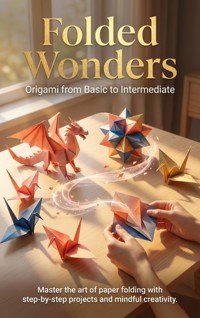
Transform a simple sheet of paper into endless creative possibilities with Folded Wonders. This beautifully illustrated guide takes you through the fundamentals of origami—from easy beginner shapes to more complex intermediate designs. Learn essential folding techniques, pattern reading, symmetry, and precision through clear instructions and diagrams. With projects ranging from classic cranes and flowers to geometric models and animals, you'll build skill and confidence while discovering the meditative joy of folding. Perfect for beginners ready to grow or craft lovers seeking a soothing, creative escape.
Sie lesen das E-Book in den Legimi-Apps auf:
Seitenzahl: 212
Veröffentlichungsjahr: 2025
Das E-Book (TTS) können Sie hören im Abo „Legimi Premium” in Legimi-Apps auf:
Ähnliche



















Table of Contents
Chapter 1: Getting Started with Origami
The Basics of Origami
Essential Tools for Origami
Selecting the Right Paper
Basic Folding Techniques
Understanding Diagrams and Symbols
Setting Up Your Workspace
Chapter 2: Essential Folding Techniques
Understanding Basic Folds
The Valley Fold
The Mountain Fold
The Reverse Fold
Chapter 3: Understanding Patterns and Diagrams
The Basics of Diagram Reading
Common Folds and Their Symbols
Interpreting Complex Diagrams
Tips for Beginners
Practicing Mindful Folding
Resources for Continued Learning
Chapter 4: Symmetry in Origami
Understanding Symmetry in Origami
Techniques to Create Symmetry
Exploring Reflective Symmetry
Embracing Rotational Symmetry
Combining Symmetry in Advanced Projects
Chapter 5: The Classic Crane
The Symbolism of the Crane
Materials Needed
Step-by-Step Folding Instructions
Tips for Success
Chapter 6: Creating Simple Flowers
Introduction to Origami Flowers
Tools and Materials Needed
Basic Flower Fold: The Origami Lotus
Creating a Simple Tulip
Advanced Flower: The Rose
Decorating and Displaying Your Flowers
Chapter 7: Geometric Origami
Introduction to Geometric Origami
Essential Tools for Geometric Origami
Basic Geometric Shapes
Intermediate Geometric Models
The Role of Mathematical Precision in Folding
Practicing Mindful Folding
Chapter 8: Folding Animals
The Basics of Animal Folding
Creating a Simple Frog
Crafting a Sleek Fish
The Fun of Mixed Animal Designs
Chapter 9: Advanced Folding Techniques
Understanding Advanced Techniques
Mastering the Pleat Fold
The Art of Squashing
Crimping Techniques Explained
Chapter 10: The Art of Paper Selection
Understanding Paper Types
Paper Weight and Thickness
Color and Pattern Selection
Speciality Papers for Advanced Designs
Chapter 11: Folding and Mindfulness
The Connection Between Folding and Mindfulness
Setting the Scene for Mindful Folding
The Process of Folding Mindfully
Benefits of Integrating Mindfulness into Your Folding Routine
Chapter 12: Sharing Your Creations
Displaying Your Origami
Sharing on Social Media
Participating in Local Origami Communities
Creating Gift Sets
Chapter 13: Origami in Daily Life
Integrating Origami into Daily Routines
Enhancing Focus and Creativity
Social Connections through Origami
Practical Applications of Origami
Chapter 14: Collaborating in Origami
Why Collaborate in Origami?
Finding Collaboration Opportunities
Types of Collaborative Projects
Effective Communication in Collaboration
Chapter 15: Resources and Inspirations
Recommended Books
Online Tutorials and Videos
Online Communities and Forums
Folded Wonders: Personal Projects
Chapter 16: Your Origami Journey
Reflecting on Your Growth
Setting Goals for Future Projects
Embracing Ongoing Practice
Exploring New Techniques and Styles
Sharing Your Creations
Finding Inspiration in Everyday Life
Wrapping Up: The Joy of Endless Possibilities
The Transformative Power of Origami
Learning from Mistakes
Expanding Your Creative Horizons
Sharing the Joy of Origami
The Future of Your Origami Journey
Chapter 1: Getting Started with Origami
Welcome to the world of origami! In this chapter, we will cover the basics of paper folding, including the essential tools you'll need and the types of paper best suited for your projects. By the end of this chapter, you'll understand the foundation of origami, making your first folds with confidence.
The Basics of Origami
Origami, the art of paper folding, is a beautiful way to express creativity and improve focus. In this section, we'll introduce the fundamental concepts of origami, including what it is, its history, and why it is a great hobby for anyone looking to explore their artistic side.
Definition of Origami
Origami is the traditional Japanese art of folding paper into decorative shapes and figures. It transcends mere paper manipulation, transforming a flat sheet into a three-dimensional sculpture through a series of precise folds. This practice invites both artistic expression and spatial reasoning, making it a multifaceted creative outlet.
At its core, origami involves several fundamental techniques, including valley folds, mountain folds, and reverse folds, which serve as the building blocks for all designs. Each fold, no matter how simple, contributes to the overall structure and beauty of the final piece. As you embark on your origami journey, you’ll find that familiarizing yourself with these basic techniques lays the groundwork for creating both classic and innovative forms.
Historical Context
The origins of origami can be traced back to Japan, where it emerged as a unique art form. However, its foundations lie in ancient Chinese traditions of paper folding. Historical references suggest that as paper-making techniques spread from China to Japan in the 6th century, so too did the practice of folding and decorating paper.
Over centuries, origami has evolved, absorbing influences from various cultures and technology. It grew from ceremonial purposes, such as folding gifts during festivals or creating decorative items for shrine offerings, into a globally recognized art form. Today, origami is celebrated not only for its aesthetic appeal but also for promoting cognitive and motor skill development, making it a cherished practice worldwide.
Benefits of Practicing Origami
Engaging in origami offers numerous benefits that extend beyond mere entertainment. One of the most significant advantages is the enhancement of fine motor skills, as the intricate folds require precision and coordination. This practice also fosters patience, encouraging individuals to slow down and focus on the task at hand.
Additionally, origami serves as a form of mindfulness, providing a calming experience that can reduce stress and increase mental clarity. By dedicating time to folding paper, you can escape from daily distractions and cultivate a sense of tranquility. The satisfaction of completing a project can build confidence, making origami a wonderfully rewarding hobby for individuals of all ages.
Types of Origami
Origami encompasses a variety of styles, each offering unique challenges and rewards. Traditional origami focuses on classic designs such as cranes, flowers, and geometric shapes, emphasizing the artistry of single-sheet folding. These models often celebrate simplicity and elegance, ideal for beginners.
Another intriguing style is modular origami, which involves assembling multiple units to create complex three-dimensional shapes. This type encourages collaboration and creativity, as pieces must fit together seamlessly to achieve a cohesive design. Lastly, mixed techniques integrate origami with other art forms, such as painting or collage, offering boundless opportunities for innovation. Each type of origami invites exploration and growth, allowing practitioners to find their expressive niche.
Essential Tools for Origami
Having the right tools can make a significant difference in your origami experience. This section will outline the essential tools you will need to start your paper folding journey with ease and precision.
Quality Paper
Choosing the right paper is crucial in origami. Opt for origami paper, which is specifically designed for this art form. It is lightweight, easily foldable, and available in various colors and patterns. This type of paper often has a consistent thickness, allowing for sharp creases and smooth folds, essential for successful designs.
When selecting your paper, consider the finish as well. You can choose from matte, shiny, or patterned varieties, depending on the aesthetic you desire for your projects. Many beginners enjoy starting with standard origami paper that is brightly colored on one side and white on the other, as it provides excellent visual contrast for beginner projects.
In addition to traditional origami paper, you can experiment with other materials, such as wrapping paper, card stock, or even recycled paper. However, always remember that the paper's texture and weight will affect your folding experience and the final outcome of your models.
Cutting Tools
While origami typically begins with a square sheet of paper, there are times when preparation calls for cutting your materials to size. In these instances, having the right cutting tools becomes essential. A good pair of sharp scissors is a must-have in your origami toolkit, allowing for clean, precise edges.
For more intricate designs, a craft knife and a cutting mat can prove invaluable. The craft knife provides the precision needed for detailed cuts, while the cutting mat protects your work surface. When cutting paper for origami, measure carefully and take your time to ensure accuracy, as this will influence the overall quality of your folds.
Remember, while most origami patterns require a square piece of paper, learning to cut your own paper in different shapes can open up a wider range of creative possibilities.
Folding Tools
Although origami can be done with just your fingers, investing in folding tools can significantly enhance your experience. One essential tool is the bone folder, which is used to create sharp, precise creases. This tool glides smoothly over the paper, making it easier to achieve professional-looking folds.
Using a bone folder allows for more control when pressing down on the paper, leading to cleaner results. Additionally, this tool can help avoid tearing, especially when working with thinner paper. Consider having a few different sizes of bone folders, as they can assist with various folds and projects.
Other helpful tools include tweezers for intricate maneuvers and a ruler for measuring and ensuring accuracy in your folds and cuts. Mastering these tools alongside your techniques will elevate your origami game and allow for more complex designs.
Work Surface
A clean, flat work surface is essential for successful origami. The right work area not only helps you stay organized but also allows for greater precision in your folding. Consider using a dedicated craft mat or a smooth table that will provide a stable base for your projects.
Ensure that your workspace is well-lit, as good visibility is key to following intricate diagrams and making accurate folds. You might also want to keep a clean cloth nearby to wipe down your workspace, ensuring there are no distractions or materials that could interfere with your folding.
Creating a comfortable and conducive environment enhances your overall origami experience. It allows you to focus on the meditative and creative aspects of paper folding, free from interruptions. Set up your space to inspire creativity, and enjoy the process of transforming paper into art.
Selecting the Right Paper
Not all paper is created equal when it comes to origami. In this section, we'll explore the different types of paper and how to select the right one for your projects to ensure success with every fold.
Origami-Specific Paper
Origami-specific paper is designed for precise and clean folding, making it an essential choice for both beginners and experienced folders. This paper is typically thin and smooth, allowing for crisp folds without adding bulk. The most common type is the colorful origami paper, which is often colored on one side and white on the other. This duality offers versatility, as you can create designs that showcase different colors and patterns in a single model.
Moreover, origami paper is available in various sizes and weights, suitable for different types of projects, from simple to complex. The lightness of this paper makes it easy to manipulate, which helps beginners gain confidence as they learn to fold. As you progress, you’ll find that using origami-specific paper enhances the overall appearance and detail of your creations, allowing your artistic expression to shine through each fold.
Using Scrap Paper
If you’re just starting out in the world of origami, using scrap paper can be an excellent way to practice without the pressure of using high-quality materials. Old notebook pages, printer paper, or any scrap of paper you have around can serve as a great foundation for your initial folds. This approach allows you to focus on refining your technique and understanding the fundamentals of paper folding without worrying about wasting premium paper.
Practicing with scrap paper also encourages creativity, as you may discover interesting textures or colors from various types of paper. As you build confidence with your techniques, you can gradually transition to using more specialized origami paper. Remember, every master was once a beginner, and the key to improvement lies in continual practice!
Cardstock for Sturdy Models
Cardstock is an excellent option when you are ready to tackle more intricate designs that demand strength and stability. This type of paper is thicker than standard origami paper, providing the necessary durability to support complex structures, such as 3D models or modular origami projects. The sturdiness of cardstock allows your creations to hold their shape better, making it ideal for pieces that require precision and balance.
When working with cardstock, you must be mindful of the thickness, as thicker cardstock can be challenging to fold. Using a scoring tool can help create clean creases. Once you grasp the technique for folding cardstock, you'll find the results can be incredibly rewarding, resulting in robust and sculptural works of art that can be displayed or gifted with pride.
Specialty Papers
For a truly unique origami experience, consider experimenting with specialty papers. Variants such as washi, metallic, or patterned papers can elevate your creations by introducing unique textures and visual appeal. Washi paper, a traditional Japanese paper, is known for its vibrant colors and intricate patterns, making it perfect for delicate models such as flowers or animals.
Metallic and patterned papers can add a striking touch to your origami, attracting attention to details that might otherwise go unnoticed with regular paper. When selecting specialty papers, ensure they have a suitable weight and folding capacity for the models you wish to create. This exploration of diverse materials can spark your creativity and inspire innovative designs, enhancing your origami journey.
Basic Folding Techniques
Before diving into actual projects, mastering basic folding techniques is essential. This section introduces you to fundamental folds and techniques that serve as the building blocks for more complex designs.
Valley and Mountain Folds
The foundation of origami lies in mastering the essential valley and mountain folds. A valley fold is made by folding the paper towards you, creating a crease that resembles a 'V' shape. This type of fold is crucial for forming basic structures and shapes.
In contrast, a mountain fold involves folding the paper away from you, producing an upward crease akin to a peak. Both folds are fundamental and will appear repeatedly throughout your origami journey. By internalizing these basic techniques, you will gain the confidence to tackle intricate designs as you progress in your origami practice.
Reverse Folds
The reverse fold is a powerful technique that allows you to change the direction of an existing crease. This fold is created by reversing the current direction of the paper, essentially 'pushing' it in the opposite way. Mastering the reverse fold is critical for developing complex shapes that require dimensionality, especially in advanced origami models.
For beginners, practicing reverse folds will introduce patience and precision into your folding technique. This skill opens doors to an array of possibilities, such as intricate figures and dynamic designs, underscoring its importance in the art of origami.
Squash Folds
Squash folds are techniques used to create flat surfaces by opening a point in the folded paper. When you execute a squash fold, you effectively flatten a part of the model, giving it more shape and depth. This technique is especially prevalent in floral origami, where petals and leaves often require a delicate touch.
To perform a squash fold, you may start with a pointed tip and gently push it down while tucking the sides inward. This not only enhances the visual appeal of your model but also prepares you for more complicated structures later on. Practicing this fold will expand your creativity within the medium of paper.
Waterbomb Base
The waterbomb base is a vital foundational technique in origami, serving as the starting point for numerous models. This base involves a series of strategic folds that transform a flat piece of paper into a compact square. Understanding how to create the waterbomb base is essential for constructing three-dimensional shapes.
To form the waterbomb base, you begin with a square sheet and perform a series of folds leading to a layered structure. Once mastered, this base allows you to create a variety of designs—from boxes to intricate animals—making it an indispensable skill for any aspiring origami artist.
Understanding Diagrams and Symbols
Learning to read origami diagrams is crucial for successfully completing models. In this section, we will explain how to interpret these diagrams and symbols commonly used in origami instructions.
Types of Diagrams
Origami diagrams serve as visual instructions that can significantly vary in complexity. Some diagrams present simple step-by-step illustrations, perfect for beginners to follow closely. Others may appear as intricate schematics, incorporating various symbols and lines that require a bit more understanding.
As you familiarize yourself with these formats, you'll find it easier to navigate through any origami pattern. Simple designs often use straightforward images portraying each fold, while complex models may show multiple folds layering over each other. Recognizing these differences allows you to approach both easy and challenging projects with confidence, ensuring a smoother folding experience.
Folding Symbols
To master origami, it is essential to learn the common symbols found in diagrams. These visual cues greatly streamline the folding process. For instance, arrows often indicate the direction in which to fold the paper. Familiarizing yourself with these arrows helps prevent mistakes during the folding process.
Additionally, symbols like dotted lines signify valley folds, whereas solid lines represent mountain folds. Understanding these distinctions is crucial for achieving the desired shape and structure of your origami model. Ultimately, recognizing these symbols empowers you to interpret diagrams effortlessly and enhances your overall origami experience.
Markings and Numbers
Many origami diagrams employ numbering to provide clarity and sequence to each step. These numbers guide you through the process in a logical fashion, ensuring you complete every essential fold. As you follow along, pay close attention to these markings, as skipping a numbered step can lead to a flawed final product.
It's beneficial to ensure that you have a clear understanding of each numbered step before proceeding to the next. This careful attention to detail not only aids in accuracy but also helps you avoid common pitfalls, allowing you to enjoy a smoother folding journey as you progress through your designs.
Tips for Effective Reading
When embarking on a new origami design, it’s crucial to take time to study the entire diagram before making your first fold. This initial overview allows you to visualize the finished creation and understand the sequence of steps required. Having a clear goal in mind can make the folding process more intuitive and enjoyable.
As you assess the diagram, note any potential challenges and prepare for them by being mindful of complex folds or tricky transitions. This preparation enhances not only your confidence but also your skills in folding. Effective reading of diagrams ultimately enriches your origami practice and fosters a greater appreciation for this mindful craft.
Setting Up Your Workspace
Creating an efficient workspace is vital for a productive origami experience. This section provides tips on how to set up a dedicated area that fosters creativity and focus as you fold.
Organizing Your Tools
To embark on your origami journey, it's essential to have your tools and materials organized. Create a dedicated space where everything related to your craft resides. You can use containers, drawers, or even a rolling cart to keep your supplies accessible and neatly arranged. This might include various types of paper, scissors, bones folders, and any decorative elements you wish to incorporate.
Consider labeling different sections or containers to quickly find what you need when inspiration strikes. Having a well-organized workspace not only enhances efficiency but also allows for a more enjoyable folding experience. When your tools are within easy reach, you can focus more on creativity rather than searching for the necessary items.
Good Lighting
Lighting plays a crucial role in origami, as it affects how well you see the details of your folds. Ideally, your workspace should be illuminated by natural light, which allows you to perceive colors and textures accurately. If this isn’t feasible, invest in bright, even lighting fixtures. Desk lamps with adjustable brightness can be beneficial.
Good lighting helps reduce eye strain and ensures that your folds are sharp and precise. It also enhances your overall mood, making the folding process more enjoyable. Remember, the precision required in origami demands that your workspace is as well-lit as possible, so take the time to evaluate and improve your lighting setup.
Minimizing Distractions
Creating a distraction-free environment is vital to immerse yourself fully in your origami practice. Choose a quiet space where you can concentrate solely on your folding. Consider turning off electronic devices, or using apps that minimize notifications, which can interrupt your flow.
If you find silence too daunting, play soft music or instrumental tracks that soothe rather than distract. This intentional separation from everyday noise helps foster the focus necessary for mastering intricate folds. A serene environment not only heightens your creativity but also enhances the meditative quality of paper folding.
Personal Touches
Making your workspace feel personal can significantly boost your creativity and enjoyment. Consider decorating your area with items that inspire you, such as art prints, quotes, or photographs of past projects. Bringing in plants or greenery can also introduce a calming element, contributing to a relaxed atmosphere.
Personal touches not only enhance the visual appeal but can also serve as motivation when you look around and see items that inspire you. By creating a workspace that reflects your personality and passions, you're more likely to feel connected to the art of origami and ready to dive into your next project.
Chapter 2: Essential Folding Techniques
Every origami artist must master certain folding techniques. This chapter introduces you to the valley fold, mountain fold, and reverse fold. We will break down each technique step by step, providing clear diagrams to help you visualize the process.
Understanding Basic Folds
Before advancing to complex designs, it's key to grasp the foundational folds. This section introduces you to the most common folds you will encounter in origami, setting the groundwork for future projects.
Valley Fold
The valley fold is one of the fundamental techniques essential for any origami artist. To execute a valley fold, start by taking your sheet of paper and folding it towards yourself. This action creates a downward crease, resembling a valley. The resulting fold should be sharp and defined, as it will serve as the foundation for subsequent folds.
Visualize the crease as the valley itself, where the paper dips into the fold. It’s important to apply even pressure along the fold to ensure uniformity. You can practice this technique on both standard and scrap paper until you feel comfortable. Remember, the valley fold is often used in various models, from simple forms to complex designs, making it indispensable in your origami journey.
Mountain Fold
In contrast to the valley fold, the mountain fold is an equally crucial technique. To create a mountain fold, you will fold the paper away from yourself, resulting in an upward crease. This fold can be visualized as a peak or a mountain, where the paper rises to form a three-dimensional shape.
When making a mountain fold, ensure that the crease is crisp and clear. This precision is vital, as many origami designs rely heavily on the correct formation of mountain folds to achieve balance and structure. Practicing this fold repeatedly on various sizes of paper will improve your skills and confidence. Recognizing when to use a valley or a mountain fold is key to mastering origami.
Importance of Precision
Precision in origami cannot be overstated. Accurate folds lead to a well-structured and aesthetically pleasing final product. A single inaccurate fold can lead to a misaligned model, which can be frustrating, especially for beginners. Therefore, take your time to ensure each crease is sharp and accurate.
Utilizing a tool like a bone folder can help achieve precise creases; however, even using your fingertip with careful pressure can yield good results. As you proceed with your projects, being meticulous in your folding will significantly enhance the quality of your work and the integrity of your models.
Practice Makes Perfect
Like any skill, origami requires practice to refine your technique. Engage in repetitive exercises focusing on basic folds such as the valley and mountain folds. Working with scrap paper initially allows you to make mistakes without the worry of wasting premium origami paper.
As you grow comfortable with the basics, gradually transition to higher-quality paper to enhance your projects. With persistent practice, you will start to notice an improvement in your folding speed, accuracy, and overall confidence. Embrace the process; it’s a stepping stone that leads to mastery in origami.
The Valley Fold
The valley fold is a fundamental technique in origami. Understanding how to properly perform a valley fold can enhance the quality of your projects.
How to Create a Valley Fold
To begin your journey with the valley fold, start by taking a square piece of paper. Gently fold the top corner down towards the bottom edge, ensuring that the two edges align perfectly. This step is crucial for achieving a precise fold.
Once aligned, press down firmly along the crease to establish a clear line. Use your fingers to run along the paper’s edge, enhancing the firmness of the fold. This initial precision will significantly impact the quality of your origami model, influencing how other folds interact with it later on.
Practice is key. As you fold, take your time to adjust and refine the crease as needed. With patience, you’ll find that you develop an intuitive sense for creating cleaner valley folds over time, which will serve you well in various projects.
Visualizing the Fold
The valley fold creates a distinctive shape that resembles a ‘v’ when viewed from the side. This perspective is essential to understanding how your paper transforms during the folding process.
Imagine the paper forming a valley that dips down between the two edges. Visualization is critical, especially when you are navigating through more complex designs. By picturing this ‘v’ shape, you can appreciate how this fold influences the overall structure of your origami piece.




