


0,99 €
Mehr erfahren.
- Herausgeber: Maria Peitcheva
- Kategorie: Geisteswissenschaft
- Sprache: Englisch
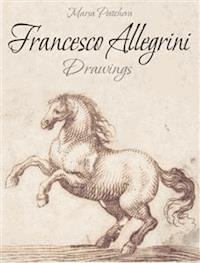
Francesco Allegrini was the son of the painter Flaminio Allegrini, who is documented as working in Rome between 1625 and 1635. Francesco was mostly active in Rome in the middle of the 17th century. He is thought to be a pupil and follower of Cavaliere d’Arpino, before entering the studio of Pietro da Cortona.Allegrini was elected to the Accademia di San Luca in 1655, together with Pierfrancesco Mola, and had a productive career as a fresco painter. He received commissions from many of the leading Roman noble families, including the Mattei, Aldobrandini, Colonna and Altieri. For Pope Innocent X he frescoed the Palazzo Pamphili with scenes from the story of Dido and Aeneas in the early 1650’s, while for Alexander VII he contributed to the decoration of the Vatican loggia. Allegrini was also active in the Roman churches of Sant’Agnese, Santi Domenico e Sisto, San Marco and the convent of Santa Maria sopra Minerva. He painted a number of works in his native Gubbio around 1660, and may have worked in Genoa.Allegrini was a prolific draughtsman, although only rarely can his drawings be connected with known paintings or frescoes. He worked mainly in pen and ink, but also in chalk and wash. He stressed his natural gift for drawing and his taste for the minute; he saw the essence of his graphic art in the graceful, appealing penmanship.Large groups of drawings by Allegrini, characterized by rapid, sketchy pen-work and relatively small dimensions, are in the National Gallery of Scotland in Edinburgh, the Metropolitan Museum of Art in New York and the Museum der bildenden Künste in Leipzig.
Das E-Book können Sie in Legimi-Apps oder einer beliebigen App lesen, die das folgende Format unterstützen:
Veröffentlichungsjahr: 2015
Ähnliche


Francesco Allegrini: Drawings
By Maria Peitcheva
First Edition
*****
Francesco Allegrini: Drawings
*****
Copyright © 2015 by Maria Peitcheva
Foreword
Francesco Allegrini was the son of the painter Flaminio Allegrini, who is documented as working in Rome between 1625 and 1635. Francesco was mostly active in Rome in the middle of the 17th century. He is thought to be a pupil and follower of Cavaliere d’Arpino, before entering the studio of Pietro da Cortona.
Allegrini was elected to the Accademia di San Luca in 1655, together with Pierfrancesco Mola, and had a productive career as a fresco painter. He received commissions from many of the leading Roman noble families, including the Mattei, Aldobrandini, Colonna and Altieri. For Pope Innocent X he frescoed the Palazzo Pamphili with scenes from the story of Dido and Aeneas in the early 1650’s, while for Alexander VII he contributed to the decoration of the Vaticanloggia. Allegrini was also active in the Roman churches of Sant’Agnese, Santi Domenico e Sisto, San Marco and the convent of Santa Maria sopra Minerva. He painted a number of works in his native Gubbio around 1660, and may have worked in Genoa.
Allegrini was a prolific draughtsman, although only rarely can his drawings be connected with known paintings or frescoes. He worked mainly in pen and ink, but also in chalk and wash. He stressed his natural gift for drawing and his taste for the minute; he saw the essence of his graphic art in the graceful, appealing penmanship.
Large groups of drawings by Allegrini, characterized by rapid, sketchy pen-work and relatively small dimensions, are in the National Gallery of Scotland in Edinburgh, the Metropolitan Museum of Art in New York and the Museum der bildenden Künste in Leipzig.
Drawings
Cavalcade with Camels and Other Animals
Pen and brown ink and brown wash on laid paper mounted on board
Detail
Detail
Fighting Women with a Row of Seated Spectators Above
Pen and brown ink with brown wash on laid paper
Detail
Detail
Scene from Roman History
Pen and brown ink and brown wash with black chalk on laid paper
Detail
Detail
Figures Before a Pyramid
Pen and brown ink on laid paper
Detail




