



4,99 €
Mehr erfahren.
- Herausgeber: Lorhainne Eckhart, INC.
- Kategorie: Gesellschafts- und Liebesromane
- Serie: The Wilde Brothers
- Sprache: Englisch
When Logan Wilde takes a job as a sheriff in a small Idaho town, he expects a quiet, peaceful life that will bore him to tears...until he walks through the door of Julia Cooper's cafe.
– "This one had it all--surprise, suspense, trauma and romance. It really kept your attention from beginning to end.” Kindle Customer
–“From the realistic flashback scenes to the awkward beginning and resistance of a budding relationship. Lorhainne Eckhart has crafted another book that will keep you turning the pages.” Frugal Girl
In FRIENDLY FIRE, after a roadside bomb ends his career in the marines, Logan Wilde struggles to put his life back together, taking a job as a sheriff in a small Idaho town. He expects a quiet, peaceful life that will bore him to tears. Until he walks through the door of Julia Cooper’s cafe.
From the moment the new sheriff walks into Julia’s cafe, she fights the attraction from the new sheriff, a man she recognizes is ex-military and has baggage that comes along with it. Even though she’s never felt this way for another man, Julia isn’t willing to take a chance with Logan. No she’s convinced herself she needs stability, someone average, someone who has never handled a gun. Except when her daughter disappears its Logan who’s there for her, it’s Logan she turns to, and Logan who turns the town upside down searching for her.
But what Logan realizes is the disappearance of her daughter may not be as it seems, and while Julia waits on the sidelines she wonders if she’ll ever be able to trust again and open her heart and take a chance on love.
Das E-Book können Sie in Legimi-Apps oder einer beliebigen App lesen, die das folgende Format unterstützen:
Seitenzahl: 238
Veröffentlichungsjahr: 2021
Ähnliche














Copyright Information
FRIENDLY FIRE, The Wilde Brothers
COPYRIGHT © Lorhainne Ekelund, 2014, All Rights Reserved.
No part of this book may be used or reproduced in any manner whatsoever without written permission of the author except in the case of brief quotations embodied in critical articles or reviews.
This ebook is licensed for your personal enjoyment only. This ebook may not be re-sold or given away to other people. If you would like to share this book with another person, please purchase an additional copy for each recipient. This is a work of fiction. Names, characters, places, and incidents are either the product of the author’s imagination or are used fictitiously, and any resemblance to actual persons living or dead, business establishments, events, or locales is entirely coincidental.
Contact Information: [email protected]
Editor: Talia Leduc, Leandra Hanes
Friendly Fire
The Wilde Brothers
Book 3
Lorhainne Eckhart
Contents
Keep in touch with Lorhainne
The Wilde Brothers
Friendly Fire
Chapter 1
Chapter 2
Chapter 3
Chapter 4
Chapter 5
Chapter 6
Chapter 7
Chapter 8
Chapter 9
Chapter 10
Chapter 11
Chapter 12
Chapter 13
Chapter 14
Chapter 15
Chapter 16
Chapter 17
Chapter 18
Chapter 19
Chapter 20
Chapter 21
Chapter 22
Chapter 23
Chapter 24
Chapter 25
Chapter 26
Chapter 27
Chapter 28
Chapter 29
Chapter 30
Chapter 31
Chapter 32
What’s next in The Wilde Brothers
Chapter 1
Uncover the Mystery of Shadow Game
The Watchers
Shadow Game
About the Author
Series Available
Links to Lorhainne Eckhart’s Booklist
Keep in touch with Lorhainne
Sign-up for Lorhainne’s Newsletter & Monday Blog
Like Lorhainne on Facebook
Follow Lorhainne on Instagram
Follow Lorhainne on Twitter
Lorhainne’s Audiobooks on Audible
Follow Lorhainne on Bookbub
Follow Lorhainne on Amazon
Connect with me on Goodreads
Check-out Lorhainne’s Pinterest Boards
Follow me on Wattpad
The Wilde Brothers
Step into the world of the Wilde Brothers, a captivating family of Idaho, where the rugged charm of the west meets the allure of hot men and strong women in this delightful romantic family saga.
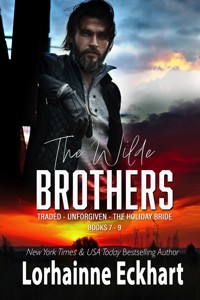
THE WILDE BROTHERS:
THE ONE: A passionate and stirring love story: After losing her job as a surgeon, Margaret retreats to her hometown — where she runs into Joe Wilde, the man she’s wanted for years.
THE HONEYMOON: In "THE HONEYMOON," Joe surprises his bride, Margaret, with an unconventional camping trip for their honeymoon, leaving her unsure about their future together.
FRIENDLY FIRE: In this gripping romance, Julia finds sizzling chemistry with Logan, a Marine veteran and the new town sheriff. But when Julia’s daughter goes missing, can Logan protect them both from harm?
NOT QUITE MARRIED: In “Not Quite Married,” Julia and Logan’s whirlwind romance faces challenges, and doubts arise as unexpected events test their love and trust in each other.
A MATTER OF TRUST: When oil executive Ben Wilde is sent to pitch a pipeline project in Kit Cove, he clashes with environmentalist Carrie Richardson, who opposes his plans. Despite their differences, a strong attraction develops between them, leading to a conflict between their feelings and their respective responsibilities.
THE RECKONING, A Wilde Brothers Christmas: The holiday season and family dynamics can be a wonderful reunion. Only the battle between two brothers, a father and son with unreconciled differences could ruin Christmas for the Wilde Brothers.
TRADED: When Chris overhears football star Jake begging his ex for a second chance, she can’t help offering him advice. And as they grow closer, their unlikely friendship sparks an attraction neither of them can resist…
UNFORGIVEN: Junior lawyer, Samuel Wilde has an unbreakable bond with his brothers—that is, until one woman comes between them, threatening to divide the Wilde family forever.
THE HOLIDAY BRIDE: Trinity Cooper Wilde longs for a quiet Christmas with her hidden baby, but a snowstorm brings Deputy Garrett Franke, the man she's sworn to hate, to her door, unaware that the baby is his. As they become snowbound together, secrets unravel, and Trinity's plan to reveal the truth faces unexpected challenges.
Friendly Fire
—“I wish I could find a man like the Wilde Brothers.” - Tina
—“Read the whole thing in one day. A page turner from start to finish. Makes me wish I lived in Idaho.” – Diane
In FRIENDLY FIRE, after a roadside bomb ends his career in the Marines, Logan Wilde struggles to put his life back together, taking a job as a sheriff in a small Idaho town. He expects a quiet, peaceful life that will bore him to tears. Until he walks through the door of Julia Cooper's cafe.
From the moment the new sheriff walks into Julia’s cafe, she fights the attraction from the new sheriff, a man she recognizes is ex-military and has baggage that comes along with it. Even though she’s never felt this way for another man, Julia isn’t willing to take a chance with Logan. No she’s convinced herself she needs stability, someone average, someone who has never handled a gun. Except when her daughter disappears its Logan who’s there for her, it’s Logan she turns to, and Logan who turns the town upside down searching for her.
But what Logan realizes is the disappearance of her daughter may not be as it seems, and while Julia waits on the sidelines she wonders if she’ll ever be able to trust again and open her heart and take a chance on love.
ChapterOne
Don’t choke, don’t hesitate, the voice in his head urged over and over as Logan Wilde pounded the ground, kicking up dust and sand as he ran through the field, his finger locked on his rifle. As the squad leader, he was never supposed to go first, but he wanted—needed—to; even though his heart was pounding. Adrenaline surged through his veins like cool liquid from an IV. Sweat made his T-shirt and uniform stick to his chest, a second skin…and the smell, it was something he might never forget. The dirt and grit scraped his lungs, his nose, his mouth. He had been told he would get used to it eventually.
The heat and dirt and grunge didn’t get to him, though, no matter how uncomfortable they were. What got to him was the guilt and worry, needing to be first through the door, because if anyone was going to take a bullet, it had to be him. These were his men. He had trained them, and they were his brothers.
He hunkered down, resting his rifle on the sandy mound and looking through his scope, eyeing the roadblock ahead as his Marines took their position. His men all knew what to do. Many of them were still kids, but they trained together and lived together, and they knew each other better than most families. To Logan, these men were family. He didn’t have to look to know that Sergeant Mike Duffy was manning the tank-mounted machine gun or that Corporal Jeff Starly had his back.
He gave the order right before a high-pitched whistle caught his attention—then there was a flash, heat and pain. His muscles seized at the long, rough droning sound, intense pain ripping through his leg. He gasped, fighting past the sense of being strangled. He couldn’t get his breath. His eyes were open, and he was on his back, staring up at the light blue sky. Was it the sky? He blinked. The sound was deafening; everything happening in slow motion. Where was the brightness, the obscured sun, and the colorless desert? It made no sense, this dingy, speckled ceiling.
He blinked again. The buzzing kept going on and on, irritating him. It just wouldn’t stop. His heartbeat was a booming sound in his ears, and something twisted around his legs, pulling him down. This time, he couldn’t get away. He was drowning, he was sure. Something had him, and he thrashed and fought. There was a crash, then silence. No noise, no buzz—nothing. He just stared. Logan blinked, trying to make sense of what he was seeing.
He took a breath, beads of sweat rolling off his forehead as he tried to swallow past the dryness in his throat—his heart hammering in his chest. When he went to lift his hand, twisted in the sheets, he yanked it free and heard the cloth tear. He was naked, out of breath as if he’d been running for miles, and he was drenched with sweat. His face, his chest, even his hands were damp. He stared at a spot on the wall and then lower, to a shattered black alarm clock in the corner, then to his gun on the nightstand beside him.
Logan Wilde lowered his face to his hands and scrubbed hard over a day-old beard. “Get a grip,” he muttered, his hands trembling as he tried to shake off the dream that returned every time he closed his eyes. He never knew when the dream would hit him. It always crept up on him, sucking him back into the insanity of war. It took him a minute now, as he stood on shaky legs, staring at the plain, boxlike bedroom, his clothes stacked on a three-drawer dresser, before it started to come back to him. He had taken a job in MacKay, a small town, part of a ranching community nestled in a charming valley with Idaho’s nine highest peaks right at its back door.
This should have given him peace. MacKay had everything he wanted, everything he needed. He had told himself over and over that this would be good for him. He took in the rumpled double bed, nightstand, and dresser that had come with the older two-bedroom house he was renting at the edge of town. It was all he needed, since it was already furnished with everything, including a coffeepot in the kitchen. It was perfect, no stress, easy: So why was he still having these damn dreams?
He sat back on the edge of the bed, the mattress dipping, and lowered his head in his hands. He ran his fingers roughly through his short, rumpled hair and over the back of his head. His damn hands still wouldn’t quit shaking. He held them up in front of his face, worried for a minute that he’d see blood; and let out a sigh of relief when he didn’t. He blinked, sweat rolling off his brow and down the bridge of his nose. His large, calloused, tanned hands should have been steady and sure and solid—instead he felt like some wet-behind-the-ears kid.
“Get a grip. Come on, it’s not real,” he said, his gruff voice sounding strange to his own ears. He was a man on the edge; losing control. He had dangled between life and death, seeing all the horrors of battle. He had teetered with one foot over that edge during the seventeen days he had been in a coma; tubes sticking out of him, a ventilator breathing for him. He had been left without a spleen, his skull fractured, his leg having to be pieced back together—all because of the roadside bomb he had never spotted. The explosion had ended his career as a first sergeant in the Marines, but that wasn’t the worst of it. No, the worst thing was his memories of the people he had lost because of that mistake.
ChapterTwo
Logan rinsed out the cheap white mug in the deep sink of his tiny kitchen. He took his time wiping it dry as he glanced out the back window at the young kids running and skipping past with their backpacks. He set the cup back in one of the six cupboards and snapped it closed. All the cupboards had been painted white, still bearing the dated handles from the Fifties. The cracked linoleum floor squeaked when he walked, but then, everything in this older house did; especially since Logan wasn’t a small man. He was the eldest of the Wilde brothers. He checked on his brothers often—not so often as to arouse suspicion, just enough for his own peace of mind.
He reminded himself that daily phone calls to check in weren’t okay—and weekly was pushing it. He could get away with a call every two weeks, just staying in touch, asking how things were going and all that. He did it as often as he could, one brother at a time, and his parents, too. The fact was that he worried about everything; fearing that something would come out of nowhere and take one of them down. It was this protective quality that defined him—it had just been amplified after he woke up in the hospital and was discharged from the Marines.
Even though the Wilde brothers could take care of themselves—strong, big boys, all built like linebackers—Logan believed none of them had the experience to deal with all the bad shit that could sneak up on them. After all, he was the eldest, wisest, and tallest of them all, as he often teased them. At six foot two, he was solid once again. He had managed to regain most of the muscle that had wasted away as he lay in that hospital bed; waiting for his shattered leg to heal. He pushed himself just like he always had, doing sit-ups, push-ups, everything—except running. The one thing he loved and had once done every day, jogging a five-mile stretch just to warm up. Now, his damn leg gave out on him time and again. The pain would come out of nowhere; making him feel useless and weak.
Today, he had put on a light tan shirt and blue jeans, sticking the sheriff’s badge to his shirtfront, his sidearm already clipped to his belt. He pulled out one of the wooden chairs around the small kitchen table and stuffed his feet into worn boots, lacing them up and then massaging his leg when an ache crept out and stole his breath. He used the pain to think, saying nothing, as he always did. He just waited and rubbed, and eventually it passed. He started toward the front door; reaching into the small closet and shrugging on a down vest before he stepped out the front door and into the cool, crisp morning. The sun was bright. He looked down at the cracked concrete steps, taking in the uneven cement and overgrown front yard; his black Jeep parked out front.
Logan drove the two blocks to the sheriff’s station on Main Street. It was an older building, a single story with a wood frame, in a small town of just over six hundred people. It was sleepy and quiet, and Logan wondered how bored he’d be. It would be refreshing, just what he needed…maybe. He winced.
He parked out front and made his way inside, taking in the front door. The word “Sheriff,” printed in red across the glass plate. The main room was rustic, with two desks in front and two desks against the back wall, a fan in the corner beside a tall black filing cabinet that should have been retired a century ago. A woman was talking on the phone, writing something down, and she peered up at him from behind her bifocals. She had short, curly black hair, and she was older, a little on the chunky side. Logan would put her in her sixties; around his mother’s age.
She hung up the rotary dial phone, which seemed to go with everything in this office—and this town, for that matter. She must have noticed his badge, his gun, or maybe the way he couldn’t help but take everything in. The papers on her desk were neat and orderly, the pens tucked into a jar at one corner.
“You must be the new sheriff,” she said, smiling. Her teeth were crooked in the front, and she had creases around her eyes and mouth, with a little sparkle in her hazel eyes.
“Logan Wilde,” he said, nodding down to the woman as she stood.
She still had to look way up at him as she held out her hand. “Rose Barnes,” she said.
He took her tiny, wrinkled hand, and she shook his without hesitating. Most people—especially women—hesitated, but not Rose. She appeared happy, confident; not nervous around him at all. “So what do you do here, Rose?” he asked.
“I run the place, Sheriff. You need anything, you ask me. I answer the phones, run the radio, take reports, complaints... Whatever it is folks call about. I make everything easier for you.” She started around her desk with surprising speed; heading to another desk where a man dressed in a deputy’s uniform was hunkered down. He had light hair and was a little on the lean side, young and blue eyed. She set a piece of paper on his desk.
“Clinton, there’s trouble out at the old Shepard place, some teens messing around,” she said. “Will called it in. There were beer bottles scattered, looked like they had quite a party. Sheriff, this here is your deputy, Clinton.” She patted the young man’s shoulder as if he were a son or relative.
The younger man stood up, almost reaching Logan’s height. “Sheriff, nice to meet you,” he said. He was thin and didn’t appear to have much muscle. He stuck out his hand, and Logan studied him for a moment—probably the same way he would have studied any of his young Marines. He winced, seeing “green” written all over this guy.
Logan took his hand in a brief handshake; nothing as solid as Rose’s. The young deputy was sweating above his brow. “How old are you?” Logan asked. He set his hands on his hips, watching the younger man as he fidgeted with his sidearm.
“Turned twenty-four last month—have a wife and baby, too,” he added as if trying to make a point. Logan thought he had just proven that he was young, stupid—and maybe, idealistic, too.
“And how long you been a deputy?”
The young man flushed. “A year now. I know what I’m doing, Sheriff,” he stated as Logan continued to scrutinize him.
“You know how to use a gun without shooting your foot off?”
“I grew up with guns. I’ve been handling them since I was twelve.” He sounded defensive, and Rose made a clucking sound.
“Well, we’ll see,” Logan said. “Until I know what you can do, you’re on the desk or with me. Rose, you put everything through me from now on.”
She exchanged an odd look with Clinton and then took the paper from the desk, handing it to Logan. She pursed her lips firmly as if she was holding back what she really wanted to say. It was odd—it reminded him of something his mother would do when she was annoyed. She gestured to an open door. “Your office is over there, Sheriff.”
He started toward a glassed-in office with two windows and tired, off-white walls covered in photos—some of retired sheriffs and one of the town sixty years earlier, in black and white. The desk was old oak, solid and clunky. The chair squeaked when he sat, but everything was neat and tidy, with nothing on the desk but an old, rotary dial, phone. Logan opened the drawers to see pens, paper, and crime reports all neatly organized.
He glanced up, and Rose was standing in front of the desk, frowning, while waiting for him to finish his perusal. “Rose, tell me about the guy who called in to report the trouble,” he said.
One thing he had learned the hard way was to have all the facts before he walked into anything. Not knowing the first thing about anyone here—the ranchers, the townsfolk, the hooligans—was the same as walking blind into a firefight, which he had no intention of doing.
“Well, Sheriff, that trouble is about as rowdy as it gets here, most days. Will is an old-timer, in his late seventies, owns a ranch just south of town, two hundred acres. There’s nothing around the old barn at the east end of the property, where he stores hay, so it’s the perfect spot for kids to sneak in to. They do now and then; and this time they left a mess: beer bottles, cigarette butts, some junk food wrappers. Kids, you know. The door was chained—Will started doing that—but this time they shimmied in through the loft. Oh, and, Sheriff—there’s a curfew here, just so you know.”
That had Logan’s attention. He leaned back in the stiff wooden chair, and the hinge squeaked as he stretched out his aching leg. Rose wasn’t scared of him one bit. She was a woman he liked, a woman he could respect. “Curfew? Please explain that,” he said.
“Well, kids, under eighteen, who wander around all night—must be looking for trouble. On school nights, they have to be in at eleven, and midnight on weekends—no exceptions. We’re a small town, and the kids need direction, a strong hand. The curfew was implemented years ago by the town council, and it works.”
“If it works so well, what was this little party all about?” Logan asked.
Rose wasn’t deterred at all by his comment. “They’re kids, Sheriff. They always find a way to blow off some steam.”
He grunted as he stood up. “So who all works here?” he asked, taking in the report, the address and details noted in Rose’s neat hand.
“Clinton works days, and then you have Jordy, who’s been covering most nights and weekends. He’s not expected in until later,” she said. Her tone had Logan wondering what kind of politics went on in the office. She didn’t have to say any more for him to notice that she appeared instantly irritated. “Anything else I can do for you, Sheriff?”
“No. I guess I’ll be taking Clinton out with me. We’ll take my Jeep,” he added as he strode into the bullpen, the creak of the floor echoing with each step. “Come on, Clinton. Let’s go pay a visit to Will.”
“Sheriff, there’s a car for you, and it has a radio in it,” Rose said.
Logan paused. “No, my Jeep’s good. I like to know what I’m driving.”
“There’s no radio in your Jeep,” she insisted. “How am I supposed to call you and get a hold of you?”
He paused with his hand on the door. “Call my cell phone,” he said before rattling off the number. He took in the old western feel of the office as he shouted over his shoulder, “Move it, Clinton!”
“Yes, sir,” Clinton said. Rose scribbled down the number as he lifted his jacket off the hook and hurried to catch up. Logan couldn’t shake the sense that his deputy was wet behind the ears; a rookie with more ego than common sense—not a good combination at all.
ChapterThree
It had been interesting, to say the least, being on this side of the law and listening to the petty squabbles of some old-timer. There were half a dozen empty beer cans in the barn, along with empty bags of chips and scattered cigarette butts. It was a dangerous stunt for the kids to have pulled; considering the barn was filled with hay. If it had gone up, there wouldn’t have been anything to stop it. The only thing the volunteer fire department could have done was stand back and let it burn. Of course, the entire thirty minutes Logan had been at the scene, Will had addressed Clinton. Adding, half a dozen times—that Sheriff Wilcox, now retired, would have known exactly who had been in the barn and would have taken care of it. In fact, he would have had those kids back there, cleaning up the mess.
Logan had said nothing other than warning Will to get a better lock. On the way back to town, Clinton had filled him in on the teens in the area; telling him which ones were problem kids and running through a list of some of the local families.
“Johnny Rhodes is the town bad boy,” Clinton said. “His dad is Stan Rhodes, who has a cattle ranch next to Will’s spread. Several kids follow him: Kim Hendricks, Connie Brattman, and a few others.”
“So you’re saying Johnny is responsible?” Logan said. He was beginning to seriously wonder what the point was in pursuing this. The kids were just blowing off steam. It seemed like a waste of time to track them down and figure out who had been there, let alone to get one of them to talk to him. He tapped his steering wheel, wondering if this was the extent of crime around here aside from speeding tickets and noise complaints. This was possibly the sleepiest town in the west.
“Not much goes on around here without Sheriff Wilcox knowing,” Clinton added, wearing his shades in the passenger seat, stirring Logan from his thoughts.
It was obvious that everyone would’ve preferred to have the old sheriff back, along with all his old ways. Logan couldn’t help being irritated. There was one thing he wasn’t about to do, and that was kiss anyone’s ass. “Let’s stop in town, grab some lunch, then call Stan Rhodes and his son, get them to come in and pay us a visit,” Logan said, wondering if this was what a typical day would be like here. “So tell me about your family, Clinton. How long you been married?”
Clinton seemed to perk up, sliding around in his seat. “Three years, coming up. Jenny and I went to high school together.”
“High-school sweethearts, huh?” Logan said, counting back. Clinton must have been just a kid when he got married.
“Well, actually, no. She didn’t know I existed until the quarterback she was dating broke her heart. I just happened to be there. I was eighteen then, just graduated. I sucked up the nerve to ask her out for coffee. She was so damn pretty, so sweet. I couldn’t believe it when she said yes.”
Logan looked over to see that Clinton wore a goofy grin, all white teeth flashing. He looked just like the boys in his unit who had been shipped overseas; those who had supposedly been trained as Marines but could barely wipe their own noses.
“We just had a baby girl, four months old. Lord, the day we were married was the happiest day of my life, but when my daughter was born…” He pulled his cell phone out and flicked the screen, angling it and showing off a picture of a chubby baby in the arms of a dark-haired woman who looked as if she, too, was still a kid.
“Cute,” Logan said. “So where’s a good place in town to grab a bite to eat?” He pulled down Main Street in the area Clinton gestured toward.
“Over at Tree’s, right on the corner. Julia Cooper—pretty gal—she makes the best sandwiches and soup, baked goods, coffee… Better than my wife’s, but don’t tell Jenny that.” He chuckled, and Logan glanced over at him, shaking his head. One day, this kid would say something that would get him in a world of trouble.
Logan saw the sign over the door, a big oval carved with a tree and roots. A plastic sign on the door said “Open.” Logan pulled in front, angling into a parking spot.
When he stepped out, Clinton shut the passenger door and pointed to his phone. “I generally go home for lunch,” he said. “Let me give my wife a call. I’ll be right in, Sheriff.”
Logan took in his deputy. The gun strapped to his side should have given him confidence, but the way he spoke about his wife made his courage seem fleeting.
“I’ll be inside,” Logan said.
He took in the coffeehouse, with about half a dozen tables and a glassed-in counter holding baked goods, sandwiches, and deli meats. He scanned the chalk menu board and strode up to the counter, where a woman with cropped dark hair had her back to him. She wore a white apron over a black long-sleeved shirt and blue jeans, and she turned around and glanced up at Logan with a bright smile and a round face—and the most stunning green eyes he’d ever seen.
She hesitated, holding a plated sandwich. “Hey, there. I’ll be right with you,” she said. She had a killer smile as she strode around the counter and over to a table, setting a sandwich in front of an older man wearing a cowboy hat. She said something and then hurried back behind the counter. She had a neat and trim figure, with a small, rounded ass.




