


12,99 €
Mehr erfahren.
- Herausgeber: No Exit Press
- Kategorie: Krimi
- Sprache: Englisch
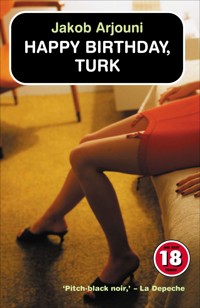
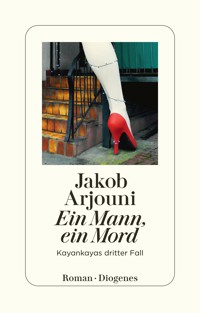
A Kemal Kayankaya Mystery A Turkish worker - Ahmed Hamul - is stabbed to death in Frankfurt's red-light district - certainly no reason for the local police to work overtime. Kemal Kayankaya, however has a different attitude. He is 26, born in Turkey, raised in Germany and now working as a Private Investigator. He has a German passport but has first hand experience of resentment against foreigners and now Hamul's wife, Ilter, has hired Kayankaya to find out who murdered her husband. In the 3 days it takes him to wrap up the case, he has time to identify Ilter's sister as a heroin addict, track down Ahmed's girlfriend [a prostitute], link his father-in-law's fatal accident three years earlier to an ingenious police cover-up, and still survive beatings, gas attacks and a close encounter with a Fiat.
Das E-Book können Sie in Legimi-Apps oder einer beliebigen App lesen, die das folgende Format unterstützen:
Veröffentlichungsjahr: 2013
Ähnliche









A Kemal Kayankaya Mystery
A Turkish worker - Ahmed Hamul - is stabbed to death in Frankfurt's red-light district - certainly no reason for the local police to work overtime. Kemal Kayankaya, however, has a different attitude. He is 26, born in Turkey, raised in Germany and now working as a Private Investigator. He has a German passport but has first hand experience of resentment against foreigners and now Hamul's wife, Ilter, has hired Kayankaya to find out who murdered her husband.
In the 3 days it takes him to wrap up the case, he has time to identify Ilter's sister as a heroin addict, track down Ahmed's girlfriend [a prostitute], link his father-in-law's fatal accident three years earlier to an ingenious police cover-up, and still survive beatings, gas attacks and a close encounter with a Fiat.
Jakob Arjouni was only 20 when his first bestselling crime novel was published in Germany and was such a literary prodigy that he had managed to create a substantial and durable body of work by the time of his death in January 2013 at the age of 48. This output includes the five pioneering novels featuring Kemal Kayankaya, a Turkish-German private eye, which began with Happy Birthday, Türke! in 1985. An immediate success, it was filmed by the director Doris Dörrie in 1992 and subsequently published by No Exit in 1995.
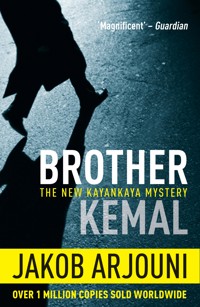
The final Kayankaya novel, Brother Kemal, which Arjouni wrote against the terrible knowledge of a diagnosis of pancreatic cancer, will be published this summer by No Exit alongside reissues of the earlier books in the series.
Arjouni’s fascination with detective fiction was shaped by external influences. Two of his literary heroes were Raymond Chandler and Georges Simenon. From the American, he took the figure of the private eye as a flawed but honest outsider; from the Belgian, he learned the importance of psychological characterisation.
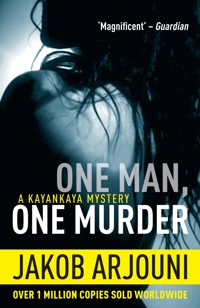
But while these mentors clearly informed the creation of Kayankaya, with the detective’s status as the son of Turkish immigrants giving a fresh twist to the tradition of the investigator as an odd one out, Arjouni brought to the form an eye for social and historical detail that was entirely his own. Kismet (2001) deals with the consequences in Europe of the Balkan wars, while One Man, One Murder (1992), which won the German Crime Fiction prize, has a background of sex trafficking. Characteristically, the final Kayankaya book explores the limits of free speech and religious tolerance as the private eye protects an author under death threat from Islamists at the Frankfurt Book Fair.
Born in Frankfurt as Jakob Michelsen (Arjouni was a pseudonym), he had an early literary role model: his father, Hans Günter Michelsen, was a successful dramatist and Jakob wrote a number of early plays before settling on the novel as his preferred form. His father gave him inadvertent but invaluable research for his future crime stories because of a fondness for taking his family to restaurants in an area of the city that was in the process of transition from red-light district to international quarter. Pungently seedy details of the rougher parts of Frankfurt are a particular feature of the Kayankaya books.
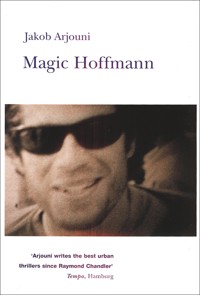
While the Kayankaya novels were the basis of his initial reputation and income, they appeared at very wide intervals. Arjouni was prolific between them. Magic Hoffmann (1996) was a story of bohemians in Berlin planning a bank robbery. Chez Max (2009) was generally considered one of the most original and thoughtful fictional responses to 9/11: it was set in a dystopian Europe in 2064, where a fenced-off community hides from terrorism and unrest. The powerful English translation was by his regular interpreter in the UK, Anthea Bell.
Modest, blazingly intelligent and thoughtful, his work both inside the crime genre and beyond it makes Jakob Arjouni a formidable figure in modern German literature
Mark Lawson
noexit.co.uk/jakobarjouni/
Jakob Arjouni: 1964-2013
Praise for Jakob Arjouni
‘It takes an outsider to be a great detective, and Kemal Kayankaya is just that’ – Independent
‘A worthy grandson of Marlowe and Spade’ – Stern
‘Jakob Arjouni writes the best urban thrillers since Raymond Chandler’- Tempo
‘There is hardly another German-speaking writer who is as sure of his milieu as Arjouni is. He draws incredibly vivid pictures of people and their fates in just a few words. He is a master of the sketch – and the caricature – who operates with the most economic of means’ – Die Welt, Berlin
‘Kemal Kayankaya is the ultimate outsider among hard-boiled private eyes’ – Marilyn Stasio, New York Times
‘Arjouni is a master of authentic background descriptions and an original story teller’ – Frankfurter Allgemeine Sonntagszeitung
‘Arjouni tells real-life stories, and they virtually never have a happy ending. He tells them so well, with such flexible dialogue and cleverly maintained tension, that it is impossible to put his books down’ – El País, Madrid
‘His virtuosity, humour and feeling for tension are a ray of hope in literature on the other side of the Rhine’ – Actuel, Paris
‘Jakob Arjouni is good at virtually everything: gripping stories, situational comedy, loving character sketches and apparently coincidental polemic commentary’ – Süddeutsche Zeitung, Munich
‘A genuine storyteller who beguiles his readers without the need of tricks’ – L’Unità, Milan
www.noexit.co.uk
Table of Contents
Day One
1
2
3
4
5
Day Two
1
2
3
4
5
6
7
8
Day Three
1
2
3
4
5
Copyright
DAY ONE
1
There was an unbearable buzzing in my ears. My hand struck, time and again, but its aim was off. Ear, nose, mouth—mercilessly it attacked them all. I turned away, turned back again. No way. This was murder.
Finally I opened my eyes and located the damned fly. Fat and black it sat on the white coverlet. I took proper aim, then got up to wash my hands, taking care not to look in the mirror. I went to the kitchen, put some water on, looked for fresh filters. Before long this activity produced a cup of steaming hot coffee. It was August eleventh, nineteen eighty-three. My birthday.
The sun squinted at me, high in the sky. I sipped my coffee, spat grounds onto the kitchen tiles, tried to remember the previous evening. To begin my birthday celebrations in an appropriate fashion, I had splurged on a bottle of Chivas. That was a fact, proven by the empty bottle in front of me on the table. At some point I had trotted off to look for company. After a while I had found the retired fellow who lives with his dachshund on the floor above me and with whom I play the occasional game of backgammon. I had run into him in the hallway as he was about to take his dog for a pee.
“G’d evening, Herr Maier-Dietrich. How about a little manly conversation over a bottle of firewater?”
He liked the idea, and we made a date.
“Watch out no one steps on your dog by mistake,” I called after him, but I don’t think he heard me.
I watched a dozen deaths on television and dispatched the first glass of Chivas to my liver. Then Maier-Dietrich rang the doorbell and limped in. He was fond of saying, not without a smile, that the Russkis had stolen his leg.
The evening proceeded according to expectation. We talked about cars we couldn’t afford and women we couldn’t get into bed. He was past that, anyway. Later we pinched two bottles of Mariacron from the cellar of the greengrocer on the ground floor, and at some still later hour reeled into our beds.
I sipped my coffee, and stared at the empty bottle. Birthday. “Well,” I thought, “wouldn’t it be nice if someone showed up with a present and a cake.” I couldn’t imagine who that would be. After last night, Mr. Maier-Dietrich could only be asleep or dead. Besides, he doesn’t know how to bake anything, and would probably, forgetful of last night, just present me with a half-empty bottle of Mariacron.
I took an open jar of pickled herring salad out of the refrigerator and poked at it without enthusiasm. The bluish-grey iridescent skin on the bits of fish gleamed in the sunlight. Half a fin stuck out between two bits of cucumber.
I tossed the jar into the garbage, opened a bottle of beer, lit a cigarette. Somewhere a kettle whistled. The sound sliced into my brain.
Then the phone rang. I crawled over and picked it up. “Heinzi, is that you?” the receiver screamed. Heinzi is not my name, nor would I like it to be, but I replied with a cheerful affirmative.
“Heinzi, dear Heinzi, I’m so incredibly glad to hear your voice. I tried to get you all last evening, but you weren’t home. Do you know what has happened”
I didn’t.
“You know, I went to see the doctor, and what do you think he told me, Heinzi? Heinzi?”
Once more I encouraged her with an expectant “Yes?”
“He told me I’m expecting a baby!”
I began to worry that she might jump out of the phone to wrap her arms around me.
“A baby, Heinzi! Do you understand? At last, at last! It worked—just as we’d almost given up on the whole thing! Heinzi, I’m so happy, and I was right, you see, you just have to really really want it.”
I pondered ways of conveying a warning to this Heinzi. “Heinzi, darling, say something? Please?”
“McDonald’s fast foods, department of fishburgers and apple turnovers. What can I do for you?”
“What? So it isn’t you? Excuse me, I must have dialled wrong.”
We hung up. My ears were still humming while I stood in the shower, slowly waking up. The phone rang again, and again. Heinzi must not have given her his real number.
I shaved, dressed, poured the rest of the beer down the drain, and left the apartment.
In my mailbox lay an invitation to purchase pork chops, bathing suits, and toothpaste, and a flier from a mortician. Nothing else.
I scribbled a friendly “Good Morning” on the flier and stuck it in Maier-Dietrich’s mailbox. The front door swung open and the greengrocer stumbled in, burdened with bananas. By way of greeting he mumbled something about lazy riffraff and quickly disappeared into his apartment.
I lit a cigarette, stepped out onto the sweaty pavement, and found my green Opel Kadett in a no parking zone a little way down the block. I did have some mail under the windshield wipers. The city was sweltering, and the car almost burned my fingers as I got into it. The air felt and smelled like a sauna someone had left his dirty socks in.
I drove off, enjoying the tepid airstream. It was eleven o’clock, and the streets were empty; people were either vegetating in their offices or lazing by the pool. Only a couple of housewives could be seen trotting down the street with their shopping bags. I squeezed the Kadett into a space two blocks from my office.
My office is in the outskirts of downtown Frankfurt, well protected by a few thousand Americans who had erected their apartment boxes there after the war. Framed by barbed wire, the green and yellow facades go on for kilometres, interrupted here and there by greasy fried chicken or burger joints.
There is a small bakery just across the street. I went in to get something for breakfast.
Behind the counter stood the owner’s corpulent daughter, an impressive advertisement for her father’s dough. She was wearing a garment of daring cut. One could see beige bra straps embedded in pink skin. I waited while an older lady picked out goodies for at least a hundred other older ladies, then purred, “What do you have in the way of tortes today, my dear?” It was my birthday.
“Sacher torte, Black Forest torte, rum torte, layer torte, and cream torte.” She rattled that off with a smile, then leaned forward and whispered, “But Papa messed up the rum torte.”
I decided on two pieces of Sacher, picked a bag of coffee off the shelf, paid, gave her a mysterious wink, and proceeded across the street to number seventy-three.
My office is on the third floor of a medium-sized light brown pile of concrete. Here too I checked the mailbox, with equally disappointing results. The entrance hall and staircase smelled of disinfectant. Quiet whimpers emanated from the dentist’s office on the second floor. I slammed the mailbox shut, climbed the stairs, and inserted my key in the office door.
KEMAL KAYANKAYA PRIVATE INVESTIGATIONS
I became a private investigator three years ago. I became a Turk when I was born. Both my father, Tarik Kayankaya, and my mother, Ülkü Kayankaya, were from Ankara. My mother died when I was born, in 1957. She was twenty-eight. A year later, my father, a locksmith by profession, decided to go to Germany. War and dictatorship had killed off his family; for reasons that remained unknown to me, my mother’s relatives did not approve of him, and so he took me along, since he couldn’t leave me anywhere else.
He went to Frankfurt and worked for three years for the municipal garbage disposal service, until he was run over by a mail truck. I was put in an orphanage, got lucky, and was adopted after only a few weeks, by the Holzheims. I became a German citizen. The Holzheims had another adopted child, my so-called brother Fritz. At the time Fritz was five, a year older than me. Max Holzheim taught mathematics and athletics at an elementary school, Anneliese Holzheim worked in a nursery school three days a week. They adopted children as a matter of conviction.
Thus I grew up in a thoroughly German milieu, and it was a long time before I began to look for my true parents. At the age of seventeen I travelled to Turkey, but wasn’t able to find out any more about my family than I already knew from the orphanage records.
I graduated from high school with average grades, went on to college, dropped out, passed the time with this and that, and applied, three years ago, for a private investigator’s licence. To my surprise, I received it. There are times when I enjoy my job.
I deposited the torte in the refrigerator and noticed that the interior smelled of mildewed tomato paste. Then I pulled up the blind, opened the window, and kept an eye out for wealthy, good-looking female clients. Heat and light streamed into the office. After putting on water for coffee, I went back to lean on the windowsill. The street remained empty except for a fat, pasty-faced cowboy jogging down the pavement. “Congratulations,” I thought, and tried to spit into a slipper sitting on a balcony on the floor below me. I stood there staring at those slippers for a while. Then the kettle squealed and I made coffee, scratched dried spaghetti remains off a plate, retrieved the torte from the refrigerator, changed the flypaper, lit a candle, and sat down at my desk. A wasp buzzed in through the window and began to fly in erratic circles, zeroing in on the baked goods. I grabbed a newspaper and folded it and was still in hot pursuit when the door-bell rang.
“It’s open,” I shouted, and smashed the wasp.
The door opened slowly. Something black slunk in and scrutinised me and my office with apprehensive eyes.
“Good morning,” I growled.
The black thing was a small Turkish woman in a mourning veil and thick gold earrings. She wore her hair in a severe braid, and there were shadows under her eyes.
I tossed the newspaper in a corner and said, in a slightly friendlier tone, “Good morning.” Pause. “Won’t you have a seat?”
She remained silent. Only her eyes darted around the room.
“Ahem …” I searched for things to say. “Is your visit of a private nature, or do you wish to employ me as an investigator?”
“Or as a private investigator,” I thought—but even the kindliest audience would not have found that very amusing.
She mumbled something in Turkish, a language I don’t understand even when it is spoken loudly and clearly. I explained to her that I was indeed an ethnic compatriot, but that due to special circumstances I neither spoke nor comprehended the Turkish tongue. She frowned, whispered, “Auf Wiedersehen,” and turned to leave.
“Come on, wait a minute. We’ll manage to communicate somehow, don’t you think? Please take the weight off your feet and tell me why you’ve climbed all the way up here to see me in this heat. OK?”
Her earrings quivered doubtfully.
“I just made some coffee, you see, and … well, we can have some coffee and a little cake and—right, that’s what we can do. That suit you?”
I was running out of patience. Finally her lips parted and breathed, “All right.”
“Make yourself at home. I’ll see about a second plate. Just a moment.”
Above my office are the quarters of a dubious credit institution whose source of profit lies in the fine print. The clerk of this shop, a sleepy bald fellow, sometimes descends for a chat, usually with a bottle of cherry liqueur under his arm.
Pondering what this mute Turkish woman might want from me, I ran upstairs and banged on the door with the legend: WE MAKE YOUR WISHES COME TRUE—BÄUMLER AND ZANK CREDIT INSTITUTION.
There was a grunt, and I went in. The clerk was sitting behind the reception desk looking bored, turning the pages of a soccer magazine.
“So what’s up, Mustafa?”
“I need a plate and a fork. Can you find such things in this dump?”
‘What’s the dish? Shish kebab?”
“Maybe so.”
“I’ll see what I can do.”




