


3,99 €
Mehr erfahren.
- Herausgeber: via tolino media
- Kategorie: Geisteswissenschaft
- Sprache: Englisch
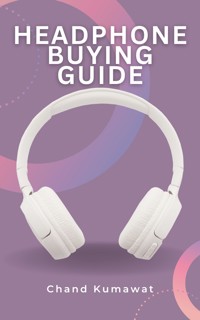
Looking for the perfect headphones to fit your lifestyle and needs? Look no further than this comprehensive headphone buying guide! Whether you're a music producer, fitness enthusiast, traveler, or podcast host, this guide has you covered. With in-depth chapters on everything from sound quality to wireless technology to headphone accessories, you'll learn everything you need to know to make an informed decision when purchasing headphones. Discover the benefits of active noise cancellation technology, the differences between open-back and closed-back headphones, and how to customize your sound with EQ. Learn how to care for your headphones to make them last longer and how to connect them to your audio equipment. With helpful tips on testing headphones before you buy and understanding headphone reviews, this guide has everything you need to make an informed decision. With this headphone buying guide in hand, you'll be able to find the perfect headphones to fit your lifestyle and take your listening experience to the next level.
Das E-Book können Sie in Legimi-Apps oder einer beliebigen App lesen, die das folgende Format unterstützen:
Veröffentlichungsjahr: 2023
Ähnliche


















Inhaltsverzeichnis
Introduction to Headphones: Types, Styles, and Features
Understanding Headphone Impedance and Sensitivity
How to Choose the Right Headphone Driver Type
Comfort and Fit: Finding Headphones That Match Your Needs
Choosing Between Wired and Wireless Headphones
Noise-Cancelling Headphones: Are They Worth the Investment?
Gaming Headphones: Features and Benefits
How to Choose the Right Headphones for Exercise
Headphones for Travel: Compact and Convenient Options
Understanding Frequency Response and Sound Quality
Finding the Best Headphones for Music Production
How to Choose Headphones for DJs and Live Performances
Headphone Amplifiers: Do You Need One?
Customizing Your Headphone Sound with EQ
How to Care for Your Headphones and Make Them Last Longer
Understanding Bluetooth Audio Codecs
The Benefits of Active Noise Cancellation Technology
Open-Back vs Closed-Back Headphones: What's the Difference
Finding Headphones for Podcasting and Voice Recording
Wireless Headphone Battery Life: What You Need to Know
How to Connect Headphones to Your Audio Equipment
Over-Ear vs On-Ear vs In-Ear Headphones: Which Is Best for You?
Understanding Headphone Sensitivity and Volume Levels
How to Choose the Right Headphone Cable
Finding the Best Headphones for Kids
How to Choose the Right Headphone Accessories
Headphone Reviews: How to Read and Interpret Them
How to Test Headphones Before You Buy
Conclusion: Choosing the Right Headphones for Your Lifestyle
Impressum
Headphone Buying Guide
Chand Kumawat
© 2023 Chand Kumawat. All rights reserved.
Imprint: Independently Published.
Email: [email protected]
Introduction to Headphones: Types, Styles, and Features
Headphones are essential tools for music lovers, audiophiles, podcasters, and anyone who enjoys listening to audio content. They allow us to enjoy our favorite music, movies, and podcasts without disturbing others around us. They also help us to focus on our work, especially in noisy environments. With so many different types and styles of headphones available, choosing the right one can be a daunting task. In this chapter, we will provide an introduction to headphones, the different types, styles, and features, to help you make an informed decision when buying a pair.
Types of Headphones
There are three main types of headphones: in-ear, on-ear, and over-ear. In-ear headphones, also known as earbuds, are small and portable and fit inside the ear canal. They are lightweight and ideal for use on the go. On-ear headphones rest on the ears and are larger than in-ear headphones. They are more comfortable to wear for extended periods and provide better sound quality. Over-ear headphones, also known as circumaural headphones, are the largest and most comfortable headphones. They completely cover the ears and provide excellent sound quality and noise isolation.
Styles of Headphones
Headphones come in various styles, including closed-back, open-back, and semi-open back. Closed-back headphones have a sealed design that isolates sound from the environment. They are ideal for listening to music in noisy environments or when you don't want to disturb others around you. Open-back headphones, on the other hand, have a design that allows sound to pass through the ear cups. They provide a more natural sound and are ideal for listening to music in quiet environments. Semi-open back headphones offer a balance between the two and provide a compromise between sound isolation and natural sound.
Features of Headphones
There are many features to consider when buying headphones, including noise-cancelling technology, wired or wireless connectivity, and driver type. Noise-cancelling technology reduces the amount of ambient noise that reaches the ear, providing a more immersive audio experience. There are two types of noise-cancelling technology: passive and active. Passive noise-cancelling is achieved through the design of the headphones, while active noise-cancelling uses built-in microphones to cancel out ambient noise.
Wired headphones are connected to audio sources via a cable, while wireless headphones connect via Bluetooth or other wireless technologies. Wireless headphones are more convenient and eliminate the need for cables, but wired headphones offer higher sound quality and don't require a battery.
The driver is the part of the headphone that converts electrical signals into sound waves. There are two main types of drivers: dynamic drivers and planar magnetic drivers. Dynamic drivers are the most common and are found in most headphones. They are lightweight, affordable, and provide excellent sound quality. Planar magnetic drivers are more expensive and offer even better sound quality, but they are heavier and less common.
Conclusion
Choosing the right headphones can be a challenge, but understanding the different types, styles, and features can help make the process easier. In this chapter, we introduced the three main types of headphones: in-ear, on-ear, and over-ear, as well as the different styles and features that are available. By considering your listening habits, environment, and budget, you can find the perfect headphones to meet your needs.
Understanding Headphone Impedance and Sensitivity
When shopping for headphones, you may come across terms like impedance and sensitivity. These technical specifications can be confusing, but they play a crucial role in determining the performance of your headphones. In this chapter, we will explain what headphone impedance and sensitivity are, how they impact sound quality, and what you should look for when shopping for headphones.
Headphone Impedance
Impedance is the measure of the opposition that a circuit presents to the flow of alternating current. In headphones, impedance is the resistance of the headphone driver to the electrical signal coming from the audio source. The unit of measurement for impedance is ohms (Ω). The higher the impedance, the more voltage is required to drive the headphones to a certain volume.
The impedance of headphones can vary from as low as 16 Ω to as high as 600 Ω. Headphones with a lower impedance require less voltage to drive them to a certain volume level, making them more suitable for use with portable devices like smartphones and laptops. On the other hand, headphones with a higher impedance require more voltage to drive them, making them more suitable for use with high-end audio equipment like dedicated headphone amplifiers and studio gear.
Headphone Sensitivity
Sensitivity is another important specification to consider when shopping for headphones.




