


0,49 €
Niedrigster Preis in 30 Tagen: 1,99 €
Niedrigster Preis in 30 Tagen: 1,99 €
Mehr erfahren.
- Herausgeber: Booksell-Verlag
- Kategorie: Sachliteratur, Reportagen, Biografien
- Sprache: Englisch
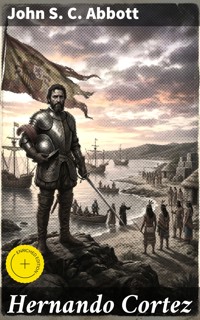
In "Hernando Cortez," John S. C. Abbott crafts a compelling narrative that delves into the life and conquests of one of history's most controversial figures. Abbott employs a vivid and accessible literary style, integrating historical context with a dramatic flair that captures Cortez's ambition and the tumultuous era of Spanish exploration in the Americas. Through meticulous research, Abbott attempts to balance the glorification of Cortez's accomplishments with the moral complexities of his actions, providing a nuanced view of the encounter between European and indigenous cultures. John S. C. Abbott, an influential American historian and biographer, was known for his ability to render history engaging for readers of all ages. His extensive work in biographical history reflects his desire to present not just the facts, but the human experiences behind them. Abbott's own observations on society and ethics likely influenced his portrayal of Cortez, making the text both a historical account and a cautionary tale of ambition, responsibility, and cultural collision. "Hernando Cortez" is an essential read for anyone interested in the complexities of exploration and colonialism. Abbott's meticulous approach offers readers a profound understanding of Cortez'Äôs legacy, as well as a reflection on the moral implications of his conquests. This book proves invaluable for scholars and general readers alike, inviting critical thought about history'Äôs impact on the present. In this enriched edition, we have carefully created added value for your reading experience: - A succinct Introduction situates the work's timeless appeal and themes. - The Synopsis outlines the central plot, highlighting key developments without spoiling critical twists. - A detailed Historical Context immerses you in the era's events and influences that shaped the writing. - A thorough Analysis dissects symbols, motifs, and character arcs to unearth underlying meanings. - Reflection questions prompt you to engage personally with the work's messages, connecting them to modern life. - Hand‐picked Memorable Quotes shine a spotlight on moments of literary brilliance. - Interactive footnotes clarify unusual references, historical allusions, and archaic phrases for an effortless, more informed read.
Das E-Book können Sie in Legimi-Apps oder einer beliebigen App lesen, die das folgende Format unterstützen:
Veröffentlichungsjahr: 2019
Ähnliche















Hernando Cortez
Table of Contents
Introduction
Empire is often built where conviction, ambition, and misunderstanding collide, leaving behind both daring narratives and enduring moral questions.
Hernando Cortez by John S. C. Abbott is a work of historical biography that recounts the life and expedition of the Spanish conquistador associated with the conquest of Mexico. Written in the nineteenth century, it reflects an era when popular histories aimed to make past events vivid for general readers and often framed world-changing campaigns through the careers of prominent individuals. Abbott’s book belongs to that tradition, combining narrative momentum with explanatory passages that guide readers through unfamiliar places, political structures, and cultural encounters.
The book introduces Cortés as a figure shaped by the forces of Spain’s overseas expansion and by the opportunities and hazards of exploration in the Americas. Without requiring specialized background, it moves from early circumstances into the undertaking that made his name synonymous with audacious command. Readers can expect a chronological account that follows preparations, alliances, conflicts, and reversals, while remaining anchored in the decisions of a central protagonist. The premise is less a mystery than a sustained study of how a single campaign could alter multiple societies.
Abbott’s narration is character-centered and emphatically story-driven, presenting events with the pacing of a dramatic history rather than a detached academic study. The tone is formal and purposeful, seeking to hold attention through clear scene-setting and a steady focus on action, leadership, and consequence. At the same time, the book frequently pauses to interpret motives and to underscore the significance of turning points, inviting readers to weigh courage against calculation and to notice how quickly outcomes shift under pressure. The result is an immersive, accessible reading experience.
Several themes run through the narrative: the lure of power and wealth, the role of faith and ideology in justifying expansion, and the precariousness of authority when it depends on distant sponsors and local uncertainties. The encounter between Europeans and the peoples of Mesoamerica is presented as both logistical and moral terrain, where language, diplomacy, and competing interests matter as much as arms. Questions of leadership recur—how commands are secured, how loyalty is managed, and how reputations are constructed in the telling of events as well as in the events themselves.
Because Abbott wrote from a nineteenth-century perspective, the work also illustrates how history has been narrated and moralized for public audiences. Contemporary readers can engage the book on two levels: as a narrative of a consequential expedition and as a specimen of its author’s historiographical approach, shaped by the assumptions and rhetorical habits of his time. Reading attentively means noticing what the book emphasizes, how it portrays different actors, and how it translates complex cross-cultural realities into a coherent story aimed at broad comprehension.
Hernando Cortez still matters because the problems it raises have not vanished: the ethics of conquest, the human cost of imperial projects, and the ways storytelling can sanctify or condemn power. In an age still grappling with colonial legacies and contested historical memory, Abbott’s biography offers a structured narrative that can prompt careful discussion about agency, responsibility, and the gaps between intention and outcome. It encourages readers to confront how decisive acts are celebrated, how suffering is accounted for, and how the past continues to shape civic and moral debate.
Synopsis
John S. C. Abbott’s Hernando Cortez is a narrative biography that frames the Spanish conquest of Mexico through a moralizing, nineteenth-century lens. It opens by situating Spain’s ambitions in the age of Atlantic exploration and by sketching Cortés’s early formation, motives, and prospects as a soldier-adventurer. Abbott then turns to the institutional forces behind overseas expansion—royal authority, colonial administration, and the competitive quest for prestige and wealth—while keeping attention on the personal character of Cortés as the book’s organizing thread. The early chapters set up the tension between individual daring and imperial policy.
The account follows Cortés’s move from the Caribbean sphere into plans for a new expedition, emphasizing the uncertainties of sponsorship, command, and loyalty in the Spanish colonies. Abbott presents the enterprise as shaped by rivalries among Spaniards as much as by the risks of navigation and supply. Once the expedition sets out, the narrative focuses on practical challenges of landing, establishing a foothold, and making decisions under pressure, with Cortés portrayed as decisive and politically astute. These opening movements establish the central conflict of initiative versus restraint, and ambition versus accountability.
As the Spaniards advance, Abbott highlights early encounters with Indigenous peoples and the rapid importance of diplomacy, intelligence, and interpreters for communication across cultures. The narrative stresses how alliances and misunderstandings could determine survival, and how displays of power, negotiation, and religious framing were deployed to secure cooperation or deter resistance. Abbott describes the expedition’s growing awareness of a powerful interior polity and the opportunities and dangers it implied. Throughout, the book maintains a dual emphasis: the tactical choices of Cortés and the wider moral questions raised by conquest, coercion, and cultural collision.
Approaching the Mexica capital, the biography turns to the complexity of Indigenous politics and the strategic value of forging partnerships with groups hostile to Mexica dominance. Abbott presents the march as a sequence of calculated moves shaped by geography, supply constraints, and rapidly shifting trust. He underscores the precariousness of a small foreign force operating far from reinforcements, dependent on local support and the credibility of its leader. Cortés’s leadership is shown as a blend of persuasion and discipline, while the narrative keeps the reader alert to how quickly fragile arrangements could harden into open conflict.
When Cortés enters the imperial city and engages with its ruler and court, Abbott slows the pace to examine ceremony, governance, and the psychological stakes of first contact between empires. He portrays the Spaniards balancing diplomacy and intimidation, anxious about their vulnerability amid dense population and unfamiliar institutions. The narrative foregrounds difficult choices about hostages, security, and the use of force, and it traces how tensions escalated through miscalculation and competing agendas. Abbott conveys the sense of being trapped between maintaining appearances and securing strategic leverage, without prematurely resolving the unfolding crisis.
The middle and later portions follow the deterioration of relations and the emergence of large-scale violence, emphasizing the compounding effects of fear, rumor, and reprisals. Abbott connects battlefield episodes to logistical realities—food, weapons, morale, and the hazards of fighting in complex terrain—and to political strains within the Spanish camp, including disputes over authority and priorities. He also notes the devastating human costs borne by Indigenous communities and the corrosive consequences of conquest for both victors and vanquished. The narrative remains centered on Cortés’s adaptability amid reversals, while avoiding a simplistic triumphal arc.
In its closing movement, Abbott traces how the struggle reshaped power in New Spain and redefined Cortés’s standing, while keeping attention on the ethical ambiguity of the enterprise. The book reflects on the interplay of personal ambition, religious justification, and imperial machinery, and it suggests that the conquest cannot be understood purely as a sequence of battles but as a collision of political systems and worldviews. Without dwelling on final outcomes, Abbott leaves the reader with the enduring resonance of the episode: the long shadow of colonization, the fragility of cross-cultural encounter, and the way individual decisions can reverberate across continents and centuries.
Historical Context
John S. C. Abbott’s Hernando Cortez was produced in the mid-nineteenth-century United States, when popular history and biography were widely read as moral instruction. Abbott (1805–1877), a Congregational minister turned writer, became known for accessible narratives about notable figures. His books appeared in an expanding print market shaped by rising literacy, cheaper publishing, and a strong appetite for accounts of exploration and empire. The work looks back to the early sixteenth century, but it was written in a nation debating expansion, slavery, and the meaning of “civilization,” concerns that colored historical interpretation and selection of sources.
The narrative’s primary setting is Spain at the end of the fifteenth and beginning of the sixteenth centuries, after the Reconquista concluded in 1492 and the Spanish monarchy consolidated power under Ferdinand and Isabella. Spain’s institutions combined royal authority, Catholic orthodoxy, and a militarized nobility experienced in frontier warfare. The crown and private investors supported Atlantic ventures through charters, licenses, and systems of reward that tied conquest to personal advancement. Religious objectives, including conversion, were intertwined with economic motives. Abbott frames Cortés within this structured world of monarchy, church, and martial ambition that propelled Iberian expansion into the Caribbean and beyond.
European exploration in the Americas accelerated after Columbus’s voyages, and by the early 1500s Spain had established colonies on Hispaniola, Cuba, and other islands. Colonial governance relied on governors, royal officials, and settlement councils, while labor and tribute systems such as the encomienda exploited Indigenous communities. These developments formed the administrative and economic foundation from which expeditions to the mainland were launched. Early Spanish encounters also brought devastating epidemics, demographic collapse, and social disruption among Native peoples. Abbott’s account draws on this wider context of Caribbean colonization to explain how Cortés and his contemporaries acquired experience, resources, and a sense of entitlement to conquest.
The Mexico of Cortés’s time was dominated in central regions by the Mexica-led Triple Alliance, commonly called the Aztec Empire, centered on Tenochtitlan. Political authority was expressed through tribute, alliance networks, and military campaigns, and city-states (altepetl) maintained distinct interests within this imperial landscape. Long-distance trade, sophisticated agriculture, and large urban populations made the region attractive to Spanish newcomers. Conflicts among Indigenous polities, including resentments toward tributary demands, shaped the environment in which Spanish diplomacy and coercion operated. Abbott’s narrative depends on these institutional realities to portray how small Spanish forces could leverage existing rivalries and political fractures.
Cortés’s expedition to the Mexican mainland occurred within Spain’s competitive imperial system, in which governors and captains sought prestige and royal favor. In Cuba, the governor Diego Velázquez authorized an enterprise that evolved into an independent bid for conquest, illustrating tensions between colonial authorities and ambitious commanders. Spanish military practice—cavalry, steel weapons, firearms, and disciplined formations—conferred tactical advantages, though not decisive alone. Translation and negotiation were central; the interpreter Malintzin (Doña Marina) became pivotal in communication with multiple Indigenous groups. Abbott emphasizes leadership and decision-making within these constraints, reflecting both contemporary sources and nineteenth-century biographical storytelling conventions.
Religion and law were formal parts of Spanish expansion. The crown claimed sovereignty through doctrines of Christian kingship and issued ordinances for conquest and settlement, while missionaries and clergy accompanied expeditions. The requirement to present Indigenous peoples with the Requerimiento, though often ineffective, signaled an effort to cloak violence in legal ritual. At the same time, the brutal realities of warfare, forced labor, and tribute extraction generated controversy. Figures such as Bartolomé de las Casas publicized abuses, and the so-called “Black Legend” debates circulated across Europe. Abbott wrote after centuries of argument over Spain’s conduct, and his work reflects the enduring moral and religious framing of conquest narratives.
Abbott relied on established chronicles and histories that had long shaped Anglophone perceptions of Cortés, including Spanish accounts and later syntheses. Nineteenth-century historical writing often treated “great men” as engines of change, organizing complex social processes around individual character and providential themes. This method fit Abbott’s broader career, which aimed to educate general readers through dramatic scenes, clear moral contrasts, and accessible prose rather than archival analysis. His context also included U.S. interest in the Spanish-speaking Americas, intensified by hemispheric commerce and diplomacy. As a result, his portrayal tends to juxtapose European institutions and Indigenous societies in ways characteristic of his era’s didactic historical literature.
In the United States, the book’s publication period coincided with Manifest Destiny rhetoric, the Mexican–American War’s aftermath, and renewed debates about empire and race. Popular narratives of earlier conquests offered readers a framework—often uncritical of expansionist assumptions—for interpreting contemporary events. Abbott’s emphasis on courage, faith, and governance mirrors Victorian moral expectations and Protestant-inflected judgments of Catholic Spain. Yet his attention to the costs of conquest, including violence and exploitation noted in earlier sources, can also serve as implicit critique. Overall, the work reflects nineteenth-century confidence in progress and biography as instruction, while drawing on long-contested historical memory of the Spanish invasion of Mexico.




