


6,99 €
Mehr erfahren.
- Herausgeber: Open Book Publishers
- Sprache: Englisch
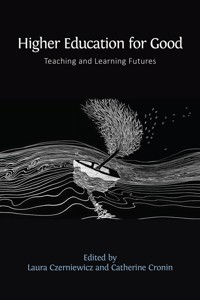
After decades of turbulence and acute crises in recent years, how can we build a better future for Higher Education?
Thoughtfully edited by Laura Czerniewicz and Catherine Cronin, this rich and diverse collection by academics and professionals from across 17 countries and many disciplines offers a variety of answers to this question. It addresses the need to set new values for universities, trapped today in narratives dominated by financial incentives and performance indicators, and examines those “wicked” problems which need multiple solutions, resolutions, experiments, and imaginaries.
This mix of new and well-established voices provides hopeful new ways of thinking about Higher Education across a range of contexts, and how to concretise initiatives to deal with local and global challenges. In an unusual and refreshing way, the contributors provide insights about resilience tactics and collective actions across different levels of higher education using an array of styles and formats including essays, poetry, and speculative fiction.
With its interdisciplinary appeal, this book presents itself as a provocative and inspiring resource for universities, students, and scholars. Higher Education for Good courageously offers critique, hope, and purpose for the practice and the trajectory of Higher Education.
Das E-Book können Sie in Legimi-Apps oder einer beliebigen App lesen, die das folgende Format unterstützen:
Veröffentlichungsjahr: 2023
Ähnliche


















HIGHER EDUCATION FOR GOOD
Higher Education for Good
Teaching and Learning Futures
Edited by Laura Czerniewicz and Catherine Cronin
https://www.openbookpublishers.com
©2023 Laura Czerniewicz and Catherine Cronin (eds). Copyright of individual chapters is maintained by the chapter’s authors
This work is licensed under a Creative Commons Attribution-NonCommercial 4.0 International (CC BY-NC 4.0). This license allows you to share, copy, distribute and transmit the text; to adapt the text for non-commercial purposes of the text providing attribution is made to the authors (but not in any way that suggests that they endorse you or your use of the work). Attribution should include the following information:
Laura Czerniewicz and Catherine Cronin (eds), Higher Education for Good: Teaching and Learning Futures. Cambridge, UK: Open Book Publishers, 2023,
https://doi.org/10.11647/OBP.0363
Copyright and permissions for the reuse of many of the images included in this publication differ from the above. This information is provided in the captions.
Further details about CC BY-NC licenses are available at
http://creativecommons.org/licenses/by-nc/4.0/
All external links were active at the time of publication unless otherwise stated and have been archived via the Internet Archive Wayback Machine at
https://archive.org/web
Digital material and resources associated with this volume are available at
https://doi.org/10.11647/OBP.0363#resources
ISBN Paperback: 978-1-80511-127-6
ISBN Hardback: 978-1-80511-128-3
ISBN Digital (PDF): 978-1-80511-129-0
ISBN Digital ebook (EPUB): 978-1-80511-130-6
ISBN XML: 978-1-80511-132-0
ISBN HTML: 978-1-80511-133-7
DOI: 10.11647/OBP.0363
Cover image: George Sfougaras, Hope, CC BY-NC-ND
Cover design: Jeevanjot Kaur Nagpal
Contents
List of Artwork ix
About the editors 1
About the authors and artists 3
List of peer-reviewers 23
Acknowledgements 25
Foreword 27
Jonathan Jansen
Preface 31
Carolina Guzmán-Valenzuela
Section I Finding Fortitude and Hope 35
Higher education for good 37
Catherine Cronin and Laura Czerniewicz
1. Writing from the wreckage: Austerity and the public university 53
Robin DeRosa
2. Counters to despair 81
Sherri Spelic
Section II Making Sense of the Unknown and Emergent 89
3. On public goods, cursing, and finding hope in the (neoliberal) twilight zone 91
Su-Ming Khoo
4. Imagining higher education as infrastructures of care 111
Leslie Chan, Mona Ghali, and Paul Prinsloo
5. Why decolonising “knowledge” matters: Deliberations for educators on that made fragile 137
Dina Zoe Belluigi
6. Closing the factory: Reimagining higher education as commons 161
Jim Luke
7. Fostering the gift: On property regimes and teaching pedagogies in higher education 183
Andreas Wittel
8. A meditation on global further education, in haiku form 199
Jess Auerbach Jahajeeah
9. Artificial intelligence for good? Challenges and possibilities of AI in higher education from a data justice perspective 239
Ekaterina Pechenkina
10. HE4Good assemblages: FemEdTech Quilt of Care and Justice in Open Education 267
Frances Bell, Lorna Campbell, Giulia Forsythe, Lou Mycroft, and Anne-Marie Scott
Section III Considering Alternative Futures 291
11. Calm in the storm 293
Paola Corti and Chrissi Nerantzi
12. Visioning futures of higher education for the common good 303
Mpine Makoe
13. Speculative futures for higher education: weaving perspectives for good 317
Elizabeth Childs, George Veletsianos, Amber Donahue, Tamara Leary, Kyla McLeod, and Anne-Marie Scott
14. “Vibrant, open and accessible”: Students’ visions of higher education futures 335
Sharon Flynn, Julie Byrne, Maeve Devoy, Jonathon Johnston, Rob Lowney, Eimer Magee, Kate Molloy, David Moloney, Morag Munro, Fernandos Ongolly, Jasmine Ryan, Suzanne Stone, Michaela Waters, and Kyle Wright
15. Vulnerability and generosity: The good future for Australian higher education 353
Kate Bowles
Section IV Making Change through Teaching, Assessment and Learning Design 371
16. A design justice approach to Universal Design for Learning: Perspectives from the Global South 373
Aleya Ramparsad Banwari, Philip Dambisya, Benedict Khumalo, and Kristin van Tonder
17. Humanising learning design with digital pragmatism 397
Kate Molloy and Clare Thomson
18. Advancing ‘openness’ as a strategy against platformisation in education 421
Tel Amiel and Janaina do Rozário Diniz
19. Imagination and justice: Teaching the future(s) of higher education through Africanfuturist speculative fiction 445
Felicitas Macgilchrist and Eamon Costello
20. One-one coco full basket — on the value of critical pedagogy of caring for learning and teaching in higher education 473
Carol Hordatt Gentles
21. Critical data literacies for good 491
Caroline Kuhn, Judith Pete, and Juliana E. Raffaghelli
22. Collaboratively reimagining teaching and learning 509
Flora Fabian, Jonathan Harle, Perpetua Kalimasi, Rehema Kilonzo, Gloria Lamaro, Albert Luswata, David Monk, Edwin Ngowi, Femi Nzegwu, and Damary Sikalieh
23. The only way is ethics:A dialogue of assessment and social good 533
Tim Fawns and Juuso Nieminen, but not necessarily in that order
Section V (Re)making HE Systems and Structures 555
24. Cultivating sustainable blended and open learning ecosystems 557
Patricia Arinto, Primo Garcia, and Ana Katrina Marcial
25. Making higher education institutions as open knowledge institutions 575
Pradeep Kumar Misra and Sanjaya Mishra
26. “It’s about transforming lives!”: Supporting students in post pandemic higher education 591
Vicki Trowler
27. Who cares about procurement? 603
Anne-Marie Scott and Brenna Clarke Gray
Afterword: Higher education for good 623
Raewyn Connell
The last word: “Making noises through our work” 627
Jyoti Arora
Index 635
List of Artwork
Hope 35
George Sfougaras
Old Tree 89
Alex Abrahams
Vessels of Hope 291
Giulia Forsythe
Little Me 371
Sheila MacNeill
The Right to Flourish 555
Niamh McArdle
About the editors
Catherine Cronin is an independent scholar whose work focuses on critical and social justice approaches in digital, open, and higher education. Born in the Bronx and now living in the west of Ireland, Catherine has interwoven work in higher education, community education, and activism for 40 years in multiple countries and contexts. She recently completed a three-year strategic role in Ireland’s National Forum for the Enhancement of Teaching and Learning in Higher Education where she led sector-wide projects in digital and open education. She has master’s degrees in systems engineering and women’s studies and a PhD in open education (University of Galway). She received a GO-GN Fellowship in 2022 for Just Knowledge, her research on equity-focused, community-based, open knowledge. Catherine has published widely and openly on critical and social justice approaches, digital and open education, and intersectional feminism. She serves on the editorial boards of several journals, is an active member of FemEdTech, and contributes regularly to collaborative projects within Ireland and globally. Catherine blogs and shares scholarship at http://catherinecronin.net.
Laura Czerniewicz has worked in education throughout her professional life as a teacher, teacher educator, publisher, strategist, researcher, and scholar. She is professor emerita at the University of Cape Town, South Africa. With personal links to South Africa, Zimbabwe, France, Poland, New Zealand, and Germany, she considers herself a world citizen. Laura’s work has been underpinned by an enduring concern about digital and social inequities; this has manifested recently in research on changing forms of teaching and learning provision and in the datafication of education. She has a long-standing commitment to open education and serious unease about the corporate capture of higher education. She serves on the editorial boards of many national and international journals; has been an interested contributor and participant at relevant events on every continent; and is an active reviewer of pertinent articles, books, proposals etc. and blogs at https://czernie.weebly.com.
Larry Erhuvwuoghene Onokpite is from Agbarha-Otor, Delta State, Nigeria. He is a registered member of the Professional Editors’ Guild of South Africa and has copy edited journal articles, dissertations, fiction writings and a book, as well as all chapters in Higher Education for Good: Teaching and Learning Futures. Larry is currently a doctoral student at Ohio State University with research interests in dyslexia education and educational neuroscience. Larry enjoys road running, photography, and cooking. https://editors.org.za/user/larry-onokpite
About the authors and artists
Alex Abrahams (b. 1991) is a trained curator and artist from Cape Town (South Africa). Alex is pursuing his art career with great commitment. He participated in seven group exhibitions in 2021, which was his debut year. His work can be viewed at www.alexrabrahams.com
Tel Amiel is an adjunct professor at the School of Education at the University of Brasília (Brazil) where he coordinates the UNESCO Chair in Distance Education, and is also an adjunct professor at the University of Nova Gorica (Slovenia) in the Master in Leadership in Open Education program. Co-founder of the Open Education Initiative: an activist research group. More information can be found at: https://amiel.net.br
https://orcid.org/0000-0002-1775-1148
Patricia Arinto is a former dean of the Faculty of Education at the University of the Philippines (UP) Open University, and currently dean of UP Tacloban College (Philippines). Her research interests include teacher professional development in blended and online learning, learning design, and open educational practices. She has a doctorate in education from the Institute of Education at the University of London; a postgraduate certificate in Technology-Based Distributed Learning from the University of British Columbia; an MA in Comparative Literature from UP Diliman; and a BA in Communication Arts from UP Visayas Tacloban College.
https://orcid.org/0000-0003-4452-9283
Jyoti Arora is a PhD Scholar at the Zakir Husain Centre for Educational Studies in the School of Social Sciences at Jawaharlal Nehru University (India). Her research interests include higher education, teacher education, and educational policy.
https://orcid.org/0000-0003-1196-0966
Jess Auerbach Jahajeeah is an associate professor at the Graduate School of Business in the University of Cape Town (South Africa). She is director for the MPhil in Inclusive Innovation. Jess has lived and worked in Angola, Brazil, Mauritius, Mozambique, the UK, the US, and Zambia. In Mauritius she was founding faculty at a start-up university. She is the author of two books, and currently writing a third on digital infrastructure. She holds a PhD in anthropology from Stanford University.
http://jessauerbach.net
https://orcid.org/0000-0001-9064-1474
Frances Bell, since her retirement from Salford Business School (UK) in 2013, has enjoyed the freedom to pursue learning textile arts and conducting independent research with valued others. Some of her treasured achievements since retirement include being part of FemEdTech, a feminist network of those associated with education technology, and being part of the project that is a material-digital expression of FemEdTech values, the FemEdTech Quilt of Care and Justice in Open Education.
http://francesbell.com
https://orcid.org/0000-0002-7543-6832
Dina Zoe Belluigi is a reader at Queen’s University Belfast (Northern Ireland) and affiliated with Nelson Mandela University (South Africa). Her work relates to the conditions for the agency and ethico-historical responsibility of academics and artists in contexts undergoing transitions in authority and in the shadow of oppression. She has been honoured to participate in research and practice in South Africa, India, Northern Ireland, and England, as well as with displaced Syrian academics.
https://pure.qub.ac.uk/en/persons/dina-belluigi
https://orcid.org/0000-0003-4005-0160
Kate Bowles is a narrative researcher in the social history of cinema-going and the patient experience of illness. She is the Associate Dean International in the Faculty of the Arts, Social Sciences and Humanities at the University of Wollongong (Australia), on Dharawal Country.
http://musicfordeckchairs.com
Julie Byrne is assistant professor in Online Education & Development at Trinity College Dublin (Ireland). She was Trinity’s academic lead (2019–2021) on the national Enhancing Digital Teaching and Learning (EDTL) project and is a current member of the Leading European Advanced Digital Skills (LEADS) consortium, funded by the European Commission. She was director of Trinity’s first fully online postgraduate programme and is a contributor to Trinity’s first micro-credential programme where she offers an online course, Digital Technologies in Human Services.
https://orcid.org/0000-0002-5913-1158
Lorna Campbell is a learning technologist and open education practitioner with a longstanding commitment to supporting open knowledge, open education, and OER. She is an active member of the FemEdTech network and a senior certified member of the Association for Learning Technology (ALT). Lorna is based in Scotland and currently works at the University of Edinburgh, where she is manager of the university’s OER Service. She blogs about openness, knowledge equity, feminism, and digital labour at Open World:
http://lornamcampbell.org
https://orcid.org/0000-0001-6767-856X
Leslie Chan is associate professor in the Department of Global Development Studies and director of the Knowledge Equity Lab at the University of Toronto Scarborough (Canada). He studies the role and design of knowledge infrastructure and their impact on local and international development, and in particular the geopolitics of academic knowledge production and the uneven power relations embedded in this production.
https://knowledgeequitylab.ca
https://orcid.org/0000-0001-7779-2059
Elizabeth Childs is a professor in the School of Education and Technology at Royal Roads University (Canada). She is interested in the design, creation and implementation of flexible learning environments that incorporate the affordances of technologies and provide learners with increased choice, flexibility, and opportunities. Dr. Childs’ research interests include online and blended learning, openness and open pedagogy, online learning communities and digital habitats, design thinking and participatory design approaches.
https://malat-coursesite.royalroads.ca/malat
https://orcid.org/0000-0003-2654-1705
Raewyn Connell is professor emerita at the University of Sydney and a Life Member of the National Tertiary Education Union (Australia). She has published widely in the areas of class dynamics, social theory of gender relations, masculinity, transsexuality, poverty and education, and higher education. She has been an advisor to United Nations initiatives on gender equality and peace-making. Her most recent book is The Good University (2019).
http://www.raewynconnell.net
Paola Corti is a project manager and instructional designer at Politecnico di Milano (Italy). She works on international projects, MOOC design and development, and professional development courses for faculty and researchers on open education and innovative pedagogical approaches. She is the open education community manager of the European Network of Open Education Librarians (ENOEL), supporting librarians in taking action to implement the UNESCO OER Recommendation. She is a facilitator for Creative Commons certificate courses.
https://orcid.org/0000-0001-8506-7148
Eamon Costello is an associate professor of Digital Learning in Dublin City University (Ireland). He is deeply curious about the ways in which we can actively shape our world so that we can have better and more humane places where we can think, work, live and learn. He is an advocate of using the right tool for the job or sometimes none at all, for not everything can be fixed or should be built.
https://www.dcu.ie/researchsupport/research-profile?person_id=141 93#tab-research
https://orcid.org/0000-0002-2775-6006
Philip Mbulalina Dambisya is a trainee learning designer at the University of Cape Town’s Centre for Innovation in Learning and Teaching (CILT) (South Africa). With qualifications in Audiology, Health Professions Education, and Public Health, he is passionate about exploring the nexus of health, social justice, and education. Viewing education as one of many vehicles towards the uplifting of others, Philip is a believer in and proponent of quality open education.
http://orcid.org/0000-0003-0571-2667
Robin DeRosa is director of Learning and Libraries at Plymouth State University, a public university in New Hampshire (USA). While her academic training was originally focused on early American literature and history, she now researches and writes about higher education and is an advocate for open, public, and sustainable futures for learning.
http://robinderosa.net
https://orcid.org/0000-0002-4375-3307
Maeve A. Devoy is the author of A City Symphony and The Tell Tale Collection. She has an MA in Literary Journalism and a BA in Journalism. She spends her time teaching creative writing across the country (Ireland).
Janaina do Rozário Diniz is a teacher at the University of the State of Minas Gerais (Brazil). She develops research on free software in education, platformisation in education, and disinformation.
https://orcid.org/0000-0001-7993-5447
Amber Donahue is proud to be a teacher and advocate of public education, whose 17 years as a K-12 educator have taught her about the power of kindness, human connection, and critical thinking. She is keenly interested in exploring technology’s impact on society and how education systems can rise to the challenge of preparing students for life in the digital age.
Flora Masumbuo Fabian is professor of Biomedical Science, focusing on transformative teaching-learning in higher education. Co-author of Gender Mainstreaming in Higher Education Toolkit (INASP, 2016), Fabian is a champion in embedding gender responsive pedagogy in HE and promoting equal opportunities for females and males in economic participation. Former University of Dodoma director of research, current Mwanza University (Tanzania) vice chancellor, Fabian has over 40 publications in peer reviewed journals.
https://www.inasp.info/staff/flora-fabian
https://orcid.org/0000-0002-4880-1021
Tim Fawns is an associate professor at the Monash Education Academy, Monash University (Australia). His research interests are at the intersection between digital, clinical, and higher education, with a particular focus on the relationship between technology and educational practice. He has recently published a book titled Online Postgraduate Education in a Postdigital World: Beyond Technology.
http://timfawns.com
https://orcid.org/0000-0001-5014-2662
Sharon Flynn was project manager of the Enhancing Digital Capacity in Teaching and Learning (EDTL) project (2019–2022) in Ireland, working with academic leaders across seven universities. The project aimed to enhance the digital competencies and learning experience of Irish university students, with a particular focus on academic staff development. She was Assistant Director of the Centre for Excellence in Learning and Teaching at the University of Galway (Ireland) for 13 years.
https://www.linkedin.com/in/sharonlflynn/
https://orcid.org/0000-0002-5755-7147
Giulia Forsythe is the director, Teaching and Learning at the Centre for Pedagogical Innovation at Brock University in Ontario (Canada).
https://gforsythe.ca/
https://orcid.org/0000-0001-9669-9706
Primo G. Garcia is the Vice Chancellor for Academic Affairs and a professor of Research and Development Management at the University of the Philippines Open University. He holds a PhD in Organization Studies from the University of Melbourne. His research interests include organisation and management, e-learning, and management of distance education.
https://orcid.org/0000-0002-8693-3746
Mona Ghali is an independent researcher based in Toronto (Canada). Her eclectic studies cut across disciplinary fields including global education policy, conflict and peace studies, international development, and feminist and critical theories. At present, she is interested in understanding how radical discourses are co-opted in mainstream politics, policies, and practices.
Brenna Clarke Gray holds a PhD in Canadian Literature andis a tenured coordinator in Educational Technologies at Thompson Rivers University in Kamloops, BC (Canada), where she is part of the Learning Technology and Innovation team. Brenna’s research interests include the history and future of open tenure processes, scholarly podcasting, and educational technology support as care work. She is powered primarily by righteous indignation and lattes.
http://brennaclarkegray.ca
https://orcid.org/0000-0002-6079-0484
Carolina Guzmán-Valenzuela is interested in the study of higher education. For the last 12 years, she has been conducting research on the role of universities in the twenty-first century. Currently, she is leading a national project on knowledge production in the social sciences and the humanities in Latin America financed by Fondecyt Chile (1200633).
https://www.researchgate.net/profile/Carolina-Guzman-Valenzuela
https://orcid.org/0000-0002-7974-762X
Jonathan Harle is director of programmes at INASP and lives and works in Berlin (Germany). He works with educators, researchers, and universities to find new ways to strengthen capacity, confidence, and leadership in research, teaching, and learning. He convened and co-leads the Transforming Higher Education for Social Change in East Africa (TESCEA) partnership.
https://www.inasp.info/staff/jonathan-harle
https://orcid.org/0000-0001-6804-2969
Carol Hordatt Gentles is a senior lecturer with the School of Education, University of West Indies (Jamaica). Her research focuses on improving teacher quality through teacher education and teacher development in the Caribbean region where she has worked as a consultant for the World Bank and UNESCO on several projects. She currently serves as president of the International Council of Education for Teaching. She is also chief editor for the Caribbean Journal of Education.
https://orcid.org/0000-0001-5744-7231?lang=en
Jonathan Jansen is distinguished professor of Education at the University of Stellenbosch (South Africa). He is currently president of the South Africa Academy of Science and Knight-Hennessey Fellow at Stanford University (USA). He has published widely in the areas of education, democracy, and human rights. His most recent books include Corrupted: A Study of Chronic Dysfunction in South African Universities (2023) and The Decolonization of Knowledge: Radical ideas and the Shaping of Institutions in South Africa (with Cyrill Walters, 2022).
https://www.jonathanjansen.org
https://orcid.org/0000-0002-8614-5678
Jonny Johnston is an educational developer at the Centre for Academic Practice at Trinity College Dublin (Ireland), where he leads on a range of teaching enhancement interventions. Jonny has been formally working in academic development since 2019. His original background and research training is in modern languages and literatures (PhD Germanic Studies, Trinity College Dublin). His current interests lie in curriculum and in structured approaches to teacher education and development in higher education.
Perpetua Joseph Kalimasi is a senior lecturer in Educational Management and Policy Studies at Mzumbe University (Tanzania). She is currently the head of Teaching Skills and Distance Learning at Mzumbe University. Her research and supervision interests include graduate employability, gender, lifelong learning, entrepreneurship education, inclusive education, school management, and vocational education. She is currently the coordinator for gender and inclusive education for the World Bank HEET programme for Higher Education Transformation implemented at Mzumbe University.
Su-Ming Khoo is associate professor and head of Sociology at the University of Galway (Ireland) and visiting professor in Critical Studies in Higher Education Transformation (CriSHET) at Nelson Mandela University (2022–2027) in South Africa. She researches, teaches, and writes about human development, rights, public goods, public activism, global learning, and development education, decoloniality, higher education, and transdisciplinarity.
https://orcid.org/0000-0001-8346-3913
Benedict Khumalo isa trainee learning designer and disability researcher, currently enrolled for an MPhil Disabilities Studies at the University of Cape Town (UCT) (South Africa). His research focuses on special schools’ educators’ perceptions of inclusive education in South Africa. He has three postgraduate qualifications: Social Development and Social Anthropology from the University of the Western Cape and a postgraduate diploma in Disability Studies from UCT. He is interested in discourses of inclusive education, including online learning and curriculum design.
Rehema Kilonzo is a senior lecturer and director of Internationalisation, Convocation and Continuing Education at the University of Dodoma (Tanzania). She teaches at the intersection of sociology, policy analysis, and development. Her current research focuses on private managed cash transfers, funded by DANIDA.She was a TESCEA project lead at the University of Dodoma.
http://www.udom.ac.tz
Caroline Kuhn came from Venezuela to Europe to pursue a PhD. Now a senior lecturer based at the School of Education in Bath Spa University (UK), her research focuses on the intersection of sociology, philosophy, technology, and education. She has a particular interest in open education and social justice framed under a critical pedagogy approach. She is also interested in issues of data justice and how technology can be meaningfully integrated into resource-constrained contexts so that different ways of knowing and being are respected, and agency is fostered.
https://www.bathspa.ac.uk/our-people/caroline-kuhn/
https://orcid.org/0000-0003-0393-6093
Gloria Lamaro is a lecturer in Education Management, Faculty of Education at Gulu University (Uganda). She is a member of the editorial board of the Journal for Common Research Network. Her research interests include gender equity, empowerment of women in the workplace, and HE in Africa. She oversees development programs in capacity building and training for academic staff, MA training, and establishment of higher education qualifications for academic staff in Uganda. She is a programme assessor for the Uganda National Council for Higher Education.
Tamara Leary is an associate professor, teaching in the MA in Higher Education Administration and Leadership program at Royal Roads University, Victoria, BC (Canada). Prior to becoming a full-time faculty member, Tamara occupied administration roles within Student Affairs. Her research interests include higher education administration and leadership, student affairs, and organisation culture within higher education.
Rob Lowney is an academic developer (Digital Learning) in the Teaching Enhancement Unit at Dublin City University (Ireland). He is a Senior Certified Member of the Association for Learning Technology and Senior Fellow of Advance HE. He works with university teachers to develop their teaching excellence, including with technologies. He is interested in staff-student pedagogical partnerships and leads the university’s Students as Partners in Assessment project.
https://www.dcu.ie/teu/people/rob-lowney
https://orcid.org/0000-0002-8866-4367
Jim Luke is professor of economics and former Open Learning Faculty Fellow at a community college in Michigan (USA), where he created the Open Learning Lab, a web-based pedagogy innovation incubator. Jim has expertise in strategic planning, organisational development, innovation, technology, open education and open pedagogy, economic history, and institutional economics. His current research interests include commons as alternative economic systems and diversity in higher education.
https://econproph.com
https://orcid.org/0000-0002-8584-4442
Albert Luswata is a senior lecturer and director of the Institute of Ethics at Uganda Martyrs University. He has trained faculty in online and transformative teaching at his university and other African universities through the PedaL and TESCEA projects. His research interests are ethics, higher education partnerships, transformative teaching/learning, and gender responsive pedagogies.
https://orcid.org/0000-0003-4276-3682
Felicitas Macgilchrist is Professor of Digital Education and Schools at the University of Oldenburg (Germany). Her research explores the cultural politics of educational technology, taking up critical and speculative approaches. She is currently thinking about how design justice can be centred in edtech development, school practice and public discourse. She is co-editor of Learning, Media and Technology and toots occasionally at @[email protected].
https://orcid.org/0000-0002-2828-4127
Sheila MacNeill is an artist and independent digital learning consultant based in Glasgow (Scotland). Open educational practice is a central part of Sheila’s professional educational practice. Sheila works with a range of HE providers and educational organisations both in the UK and internationally.
https://howsheilaseesit.net
Eimer Magee was a student on the MEngSc in Biopharmaceutical Engineering at University College Dublin (Ireland) in 2021–2022, and a student associate intern for the Enhancing Digital Teaching and Learning (EDTL) project with the Irish Universities Association.
Mpine Makoe is the executive dean of the College of Education at the University of South Africa (UNISA) and a Commonwealth of Learning chair in Open Education Resources/Practices. She has published extensively in open and distance learning related fields and in the futures of higher education. She worked on numerous commissioned research projects for Commonwealth of Learning, UNESCO, British Council, and the Council for Higher Education.
https://orcid.org/0000-0003-4192-1781
Ana Katrina Marcial is an assistant professor teaching in the undergraduate and graduate programs at the Faculty of Education, University of the Philippines Open University. She is currently the chair of the graduate certificate and MA in Distance Education programs at UPOU. She also served as chair of the graduate diploma and MA in Language and Literacy Education programs and head of the Office of Academic Support and Instructional Services. Her current interests relate to language teaching, learning design, and continuing professional development for teachers.
https://orcid.org/0000-0001-6744-3023
Niamh McArdle is a graphic designer and occasional artist based in Dublin (Ireland). Originally from a very small village in Galway, she is interested in emotive storytelling through the use of typography, language, and image-making. She creates work with the intention of prompting emotion from whoever happens to see it.
https://www.linkedin.com/in/niamh-mcardle-493451186
Kyla McLeod is the director of student services and an associate faculty member within the School of Education and Technology at Royal Roads University (Canada). She has worked in student affairs for over 25 years and enjoys the challenges associated with supporting the learning experiences of a consistently changing student demographic. Her recent research interests are in understanding how non-Indigenous student services practitioners can effectively respond to the calls-to-action that were made through the final report of Canada’s Truth and Reconciliation Commission.
Sanjaya Mishra is Director, Education at Commonwealth of Learning, Canada and promotes open education and open access to information and knowledge for all. As a staff developer, instructional designer and practitioner of distance learning, Dr Mishra has developed several award-winning platforms and courses for increasing access to quality education. His current focus is on supporting Sustainable Development Goal 4 (SDG 4) through the use of open and distance learning, especially by creating an enabling policy environment for ethical use of technology for improving the quality of lifelong learning opportunities for all.
https://www.col.org/members/dr-sanjaya-mishra
https://orcid.org/0000-0003-3291-2410
Pradeep Kumar Misra is professor and director of the Centre for Policy Research in Higher Education at the National Institute of Educational Planning and Administration, New Delhi (India). He has received several prestigious international research scholarships, published widely in journals of international repute, authored reference books, including his popular book Learning and Teaching for Teachers, completed research and development projects, developed educational media programs, and visited many countries for educational purposes.
http://cprhe.niepa.ac.in
https://orcid.org/0000-0002-9164-6071
Kate Molloy is an instructional designer at Atlantic Technological University (Ireland) and was previously a learning technologist in CELT, University of Galway. She was the university lead on the Irish Universities Association Enhancing Digital Teaching and Learning (EDTL) project from 2019 to 2022. Her work focuses on the informed and ethical use of technology, learning design, inclusion, and open practice. Kate is secretary national executive of the Computers in Education Society of Ireland (CESI).
https://kate-molloy.net/about/
https://orcid.org/0000-0003-3544-3170
David Moloney works as digital skills development lead in the Centre for Transformative Learning (CTL), University of Limerick (Ireland).
https://daveymoloney.com/
https://orcid.org/0009-0005-5763-3778
David Monk is a lecturer in the faculty of Education and Humanities at Gulu University (Uganda), honorary assistant professor in the School of Education at Nottingham University (UK), affiliate faculty of Education University of Victoria (Canada), special advisor to the UNESCO Chair Lifelong Learning Youth and Work, and coordinator for the Gulu Hub of the UNESCO Chair Community Based Research and Social Responsibility in Higher Education.
https://orcid.org/0000-0002-9178-6576
Morag Munro is Maynooth University’s (Ireland) EDTL institutional lead, and lecturer on the postgraduate diploma in HE Teaching, Learning, and Assessment. Prior to this, Morag was learning technologist and head of the Learning Innovation Unit at Dublin City University. She has also worked at the University of Strathclyde and in the commercial eLearning sector. Her research interests include critical perspectives on educational technologies and educational policy, education for global citizenship and sustainability, and student-staff partnerships.
https://www.maynoothuniversity.ie/people/morag-munro
https://orcid.org/0000-0002-3131-8981
Lou Mycroft is an educator, changemaker and social entrepreneur. Inspired by nomadic posthuman professionalism, she works pan-organisationally, anti-competitively and pro-socially with changemakers and policymakers across further education to enact new values-led possibilities. This takes graft, and there are still people looking out for magic bullets, but change is in the air.
https://loumycroft.substack.com
Chrissi Nerantzi is an associate professor in education in the School of Education at the University of Leeds (UK). Her research interests include creativity, open education, cross-boundary collaborative learning, networks, and communities. She has initiated a range of open professional development initiatives that have been sustained over the years, bringing educators, students, and the wider public together.
https://essl.leeds.ac.uk/education/staff/2085/dr-chrissi-nerantzi
https://orcid.org/0000-0001-7145-1800
Edwin Ngowi is a senior lecturer in the department of Development and Strategic Studies at Sokoine University of Agriculture (Tanzania). Dr Ngowi has specialities in socioeconomic impact research; development policy analysis; livelihoods, climate change, and variability impact analysis; and sustainable development analysis. In this book, he shares an experience of a project consortium Transforming Employability for Social Change in East Africa (TESCEA) developed by a group of academics, learning designers, and social entrepreneurs.
https://www.cssh.sua.ac.tz/developmentstudies/edwin-estomii-ngowi/
https://orcid.org/0000-0003-3655-8973
Juuso Henrik Nieminen is an assistant professor at the University of Hong Kong and an Honorary Fellow at Deakin University (Australia). Dr Nieminen’s research concerns the social, cultural, and political dimensions of assessment in higher education. Dr Nieminen is particularly interested in how assessment shapes student identities and how it could be designed inclusively for a diversity of learners.
http://juusonieminen.com
https://orcid.org/0000-0003-3087-8933
Femi Nzegwu is assistant professor of Monitoring, Evaluation, and Learning at the London School of Hygiene and Tropical Medicine (UK). She is a social researcher, MEL and international project management specialist with 30 years of experience in these fields, including institutional learning, institutional and national capacity development, and sharing and institutional strategy development. She is highly multidisciplinary and holds degrees in post-colonial studies, public health, sociology, and economics.
https://orcid.org/0000-0003-2208-4498
FernandosOngolly is a doctoral research student at the Business School at University College Dublin (Ireland). He is a Kenyan anthropologist based in Ireland interested in research on how people evolve and adapt to new technologies in many aspects of life such as education, health, and business, among others. He previously worked at the Irish Universities Association’s (IUA) Enhancing Digital Teaching and Learning (EDTL) project as a student associate intern and is currently a portal administrator at Euraxess Ireland based at the IUA.
https://www.linkedin.com/in/fernandos-ongolly-89927b32
Ekaterina (Katya) Pechenkina is a cultural anthropologist, teaching and learning scholar, and award-winning lecturer at Swinburne University of Technology (Australia). Her research focuses on impact and evaluation in education, as well as on understanding how educators and students experience technological change. She is also a published fiction author and supervises a number of Creative Writing PhDs by artefact and exegesis.
https://www.swinburne.edu.au/research/our-research/access-our-research/find-a-researcher-or-supervisor/researcher-profile/?id =epechenkina
https://orcid.org/0000-0001-6997-6974
Judith Pete has been an educator in higher education institutions in East Africa for 13 years. She was regional director for Africa for ROER4D and is currently Uniservitate regional coordinator for Service Learning Hub for Africa at Tangaza University College (Kenya). She holds a PhD from the Open University (Netherlands) and MBA from Catholic University of Eastern Africa. She won the 2021/22 Researcher of the Year Award and is a member of UNESCO University Network and alumnus of GO-GN.
https://scholar.google.com/citations?hl=en&user=kJPx3lsAAAAJ.
https://orcid.org/0000-0003-0971-5945
Paul Prinsloo is a research professor in Open and Distance Learning in the Department of Business Management, College of Economic and Management Sciences, University of South Africa (Unisa). His research interests include, inter alia, the ethics of (not) collecting and using student data. Paul was born curious and in trouble and, since then, nothing has changed. His Twitter and Mastodon aliases are @14prinsp.
https://opendistanceteachingandlearning.wordpress.com
https://orcid.org/0000-0002-1838-540X
Juliana Elisa Raffaghelli is an assistant professor in educational research and experimental pedagogy at the University of Padua (Italy). She actively practices the values of open science and education, exploring the impacts on educators’ professional identities. Juliana is also an associated researcher of the research group Edul@b (Universitat Oberta de Catalunya, Spain) and associated researcher to the TIC-CIAFIC department at the Center for Research in Philosophical and Cultural Anthropology, National Commission of Science and Technology (Argentina).
https://jraffaghelli.com
https://orcid.org/0000-0002-8753-6478
AleyaRamparsadBanwari is an entrepreneur, activist, and social innovator who is passionate about social justice, community-based activism, and creating a better African future for tomorrow through driving digital transformation. Aleya is a co-director and co-founder of GrabAGrad, a graduate-led innovation and consulting firm specialising in disruptive solutions, staffed entirely by previously unemployed graduates. Aleya is currently pursuing a Masters in Public Health at the University of Cape Town. Aleya’s academic credentials also encompass a Bachelor of Social Science in Political Science, Industrial Sociology, and Social Anthropology in 2018, followed by their Honours in Social Anthropology in 2019 (University of Cape Town), and certifications in Design Thinking and Change Management.
https://www.linkedin.com/in/aleya-ramparsad-banwari-they-she-35bb2b7b
https://orcid.org/0000-0003-2871-1907
Jasmine Ryan was a final year BA student of Politics and International Relations with Philosophy at the University of Limerick (UL) (Ireland) in 2021 to 2022, and a student associate intern for the Enhancing Digital Teaching and Learning (EDTL) project with the Irish Universities Association. She played a pivotal role in the LevUL Up Student Digital Skills and Competence Development Programme, enhancing student experiences. Jasmine currently works as a Leadership & Representation administrator in UL Student Life.
Anne-Marie Scott has worked in higher education senior digital leadership for over 20 years in the UK (University of Edinburgh) and Canada (Athabasca University), with a particular interest in open educational technologies. She is Board Chair of the Apereo open-source software foundation, board member of the Open Source Initiative, and advisor to the OpenETC (Canada). She has an MA in Literature and a postgraduate diploma in E-Learning from the University of Edinburgh. www.ammienoot.com
https://orcid.org/0000-0003-4769-1577
George Sfougaras makes work that exists at the intersection of art, history, politics, and culture. His topics are drawn from personal experiences, family histories, and contemporary events. His work engages others at an emotional level and encourages dialogue, healing, and reconciliation, within the self and the world beyond. His art serves to extend life beyond our time through its magic and infinite ways of validating the human experience. www.georgesfougaras.com
Damary Sikalieh is a professor of Management and Entrepreneurship Education at the United States International University–Africa. Professionally, she has over 50 publications with immense experience in curriculum development and transformative teaching and learning. In consultancy, she has served on different project teams with the university and the Association of Faculty Enrichment in Learning and Teaching (AFELT). Her research interests are in the broader areas of management, entrepreneurship with a bias to inclusivity, and resilience.
http://www.afelt.org
https://orcid.org/0000-0002-3953-5024
Sherri Spelic teaches elementary physical education at an international school in Vienna (Austria). She has written extensively on topics related to education, identity and power and among other things publishes a monthly social justice newsletter for educators: Bending The Arc. Check out her book of essays, Care At The Core or find her on Twitter @edifiedlistener.
SuzanneStone has over ten years’ experience working in the higher education sector as a learning technologist and more recently as an academic developer. With specific expertise in learning technologies and the development of staff digital capabilities, Suzanne has collaborated on a range of research projects relating to technology for teaching and learning. Her current research focuses on digital wellbeing, digital assessment, and the use of ChatGPT in assessment design.
https://www.dcu.ie/teu/people/suzanne-stone
Clare Thomson is an assistant professor of Digital Pedagogies and Course Design at Heriot-Watt University (Scotland), and previously a digital education consultant in the Office for Digital Learning at Ulster University (Northern Ireland). Clare is also currently a part-time doctoral student at the University of Edinburgh, researching reflective practice. Inclusion, creativity, collaboration, and care are her cornerstones.
https://www.lostandfoundinedtech.org
https://orcid.org/0000-0002-8608-4801
Vicki Trowler has been unable to escape the gravitational pull of higher education and has spent almost her entire adult life studying at, working at, or researching universities in South Africa and the UK. Vicki has a M.Ed in Higher Education Studies from the University of the Western Cape (South Africa) and a PhD from the University of Edinburgh (UK). She is currently a postdoctoral researcher at the University of Huddersfield (UK).
https://www.linkedin.com/in/vicke
https://orcid.org/0000-0001-7050-099X
Kristin van Tonder is an educator, curriculum developer, and policy advocate with a passion for accessible and equal education. She is currently a Master’s candidate in Education at the University of Cape Town (South Africa), where her research interests include instructional and curriculum design, cognitive development and inclusive education in K-12 and higher education contexts.
https://www.linkedin.com/in/kristin-van-tonder-5a326875
https://orcid.org/0000-0002-3709-5838
George Veletsianos is professor and Canada research chair in Innovative Learning and Technology at Royal Roads University in Victoria, British Columbia (Canada). His research agenda focuses on three strands: design, development, and evaluation of online and blended learning environments; the study of learning experiences and participation in emerging online environments; and learning futures.
http://www.veletsianos.com
https://orcid.org/0000-0002-6579-9576
Michaela Waters was a final year BBS student of Business Studies and Accounting at Maynooth University (Ireland) in 2021 to 2022 and a student associate intern for the Enhancing Digital Teaching and Learning (EDTL) project with the Irish Universities Association.
AndreasWittel teaches and researches at the School of Arts and Humanities, Nottingham Trent University (UK). His research explores the political economy of digital technologies and alternatives to capitalism. More recently his research explores questions of political ecology and possibilities to prevent environmental collapse, such as a political ecology of commoning in degrowth.
https://orcid.org/0000-0002-4680-6670
KyleWright was a third-year Creative Digital Media student in Technological University Dublin Blanchardstown (Ireland) in 2021–22. He has a passion for technology and the creative arts, hoping to move into graphic design and cinematography after graduation. Outside of class, Kyle is part of a Dublin-based rock band.
http://kylewrightmedia.com
List of peer-reviewers
Each chapter in this book has been reviewed by esteemed scholars in higher education. Most reviews were openly shared with respective authors. The editors and authors are grateful to the following reviewers for their expertise, time, and care in providing valuable feedback:
Ishan Abeywardena, University of Waterloo, Canada
Jane-Frances Agbu, Commonwealth of Learning, Canada, Nigeria
Najma Aghardien, University of the Witwatersrand, South Africa
Ibrar Bhatt, Queens University Belfast, Northern Ireland
Carina Bossu, The Open University, UK
Cheryl Brown, Te Kaupeka Ako, Canterbury University, New Zealand
Linda Castañeda, Universidad de Murcia, Spain
Manuel Joāo Costa, University of Minho, Portugal
Alison Farrell, Maynooth University, Ireland
Jairo Fúnez-Flores, Texas Tech University, USA
Peter Goodyear, University of Sydney, Australia
Himasha Gunasekara, Te Kaupeka Ako, Canterbury University, New Zealand
Sandhya Gunness, University of Mauritius, Mauritius
Melissa Highton, University of Edinburgh, Scotland
Phil Hill, Mindwires, USA
Mandy Hlengwa, Rhodes University, South Africa
Cheryl Hodgkinson-Williams, University of Cape Town, South Africa
Petar Jandrić, Zagreb University of Applied Sciences, Croatia
Christopher Knaus, University of Washington Tacoma, USA
Allison Littlejohn, University College London, UK
Tristan McCowan, University College London, UK
Gita Mistri, Durban University of Technology, South Africa
Erick Montenegro, Pell Institute for the Study of Opportunity in Education, USA
Marcela Morales, Open Education Global. Mexico
Hoda Mostafa, American University Cairo, Egypt
Simbarashe Moyo, University of the Witwatersrand, South Africa
Jackline Nyerere, Kenyatta University, Kenya
Larry Erhuvwuoghene Onokpite, Ohio State University, USA
Luci Pangrazio, Deakin University, Australia
Rubina Ramparsad, University of Mauritius, Mauritius
Shikha Raturi, University of the South Pacific, Fiji
Jen Ross, University of Edinburgh, Scotland
Bonnie Stewart, University of Windsor, Canada
Marwan Tarazi, Berzeit University, Palestine
Melody Viczko, Western University, Canada
Ben Williamson, University of Edinburgh, Scotland
This book has also been peer-reviewed anonymously by experts in their field according to OBP’s own peer-review processes. We thank them for their feedback.
Acknowledgements
Our warm gratitude extends to so many:
First and foremost, to all 71 authors without whom there would be no book—for dedication, imagination, and commitment to the future of higher education.
To all foreword and afterword authors: Jyoti Arora, Raewyn Connell, Carolina Guzmán-Valenzuela, and Jonathan Jansen, for generous and provocative contributions that we are honoured to include in the book. And to Simon Marginson, for an inspiring global list of young scholars of the future.
To all potential authors who took time to conceptualise a long abstract, who invested in writing but had to withdraw for a range of good reasons. Please keep writing; we will keep reading. This journey isn’t over!
To thoughtful reviewers, for taking on this work during tough times, for committing and keeping to deadlines, and especially for deep, constructive reviews, most of which were openly shared.
To the talented artistswho responded so generously to our call and who expressed, in beautiful form, unique yet aligned visions for the future.
To colleagues who played essential and appreciated mentoring roles, including Cheryl Hodgkinson-Williams, Nokthula Vilakati,and Michelle Willmers.
Tocopy-editorLarry Erhuvwuokhene Onokpite for outstanding and indefatigable work in copy editing all 27 chapters of the book.
To Open Book Publishers’Alessandra Tosi for expressing enthusiastic interest right from the start and for impressive professionalism all the way through.
To everyone on social media and other networkswho disseminated our call for proposals and answered our questions, including the FemEdTech and Continuity With Care networks.
To our dear friends and colleagues who supported and believed in the work, and to our families, especially Rick and Hamish, for continual support and for cheerfully living with this project from the seed of an idea to its fruition.
And finally, to those who gave us breath and give us hope. To our foremothers who imagined and fought for the futures that are our present, to our forebears in critical education and activism, to all who imagine better futures for/on this precious planet, and to all who work to create them.
Thank you.
Foreword
Jonathan Jansen
In the daily churn of university operations, it would appear as though the question of purposes: “What are universities for?” has been settled. Students are clients. Teaching is inputs. Publications are outputs. Curriculum is (unit) standards. Measurement is accountability. Assessment is performance. Scholarship is metrics. Graduates (oven-ready) are for the labour market. Leadership is management.
The language of critique that targets these narrowed down purposes for the university is by now familiar to those who study higher education: the neoliberal university, managerialism, the new public management, academic capitalism and more. But does a critical language that routinely describes these tendencies in the modern university do anything to even begin to shift institutional practice? In other words, have the critics reckoned with the power of what we call the institutional curriculum — that ensemble of rules, regulations, values, and processes that keep official knowledge sheltered in place?
Recent South African experience is instructive in this regard. In 2015, our universities experienced massive disruptions through student revolts against the colonial imprint and consequences of higher education. The curriculum was too white, the professors too pale, and institutional cultures too exclusive. The students started with the radical descriptor decolonisation that later formed part of a couplet of demands for “a free, decolonised education”. On the face of it, this was a powerful moment in student resistance that seemed to enjoy support from “management” across the 26 public universities. Did anything change?
Our study on the uptake of decolonisation in the curriculum of public universities showed that little changed beyond the official performance of participation and support (Jansen & Walters, 2022) because the institutional curriculum did its job domesticating, marginalising, and subverting any attempts at radical incursion into settled knowledge inside universities.
The authors in this stunning new book are not unaware of the power of institutions labouring under the weight of a political economy that reduces academic work to market value. What, then, about the “pockets of freedom” (Raaper, 2019) in universities that can be exploited to do the work of resistance and generate alternatives to teaching, learning, assessment, and the making of curriculum?
This understanding of change is vital if a politics of hope — what Kate Bowles in this book calls “small hope-building practices” — rather than despair is going to emerge from under the crushing authority of the neoliberal university. The writers are aware of broader, democratic commitments to openness, participation, inclusion, and “infrastructures of care” (Chan et al., this volume). I have worked in those crevices as a university leader in a university which gained notoriety for racism. My colleagues created social and physical spaces on campus, such as the Institute for Reconciliation and Social Justice at the University of the Free State, where students could gather for both informal interactions and formal events on topics like race, identity, and our shared humanity. It was also a generative space for creative works from art, music, history, drama, and politics that gave expression to student struggles and ideals.
The downside of these enclave initiatives in large institutions is that systemic or system-wide change is not possible. Our study of enclave curricula found not only considerable institutional resistance on the one hand but also benign neglect on the other. Enclave initiatives are often the result of the activism of one or more scholars who fight for resources on an ongoing basis. They work hard to mobilise allies within their universities in the struggle for a pedagogy or assessment that is more socially just. They demonstrate alternative ways of teaching and leading at seminars and workshops on their own and other campuses. In other words, there is a considerable personal investment in sustaining an engaged and transformative pedagogy on the campus.
What is intellectually fascinating is how exactly academics with an enlarged agenda for pedagogy and assessment work in these institutional crevices such that they satisfy institutional demands, while at the same time widening those pockets of freedom. Here are hard lessons to be learnt that are sometimes ignored in the optimistic, breezy accounts of alternative education; that kind of naivete is not only poor analysis but also weak strategy when it comes to the politics of change. One example will suffice.
At my current university, I encouraged staff in student support to develop a core curriculum for undergraduates that deals openly with issues of race, identity, power, and history. This was important since thousands of first years enrol annually from very diverse schools in terms of race and resources, and some constitute a threat to the wellbeing of black students on a formerly white university campus. The university management generously funded a pilot of the core. The students who attended voluntarily were exceptional and greatly enriched the core. But they were generally open-minded, progressive black and white students, not the ones you wanted to target for this kind of curriculum. We made the case for system-wide implementation, but the argument was that some of the deans did not feel there was time for an addition to the curriculum. This, by the way, is a nonsense argument in curriculum theory.
There is always time given the highly selective tradition of curriculum decision-making. Still, the pilot was funded every year, a curriculum enclave of sorts. Until a white student in a brazenly racist attack in 2022 urinated onto the laptop and other belongings of a black student. There was intense and widespread reaction on and beyond the campus which led to the appointment of a judicial commission of inquiry into racism at the university. In the meantime, the student was suspended pending an investigation and eventually expelled. It was at this time that the university took seriously the plea for an institution-wide core curriculum that will now be implemented. What is the point of this account? That rare, enclave curricula or other projects can sometimes break through because of an institutional crisis or burst of conscience on the part of university leadership. By the time of this crisis at my university, there was a fully trialled core curriculum in place ready for implementation.
And finally, when there is the opportunity for deep thinking about “higher education for good” we should always ask, “good for whom?” (Childs et al., this volume). One of the most devastating consequences of the pandemic is that lockdown arrangements led to great learning losses for those with little to no access to bridging technologies and, in the process, widened the inequality gap between students of the middle classes and the poor. Put differently, when reimagining the neoliberal university, we must constantly and consciously pose the question as to the differential impacts of newly envisaged institutions. That reimagination has implications for everything from infrastructure to pedagogy and to forms of assessment.
This courageous book works with an unspoken proposition, that we cannot wait for the neoliberal university to transform itself. Universities can change “because of their capacity for challenge, critique, invention and intellectual growth… but it has to be fought for” (Connell 2019, p. 10).
References
Connell, R. (2019). The good university: What universities actually do and why it’s time for radical change. Zed Books
Jansen, J. D., & Walters, C. A. (2022). The decolonization of knowledge: The shaping of institutions in South Africa and beyond. Cambridge University Press
Raaper, R. (2019). Assessment policy and “pockets of freedom” in a neoliberal university. A Foucauldian perspective. In C. Manathunga & D. Bottrell (Eds), Resisting neoliberalism in higher education (pp. 155–75). Palgrave Macmillan.
Stellenbosch, South Africa, 18 August 2022
Preface
Carolina Guzmán-Valenzuela
Higher Education for Good: Teaching and Learning Futures presents us with a formidable effort about ways in which higher education institutions can be thought of as organisations that consider, promote, and produce the good. Although this might be seen as a simple declaration of intentions or even as a straightforward task, both the editors and the chapter contributors indicate that, without an individual and collective will, careful thought, strategic planning, key partnerships, and innovative initiatives, this task is difficult to pull off. But this book goes much further, offering new ways of thinking about universities, their missions, and values and how to put into practice concrete initiatives in specific contexts to deal with the challenges of the current world.
Nowadays, universities operate in very complex environments. Ecological and climate crises, the COVID-19 pandemic, wars and armed conflicts, financial crises affecting the poorest, refugee and migratory movements, extreme populist movements, growing inequities (especially between wealthy countries in the Global North and countries with fragile economies in the Global South), violence, racial and sexual discrimination, labour division, little care for Indigenous groups and their knowledges and practices, and a host of other problems make us think about the world as a very difficult place in which to live, especially for the most fragile and vulnerable. Amid these crises, challenges, and problems, the book contains an urgent call to think about the role of universities and how they can help in addressing these challenges in an active and committed way.
Unfortunately, all too often, universities are encased in their own problems and challenges so that producing the good becomes even more challenging. As noted by most chapter authors of this book, higher education systems and universities are trapped in a series of narratives and practices that are dominated by financial drivers, reputational aspiration, and performance indicators. Income and reputation have become desirable assets for which higher education institutions compete by changing their structures, missions, values, and practices. Productivity and measures of quality have become goals in themselves.
As a result, higher education is seen too often as a set of goods with economic and prestige value that are traded in the market. This vision of higher education has shaped every sphere of universities and their practices. At global and national levels, universities are seen as economic engines of progress able to produce effective workers for the labour market and consequently boosting the economy. Universities are also seen as producers of profitable knowledge and research that can be commercialised rather than as producers of knowledge for the public good.
At an institutional level, many of these commercial narratives and practices shape universities’ missions and values. This promotes a university that operates under competitiveness and business-like principles and a cognitive capitalism paradigm. In the classroom, these discourses are reflected in the ways in which teaching and learning processes are practised with an emphasis on grades, skills, and certifications.
Both academics and students have come to form a pedagogical relationship that is shaped by market principles. On the one hand, many academics experience precarity and insecurity in their jobs, increasing demands to perform, or are pushed to generate income and reputation through academic publications and research grants. On the other hand, students become consumers of credentials with an overvaluation of grades and skills for the labour market. On top of this, recently, the COVID-19 pandemic brought not only disastrous economic consequences for universities, academics, and students, but it also challenged the ways in which teaching and learning had taken place. The pandemic also made evident inequities within and across countries and regions and put technologies and online learning as top priorities.
Although universities have not produced these problems, challenges, and powerful narratives by themselves, they have become complicit and even have been reinforcing marketised practices and inequities and promoting values that clash with the principles of the common good. In this milieu, what do universities have to offer? How can universities contribute to the good despite these rather gloomy and dark times, narratives, and practices?
This is the great contribution of this edited book and its 27 chapters by authors from all around the world who have given much careful thought about what the “good” looks like. Drawing on critical reflections about the challenges and problems affecting the world and the role and responsibility that universities have in countering these problems, the authors offer creative insights about what some of them call tactics of resistance and collective and collaborative actions across different levels and dimensions. These include initiating policy changes, promoting certain types of teaching and learning practices and assessment, forging partnerships between universities and other kinds of organisations of society nationally and internationally, working with local communities to solve concrete problems, producing and using technologies that facilitate learning in creative ways, and so on.
What is seen clearly throughout the chapters is a need for a new set of values for universities across the world, hindered by discourses and practices focused on economic aspects, reputation, and indicators. The reader will see, for example, how the reflections, initiatives, and strategies proposed in the book advocate for social justice, inclusion of the different and the most vulnerable, plurality, generosity, care for others, reparation, democracy, concern for the environment and the climate crisis, hope, equity, creativity, critical thinking and reflection, engagement with communities, higher learning and open access, and reduction of poverty. The promotion of these values, as shown throughout the chapters, can be fulfilled through multiple ways and at different orders of scale — such as participatory approaches (including teachers, students, and communities) — by exercising critical pedagogies and pedagogies of care, promoting antiracist practices and decolonising teaching methods and the curriculum, acknowledging Indigenous lands, creating partnerships and working collaboratively with students, rural communities and/ or with other universities or organisations, through critical data literacy, and using new technologies to promote online and blended learning or even artificial intelligence. All these initiatives aim to overcome an overemphasis on metrics, assessment, control, and performance.
Another aspect that makes this book unique is that of creatively thinking about the university — beyond traditional academic practices. In many chapters, the reader will find rather unusual ways of writing in an academic book (for example, poetry, a tale, narrative, co-written pieces, science fiction, visual essays, and the description of a quilt weaving). These new forms of communicating ways in which universities may produce goods are not only creative, but bring fresh air to stimulate academia, teachers, students, and communities to think about what universities can do amid the several crises in which they are immersed.
As the editors of the book stated in the call for chapters, what authors bring in their chapters are glimmers of optimism and hope for the future. Many of these glimmers provided by the authors emerged because of the pandemic in combination with all the challenges and problems affecting universities. As such, these glimmers of hope may help to change not only universities but the world.
Arica, Chile, 11 August 2022
Section I Finding Fortitude and Hope
‘Hope’ by George Sfougaras (CC BY NC-ND)
Note from the artist
The print ‘Hope’ was inspired by the exodus of refugees and the images of people sailing across the Mediterranean from Turkey to the Greek islands. The news was and is saturated with shocking pictures of little boats and uprooted people, desperately seeking a better life, leaving all they had and all that sustained them behind.
Early on the day when the original idea was conceived, I was walking to my studio through Victoria Park in Leicester. The trees had shed their last autumnal leaves and stood in a bitter breeze which bent and swayed their thin branches. They stoically faced their circumstances in the hope of a new spring and new life. The image of the tree made me think of how hope survives and sustains us — even guides us — when we face insurmountable odds. The tree on the boat is a metaphor. The three components of the print, the boat, the tree, and the sea are simple and universally understood, but their juxtaposition makes us look again and reflect. The tree symbolises a person who has been displaced or uprooted and through life-changing events, forced to become a refugee. Anyone in that position cannot survive long without putting roots down somewhere. When they do, will they survive and thrive, create a meaningful life for themselves and their children, and bear fruit?
Every displaced person is sustained in their search for a better life through their hopes and dreams. For immigrant families, the education of the children was seen as the way to succeed in a new country. It was certainly the case for me, coming to the UK as an adolescent with basic English. I vividly recall wanting to master the language, to integrate and be seen as capable and competent in my school and later in the workplace. Having come to a rather insular and xenophobic 1970s England, I saw education as my way to demonstrate my capacity for hard work, but, more than that, to address the perceptions of ‘foreigners’ as less capable, less educated, less emotionally literate, and somehow less than. Higher education gave me a way to gain qualifications, which allowed me to progress and, in some ways, overcome the barriers of prejudice, at least professionally. Towards the end of my career as the head teacher of a school, I realised that the hope education gave me was still a powerful currency, and in my discussions with displaced or disenfranchised young people, I was able to turn to the hope that education offers, to escape difficult circumstances, and to create a better world through knowledge and insight.
On a deeply personal level, the image reminds me of my own family’s tortuous path to safety, when they escaped war and ethnic violence. My mother’s family followed a route from their home in Smyrna (Izmir) in 1922 to the island of Chios, which a century later is the same route taken by refugees from the Middle East and Asia. They rebuilt their lives in Greece, the ‘home’ country they had never seen. It seems that they were destined to uproot again, this time during the troubled Greek Junta period. History is, for all of us, a bigger part of our lives than we like to acknowledge.
Higher education for good
© 2023 Catherine Cronin and Laura Czerniewicz, CC BY-NC 4.0 https://doi.org/10.11647/OBP.0363.28




