


14,99 €
Mehr erfahren.
- Herausgeber: John Wiley & Sons
- Kategorie: Ratgeber
- Serie: Capstone Classics
- Sprache: Englisch
Revisit a timeless and enduring exploration of relationships and human connection
How to Win Friends and Influence People, one of the bestselling self-help books ever written, offers an enduring and insightful account of human nature that promises to improve your ability to relate to those around you. It provides grounded and straightforward techniques for being more persuasive and relatable, helping you move people toward your point of view without being abrasive.
This Capstone Classic edition of the celebrated book by Dale Carnegie comes with a brand-new introduction by self-help scholar Tom Butler-Bowdon and serves as an ideal entry point to the work for readers who have never read it, as well as those who would like to revisit its timeless lessons. You’ll discover:
- Simple, easy-to-implement strategies for persuasion and connection in a wide variety of personal and professional settings
- Tips on how to cultivate and enjoy genuine interest in other people as the key to influence
- Techniques to make others feel important, valued, and comfortable around you
A must-read for everyone interested in improving their relationships with the people most important to them in life and at work, How to Win Friends and Influence People remains one of the most groundbreaking approaches to relationship management and human connection. As human nature does not change, it’s as relevant and critical today as when first released in 1936.
Sie lesen das E-Book in den Legimi-Apps auf:
Seitenzahl: 427
Veröffentlichungsjahr: 2026
Ähnliche













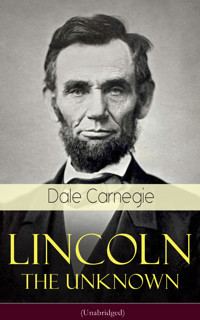



Table of Contents
Cover
Table of Contents
Series Page
Title Page
Copyright
Dedication
INTRODUCTION
EARLY YEARS: FARM BOY, STUDENT, SALESMAN, ACTOR
CARNEGIE'S INFLUENCES: CHRISTIAN SCIENCE TO PSYCHOLOGY
INTERWAR YEARS: IMPRESARIO, HUSBAND, NOVELIST
HOW TO WIN FRIENDS: PUBLISHING PHENOMENON
CARNEGIE'S THEMES AND ETHICS
THE REAL DALE CARNEGIE
LATER YEARS
FINAL THOUGHTS
SOURCES
NOTE ON THE TEXT
HOW TO WIN FRIENDS AND INFLUENCE PEOPLE
A SHORT‐CUT TO DISTINCTION
HOW THIS BOOK WAS WRITTEN—AND WHY
PART ONE: FUNDAMENTAL TECHNIQUES IN HANDLING PEOPLE
CHAPTER 1: “IF YOU WANT TO GATHER HONEY, DON'T KICK OVER THE BEEHIVE”
CHAPTER 2: THE BIG SECRET OF DEALING WITH PEOPLE
CHAPTER 3: “HE WHO CAN DO THIS HAS THE WHOLE WORLD WITH HIM―HE WHO CANNOT WALKS A LONELY WAY”
NINE SUGGESTIONS ON HOW TO GET THE MOST OUT OF THIS BOOK
PART TWO: SIX WAYS TO MAKE PEOPLE LIKE YOU
CHAPTER 1: DO THIS AND YOU'LL BE WELCOME ANYWHERE
BECOME GENUINELY INTERESTED IN OTHER PEOPLE.
CHAPTER 2: A SIMPLE WAY TO MAKE A GOOD FIRST IMPRESSION
The Value of a Smile at Christmas
CHAPTER 3: IF YOU DON'T DO THIS, YOU ARE HEADED FOR TROUBLE
Note
CHAPTER 4: AN EASY WAY TO BECOME A GOOD CONVERSATIONALIST
CHAPTER 5: HOW TO INTEREST PEOPLE
CHAPTER 6: HOW TO MAKE PEOPLE LIKE YOU INSTANTLY
IN A NUTSHELL
SIX WAYS TO MAKE PEOPLE LIKE YOU
PART THREE: TWELVE WAYS TO WIN PEOPLE TO YOUR WAY OF THINKING
CHAPTER 1: YOU CAN'T WIN AN ARGUMENT
Note
CHAPTER 2: A SURE WAY OF MAKING ENEMIES—AND HOW TO AVOID IT
CHAPTER 3: IF YOU'RE WRONG, ADMIT IT
CHAPTER 4: THE HIGH ROAD TO A MAN'S REASON
CHAPTER 5: THE SECRET OF SOCRATES
CHAPTER 6: THE SAFETY VALVE IN HANDLING COMPLAINTS
CHAPTER 7: HOW TO GET CO‐OPERATION
CHAPTER 8: A FORMULA THAT WILL WORK WONDERS FOR YOU
CHAPTER 9: WHAT EVERYBODY WANTS
CHAPTER 10: AN APPEAL THAT EVERYBODY LIKES
CHAPTER 11: THE MOVIES DO IT. RADIO DOES IT. WHY DON'T YOU DO IT?
CHAPTER 12: WHEN NOTHING ELSE WORKS, TRY THIS
IN A NUTSHELL
TWELVE WAYS OF WINNING PEOPLE TO YOUR WAY OF THINKING
PART FOUR: NINE WAYS TO CHANGE PEOPLE WITHOUT GIVING OFFENCE OR AROUSING RESENTMENT
CHAPTER 1: IF YOU
MUST
FIND FAULT, THIS IS THE WAY TO BEGIN
CHAPTER 2: HOW TO CRITICIZE—AND NOT BE HATED FOR IT
CHAPTER 3: TALK ABOUT YOUR OWN MISTAKES FIRST
CHAPTER 4: NO ONE
LIKES
TO TAKE ORDERS
CHAPTER 5: LET THE OTHER MAN SAVE HIS FACE
CHAPTER 6: HOW TO SPUR MEN ON TO SUCCESS
CHAPTER 7: GIVE THE DOG A GOOD NAME
CHAPTER 8: MAKE THE FAULT SEEM EASY TO CORRECT
CHAPTER 9: MAKING PEOPLE GLAD TO DO WHAT YOU WANT
IN A NUTSHELL
NINE WAYS TO CHANGE PEOPLE WITHOUT GIVING OFFENCE OR AROUSING RESENTMENT
PART FIVE: LETTERS THAT PRODUCED MIRACULOUS RESULTS
PART SIX: SEVEN RULES FOR MAKING YOUR HOME LIFE HAPPIER
CHAPTER 1: HOW TO DIG YOUR MARITAL GRAVE IN THE QUICKEST POSSIBLE WAY
CHAPTER 2: LOVE AND LET LIVE
CHAPTER 3: DO THIS AND YOU'LL BE LOOKING UP THE TIME‐TABLES TO RENO
CHAPTER 4: A QUICK WAY TO MAKE EVERYBODY HAPPY
CHAPTER 5: THEY MEAN SO MUCH TO A WOMAN
CHAPTER 6: IF YOU WANT TO BE HAPPY, DON'T NEGLECT THIS ONE
CHAPTER 7: DON'T BE A “MARRIAGE ILLITERATE”
IN A NUTSHELL
SEVEN RULES FOR MAKING YOUR HOME LIFE HAPPIER
FOR HUSBANDS
FOR WIVES
End User License Agreement
Guide
Cover
Table of Contents
Series Page
Title Page
Copyright
Dedication
INTRODUCTION
HOW TO WIN FRIENDS AND INFLUENCE PEOPLE
A SHORT‐CUT TO DISTINCTION
HOW THIS BOOK WAS WRITTEN—AND WHY
Begin Reading
End User License Agreement
Pages
ii
iii
iv
v
xi
xii
xiii
xiv
xv
xvi
xvii
xviii
xix
xx
xxi
xxii
xxiii
xxiv
xxv
xxvi
xxvii
xxviii
xxix
xxx
xxxi
xxxiii
xxxv
xxxvi
xxxvii
xxxviii
xxxix
xl
xli
xlii
xliii
xliv
xlv
xlvi
xlvii
xlviii
xlix
l
li
lii
liii
liv
lv
lvi
lvii
lviii
lix
lx
lxi
lxii
1
3
4
5
6
7
8
9
10
11
12
13
14
15
16
17
18
19
20
21
22
23
24
25
26
27
28
29
30
31
32
33
35
36
37
38
39
40
41
42
43
44
45
46
47
48
49
50
51
52
53
54
55
57
58
59
60
61
62
63
65
67
68
69
70
71
72
73
74
75
76
77
78
79
80
81
82
83
84
85
86
87
88
89
90
91
92
93
94
95
96
97
98
99
100
101
102
103
105
106
107
108
109
110
111
112
113
114
115
116
117
118
119
120
121
122
123
125
126
127
128
129
130
131
132
133
134
135
136
137
138
139
140
141
142
143
145
147
148
149
150
151
152
153
154
155
157
158
159
160
161
162
163
164
165
166
167
168
169
170
171
173
174
175
176
177
178
179
180
181
183
184
185
186
187
188
189
190
191
192
193
194
195
196
197
198
199
200
201
202
203
205
206
207
208
209
210
211
212
213
214
215
216
217
218
219
220
221
223
224
225
226
227
228
229
230
231
232
233
234
235
236
237
239
240
241
242
243
244
245
246
247
248
249
250
251
253
254
255
256
257
258
259
261
262
263
264
265
266
267
268
269
270
271
273
274
275
276
277
279
280
281
282
283
284
285
286
287
288
289
290
291
292
293
294
295
296
297
298
299
300
301
302
303
304
305
307
308
309
310
311
312
313
314
315
316
317
318
319
321
323
324
325
326
327
328
329
330
331
332
333
334
335
336
337
338
339
340
341
343
344
345
346
347
348
349
350
351
352
353
354
355
357
358
359
360
361
362
363
364
365
Also available in the same series:
The Science of Getting Rich: The Original Classicby Wallace Wattles (ISBN: 978‐0‐857‐08008‐0)
The Art of War: The Ancient Classicby Sun Tzu (ISBN: 978‐0‐857‐08009‐7)
The Wealth of Nations: The Economics Classicby Adam Smith (ISBN: 978‐0‐857‐08077‐6)
The Prince: The Original Classicby Niccolò Machiavelli (ISBN: 978‐0‐857‐08078‐3)
Tao Te Ching: The Ancient Classicby Lao Tzu (ISBN: 978‐0‐857‐08311‐1)
The Republic: The Influential Classicby Plato (ISBN: 978‐0‐857‐08313‐5)
Think and Grow Rich: The Original Classicby Napoleon Hill (ISBN: 978‐1‐906‐46559‐9)
The Ancient Classics Collection: The Art of War & Tao Te Chingby Lao Tzu (ISBN: 978‐0‐857‐08627‐3)
The Game of Life and How to Play It: The Self‐Help Classicby Florence Scovel Shinn (ISBN: 978‐0‐857‐08840‐6)
The Interpretation of Dreams: The Psychology Classicby Sigmund Freud (ISBN: 978‐0‐857‐08844‐4)
Meditations: The Philosophy Classicby Marcus Aurelius (ISBN: 978‐0‐857‐08846‐8)
On the Origin of Species: The Science Classicby Charles Darwin (ISBN: 978‐0‐857‐08847‐5)
Beyond Good and Evil: The Philosophy Classicby Friedrich Nietzsche (ISBN: 978‐0‐857‐08848‐2)
The Prophet: The Spiritual Classicby Kahlil Gibran (ISBN: 978–0–857–08855‐0)
The Communist Manifesto: The Political Classicby Karl Marx and Friedrich Engels (ISBN: 978‐0‐857‐08876‐5)
A Room of One’s Own: The Feminist Classicby Virginia Woolf (ISBN: 978‐0‐857‐08882‐6)
Twelve Years a Slave: The Black History Classicby Solomon Northup (ISBN: 978‐0‐857‐08906‐9)
Narrative of the Life of Frederick Douglass: The Black History Classicby Frederick Douglass (ISBN: 978‐0‐857‐08910‐6)
The Interesting Narrative of Olaudah Equiano: The Black History Classicby Olaudah Equiano (ISBN: 978‐0‐857‐08913‐7)
Thus Spoke Zarathustra: The Philosophy Classicby Friedrich Nietzsche (ISBN: 978‐0‐857‐08930‐4)
Essays by Montaigne: The Philosophy Classicby Michel de Montaigne (ISBN: 978‐0‐857‐08933‐5)
Selected Discourses – The Wisdom of Epictetus: The Stoic Classicby Epictetus (ISBN: 978‐0‐857‐08995‐3)
Letters from a Stoic: The Ancient Classicby Seneca (ISBN: 978‐1‐119‐75135‐9)
Utopia: The Influential Classicby Thomas More (ISBN: 978‐1‐119‐75438‐1)
Dracula: The Gothic Classicby Bram Stoker (ISBN: 978‐1‐907‐31257‐1)
Frankenstein: The Gothic Classicby Mary Shelley (ISBN: 978‐1‐907‐31258‐8)
A Christmas Carol: The Festive Classicby Charles Dickens (ISBN: 978‐1‐907‐32610‐3)
How to Win Friends and Influence People: The Self‐Help Classicby Dale Carnegie (ISBN: 978‐1‐907‐32615‐8)
HOW TO WIN FRIENDS AND INFLUENCE PEOPLE
The Self‐Help Classic
DALE CARNEGIE
With an Introduction by
TOM BUTLER‐BOWDON
This edition first published 2026
© 2026 by John Wiley & Sons, Ltd.
All rights reserved, including rights for text and data mining and training of artificial intelligence technologies or similar technologies. No part of this publication may be reproduced, stored in a retrieval system or transmitted, in any form or by any means, electronic, mechanical, photocopying, recording or otherwise, except as permitted by law. Advice on how to obtain permission to reuse material from this title is available at http://www.wiley.com/go/permissions.
The right of Tom Butler‐Bowdon to be identified as the author of the editorial material in this work has been asserted in accordance with law.
Registered OfficesJohn Wiley & Sons, Inc., 111 River Street, Hoboken, NJ 07030, USAJohn Wiley & Sons Ltd, New Era House, 8 Oldlands Way, Bognor Regis, West Sussex, PO22 9NQ, UK
For details of our global editorial offices, customer services and more information about Wiley products visit us at www.wiley.com.
The manufacturer's authorized representative according to the EU General Product Safety Regulation is Wiley‐VCH GmbH, Boschstr. 12, 69469 Weinheim, Germany, e‐mail: [email protected].
Wiley also publishes its books in a variety of electronic formats and by print on demand. Some content that appears in standard print versions of this book may not be available in other formats.
Trademarks: Wiley and the Wiley logo are trademarks or registered trademarks of John Wiley & Sons, Inc. and/or its affiliates in the United States and other countries and may not be used without written permission. All other trademarks are the property of their respective owners. John Wiley & Sons, Inc. is not associated with any product or vendor mentioned in this book.
Limit of Liability/Disclaimer of WarrantyWhile the publisher and the authors have used their best efforts in preparing this work, including a review of the content of the work, neither the publisher nor the authors make any representations or warranties with respect to the accuracy or completeness of the contents of this work and specifically disclaim all warranties, including without limitation any implied warranties of merchantability or fitness for a particular purpose. No warranty may be created or extended by sales representatives, written sales materials or promotional statements for this work. The fact that an organization, website or product is referred to in this work as a citation and/or potential source of further information does not mean that the publisher and authors endorse the information or services the organization, website or product may provide or recommendations it may make. This work is sold with the understanding that the publisher is not engaged in rendering professional services. The advice and strategies contained herein may not be suitable for your situation. You should consult with a specialist where appropriate. Further, readers should be aware that websites listed in this work may have changed or disappeared between when this work was written and when it is read. Neither the publisher nor authors shall be liable for any loss of profit or any other commercial damages, including but not limited to special, incidental, consequential or other damages.
Library of Congress Cataloging‐in‐Publication Data is Available:
ISBN 9781907326158 (Cloth)ISBN 9781907326172 (ePDF)ISBN 9781907326189 (ePub)
This Book is Dedicated to a Man
Who Doesnʼt Need to Read It
MY CHERISHED FRIEND
HOMER CROY
INTRODUCTION
BY TOM BUTLER‐BOWDON
How To Win Friends and Influence People is a significant book on many levels.
Although it had many antecedents in the success literature of the Victorian and early modern era, it was the first self‐help or motivational blockbuster of the twentieth century. Its rate of sales shocked author and publisher, and today the book has sold over 30 million copies in English, and many more in the world's main languages.
It is also a cultural phenomenon. A 2013 Library of Congress survey, based on responses from over 9,000 people, included How To Win Friends and Influence People as one of the 100 “Books That Shaped America,” alongside Moby Dick, Uncle Tom's Cabin, The Great Gatsby, the Federalist Papers, Up From Slavery, and Silent Spring.
As the cornerstone of the Dale Carnegie Course, How to Win Friends is one of the great peer‐supported approaches to personal transformation, arguably in the same league as Toastmasters International, Weightwatchers, and Alcoholics Anonymous.
This Introduction provides a short biography of Carnegie, including how his book came to be written. I will highlight its key themes. Finally, I consider his ethics and personality, including why he changed the spelling of his name, and the wider cultural impact of his work.
EARLY YEARS: FARM BOY, STUDENT, SALESMAN, ACTOR
Dale Harbison Carnegey was born on November 24, 1888, to James and Amanda, in the hamlet of Harmony Church, ten miles from Maryville, Missouri. He had an older brother, Clifton. His mother steeped him in popular literature and made him memorize tracts from the Bible and orate them in church.
Dale's childhood was a constant round of hard farm work: milking cows, chopping wood, and raising pigs in freezing winters. It gave him a lifelong hatred of manual labour. “I was ashamed of our poverty,” he later said.
Assailed by floods and pests, the Carnegeys were forced to sell their smallholding. They started again with a rented farm, but times remained tough. James Carnegey turned for solace to populist leaders like William Jennings Bryan and tended to morosity, while Amanda was sunny, optimistic, and pious. His parents left him nothing except “the blessing of faith and sturdy character,” an older Carnegie liked to say. They lived just long enough (Amanda died in 1939 and James in 1941) to see their son's success.
In 1904, the family moved to farmland near Warrensburg, Missouri, so that the boys could get a proper education. They attended Warrensburg Normal School and then the Missouri Teacher's College (now University of Central Missouri). The family could not afford to pay for Dale to live on site, so he had to ride a horse to school from their farm nearby.
Humiliated and poorer than his peers, college nevertheless opened his horizons. He gained self‐esteem via public speaking, including memorized declamations and debating. He found he could gain friends by his words, and began winning speaking and debating competitions and training other students. As a harbinger of his later writing style, Carnegey adopted an informal, chatty style, very different from traditional oratory.
After graduating from college in 1908, he saw his ticket out of poverty as being a travelling Chautauqua speaker. But the only path open to him was sales. He moved to Nebraska to sell correspondence school courses. He was a failure at it and, to boot, homesick. Things got slightly better with a sales position in Omaha with Armour and Company, the huge meatpacking company. He worked the rural districts of South Dakota selling canned meat, lard, and soap, and his work ethic put him into the top tier of Armour salesman. As a result, Carnegey was able to send a good chunk of his earnings home to help his parents pay the mortgage.
As a salesman, Carnegey learned to tell an amusing story. He found that smiles and positivity had a real effect on people, even if much of the time he felt like he was acting. He discovered the power of remembering people's names and letting them talk about themselves.
But Carnegey was too ambitious and intellectually curious to sell meat forever. In 1911, aged 22, he applied and was accepted into the prestigious American Academy of Dramatic Arts in New York. Over the decades, this institution, with its innovative techniques, trained Anne Bancroft, Grace Kelly, Spencer Tracy, and later Kirk Douglas and Robert Redford.
Yet Carnegey lasted only six months at the Academy before joining a travelling stage production of Polly of the Circus, a popular moralistic romance of the time. He played the part of Dr Hartley, plus many extra parts, and travelled around the East and Midwest. When the run ended, however, no other acting parts opened up. He was forced to return to sales.
Back in New York, Carnegey went into business with an acquaintance selling trucks, and then joined an auto sales company including Packard cars. His heart was not in cars any more than it was in meat, but socially he enjoyed life in the city. He dated Jewish, Irish, French, and Canadian girls, and wrote home to a slightly worried Amanda to tell her about it all. But the reality of a job he hated and a dirty rented room made him feel his life was going nowhere.
Carnegey left Packard in late 1913. Now 25, he was desperate to move out of sales and have a speaking career. He gave a few one‐off talks (on cowboys for the New York Board of Education, and on self‐expression and oratory to the Masons) and took writing courses at Columbia University. As Columbia and New York University had turned down his ideas to teach evening extension courses, he now aimed a little lower. The director of New York's smallest Y.M.C.A., in Harlem, gave him a chance to give a course on public speaking. The course did well, and Brooklyn Y.M.C.A. asked him to run a course, followed by Y.M.C.A.s in Newark, Baltimore, and Philadelphia. Teaching mostly young white‐collar males who wanted to get ahead in business, he was earning a princely $500 a month.
Carnegey also began having some success with writing, getting commissions for “how they made it” success stories for magazines. These potted biographies of well‐known people would remain an important sideline for most of his life. He also wrote articles on war and Antarctic exploration, and how to make money from writing for the screen or stage.
CARNEGIE'S INFLUENCES: CHRISTIAN SCIENCE TO PSYCHOLOGY
In 1915, Carnegey co‐authored his first book, The Art of Public Speaking, with editor and writer Joseph Berg Esenwein. It was published (ironically) by one of the home correspondence schools that he had been a salesman for only a couple of years prior.
The Carnegey Course in Public Speaking, meanwhile, had become a mini industry. By 1920, it had been codified into a course—“Public Speaking: The Standard Course of the Y.M.C.A. Schools”—that Carnegey could train others to give. What made the course different was its infusion with the motivational, psychological, and even metaphysical ideas of the day.
Carnegey's influences included the popular speaker Rev. Russell H. Conwell and his famous “Acres of Diamonds” speech (which promised readers they would find their fortune in their own back yard); Elbert Hubbard and his “Message to Garcia” story from the Spanish–American war, about a soldier who gets the job done without excuses; James Allen, the English metaphysical thinker and author of As A Man Thinketh; Mary Baker Eddy, founder of Christian Science and author of Science and Health with Key to the Scriptures; and Orison Swett Marden, the founder of Success magazine and author of Pushing To The Front, or Success Under Difficulties.
Biographer James Watts (Self‐Help Messiah) believes that Marden, the most famous motivational speaker and writer of his day, was Carnegey's secret mentor. Marden encouraged Carnegey to read as widely as possible across history, fiction, science, and philosophy. Indeed, How To Win Friends and Influence People references many great figures from history, philosophy, and religion—from Cicero to Confucius to Shakespeare to Napoleon. That said, Carnegey's childhood friend Homer Croy, whom the book is dedicated to, remembers Carnegie always trying first to find the condensed versions of books to save time and cut to the core ideas.
Carnegey was inspired by the American New Thought writers whose preoccupation was the metaphysics of abundance and “mind power,” but he knew that to appeal to the broadest audience he had to invoke the emerging science of psychology. He quotes liberally from William James, Sigmund Freud, and Alfred Adler, and from contemporary writers such as Harry Overstreet. Overstreet wrote one of the first popular psychology books, Influencing Human Behavior (1925), and it is mentioned several times in How To Win Friends. Carnegie's principle, “Arouse in the other person an eager want” was taken directly from Overstreet, as was his list of “basic human needs” that need to be satisfied.
Title page of Carnegey's first book. Library of Congress.
INTERWAR YEARS: IMPRESARIO, HUSBAND, NOVELIST
Carnegey's prosperous new life ended with Woodrow Wilson's decision in 1917 to enter the United States into World War One. He was drafted and sent to Camp Upton, Long Island. Saved from weapons training by a missing finger from a childhood accident, he was given office duties with the rank of Sergeant, assisting a Major. Discharged at the start of 1919, he was happy to put this dull period behind him.
Back in New York, Carnegey restarted his public speaking business with the Y.M.C.A.s, adding new courses for bankers, engineers, and advertising men. He got into trouble with speech education professionals by submitting articles to their journals to promote his business. Unfortunately, the articles contained accounts of people that were fictitious, which forced him to make a retraction and apology.
The incident did not hold him back for long. In 1917, adventurer Lowell Thomas had sought Carnegey's help in giving a talk on his time in Alaska to the Smithsonian. The talk was a success, and Thomas gave Carnegey an endorsement for his courses. It was the start of a lifelong collaboration and friendship.
Thomas had created a touring act with film and slides based on his time with General Allenby in Palestine, and with T.E. Lawrence in Arabia. In 1919 he again sought Carnegey's help, this time to make the show more alluring. Carnegey, who had never left America, gladly accepted and became his business manager on a tour of England. The revamped show, given at the Royal Opera House in London, was a sellout, and as creative director and manager Carnegey earned a cut of the profits.
The show was later performed on the eastern seaboard of America, Canada, the north of England and Scotland, and in Australia. But when Thomas had to pull out as narrator, replaced by Carnegey, bookings and profits dwindled. Carnegey came close to a nervous breakdown over the stress. Yet he seemed to like the role of impresario, and in 1921 created another show based on Sir Ross Smith's famous 1918 flight from England to Australia. This was also a hit, running for four months.
Carnegey's time in the UK had an unforeseen benefit: love. In July 1921 he married Lolita Harris in Dorking, Surrey. Born Lolita Baucaire in Ulm, Germany, she had emigrated to the United States and worked as an actress. Lolita had married a rich dentist, Charles Harris, but it ended in divorce. She met Dale while he was part of the Lowell Thomas show touring Baltimore. After marrying, the Carnegeys enjoyed travelling around Europe, including a year in Versailles outside Paris and on the French Riviera, plus some time in North Africa. This was at a time when U.S. dollars went far. Carnegey gave some speaking courses in Europe but was also earning $3,000 a year from his book royalties.
In time, Lolita grew critical of Dale's basic Midwestern ways. He, apparently, tired of her pretentiousness and harrying nature. The marriage lasted a decade, but Carnegie tried never to talk of it. The two Carnegie biographers (Watts and Kemp/Claflin) contend that Carnegey's depiction of the difficult Mary Todd, Abraham Lincoln's wife, in his book Lincoln The Unknown (1932), is a veiled portrait of his own wife. They would finally divorce in 1931.
Perhaps inspired by other American emigres in Europe such as Hemingway and Gertrude Stein, Carnegey spent considerable time writing what he thought would be the next great American novel. Yet even his literary agent thought that The Blizzard, set in Missouri and with wooden characters and stilted dialogue, was poor. It was never published and remains a little‐known detail of Carnegie's life as a writer, which we now associate with page‐turning non‐fiction.
At the time Carnegey was crushed by the rejection, but it forced him to return to what he knew best and what could earn him money: public speaking and human relations. In 1925 he changed his name from Dale Carnegey to Dale Carnegie. His public reasoning? The Carnegie spelling was much easier for people to remember (given industrialist Andrew Carnegie, Carnegie Hall, etc.). It didn't hurt, either, that the Carnegie name in the 1920s had great lustre in the public imagination. Why not associate oneself with it?
Lincoln The Unknown (1932).
Source: Unknown/Wikimedia Commons.
HOW TO WIN FRIENDS: PUBLISHING PHENOMENON
In 1926, Carnegie published Public Speaking: A Practical Course for Business Men, based on his Y.M.C.A. course materials. He was earning enough to buy a relatively new English Tudor‐style house in the pleasant (now affluent) suburb of Forest Hills in Queens, New York.
Three years later, however, like many at the time he lost money in the stock market crash of 1929. He managed hold onto the property, and it would remain his home until his death in 1955. The house was a quiet refuge where he could enjoy his garden and dogs, yet it was only ten miles from New York City.
Fortunately, demand for Carnegie's courses continued through the early years of the Great Depression. But he was not run off his feet and in the summer of 1932 made a trip of many weeks to China. He would call it his “greatest adventure in living.” After the ship berthed in Shanghai, he was shocked by the poverty. It was of a much greater level than even a very depressed United States and put his own struggles into perspective.
The Depression years saw him begin a weekly radio spot conveying fascinating biographical details about famous people on a show sponsored by Maltex, a cereal brand. He also published Lincoln The Unknown (1932) and Little Facts About Well Known People (1934). Neither were bestsellers, but Carnegie's publishing fate was about to change.
In 1934, a young executive at Simon & Schuster, Leon Shimkin, attended a promotional lecture by Carnegie. Shimkin was impressed, but Carnegie had been turned down by Simon & Schuster for a previous book and was cool to Shimkin's advances. Carnegie eventually relented, and spent whatever spare time he had in the next two years writing.
Published in October 1936, How To Win Friends and Influence People, including a ten‐page biography‐cum‐testimonial by Lowell Thomas, was a success from the start. Shimkin had the bright idea of sending free copies to 500 graduates of the Dale Carnegie Course, which quickly brought orders for 5,000 more. He also put a full‐page ad in The New York Times.
Carnegie had hoped the book would sell 20,000 copies. He was astonished when, in early 1937, it entered bestseller lists. By March of that year it had sold 250,000 copies. Earning 25 cents a copy, or around $5 in today's money, his first royalty check was for $90,000, or over $2 million today. While most of America was still trying to claw itself out of the Depression, with 80 bread lines in New York City and over 9 million people were unemployed, Carnegie was becoming a millionaire.
Early Simon & Schuster paperback edition. From “America Reads” exhibition, Library of Congress.
Source: Unknown/Wikimedia Commons.
CARNEGIE'S THEMES AND ETHICS
As Steven Watt has noted, Carnegie's life covered a period of massive change and expansion in America, including the transition from a farming‐based economy to an industrial, urban one. An era of staid Puritan morals, emphasizing duty, thrift, and self‐control, gave way to one of consumerism and entertainment. The desire for charisma, power, and attractiveness replaced the wish for rectitude and honesty. This shift from an ethic of “character” to “personality” is well documented; Stephen R. Covey discusses it in The 7 Habits of Highly Effective People.
The America of Carnegie's time also saw a move from an economic base of individual entrepreneurs to huge corporations catering to a mass consumer base, with layers of white‐collar workers. If many were similar to you in terms of education, skills, training, and experience, “being a good people person” could be a distinct advantage.
Carnegie had kept in his mind a statement by John D. Rockefeller that the ability to handle people well was more valuable than all others, but he could find no book written on the subject. He and his researchers read everything they could find on human relations, including philosophy and literature and the latest works in psychology and biography. This research, combined with the experience of running hundreds of public speaking courses, gave Carnegie a unique insight into what made people tick, including their deepest fears and desires. In How To Win Friends he mentions a man who had driven his 300 employees mercilessly and was incapable of saying anything positive about them. But after taking a Carnegie course and applying the principle Never criticize, condemn or complain, the gentleman was able to turn “314 enemies into 314 friends,” inspiring loyalty and increasing profits at the same time. Applying the principle also transformed his relationship with his family.
Freud's belief was that apart from sex, the chief desire was to be great. Lincoln said it was the craving to be appreciated. Carnegie made this craving for appreciation central to his method. Being aware of it enabled one to make others happy and to be valued oneself (“even the undertaker will be sorry when he dies”). Perhaps Carnegie's most well‐known example is the story of Charles Schwab, the first person to earn $1 million a year by running Andrew Carnegie's United States Steel Company. Schwab confided the secret of success as being “hearty in my approbation, and lavish in my praise” to the people under him.
Yet Carnegie was anti‐flattery because it involved a calculated mimicking of people's vanities. Instead, he believed in sincere appreciation of someone's good points. Doing so requires you to really see that person, maybe for the first time. Warmth replaces mistrust: “If we merely try to impress people and get people interested in us, we will never have many true, sincere friends. Friends, real friends, are not made that way.”
Carnegie's great insight was that it is not “soft” but smart to become more attuned to the feelings and motivations of others. When you do, it is natural that you would be liked more and your influence would grow.
His book's 30 rules or principles include:
Arouse in the other person an eager want.
The only way to get the best of an argument is to avoid it.
Show respect for the other person's opinions. Never say, “you're wrong.”
If you're wrong, admit it quickly and emphatically.
Begin in a friendly way.
Let the other person do a great deal of the talking.
Appeal to the nobler motives.
Give the other person a fine reputation to live up to.
When it was published in 1936, How to Win Friends received plenty of negative reviews for being manipulative, shallow, or simply lacking taste. The fact that Carnegie was a former canned meat and car salesman did not help the perception that a bar had been lowered.
And yet, compared to the brazen darkness of a contemporary work such as Robert Greene's The 48 Laws of Power (1998), Carnegie's book is quite mild, even folksy, and often funny. His log cabin sense of humour meant that How To Win Friends is not as earnest as many contemporary self‐help books. For example, one of his principles is Remember that a person's name is to that person the sweetest and most important sound in any language. The title is more brash than the content, and it is not possible to argue that it is a manual for manipulation in the manner of Robert Greene or Machiavelli's The Prince.
His conversational style was a breath of fresh air to those who had tried to read academic psychology, and even more attractive to those who didn't read books at all. The action‐oriented nature of the book set the tone for all motivational and business books to follow.
Yet it has always been an easy book to parody. Irving Tressler's wry 1937 tome How to Lose Friends and Alienate People gave life advice that was diametrically opposite to Carnegie's. The same title was used for Toby Young's 2008 memoir about failing to get ahead in advertising in 1990s New York.
The popular view is that Carnegie's book marked the shift from the “character ethic” to the “personality ethic.” In fact Carnegie never renounced the “sturdy character” that his parents tried to instill in him and his brother. In Part Three of How To Win Friends he seems to say that the worse thing one can become is a blowhard. This passage, from Part Three, is an example:
A lawyer once said to Cobb on the witness stand: “I understand, Mr. Cobb, that you are one of the most famous writers in America. Is that correct?”
“I have probably been more fortunate than I deserve,” Cobb replied.
“We ought to be modest, for neither you nor I amount to much. Both of us will pass on and be completely forgotten a century from now. Life is too short to bore other people with talk of our petty accomplishments. Let's encourage them to talk instead.”
THE REAL DALE CARNEGIE
Carnegie kept a file, “Damned Fool Things I Have Done.” It included social faux pas rather than big moral or life mistakes, but he did not regret them any less for this. He often felt he did not live up to his own image as a master of human relations. He could be impatient or easily annoyed, make sweeping statements that antagonized people, did not show enough appreciation, and often forgot people's names. Reviewing the incidents in his Fool file he realized that, “They help me to deal with the biggest problem I shall ever face: the management of Dale Carnegie.”
In 1938, he wrote to his local newspaper in Missouri:
“I realize now that healthy people don't write books on health. It is the sick person who becomes interested in health. And, in the same way, people who have a natural gift for diplomacy don't write books on How To Win Friends and Influence People. The reason I wrote the book was because I have blundered so often myself, that I began to study the subject for the good of my own soul. You will recall one of the rules in the book says not to argue. Well, I was always arguing.”
It annoyed him that, after he had become famous, people expected him to be constantly “on,” having a dazzling personality and being master of every social situation. Carnegie was a Midwestern farm boy inside, and not even significant wealth and fame could make him 100 per cent confident.
The fact that he remained a student of his own principles tells us something important: that the skills and tips in How To Win Friends may seem obvious, yet because we are essentially selfish beings we refrain from practising them. And it's precisely because these skills don't come naturally to most of us that Carnegie's book is so valuable.
The first edition of How To Win Friends has an array of letters after Carnegie's name: B.Pd., B.C.S., F.R.G.S., and Litt.D. He did indeed gain a teaching degree (Bachelor of Pedagogy); less certain is the Bachelor of Commercial Science (although he certainly paid his dues as a travelling salesman and entrepreneur) or the Fellowship of the Royal Geographical Society (his friend Lowell Thomas may have been a member). The “Litt.D” or Doctor of Letters refers to an honorary degree from the Maryland College for Women, received in 1933. Later editions of How To Win Friends dropped the letters; by this point he needed no formal imprimatur.
The post‐nominals tip us off to the sense of inferiority that Carnegie felt as someone outside the East Coast cultural establishment. Yet this feeling enabled him to empathise with millions of others who felt the same. He learned that what people craved the most was confidence via affirmation and validation.
Perhaps the most famous taker of a Dale Carnegie course, at age 21, was Warren Buffett. Biographer Alice Schroeder (The Snowball: Warren Buffett and the Business of Life, 2008) credits the course as the “great turning point of his life.” By this point Buffett had a college degree and had started his life as a successful financier. But he was deathly afraid of speaking in public. He considered his Carnegie diploma to be at least as important as his one from Columbia: “The $100 I spent on that Dale Carnegie course was the most important investment I ever made.”
Other well‐known course graduates include: Lee Iacocca, the transformational CEO of Chrysler; Mary Kay Ash of Mary Kay Cosmetics; and Domino's Pizza founder Tom Monaghan. John H. Johnson, the publisher of Ebony and Jet magazines and a role model for Black entrepreneurs, noted his love of How To Win Friends and Influence People.
Did Carnegie's sensitivity to marginalized feeling extend to political issues?
He came from an older “white” America whose cultural stars included Bing Crosby, Shirley Temple, and Fred Astaire. He grew up in a part of rural Missouri that was overwhelmingly white and Protestant, as was Warrensburg where he went to school, with its then less than 5 per cent African American population. He came of age when the United States was still in many places segregated, and racism ran deep. There are one or two bits in How To Win Friends that reveal this.
Carnegie mentions how Jan Paderewski (1860–1941), the famous Polish pianist, composer, and statesman, would address his Black chef on Pullman trains by his correct surname of Mr. Copper—instead of the generic “George” that white Americans often addressed African–American porters on Pullman trains in the 1920s and 1930s (originally because of the company's founder, George Pullman). Carnegie lauds him for it but does not condemn the practice of saying “George” itself.
Carnegie began his public speaking courses in 1912 at the 125th Street Y.M.C.A. in Harlem, an institution for both Black and white residents, so presumably Carnegie's students included both. And to its credit, the Carnegie organization has always gone out of its way to be inclusive.
The fact that Carnegie himself never commented on race or politics may simply have been because he was not very political. He honestly believed that every American would benefit from taking his course or reading his books. After all, Black, white, man, woman, CEO, factory worker—all human beings had the same fears and vulnerabilities. What excited him most were not stories of the beneficial career or financial effects of his courses, but how they made people open their eyes and reshape their lives. His own principles had given him confidence and happiness, putting him on a trajectory from poor farm boy to one of America's most celebrated men.
Carnegie in the late 1940s or early 1950s.
Source: Unknown/Wikimedia Commons.
LATER YEARS
In November 1944, Carnegie married again. Dorothy Price Vanderpool was also from the Midwest (Tulsa, Oklahoma) and had taken a Carnegie course in 1941. As a divorced single mother she claimed it had boosted her confidence, helping her to be promoted from stenographer at Gulf Oil to an executive secretary.
The pair met for the first time following a speech Carnegie gave in Tulsa, after which he invited her to move to New York and become his secretary. Dorothy Carnegie, despite being 24 years younger, would prove to be an excellent match. In 1945, Dale formalized the business structure of his organization, creating Dale Carnegie & Associates, the private company that still owns Dale Carnegie Training. He made Dorothy vice president, and she would in time become chairman of the board, helping to oversee a national organization with many franchisees.
In 1948, Carnegie had another publishing hit with How to Stop Worrying and Start Living. It was organic result of feedback from Carnegie course participants on what kept them up at night. Although nothing was going to match the blockbuster status of How To Win Friends, the book was still the second bestselling non‐fiction book of the year.
Early edition of How To Stop Worrying and Start Living, 1948.
Source: Unknown/Wikimedia Commons.
In 1951, when he was 63, Carnegie became a father for the first time ‐ to Donna Dale Carnegie. Donna would, in time, help her mother Dorothy feminize the family's content offerings.
Dorothy Carnegie had developed a course aimed at women in the late 1940s. It never really took off, but in 1953, as “Mrs Dale Carnegie” she published her own book, How To Help Your Husband Get Ahead in His Social and Business Life. As an adult, Donna helped with the 1981 modernizing revision of How to Win Friends, and in 2006 published her own book, How to Win Friends and Influence People For Girls.
Donna Carnegie has only vague memories of her father. After suffering from Hodgkin's lymphoma for some time, Dale Carnegie died at home in Forest Hills on November 1, 1955.
In the years following, Dorothy Carnegie would help transform Carnegie Training into an organization with global reach involving offices in 70 countries and over $180 million in annual sales. She died in 1998, aged 85.
FINAL THOUGHTS
A striking point about Dale Carnegie is that he failed in many of the things he tried in life. He was a good salesman but didn't love his product enough to stick at it. He fancied himself as an actor but only graced the stage in one production. He imagined himself as a great American novelist, but even his agent didn't think his novel was good. His first marriage ended in failure.
Yet you only have to be good at one thing to be a success.
Carnegie's strength was to really understand—because he had deeply felt it too—the impotency that many experience who have not achieved what they want in work or life. He had been ignored or underestimated on account of his background and apparent lack of sophistication. Even his own wife, Lolita, thought he was too uncultured for her to spend her life with him.
Yet Carnegie was remarkably good at organizing and promotion, became a writer of simple brilliance, and founded a company (Dale Carnegie Training) that outlives him.
Decades before psychology bestsellers such as Emotional Intelligence (Daniel Goleman), How To Win Friends showed that people skills can be systematically learned. Yet because Carnegie was not a psychologist, his impact on society has been underestimated. He is an important figure of the twentieth century because his book is foundational to the modern ethic of self‐help and success, and he spawned a movement that continues to help people fulfil their potential.
SOURCES
Butler‐Bowdon, Tom. “How To Win Friends and Influence People by Dale Carnegie.” Commentary in 50 Self‐Help Classics: Your Shortcut to the Most Important Ideas on Happiness and Fulfilment. Nicholas Brealey/Hachette, London, 2017.
Dullea, Georgia. “How Dorothy Carnegie Won a Husband and Influenced a Business,” The New York Times, 23 May, 1973.
Watts, Steven. Self‐Help Messiah: Dale Carnegie and Success in Modern America. Other Press, New York, 2013.
Kemp, Giles, and Claflin, Edward. Dale Carnegie: The Man Who Influenced Millions. St Martin's Press, New York, 1989.
“Dale Carnegie, Author, Is Dead,” The New York Times, 2 November, 1955.
Uhler, Bruce. Johnson County Missouri—Dale Carnegie History Archive.
https://1973whsreunion.blogspot.com/2011/04/dale-carnegie-attended-ucm-influenced.html
NOTE ON THE TEXT
This Capstone edition is based on the original 1936 text of How To Win Friends and Influence People. This text has six parts, including two ‐ “Letters That Produced Miraculous Results” and “Seven Rules for Making Your Home Life Happier” ‐ that are not found in the four‐part revised 1981 edition. This later edition, involving the input of Dorothy Carnegie, updated some of the language of the original and included current examples.
Today's readers may find some of the language and ideas in the 1936 text sexist or outdated, but bear in mind the text is now 90 years old. Nothing has been altered or excised from the original.
HOW TO WIN FRIENDS AND INFLUENCE PEOPLE
A SHORT‐CUT TO DISTINCTION
BY LOWELL THOMAS
ON a cold, winter night last January, 2,500 men and women thronged into the grand ballroom of the Hotel Pennsylvania in New York. Every available seat was filled by halfpast seven. At eight o'clock the eager crowd was still pouring in. The spacious balcony was soon jammed; presently even standing space was at a premium, and hundreds of people, tired after navigating a day in business, stood up for an hour and a half that night to witness—what?
A fashion show?
A six‐day bicycle race or a personal appearance of Clark Gable?
No. These people had been lured there by a newspaper ad. Two evenings previously, they had picked up a copy of the New York Sun and found a full‐page announcement staring them in the face.
“Increase Your Income
Learn to Speak Effectively
Prepare for Leadership”
Old stuff? Yes, but believe it or not, in the most sophisticated town on earth, during a depression with 20 per cent of the population on relief, 2,500 people left their homes and hustled to the Pennsylvania Hotel in response to that ad.
And the ad appeared—remember this—not in a tabloid sheet, but in the most conservative evening paper in town—the New York Sun; and the people who responded were of the upper economic strata—executives, employers, and professional men with incomes ranging from $2,000 to $50,000 a year.
These men and women had come to hear the opening gun of an ultra‐modern, ultra‐practical course in “Effective Speaking and Influencing Men in Business”—a course given by the Dale Carnegie Institute of Effective Speaking and Human Relations.
Why were they there, these 2,500 business men and women?
Because of a sudden hunger for more education due to the depression?
Apparently not, for this same course had been playing to packed houses in New York City every season for the past twenty‐four years. During that time, more than 15,000 business and professional men had been trained by Dale Carnegie. Even large, sceptical, conservative organizations such as the Westinghouse Electric & Manufacturing Company, McGraw‐Hill Publishing Company, Brooklyn Union Gas Company, Brooklyn Chamber of Commerce, American Institute of Electrical Engineers, and the New York Telephone Company have had this training conducted in their own offices for the benefit of their members and executives.
The fact that these men, ten or twenty years after leaving grade school, high school, or college, come and take this training is a glaring commentary on the shocking deficiencies of our educational system.
What do adults really want to study? That is an important question; and, in order to answer it, the University of Chicago, the American Association for Adult Education, and the United Y.M.C.A. Schools made a survey that cost $25,000 and covered two years.
That survey revealed that the prime interest of adults is health. It also revealed that their second interest is in developing skill in human relationships; they want to learn the technique of getting along with and influencing other people. They don't want to become public speakers; and they don't want to listen to a lot of high‐sounding talk about psychology—they want suggestions that they can use immediately in business, in social contacts, and in the home.
So that was what adults wanted to study, was it?
“All right,” said the people making the survey. “Fine. If that is what they want, we'll give it to them.”
Looking around for a text‐book, they discovered that no working manual had ever been written to help people solve their daily problems in human relationships.




