


0,49 €
Niedrigster Preis in 30 Tagen: 0,00 €
Niedrigster Preis in 30 Tagen: 0,00 €
Mehr erfahren.
- Herausgeber: DigiCat
- Kategorie: Gesellschafts- und Liebesromane
- Sprache: Englisch
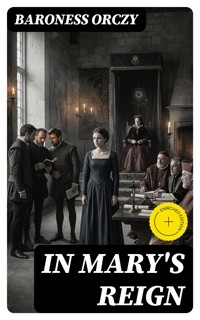
In Mary's Reign is a meticulously crafted historical novel by Baroness Orczy, set during the tumultuous period of Queen Mary I's rule in England. The narrative intricately weaves themes of loyalty, betrayal, and religious conflict, showcasing Orczy's elegant prose and characteristic attention to period detail. The novel's literary style blends vivid characterizations with a rich historical backdrop, enabling readers to experience the complex social and political dynamics of 16th-century England. As such, it stands as a poignant exploration of the tensions between Protestantism and Catholicism during a critical time in British history, drawing readers deeply into the emotional and moral dilemmas faced by its characters. Baroness Orczy, a Hungarian-born British writer, is perhaps best known for her creation of the Scarlet Pimpernel, yet her exploration of historical themes extends into this lesser-known work. With a keen interest in history and a profound understanding of human nature, Orczy's experiences as a refugee and her observations of societal transformations greatly influenced her writing. In Mary's Reign reflects her commitment to engaging with intricate historical narratives that illuminate the human experience. Recommended for readers of historical fiction and enthusiasts of Tudor history, In Mary's Reign invites you to delve into a world of intrigue and passion. Orczy's narrative prowess ensures that readers will be both entertained and enlightened, as they navigate the perilous waters of loyalty and faith during a monarch's reign fraught with conflict. In this enriched edition, we have carefully created added value for your reading experience: - A succinct Introduction situates the work's timeless appeal and themes. - The Synopsis outlines the central plot, highlighting key developments without spoiling critical twists. - A detailed Historical Context immerses you in the era's events and influences that shaped the writing. - An Author Biography reveals milestones in the author's life, illuminating the personal insights behind the text. - A thorough Analysis dissects symbols, motifs, and character arcs to unearth underlying meanings. - Reflection questions prompt you to engage personally with the work's messages, connecting them to modern life. - Hand‐picked Memorable Quotes shine a spotlight on moments of literary brilliance. - Interactive footnotes clarify unusual references, historical allusions, and archaic phrases for an effortless, more informed read.
Das E-Book können Sie in Legimi-Apps oder einer beliebigen App lesen, die das folgende Format unterstützen:
Veröffentlichungsjahr: 2022
Ähnliche






In Mary's Reign
Table of Contents
Introduction
A torch of faith held against a tempest of power throws long, dangerous shadows across Tudor England. In Mary’s Reign ushers readers into a world where conscience can become a battlefield and the quiet routines of home life are rattled by proclamations, spies, and the sudden knock at the door. Baroness Orczy fashions from this fraught landscape a story of emotional intensity and swift turns, balancing intimacy with spectacle. The novel does not merely recount public upheavals; it follows the tremors that run through private hearts when belief, loyalty, and survival stand at cross-purposes. The resulting tension propels an engrossing historical romance of peril and resolve.
Baroness Emmuska Orczy, the Hungarian-born British novelist and playwright, is best known for creating the Scarlet Pimpernel, yet her historical romances beyond that famous hero demonstrate the breadth of her craft. Written and published in the early twentieth century, during the Edwardian appetite for vivid historical storytelling, In Mary’s Reign showcases the author’s instinct for narrative momentum and atmosphere. Orczy drew readers with accessible prose, bold plotting, and a keen eye for the emotional stakes of history. This novel stands among the works that established her as a leading popular storyteller of her day, one who understood how to fuse historical circumstance with page-turning drama.
The setting is England under Mary I, whose brief reign in the mid-sixteenth century sought to restore Roman Catholic orthodoxy to a realm reshaped by earlier reforms. The result was an age of fear and fervor, in which public rites and private convictions suddenly mattered in life-and-death ways. Trials, denunciations, and policy reversals unsettled communities; rumors traveled as swiftly as edicts; and allegiance became a perilous, shifting line to tread. Orczy distills this atmosphere with an eye for the everyday texture of the period—its manners, talk, and rituals—while never losing sight of how power and belief press upon ordinary lives.
Within this charged landscape, the novel’s central premise is spare and compelling: a life becomes entangled with the politics of faith and the hazards of loyalty at a time when neither can be cleanly separated from survival. The narrative follows its protagonist through corridors of uncertainty—moments when friendship is tested, when trust must be weighed against prudence, and when acts of compassion may invite suspicion. The story unfolds across households and meeting-places where whispers carry dangers, and where love, in any form, must navigate a treacherous public climate. Without foreclosing its surprises, the book invites readers to feel every hinge of decision.
Orczy’s art lies in her orchestration of pace and feeling. Scenes often begin with a calm domestic gesture and tilt suddenly into jeopardy, creating a rhythm of suspense that keeps the reader alert. Her descriptions are clear and unfussy, illuminated by specific detail rather than burdened with it, and her dialogue moves swiftly, shaping character as it advances the plot. Above all, Orczy understands the drama of moral choice. She gives the story a tight focus on the individual’s inner weather—fear, hope, defiance—against the gale of historical necessity, so that the past becomes immediate and the stakes unmistakably human.
In Mary’s Reign endures as a classic of popular historical fiction because it unites an accessible narrative with durable questions about power and principle. The novel belongs to the early twentieth-century resurgence of romantic adventure set against recognizable pasts, a movement that offered readers both escape and reflection. As part of the body of work that solidified Orczy’s reputation, it illustrates how historical romance can illuminate, rather than merely decorate, a turbulent era. The book’s continued presence in modern reprints and its readership among enthusiasts of Tudor narratives attest to its capacity to engage across generations.
The themes at the novel’s heart are perennial. It explores how private faith survives public scrutiny, how love recalibrates itself under duress, and how courage may take quiet forms as often as spectacular ones. Loyalty in this story is never a simple banner to wave; it must be chosen repeatedly, with measured risk. Equally resonant is the portrait of a society learning to endure uncertainty—where policy shifts can unsettle the ground beneath one’s feet and where the difference between rumor and truth becomes a matter of consequence. These concerns feel authentic to the period and recognizable to modern readers.
Characters in Orczy’s hands are shaped by circumstance without being reduced to it. The sovereign’s presence looms, a distant source of edict and ceremony, while lesser-known figures bear the immediate costs of allegiance and suspicion. By centering individuals who live outside the inner sanctums of power, the novel makes the Tudor court’s decisions legible in kitchen talk, church aisles, and the strained courtesies of neighbors. The cast’s hopes and fears offer a human lens on an age too often summarized by chronicles and decrees, revealing how history’s grand movements live and breathe through personal choices.
The book’s structure blends measured buildup with bursts of danger, alternating episodes of tense stillness with sudden, decisive action. Orczy uses the mechanics of suspense with assurance: impending footsteps, an unexpected visitor, the tilt of a conversation toward confession or evasion. Yet the momentum never eclipses moral complexity. The narrative repeatedly asks what it means to be honorable when law and conscience diverge, and what safety costs when sought at any price. In this way, the plot’s engine is powered not only by events, but by the reader’s investment in the characters’ integrity.
Orczy’s influence on historical adventure reaches beyond any single title. Her fusion of brisk storytelling, romantic tension, and a vividly realized past helped set expectations for the genre throughout the twentieth century. The figure of an individual standing against repression, the interplay of disguise and revelation, and the insistence that history can be thrilling without losing seriousness—all are hallmarks that many later writers and dramatists have adopted. In Mary’s Reign exemplifies these strengths in a Tudor frame, showing how a specific political crisis can sustain a universal drama of risk and resolve.
Readers approaching this novel as a record of dates and edicts will find more than a chronicle; they will encounter the texture of an age. Clothing, gesture, church ritual, and household routine form a living backdrop, grounding the suspense in believable detail. Orczy’s research supports the story without encumbering it, allowing readers to absorb context organically as the characters move through their world. The book therefore functions both as an entry point into the Maryan period and as an engrossing narrative whose urgency does not depend on prior historical knowledge.
In Mary’s Reign continues to speak to contemporary concerns because it locates dignity in principled choice amid polarized times. Questions about how far individuals should bend to prevailing winds, how communities repair trust, and how love persists when fear is contagious remain urgently familiar. Orczy’s tale reminds us that history’s pressures are never merely antique; they echo whenever authority meets conscience and public life invades the private heart. That is why this novel, grounded in a particular reign, holds lasting appeal: it offers courage without naïveté, hope without denial, and the steady conviction that character matters when everything else is in flux.
Synopsis
In Mary’s Reign by Baroness Orczy is a historical novel set in mid–sixteenth-century England under Queen Mary I. It places a personal story within the turbulence that followed the change of monarch and the reversal of earlier religious reforms. Orczy evokes court ritual, country households, and crowded London streets, showing how politics stretches into private lives. The narrative keeps close to a small circle of gentlefolk whose fortunes rise and fall with events at court. From the outset, questions of allegiance, conscience, and duty shape every decision, while rumors and proclamations darken ordinary routines. This atmosphere frames the conflicts that gradually drive the plot forward.
Early chapters establish the new sovereign’s authority and the swift reshaping of public worship, ceremonies, and expectations. Families recalibrate their loyalties, mindful that old friendships or careless words may draw suspicion. The protagonist moves between domestic obligations and visits to powerful patrons, watching how piety, policy, and personal ambition mingle. Orczy’s scenes emphasize careful etiquette, sudden edicts, and the quiet calculations of those who serve or advise the realm. Conversations in halls and gardens hint at grievances and hopes, yet few trust what they hear. The story’s tensions emerge not from open battle but from uncertainty tightening around familiar places.
As the court settles into its rhythms, talk of a foreign alliance stirs anxieties about influence and identity. Negotiations for a royal marriage become the subject of debate, with merchants, courtiers, and clergy weighing the risks of entanglement with a great continental power. The protagonist witnesses how policy is argued in whispers as much as in councils, and how public festivities veil private unease. Friendships fray over doctrine and nationhood, even as some see opportunity in new connections. Orczy uses these crosscurrents to introduce watchfulness, coded messages, and discreet favors, charting how prudence becomes a daily practice for those near danger.
The personal thread intertwines with the political as a tentative attachment develops under the pressure of scrutiny. Affection is tested by differences of belief and by the demands of patrons who expect unquestioning service. Domestic scenes—feasts, lessons, and small kindnesses—contrast with the harshness of proclamations and arrests that echo through the city. The protagonist’s companions, shaped by family histories and economic need, choose varied paths: loyalty to the crown, quiet conformity, cautious dissent. The novel avoids caricature by giving each stance a rationale, showing the weight of livelihood and reputation. Against this background, trust becomes both precious and perilous.
Midway, clandestine errands and anxious meetings reveal how easily minor favors can become high stakes. A note delivered at the wrong hour, a face glimpsed in the wrong doorway, or an audience postponed by illness can alter lives. Orczy builds suspense through delays, misread gestures, and the narrowness of escape that may be nothing more than a door left ajar. Officials appear courteous yet exacting, insisting on explanations, names, and oaths. The protagonist learns that silence can be interpreted as guilt, while speech may bind more tightly than chains. Such pressures narrow choices until even prudence feels like defiance.
Public order hardens. Sermons grow sharper, inquiries broader, and legal process more visible. Punishments—formal, public, and meant to instruct—create ripples of fear that reach kitchens, workshops, and chapels. The protagonist navigates these currents, seeking counsel without attracting attention, and weighing the compromise that might spare a household. Orczy shows how power is exercised through records, signatures, and custody, as much as through soldiers. The queen remains a distant, determining presence, her policy felt more in outcomes than in personal encounters. The mounting strain forces characters to measure what they can bear, and what they cannot forfeit.
A crisis gathers when private loyalties and public obligations collide. Invitations cannot be refused, and absences demand explanation. A summons—whether to a hall, a chamber, or a gate—becomes the fulcrum on which fates turn. The protagonist confronts the question that has been forming since the first chapter: whether to hold fast to conscience, protect a loved one, or preserve a family’s standing. Orczy’s staging emphasizes how formalities, witnesses, and written testimony can either shield or expose. Outwardly, the scene is orderly; inwardly, it tests the strength of promises and the reach of mercy. Choices have costs none can fully foresee.
In the aftermath, threads drawn taut across households, parishes, and patronage networks begin to pull free or snap. Some characters accept compromise as prudence; others cling to principle at personal risk. Reconciliations are attempted in quiet rooms, while city life resumes its relentless pace beyond shuttered windows. Outcomes hinge on a handful of signatures and the temper of officials empowered to interpret the law. Orczy allows reflection to temper suspense, returning attention to modest acts of fidelity that keep people whole. The future remains uncertain, yet the narrative suggests that endurance, not triumph, is the measure of survival.
Without disclosing final turns, In Mary’s Reign leaves a resonant impression of lives negotiated under a stern, contested authority. The novel’s lasting significance lies in its portrait of ordinary people maneuvering within ideology and statecraft, where kindness can be subversive and caution a form of courage. Orczy’s blend of romance and political observation underscores how history is felt at hearthside as much as at court. The book invites readers to consider the costs of certainty and the compromises of governance, while affirming that integrity—kept quietly, at personal expense—can steady hearts when institutions cannot.
Historical Context
In Mary’s Reign is set in England during the brief but turbulent rule of Mary I, approximately 1553 to 1558. The geographic focus is largely London and the royal court, where policy and power converged under the Tudor monarchy. Dominant institutions included the crown, the Privy Council, Parliament, and the restored Catholic Church, which operated through diocesan structures and ecclesiastical courts. Urban life was ordered by guilds and livery companies, while rural society revolved around manorial tenures and parish communities. This framework situates the novel’s atmosphere of ceremony, surveillance, and obligation, where royal directives, religious mandates, and local officeholders shaped the conditions of everyday life and personal allegiance.
The novel’s backdrop begins with a succession crisis. After Edward VI died in July 1553, a brief attempt was made to install Lady Jane Grey as queen. Mary Tudor gathered armed and civic support, entered London in August 1553, and was proclaimed queen, securing legitimacy through both bloodline and public acclamation. Her accession, as England’s first queen regnant, unsettled expectations about female rule. Resistance to her authority quickly became entangled with religion and foreign policy. The story reflects how the fragility of succession fostered intrigue, caution among courtiers, and anxieties for those whose status, property, or faith hinged on the final outcome.
Mary’s early government reversed Protestant reforms enacted under Edward VI. In late 1553, Parliament repealed much of the Edwardian religious settlement, restoring the Mass and traditional ceremonies. In 1554–1555, reconciliation with Rome under Cardinal Reginald Pole ended the break with the papacy, while politically sensitive compromises let many lay holders keep former monastic lands. Parish churches re-erected altars and revived processions, but regional and household practices varied. The novel echoes these reversals by dramatizing the pressures on conscience and conformity, as communities navigated shifting liturgy, parish oversight, and public displays of orthodoxy that could signal loyalty—or invite suspicion.
The Marian restoration brought the revival of heresy laws in 1554 and the beginnings, from 1555, of executions for persistent Protestant dissent. Approximately 280 people, men and women from diverse social ranks, were burned, with London and southeastern towns witnessing many of the deaths. Notable figures included Hugh Latimer and Nicholas Ridley at Oxford in 1555, and Thomas Cranmer in 1556. Bishops such as Edmund Bonner in London and Stephen Gardiner, Mary’s lord chancellor until 1555, figured prominently in enforcement. The novel echoes the climate of fear, interrogation, and witness, showing how trials, sermons, and public punishments aimed to compel obedience while also forging counter-memories of martyrdom.
Foreign policy sharpened domestic divisions. Mary’s marriage to Philip of Spain in 1554 tied England to Habsburg interests but restricted Philip’s formal powers by treaty. Unrest fed on xenophobia, fear of Spanish influence, and concern for property and English law. Spanish courtiers and soldiers were visible in and around the court, though their authority remained constrained. The novel reflects this charged ambience by depicting debates over loyalty and identity, where alliances, patronage, and courtly favor could all be read through the lens of a European power struggle that touched marriages, offices, and the circulation of news and rumor.
Wyatt’s Rebellion in early 1554 crystallized many of these tensions. Centered in Kent and led by Sir Thomas Wyatt the Younger, the rising opposed the Spanish marriage and broader religious and political change. After brief successes, the rebels were repulsed near London; executions followed, and the episode reinforced royal vigilance. Elizabeth, Mary’s half-sister, fell under suspicion, was confined, and later kept under watch. The novel draws on the mood of conspiracy and reprisal that followed, highlighting how messengers, coded correspondence, and shifting loyalties defined the perilous distance between principled resistance and treason in the eyes of the state.
Security under Mary was coordinated by the Privy Council, local justices, and parish officers. Proclamations regulated behavior, while ecclesiastical commissions pursued heresy and policed books. The Stationers’ Company received a royal charter in 1557, strengthening licensing and oversight of the press. Smuggled or clandestinely printed Protestant texts still circulated, alongside ballads and broadsides that carried news and satire. The novel’s atmosphere of furtive meetings and hidden papers reflects this world of surveillance and evasion, where printers, book hawkers, and the pulpit at Paul’s Cross could amplify or challenge official messages, and where possession of a page might jeopardize a household.
Mary’s foreign entanglements drew England into war with France in 1557 alongside Spain. The most consequential outcome was the loss of Calais in January 1558, England’s last continental stronghold. The fall of Calais shocked contemporaries, wounded prestige, and disrupted long-standing commercial networks. Military levies, taxation, and provisioning strained communities already stressed by poor harvests. The novel’s sense of national vulnerability and urgency is grounded in these events, which linked the fortunes of ordinary people to strategic decisions at court and on campaign, and made the rhetoric of loyalty and sacrifice a lived reality for towns, garrisons, and ports.
Economic conditions in Mary’s years were unsettled. England still felt the effects of earlier currency debasements, while inflation eroded wages. Harvest failures in 1555–1556 created scarcity, and an influenza epidemic in 1557–1558 added a grave demographic shock. Poor relief, administered through parishes and civic institutions, faced extraordinary demands. Grain market regulation and local charity tried to stabilize supply, yet discontent and hardship sharpened. The novel’s depiction of crowded streets, guarded storehouses, and anxious households resonates with this fragile economy, where the price of bread, the reliability of a patron, or the misfortune of illness could recalibrate loyalties and moral choices.
London’s social world shaped behavior and opportunity. Guilds and livery companies regulated crafts, while apprentices and journeymen filled densely populated wards. The Thames carried goods and gossip; markets clustered around Cheapside, and St. Paul’s Churchyard served as a book market and meeting place. Sermons at Paul’s Cross framed public orthodoxies and controversies alike. Smithfield, a livestock market, witnessed executions that impressed memory through spectacle. The novel situates characters within these spaces—river stairs, city lanes, and churchyards—where a glance or whispered word could carry political meaning, and where civic ritual, commercial routine, and state punishment met in daily view.
Household order underpinned Tudor society. Kinship networks, service in great households, and arranged marriages structured security and aspiration. The law and custom placed authority in male heads of household, though noble and gentry women managed estates and patronage. Mary’s queenship challenged contemporary assumptions about female rule; court ceremonial worked to display legitimacy, fertility, and continuity. Public hopes for an heir, complicated by failed pregnancies, intensified anxiety about succession. The novel reflects these gendered pressures as personal dilemmas—duty to family, obedience to conscience, and the negotiation of marriage and service—mirror the larger tensions of dynastic stability and political obedience.
Legal and penal frameworks added edge to religious politics. Ecclesiastical courts handled heresy examinations; secular treason trials addressed rebellion and sedition. The Tower of London held political prisoners; interrogations could be searching, and while routine judicial torture was limited by English practice, state security sometimes used coercive measures. Public executions were choreographed to warn and instruct. The novel’s confrontations and escapes evoke real mechanisms of Tudor control—oaths, bonds, sureties, and surveillance—through which the government sought to discipline tongues and texts, while petitioning, intercession by patrons, and calculated displays of repentance offered precarious paths to mercy.
Cultural life in Mary’s England blended re-Catholicized worship with popular entertainment. Latin liturgy and traditional music returned; roods and images reappeared in many churches. Court masques and pageants continued, while the theater had not yet found permanent playhouses, leaving interludes and traveling players to inns and halls. Ballads spread news in verse; literacy, especially among urban artisans and the middling sort, was rising but uneven. The novel’s emphasis on sermons, proclamations, and rumor reflects how words—spoken, sung, or printed—carried spiritual authority and political danger, embedding ideological conflict in the rhythms of festival days, markets, and parish devotions.
Technologies and logistics framed movement and war. Handheld firearms and artillery were increasingly common; fortifications guarded coasts and ports. The navy, significantly developed under Henry VIII, remained a strategic asset, though resources were strained by war. Overland travel was slow, with riders, post relays, and river transport crucial for letters and intelligence. Delays and misdirection were ordinary hazards, not mere plot devices. The novel’s chases, messages, and narrow escapes rest on this infrastructure, in which a night tide on the Thames or a broken bridge could shape outcomes as decisively as a decree from Whitehall or a sermon at the cathedral.
How Mary’s reign has been remembered shapes the novel’s moral universe. Elizabethan and later Protestant writers, notably John Foxe in his Actes and Monuments (first published 1563), cemented images of Marian persecution and heroism under fire. Nineteenth-century historians such as J. A. Froude popularized a strongly critical view of Mary’s policies and Spanish alliance. By the early twentieth century, this tradition was widely diffused through schools, pulpits, and print. The novel draws upon this inheritance, presenting conscience-tested protagonists within a landscape defined by Catholic restoration, foreign influence, and the costs of resistance, while echoing familiar martyrological tropes.
Baroness Orczy wrote as a popular historical romancer in the early 1900s. Anglo-Hungarian and based in Britain, she enjoyed success on stage and in mass-market fiction, where melodrama, disguise, and daring rescues appealed to Edwardian audiences. Circulating libraries, illustrated periodicals, and theatrical adaptations helped codify a brisk, heroic style. Her work often champions individual courage against oppressive regimes, aligning virtue with national identity and personal honor. Placing her story in Mary’s England let her combine religious peril, court intrigue, and urban pursuit, using a past already moralized by Protestant and patriotic historiography to stage conflicts legible to contemporary readers.
Readers in Orczy’s Britain encountered Mary’s reign through an imperial, Protestant-inflected lens that prized constitutional liberty and feared continental autocracy. The Spanish alliance, the burnings, and the loss of Calais were ready-made emblems of threatened Englishness. At the same time, scholarship was beginning to revise aspects of Marian policy, but popular fiction tended to preserve older narratives. The novel participates in this cultural moment, offering suspense and sentiment while reaffirming a national story in which conscience resists coercion, foreigners menace local freedoms, and London’s streets become a theater where private loyalties test public power and faith.
Author Biography
Baroness Orczy (1865–1947) was a Hungarian-born British novelist and playwright best known for creating the Scarlet Pimpernel, a daring rescuer who helped define the modern secret-identity hero. Writing from the late Victorian era into the mid-twentieth century, she blended historical romance, melodrama, and adventure for a wide readership in Britain and beyond. Her works popularized fast-paced plots set against the French Revolution, and her central figure, Sir Percy Blakeney, became a cultural touchstone adapted repeatedly for stage and screen. Though often classified as popular fiction, her narratives shaped enduring conventions of the swashbuckler, spy tale, and early superhero tradition.
Born in Hungary, Orczy spent part of her childhood on the European continent before her family settled in London, where she studied at the West London School of Art and the National Art Training School. She initially aspired to be a visual artist and supported herself through illustration and translation. Training in drawing, costume, and design later fed the vivid settings of her fiction. Immersion in London’s theaters and the vogue for historical romance helped steer her toward narrative writing. The French Revolutionary period, with its stark conflicts of class and ideology, offered a durable backdrop, while stage melodrama encouraged suspense and revelation.
Orczy’s literary career began with short fiction and early historical novels published at the turn of the twentieth century. The Emperor’s Candlesticks, among her first notable books, signaled a taste for intrigue across European settings. She also developed serial fiction for magazines, honing episodic structures and cliffhangers that later characterized her best-known work. Collaboration on stage pieces sharpened her dialogue and scene construction, preparing the way for the theatrical origins of the Scarlet Pimpernel. By the early 1900s she had established a professional foothold, moving from illustration toward full-time writing and cultivating a popular readership through accessible prose and high-stakes plotting.
In the early 1900s Orczy and her husband, the artist and writer Montagu Barstow, fashioned The Scarlet Pimpernel as a stage drama. After an initial provincial run, a revised London production in 1905 became a sensation, leading to the novel of the same year. The story introduced Sir Percy Blakeney, an English aristocrat who conceals heroic exploits behind a frivolous persona. Its mix of romance, disguise, and daring rescues captivated audiences and spawned a long-running franchise. The book’s success quickly encouraged sequels and prequels, and it established Orczy as a leading figure in commercial historical fiction of the Edwardian era.
Across the next decades Orczy extended the Pimpernel cycle with titles such as I Will Repay, The Elusive Pimpernel, El Dorado, and later prequels including The Laughing Cavalier and The First Sir Percy. Parallel to these adventures, she created influential detective fiction. The Old Man in the Corner, an armchair sleuth introduced in magazine stories and later collected, anticipated many hallmarks of puzzle-driven crime tales. In Lady Molly of Scotland Yard she offered a pioneering female investigator. Critics sometimes dismissed her melodramatic flourishes, yet readers responded to her clear plotting, theatrical reveals, and moral clarity, keeping her books in steady circulation.
Orczy’s fiction consistently highlighted loyalty, chivalry, and opposition to violent revolutionary change, themes that reflected her conservative outlook. During the First World War she supported British recruitment efforts and helped found the Women of England’s Active Service League, which urged men to enlist. She contributed essays and commentary to newspapers and periodicals, and later published The Scarlet Pimpernel Looks at the World, reflecting on contemporary politics through the lens of her famous creation. These activities reinforced her public image as a patriotic writer whose historical tales resonated with ideals of duty and national service during a turbulent twentieth century.
Orczy continued to write into the 1930s and published an autobiography, Links in the Chain of Life, near the end of her career. She died in England in 1947, by then firmly associated with a character who had leapt from the page to stage, radio, film, and later television and musical adaptations. The Scarlet Pimpernel’s blueprint—a double life, theatrical disguises, a loyal network, and a code of honor—shaped later masked and costumed heroes and informed the development of espionage fiction. Her legacy endures in popular culture and in scholarly discussions of genre, national identity, gender performance, and the power of myth-making.
In Mary's Reign
Part 1 - Mirrab the Witch
Chapter 1 East Molesey Fair
Even Noailles, in his letters to his royal master, admits that the weather was glorious, and that the climatic conditions left nothing to be desired.
Even Noailles! Noailles, who detested England as the land of humid atmospheres and ill-dressed women!
“Aulcungs ne pourroient contempler ciel plus bleu soleil plus brillianct ni peuple plus joieult.”
Yet what have we to do with the opinions of these noble ambassadors of great and mighty foreign monarchs?
Our own chroniclers tell us that East Molesey Fair was the maddest, merriest, happiest time the goodly folk of the Thames Valley had had within memory of the oldest inhabitant.
Was not good Queene Marye, beloved daughter of the great King Henry VIII, crowned at last? crowned in Westminster Abbey, as all her loyal subjects had desired that she should be, despite His Grace of Northumberland and his treasonable faction, whom God and the Queene’s most lawful Majesty would punish all in good time?
In the meanwhile let us be joyful and make merry!
Such a motley crowd as never was seen. Here’s a sheriff from London City, pompous and dignified in dark doublet and hose, with scarlet mantle and velvet cap; beside him his lady trips right merrily, her damask kirtle held well above her high-heeled shoes, her flowered paniers looped in the latest style, with just the suggestion of a farthingale beneath her robes, to give dignity to her figure and value to the slimness of her waist.
Here a couple of solemn burgesses in velvet cloaks edged with fur, and richly slashed doublets, are discussing the latest political events; whilst a group of Hampton merchants, more soberly clad, appraise the wares of a cutler lately hailed from Spain.
Then the dames and maidens with puffed paniers of blue or vivid scarlet, moving swiftly from booth to booth, babbling like so many gaily-plumaged birds, squabbling with the vendors and chaffing the criers.
Here and there the gaudy uniform of one of the liveried Companies will attract the eye, anon the dark cloak and close black mask which obviously hides the Court gallant.
Men of all ranks and of all stations have come out to East Molesey to-day. Merchants, shopkeepers, workers, aldermen and servants, all with their womenkind, all with pouches more or less well filled, for who would go to Molesey Fair but to spend money, to drink, to eat, or to make merry?
Then there were the ’prentices[1]!
They had no money to spend, save a copper or so to throw to a mountebank, but nevertheless they contrived to enjoy themselves right royally.
Such imps of mischief!
No whipping-post to-day! Full licence for all their pranks and madcap jokes. The torment of all these worthy burgesses out on a holiday.
Oh! these ’prentices!
Hundreds of them out here this afternoon. They’ve come down from Esher and Hampton, Kingston and Westminster and London City, like so many buzzing insects seeking whom they can annoy.
Now on the ground, suddenly tripping a pompous dame off her feet; anon in rows, some half-dozen of them, elbow to elbow, head foremost, charging the more serious crowd, and with a hoot and a yell scattering it like a number of frightened goslings. Yet again at the confect booth, to the distraction of the vendors of honey-cakes, stealing sugar-plums and damson cheese, fighting, quarrelling, screeching, their thin legs encased in hose of faded blue or grey worsted, their jerkins loose, their shirt sleeves flapping in the breeze, a cool note of white amidst the dark-coloured gowns of the older men.
Heavens above! what a to-do!
A group of women be-coiffed, apparelled in best kirtles and modish shoes, were pressing round a booth where pantoufles, embroidered pouches, kerchiefs, and velveted paniers were laid out in tempting array.
Just beyond, a number of buxom country wenches, with round red arms, showing bare to the grilling sun, and laughing eyes, aglow with ill-concealed gourmandise, were gaping at a mighty display of pullets, hares, and pigeons, sides of roebuck and haunches of wild boar, ready spiked, trussed, and skewered, fit to tempt Her Majesty’s Grace’s own royal palate.
Sprigs of sweet-scented marjoram, thyme, and wool-blade tastefully disposed, further enhanced the attractions of this succulent show. ’Twas enough to make the sweetest mouth water with anticipatory delight. A brown-eyed, apple-cheeked wench in paniers of brilliant red was unaffectedly licking her pretty lips.
“This way, mistress, this way!” shouted the vendor of these appetizing wares. A sturdy fellow, he, with ginger-coloured pate, and wielding a long narrow-bladed knife in his fleshy hand. “This way! a haunch of buck from the royal venery! a hare from Her Liege Majesty’s own chase! a pullet from—”
“Nay, thou gorbellied knave!” responded a vendor of drugs and herbs close by, whose stall was somewhat deserted, and whose temper was obviously suffering—“Nay! an thou speakest the truth thou art a thief, but if not, then thou’rt a liar! In either case art fit for the hangman’s rope!”
“This way, my masters! this way!” came in loud, stentorian cries from a neighbouring booth; “this way for Peter the juggler, the greatest conjurer the world has ever seen!”
“This way! I pray you, worthy sirs!” this from yet another place of entertainment, “this way for John the tumbler!”
“Peter the juggler will swallow a cross-bow of steel before your very eyes!” shouted one crier.
“John the tumbler will climb Saint Ethelburga’s steeple without help of rope or ladder,” called the other.
“Peter will show you how to shoe a turkey, how to put salt on a swallow’s tail, and how to have your cake and eat it!”
“John will sit on two stools without coming to the ground!”
“Marry! and ye both lie faster than my mule can trot!” came in hilarious accents from one of the crowd.
“And Peter the juggler will show thee how to make thy mule trot faster than thou canst lie, friend,” responded Peter’s crier unabashed, “and a mighty difficult task ’twill be, I’ll warrant.”
Laughing, joking, ogling like some fickle jade, the crowd passed from booth to booth: now dropping a few coins in Peter the juggler’s hat, now watching the antics of John the tumbler; anon looking on amazed, half terrified at the evolutions of a gigantic brown bear, led by the nose by a vigorous knave in leather jerkin and cross-gartered hose, and accompanied by a youngster who was blowing on a mighty sackbut until his cheeks looked nigh to bursting.
But adsheart! who shall tell of all the attractions which were set forth on that memorable day before the loyal subjects of good Queene Marye?
There were the trestles where one could play at ball and knuckle-bone, or chance and mumchance; another, where evens and odds and backgammon proved tempting. He who willed could tilt at Weekie, play quoits or lansquenet, at ball or at the billiards, or risk his coppers on such games as one-and-thirty, or at the pass ten; he might try his skill, too, at throwing the dart, or his strength at putting the stone.
There were mountebanks and quacksalvers, lapidaries at work, and astrologers in their tents. For twopence one could have a bout with the back-sword or the Spanish tuck, could watch the situations and conjunctions of the fixed stars and the planets, could play a game of tennis or pelitrigone, or be combed and curled, perfumed and trimmed so as to please a dainty mistress’s eye.
And through it all the loud bang! bang! bang! of the big drums, the criers proclaiming the qualities of their wares, the jarring notes of the sackbut and the allman flute, the screechy viol and the strident nine-hole pipe, all playing against one another, each striving to drown the other, and mingling with the laughter of the crowd, the yells of the ’prentices, the babble of the women, formed a huge volume of ear-splitting cacophony which must have been heard from one end of the country to the other.
All was noise, merriment, and laughter, save in one spot—an out-of-the-way, half-hidden corner of the fair, where the sister streams, the Ember and the Mole, join hands for a space, meet but to part again, and whence the distant towers and cupolas of Hampton Court appeared like those of a fairy palace floating in mid-ether, perched high aloft in the shimmering haze of this hot late summer’s afternoon.
Chapter 2 The Witch’s Tent
There are many accounts still extant of the various doings at East Molesey Fair on this 2nd of October in the year of our Lord 1553, and several chroniclers—Renard is conspicuous among the latter—make mention of the events which very nearly turned the gay and varying comedies of that day into weird and tragic drama.
Certainly the witch’s tent was a mistake.
But what would you? No doubt the worthy individual, who for purposes of mystification called himself “Abra,” had tried many means of earning a livelihood before he and his associate in business took to the lucrative, yet dangerous trade of necromancy.
He was tall and gaunt, with hooked nose and deep-sunk eyes; he had cultivated a long, grey beard, and could call forth the powers of Mirrab the Witch with a remarkably solemn and guttural voice.
As for Mirrab herself, no one was allowed to see her. That was part of the business. She was a witch, a dealer in magic potions, charms and philters, a reader of the stars, and—softly be it spoken—a friend and companion of the devil! She only appeared enveloped in a thick veil, with divining wand held lightly in her hand, the ends of her gold tresses alone visible below the heavy covering which swathed her head.
It was the mystery of it all—cheap devices at best—which from the first had irritated the country-folk who thronged the Fair.
The tent itself was unlike any other ever seen at East Molesey. It stood high upon a raised wooden platform, to which a few rough steps gave access. On the right was a tall flagstaff, with black flag emblazoned with white skull and cross-bones, fluttering lazily in the breeze.
On the left a huge elm tree, with great heavy branches overshadowing the tent, had been utilized to support a placard bearing the words—
Perched on the platform, and assisted by a humbler henchman, armed with big drum and cymbals, the worthy Abra, in high-peaked cap and flowing mantle covered with strange devices, had all day long invited customers to his booth by uttering strange, mysterious promises.
“This way, this way, my masters,” he would say with imposing solemnity; “the world-famous necromancer, Mirrab, will evoke for you the spirits of Mars, of Saturn, or of the moon.”
“She will show you the Grand Grimorium. . . !”
Now what was the Grand Grimorium? The very sound of the words suggested some agency of the devil; no Christian man had ever heard or spoken of the Grand Grimorium.
“She will show you the use of the blasting rod and the divining wand. She will call forth the elementary spirits. . . .”
Some people would try to laugh. Who had ever heard of the elementary spirits? Perhaps if some of the more enlightened town worthies happened to be nigh the booth, one or two of them would begin to chaff the necromancer.
“And prithee, friend wizard,” a solemn burgher would suggest, “prithee what are the elementary spirits?”
But Abra was nothing if not ready-witted.
“The elementary spirits,” he would explain with imperturbable gravity, “are the green butterfly, the black pullet, the queen of the hairy flies, and the screech owl.”
The weird nomenclature was enough to make any one’s hair stand on end. Even the sedate burgesses would shake their heads and silently edge away, whilst their womenkind would run swiftly past the booth, muttering a quick Ave to the blessed Virgin or kissing the Holy Scapulary hung beneath their kerchiefs, as their terrified glances met the cabalistic signs on the black flag.
The humbler country-folk frankly spat upon the ground three times whenever they caught sight of the flag, and that is a sure way of sending the devil about his business.
The shadows now were beginning to lengthen.
The towers and cupolas of Hampton Court Palace[2] were studded with gold and gems by the slanting rays of the setting sun.
It had been a glorious afternoon and, except in the open space immediately in front of the witch’s tent, the fun of the fair had lost none of its zest.
The witch’s booth alone was solitary—weird-looking beneath the spreading branches of the overhanging elm.
The tent seemed lighted from within, for as the evening breeze stirred its hangings, gleams of brilliant red, more glowing than the sunset, appeared in zigzag streaks between its folds.
Behind, and to the right and left of it, the gentle murmur of the sister streams sounded like ghostly whisperings of evening sprites, busy spreading their grey mantles over the distant landscape.
As the afternoon wore on, the crowd in the other parts of the Fair had grown more and more dense, and now, among the plainer garb of the burgesses and townsfolk, and the jerkins and worsted hose of the yokels, could be seen quite frequently a silken doublet or velvet trunk, a masked face perhaps beneath a plumed bonnet, or the point of a sword gleaming beneath the long, dark mantle, denoting the Court gallant.
Now and then, too, hooded and closely swathed forms would flit quickly through the crowd, followed by the inquisitive glances of the humbler folk, as the dainty tip of a broidered shoe or the richly wrought hem of a silken kirtle, protruding below the cloak, betrayed the lady of rank and fashion on gay adventure bent.
Most of these veiled figures had found their way up the rough wooden steps which led to the witch’s tent. The fame of Mirrab, the Soothsayer, had reached the purlieus of the palace, and Abra, the magician, had more than once seen his lean palm crossed with gold.
“This way, noble lords! this way!”
He was even now trying to draw the attention of two cloaked figures, who had just emerged in sight of the booth.
Two gentlemen of the Court evidently, for Abra’s quick eye had caught a glimpse of richly chased sword-hilts, as the wind blew the heavy, dark mantles to one side.
But these gentlemen were paying little heed to the worthy magician’s blandishments. They were whispering excitedly to one another, whilst eagerly scanning the crowd all round them.
“They were ladies from the Court, I feel sure,” said the taller man of the two; “I swear I have seen the hem of that kirtle before.”
“Carramba!” replied the other, “it promised well, but methinks we’ve lost track of them now.”
He spoke English very fluently, yet with a strong, guttural intonation, whilst the well-known Spanish oath which he uttered betrayed his nationality.
“Pardi!” he added impatiently, “I could have sworn that the damsels were bent on consulting the witch.”
“Nay, only on seeing the fun of the Fair apparently,” rejoined the other; “we’ve lain in wait here now for nigh on half an hour.”
“Mirrab the Soothsayer will evoke for you the spirits of the moon, oh noble lords!” urged Abra, with ever-increasing persuasiveness. “She will give you the complaisance of the entire female sex.”
“What say you, my lord,” said the Englishman after a while, “shall we give up the quest after those elusive damsels and woo these obliging spirits of the moon? They say the witch has marvellous powers.”
“Bah, milor!” rejoined the Spaniard gaily, “a veiled female! Think on it! Those who have entered yon mysterious tent declare that scarce an outline of that soothsayer could they glean, beneath the folds of thick draperies which hide her from view. What is a shapeless woman? I ask you, milor. And in England, too,” he added with affected gallantry which had more than a touch of sarcasm in it, “where all women are shapely.”
“Mirrab, the world-famous necromancer, will bring to your arms the lady of your choice, oh most noble lords!” continued the persistent Abra, “even if she were hidden beyond the outermost corners of the earth.”
“By my halidame! this decides me,” quoth the Englishman merrily. “I pray you come, my lord. This adventure promises better than the other. And, who knows?” he added in his turn with thinly-veiled, pleasant irony, “you Spaniards are so persuasive—the witch, if she be young and fair, might lift her veil for you.”
“Allons!” responded the other, “since ’tis your wish, milor, let us consult the spirits.”
And, standing aside with the courtly grace peculiar to those of his nationality, he allowed his companion to precede him up the steps which led to Mirrab’s tent.
Then he too followed, and laughing and chattering the two men disappeared behind the gaudily painted draperies.
Not, however, without tossing a couple of gold pieces into the hands of the wizard. Abra, obsequious, smiling, thoroughly contented, sat himself down to rest awhile beside his patient, hard-worked henchman.




