


1,99 €
Niedrigster Preis in 30 Tagen: 1,99 €
Niedrigster Preis in 30 Tagen: 1,99 €
Mehr erfahren.
- Herausgeber: DigiCat
- Kategorie: Für Kinder und Jugendliche
- Sprache: Englisch
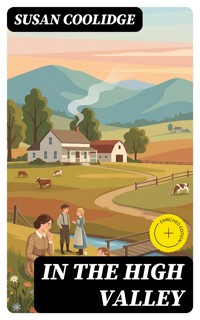
In her charming novel "In the High Valley," Susan Coolidge weaves a rich tapestry of life in rural America, presenting a compelling narrative that explores themes of family, friendship, and the passage of time. The book is characterized by Coolidge's lyrical prose and vivid descriptions, immersing readers in the beauty and challenges of the high valley setting. Drawing from her own experiences and observations, she captures the intricacies of relationships and the nuances of daily life in a small community, blending elements of realism with a touch of idealism, characteristic of 19th-century American literature. Susan Coolidge, the pen name of Sarah Chauncey Woolsey, was a prominent author known for her ability to portray childhood innocence and the complexities of coming of age. Her background, being raised in a family of educators and surrounded by literary influences, shaped her voice and inspired her narratives. "In the High Valley" emerges from her desire to celebrate community bonds and the strength found in both laughter and adversity, reflecting her understanding of human emotions and interactions. This novel is highly recommended for readers who appreciate heartfelt storytelling intricately tied to place and character. It appeals not only to fans of realism but also to those who seek to reflect on the enduring values of love and resilience in the face of life's challenges. In this enriched edition, we have carefully created added value for your reading experience: - A comprehensive Introduction outlines these selected works' unifying features, themes, or stylistic evolutions. - A Historical Context section situates the works in their broader era—social currents, cultural trends, and key events that underpin their creation. - A concise Synopsis (Selection) offers an accessible overview of the included texts, helping readers navigate plotlines and main ideas without revealing critical twists. - A unified Analysis examines recurring motifs and stylistic hallmarks across the collection, tying the stories together while spotlighting the different work's strengths. - Reflection questions inspire deeper contemplation of the author's overarching message, inviting readers to draw connections among different texts and relate them to modern contexts. - Lastly, our hand‐picked Memorable Quotes distill pivotal lines and turning points, serving as touchstones for the collection's central themes.
Das E-Book können Sie in Legimi-Apps oder einer beliebigen App lesen, die das folgende Format unterstützen:
Veröffentlichungsjahr: 2022
Ähnliche





In the High Valley
Table of Contents
Introduction
This single-author collection, IN THE HIGH VALLEY (Katy Karr Chronicles), gathers a late and defining novel from Susan Coolidge’s celebrated Katy Carr sequence, a companion short story in which Dr. Carr steps to the foreground, and a concise biographical sketch of the author. Its purpose is twofold: to present a self-contained reading experience for newcomers and to offer longtime admirers a coherent view of Coolidge’s mature concerns. The genres represented are a full-length novel, a short story tied to the series’ domestic world, and an informative biography. Together they illuminate the imaginative reach and moral texture of Coolidge’s enduring work.
Susan Coolidge was the pen name of Sarah Chauncey Woolsey, an American writer best known for the What Katy Did books. She produced fiction and poetry, but it was her narratives for young readers, centered on family life and the education of character, that secured a lasting audience. The Katy Carr novels trace ordinary days made memorable by growth, kindness, and quietly comic mishaps. Coolidge’s unfussy style, close attention to siblings and friends, and steady narrative voice place her among notable nineteenth-century contributors to juvenile literature. Her stories invite sympathy without sentimentality, and they prize good sense, patience, and mutual care.
In the High Valley is the concluding novel of the Katy Carr series, written in the later years of Coolidge’s career. Without retracing earlier plots, it broadens the series’ horizon by turning toward the American West, where new landscapes and neighbors test familiar values. Members of the Carr circle build homes, choose friends, and make room for difference, all within the rhythms of work and companionship. The novel can be read on its own, yet it rewards readers who know the earlier books with quiet continuities of character and tone. Its premise emphasizes settlement, hospitality, and steady self-command rather than dramatic reversals.
Dr. Carr in "Curly Locks" offers a compact narrative in which the physician-father who anchors the Katy books is seen in focused relief. The story draws on the everyday theatre of home and practice, showing how tact, medical judgment, and affection can align in moments of ordinary crisis. It complements the broader canvas of the novel by returning to the intimate scale of a single household episode. Readers meet the same atmosphere of thoughtful cheer that characterizes the series, with attention to small gestures, shared responsibilities, and the quiet authority of a parent who reconciles care with clear expectations.
Across these works, Coolidge’s signatures are evident: clear conversational prose; gentle humor that never undercuts seriousness; and an episodic structure that lets character emerge through daily choices. Her fiction often turns on recovery and renewal—after illness, disappointment, or misunderstanding—and on the ethics of friendship. The landscapes, whether a New England town or a western valley, are not mere backdrops but fields in which duty and delight are cultivated. She observes household tasks, lessons, visits, and excursions with equal respect, using them to show how consideration and perseverance take root. The result is domestic realism refined by tact and purpose.
Coolidge’s appeal endures because her books balance moral clarity with narrative ease. They continue to be reissued and discovered by new readers, shaping expectations for girls’ coming-of-age fiction and domestic narratives more broadly. In the High Valley contributes to that legacy by widening the geographic imagination of the series, pairing frontier vistas with the civilities that animate the earlier volumes. Contemporary readers will find a thoughtfully drawn model of community-making—neighborliness, restraint, cheerful labor—rendered without preachiness. The collection accentuates how Coolidge turns modest materials into a persuasive argument for character, and how her calm confidence still speaks across generations.
The biographical sketch, Susan Coolidge (Biography), supplies reliable context for the pen name, outlines principal publications, and situates the Katy novels within Woolsey’s broader output. It supports general readers and students by clarifying the cultural moment in which these stories first appeared and by noting features critics consistently recognize: domestic settings, steady humor, and an emphasis on ethical growth. While succinct, it aims for precision rather than anecdote, reinforcing the fiction without intruding on it. Together, the novel, the short story, and the biography form a coherent introduction to Coolidge’s art, its consistent themes, and its ongoing significance.
Historical Context
Susan Coolidge, the pen name of Sarah Chauncey Woolsey (1835–1905), wrote the Katy Karr chronicles across America’s post–Civil War decades, when children’s literature shifted from stern didacticism toward domestic realism. Spanning 1872 to 1890, the series appeared through Boston’s Roberts Brothers, aligning Coolidge with the city’s genteel literary market that had also sustained Louisa May Alcott. Middle-class readers in the United States and Britain embraced narratives of household duty, self-culture, and female solidarity, ideals that anchor both In the High Valley and shorter family-centered episodes like Dr. Carr in “Curly Locks.” The collection’s accompanying biography situates these stories within that evolving cultural consensus.
Juvenile periodicals formed the ecosystem in which Coolidge honed tone and tempo. Mary Mapes Dodge’s St. Nicholas Magazine (founded 1873 in New York) modeled the polished, affectionate voice readers expected, while Boston editors cultivated “home libraries” for girls. Before the International Copyright Act of 1891, transatlantic reprints circulated freely, helping the Katy books find British audiences; after 1891, firmer protections encouraged carefully marketed editions. Short pieces featuring familiar figures—such as a domestic cameo by Dr. Philip Carr in “Curly Locks”—fit the magazine culture of vignettes and holiday numbers, reinforcing serial continuity and sustaining reader attachment between longer installments like In the High Valley.
The decades surrounding 1880 saw a dramatic expansion of women’s education and public presence. Vassar opened in 1865, Smith in 1871, and Wellesley in 1875, legitimizing academic aspiration for middle-class girls. By the 1890s the “New Woman” rode bicycles and sought professions, while Western states experimented earliest with political rights—Colorado granted women’s suffrage in 1893. Coolidge’s heroines never abandon domestic virtues, yet they move, decide, and work within widening horizons. In the High Valley’s frontier households and the quiet authority of Dr. Carr in “Curly Locks” reflect this negotiation, modeling competence and mutual respect rather than strict paternal command.
The figure of Dr. Philip Carr emerges from a century of medical professionalization. The American Medical Association formed in 1847 to standardize training; Joseph Lister’s antiseptic principles (1867) and laboratory advances gradually reshaped practice, especially in urban centers like Boston and New York. Family physicians were cultural anchors, advising on childhood illness, hygiene, and moral comportment. In fiction, they could reconcile science with sympathy. Episodes such as “Curly Locks” spotlight Dr. Carr’s bedside manner, while the series’ recurrent convalescences mirror late‑Victorian anxiety about fevers, spinal injuries, and “nervous” ailments. Readers recognized modern medicine tempered by kindness and prudence.
In the High Valley draws upon the social geography of the American West after the Homestead Act of 1862 and the completion of the transcontinental railroad in 1869. Colorado’s statehood in 1876 and the Denver & Rio Grande Railway opened mountain valleys to migrants, investors, and convalescents seeking dry air at resorts like Manitou. Eastern households exported their manners westward, meeting British settlers and mining capital during the Gilded Age. Coolidge’s plotlines—friendship across classes, adaptation to altitude and isolation, renewed health—echo advice literature of the era, which promoted the Rockies as a therapeutic landscape and a proving ground for character.
The Katy books flourished within an Anglo‑American exchange intensified by steamship travel and cheap print. By the 1880s, American girls’ novels shared shelf space in London with Mrs. Molesworth and Charlotte Yonge, while U.S. readers consumed Dickens, Eliot, and domestic handbooks from Routledge. In the High Valley’s encounters between Americans and Britons reflect everyday contact produced by empire, tourism, and investment. Polite sociability, evangelical ethics, and respectability provided a common idiom. The figure of a reliable physician, like Dr. Carr in “Curly Locks,” also traveled well, reassuring families on both sides that modernity could harmonize with home-centered virtue.
Susan Coolidge’s life bridges Midwest origins and New England refinement. Born in Cleveland in 1835, she later made Newport, Rhode Island, her home, writing within Protestant, reform-minded circles shaped by Yale- and Boston‑centered intellectual life. The biography included in this collection participates in a fin‑de‑siècle habit of presenting authors as moral exemplars, a practice that aided school and library selection. By the time of her death in 1905, Coolidge’s reputation rested on portraying cheerful perseverance, tact, and domestic responsibility. That public image, reinforced by biographical sketches, helped assure continuing circulation of the Katy books in classrooms, church libraries, and family parlors.
Progressive Era institutions amplified Coolidge’s reach. The American Library Association (founded 1876) and urban public libraries created children’s rooms in the 1890s, favoring wholesome series with clear moral throughlines. The child‑study movement led by G. Stanley Hall encouraged age‑graded reading lists, on which the Katy books often appeared. As transcontinental rail and postal networks knitted markets, publishers bundled earlier titles with late entries like In the High Valley and ancillary pieces such as “Curly Locks” into durable omnibus editions. This packaging reinforced themes prized by educators—resilience after illness, cooperative family life, and ethical independence—ensuring steady circulation into the twentieth century.
Synopsis (Selection)
Katy Karr Chronicles: In the High Valley + Dr. Carr in 'Curly Locks'
In the High Valley follows the Carr family’s circle and new neighbors in a Western high valley, where domestic trials, friendship, and the awe of unfamiliar landscape nurture modest but resonant moral growth in a warm, quietly humorous tone.
The companion sketch Dr. Carr in 'Curly Locks' offers a compact glimpse of the series’ physician‑father at work, highlighting Coolidge’s hallmarks—compassionate observation, episodic scenes, and the belief that everyday kindness sustains community.
Susan Coolidge (Biography)
A concise life‑and‑works overview that frames Susan Coolidge as a key writer of domestic fiction for young readers, attentive to sisterhood, duty, and the textures of ordinary home life.
It identifies recurring motifs—illness and recovery, education, and service—and notes a late shift from parlor and school settings toward Western horizons, all conveyed in plain, affectionate prose with light moral emphasis.
IN THE HIGH VALLEY (Katy Karr Chronicles)
In the High Valley
Chapter I. Along the North Devon Coast
It was a morning of late May, and the sunshine, though rather watery, after the fashion of South-of-England suns, was real sunshine still, and glinted and glittered bravely on the dew-soaked fields about Copplestone Grange.
This was an ancient house of red brick, dating back to the last half of the sixteenth century, and still bearing testimony in its sturdy bulk to the honest and durable work put upon it by its builders. Not a joist had bent, not a girder started in the long course of its two hundred and odd years of life. The brick-work of its twisted chimney-stacks was intact, and the stone carving over its doorways and window frames; only the immense growth of the ivy on its side walls attested to its age. It takes longer to build ivy five feet thick than many castles, and though new masonry by trick and artifice may be made to look like old, there is no secret known to man by which a plant or tree can be induced to simulate an antiquity which does not rightfully belong to it. Innumerable sparrows and tomtits had built in the thick mats of the old ivy, and their cries and twitters blended in shrill and happy chorus as they flew in and out of their nests.
The Grange had been a place of importance, in Queen Elizabeth’s time, as the home of an old Devon family which was finally run out and extinguished. It was now little more than a superior sort of farm-house. The broad acres of meadow and pleasaunce and woodland which had given it consequence in former days had been gradually parted with, as misfortunes and losses came to its original owners. The woods had been felled, the pleasure grounds now made part of other people’s farms, and the once wide domain had contracted, until the ancient house stood with only a few acres about it, and wore something the air of an old-time belle who has been forcibly divested of her ample farthingale and hooped-petticoat, and made to wear the scant kirtle of a village maid.
Orchards of pear and apple flanked the building to east and west. Behind was a field or two crowning a little upland where sedate cows fed demurely; and in front, toward the south, which was the side of entrance, lay a narrow walled garden, with box-bordered beds full of early flowers, mimulus, sweet-peas, mignonette, stock gillies, and blush and damask roses, carefully tended and making a blaze of color on the face of the bright morning. The whole front of the house was draped with a luxuriant vine of Gloire de Dijon, whose long, pink-yellow buds and cream-flushed cups sent wafts of delicate sweetness with every puff of wind.
Seventy years before the May morning of which we write, Copplestone Grange had fallen at public sale to Edward Young, a well-to-do banker of Bideford. He was a descendant in direct line of that valiant Young who, together with his fellow-seaman Prowse, undertook the dangerous task of steering down and igniting the seven fire-ships which sent the Spanish armada “lumbering off” to sea, and saved England for Queen Elizabeth and the Protestant succession.
Edward Young lived twenty years in peace and honor to enjoy his purchase, and his oldest son James now reigned in his stead, having reared within the old walls a numerous brood of sons and daughters, now scattered over the surface of the world in general, after the sturdy British fashion, till only three or four remained at home, waiting their turn to fly.
One of these now stood at the gate. It was Imogen Young, oldest but one of the four daughters. She was evidently waiting for some one, and waiting rather impatiently.
“We shall certainly be late,” she said aloud, “and it’s quite too bad of Lion.” Then, glancing at the little silver watch in her belt, she began to call, “Lion! Lionel! Oh, Lion! do make haste! It’s gone twenty past, and we shall never be there in time.”
“Coming,” shouted a voice from an upper window; “I’m just washing my hands. Coming in a jiffy, Moggy.”
“Jiffy!” murmured Imogen. “How very American Lion has got to be. He’s always ‘guessing’ and ‘calculating’ and ‘reckoning.’ It seems as if he did it on purpose to startle and annoy me. I suppose one has got to get used to it if you’re over there, but really it’s beastly bad form, and I shall keep on telling Lion so.”
She was not a pretty girl, but neither was she an ill-looking one. Neither tall nor very slender, her vigorous little figure had still a certain charm of trim erectness and youthful grace, though Imogen was twenty-four, and considered herself very staid and grown-up. A fresh, rosy skin, beautiful hair of a warm, chestnut color, with a natural wave in it, and clear, honest, blue eyes, went far to atone for a thick nose, a wide mouth, and front teeth which projected slightly and seemed a size too large for the face to which they belonged. Her dress did nothing to assist her looks. It was woollen, of an unbecoming shade of yellowish gray; it fitted badly, and the complicated loops and hitches of the skirt bespoke a fashion some time since passed by among those who were particular as to such matters. The effect was not assisted by a pork-pie hat of black straw trimmed with green feathers, a pink ribbon from which depended a silver locket, a belt of deep magenta-red, yellow gloves, and an umbrella bright navy-blue in tint. She had over her arm a purplish water-proof, and her thick, solid boots could defy the mud of her native shire.
“Lion! Lion!” she called again; and this time a tall young fellow responded, running rapidly down the path to join her. He was two years her junior, vigorous, alert, and boyish, with a fresh skin, and tawny, waving hair like her own.
“How long you have been!” she cried reproachfully.
“Grieved to have kept you, Miss,” was the reply. “You see, things went contrairy-like. The grease got all over me when I was cleaning the guns, and cold water wouldn’t take it off, and that old Saunders took his time about bringing the can of hot, till at last I rushed down and fetched it up myself from the copper. You should have seen cook’s face! ‘Fancy, Master Lionel,’ says she, ‘coming yourself for ‘ot water!’ I tell you, Moggy, Saunders is past his usefulness. He’s a regular duffer—a gump.”
“There’s another American expression. Saunders is a most respectable man, I’m sure, and has been in the family thirty-one years. Of course he has a good deal to do just now, with the packing and all. Now, Lion, we shall have to walk smartly if we’re to get there at half-after.”
“All right. Here goes for a spin, then.”
The brother and sister walked rapidly on down the winding road, in the half-shadow of the bordering hedges. Real Devonshire hedge-rows they were, than which are none lovelier in England, rising eight and ten feet overhead on either side, and topped with delicate, flickering birch and ash boughs blowing in the fresh wind. Below were thick growths of hawthorn, white and pink, and wild white roses in full flower interspersed with maple tips as red as blood, the whole interlaced and held together with thick withes and tangles of ivy, briony, and travellers’ joy. Beneath them the ground was strewn with flowers,—violets, and king-cups, poppies, red campions, and blue iris,—while tall spikes of rose-colored foxgloves rose from among ranks of massed ferns, brake, hart’s-tongue, and maiden’s-hair, with here and there a splendid growth of Osmund Royal. To sight and smell, the hedge-rows were equally delightful[1q].




