


16,99 €
Mehr erfahren.
- Herausgeber: John Wiley & Sons
- Kategorie: Geisteswissenschaft
- Serie: Theory Redux
- Sprache: Englisch
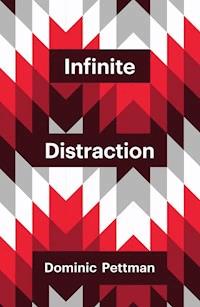
It is often argued that contemporary media homogenize our thoughts and actions, without us being fully aware of the restrictions they impose. But what if the problem is not that we are all synchronized to the same motions or moments, but rather dispersed into countless different emotional micro-experiences? What if the effect of so-called social media is to calibrate the interactive spectacle so that we never fully feel the same way as other potential allies at the same time? While one person is fuming about economic injustice or climate change denial, another is giggling at a cute cat video. And, two hours late, vice versa. The nebulous indignation which constitutes the very fuel of true social change can be redirected safely around the network, avoiding any dangerous surges of radical activity.
In this short and provocative book, Dominic Pettman examines the deliberate deployment of what he calls �hypermodulation,� as a key strategy encoded into the contemporary media environment. His account challenges the various narratives that portray social media as a sinister space of synchronized attention, in which we are busily �clicking ourselves to death.� This critical reflection on the unprecedented power of the Internet requires us to rethink the potential for infinite distraction that our latest technologies now allow.
Sie lesen das E-Book in den Legimi-Apps auf:
Seitenzahl: 170
Veröffentlichungsjahr: 2016
Ähnliche



















Contents
Cover
Title Page
Copyright
Acknowledgments
Preface: There Is Nothing Outside the Texting
Introduction: I Know Why The Caged Bird Tweets
Notes
1. Hypermodulation (or the Digital Mood Ring)
Notes
2. The Will-to-Synchronize
Notes
3. Slaves to the Algorithm
Notes
4. NSFW: The Fappening, and Other Erotic Distractions
Notes
Conclusion: Chasing the Unicorn
Notes
Works Cited
End User License Agreement
Guide
Cover
Table of Contents
Begin Reading
Pages
ii
iii
iv
vi
vii
viii
ix
x
xi
xii
xiii
xiv
1
2
3
4
5
6
7
8
9
10
11
12
13
14
15
16
17
18
19
20
21
22
23
24
25
26
27
28
29
30
31
32
33
34
35
36
37
38
39
40
41
42
43
44
45
46
47
48
49
50
51
52
53
54
55
56
57
58
59
60
61
62
63
64
65
66
67
68
69
70
71
72
73
74
75
76
77
78
79
80
81
82
83
84
85
86
87
88
89
90
91
92
93
94
95
96
97
98
99
100
101
102
103
104
105
106
107
108
109
110
111
112
113
114
115
116
117
118
119
120
121
122
123
124
125
126
127
128
129
130
131
132
133
134
135
136
137
138
158
159
160
161
162
163
164
165
Theory Redux
Roberto Esposito, Persons and ThingsSrećko Horvat, The Radicality of Love
Infinite Distraction
Paying Attention to Social Media
Dominic Pettman
polity
Copyright © Dominic Pettman 2016
The right of Dominic Pettman to be identified as Author of this Work has been asserted in accordance with the UK Copyright, Designs and Patents Act 1988.
First published in 2016 by Polity Press
Polity Press65 Bridge StreetCambridge CB2 1UR, UK
Polity Press350 Main StreetMalden, MA 02148, USA
All rights reserved. Except for the quotation of short passages for the purpose of criticism and review, no part of this publication may be reproduced, stored in a retrieval system, or transmitted, in any form or by any means, electronic, mechanical, photocopying, recording or otherwise, without the prior permission of the publisher.
ISBN-13: 978–1–5095–0230–1
A catalogue record for this book is available from the British Library.
Library of Congress Cataloging-in-Publication Data
Pettman, Dominic.Infinite distraction / Dominic Pettman.pages cmIncludes bibliographical references and index.ISBN 978-1-5095-0226-4 (hardback) -- ISBN 978-1-5095-0227-1 (pbk.)1. Distraction (Philosophy) 2. Social media. 3. Critical theory. I. Title.B105.D58P48 2015302.23’1--dc23
2015019466
The publisher has used its best endeavours to ensure that the URLs for external websites referred to in this book are correct and active at the time of going to press.However, the publisher has no responsibility for the websites and can make no guarantee that a site will remain live or that the content is or will remain appropriate.
Every effort has been made to trace all copyright holders, but if any have been inadvertently overlooked the publisher will be pleased to include any necessary credits in any subsequent reprint or edition.
For further information on Polity, visit our website:politybooks.com
Acknowledgments
This book would not exist were it not for Laurent de Sutter and his keen editorial eye. It was he who plucked one of my all-too-frequent Facebook updates from the digital torrent and suggested that I turn it into a focused polemic for his new book series. Laurent has been an excellent respondent to my work and staunch champion of its idiosyncrasies, for which I’m exceedingly grateful. Thanks are also due to John Thompson, who welcomed me to the postmodern polis of Polity with great hospitality. It was John who encouraged me to “take a position” rather than perform the usual academic labors from an imagined, highly abstract, Archimedean point. Thanks also to Neil de Cort and the editorial team at Polity for helping to usher this book into the world with such efficiency, good humor, and grace. Margret Grebowicz provided consistently brilliant feedback to my sometimes stumbling thinking around these topics. Eugene Thacker has helped me glimpse a darkly utopian world beyond, or perhaps simply before, social media. And Merritt Symes, as always, is my precious partner in various hedonic diversions within the unfoldings of daily life.
It would take several pages to personally thank all those people (colleagues, students, friends, and virtual “friends”) who have enriched my micromoments with all manner of distractions, both via the screen and in person. So I simply offer this book to my own private multitude as a perverse form of gratitude for such.
Preface: There Is Nothing Outside the Texting
This book began its life as a humble Facebook update. In terms of media ecology and technological evolution, this is a bit like starting with a bird and ending up with a dinosaur. Despite being a professor of culture and media—that is, a professional skeptic of technological promises and practices—I certainly surrender an inordinate amount of my time interacting online in social media spaces. For fellow critic Jonathan Crary, this is no doubt in part because I—like everyone else—am obliged to submit to “mandatory techniques of digital personalization and self-administration” (43). But I would be lying if I pretended that mediated socialization doesn’t bring me many micro-pleasures, along with generous infusions of exasperation, boredom, and spleen. Moreover, I would have trouble denying the fact that for every intellectual observation I post or link to, I upload several more frivolous or trivial info-morsels, designed more to distract than instruct or edify. If accused of wasting time or procrastinating, I can certainly use my job as an alibi. “Know your enemy.” But the truth is that having a critical-theoretical perspective on something does not necessarily make you immune to it. An intellectual understanding of a problem does not prevent an affective investment in the same (as we all know, from our romantic histories as much as from our credit card receipts).
The following pages explore some of the more troubling effects of what we might call “the digitalization of distraction,” along with its luminous shadow: attention. This book therefore touches upon some of the specific technological, cultural, social, and political constellations that solicit these two intimately connected phenomena. From anecdotes concerning common or gardenvariety distractions to official reports of acute clinical cases of ADHD, there is a strong tendency to blame technology for a perceived pandemic of preoccupation. Indeed, “the media” has often been painted as little more than a distraction machine, engineered for what the curmudgeonly critic Theodor Adorno rather patronizingly called “the cross-eyed transfixion with amusement.” For teachers like myself, distraction is our nemesis, just as attention is our lifeblood. Given the disheartening state of the world today, however—from terrorism to disease to corruption to exploitation to injustice to inequality to ecological catastrophe—we are likely to feel a pang of conscience at obliging young people to pay attention. The more we notice about the way the world works, the more we are likely to feel a crippling combination of fury, resentment, depression, shame, and helplessness. This is certainly one reason why social media is so addictive: the new opium of the masses. It dulls the pain. It screens out the screams of those suffering just outside our personal experience (or indeed the screams in our own head, on a particularly bad day). Certainly, a lot of our problems are not necessarily curable by better economic or social policies. Much of the trauma comes with being human, and thus being burdened with the awareness of mortality and other miserable fates that await us. “Being unable to cure death, wretchedness and ignorance,” wrote Pascal, “we have decided, in order to be happy, not to think about such things.” Social media helps us not to think about such things. So there is already an irony in trying to think through and about social media.
Something else to note from the outset: social media is not a thing, or a place, or a new medium. It is a constellation, a concept. It is a virtual, evolving assemblage of elements, including—and especially—older forms of media, now diagrammed in novel articulations. We should thus not make the mistake of reifying “it” into a stable object, even as it seeks to reify us in many ways, as well as our interactions. Just as Guy Debord’s notion of the Spectacle did not simply denote the sum total of images circling in the postwar mediascape, but also expressed the ways in which we now think in and relate via images embedded deep in our heads, “social media” names the simultaneously limitless and circumscribed ways we interact via newly enmeshed communications and entertainment technologies. Limitless because no two people will navigate the same branching pathways social media affords in the same way (we all have a unique combination of interests and interactions), and circumscribed because these are all conducted within the vectors provided by those (increasingly few) entities that own the cables, the satellites, the channels, the sites, the providers, and the applications that funnel us all toward each other, so that we may congregate in the bright light of voluntary and compliant commerce. (Today we find a strong preference for economic commerce over the social kind—although marketers have recently realized that you can stimulate the former by simulating the latter.)
To be clear, there is no sense in simply demonizing social media, because there is no single there there. What I want to do, however, is focus on a troubling tendency within new modes of communication, which often goes under the name of social media. As a consequence, this is not a critique of social media, which would be akin to a critique of society qua technology. Rather, it is a critique of “social media” in the sense that very many companies would like to trademark that term. That is, in its narrow, shorthand sense, which points offstage to a whole industry of meshing mechanisms carefully calibrated to narrow our focus, clip our capacity for sustained attention, and shepherd as many of us as possible into the interactive sphere of reflexive consumption.
The sheer, asymptotic, never-delivered promise of the media flow demands a compulsive refresh of our screens. Real time is the new temporal standard. Enormous amounts of energy are expended for everything to be streaming live, so that we are not stranded in the past, in history, in the archive, where we might gather dust (or actually learn something). If you dare lift your eyes from the screen even for a moment, you might miss the tweet or the post or the update that promises to change your life. Links are assumed to have a lifespan of only a few days, if that. Everything is in flux. And yet each day feels the same as the one before.
These days, to adapt Heraclitus, you never step in the same live stream twice.
And yet the digital river is tediously familiar.
“You shall know them by their fruits,” Jesus says in Matthew 7:16. From the point of view of the world we share in common, the fruits in question are altogether tasteless. I have seen young teenagers who just yesterday were ebullient, verbal, interactive, and full of personality turn into aphasic zombies within three months of getting a smart phone or an iPad. The new wine is dying on the vine, and Dionysos, the telluric god of ecstasy, is nowhere in sight. It is unlikely that the next big digital innovation will lure him back.
Robert Pogue Harrison, “The Children of Silicon Valley”
Let us avoid making a Gothic novel, as well as a romance, out of information technology.
Henri Lefebvre, Critique of Everyday Life
IntroductionI Know Why the Caged Bird Tweets
We will have to suffer this new state of things, this forced extroversion of all interiority, this forced injection of all exteriority.
Jean Baudrillard, “The Ecstasy of Communication”
In the waning days of 2014, Instagram purged its accounts of billions of bots—automated, fake user accounts—so that a slew of celebrities woke up with several million fewer followers than they had when they went to sleep. It was a vicious purge, under the cover of darkness. No doubt tears were shed that same morning, and some agents started looking for a new high-profile client. Were we ourselves not flawed humans but particularly sympathetic bots, this code-induced holocaust may have sounded like the destruction of the planet Alderaan to Obi-Wan Kenobi in Star Wars: “I felt a great disturbance in the Force, as if millions of voices suddenly cried out in terror, and were suddenly silenced. I fear something terrible has happened.” In my own case, however, I noticed no difference, since I have an Instagram account with zero followers. I use this account to post selfies for the exclusive pleasure of the network’s blind, unblinking eye. Why? Because I am amused by the very existence of a social media account with no followers whatsoever, no actual social component. And yet, as the existence of bots makes clear, once uploaded to the network, no posting goes “unread” or “unseen,” in some form or another, even if only under the obscure heading of “metadata.”
Which leads to the question: to what degree are humans different from bots when it comes to the various metrics concerning online behavior? To what extent have our own routines become fully preempted subroutines, or apparently algorithmic? From a certain angle—say, the angle of Target’s commercial recommendation engine—a woman can now be assumed to be pregnant on the basis of a series of word searches in Google or some adjustments in shopping habits. The corporation presumes to know this information, perhaps even before the mother-to-be has realized it herself (as happened in one high-profile case). The vast nano-army of harvesting functions that help amass “big data” read the digital tea leaves for patterns in which we ourselves seem to dissolve as individuals (at least until such time as the authorities have a vested interest in fishing our unique personage out of the electronic soup; then the individual is suddenly reconstituted from the morass).
This is where we find ourselves, a decade and a half into the twenty-first century: suspended between bot and not, between anonymous and tagged, generic and specific. We hover between the older conceptions of what it is to be a person—a citizen, with rights, responsibilities, character, agency, identity, and so on—and new, emerging types of being—a consumer, with cravings, likes, profiles, and opinions, leaving a trail of cookie crumbs in our wake. Today, the sovereign individual of liberal philosophy and history is rather rapidly morphing into what Gilles Deleuze called the “dividual”: that is, the sub-subject of a more modular ontology, better designed for connection to flexible assemblages (themselves designed for a world based less on the transcendental “I” than the transnational Ikea).
Or so the story goes.
There is certainly no shortage of polemics out there, pleading with us to stop “clicking ourselves to death,” to stop using the unprecedented reach and power of the Internet to distract ourselves from the late capitalist conspiracy to suck what’s left of our souls, our bodies, our bank accounts, and everything of value in the environment, whether it be the interactions we have online or the minerals that are mined in order to make our communications gadgets in the first place. Every new technology brings with it a new McLuhan, a new Toffler, a new Postman, or a new Turkle, warning us against the dangers of the reflex adoption of new cybernetic arrangements, which themselves form the contours of new modes of cultural and political compliance. Indeed, the present book is not immune from such admonishments. It does, however, seek to do more than add yet another concerned voice to the Neo-Luddite Choir, by tracing some of the ways in which the public social critique of “the Media” (if we can even talk in such monolithic terms anymore) is often itself fed back into the very same overcoded circuits to better increase its reach, efficiency, and profit margins. Moreover, along the way, this short book seeks to identify some of the ways in which new media platforms bring unexpected social possibilities as well as politically progressive agendas to the table, even as they foreclose on other, more tried and true orientations or arrangements. (Such an approach to technological change falls under the sign of “the pharmakon,” at least since Plato—a “remedy” with the capacity for both curing and killing the user, and thus to be approached with caution.)
Jean Baudrillard is an interesting figure, in this sense, and still the most prescient diagnostician of the radical fracture or revolution that occurred with the rise of the simulated society. While he is usually read as a pessimist, in the post–Frankfurt School tradition (“things may not have been better before, but they are certainly getting worse!”), he would at times insist that he is not simply lamenting these anomalous developments, since they are too vast and swift to account for as yet. In his classic short work “The Ecstasy of Communication,” Baudrillard argues that subjectivity itself has lost its “scene,” the traditional site of its genesis and drama, and has instead been replaced by the “obscene”: a nowhere-land of screens and informatics. Where the original scene was essentially psychological (based on such key distinctions as private vs. public, self vs. other, subject vs. object), the new obscenity is not interested in such a congealed metaphysics, with its reassuring markers of difference and dialectical agon. Thanks to “the narcissistic and protean era of connections” (127), the mirror is replaced by the network: a decisive substitution, leading to a very different way of being human (many would say, to a mode of being posthuman, more in tune with the machine). Gone are the melancholic missed encounters of self-reflection, along with the generative struggles for recognition. In their place appears “a nonreflecting surface … where operations unfold—the smooth operational surface of communication” (126–27). The result?
No more expenditure, consumption, performance, but instead regulation, well-tempered functionality, solidarity among all the elements of the same system, control and global management of an ensemble…. Private “telematics”: each person sees himself at the controls of a hypothetical machine, isolated in a position of perfect and remote sovereignty, at an infinite distance from his universe of origin. Which is to say, in the exact position of an astronaut in his capsule, in a state of weightlessness that necessitates a perpetual orbital flight and a speed sufficient to keep him from crashing back to his planet of origin. (128)
It is remarkable to think that this description was offered in a time before the World Wide Web gave mass-access to the Internet and its various hubs and clusters. Certainly, this portrait of the orbital, telematic subject is not so different from Sherry Turkle’s recent account of the digital age, in which we find ourselves “alone together”: floating trapped in an uncanny and unsettling kind of networked solipsism. (A rather straightforward varnish on the prewar critique of the movie palace as a shrine for secular “lonely crowds.”) For Turkle, the stakes are still wagered within a paradigm of alienation. By this account, the constant solicitation of the Internet estranges us from our authentic selves, because we no longer foster each other’s welfare in the irreplaceable face-to-face community (the locus classicus




