


Erhalten Sie Zugang zu diesem und mehr als 300000 Büchern ab EUR 5,99 monatlich.
- Herausgeber: Kohlhammer Verlag
- Kategorie: Religion und Spiritualität
- Sprache: Englisch
The commentary interprets Jeremiah 1-25 as a dramatic text: In laments, accusations, and announcements of doom, a polyphonic message about the fall of Jerusalem and Judah emerges. The colorful and at times disturbing texts narrate a cultural trauma and try to develop an image of God that can explain history and at the same time convey hope for a better future. The female personification of Jerusalem provides an emotional and compassionate portrait of the people, giving voice to their experience of wartime violence and destruction. The persecuted prophet Jeremiah wrestles with God on behalf of the people.
Sie lesen das E-Book in den Legimi-Apps auf:
Seitenzahl: 1291
Veröffentlichungsjahr: 2025
Das E-Book (TTS) können Sie hören im Abo „Legimi Premium” in Legimi-Apps auf:
Ähnliche


















International Exegetical Commentary on the Old Testament (IECOT)
Edited by:
David M. Carr, Christl M. Maier, Walter Dietrich, Irmtraud Fischer, Shimon Gesundheit, Bernard M. Levinson, Ed Noort, William A. Tooman, Helmut Utzschneider and Beate Ego (Apocrypha/Deuterocanonical books)
Cover:
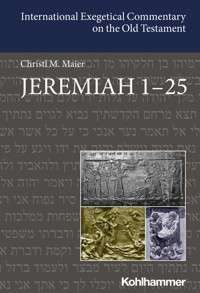
Top: Panel from a four-part relief on the “Black Obelisk of Shalmaneser III” (859–824 BCE) depicting the Israelite king Jehu (845–817 BCE; 2 Kings 9f) paying obeisance to the Assyrian “King of Kings.” The vassal has thrown himself to the ground in front of his overlord. Royal servants are standing behind the Assyrian king whereas Assyrian officers are standing behind Jehu. The remaining picture panels portray thirteen Israelite tribute bearers carrying heavy and precious gifts.
Photo © Z.Radovan/BibleLandPictures.com
Bottom left: One of ten reliefs on the bronze doors that constitute the eastern portal (the so-called “Gates of Paradise”) of the Baptistery of St. John of Florence, created 1424–1452 by Lorenzo Ghiberti (c. 1378–1455). Detail from the picture “Adam and Eve”; in the center is the creation of Eve: “And the rib that the LORD God had taken from the man he made into a woman and brought her to the man.” (Gen 2:22)Photograph by George Reader
Bottom right: Detail of the Menorah in front of the Knesset in Jerusalem, created by Benno Elkan (1877–1960): Ezra reads the Law of Moses to the assembled nation (Neh 8). The bronze Menorah was created in London in 1956 and in the same year was given by the British as a gift to the State of Israel. A total of 29 reliefs portray scenes from the Hebrew Bible and the history of the Jewish people.
Christl M. Maier
Jeremiah 1–25
Verlag W. Kohlhammer
Translated by Linda M. Maloney and Christl M. MaierEditorial collaboration: Alexander Müller (German), Justin Howell (English)
1. Edition 2025
All rights reserved
© W. Kohlhammer GmbH, Stuttgart
Production:
W. Kohlhammer GmbH, Heßbrühlstr. 69, 70565 Stuttgart, GERMANY
Print:
ISBN 978-3-17-020084-5
E-Books:
pdf: 978-3-17-043539-1
epub: 978-3-17-043540-7
All rights reserved. This book or parts thereof may not be reproduced in any form, stored in any retrieval system, or transmitted in any form by any means—electronic, mechanical, photocopy, recording, microfilm/microfiche or otherwise—without prior written permission of W. Kohlhammer GmbH, Stuttgart, Germany.
Any links in this book do not constitute an endorsement or an approval of any of the services or opinions of the corporation or organization or individual. W. Kohlhammer GmbH bears no responsibility for the accuracy, legality or content of the external site or for that of subsequent links.
The commentary interprets Jeremiah 1–25 as a dramatic text: In laments, accusations, and announcements of doom, a polyphonic message about the fall of Jerusalem and Judah emerges. The colorful and at times disturbing texts narrate a cultural trauma and try to develop an image of God that can explain history and at the same time convey hope for a better future. The female personification of Jerusalem provides an emotional and compassionate portrait of the people, giving voice to their experience of wartime violence and destruction. The persecuted prophet Jeremiah wrestles with God on behalf of the people.
Prof. Christl M. Maier teaches Old Testament at Philipps Universität Marburg, Germany.
Content
Editors’ Foreword
Author’s Foreword
Introduction to Jeremiah 1–25
Textual Basis of This Commentary
Differences between Jer and Jer
Change of Translators in Jer?
The Communicative Situation in Jer and Jer
The Positioning of the Oracles concerning the Nations in Jer and Jer
The Historical Background of Jeremiah’s Prophecy
Judah at the End of the Neo-Assyrian Empire
The Babylonian Victory at Carchemish, 605 BCE
Nebuchadrezzar’s War against Jerusalem
Judah under Babylonian Rule
Method of This Commentary
The Significance of Multiple Voices in the Interpretation
Feminist Interpretation
Postcolonial Perspectives
On Synchronic Analysis
On Diachronic Analysis
Preexilic Passages
The Early-Exilic Composition in Jeremiah 2–15*
The Exilic Historical-Etiological Redaction in Jeremiah 1–25
The Golah-Oriented Redaction
The Nations Redaction
The Torah-Oriented Redaction
Jeremiah’s Confessions as Postexilic Lament Discourses
The Pre-Masoretic Editing
Jeremiah 1:1–19: The Prophet Jeremiah and His Mission
Notes on Text and Translation
Synchronic Analysis
Diachronic Analysis
Synthesis
Jeremiah 2:1–4:2: The Significance for Judah of Israel’s Defection
Textual Boundaries and Communicative Structure
Jeremiah 2:1–3:5: How the Break with God Happened
Notes on Text and Translation
Synchronic Analysis
Diachronic Analysis
Jeremiah 3:6–4:2: How the Breach May Be Healed
Notes on Text and Translation
Synchronic Analysis
Diachronic Analysis
Synthesis
Jeremiah 4:3–6:30: The Announcement of the Enemy from the North
Text Demarcation and Communication Structure
Act One: Jeremiah 4:3–31: The Enemy Sets Out
Notes on Text and Translation
Synchronic Analysis
Diachronic Analysis
Synthesis
Act Two: Jeremiah 5:1–31: Reasons for the Enemy Threat
Notes on Text and Translation
Synchronic Analysis
Diachronic Analysis
Synthesis
Act Three: Jeremiah 6:1–30: The Enemy before Jerusalem
Notes on Text and Translation
Synchronic Analysis
Diachronic Analysis
Synthesis
Jeremiah 7:1–8:3: Critique of the Temple and of Other Cults
Text Demarcation and Communication Structure
otes on Text and Translation
Synchronic Analysis
Diachronic Analysis
Synthesis
Jeremiah 8:4–10:25: Reasons for and Lament over the End
Text Demarcation and Communication Structure
Act Four: Jeremiah 8:4–9:2: People’s Lament and God’s Lament
Notes on Text and Translation
Synchronic Analysis
Diachronic Analysis
Synthesis
Act Five: Jeremiah 9:3–20: uined Relationship to God
Notes on Text and Translation
Synchronic Analysis
Diachronic Analysis
Synthesis
Act Six: Jeremiah 9:21–10:25: as the Only Powerful God
Notes on Text and Translation
Synchronic Analysis
Diachronic Analysis
Synthesis
Jeremiah 11:1–13:27: Reflections on Jerusalem’s End
Text Demarcation and Communication Structure
Act Seven: Jeremiah 11:1–17: God’s Covenant Obligation
Notes on Text and Translation
Synchronic Analysis
Diachronic Analysis
Synthesis
Jeremiah 11:18–12:6: Jeremiah’s First Lament Discourse
Notes on Text and Translation
Synchronic Analysis
Diachronic Analysis
Synthesis
Act Eight: Jeremiah 12:7–17: The Ravaging of the Land
Notes on Text and Translation
Synchronic Analysis
Diachronic Analysis
Synthesis
Jeremiah 13:1–11: The Sign Act with the Ruined Loincloth
Notes on Text and Translation
Synchronic Analysis
Diachronic Analysis
Synthesis
Jeremiah 13:12–27: A Collection of Other Sayings
Notes on Text and Translation
Synchronic Analysis
Diachronic Analysis
Synthesis
Jeremiah 14:1–17:27: Discourses on Suffering and Catastrophe
Text Demarcation and Communication Structure
Act Nine: Jeremiah 14:1–15:4: Rejected Complaints
Notes on Text and Translation
Synchronic Analysis
Diachronic Analysis
Synthesis
Jeremiah 15:5–21: God’s Lament over Jerusalem and Jeremiah’s Second Lament Discourse
Notes on Text and Translation
Synchronic Analysis
Diachronic Analysis
Synthesis
Jeremiah 16:1–17:4: Jeremiah’s Life as Symbol of the Catastrophe
Notes on Text and Translation
Synchronic Analysis
Diachronic Analysis
Synthesis
Jeremiah 17:5–18: Jeremiah’s Third Lament Discourse
Notes on Text and Translation
Synchronic Analysis
Diachronic Analysis
Synthesis
Jeremiah 17:19–27: The Sabbath Speech as Conditional Promise of Salvation
Notes on Text and Translation
Synchronic Analysis
Diachronic Analysis
Synthesis
Jeremiah 18:1–20:18: Jeremiah Embodies the Fall
Text Demarcation and Communication Structure
Jeremiah 18:1–17: Jeremiah’s Visit to the Potter’s House
Notes on Text and Translation
Synchronic Analysis
Diachronic Analysis
Synthesis
Jeremiah 18:18–23: Jeremiah’s Fourth Lament Discourse
Notes on Text and Translation
Synchronic Analysis
Diachronic Analysis
Synthesis
Jeremiah 19:1–13: The Broken Vessel as Symbol of the Fall
Notes on Text and Translation
Synchronic Analysis
Diachronic Analysis
Synthesis
Jeremiah 19:14–20:18: Jeremiah’s Fifth Lament Discourse
Notes on Text and Translation
Synchronic Analysis
Diachronic Analysis
Synthesis
Jeremiah 21:1–24:10: Words against Judah’s Kings and Leaders
Jeremiah 21:1–10: Jerusalem’s End as ’s Work
Notes on Text and Translation
Synchronic Analysis
Diachronic Analysis
Synthesis
Jeremiah 21:11–22:9: Sayings against the Royal House
Notes on Text and Translation
Synchronic Analysis
Diachronic Analysis
Synthesis
Jeremiah 22:10–23:8: Sayings about Individual Kings
Notes on Text and Translation
Synchronic Analysis
Diachronic Analysis
Synthesis
Jeremiah 23:9–40: Sayings about the Prophets
Notes on Text and Translation
Synchronic Analysis
Diachronic Analysis
Synthesis
Jeremiah 24:1–10: The Vision of the Good and Bad Figs
Notes on Text and Translation
Synchronic Analysis
Diachronic Analysis
Synthesis
Jeremiah 25:1–38: Jeremiah’s Message and ’s Judgment on the Nations
Text Demarcation and Communication Structure
Jeremiah 25:1–14: A Summary of ’s and Jeremiah’s Work
Notes on Text and Translation
Synchronic Analysis
Diachronic Analysis
Synthesis
Jeremiah 25:15–38: The Cup of Wrath for Judah and the Nations
Notes on Text and Translation
Synchronic Analysis
Diachronic Analysis
Synthesis
Abbreviations
Bibliography
Sources and Reference Works
Commentaries on Jeremiah
Secondary Literature
Indexes
Index of Hebrew Words
Index of Key Terms
Index of Biblical Citations
Old Testament
New Testament
Index of Other Ancient Literature
Plan of volumes
Editors’ Foreword
The International Exegetical Commentary on the Old Testament (IECOT) offers a multi-perspectival interpretation of the books of the Old Testament to a broad, international audience of scholars, laypeople and pastors. Biblical commentaries too often reflect the fragmented character of contemporary biblical scholarship, where different geographical or methodological sub-groups of scholars pursue specific methodologies and/or theories with little engagement of alternative approaches. This series, published in English and German editions, brings together editors and authors from North America, Europe, and Israel with multiple exegetical perspectives.
From the outset the goal has been to publish a series that was “international, ecumenical and contemporary.” The international character is reflected in the composition of an editorial board with members from six countries and commentators representing a yet broader diversity of scholarly contexts.
The ecumenical dimension is reflected in at least two ways. First, both the editorial board and the list of authors includes scholars with a variety of religious perspectives, both Christian and Jewish. Second, the commentary series not only includes volumes on books in the Jewish Tanach/Protestant Old Testament, but also other books recognized as canonical parts of the Old Testament by diverse Christian confessions (thus including the deuterocanonical Old Testament books).
When it comes to “contemporary,” one central distinguishing feature of this series is its attempt to bring together two broad families of perspectives in analysis of biblical books, perspectives often described as “synchronic” and “diachronic” and all too often understood as incompatible with each other. Historically, diachronic studies arose in Europe, while some of the better known early synchronic studies originated in North America and Israel. Nevertheless, historical studies have continued to be pursued around the world, and focused synchronic work has been done in an ever greater variety of settings. Building on these developments, we aim in this series to bring synchronic and diachronic methods into closer alignment, allowing these approaches to work in a complementary and mutually-informative rather than antagonistic manner.
Since these terms are used in varying ways within biblical studies, it makes sense to specify how they are understood in this series. Within IECOT we understand “synchronic” to embrace a variety of types of study of a biblical text in one given stage of its development, particularly its final stage(s) of development in existing manuscripts. “Synchronic” studies embrace non-historical narratological, reader-response and other approaches along with historically-informed exegesis of a particular stage of a biblical text. In contrast, we understand “diachronic” to embrace the full variety of modes of study of a biblical text over time.
This diachronic analysis may include use of manuscript evidence (where available) to identify documented pre-stages of a biblical text, judicious use of clues within the biblical text to reconstruct its formation over time, and also an examination of the ways in which a biblical text may be in dialogue with earlier biblical (and non-biblical) motifs, traditions, themes, etc. In other words, diachronic study focuses on what might be termed a “depth dimension” of a given text—how a text (and its parts) has journeyed over time up to its present form, making the text part of a broader history of traditions, motifs and/or prior compositions. Synchronic analysis focuses on a particular moment (or moments) of that journey, with a particular focus on the final, canonized form (or forms) of the text. Together they represent, in our view, complementary ways of building a textual interpretation.
Of course, each biblical book is different, and each author or team of authors has different ideas of how to incorporate these perspectives into the commentary. The authors will present their ideas in the introduction to each volume. In addition, each author or team of authors will highlight specific contemporary methodological and hermeneutical perspectives—e.g. gender-critical, liberation-theological, reception-historical, social-historical—appropriate to their own strengths and to the biblical book being interpreted. The result, we hope and expect, will be a series of volumes that display a range of ways that various methodologies and discourses can be integrated into the interpretation of the diverse books of the Old Testament.
Fall 2012 The Editors
Author’s Foreword
This volume is the fruit of a project undertaken in partnership with my esteemed colleague Carolyn J. Sharp, who teaches at Yale Divinity School. It began nearly fifteen years ago and was carried out through transatlantic visits, meetings at conferences in the United States and in Europe, and countless e-mails. The result is a two-volume commentary on the book of Jeremiah that emphasizes new hermeneutical perspectives in Jeremiah research from different points of view. In my interpretation of Jer 1–25, based on a feminist hermeneutics, I employ insights from postcolonial theory and trauma studies. In engaging these perspectives, Carolyn Sharp and L. Juliana Claassens (University of Stellenbosch) have been my constructive dialogue partners and have supported me, as colleagues and friends, in my research and writing.
Our project was initiated with essential support from the Alexander von Humboldt Foundation and the Dean of Yale Divinity School, Harold Attridge. I thank him, as well as our colleagues in the United States and Europe who exchanged and discussed ideas with us, in New Haven and in Marburg. Members of the program section “Writing/Reading Jeremiah” invited me to present my conclusions for discussion at meetings of the Society of Biblical Literature and motivated me to think beyond the usual boundaries. The German Research Foundation made it possible for me to devote a year to intensive research. Helmut Utzschneider debated the analysis of dramatic texts with me. My Marburg colleagues and students never tired of discussing Jeremiah with me in seminars and graduate colloquia. Josephine Haas and Sarah Döbler gave me energetic support in reading and correcting the German manuscript. Walter Dietrich, senior editor of the IEKAT/IECOT series at the time, offered encouraging comments on my manuscript in its various versions. Alexander Müller proofread the German manuscript with the greatest care. In a joint effort, Linda Maloney and I translated it into English, including the German quotations of works for which no English editions were available, and Justin Howell reviewed that version. Florian Specker of Kohlhammer supervised the correct formatting and indexing of both manuscripts. To all of them—and many others besides—I offer my most sincere thanks.
Marburg, July 2024
Christl M. Maier




