


4,14 €
Mehr erfahren.
- Herausgeber: M-Y Books
- Kategorie: Abenteuer, Thriller, Horror
- Sprache: Englisch
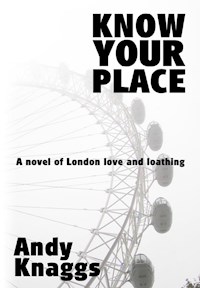
"Someone really should make a movie of this story. It's better than most of the scripts I see." Jacqui Gray, actress "I loved Know Your Place and was especially enthralled by the nerve-jangling crescendo. Can't wait for the sequel!" Helen Alexander "A fast-paced tale of paranoia and vengeance in modern London. A promising first novel." Andy Sibley "This is a captivating book, taut with suspense and unfolding drama. Impossible to put down." Sally Whitear It was a humdrum kind of life...polishing City boys’ shoes by day, and counting the meagre pennies by night. But for Nick Newman life was about to take an astonishing turn. A chance encounter shakes his world to the core – and leads him unsuspectingly into the heart of a vicious plot that’s about to be played out on the streets. Nick is soon playing a major role in the opening move...if only he knew it.
Das E-Book können Sie in Legimi-Apps oder einer beliebigen App lesen, die das folgende Format unterstützen:
Seitenzahl: 511
Veröffentlichungsjahr: 2012
Ähnliche


















Andy Knaggs
Published by M-Y Books
Prologue
This was Eddie’s favourite place to sit and watch the world go by. Sometimes the wind howled, and the rain teemed down, and it was easy to imagine that misery must prevail; at other times, the sun trapped him in its glare; warmed his heart, but made him shield his eyes, so that all he saw were the shoes of passing strangers, a metre away and then gone in an instant. Every day though, the growling of traffic across London Bridge provided him with company throughout another empty day, and whatever nature threw at him, this place remained at the centre of Eddie’s universe; it was home.
The River Thames at its grandest ebbed by below him, but against the disorder of footsteps and babbling voices, the car and bus engines revving and whining, and the occasional party boat motoring by beneath, it was impossible to listen to the hushed sounds of the river itself until the early hours, when the city slept.
Eddie didn’t mind that. He was usually still here even then – halfway across London Bridge, huddled against the elements, clinging to the blanket that was his shelter, and enjoying the river’s whisper. He had no reason to be anywhere else in particular. As a boy growing up in the countryside in Northern Ireland, probably 50 years before, he had heard people talking about London, and he had listened with disbelieving ears, and imagined with wide eyes. Many people went to London; it was bigger even than Belfast, and its call was uniquely strong, its promise seductive. It was a well-worn path: off to London to seek your fortune. Eddie had followed that path himself years ago, and it had been good to him for a while; he had drawn energy and purpose from it. Not now though, and not for some time.
These were hard times now, but he didn’t blame it on the city. Life did what it did to a man, and he accepted that phlegmatically. London was still where he wanted to be; and here, halfway across the bridge, thirty feet above the shimmering water, was where he calculated the heart of London to be. He had the river, he had the traffic, and he had the people, flowing according to their own tidal patterns, mostly from his left, the south bank, across to the City to his right every morning, and back again in the evening.
He could watch the world go by, and on those days when he’d not managed to secure a source of alcohol he could think, and wait, and watch his small metal tin, long emptied of tobacco, gradually fill with coins from passers-by. Eddie had become an avid people watcher over the years, and he indulged in it whenever he could rouse himself from fitful sleep or blurry-eyed indolence for long enough to take in what was in front of him.
And right now, as Eddie looked to his left, what was in front of him was a young man – probably about 30 years old, he reckoned; around 25 years younger than Eddie was. He stood on the bridge, not quite mid-river, looking out towards HMS Belfast, Tower Bridge and beyond, as the Thames curved away towards Docklands.
Something about the man had caught Eddie’s attention as he had approached from the south side of the river and then stopped about five yards short of where Eddie, an easily ignored, shapeless figure hunched beneath a mucky blanket, was huddled. It was a dark October weekday evening, becoming chilly, and with a gentle drizzle that came and went. The evening was drawing on, although Eddie judged that it wasn’t yet closing time in the City pubs, since the flow of human traffic hadn’t developed into a boisterous, alcohol-fuelled surge yet. People often staggered past Eddie after a night of boozing, but this young man – tall and skinny with a mop of fairish hair – looked more like he could still do with a drink Eddie had thought, judging by the grim frown on his face as he had neared where Eddie sat. He had walked quite slowly, almost reverentially. His face had been pale, pre-occupied, but hard-set as if steeled by some kind of resolution to action. To Eddie’s surprise the young man had not continued walking across the bridge, but had stopped when nearly halfway across. He gave no obvious sign of being aware of the presence of the vagrant slumped nearby. Eddie watched with vague but growing interest, seeing the man cradle his head in his hands, looking in some distress.
Nothing happened for a minute, save for a car or two flashing past. Then Eddie saw a sudden flurry of movement, the man’s arms searching their own body, and finding something; an arm pulled back and flung forward, hastily, like a nervy army recruit tossing a hand grenade for the first time; a small, shiny object flew out into the night, towards the black river. Eddie even heard a small ‘plop’ as it hit the surface seconds later. By now, his interest piqued, Eddie was getting to his feet and edging towards the young man, leaving his blanket behind but bringing his collecting tin with him. The man continued to stare out at the river, and Eddie was close enough now to pick out more detail in his face. As Eddie crept nearer a tear rolled down the man’s cheek and disappeared inside his coat collar. His lips were moving slowly, soundlessly.
“D’ya think that was a good idea then, sonny?” Eddie croaked, the broad Ulster accent immediately betraying his origins.
The man turned quickly towards him – more quickly than Eddie had expected. He looked defiant, but his eyes shone with moisture that Eddie knew didn’t just come from the steady, thin rain. His reply was defiant too:
“I don’t care. It’s done. That shitty phone has done too much damage already. I’m better off without it.”
A pause, then: “What’s it to you anyway?”
Eddie smiled benignly; neither the question nor its tone caused him concern. “What’s it to me? It’s nothing to me, sonny. But this is my bridge, and you’re causing a scene, so you are.”
They watched each other in silence. Searching the young guy’s face, Eddie reckoned he was reaching for indignation, for the excuse or maybe the will to be confrontational. Eddie sensed that instead confusion and frustration were all he could grasp right now. “I suppose it’s all to do with some lass... ”
The young man answered, protested, too quickly, too loudly, summoning that indignation now.
“No!”
“No?”
“Nosy fucker.”
“Oh, right you are then. There’s no need for all that language now is there. I see you coming along, getting all flustered, and I thought to myself, now there’s a lad who would appreciate a few hard-earned tips from the life of old Eddie Finn.”
The younger man scoffed a doubtful, humourless “yeah, whatever”. “Listen, I had a woman once, you know,” Eddie persisted. “Beautiful she was – as perfect as a peach. I wasn’t in these rags then. But like a bloody fool I didn’t realise what I had until it was too late, and I lost her. So don’t be like me sonny. Do the right thing now. That’s all I wanted to say. It’s up to you.”
The young man listened to all this in silence, then sighed and shook his head. “Jesus, are you for real? A bloody tramp turned Agony Uncle?” The man shook his head slowly again, this time with a rueful smile. “Look…I’m sorry I swore, okay. I’ve just had a complete nightmare tonight and nothing you say is going to make it better.”
“I got a smile from you though sonny, eh? I tell you, from under that blanket there I see young guys like you bawling over their ladies every day of the week. It’s the story that never ends.”
They looked at each other again in silence. Then the man murmured so quietly it was as if the words were intended just for him. Eddie could only barely hear, but he saw that the man spoke through gritted teeth:
“Well, you haven’t heard this story before, I promise you. This one is a proper original.”
“I’ve got plenty of time on my hands sonny, so please – do tell. It’s not fair to keep a good story like that to yourself.”
The man greeted the comment with a weary laugh: “No, no. If I did that you’d have to go in the river too, and that’s the God’s honest truth.”
“She could be trying to ring you right now,” Eddie continued, gesturing toward the Thames and by implication the discarded phone in its watery grave. “How will you make it right if you can’t talk to her? You’d better get round there.”
The man sighed, and looked out at the river again. “After the night I’ve had pal…” he started, but then paused before turning back to Eddie and speaking again in a voice full of tiredness, frustration and now a flash of anger. “It’s over, it’s done. Now, if it’s all the same with you, I’m going home.”
The younger man turned away from Eddie, and started off back towards the south end of the bridge. It seemed that the conversation was over, but Eddie persisted, enjoying the moment, raising his voice slightly even though the man was still just a couple of yards away from him.
“Hey, don’t forget what I said now. Get yourself round there; take her some flowers. Be a man.”
The young man stopped in his tracks and turned to face Eddie again. Eddie wondered if he’d over-stepped the mark. The younger man seemed to study him closely for a few seconds, before turning again towards the river. Eventually he nodded, and with a quiet comment of “maybe you’re right” he turned on his heel once more and walked on. Eddie watched him stride away, feeling relieved, happier even. Suddenly the man stopped again, dug something out of his coat pocket, and faced Eddie again.
“Here, take this. Thanks for the advice,” the man called, and tossed something underarm towards the old tramp. Eddie caught it smartly in his open tin, recognising it in mid-air as a gleaming pound coin. He didn’t drop those kinds of things. “Cheers! I hope you work it out!” he called to the man’s rapidly retreating back. There was no sign of acknowledgement. In a matter of seconds, just as he had arrived, the man was gone for ever from Eddie’s life.
Chapter One
Men in suits and women in high heels milled around the concourse of London’s Liverpool Street Station, a blur of perpetual motion to a casual observer. If you looked closely enough though there were a few stationary figures amid the Monday morning frenzy. Here, a station cleaner resting on his broom; there, an office worker, leaning against a wall waiting for a friend; and here, just by the escalators that take new arrivals at Liverpool Street onto the City’s streets of gold, here was a shoeshiner, clad all in black – t-shirt, trousers and shoes – sitting back in the chair he reserved for his clients, reading a paperback book between jobs, occasionally flicking his fair, floppy fringed hair away from his eyes and looking up and around at the rivers of humanity that flowed past.
He viewed the streams of people impassively and with practised eyes; he heard the buzz and felt the pent up electricity, though he hardly, at this moment, seemed energised by its power. The sights and sounds of the station at rush hour were as familiar to him as the advancing lines he saw on his 32-year old face when he looked in the mirror every dawn, rubbing crusty sleep out of his eyes before getting ready for the subdued bus journey to work. Nick Newman had been working as a shoeshiner for more than a year now, and although in his earlier years he’d had lofty ideas about the station in life he expected to achieve, he found himself relatively content with his lot. Occasionally, as the railway station busied itself around him during the long day on duty, and he waited for his next customer, he would have time to consider the path his life had taken to bring him to this point, this moment in this place. It had been anything but a straight-forward path. A cycle of bereavement, disillusion, drug abuse and then homelessness had marred his life in his 20s, and there was no getting away from those cold facts. It had never been the plan – no-one would plan a life like that, after all – but it had happened, like it did to many young people that got caught up in the wrong circumstances, and followed the wrong instincts.
Nick was now on his second chance, and he was smart enough to know that this one really mattered. Some may have looked down upon it, but he found that he actually quite enjoyed his job. It was true that there was boredom between customers, but there were books and newspapers and attractive women around to divert his attention in these situations. It was not too mentally taxing but Nick took his pleasure from simple things – chatting to new people, the praise of regular customers, making commuters break into laughter when just minutes before they had seemed anxious or pre-occupied about the day ahead of them.
He was a familiar sight, if not a personality, to many of the commuters, and even more so to the employees of the nearby coffee and sandwich shops, the newsagents and chemists, and the station staff. One of these workers, a slim, petite girl called Vicky from the Coffee Cup bar which faced onto the part of the concourse where Nick had his regular pitch, now approached him, bringing with her a tall plastic cup of coffee with a lid on top.
Nick had got to know her fairly well over the last year, but that was mostly because Vicky, who was ten years younger than he, had taken a shine to him, even pestering him for a date. She seemed to have given that up in recent months, but she still came over to say hello when quiet moments in the coffee bar allowed. Nick knew that the regular four coffees a day that she brought over for him to drink were really just friendly subterfuge – an opportunity to flirt a little. He saw her approaching with his coffee out of the corner of his eye, and looked up from his paperback, giving her a friendly smile. He had learned to tolerate her hanging around him. “Hey Vicks, how’s it going?” he hailed her as she walked over wearing an earnest look on her face. “Brought your coffee over dude. Shall I put it down here?” she replied. Even as she said it she was bending down to put the cup on the floor in front of Nick’s black work bag, where he kept his kit. This was almost a ritual by now, he felt. He was flattered by the attention, but for Nick it was a no-go. It wasn’t that she was unattractive; it was just that he had Justine, his Australian girlfriend. And that, as far as Nick was concerned, was that. “Thanks mate,” he said, as she straightened up again. He knew what would happen next.
Vicky stood next to his seat in silence for a second or two, looking at the commuters rushing by. Then, without actually looking at Nick, she said: “Good weekend? Still with her?” The two questions and their answers seemed inextricably linked. “Yes Vick, still with her.”
He reached down to pick up the coffee cup, which was by her feet. She had to shift to get out of the way, and took the opportunity to look down at him. The expression of resigned disgust that he’d seen a hundred times on her face flickered across her features again. She didn’t need to say anything, and nor did he: she was fed up with it; he was sorry. It was the usual Monday morning.
He therefore gave her the obligatory apologetic shrug, and sipped his coffee. “Where’d you get to this time then?” he asked, as much to end the accustomed awkwardness of the moment as to pursue genuine interest. She started to tell Nick about another weekend of drinking too much, boys and girls on the pull, scrapes and scenes, moments of hilarity and horseplay. It always made Nick wonder why Vicky was interested in him – from what he could hear, there was much more going on in her life than in his. His weekend had been quiet. He had little money, and Justine, who worked as a secretary in the West End by day, and often did evening bar work in a Camden pub near to where they lived, didn’t have much more to spare. Occasionally, at the start of a month when wages had just been paid, they would head west into town with her friends for a big night out. Mostly though, they had to scrimp and save to pay the rent on their flat, and spent their evenings either indoors watching movies, or nursing a couple of slowly consumed pints in the pub.
It wasn’t exciting, and Nick longed to be able to offer Justine more. Years before, he had worked in a bank, here in the City, earning decent enough money, and with the potential to earn a lot more. He’d blown that one though. Banks didn’t react favourably to finding their staff with a nose full of cocaine in the toilets. Nick had been in his mid-twenties when that had happened. It was just one horrendous moment in a run of misfortune and misjudgement that had plagued him through those years. By the time he was 28 he had lost both parents, and a girlfriend who had taken her drug habit to its final, fatal end; other friends had drifted away, and there was no-one close enough left to halt his slide into depression, drink and drugs. He lost the job and the house in quick succession. Then he was on the streets, just another government statistic.
Nick was within a whisker of hurtling headlong over the precipice. Two years of sleeping in dirty alleyways followed, being avoided by passers-by, and sneered at by youths in baggy track suits and spiky hair. They were days of unending desperation where the only motivation he felt came from planning how to pinch the next tin of beer or bottle of vodka. He’d got good at that, but from time to time there was a calm reasoning voice in his head telling him that he was better than this; that he could find himself again.
One day he listened to that voice. A moment of clarity fought through a mind-pummelling alcoholic haze as he lay underneath some sheets of cardboard just off Oxford Street one morning. It wasn’t going to be easy but he had to clean up. Fortunately he had avoided the worst – he had never been tempted by heroin, and cocaine was far too expensive a hobby for a man on the streets to pursue. If he could clean up and smarten up enough so that his appearance didn’t repel everyone that walked past, maybe he could start his resurrection by selling copies of the Big Issue on street corners.
It turned out to be the turning point in his life. Some help from charitable organisations started his rehabilitation, and provided food, shelter, and counselling for the grief that still hit him, and for the remnants of his addiction. He knew he had come close to scraping the bottom of the barrel. Then, in the midst of it all, a miracle occurred when Justine Tanner walked into his life.
It happened one evening, while selling magazines outside Camden Town underground station. He managed to persuade a pretty red-haired girl with an Australian or New Zealand accent (Nick wasn’t entirely sure which at the time) to part with a pound. She came back and bought another one a few days later, even though she already had that copy. They talked for a few minutes and laughed. It was more human interaction than Nick had grown used to having. Two days later he saw her again and this time, before she walked off home, she fished in her coat pocket and pulled out a slip of paper with her name and mobile phone number written on it.
Watching the girl saunter off down the road, he had stared from her to the piece of paper in disbelief. It was incredible. There was no other word for it. But putting aside his doubts, his feelings of inferiority, and what he recognised as his fear, he called her and they went out. They drank wine and talked all night. Then they did the same the following evening. Before he knew it, Nick had found a new girlfriend. She was Australian as it turned out; a strong-minded girl of calm dignity, who had been in England only for eight months. Though it was obvious that Nick was in pieces, she seemed to accept the challenge of putting him back together as if it was entirely natural and obvious that she should do so. He had no idea what drove her to feel this way, and one over-heated summer day early in their relationship his insecurity had got the better of him, and he had asked her. They had been lazing in a nearby park, lying on the grass, the back of Justine’s head resting on Nick’s stomach, as he reclined on his elbows with his legs stretched out before him. A three-quarters empty bottle of white wine stood beside Nick’s right elbow, on the opposite side of his body to where Justine snoozed contentedly. Their conversation had grown more desultory as the day had heated up and sapped the energy from them, but it was enough to be together, warm and happy in the easiness of their laughter. With his left hand he traced intricate little patterns on her shoulder, and coiled locks of her long red hair around his fingers, his frown as he weighed up his thoughts being unseen by Justine. He was scared of ruining everything with a misplaced word or question, but finally he broke the silence: “Can I ask you something?” She moaned quietly, but otherwise didn’t move, her eyes still shut. After a couple of seconds he saw her lips draw upwards in a lazy smile. “Well go on then babe – ask away,” she breathed, rocking herself slightly from side to side to find the most comfortable bit of grass under her backside.
Nick chuckled at her efforts to get comfortable. “Okay. I’ve been trying to work this out for a while, but…” He hesitated, already feeling silly and self-conscious. “But…is all this really happening? It’s like, there’s all these men out there and... for some reason, here you are with me. I mean, I don’t know if you’ve noticed but my prospects aren’t exactly great.” He felt her shoulders stiffen a little, but the warmth and the wine that had made her feel dozy all afternoon was still there in her bones and in her blood. She half-turned her face towards him and slowly pulled her sunglasses off, looking up at Nick with one eye shut tight against the sun’s glare while the other studied his face, piercing the concern in his own eyes.
“Prospects? Jeez babe, what a time to say something like that,” she drawled. He shrugged an apology, and looked pleadingly at her for some sort of answer anyway. “Okay, let’s sort this one out right now so you never have to say such a bloody stupid thing ever again, right?”
Justine seemed energised all of a sudden, and as if to emphasise that she was now awake and switched on, she rolled onto her side, swept a few bits of grass off her bare legs, and settled down on her front facing Nick, with her head supported by her bunched fists. “Right.” She was settled now. “Look, it’s because I’m nuts about you. The whole deal: kids and stuff. I think you soft-as-shit Poms call it ‘love’. But I’ve been waiting for you all this time and at last you’re here. I knew it straight away when we met, and when you find someone that makes you feel that way, any other stuff like prospects go straight out the window.” Justine grinned at the thought of the next few words she was going to say – it was a line from a well-known TV advert, with her own twist at the end.
“It’s because you’re worth it, you muppet! Now pass me the bloody wine, and stop being such a galah.” They both laughed, and the moment quickly passed, but Nick continued to think about it. He had been hoping for something a little deeper, he supposed, but as they laughed and settled down again, he realised it was a better answer and a more important one than he had dared hope for. It was simple and honest, and it needed no further elaboration. As weeks passed it became a magical memory for Nick; the moment that cleared away a multitude of shadows from his mind. From that day on they had just grown closer to each other. Before long, Nick had moved into the sanctuary of Justine’s flat and he was homeless no more. The next step had been to get Nick back into work, although his choices were limited because of his police record. However, the charity had a scheme to get people who were down on their luck trained as shoeshiners. He would start off working for a boss – a Polish guy called Mike – who managed several other shoeshiners, but the idea was that eventually Nick would run his own little business as a franchise. Others in a similar predicament had already done so, and Mr Desborough, who had organised the scheme for the charity, felt that Nick was smarter than most. He had taken a few deep breaths before agreeing to do the training. It was a big moment in his life. But in the year since then he’d had no reason to regret the decision. Sometime in the next few months he hoped to take on the reins of his own franchise, and when that happened he might start taking some better money home to repay Justine’s faith.
For the time being though, Nick and Justine were mostly reliant on her income for their small pleasures, and all this explained why Nick felt slightly embarrassed when Vicky asked him every Monday about his weekend. It was the same answer almost every week, and it didn’t add up to much in comparison with Vicky’s regular shenanigans.
Their chat was just sliding towards another one of those awkward silences when Nick had a customer turn up at his chair. It was a man in a suit, who interrupted the conversation with a curt: “Whenever you’re ready.”
Nick spun round, annoyed that he had not seen the man approach. “Sorry, sir – please sit here.” Vicky wandered off back to her coffee shop with a goodbye wave, leaving Nick thinking with relief that that particular routine was done for another week. He got his head down and got to work on the man’s shoes. Seconds after he had started a lady came and stood by Nick’s customer.
Nick was too busy to look up and see her properly but out of the corner of his eye he could see her shoes – elegant, black, high heels – and the start of a shapely curve of calf. She started talking, putting a London-accented voice to the ankles.
“Anyway, you never let me finish. Your mum says you’ve asked them to come as well.”
“Uh-huh. So what if I did? You didn’t mind them coming last time.”
“It would just be nice if you actually mentioned it to me first though Lee. It is my bloody holiday too. What if I just wanted it to be the two of us for a change?”
“Oh come on! Jesus, don’t make me laugh Kay. Anyway, do we have to talk about it now for God’s sake? I’m sure this bloke doesn’t want to hear you moaning on.”
A tone of mutual irritation had risen throughout the exchange. Hearing a reference to himself, Nick just concentrated on the job and tried to ignore the quarrel. The woman wasn’t going to back down just yet though.
“Well, let’s ask him shall we? What do you think Mister shoeshine man? Would you like it if your other half invited her nosy cow of a mother to come on the only bloody holiday you’re going to get next year?”
Nick was forced to look up for the first time, and was taken aback. The woman was quite something. She was tall and slim, with long dark hair, and she glared down at Nick now with a pair of brown eyes that would stop any man in his tracks. Those eyes smouldered angrily behind the mascara, but Nick couldn’t avoid appreciating her beauty. She was also already sufficiently suntanned to make Nick question momentarily in his own mind why she needed to go on another holiday. She wore a black business suit and held a plastic coffee cup in each hand.
Nick had to turn quickly back down to the man’s shoes so as not to betray his own instant admiration. “I don’t know,” he said. “Don’t bring me into it. I’m just…” He left the sentence unfinished and carried on polishing. He could feel his cheeks flushing with heat.
“See, you’ve embarrassed the geezer now,” the man continued. “Just leave it until later Kay, when you can throw as many fucking pots and pans at me as you want. You’ll have to wait though cos I’m probably going to have a few beers with Darren after work. Hopefully you’ll have calmed down by then.”
“Stay out all fucking night as far as I care.” She spat out the sentence with startling venom. Bloody hell, Nick thought, who’d get married? She went on: “I could pour this coffee right over your head you ignorant bastard. That would take the smirk off your self-satisfied little face.” The man seemed about to respond in kind but Nick had heard enough. He shot up from his stool, dropping the brush he was using to the floor with a clatter.
“Okay people. That’s enough of that. Either you both shut up and save this for later or you can get a shoeshine somewhere else. It’s that simple.”
He looked from one to the other. The woman looked like she was about to erupt still, anger flashing in her dark eyes. The man stared silently at the floor. Nick could see in the background that a couple of passing commuters had stopped to watch, no doubt hoping that something interesting was going to happen.
“Christ, you’re like a couple of spoilt kids,” Nick continued, more to fill the silence than anything else. “Well? What’s it to be, people?”
The woman had closed her eyes, and appeared to be counting to ten in her head. Then she opened her eyes again, looked at Nick and said: “You know what mate, you’re right. I’m sorry. I don’t know why I let this arsehole wind me up.”
“You started this in the first place, you moany old cow,” the man in the chair retorted, giving his wife a thunderous glare.
It looked like the woman was about to snap back at him, but Nick held up a hand and with a single, sharp “enough!” cut across her. Two minutes of silence followed while Nick finished the man’s shoes. The onlookers had moved along, disappointed at the anti-climax. Nick fancied that the argument still raged on above his head as he sat at the man’s feet and buffed the leather; it wasn’t spoken out loud but continued with every furious look that passed between the couple, he imagined. It was with relief that he finished the job and took the man’s money. The couple moved on, he without a word or look in acknowledgement to the shoeshiner, she with a small guilty smile, and a mouthed “thank you”, before they headed off towards the Broadgate centre, next to the station.
Nick didn’t watch them go. He was sorting out his money and his equipment. When he next turned around they had gone, and Liverpool Street Station was its usual bustling self. Nick looked up at the main clock above the concourse. It read 8.36. What a way to start the week, he thought. Mind you, what a woman. He sat down with his coffee and picked up the paperback again. Within a minute another customer had settled into the chair, and Nick was swept up in the day’s work once more.
**
Kay Talbot sat back and watched the members of her team, most of them heads bowed to their desks, or intently viewing computer screens, and she reflected that despite everything that advances in communication technology had provided – emails, mobile phone, social networking – life was still much easier when you did things face to face. You could use your physical gifts to the maximum when you were face to face – and Kay Talbot was aware of the advantages that gave her if the person across the table happened to be a man.
Today though, those gifts were being neutralised. The action was happening on the telephone, and as smart, quick and tough as her mind could be, that meant that the playing field was levelled.
Kay had long known that in public relations there were two different kinds of attention. There was the kind of attention that you chased and plotted and schemed for; that you lunched journalists and analysts for, and that you wrote press releases for. This was the good stuff, and it was enjoyable enough, although a woman of Kay’s expertise and political nous could handle it without having to stretch herself overly. The results could be impressive, and could be presented as great wins to your client.
Then there was the other kind, the unwelcome attention. It was usually initiated by a panicked phone call from a client. Such and such a journalist has been phoning and asking about so and so, please get them off our case. This was where, to Kay’s mind, a PR professional earned his or her corn. There were some that specialised in ‘crisis management’. They loved the thrill of the chase, even though it was they who were being harried by snapping journalists, demanding good answers to awkward questions.
This was one of those days, and unusually Kay found that she wasn’t enjoying it. The crisis had begun at the start of the week, with a phone call from the catering firm that she represented as a director of Palmerston PR. The catering firm had won a contract two years earlier to supply meals for some of the UK’s biggest airports. It had been announced in a blaze of glory for the company. There were stories all over the trade press, the managing and marketing directors were kept busy giving interviews about the importance of the contract, and even a couple of national newspapers had picked it up and printed small articles. For the client, a company called Mighty Meals UK, this was the ultimate in press coverage. From top to bottom everyone in the firm was ecstatic. Kay was overjoyed, her team celebrated with an expensive night out in a restaurant, all paid for by the PR company, and more than covered by the increased fees that came with the PR contract extension that followed. The sore head that Kay had suffered the next day however was nothing when compared to what she was wrestling with now.
There had been a police raid at Gatwick airport. They had taken away the catering company’s paperwork, and discovered that several of its staff members were illegal immigrants. Two were from China, but nobody seemed too bothered about that. It was the Somalian and the two Yemenis that were the real problems. This would have been bad enough before the terror attacks of September 11th 2001. Since that infamous day six years earlier, and then the London bombings of July 7th 2005, the issue of illegal immigrants working at airports held a whole new resonance for the British public.
Kay had fire-fought throughout that first day, dashing down to Gatwick on the train and standing shoulder to shoulder with her beleaguered client, Mighty Meals’ managing director Roger Wallace, who was frightened and totally out of his depth. He was surrounded by deadly serious policemen, and intelligence and immigration officials who, when not asking questions in a highly accusatory way, were busy filling boxes with paperwork taken from Mighty Meals’ personnel files.
In truth, there hadn’t been much that Kay could do. No mere PR representative could prevent the security services from doing their jobs. It was going to be a matter of damage limitation when all this broke, and it did just that two days later after the police gave the story to a national newspaper. A weasel-sounding reporter had called with a long list of questions that Kay knew she could never answer specifically. Having talked at length with Roger Wallace at Mighty Meals, Kay had discovered so many holes in the firm’s procedures for vetting employees that it was obvious that they were doomed if they engaged in any kind of straight-talking dialogue with the media.
So she had beaten the questions away with a prepared statement, which said next to nothing. The company could confirm there was an investigation, and it was co-operating with the security services to investigate the degree to which these people had been checked out before being given jobs. That was the gist of it. What it didn’t say was that these jobs just happened to involve working next to sophisticated aeroplanes that in the wrong hands could be turned into lethal flying bombs. The press would spell that out for everyone though, that much was certain. Well, Kay reflected, it was a complete mess. She almost hoped that Mighty Meals would get nailed.
Having sent the statement to the newspaper, Kay had then called Roger Wallace to confer.
“They’re asking if we will put someone forward to be interviewed,” she informed him. There was silence for a couple of seconds at the other end of the line. Kay was keenly aware that Wallace was like a rabbit caught in the headlights over this situation, and that made her even more certain that it could only work out badly for her client, and by extension Kay herself, if the company put itself in the firing line.
“Do you think we should?” Wallace ventured.
“No, absolutely not Roger. Believe me, after what we talked about two days ago, I don’t want you going anywhere near an interview. If you’d ever done that media training we recommended then maybe, but even so, on this issue, it’s really tricky. And when this story breaks and the TV and radio people get hold of it, the same applies then. Even more so actually. You’d get taken apart on national telly. It would be a disaster.”
“Couldn’t you handle it for us?”
“How do you mean?”
“Couldn’t you handle the interview? I mean, isn’t that what we pay you for?”
Kay had almost jumped out of her chair at that suggestion, but she had to keep her anger in check, realising that it would be unprofessional for her team to hear their boss arguing on the telephone with a client. Instead she lowered her voice to a tight-lipped, rasping whisper: “No Roger, it isn’t what you pay us for. We consult and advise but we don’t run your company. How do you think it would look if Mighty Meals put up a spokesman who doesn’t even work for the company to speak in front of the whole world? When Jeremy bloody Paxman asks me a question I can’t just say, sorry Jeremy I’ll have to come back to you on that one when I’ve checked with my client. You pay me to advise you, to brief you, and to issue statements on your behalf. We’re a PR company Roger; we don’t make food for airplane meals.”
“Okay, I was just thinking out loud. I understand. Now, what do you advise me to do then?” He seemed anxious to appease Kay’s anger, though she noticed that he placed extra emphasis on the word ‘advise’. She took a few deep breaths before answering.
“All we can do is put the statement out, and refuse interviews. You’ll get some stick but hopefully within a day or two some bloody war will kick off again somewhere in the world and they’ll forget all about it. We’ll say nothing outside of what we’ve agreed. Any media calls, direct them to me. You concentrate on working with the police to sort this out. And when this is all done and dusted Roger, make very, very sure that your procedures are as tight as a duck’s arse, because in six months’ time I’ll just bet they will try and get an undercover reporter in to stir it all up again.”
“You really think they would do that?” He sounded troubled, disbelieving of that possibility. “Yes, totally. If I was in their shoes I know I would. This isn’t a game you know, Roger. The police want the public to know they’re doing their job and protecting them, and the press just love exposing all this stuff. So let’s keep our heads down and get through this. I just hope to God they don’t discover a bloody Al Qaeda nutter working for you. Things would be so much easier if you just gave jobs to good English people, but I suppose they want too much money.”
And now, two days after that conversation, the story had broken. The newspaper had run it as a front page splash, with more promised on page seven. Police chiefs, airport bosses and MPs had all been quoted. Now Kay had the hottest telephone in England on her desk. She had been called by four newspapers, two radio stations and two TV stations already, and it was not even half past nine yet. The phone shrilled again, and she snatched it up.
“Kay Talbot.” Her south London dialect had instantly disappeared, and another voice – her ‘telephone voice’ – had kicked in automatically.
“Hi, it’s Rob Field from Sky News. We’d like to speak to someone from Mighty Meals about this Gatwick story. Can you get someone down to the London studio?”
“Rob – great to hear from you,” Kay lied. “I’m really sorry but I’m afraid there won’t be any interviews.”
“Oh. Why the hell not?”
“There’s no-one available I’m afraid. I can send you a statement, but that’s it at the moment. Mighty Meals are helping the police with the investigation and there’s nothing more to say at this point. These things take…”
“Kay, this is important. You can’t just brush over it. Our viewers expect answers to some important questions.”
“I can’t help what your viewers expect Rob. You guys give them plenty of great stuff as it is. There won’t be any interview and I’m saying the same to everyone that calls me today. I’m sorry, but my hands really are tied on this one.” There was silence at the other end for a second, and Kay imagined the journalist was glowering at her down the telephone; then the TV man said:
“Kay – this really is such crap. What the fuck are these people thinking about? There are some big questions that need to be answered about security at airports. What the hell are they doing that’s more important than this?” Kay winced. “Rob, I understand you perfectly but it isn’t going to happen at this moment. When it does, I promise you that you can have the exclusive. Until then, how about we do lunch sometime and I can give you an off the record briefing on what’s happening.”
There was another pause. Kay had uttered the magic word: exclusive. Rob Field was obviously thinking about it. “Well…I suppose that would be something at least. What does this statement say anyway?”
“I’ll send it to you if I can just check your email address. It doesn’t say much that you probably don’t already know though. Mighty Meals are co-operating with the police. There’s not much else they can say at the moment. I’m sure you can appreciate how sensitive it is right now.”
Field simply responded with a weary snort that suggested he’d heard it all before and all too often. Seconds later the conversation was over, and Kay replaced the handset. The entire morning was spent reiterating these same points to one journalist after another. At one point she had to read the statement over the telephone for a radio broadcaster to record. There was plenty of criticism flying around for the stance she took, but she knew in her own mind that it was the best way, in fact the only way with this story. It would be too easy for Roger Wallace to get tripped up on air. Soon, by way of cracking a few jokes and fibbing that the decision was not in her hands, she was even eliciting some sympathy from the reporters that called.
Her business partner and fellow director, Wilf Palmerston-Prior, came round mid-morning to check how things were going. He was posh and privately educated; the chalk to Camberwell-born Kay’s cheese. It was a combination that worked though. She admired his smooth charm, and the ease with which he could ingratiate himself into the most highly esteemed of company. Wilf adored Kay, and always had since they had met working for a PR agency early in their careers. Her strength of character, her daring and her total disregard for the possibility of failure at times made him choke with amazed laughter. They had decided to break away and set up their own agency when they were both in their late 20s, some seven years before. Wilf was a homosexual, and that was a welcome relief to Kay. He didn’t take any of her crap, and he wasn’t about to be swayed by her looks either.
“So, Mrs Talbot,” Wilf greeted her now. “How goes the good fight? Are we winning?”
She gave him a dark look. “Wilf, I’ve just about had it up to here. If one more journo rings that phone I think either it or me will go into meltdown.”
“Indeed, so I see from those tired, frustrated eyes of yours. But the question remains: are we winning?”
She tossed it around in her mind for a second and said: “Yeah, I think so – as much as we can on this one. We’ll see what happens on the lunchtime news, and then this evening, but hopefully come tomorrow lunchtime it will all have gone away. Roger is clucking like a fucking chicken with the foxes after it, but unless something really heavy comes out of the investigations I think we might be okay.”
“Excellent, I knew you were the man for the job Mrs T.” It was their standing joke. She wore the trousers in the partnership.
“Plus,” she said, suddenly conspiratorial, “I’ve got lunch arranged with the very attractive Rob Field from Sky, so I can give him a ‘background briefing’ off the record. Can you believe it?”
“I can believe anything of you, you brazen hussy. Anyway, can we sit down this pm and have a chat? Bring Belinda and we’ll do some blue-skying on that Plaxaco pitch next week – we need some of Bel’s creative spark to make this one breathe I think.”
“Okay, what time?”
“3pm any good?” She nodded that it was. “Righto – there goes your phone again. The chase heats up! Back into the fray Mrs T. See you later.”
She gave the phone a nasty stare before snatching up the receiver. “Kay Talbot!”
“It’s me.”
She slumped back down in her chair. It was her husband. “Lee, I told you I was going to have a shit morning and not to disturb me. Which bit of that didn’t you understand?”
“Excuse me for breathing. Listen, I was just ringing to tell you I’m playing squash with Dave tonight and then we might go for a curry, so don’t wait up.”
“Fine, I’ve got used to cooking for one. Now goodbye, I’ve got too much to do.”
They hung up, and Kay covered her face with her hands for a couple of seconds, breathing hard. It was hard to believe how cold and harsh things had become between her and Lee. Displays of affection were a distant memory, and the nastiness that seemed to mark most of their conversations was getting worse.
After more than ten years of marriage, Kay could see that things were starting to crumble badly. Every conversation quickly degenerated into a bitter slanging match. Lee seemed to have little interest in anything to do with her. He ridiculed her attempts at cooking and criticised her housework, yet he was rarely there to help, and when he was there he sat on his backside watching sport on the TV, being obnoxious with apparent effortless ease.
That drove her madder than anything else. It was as if he was flinging a blunt statement in her face – that they were not a partnership anymore; that he would do just exactly as he pleased. He was no longer the charming, funny boy she had met and fallen for on holiday in Spain back in the early 1990s. Perhaps she had changed too.
They had kept their holiday romance going despite the distance between their homes back in England – he in Hertford, Kay in Denmark Hill. The fact that they both worked in London anyway had made that easier. After a couple of years the happy couple had set up home in Hertford, not far from his parents, and got married soon after. She was a high flying PR executive; he had a steady job at the bank where he still worked now. To their friends, they had seemed a golden couple. Life had got in the way though, and she could pinpoint exactly why the problems had started. As the years went by, his desire for children grew, but Kay it seemed was still focused on her career. In fact, there was a deeply personal reason why Kay was reluctant to have a baby. Many years before, when she had been a little girl, she had lost her mother to an ectopic pregnancy. The psychological impact of that was just a starting point though. She didn’t really believe that the same was bound to happen to her. But she also had a career that she loved, and a theory that there was not a maternal bone in her body.
Perhaps Lee had always assumed that he could persuade her eventually, or maybe he reckoned that the ticking of her biological clock would do the job for him. Time went by without any sign of her position changing however, and the arguments got meaner, the sly comments got more hurtful, and the grudges became deeper and more frequently aired. The lack of a baby had come to define their marriage and it magnified every other difference, spreading like a cancerous growth until there were no physical expressions of their love to speak of. It felt to Kay as if this was her punishment for depriving Lee of children.
Kay reflected on some of this for the thousandth time as she sat waiting for the next phone call, and wondered idly whether the gulf between her and her husband had already grown so wide as to drive him into the arms of another woman. Probably, she thought. Certainly he spent more and more time out and about, supposedly drinking with his work mates, or playing sport. Did she care whether he was being faithful? The answer to that could change from one day to the next, depending on how tired or fragile she felt. Today she was too harassed to care, she decided. She sat back in her chair and looked through the glass partition at her team of PR execs, tapping away at keyboards or working the telephones. There were four tables in the main office, and when everyone was in, each desk had two people facing each other. They were a good bunch – young, creative and confident. Belinda, who dressed like a punk rocker and had red streaks in her short, dark hair, was the creative star. She could always be relied on to find a different angle for a pitch or a story idea, but she was also a spiky presence, with a fierce individuality that Kay adored.
Across from Belinda was Giles, who was the best writer of the team. He was also the team joker with a gift for impersonating characters from TV shows. Everyone in the team had a nickname, and Giles was generally the one who decided what it would be. Kay’s immediate deputy, Sara, was away on holiday. She was a serious career girl, not long married, and a solid if unspectacular performer. The only other male was Gavin, who was quiet and serious, but capable of moments of genius. Ruth was a feisty Welsh blonde, a PR account director with a sneeze that caused the whole office to duck in panic when it exploded with shocking suddenness. The other girls were Jasmine, a dark haired, tanned girl, always dressed in the latest fashions, who often seemed slightly detached from the pressures of her job; she was just a little too cool maybe; posh Tissy (or Laetitia), who had got the job because Wilf knew her father; and the office assistant, Steph, who gave everyone cheek but was worth her weight in gold for the account teams by doing jobs like collecting press cuttings and making up pitch props.
It was a business to business PR agency with a dozen clients, some of them very small, paying small retainer fees. Wilf looked after two very big clients, Kay another two. Mighty Meals was not one of Kay’s big clients, but was demanding more attention than it warranted in fees, and Kay was increasingly aware of it. Kay soon turned back to her desk and enjoyed the bonus of a twenty minute spell without interruption to read through some draft press releases that Giles and Jasmine had written. It was looking like she might get through to lunchtime without further disturbance, but then another call came in. She answered, and heard the voice of a lady on the other end, sounding somewhat anxious.
“Hello. Is that Palmerston PR?” the lady enquired.
“Yes, it is. This is Kay Talbot, how can I help?”
“Ah, good. I’m calling from Mighty Meals at Gatwick. There’s a TV camera outside with a reporter and they’re asking if they can come in and talk to someone about all this business in the newspaper today,” she explained. She sounded like an elderly secretary, for whom all of this would have been mystifying stuff. There was certainly confusion in her voice. “There was an email from Mr Wallace telling us to call you if anything like this happened. What shall we do? They want to come in,” she concluded.
Kay’s heart was sinking. Bang goes the three o’clock meeting with Wilf, she thought.
“Alright, what’s your name? Jenny? Okay Jenny, don’t worry, you did the right thing by calling me. Tell them someone is coming along to see them. I’ll be there as soon as I can. But don’t say anything, and don’t answer any questions. Make them wait outside the building; they’ve got no right to barge in. Take them out a cup of tea or something. Okay? I’ll see you soon.”
Kay heard the woman thanking her in a doddery way as she hung up. There was just time for another head-in-hands moment, muttering heartfelt curses, before Kay leapt into action. First she called Wilf to tell him that she was going to have to leave and would miss the meeting. Belinda would do great though. Wilf understood. After all, a client in need, he said in an absent minded way, was one that might agree to paying an increased fee the next time the account came up for review. Kay packed a few things into her case and, pausing only to assign Giles to cover her telephone, she dashed out, heading for Baker Street station to catch the tube to Victoria Station, from where she could get the Gatwick Express train. Kay found a seat on the tube train easily, but as she thought over her next move, finding relaxation was a whole different proposition. There was tension and tiredness in every limb it seemed, but Kay mentally shook herself, and attempted to focus on the job in hand: Mighty Meals, Gatwick, a TV crew, problem.
Time and again however, Lee’s phone call kept bursting through as she tried to concentrate. It was only the latest in a long line of unsatisfying exchanges between the two of them, but as Kay sat silently on the tube train with just her thoughts for company she felt a familiar gloom descending in her mind; a sinking despair that she knew well but had yet to find a way to conquer, unless you counted the method that led to an empty bottle and a sore head the next day.
There was a consistent cycle to this emotional decline that she was now accustomed to. It went from unsettling gloom to a mute, hopeless despair, soon turning to a stomach-churning panic about the things in her life that troubled her: the demands of her job, the vacuum of her relationship with Lee, and the paucity of time in which to put either of those things right. A short, worthless conversation like the one with her husband earlier could, on a bad day, make her re-evaluate and consign as hopeless every facet of her life. It was happening again now, despite the importance of the task immediately at hand. It was shocking and relentless.
Kay felt self-worth draining away by the second, like blood emptying from her veins; gushing, bursting out of the tube train doors as they slid open at Bond Street, flooding the platform beyond, fouling up the shoes of disgusted passengers who were waiting to get on. She imagined she watched it happen, like a bad horror movie, observing it silently but with bitter, forlorn eyes. Kay breathed deeply and tried to fight it, tried to close the flood gates. The next stop was Green Park, and by the time she reached it, she felt hollow. Just enough focus remained for her to rise from her seat and move robotically towards and through the open train doors before walking along the platform towards the Victoria Line, rubbing her elbow which had been dealt a painful blow by the sliding tube door as she exited just in time. Another annoyance. It was only one stop from Green Park to Victoria, but by the time she came back above ground at Victoria, Kay’s self-assurance was in tatters. It struck her as odd that she was completely aware of this slide into crisis all the way through; she knew it was happening, she recognised that it was ridiculous to let such things affect her capacity to do her job, yet there it was: it happened anyway; she experienced it creeping over her with every passing second, and it was apparent that there was nothing she could do to stop it.
Now she stood on the wide concourse of Victoria Station, to all intents and purposes a smart, attractive woman, looking up and scanning the boards for details of the train she wanted, but in fact seeing nothing more than a random jumble of letters that her fogged brain barely recognised.
It took a few seconds before she could snap out of this paralysis and focus. When she did manage to read the boards it gave her bad news: there were problems with the service, and the Gatwick Express, which should have been running every 15 minutes, was running with delays.




