


0,99 €
Mehr erfahren.
- Herausgeber: The Ebook Emporium
- Kategorie: Gesellschafts- und Liebesromane
- Sprache: Englisch
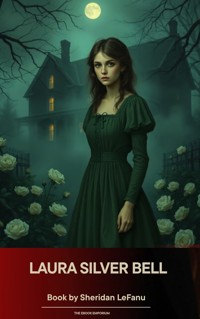
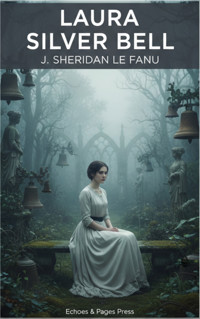
"She heard the chiming of the silver bells, and she knew the hills were calling her home." In a secluded village nestled beneath the shadow of ancient, brooding hills, dwells the beautiful and ethereal Laura Silver Bell. Unlike the other village girls, Laura feels a strange, magnetic pull toward the wild, unpeopled places of the moor. But in the world of Le Fanu, the hills have eyes, and the "Good People" (the Sidhe) are not the whimsical fairies of nursery rhymes—they are ancient, predatory, and possessive. When a mysterious and charismatic stranger appears, Laura finds herself caught between the warmth of human love and a chilling supernatural inheritance. It is a tale of enchantment that warns: once you hear the silver bells, you can never truly belong to the world of men again. The "Dark" Fairy Tale: Le Fanu strips away the Victorian "flower fairy" imagery to return to the roots of Celtic myth. His fairies are tall, silent, and dangerous beings who exist in the "liminal" spaces of the world. The story explores the "Changeling" myth through a sophisticated Gothic lens, making the supernatural feel like a physical, inevitable force of nature. A Heroine of Two Worlds: Laura is one of Le Fanu's most complex female characters. Her "silver" beauty is both a blessing and a curse, marking her as someone who doesn't quite fit into the mundane life of her village. Her struggle is a poignant metaphor for the outsider—the person who hears a music that no one else can. The Master of the Eerie: Laura Silver Bell showcases Le Fanu's ability to weave a sense of "wrongness" into the natural landscape. The rustle of the grass, the shifting shadows of the hills, and the sudden silence of the birds all build toward a climax that is as beautiful as it is devastating. Follow the music into the mist. Purchase "Laura Silver Bell" today.
Das E-Book können Sie in Legimi-Apps oder einer beliebigen App lesen, die das folgende Format unterstützen:
Seitenzahl: 24
Veröffentlichungsjahr: 2026
Ähnliche




Laura Silver Bell
Joseph Sheridan Le Fanu
About Joseph Sheridan Le Fanu
Joseph Sheridan Le Fanu (1814–1873) was an Irish writer renowned for his masterful contributions to gothic fiction and supernatural tales. Often referred to as the "invisible prince" of Victorian literature, Le Fanu carved out a lasting legacy with his chilling narratives and atmospheric storytelling.
Le Fanu began his literary career as a journalist and editor before gaining recognition as a leading author of ghost stories and mysteries. His work blends psychological depth with gothic horror, creating suspenseful tales that linger in the reader’s imagination. He is perhaps best known for Carmilla (1872), one of the earliest and most influential vampire stories, predating Bram Stoker’s Dracula by over two decades.
Among his other notable works are Uncle Silas, a sinister mystery novel, and In a Glass Darkly, a collection of eerie tales framed as case studies of a fictional doctor. Le Fanu’s fiction often explores themes of fear, repression, madness, and the supernatural, set against the backdrop of crumbling estates and dark secrets.
Though somewhat overlooked in his lifetime, Joseph Sheridan Le Fanu is now recognized as a foundational figure in the gothic tradition, influencing generations of horror and mystery writers. His subtle, psychological approach to the genre continues to captivate readers around the world.
In the five Northumbrian counties you will scarcely find so bleak, ugly, and yet, in a savage way, so picturesque a moor as Dardale Moss. The moor itself spreads north, south, east, and west, a great undulating sea of black peat and heath.
What we may term its shores are wooded wildly with birch, hazel, and dwarf-oak. No towering mountains surround it, but here and there you have a rocky knoll rising among the trees, and many a wooded promontory of the same pretty, because utterly wild, forest, running out into its dark level.
Habitations are thinly scattered in this barren territory, and a full mile away from the meanest was the stone cottage of Mother Carke.
Let not my southern reader who associates ideas of comfort with the term "cottage" mistake. This thing is built of shingle, with low walls. Its thatch is hollow; the peat-smoke curls stingily from its stunted chimney. It is worthy of its savage surroundings.
The primitive neighbours remark that no rowan-tree grows near, nor holly, nor bracken, and no horseshoe is nailed on the door.
Not far from the birches and hazels that straggle about the rude wall of the little enclosure, on the contrary, they say, you may discover the broom and the rag-wort, in which witches mysteriously delight. But this is perhaps a scandal.
Mall Carke was for many a year the sage femme




