


Erhalten Sie Zugang zu diesem und mehr als 300000 Büchern ab EUR 5,99 monatlich.
- Herausgeber: Barbara Cartland Ebooks Ltd
- Kategorie: Gesellschafts- und Liebesromane
- Serie: The Eternal Collection
- Sprache: Englisch
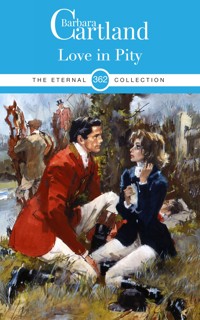
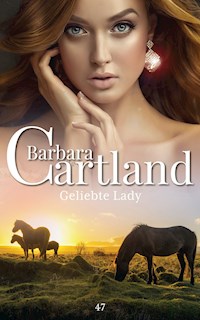
Faced with a broken heart and financial ruin, lovely Jacinda finds herself alone in the world except for her reckless but lovable father. As their beloved home, Coombe Castle, is bought by a self-made millionaire Morgan Wright, Jacinda finds herself angry and fuelled with resentment. But when a hunting accident nearly kills her father and causes her distant mother to return, Jacinda feels she has nothing to lose. She runs away to London, determined to teach her parents a lesson and to gain independence. But with no skills, no work experience, no money, and no understanding of city life, she is forced to face the shady streets of London ill equipped and alone. Destitute and desperate, Jacinda finds salvation in the arms of her family's sworn enemy - but is this revenge, or the path she should take? How Jacinda finds deliverance, how she discovers the true meaning of love and how her shattered family are reconnected are all told in this wonderful tale of reckoning, redemption and love.
Sie lesen das E-Book in den Legimi-Apps auf:
Seitenzahl: 334
Veröffentlichungsjahr: 2025
Das E-Book (TTS) können Sie hören im Abo „Legimi Premium” in Legimi-Apps auf:
Ähnliche













Audiobooks
Listen to all your favourite Barbara Cartland Audio Books for free on Spotify, just scan this code or click here
1 ~ 1939
It was dark in the wood.
The man groped his way from the car that he had left on the road, through the thick branches of Scotch firs until they thinned out and some distance away, across the lawn, he could see the lights of the house. Here he waited, peering through the darkness. An owl hooted nearby. There was the sudden startled flutter of wings as a wood pigeon was disturbed from its roosting place.
Suddenly, the watcher stiffened. There was a movement by the yew hedge that bordered one side of the house. A moment later, he saw the figure of a woman coming in his direction. He waited until she was within a few yards from where he stood.
Then the swift pace with which she was walking changed, she hesitated and looked around as if uncertain.
“Jacinda!” he said her name softly.
“Terry!” she answered. “I couldn’t see you.”
She held out her hands. There was no mistaking her gladness.
“Was it difficult to get away?” he asked.
“Frightfully. Buck told all his longest stories. I simply couldn’t find the right moment to leave the men to their port. Were you anxious?”
“I knew you would come.”
He slipped an arm through hers and drew her deeper into the shadow of the trees. They walked a few paces, then, as with one mind, halted. She raised her face to his as she felt his arms go round her.
“Darling!” she murmured. “It has been so long.”
It was some moments before either of them spoke again. Jacinda was trembling when finally she moved away from him.
“When do you go?” her voice was unsteady as she asked.
“Tomorrow,” he answered.
There was a moment’s silence.
“Let’s go and sit in the car,” she said, “I want to hear all about it.”
There was a misery in her voice, which made him unable to answer her. He nodded.
He put an arm around her shoulders, and they walked towards the road. They reached the car – Jacinda crept into the seat next to the driver’s, settling herself down on the worn leather cushions, the light from the dashboard reflecting faintly her face.
Terry closed the door on her and walked round to the other side.
“Shall we stay here or go up the hill?” he asked as he got in.
“The hill,” she answered.
He started the car and drove up the hill. Soon he turned off the main road onto what was nothing more than a cart track and bumped along until he stopped beneath the shelter of a great oak tree. From where they had stopped, they could see a wide sweep of the countryside below them, stretching away field upon field, orchard upon orchard, the Vale of Evesham.
Terry switched off the engine, but as he reached out his arms for Jacinda, she stopped him.
“Tell me first,” she said. “Remember I know nothing except what you said on the telephone. I want to know everything, most of all, how Aunt Margaret found out.”
“Mother read a letter I had written to you,” Terry answered.
“Oh, Terry! How could she?”
“I suppose in a way it was my fault,” he said sullenly. “I had been writing to you in my room – Travers came up to see me about a horse. I slipped the letter into the blotter – I only meant to be away a minute, you see – but of course when I saw the horse I had to try it. Then we got talking and, well you know what it is, Jacinda. It was a couple of hours before I went back again.
“By that time mother had been in to do a bit of tidying. She may have been prying round, I wouldn’t put it past her, you know what she is about me. Anyway, I have had a suspicion she has read my letters before this.”
“Oh, Terry, she couldn’t!”
“Well, she thinks it is her right to protect me, or some such stuff. The point is, in her eyes I have never grown up and never shall. Any woman that I have anything to do with has got designs on me!”
“Including me?”
“Being you made it worse,” he answered honestly. “You see there was the question of being first cousins and then mother’s row with your father over the castle. She has never forgiven him for that.”
“And I shall never forgive her for the way she behaved,” Jacinda cried hotly. She checked herself. “Go on.”
“Oh, and so many other things,” Terry said wearily. “I listened to it for hours until finally she gave me an ultimatum – either I went to work at once in the bank in London, or else I could take a year’s holiday and go round the world, starting with New York, where I should stay with the Sherbrooks.”
“The Sherbrooks,” Jacinda echoed. “You mean that girl who was here last summer, whom Aunt Margaret kept thrusting on you?”
“The very same,” Terry said, “only a million dollars in her own right, dear, or is it two? I really don’t remember.”
“Oh, Terry, you can’t go, you can’t!” Jacinda cried.
“If I don’t, I start in the bank at once, and, Jacinda, you know what that would mean to me. No hunting, no horses, cooped up with that awful trustee of mine acting as mother’s spy, the entire time. I couldn’t bear it, I couldn’t really.”
Jacinda stared straight in front of her.
“But a year,” she whispered. “It is an awfully long time.”
“It will pass quickly, darling, it will really, and when I come back, I will go into the bank, if you want me to, and make enough money to get married on. Perhaps by that time mother will have relented.”
“About you marrying me?” Jacinda asked. “Darling, you know she won’t, she will never allow it, never. She was so furious when Buck sold the castle, and I agreed with him that it was the only thing to do. She told me then she was ashamed of me, and I think she honestly meant it.”
“Mother ought to have been a man.”
“Just as I ought to have been one,” Jacinda said unhappily. “It would have solved all the difficulties, for then father wouldn’t have been able to break the entail.”
“Anyway, we can’t go over all that again,” Terry said. “The point is that you’re not, and at the moment I am thanking God for it.”
He pulled her closer to him.
“Kiss me, Jacinda, don’t be unhappy.”
She did as she was asked, raising her mouth to his with an unsophisticated eagerness that told him without words how deeply she loved him. He kissed her passionately, until, breathless and shy, she put out her hands to protect herself.
“You won’t forget me?” she asked.
“Is it likely, Jacinda? You know I have never loved anyone before this. This is different, quite different. You believe me, don’t you?”
“If you say so,” she answered in a very low voice. “But you will write to me?”
“Of course I will, and I will wire you my address from every port of call once I leave New York.”
“Will that be safe?” Jacinda asked only half-seriously.
“Oh, I expect so,” Terry replied. “I can’t believe that mother can reach me once I’ve crossed the Atlantic.”
“You will enjoy it,” she said ruminatively. “Think of seeing all those places, meeting new people, making new friends. You will enjoy it, Terry.”
“With any luck,” he said, “I shall get invited to Florida, then I shall get some polo – I’d like that. It would be a change to play on really decent horses and not the makeshift beasts I have here.”
Jacinda was silent. At last, in a strangled voice, she spoke.
“Terry, I am afraid.”
“Why, darling? Not for me?”
“No, for myself,” she replied, “for our love, Terry. You won’t be able to remember me. A year’s a long time. You know that you adore new people and money’s such a temptation.”
“My precious idiot!” he said and tilted her face up to his.
“I can’t believe it is true,” Jacinda said, “that this is our last time together. The last time for a year. We had such fun this spring and the last few months have been so happy, so radiantly, wonderfully happy.”
“I was a fool,” Terry said, “to leave that letter in the blotter.”
“You couldn’t help it,” she answered. “After all, there were a hundred ways Aunt Margaret might have found out.”
“I think she was beginning to suspect anyway,” he said. “After all, I am not a good liar, and I was away from home so much seeing you that I began to run out of excuses.”
Jacinda laughed.
“You are being unduly modest,” she mocked. “You are the best liar I have ever met or heard.”
They both laughed, then, as if sobered by the very sound, clung together again.
“Terry,” Jacinda whispered, her voice hardly audible, “you don’t think, darling, it wouldn’t be possible, would it, to be married before you go, married secretly, I mean? No one need know, except us, but I should know, I should be your wife.”
“How could we?” Terry asked. “You know it is impossible. The newspapers would be bound to find out some way or another and then there would be the devil to pay. We have got to be sensible, darling, and wait. It won’t be too bad, really.”
“We’ll manage it somehow,” she said bravely.
“That’s the girl,” Terry replied. “You’ll see, the months will flash by – then I shall come tearing home, very likely with a packet of money I have picked up some way or another – and in a single cabin. Mother will be furious, but what care I?”
“Why furious?” Jacinda asked quickly, then turned to look at him. “Do you mean? Does Aunt Margaret...? Terry, she wants you to get married to the Sherbrook girl!”
Terry looked uncomfortable.
“Don’t jump to conclusions, Jacinda.”
“I’m not,” Jacinda answered, “but that’s the truth, isn’t it? You are being sent out to America to propose to Mary Sherbrook. That’s Aunt Margaret’s idea, isn’t it?”
“Her ideas and mine don’t always coincide,” Terry answered. “I am all for peace and quiet, and if she likes to think…”
“But, Terry, don’t you see,” Jacinda interrupted, “you ought to have made it perfectly clear to her that you weren’t going to do anything of the sort?”
“What’s the point of having a row before I need? When I am over the other side of the Atlantic, I can say I have changed my mind – it is far easier to write these things than to say them to mother, you know that.”
“It is not a question of being easier,” Jacinda answered, “it is a question of letting me down, of letting Aunt Margaret think that you hold me so cheap.”
“Oh, Jacinda, don’t go on in that way,” Terry pleaded. “You know nothing I can say or do would make mother like you. Naturally, she was furious and went off the deep end when she found that the one girl she really loathed was the person I had chosen to fall in love with. If I let her think things weren’t very serious, what does it matter, what harm is done?”
“But why the Sherbrooks?” Jacinda asked. “Why should Mary Sherbrook be brought into it at all?”
“Oh, you know what mother is! I am twenty-seven, and at that age my dear father had been married three years and was the happy possessor of me. The right wife would be a steadying influence, etcetera. I’ve heard it all, Jacinda, too often for it to make any difference, and when she offered to pay my fare to America, I jumped at it, and afterwards I made her promise the bit about going on round the world.”
“In case Mary Sherbrook refused you, I suppose,” Jacinda said bitterly.
“Perhaps, but I didn’t go too deeply into that,” Terry said lightly.
“Do you ever?” Jacinda asked.
But the words were lost in a sob as tears welled into her eyes. She blinked them away, fighting against the misery which threatened her control.
“Jacinda darling, you aren’t to be unhappy,” Terry commanded. “I love you, you know that I love you. Nothing can alter that, not all the mothers or American millionaires in the world.”
“Swear it,” Jacinda asked.
“I swear it,” he said, lifting her hand to his lips.
It was some hours later when he drove her back towards the house. The moon was high in the heavens, and as they came slowly away down the hill towards Jacinda’s home they saw, bathed in the silver light, Coombe Castle.
Grey and gaunt, it raised its battlemented towers towards the sky. It had the dignity of age and the perfect proportions of Norman architecture. There were no lights in the windows, and it rose grim and austere from the belt of trees that surrounded it. Jacinda stared at it through the windscreen, before it was hidden from view by the trees bordering the road.
The manor too, was in darkness when they reached it. She kissed Terry goodbye, a last long agonizing embrace, then she crept away from him under the trees, moving softly over the grass so that her feet should not be heard on the shingled path, until she reached a side door of the house.
She let herself in. Everything was very still. She slipped off her shoes and carried them in her hand, walking in stockinged feet. The boards creaked as she passed over them, but no one was likely to notice that in an old house. The grandfather clock in the hall was ticking loudly – its hands told her that it was nearly half past two.
Slowly she went up the wide oak staircase towards her bedroom. As she reached the top, she realised that she was very tired and unhappy with a strange despondency which amounted almost to despair.
*
Sir Buckingham Coombe came into the hall and throwing his crop and gloves down on the table, shouted for Jacinda.
She answered at once, as though she had been awaiting his summons, for it was seldom that her father came in from hunting without calling for her the instant he entered the house.
In the autumn, when hunting started, Buck was at his best. In the summer, which he hated, Jacinda would find him taciturn and disagreeable, moody and prone to swift anger if he experienced the slightest opposition. But as soon as he could hunt again, he was in his element, showing all the charm which, combined with his good looks, had made him a legendary ‘Prince Charming’ from the time he was a boy.
Buckingham Coombe had inherited the baronetcy and Coombe Castle when he was eighteen. His father had been killed in the Boer War, just a week after Buck’s elder brother had broken his neck riding in the Grand National. He had been clever, conscientious, but to look at, unimpressive.
Buck, from his earliest days, had relied on his charm and his face to get him all that he wanted. When he inherited the baronetcy and Coombe Castle, country folk said he had been born with a silver spoon in his mouth. It seemed to be true for nearly a quarter of a century. What Buck had not had, was money – so he married it. But the loveliest woman that Worcestershire had ever seen could not give him an heir.
When his first child was born, he was disappointed. Every man wants a son, and Buck suddenly realised that he wanted one to carry on the name and tradition of the Coombes. When another child was expected he was certain it would be a boy.
He made plans for the celebration. Bells were to be rung, bonfires lit, and he ordered the pipe of port, which it was traditional for all the Coombes to lay down at the birth of the eldest son.
When Jacinda was born and they told him that he had another daughter, Buck could hardly believe his ears. Even when his wife lay between life and death for two weeks following the birth of the child, his anxiety and sorrow were overwhelmed by the knowledge that she had failed him.
Helen Coombe lived, and while her husband rejoiced because he loved her, he learnt that in her living she had sounded the death knell of the Coombes – Helen could never bear another child. For a long time, Buck could never look at his younger daughter without a feeling of anger and resentment.
At last, because he was by nature easy-going and without great depth of emotion, he began to forget, but he took little interest in the baby. With the irony of fate, Jacinda, in her ways, might easily have been a boy. She took after her father, whilst her sister, Fleur, was obviously her mother’s child.
Jacinda had no time for clothes, for all the gentle coquettish artifices of women, she wanted only to ride. From the moment she could leave her pram, she loved horses – before anything else they were her only interest and joy.
Gradually, Buck became proud of her. He liked her straight back, her gentle hands and, above all else, the amazing courage that made her, at twelve, tackle the unruliest horse in his stable. When her mother remonstrated, he stood up for her. He helped her to outwit her Governess and avoid lessons, which she hated, and to play truant from them whenever there was a chance of being in the stables.
In return, Jacinda gave him her adoration. She followed him about from the time she could walk like a small dog. She copied him – even his small mannerisms were faithfully imitated. People laughed, but not to Buck.
When the crash came and the silver spoon, which had been Buck’s since his childhood, tarnished and broke, Jacinda was the only person to whom he could turn, the one person who managed to pull him through. Buck was not built for tragedy – he was built for happiness.
He belonged to a generation that could not visualise life without money, could not understand that people could live quite happily without horses, without estates and without their wives. Only Jacinda knew how near Buck had been at one time to suicide. Only Jacinda knew how she had contrived, if not to make him a happy man, at least to retain his sanity.
“Jacinda!” Buck bellowed again, and there she was beside him.
She too was in riding breeches, with an old and somewhat tattered khaki shirt open at the neck, the sleeves rolled up to her elbows. Her hair was untidy and one thick curl had slipped forward to fall over her forehead into her eyes. She pushed it back with her arm, unable to use her hands as they were covered in soap.
“I am bathing the dogs,” she explained briefly.
“Good Lord! What’s the use this weather?” Buck asked.
As he spoke, he looked down at his mud splashed boots and the breeches that showed so little of the fresh whiteness in which he had left the house that morning.
“Did you have a good day?” Jacinda asked.
“Three-quarters of an hour’s run to the Common, then we turned left to Hanley Cross and lost him. Hounds are too slow these days – old Leighton’s too old for his job.”
This was a complaint of long standing, and Jacinda sidetracked it.
“Did you see anybody exciting?”
“The usual crowd,” Buck answered. “Is tea ready?”
“It’s just coming,” Jacinda said.
“That damned fellow Wright was out. It makes me sick to see him lording it about on the best horses. That new mare of his must have cost a thousand guineas, if she cost a penny.”
Jacinda sighed.
“Did you ask anyone in?” she asked.
This was a wise question to put to Buck when he returned. He had a habit of extending invitations to all and sundry, then forgetting he had asked them. More than once, Jacinda had been astonished by people arriving to dinner when she had not the slightest idea that they had been coming.
“Oh yes. Wilton will be dropping in tomorrow.”
Jacinda made a face.
“Not again?” she said.
She had no liking for Tom Wilton, a rough, coarse man who, in her mother’s day, would never have been invited to the castle. He had only two interests – women and drink – and an evening spent with Buck always ended in a drunken carouse. Buck had taken to drinking pretty heavily these days, and it was all Jacinda could do to keep him within bounds. When Tom Wilton came to dinner, all her endeavours were in vain, and she knew it.
“Anyone else?” she asked.
“Heavens, no!” Buck said. “What do you think this is, an open house? Besides, we haven’t got the money to entertain.”
Jacinda took no notice of his irritability.
“Here’s our tea,” she said. It was brought into the Great Hall and laid in front of the roaring fire – eggs and bacon, scones and hot buttered toast.
“I will just wash my hands,” Jacinda said. “I won’t be a moment, then I will pour out for you.”
“You needn’t hurry,” Buck said casually, “I can manage.”
He turned to the servant who was still arranging the cups.
“Oakley,” he said, “I need some more stocks, I had to try three this morning before I found one that wasn’t frayed. Why the devil do you put those frayed things out for me?”
“You need some new ones, Sir Buckingham,” Oakley said.
“I know that you fool! Order me some then. Why do you let us get so low?”
“They won’t let you have any more things until we have paid their last account,” Oakley answered.
“Damn the shops!” Buck answered. “I don’t know what has come over them these days, whining for money and not a word of gratitude if you do pay them. Well, tell Miss Jacinda to see to it. Make it quite clear to her I have to have some more stocks before the end of the week.”
“Very good, sir,” Oakley said.
Jacinda heard the last part of the conversation as she was coming downstairs. She was sorry this subject had cropped up.
At this moment, money was very short. She was badly in need of something to pay the housekeeping bills, and Buck’s tailor bill was enormous – it always was. He still had the vanity of his youth and he could not resist being the smartest man in the county.
She was proud of him too, and quite prepared to do without everything herself so that he could look his best, but at the same time, the servants must be paid, the gas and electric light bills had to be met. Buck had bought a new horse at the beginning of the season. It had crippled them, even while she was loth to damp his enthusiasm when he found it.
The price was cheap, there was no mistaking that, but not for them. They could not, at this moment, afford two hundred guineas for a horse. She poured out his tea for him, and when he had finished and was lighting his cigarette, choosing her moment, she returned to the subject.
“Buck, I am afraid we shall have to sell one of the miniatures.”
Her father looked up in what was genuine surprise.
“Are you mad?” he said.
Jacinda shook her head.
“We owe about five hundred pounds,” she said, “and if you can find any other way of raising it, or cutting down expenses, I would be glad to hear of it.”
“What’s the date?” Buck asked.
“The third of November,” Jacinda replied. “We get about a hundred pounds on quarter day, the twenty-fifth of December, and nothing more until March. It is impossible, Buck, I have tried to work it every way I can. I’m not much good at figures, I know, but even a child can see that if you deduct five hundred pounds from nothing it leaves minus five hundred pounds.”
Buck rose to his feet.
“I won’t sell the miniatures,” he said. “I’m damned if I do! Everything else has gone – pictures, family silver, everything for which my ancestors fought and died. And where have they gone to? Some damned whippersnapper who has managed in the last twenty years to bamboozle the public into buying cheap clothes!”
“Listen, Buck,” Jacinda interrupted.
“I won’t listen,” he answered. “You are going to say you have heard this before, I know – so have I. Do you think I ever go out of the gate without looking up at the castle, go past the lodge and see the elms in the drive without cursing the man, cursing him and hoping he may rot where he has no right.”
“He has a right,” Jacinda said quietly. “He bought the castle and paid for it. We have got sufficient, due to him, to live here quite comfortably, if you would be sensible.”
“What do you call sensible?” Buck asked. “Vegetate here without horses?”
“At least without gambling,” Jacinda said sharply.
Her father turned away from her and kicked a log back into the fire. In some ways Jacinda felt sorry that she had said that, but it was impossible to have a discussion of this sort without reminding Buck that he had lost over £1,000 this summer, flat racing.
It wasn’t, she told herself bitterly, as though he really enjoyed racing. Hunting was his real and only pleasure, but in the off-season he had to do something, and that something must be connected with horses.
He had fallen in with a party crowd, hard-drinking, hard-riding types, who made up to Buck and flattered him. They liked having him with them, Jacinda was quite sure of that, but Buck could never be content to be insignificant, whatever the company he found himself in. He had to be the central figure, the axis round which everyone revolved. If they gambled, he gambled too and he should always go one better than they.
One lesson in his life should have been enough for Buck. Because of his gambling, as much as for any other reason, they had had to sell the castle, though sooner or later the necessity for that was bound to have come upon them.
Now, when they had the manor, which had once been the Dower House of the castle, for their own, an assured income in trust for Jacinda and her sister, the capital of which Buck could not touch but on which he could live for his lifetime, he might have made the best of what was left and lived more carefully.
Yet, while she argued with herself in such a strain, Jacinda knew it was impossible. Had he been able to live steadily, Buck would not have been Buck, and in a way something lovely and unique in his personality would have been lost. He was like a child in his vanities, a child in his boasting and extravagances, but unfortunately the reckoning had to come.
“The question is,” Jacinda said sadly, “which one?”
The miniatures were the only heirlooms that they had brought away from the castle when they had sold it, furnished as it stood, to Mr. Morgan Wright. There were twelve miniatures, all of Buck’s ancestors. For both Buck and for her it was like parting with an arm or a leg, to sever this last connection with the past – to hand over the very last of their treasures to the highest bidder, but it had to be done.
She was determined that Buck should not know what a wrench it was for her.
Sometimes he reproached himself for breaking the entail, for allowing himself to be persuaded into selling the castle, but always these bitter reproaches ended in the same way.
“If only you had been a boy, Jacinda,” he said, “it would never have happened.”
Jacinda could not help thinking that, had he been of any other family, Buck might have married again, with another wife he could so easily have had a son. But Coombes did not have public scandals. In the very long history of the family there had been nothing to regret – to Buck, divorce was unthinkable.
To anyone who did not know Buck, the whole position seemed to be ridiculous, Jacinda realised that. Even living the life she did, she understood how easy divorce would be and how everyone would consider that Buck had done the right thing. The great war had come and had left Buck unchanged, while it had completely revolutionised the rest of the world.
To him, Worcestershire was the same – they were poorer, there were fresh faces to be seen in the hunting field – but otherwise things were as they were when he was a boy. Only the castle that had been so much a part of his life that it meant even more than father or mother, kith and kin, was gone.
But the Dower House had been part of Buck’s life too. He had gone there nearly every day to see his grandmother when she was alive. The old servants had come with him – the furniture of the house was the accumulation of three hundred years of resident Coombes.
“I think it will have to be the Admiral,” Jacinda said quietly. “It is the one I like least.”
“My great-grandfather,” Buck said abruptly.
“Darling, they are all relations,” Jacinda suggested, “so that excuse is no use. I couldn’t bear to part with the Lady of the Ringlets, or the man who looks like George IV.”
“Well, do as you damn well please, then,” Buck said in a sudden fury, “but don’t tell me about it. Don’t let me know.”
He walked away and up the stairs to his bedroom. The heavy oak door that led into his room was slammed. It echoed through the passages.
Jacinda sighed. Then she began to wonder who the best person would be to approach.
*
“Is that all?”
“Yes, sir, except those returns you asked for from America,” Curtis said.
“Oh, I will take those with me.”
Morgan Wright put down his pen and looked at the clock.
“Good heavens! Is that the right time?”
“Exactly, sir.”
“Then I must go, or I shall miss my train. Push the papers in my case, will you?” He drew on his overcoat and picked up his hat. “Goodbye, Curtis, see you Monday.”
“Goodbye, sir, I hope you get your train all right.”
“So do I!” his employer answered.
He hurried through the glass door and down the stairs to the entrance. The commissionaire saluted him smartly, holding open the door of the car.
“We shall have to hurry, Stevens,” he said to the chauffeur as he got in.
“Very good, sir.”
The car glided forward. At the end of the side street, they waited for the oncoming traffic. Morgan Wright leant forward to look at the front of his recently rebuilt shop. ‘Wright’s World-Wide Cheap Tailors’ flashed in electric lights its message to the passersby. The huge windows, brilliantly lit, were arranged with scenic effects, each a small stage on which a model man showed the proper clothes for each occasion.
Its owner looked at it with a critical eye. It was good on the whole. The manager had taken a great deal of trouble over what he considered new-fangled and high-falutin ideas brought back by his employer from America. Still, there was room for improvement yet. British showmanship was still years behind other countries – London had not even begun to understand publicity compared with New York.
He interrupted his thoughts to take out his watch and look at the time. Two minutes to the quarter past six. The train went at 6.25. He would do it, as long as there wasn’t a block of traffic round Marble Arch. If he missed this train, it meant motoring down to Coombe. Tomorrow was Saturday and he had no intention of missing a day’s hunting. He wanted to try out that new horse of his too.
Paddington at last! And the clock over the station pointing to one minute to the five and twenty past. He jumped out of the car before it had stopped, slammed the door behind him and ran.
The guard was standing at the end of the train, flag in hand, as Morgan wrenched open the door of the first carriage he came to and jumped in. It was filled with women and small children who stared at him in a startled manner. He apologised and passed on into the corridor. The train started. He had a long walk down the whole length of the train, for the Worcester portion was in the front. When he came to the restaurant car he sat down and asked for a whisky and soda.
The attendant who knew him smiled a greeting.
“Did you cut it fine again tonight, sir?” he asked.
His method of train catching was already well known on the line.
“It was a near thing,” Morgan answered.
“We shall be having bets on you soon, sir,”
“The odds oughtn’t to be very long,” Morgan said. “I have only missed it twice in about a hundred times.”
He tipped liberally, and ten minutes later continued his journey down the train. In the Worcester portion, he found a carriage empty except for an old gentleman asleep in the corner seat. Morgan settled himself at the opposite end of the compartment and read the evening papers.
The car was waiting for him when he arrived at the station. Morgan got into it, wrapping a rug closely round his legs. He had a fifteen-mile drive to the castle, and it was cold, as he had already sensed in London, with a nip of frost in the air.
They sped through the narrow streets of Worcester and soon were out in the country. In the distance, Morgan could see the long silhouette of the Malvern Hills against the sky. They turned towards Bredon, as yet lost in the darkness which was unrelieved by the stars. It seemed to him only a short time before they were passing through the village of Coombe-on-Avon, the lights of the car showing up the little black and white thatched cottages clustered round the village green.
They swept up the hill to where the grey stone gateway with its carved lions stood open for them to enter. Always, as he came to the gates, Morgan felt a thrill of pleasure, an uplifting of the heart which told him he was coming home. From the first moment that he had seen Coombe Castle, he had wanted it as he had never believed it possible to want anything.
It struck some chord in him, and he vibrated to it as surely as a master hand finds the right octave. He could not escape from the beauty of it. He saw it first in the spring, the grey stone of its walls almost silver against the blue of an April sky. There was something in its dignity, in its fine proportions and its serenity, that moved him almost to tears. He could not explain it, but the castle stood to him for all that seemed worthwhile in life. It stood also for what he had always missed, that calm and strength of position, that grave philosophy which accepted the passage of time without regret.
He had been staying near Coombe for Cheltenham Races, and it was on the course that he met Buck Coombe.
“Not know Buck?” someone said. “But you must meet him at once. He knows more about horses than most people learn in a lifetime.”
“Coombe?” Morgan said. “Is that the man who owns the castle we saw yesterday?”
“Of course. Sir Buckingham Coombe, Baronet, impoverished, but keeping his end up all the same.”
“It is the most marvellous place I have ever seen in my life,” Morgan said.
“And what a liability!” his friend answered. “I don’t believe there’s a bathroom in the place, unless Lady Coombe put one in, but if she did, I expect it is used as a horse trough by now. There’s only one thing that’s kept up in any sort of decency in the whole place – that’s the stables. But come and meet Buck, you’ll like him.”
As he shook hands, Morgan told himself that no one could dislike this man.
There was a sort of ingenuous charm about him, a friendliness that could not have been assumed. They talked about horses. Morgan had two or three in training and this at once constituted a link. They drank together and Buck accepted a cigar from the case that Morgan proffered to him.
“I envy you,” Buck said, “I can’t afford cigars these days. I used to once, but my estates eat up every penny I possess and a good deal that I don’t.”
“I saw the castle yesterday,” Morgan said. “It is the most magnificent place I have ever seen.”
“It looks all right,” Buck said with a laugh. “But you try and run it on an income that wouldn’t purchase two good hunters.”
“You wouldn’t think of selling, I suppose?”
As soon as he had said the words, Morgan was astounded at his own impertinence. He did not know how he had dared to say them. He saw Buck start, about to express a quick negative, then hesitate while he wetted the end of his cigar and reached for a match. Then slowly, hesitatingly, he answered.
“Well, I don’t know, haven’t thought of it before, but we might talk about it.”
2
It was a sunny morning.
Morgan had been called early while the mist hung grey over the distance and hid the lower slopes of the park, but by the time he was in the breakfast room the sun was pouring through the windows. Golden and jubilant, it belied the sharp cutting wind that had risen in the night.
He ate heartily, The Times propped open in front of him. There was a huge fire blazing in the grate and before it lay two spaniel puppies, recent acquisitions to dispel what he sometimes thought of as the emptiness of the house.
He had bought the place, lock, stock and barrel. Dispensing with the rubbish, he had retained only the old and gracious pieces of furniture which through the centuries had become part of the house itself. The rooms were large, but there were not many of them. The turrets were empty, and the high, surrounding wall, which made the castle from a distance seem so impressive, enclosed the courtyard where once the chapel had stood, before it was destroyed by Cromwellian soldiers.
The morning room, like all the main rooms of the house, looked out on to the park.
Morgan got up from the table and walked to the window. Down below he heard the clip clop of horses’ hoofs, and he bent forward until he could see the second horseman leading his own horse, going down the drive. The meet was only two miles away and looking at his watch he realised that he need not start in the car for another quarter of an hour.
The sun, glistening on his gilt buttons, dazzled his eyes. He walked towards the mirror over the mantelpiece and looked at himself appreciatively.




