


0,99 €
Niedrigster Preis in 30 Tagen: 1,99 €
Niedrigster Preis in 30 Tagen: 1,99 €
Mehr erfahren.
- Herausgeber: DigiCat
- Kategorie: Religion und Spiritualität
- Sprache: Englisch
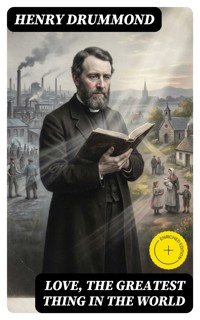
In "Love, the Greatest Thing In the World," Henry Drummond explores the profound essence of love as the highest virtue, emphasizing its transformative power in human relationships and society at large. Written in a lyrical, yet didactic style, Drummond intertwines anecdotes, biblical references, and philosophical reflections to illustrate love's role as a unifying force. Situated in the 19th-century revivalist movement, the work emerges as a response to the growing industrialization and materialism of the era, seeking to rekindle spiritual depth and interpersonal connection through the lens of divine love. Henry Drummond (1851-1897), a Scottish preacher, biologist, and writer, was deeply influenced by the Ethical Movement and the Social Gospel, which sought to address societal issues through moral reform and spiritual awakening. His extensive work as a revivalist and his interest in science reflect his belief in harmonizing faith with rational thought. These experiences culminated in this seminal work, wherein he articulates a comprehensive vision of love that challenges the prevailing sentiments of his time. This book serves not only as a theological treatise but also as a powerful manifesto for those seeking to understand the dynamics of love and its central role in human existence. Drummond's eloquent prose and heartfelt declarations make it a timeless read, offering invaluable insights for anyone interested in the complexities of love, morality, and the human spirit. In this enriched edition, we have carefully created added value for your reading experience: - A comprehensive Introduction outlines these selected works' unifying features, themes, or stylistic evolutions. - A Historical Context section situates the works in their broader era—social currents, cultural trends, and key events that underpin their creation. - A concise Synopsis (Selection) offers an accessible overview of the included texts, helping readers navigate plotlines and main ideas without revealing critical twists. - A unified Analysis examines recurring motifs and stylistic hallmarks across the collection, tying the stories together while spotlighting the different work's strengths. - Reflection questions inspire deeper contemplation of the author's overarching message, inviting readers to draw connections among different texts and relate them to modern contexts. - Lastly, our hand‐picked Memorable Quotes distill pivotal lines and turning points, serving as touchstones for the collection's central themes.
Das E-Book können Sie in Legimi-Apps oder einer beliebigen App lesen, die das folgende Format unterstützen:
Veröffentlichungsjahr: 2022
Ähnliche





Love, the Greatest Thing In the World
Table of Contents
Introduction
This collection gathers six of Henry Drummond’s most influential shorter writings, offering an accessible doorway into his pastoral and devotional thought. Rather than presenting a complete edition or a survey of his scientific or apologetic studies, the volume concentrates on addresses and essays shaped for practical spirituality. The pieces included—Love, the Greatest Thing in the World; Lessons From the Angelus; Pax Vobiscum; First! An Address to Boys; The Changed Life, the Greatest Need of the World; and Dealing With Doubt—are compact works originally shared with general audiences and later circulated in print. Together they reveal the heart of Drummond’s message: character transformed by love and lived in everyday life.
Readers will encounter a range of devotional forms rather than fiction or formal theology. Love, the Greatest Thing in the World is a brief meditation that unfolds the meaning of Christian love as taught in Scripture. Lessons From the Angelus is a contemplative essay drawing spiritual counsel from the posture of prayer and labor. Pax Vobiscum is an address on inner peace. First! An Address to Boys speaks directly to youth about priorities. The Changed Life, the Greatest Need of the World is an appeal for genuine transformation. Dealing With Doubt approaches questions of faith with patient, pastoral care. All retain the cadence of spoken counsel.
Across these works, Drummond’s unifying concern is practical religion: the cultivation of love, peace, and integrity in ordinary conduct. He writes as a guide rather than a polemicist, favoring clear reasoning, vivid illustration, and short, memorable sections that encourage reflection and application. The themes recur with deliberate consistency—charity as the highest mark of character, the possibility of inner rest amid pressure, the claims of conscience on the young, the necessity of actual change, and the honesty required when doubts arise. His style is at once warm and incisive, inviting readers from varied church backgrounds to consider essentials they already recognize as central.
Drummond’s method privileges experience tested by Scripture and offered in plain speech. He does not construct a system or argue technical points; he proceeds by observation, moral insight, and direct appeal to conscience. Short sentences, concrete images, and orderly progressions carry his argument forward, while a conversational tone preserves the immediacy of a talk. The result is counsel that aims at the will as much as the intellect. He does not ask readers to admire novel theories; he invites them to practice what they already grasp as true, confident that clarity, persistence, and love can reorder motives and renew habits.
Each piece illuminates a facet of the same vision. Love, the Greatest Thing in the World considers the primacy of love as the measure of maturity. Pax Vobiscum reflects on the promise of peace and how it may be received in the midst of burden. First! An Address to Boys urges early, decisive choices that set a constructive life course. Lessons From the Angelus draws practical lessons from a simple rhythm of prayer and work. The Changed Life explores the sources and signs of genuine moral change. Dealing With Doubt encourages bringing hard questions into the light for wise, patient resolution.
These writings achieved wide circulation in the decades following their first appearances, becoming staples of devotional reading for individuals, families, and study groups. Their brevity encouraged frequent reprinting and broad sharing, and their ecumenical emphasis on the essentials of Christian character gave them a reach beyond any single tradition. The continued appeal lies in their practicality: they address recognizable struggles—restlessness, indecision, moral inertia, intellectual uncertainty—with humane forthrightness. For readers new to Drummond, the collection offers an introduction to a trusted voice. For those familiar with him, it gathers favorites whose counsel has proven durable across changing eras and circumstances.
Although the works stand independently, they reward a connected reading. Beginning with love, Drummond sets the criterion by which the others are judged; peace, vocation, change, and honest inquiry follow as natural applications. The collection is designed for unhurried use—in private devotion, in small groups, or as a companion to service and study—without requiring specialized knowledge. No plot is at stake, and no argument depends on hidden premises; readers can pause anywhere and resume without loss. By gathering these concise addresses and essays together, the volume presents the essential Drummond: a clear-eyed pastor of the inner life, urging what is good and practicable.
Historical Context
Henry Drummond (1851–1897), a Scottish writer and evangelist formed within the Free Church of Scotland, emerged during the late Victorian ferment linking faith, science, and social change. Educated in natural science and divinity at the University of Edinburgh, he became a lecturer in natural science at the Free Church College, Glasgow, in 1877. Rapid urbanization in Scotland and northern England, expanding railways, and an industrial workforce created audiences eager for practical, consoling religion. Cheap print, tract societies, and transatlantic publishers multiplied concise devotional texts. These conditions fostered Drummond’s brief, accessible addresses later gathered in this collection, aiming to stabilize Christian ethics amid modern dislocation.
In the 1870s the revival campaigns of Dwight L. Moody and Ira D. Sankey swept Britain (1873–1875), welding British and American evangelical networks. Drummond assisted Moody, later speaking at Moody’s Northfield Conferences in Massachusetts, founded in 1880 as a training hub for lay workers and students. There, in 1887, Drummond’s expository address on 1 Corinthians 13—eventually printed as Love, the Greatest Thing in the World—won a transatlantic readership for its ethical clarity over sectarian polemic. The Northfield platform, combined with railway-linked book distribution and college prayer meetings, shaped a tone of practical charity that runs across several works in the collection.
Concurrently, the Keswick Convention (begun 1875 in Cumbria) popularized "Higher Life" teaching on sanctification, quiet trust, and victorious Christian living. While not a systematizer of Keswick doctrine, Drummond addressed similar longings for inner rest and moral transformation, evident in Pax Vobiscum and The Changed Life. Late Victorian believers, fatigued by doctrinal disputes and social strain, sought a spirituality promising peace and character rather than controversy. The language of surrender, calm, and steady growth—phrases common in Keswick preaching—permeated Drummond’s concise counsel. He reinterpreted holiness as practical benevolence, commending temperate habits, relational kindness, and steady duty to readers navigating crowded cities and competitive professions.
Urban expansion also produced new youth formations: the Young Men’s Christian Association, school missions, and, notably, the Boys’ Brigade founded in Glasgow in 1883 by William Alexander Smith. These movements fused drill, Scripture, and service to cultivate disciplined Christian manhood. Drummond’s First! An Address to Boys reflects this ethos, speaking to adolescent ambition shaped by examinations, factories, and sport. Glasgow’s church guilds and reading rooms supplied venues where short addresses could mold character and aspiration. By engaging boys directly, Drummond advanced a generational strategy—prioritizing moral "first principles" and leadership—mirroring wider Victorian efforts to channel youthful energy toward civic responsibility and Protestant virtue.
Amid industrial restlessness, European art offered images of piety in ordinary labor. Jean-François Millet’s The Angelus (painted circa 1857–1859) became an icon of humble devotion, widely circulated in engravings and chromolithographs by the 1880s. Its depiction of peasants pausing at the bell for prayer resonated with Catholic and Protestant audiences alike as a parable of sanctified work. Drummond’s Lessons From the Angelus drew upon this shared visual culture to commend recollected prayer and dignity in toil. The choice of a French rural scene, familiar on middle-class walls in Britain and America, enabled him to translate aesthetic sentiment into everyday spiritual practice.
The era’s intellectual climate sharpened the appeal of Drummond’s conciliatory tone. After Charles Darwin’s On the Origin of Species (1859) and the public debates led by figures like T. H. Huxley, "agnosticism" (a term Huxley popularized) framed educated doubt. German higher criticism, especially Julius Wellhausen’s work in the 1870s–1880s, further unsettled traditional readings of Scripture. Drummond’s earlier Natural Law in the Spiritual World (1883) attempted a bridge, importing scientific analogies into theology. Dealing With Doubt continues that pastoral project, urging patient inquiry and moral experiment over polemics. By addressing skepticism sympathetically, he appealed to students and professionals negotiating faith within modern science.
British imperial expansion and missionary enterprise formed another backdrop. Following the legacy of David Livingstone and the growth of the African Lakes Company (founded 1878), Scottish missions clustered around Lake Nyasa in the 1880s. Drummond traveled in Central Africa in 1888–1889, visiting mission stations and observing commerce, disease, and cultural encounter—experiences he later described for readers at home. This exposure broadened his universalist emphasis on love and character over denominational boundaries. The combination of humanitarian ambition and imperial commerce shaped his moral cosmopolitanism, reinforcing appeals to peace, patience, and transformed conduct that recur across the collection’s addresses.
By the 1890s, fin-de-siècle anxieties—economic downturns, labor unrest, and debates over empire—converged with early Social Gospel initiatives in North America and Christian social reform in Britain. Drummond’s brief books, issued by firms such as Hodder & Stoughton and sold in inexpensive formats, suited gift culture, Sunday schools, and student groups. The Ascent of Man (1894) confirmed his desire to harmonize science and ethics. Tuberculosis curtailed his activity; he died on 11 March 1897 at Tunbridge Wells. Posthumously, these addresses circulated as steady guides to inner peace, charitable love, and practical faith for readers seeking stability amid modern change.
Synopsis (Selection)
Love, the Greatest Thing in the World
A devotional meditation on the primacy of love, presenting charity as the central measure of Christian character and everyday conduct.
With warm, plainspoken exhortation and practical moral psychology, Drummond distills high theology into lived virtues like patience, kindness, and self-forgetful service.
Peace and Transformation Addresses (Pax Vobiscum; The Changed Life, the Greatest Need of the World)
Pax Vobiscum and The Changed Life trace the movement from inner surrender to steady transformation, arguing that lasting peace and moral renewal flow from living union with Christ rather than self-driven effort.
Pastoral in tone and rich with homely illustrations, these addresses emphasize interior rest that yields outward character, a signature blend of reassurance and practical application.
Lessons From the Angelus
Drawing meditations from the Angelus devotion, Drummond shows how rhythms of prayer dignify ordinary work and foster humility and attentiveness.
Contemplative yet concrete, it models his habit of reading daily life devotionally to inspire quiet faithfulness.
First! An Address to Boys
A brisk talk urging boys to put first things first, aligning ambition, discipline, and play with a clear moral center.
Direct and upbeat, it channels Drummond’s evangelistic energy into practical counsel on integrity, courage, and purposeful priorities.
Dealing With Doubt
An empathetic counsel for skeptics and wavering believers, treating doubt as a workable stage rather than a terminal crisis.
With calm reasoning and pastoral tact, Drummond points readers toward honest inquiry, patient practice, and the steadying certainties they already possess.




