


0,99 €
Mehr erfahren.
- Herausgeber: Daniel Coenn
- Kategorie: Geisteswissenschaft
- Sprache: Englisch
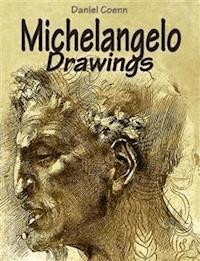
This Art Book contains annotated reproductions of Michelangelo Buonarroti drawings, date and interesting facts page below. A sculptor, architect, painter, and graphic artist, Michelangelo cannot be assigned definitely to any of those genres. The drawing as a medium for developing new ideas and conveying artistic thoughts, however, is the connecting link to and the basis of all his creative activities. During the Renaissance, drawing was established as the basis of every genre of art. Michelangelo viewed his drawings as material he needed for his work. Contemporaries of Michelangelo collected his drawings during his lifetime and guarded them like precious gems. Presently, the total number of his existing drawings is around 600.
Das E-Book können Sie in Legimi-Apps oder einer beliebigen App lesen, die das folgende Format unterstützen:
Veröffentlichungsjahr: 2015



















Michelangelo Drawings
By Daniel Coenn
Foreword and Annotations by Daniel Coenn
First Edition
Copyright © 2013 by Daniel Coenn
*****
Michelangelo Drawings
*****
Foreword
Michelangelo's drawings offer a unique insight into how the artist worked and thought. They are beautiful artworks in their own right but also provide a crucial link between his work as a sculptor, painter and architect. This ebook traces Michelangelo's life from youth to old age through drawings.
Michelangelo was extraordinarily famous during his lifetime, so much so that other artists produced portraits of him and three biographies were written. His artistic achievements set him in a class apart from his contemporaries; after the death of his main rival Raphael in 1520, he was to dominate the Roman art world for more than four decades. His primary focus as an artist was the male body, and his drawings chart his relentless search to find poses that would most eloquently express the emotional and spiritual state of his subjects.
A sculptor, architect, painter, and graphic artist, Michelangelo cannot be assigned definitely to any of those genres. The drawing as a medium for developing new ideas and conveying artistic thoughts, however, is the connecting link to and the basis of all his creative activities. During the Renaissance, drawing was established as the basis of every genre of art. Michelangelo viewed his drawings as material he needed for his work.
Contemporaries of Michelangelo collected his drawings during his lifetime and guarded them like precious gems. Presently, the total number of his existing drawings is around 600. However, during his more than seventy years of activity, he certainly produced much more, thus many works by the master must have been lost. It is well known that Michelangelo twice destroyed his own drawings: the first time was in 1517, the second time shortly before his death.
Annotated Drawings
Kneeling Male Nude
n.d., Black chalk on paper, Galleria degli Uffizi, Florence
Study of a Seated Woman
n.d., Chalk, Musee Conde, Chantilly; this drawing may be related to the lunette frescoes on the Sistine Chapel
Madonna and Child with St. Anne
n.d., Pen and ink, 32.5 x 26 cm, Louvre, Paris
Satyr's Head
n.d., Pen and brown ink, 28 x 21 cm, Louvre, Paris
Two Male Figures after Giotto
1490-92, Pen and gray and brown ink over traces of drawing in stylus, 31.7 x 20.4 cm, Louvre, Paris
This drawing is Michelangelo's partial copy after Giotto's fresco of the Ascension of St John the Evangelist in the Peruzzi Chapel of Santa Croce in Florence. It is part of a series of early drawings in which he copied with minor alterations figures from the works of the older Florentine masters, Giotto and Masaccio. This sheet, containing anatomical studies on the verso, is regarded as the earliest extant work by Michelangelo.
Study (for a Deposition or Lamentation of Christ) of a Mourning Woman
1493-97, Pen and brown ink, heightened with white, 26 x 16.5 cm, Private collection
Woman Hoeing and Sitting Man
1493-96, Pen and brown ink, black pencil, 20.8 x 23.3 cm, Teylers Museum, Haarlem
The figures on this sheet are not identified. The half-standing, half-sitting male figure with his animal-like head and long left nipple bears resemblance to a faun. The verso contains two studies of a left foot.
Male Nude
1501-02, Pen and brown ink, 33.7 x 16.2 cm, Louvre, Paris
This drawing, which reflects both classical inspiration and the study of a living model, is connected with the marble David, for which Michelangelo received the commission in August 1501. On the verso, various studies can be seen which can be connected to a wide variety of works by Michelangelo.
Kneeling Female Nude in Profile
1503-04, Pen and brown ink on paper partly prepared in red, 25.8 x 15, 3 cm, Louvre, Paris




