


0,49 €
Niedrigster Preis in 30 Tagen: 1,99 €
Niedrigster Preis in 30 Tagen: 1,99 €
Mehr erfahren.
- Herausgeber: Booksell-Verlag
- Kategorie: Lebensstil
- Sprache: Englisch
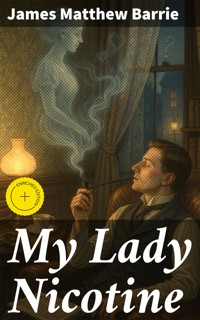
In 'My Lady Nicotine', James Matthew Barrie weaves a whimsical yet poignant narrative that explores the themes of addiction and desire. Through the lens of a young man's infatuation with both tobacco and his beloved, Barrie adopts a conversational and humorous literary style that captures the charm of Edwardian society while revealing deeper psychological insights. The book, written in 1890, stands as a unique meditation on the intersections of love and habit, set against a backdrop of burgeoning modernity and shifting cultural norms around smoking, which was an integral part of social life at the time. Barrie, best known for creating Peter Pan, was deeply influenced by the complexities of youthful longing and the bittersweet nature of adult responsibilities. His own experiences of loss and his personal battles with societal expectations permeate his writing. In 'My Lady Nicotine', the vivid portrayal of the protagonist's struggles mirrors Barrie's own relationship with escapism and the bittersweet joys of life, contextualizing his work within the wider literary movement that examined the human condition with warmth and hilarity. Ideal for both the casual reader and literary scholar, 'My Lady Nicotine' offers an intriguing exploration of addiction through Barrie's characteristic wit and charm. This delightful novella serves not only as an entertaining read but also as a poignant reflection on the complexities of love and dependency, making it a timeless classic that resonates with contemporary issues. Perfect for those seeking insight into Barrie's multifaceted genius, this book captures the essence of longing and humor in the face of life's uncertainties. In this enriched edition, we have carefully created added value for your reading experience: - A succinct Introduction situates the work's timeless appeal and themes. - The Synopsis outlines the central plot, highlighting key developments without spoiling critical twists. - A detailed Historical Context immerses you in the era's events and influences that shaped the writing. - An Author Biography reveals milestones in the author's life, illuminating the personal insights behind the text. - A thorough Analysis dissects symbols, motifs, and character arcs to unearth underlying meanings. - Reflection questions prompt you to engage personally with the work's messages, connecting them to modern life. - Hand‐picked Memorable Quotes shine a spotlight on moments of literary brilliance. - Interactive footnotes clarify unusual references, historical allusions, and archaic phrases for an effortless, more informed read.
Das E-Book können Sie in Legimi-Apps oder einer beliebigen App lesen, die das folgende Format unterstützen:
Veröffentlichungsjahr: 2020
Ähnliche


















My Lady Nicotine
Table of Contents
Introduction
Between the curl of a cigarette and the claims of respectability, a man weighs devotion to a fragrant habit against the tug of ordinary life.
My Lady Nicotine by James Matthew Barrie, first published in 1890 with the subtitle A Study in Smoke, gathers a sequence of humorous sketches about a narrator’s infatuation with tobacco and the fellowship that grows around it. Barrie, a Scottish author best known today for Peter Pan, here writes in an earlier, playful key, observing the daily rites of smokers with affectionate wit. Without venturing into melodrama or moral crusade, the book offers a portrait of habit as solace, social bond, and imaginative spark, presenting episodes that illuminate a distinctly late Victorian bachelor world.
Composed in the rich ecosystem of late nineteenth-century British letters, the book shows Barrie working within and extending the period’s essayistic tradition, where character, conversation, and place are sketched with sprightly economy. Its episodes, first encountered by many readers in the age of bustling magazines and clubland humor, exemplify how fin-de-siècle prose could be intimate yet urbane, domestic yet slyly theatrical. The voice is conversational but precise, staging small dramas out of familiar rituals. Before the triumphs of the stage, Barrie demonstrates a prose style attuned to nuance, whimsy, and the incremental revelation of personality.
The work is often regarded as a minor classic of comic prose and of what might be called smoking literature, not for grand plot or sweeping social canvas, but for its perfectly pitched tone and durable charm. Its influence is felt less in imitation than in the confidence it gave to light, character-driven sketches that treat everyday habits as worthy of literary attention. Within Barrie’s career, it stands as a formative statement of sensibility, showing the blend of tenderness and irony that later shaped his more famous creations, and linking him to a lineage of essayists who made entertainment a form of quiet insight.
At its heart lies a simple premise: the narrator and a circle of fellow devotees converge around pipes, cigars, and blends, creating a fellowship forged in smoke and story. Barrie’s vignettes observe how a particular mixture can summon memory, how a pipe passed between friends becomes a ceremony, how a room’s atmosphere shapes talk and temper. Rather than advancing a single narrative arc, the book drifts delightfully from scene to scene, as if following the leisurely plume from a match’s flare. The result is a mosaic of domestic comedy and gentle self-portraiture, airy yet precise in its particulars.
Readers often remember the persona of Lady Nicotine, the graceful figure to whom the narrator pledges a kind of chivalric loyalty. Barrie personifies the habit to dramatize a conflict between devotion to smoke and the obligations of everyday duty. This device allows him to examine dependence without rancor, siding neither with censorious reform nor reckless indulgence. The figure of an ideal blend, notably the Arcadia Mixture, becomes emblem and talisman, suggesting that what is truly pursued may be less a substance than a mood: composure, companionship, or the quickening of fancy that makes ordinary rooms feel enchanted.
Part of the book’s classic appeal comes from its economy of means. Barrie conjures full social worlds with a few strokes: a steadfast chair, a draught under the door, the silence after a joke has settled. The humor is never cruel. It arises from affectionate exaggeration, from the inevitabilities of routine, from the vanity and loyalty of friends who share a common weakness. Stylistically, the prose balances quick wit with a small, abiding melancholy, sensing that ceremonies of comfort are both sustaining and fragile. That balance, neither moralistic nor cynical, has proven remarkably durable with generations of readers.
As a period piece, My Lady Nicotine offers a window onto late Victorian attitudes toward leisure, domesticity, and sociability. It captures the clubbable ethos of bachelor life and the rituals that formed polite masculinity at the time. Contemporary readers encounter in it a historical artifact, written before modern understandings of health reframed the cultural meaning of tobacco. Barrie’s aim, however, is not medical nor polemical; he is after the comedy of habit and the poetry of routine. Read with that in mind, the sketches illuminate how objects and practices, however modest, can organize memory, affiliation, and self-invention.
Placed within Barrie’s development, the book anticipates qualities that later distinguish his drama: a knack for creating intimate, enclosed worlds; an ear for companionable dialogue; and a fascination with how imagination overlays the ordinary. Here, those elements rest not on spectacle but on perspective. The tight focus on shared rooms and repeated rites lets Barrie refine timing, tone, and the suggestive image. The work thus acts as both showcase and workshop, demonstrating that lightness is not thinness, and that a slender subject, attentively rendered, can carry surprising depth of feeling and a durable aftertaste of reflection.
Why has it endured? In part, because it translates private habit into common culture without preaching, inviting readers to recognize their own rituals in the narrator’s. The essays balance particularity—specific blends, chairs, hours—with universals: the allure of companionship, the comic dignity of preference, the negotiation between impulse and duty. Its sentences move with quiet poise, deftly placing observation beside anecdote. As literature, it models how style can be destiny; its effects are cumulative and humane. As cultural record, it preserves a tone of voice that might otherwise vanish: the urbane, slightly wistful confidences of a bygone room.
Key facts are straightforward. James Matthew Barrie was a Scottish writer active in the late Victorian and early Edwardian periods. My Lady Nicotine appeared in 1890, gathering humorous sketches concerned with tobacco as a social and imaginative force. The author’s purpose was not to tell a grand story but to anatomize a mood and a milieu, to explore how small pleasures structure time and talk. Without advancing judgments about virtue or vice, he renders habit as human, sometimes comic, sometimes tender. For new readers, this framing clarifies the book’s method and sets expectations for its episodic, companionable progress.
In sum, My Lady Nicotine delights through atmosphere, companionship, and a gently ironized devotion to the rituals that make life livable. Its themes—habit as identity, fellowship as refuge, imagination as transfiguration—remain fresh, even as the particulars belong to another age. Contemporary audiences find in it a study of how people arrange meaning out of small things, and a reminder that comedy can be exact without being harsh. That is why the book still compels: it offers an elegant, humane attention to the ordinary, and leaves readers with the rare feeling that they have been well and kindly kept company.
Synopsis (Selection)
My Lady Nicotine: A Study in Smoke by James Matthew Barrie is a sequence of linked sketches presented as a memoir of a devoted smoker. The narrator personifies tobacco as a capricious lady, addressing her with mock-gallantry while recounting his life among bachelor lodgings and their informal club of smokers. Set largely in late Victorian London interiors, the book moves from quiet routines to small domestic adventures. Its tone is light and observational, describing habits, rooms, and rituals rather than climactic action. The work follows the narrator’s attachment to a particular blend, his companions, and the shifting demands that test his allegiance to smoking.
Early chapters establish the narrator’s initiation into the art of smoking and the discovery of an ideal blend known as Arcadia Mixture. He details the ceremony of packing a pipe, the timing of the first draw, and the calm that accompanies familiar tobacco. The mixture becomes a touchstone, an emblem of constancy that organizes his day and his friendships. The narrative lingers on the sensory world of smoke and the paraphernalia of the habit, treating them as a private language. This foundation sets the stage for later episodes in which the pursuit, protection, and remembrance of Arcadia guide his choices.
The book then introduces a circle of fellow smokers who frequent the narrator’s rooms. Each figure is sketched by his pipe, method, and code of conduct, from the meticulous cleaner to the impulsive borrower. Their camaraderie hinges on shared rules about lighting, silence, and the exchange of mixtures. Anecdotes arise from small breaches of etiquette, misplaced tobacco jars, and opinions over the merits of briar versus meerschaum. These scenes position the smoking room as a social world with its own humor and hierarchies. Through these portraits, the narrative develops its theme of fellowship forged by routine and taste.
Domestic incidents further shape the setting. The narrator negotiates with vigilant landladies, curtains bear the mark of smoke, and windows become strategic outlets. He recounts attempts to disguise odors, preserve favorite pipes, and avoid conflicts about ash and burns. Experiments with blending produce disappointments and near-successes, often prompting friendly disputes among the regulars. The boundary between the smokers’ enclave and the rest of the house becomes a recurring source of comedy and tension. These episodes deepen the sense of place, showing how habit intersects with everyday logistics, furniture, and the delicate arrangements required to keep the smoking room intact.
A turning point arrives with courtship and the prospect of marriage, which reframes the narrator’s allegiance to tobacco. He contemplates promises to abandon smoking, stages farewells to favorite pipes, and debates the feasibility of renunciation. The figure of Lady Nicotine becomes both a metaphor for temptation and a symbol of past companionship. The narrator’s reflections emphasize intention versus practice, describing plans to quit and the sentimental value tied to familiar objects. Without resolving the conflict outright, the narrative introduces a new domestic horizon where the habit’s place must be negotiated, foreshadowing adjustments to come in a different household.
Subsequent chapters explore life in a new home where smoking is restricted. The narrator organizes drawers and boxes, sequesters jars of Arcadia, and invents strategies to minimize disturbance. Visits from old companions test boundaries, and the etiquette of smoke in shared rooms becomes a delicate subject. Small mishaps—lingering scents, conspicuous matches, or a betrayed hiding place—produce comic consequences. The narrative remains focused on routine, noting how time of day, ventilation, and company determine whether a pipe appears. These episodes depict a gradual accommodation, charting how habit adapts to circumstances without disclosing a final victory for either side.
Interludes broaden the scope beyond the home. Supply scares, rumors about the discontinuation of mixtures, and experiments with substitutes highlight the fragility of loyalty to a single tobacco. The narrator recounts brief travels and the uneasy feeling of smoking away from familiar chairs and jars. Letters, trades, and speculative recipes suggest a community bound by shared pursuit, even as each palate proves stubbornly individual. Stories of near-fires, singed pockets, and mislaid pouches maintain a gentle sense of risk. Through these vignettes, the book underscores how a modest habit becomes a network of memory, procurement, and inventive problem-solving.
Reflective passages consider the meanings attached to smoke. The narrator links tobacco to companionship, composure, and the pacing of thought, while acknowledging social pressures that cast the habit as untidy or inconsiderate. The sketches balance affection for ritual with awareness of changing expectations, especially in mixed company and domestic settings. Gentle satire touches earnest reformers and zealous devotees alike, without prosecuting a case for or against. The underlying argument is descriptive: that smoking, as practiced here, shapes conversation, space, and leisure. The tone remains steady, preferring observation to exhortation, and emphasizes the culture of smoking rooms in their period.
The closing movement gathers these threads into a poised acknowledgment of loss and persistence. The narrator recognizes the costs of accommodating or relinquishing tobacco while preserving respect for the charms that drew him to Arcadia. The fellowship of the old room becomes a memory that is neither condemned nor extolled beyond proportion. Without grand revelation, the book ends by situating Lady Nicotine among the manageable attachments of life, subject to compromise and recollection. The overall message is measured: habits create communities and rhythms, and even when curtailed, their images linger. The narrative leaves the balance deliberately unresolved, consistent with its modest scale.
Historical Context
James Matthew Barrie situates My Lady Nicotine in the intimate interiors of late Victorian urban life, chiefly London bachelor lodgings in the mid-to-late 1880s. The setting is one of gaslit rooms, landladies’ rules, and a sociable, smoky camaraderie that flourished in parlors and improvised smoking dens. The neighborhood geography—Bloomsbury’s chambers, St James’s streets lined with tobacconists, and omnibuses rattling across the Strand—anchors the essays in a recognizably metropolitan environment. The social air is Victorian respectability: smoking is tolerated in designated spaces yet frowned upon in drawing rooms. Against this cityscape, Barrie’s Scottish sensibility—formed in Kirriemuir—shapes a tone of affectionate irony as he charts the rituals surrounding the jar of “Arcadia Mixture.”
The book emerged in a precise historical moment. Barrie moved from Kirriemuir to London in 1885, wrote journalism for the St James’s Gazette, and drew material from bachelor life in rented rooms before his 1894 marriage. My Lady Nicotine: A Study in Smoke appeared in 1890, with a revised edition in 1896, straddling the fin de siècle when Queen Victoria reigned and London modernized rapidly. The essays recall a preceding decade: a world of pipes, matches, and etiquette that preceded the full triumph of the mass-produced cigarette. Its time and place are essential: domestic spaces policed by moral propriety, clubs and cabs facilitating male sociability, and tobacconists supplying exotic blends from imperial trade routes.
The Victorian tobacco economy was a global web. Britain’s 19th-century consumption drew on Virginia and North Carolina leaf and “Oriental” tobaccos from Ottoman ports such as Smyrna (Izmir) and Latakia. The Anglo-Turkish Commercial Convention of 1838 (the Balta Liman treaty) liberalized trade, and the Régie co-internationale des tabacs de l’Empire Ottoman (founded 1883) managed production and revenues to service Ottoman public debt. In London, St James’s and Haymarket tobacconists purveyed carefully blended mixtures to a growing middle class. Arcadia Mixture, Barrie’s fictional blend, mimics real Victorian fascination with “Oriental” tobaccos prized for aroma and finesse. The book’s reverence for a specific jar reflects connoisseurship born of these supply chains, while comic quests for refills echo the scarcity, branding, and mystique cultivated by metropolitan tobacconists.
Victorian smoking had a distinct material culture. Briar pipes, fashioned from Erica arborea roots, spread from the 1850s, prized for heat resistance; meerschaum bowls, quarried in Ottoman Anatolia, were fashionable among connoisseurs. Friction matches, first sold commercially in 1827 by John Walker, and safer “Swedish” matches improved by Johan Edvard Lundström in 1855, enabled casual indoor smoking yet alarmed insurers and landlords. Cigarettes, popularized after the Crimean War (1853–1856), surged with the James Bonsack machine (patented 1880–1881), which automated rolling and transformed consumption patterns. Barrie’s essays elevate the slow rituals of pipe preparation and tamping, setting them against the onrush of mechanized, disposable habits. The characters’ loyalty to their pipe and blend becomes a genteel defense of deliberation, memory, and sociability.
Nineteenth-century clubland institutionalized smoke. The Garrick Club (1831) and the Reform Club (1836) cultivated smoking rooms as male refuges where cigars and pipes accompanied conversation and newspapers. In private houses, the mid-century “smoking jacket” and separate smoking rooms protected fabrics and reputations by containing odor and ash. Many boarding houses and hotels restricted smoking to avoid fire and to conform to propriety. My Lady Nicotine stages comic skirmishes over “no smoking” rules—landladies policing corridors, fiancées banning the jar from drawing rooms—mirroring a culture that cordoned smoke into sanctioned enclaves. The bachelor “set” forms a semi-club within rented chambers, reproducing clubland rituals on a smaller, anxious scale.
Temperance and health reform shaped the moral climate in which smokers negotiated their pleasure. The Band of Hope (founded 1847) and the United Kingdom Alliance (1853) campaigned for sobriety and legislative control of intoxicants; many allied reformers also criticized tobacco as wasteful and unhealthy. Medical voices, including surgeon John Lizars’s The Use and Abuse of Tobacco (1856) and physician Benjamin Ward Richardson’s public-health lectures, warned about nicotine’s effects decades before modern epidemiology. While Barrie’s book remains playful, its recurring figure of the disapproving wife or landlady echoes reformist surveillance in domestic spaces. The comic bargaining—promising abstinence, hiding pipes, timing smokes—reflects how temperance-era discipline seeped into everyday household negotiations.
Rapid urbanization underwrote the bachelor habitat of the book. London’s population surpassed 4.2 million by the 1891 census, swelling demand for boarding houses and bachelor “chambers” in Bloomsbury, the Strand, and adjacent districts. The lodging-house economy, regulated in part by mid-century acts and later by the Housing of the Working Classes Act 1890, produced interiors with shared rules, thin walls, and strict proprietors. Clerks, journalists, and minor civil servants—Barrie’s milieu—assembled evening communities built around tea, tobacco, and talk. My Lady Nicotine chronicles this life: comrades staking out times when a landlady is out, engineering draughts to whisk smoke up chimneys, and grieving catastrophes like a spilled jar. Bachelor etiquette and shared ritual create a micro-society that defines the narrative’s world.
Public-space norms for smoke evolved unevenly. By the late 1860s most British railway companies provided designated smoking compartments, while omnibuses and trams often restricted smoking entirely or by route and time. Simultaneously, the Smoke Nuisance Abatement (Metropolis) Act 1853 and later municipal regulations targeted coal smoke, cultivating a broader sensitivity to air quality and nuisance. The patchwork shaped habits: men timed journeys to find a smoking carriage or carried cigars to smoke outdoors between engagements. In Barrie’s essays, the search for permissive spaces—clubs, certain restaurants, and forgiving rooms—maps this regulatory mosaic. The domestic emphasis on “where one may smoke” mirrors a city where smoke was legally, commercially, and morally zoned.
Scottish Presbyterian culture forms a quiet undertow in Barrie’s humor. The Disruption of 1843, which formed the Free Church of Scotland, left a legacy of strict Sabbath observance and moral seriousness across towns like Kirriemuir (“Thrums” in Barrie’s fiction). While tobacco use persisted, admonitions against indulgence and ostentation remained potent. The narrator’s self-mockery—pledging reform, then backsliding to Arcadia—carries the cadence of Presbyterian self-examination. Domestic scenes in which women arbitrate propriety echo Scottish household pieties the author knew well. Thus, a London pipe becomes an index of conscience: an object around which inherited Northern discipline and metropolitan permissiveness negotiate a fragile truce.
The late Victorian press and advertising environment normalized—and glamorized—smoking. Illustrated periodicals expanded in the 1880s, their pages hosting tobacconists’ notices for blends, pipes, and cigars. Shopfronts in St James’s, Jermyn Street, and the Strand displayed jars, snuff mulls, and carved meerschaum, turning connoisseurship into spectacle. Duty-paid stamps and branded tins signaled regulated quality to consumers. Barrie, writing columns for the St James’s Gazette from 1885, absorbed this metropolitan media world. My Lady Nicotine adopts the feuilleton’s urban wit while parodying brand mystique through the quasi-sacred “Arcadia” jar. The book thus mirrors a marketplace where narration, display, and taste-making intertwined with everyday consumption.
The Crimean War (1853–1856) accelerated British adoption of cigarettes, as soldiers encountered Ottoman and Russian habits and brought them home. Egyptian and Turkish leaf gained fashion status in the 1870s–1880s, and the paper-wrapped cigarette became a marker of cosmopolitan ease. Yet Barrie’s smokers are “old believers” in pipe tobacco, their rituals slower and homelier than café cigarettes. The contrast functions historically: by 1890 cigarettes were rising, but pipe culture still dominated many domestic settings. The book’s affectionate defense of pipe aroma, tamping, and ember management reads as a gentle riposte to transnational cigarette chic and the fleeting, mobile modernity it represented.
Public health reforms reshaped interiors. The Public Health Act 1875 consolidated sanitary regulations, while ventilation, miasma debates yielding to germ theory, and smoke-abatement campaigns made “air” a central Victorian concern. Architects experimented with ventilators, transom windows, and flues to manage fumes. In boarding houses, contraptions to direct drafts and protect curtains proliferated. Barrie’s characters—blocking doors with towels, nudging windows to the “exact inch,” and praising a chimney’s draw—turn these anxieties into comedy. Their tinkering points to an era fascinated by domestic engineering: how to breathe cleanly, avoid nuisance, and still indulge. Tobacco smoke becomes a visible tracer of the period’s evolving science of the household atmosphere.
Changes in women’s legal and social status reframed household authority. The Married Women’s Property Acts (1870, 1882) secured wives’ control over earnings and property, strengthening their leverage in domestic negotiations. The 1890s “New Woman” debates widened expectations around education and autonomy. These developments played out in small rituals—what could enter the parlor, who set evening routines, whether ashtrays appeared in sight. In My Lady Nicotine, the fiancée or wife who outlaws the Arcadia jar is not merely a scold; she embodies newly assertive household sovereignty. The author’s playful strategems to evade her rules dramatize a wider, gendered politics of space and habit in late Victorian homes.
Industrial consolidation reshaped tobacco commerce around the book’s publication. The American Tobacco Company formed in 1890 under James B. Duke, leveraging the Bonsack machine and aggressive advertising. In Britain, a defensive merger created Imperial Tobacco in 1901, uniting firms such as W.D. & H.O. Wills and Lambert & Butler after Duke attempted to penetrate the British market. Although Barrie’s essays predate Imperial’s formation, the commercial tide was already turning toward standardized, mass-market cigarettes. The characters’ devotion to a singular, artisanal “Arcadia” blend reads as cultural resistance to homogenization—an insistence that identity, memory, and friendship adhere to taste beyond the reach of trusts and advertising budgets.
Victorian debates over youth, health, and public morals culminated in later restrictions. School boards and headmasters commonly forbade pupils from smoking; medical journals warned about adolescents and nicotine. The Children Act 1908 eventually prohibited selling tobacco to minors under sixteen in the United Kingdom, formalizing concerns aired since the 1890s. Barrie’s book, though earlier, anticipates this climate through jokes about promises to abstain and vows of reform under domestic pressure. Its playful tone exposes a serious trajectory: the privatized governance of vice in boarding houses and marriages foreshadowed broader legislation and bureaucratic oversight of everyday habits in the Edwardian years.
As social critique, the book dissects Victorian respectability by staging conflicts over air, clothes, rooms, and time. Tobacco becomes a test of self-mastery and conformity, revealing how middle-class morality operated through gentle coercion and spatial rules rather than overt law. Landladies and wives wield soft power—rent, permission, hospitality—to discipline male leisure. Barrie’s comic evasions expose the administrative texture of domestic life: negotiated truces, ritualized concealment, and performative promises. By showing pleasure corralled into sanctioned niches, the essays question whether civility is a humane code or a petty surveillance that converts homes into miniature bureaucracies.
Politically, the work uses a pipe to weigh liberty against reform in an imperial consumer society. Exotic leaf, Ottoman monopolies, and London retail glamour underscore Britain’s dependence on distant labor and fiscal regimes, even as domestic reformers police the final puff at home. The bachelor set’s solidarity—part club, part union—parodies civic association while illuminating class. Clerks and journalists organize to protect leisure from proprietors and fiancées, hinting at broader struggles over autonomy within regulated modernity. In making smoke visible—pervasive yet fugitive—Barrie exposes the period’s contradictions: a society championing progress and order while quietly stifling idiosyncrasy, conversation, and the unhurried rituals that knit community.
Author Biography
James Matthew Barrie (1860–1937) was a Scottish novelist, essayist, and dramatist whose career bridged the late Victorian and Edwardian periods. Internationally he is best known for creating Peter Pan, but his output ranged from Scots village sketches to sophisticated comedies and enigmatic, dreamlike plays. Barrie’s work combined wit, sentiment, and a probing interest in memory, imagination, and the tension between youth and adulthood. He moved fluently between periodical journalism, popular fiction, and the commercial stage, achieving both public success and a measure of critical respect. Across forms, he explored how stories shape identity, sustaining a lasting presence in print and performance.
Barrie was born in Kirriemuir, Angus, Scotland, and educated in Scottish schools before studying at the University of Edinburgh. After graduating, he entered journalism, a training ground that honed his concise style and ear for dialogue. His early reading and theatrical experiences drew on Scottish oral traditions, popular melodrama, and the late Victorian culture of serial publication. He is often associated with the Kailyard school, a tendency toward sentimental, small‑town realism then prominent in Scottish letters. While Barrie absorbed some of its conventions, he also adapted them, leavening homely scenes with irony, fantasy, and a keen awareness of performance.
Barrie first gained attention through prose sketches and stories rooted in Scottish settings. Volumes such as Auld Licht Idylls and A Window in Thrums in the late 1880s, followed by the novel The Little Minister in the early 1890s, brought him a wide readership. These works portrayed village life with humor and pathos, and were praised for their intimate detail while also critiqued for sentimentality. The success established Barrie as a literary figure in London’s publishing world and opened doors to theatrical collaboration. Even in prose, he staged scenes with a dramatist’s instinct, anticipating his later turn to the theatre.
By the early 1900s, Barrie had become a leading playwright on the London stage. Comedies such as Quality Street, The Admirable Crichton, and What Every Woman Knows displayed deft dialogue, elegant construction, and a recurring fascination with class, performance, and self‑invention. He wrote for popular audiences yet experimented with tone and form, blending light comedy with moments of abrupt seriousness. Collaborating closely with producers and actors, he refined stagecraft that balanced spectacle with psychological nuance. The plays’ success broadened his reputation beyond Scottish subjects, positioning him as an Edwardian dramatist capable of mixing social observation with theatrical enchantment.
Peter Pan, first produced as a play in the early 1900s and later adapted as the novel Peter and Wendy in the 1910s, became Barrie’s signature creation. Its vision of flight, make‑believe, and the refusal—or impossibility—of growing up drew on his storytelling for children and friendships within a London family whose imaginative play he observed. He fused whimsy with a poignant meditation on memory and loss, crafting a stage fable that invited both delight and unease. The production’s technical ingenuity and its enduring characters quickly embedded themselves in cultural memory, and the story has remained central to his public legacy.
Barrie continued to write for the stage across the 1910s and 1920s, addressing themes sharpened by war and bereavement. Works such as The Old Lady Shows Her Medals, Dear Brutus, and Mary Rose explored identity, grief, and the allure and cost of enchantment. He received major national honors in the early 1910s and early 1920s, reflecting his stature in British letters. In the late 1920s, he assigned the rights to Peter Pan to Great Ormond Street Hospital for Children, a philanthropic act that linked his most famous work to pediatric care. He also delivered public addresses and held ceremonial academic roles in Scotland.
In his later years, Barrie remained a prominent cultural figure, active in literary and theatrical circles, and continued to revise and re‑stage earlier work. He died in the late 1930s in London. His reputation has fluctuated, with critics periodically reassessing the early Scottish sketches and the comedies beyond the shadow of Peter Pan. Today, scholars and audiences read his oeuvre for its intricate play between fantasy and reality, its staging of memory, and its ambivalence about adulthood. Onstage, Peter Pan endures as a touchstone of popular theatre and children’s literature, while his broader body of work remains part of the modern canon.




