


0,49 €
Niedrigster Preis in 30 Tagen: 1,99 €
Niedrigster Preis in 30 Tagen: 1,99 €
Mehr erfahren.
- Herausgeber: Booksell-Verlag
- Kategorie: Lebensstil
- Sprache: Englisch
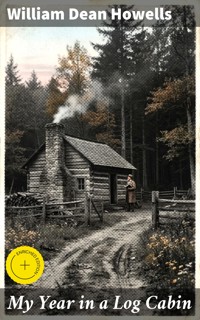
In "My Year in a Log Cabin," William Dean Howells offers a unique exploration of frontier life, depicting his year spent in a rustic cabin in the heart of the American wilderness. Through a blend of personal narrative and keen observation, Howells employs a naturalistic literary style that immerses readers in the raw beauty and challenges of rural living. The book is a testament to the ideals of the late 19th century, reflecting the era'Äôs fascination with nature, simplification, and self-sufficiency, while simultaneously critiquing societal norms and the rapid urbanization of the time. William Dean Howells, often referred to as the "Dean of American Letters," was a pivotal literary figure whose experiences and broader socio-political concerns deeply informed his writing. A champion of realism, Howells's literary career was marked by a commitment to portraying everyday American life with authenticity and empathy. His interactions with prominent literary contemporaries and his own pursuits in social reform invigorated his narratives and enabled him to present an honest, textured view of life in a log cabin, capturing both its charm and its tribulations. For readers drawn to the intricacies of American life and the interplay between nature and society, "My Year in a Log Cabin" is an essential read. Howells'Äôs thoughtful reflections and vivid prose not only entertain but also provoke introspection about the fundamental connections between humanity and the environment. This book serves as both a historical document and a philosophical inquiry, making it a relevant read for anyone seeking to understand the complexities of American identity. In this enriched edition, we have carefully created added value for your reading experience: - A succinct Introduction situates the work's timeless appeal and themes. - The Synopsis outlines the central plot, highlighting key developments without spoiling critical twists. - A detailed Historical Context immerses you in the era's events and influences that shaped the writing. - An Author Biography reveals milestones in the author's life, illuminating the personal insights behind the text. - A thorough Analysis dissects symbols, motifs, and character arcs to unearth underlying meanings. - Reflection questions prompt you to engage personally with the work's messages, connecting them to modern life. - Hand‐picked Memorable Quotes shine a spotlight on moments of literary brilliance. - Interactive footnotes clarify unusual references, historical allusions, and archaic phrases for an effortless, more informed read.
Das E-Book können Sie in Legimi-Apps oder einer beliebigen App lesen, die das folgende Format unterstützen:
Veröffentlichungsjahr: 2019
Ähnliche













My Year in a Log Cabin
Table of Contents
Introduction
A man steps away from the crowded pace of modern life and tests what remains of him when walls are made of timber and days are measured by weather, work, and quiet thought.
My Year in a Log Cabin belongs to the strain of American writing that treats ordinary experience as a serious subject, and its classic standing rests on the author’s ability to turn a modest domestic experiment into a searching study of perception, character, and place. William Dean Howells, a central figure in American literary realism, brought to this narrative the disciplined attention to daily life that shaped his novels, criticism, and editorial influence. The book endures because it joins practical observation to moral and social reflection without forcing the material into melodrama.
Howells (1837–1920) is widely recognized for helping define realism in the United States, both through his fiction and through his role in late nineteenth-century literary culture. When he wrote about a year in a cabin, he was writing as a mature author with a refined sense of how experience becomes meaning on the page. The premise is straightforward: he records a period of living in a log cabin and the routines, impressions, and small challenges that follow from that choice. The result is less a tale of conquest than an account of attention.
The book was composed and published in the late nineteenth-century American context in which industrial growth and urban expansion were transforming everyday life and the nation’s self-image. That historical backdrop matters because the cabin is not presented as a distant frontier fantasy, but as a deliberate counterpoint to contemporary pressures and comforts. Howells’s realism is crucial here: he approaches the setting with an eye for the unromantic facts of maintenance, habit, and temperament. Even when the subject invites pastoral nostalgia, the narrative keeps returning to the textures of actual days.
As an introduction to Howells’s sensibility, the work offers a compact view of the themes that animate his broader career: the ethical weight of ordinary choices, the negotiations of family and community, and the friction between ideals and circumstances. The cabin becomes a scene in which simplicity is tested rather than assumed. What does it mean to live “simply” when simplicity itself requires planning, labor, and compromise? The book explores that question by showing how a changed environment alters what the mind notices and what the body must do.
One reason the book remains influential is its confidence that the commonplace can sustain serious art. Howells builds interest not by relying on sensational plot turns but by deepening the reader’s awareness of routine, mood, and the meanings that accumulate around small events. This approach helped broaden the possibilities for American prose, supporting later writers who found drama in the interior life and in the minute particulars of social reality. The cabin year becomes a laboratory for realism, demonstrating that close description can carry narrative momentum.
The work also participates in a larger American tradition of nature and dwelling narratives, yet it distinguishes itself by resisting grand claims and by tempering admiration with scrutiny. Where some outdoor or homestead writing seeks revelation in the extraordinary, Howells looks for the instructive in what repeats: the same tasks, the same thresholds of comfort and discomfort, the same negotiations between intention and fatigue. That steady focus encourages a reader to reconsider the supposed opposition between culture and nature, suggesting instead a continuum shaped by work, tools, and habit.
Howells’s style, as readers have long noted across his writings, values clarity, measured wit, and an exactness of social and physical detail. In a book centered on a cabin year, those qualities translate into descriptions that are concrete without becoming merely technical, and reflective without turning abstract. The narrative voice invites companionship rather than awe, making the reader feel present for decisions and observations as they arise. The classical quality of the book is not monumentality but proportion: the right scale for its subject and the patient intelligence to sustain it.
The cabin serves as a setting in which questions of comfort, self-reliance, and interdependence can be approached without grandstanding. Howells does not treat withdrawal as pure escape; the experiment of living differently is shown to have consequences, demands, and limits. The daily need to secure warmth, food, and order brings into focus the usually hidden infrastructure of ordinary urban life. By tracing that shift, the book quietly invites readers to examine what they take for granted, and what they might choose to value instead.
In literary history, Howells’s importance extends beyond any single title, and this book benefits from that broader significance: it embodies the realist commitment to representing life as it is lived, with its mixed motives and partial satisfactions. Its influence can be understood in the way later American writers embraced the unheroic perspective, the domestic scene, and the moral complexity of everyday decisions. My Year in a Log Cabin offers a clear example of how an established novelist could make a non-sensational premise carry intellectual and emotional weight.
As context for new readers, it helps to approach the book not as a survival adventure or a travelogue, but as a composed record of a chosen season of living with heightened awareness. The central premise is a year spent in a log cabin and the reflections that such a year occasions. The narrative attends to place, weather, labor, and the rhythms of a household, while also considering what those rhythms reveal about modernity and desire. It does not depend on surprises; its interest lies in accumulation and perspective.
That is why the book remains timely. In an era still marked by speed, noise, and technological mediation, Howells’s cabin year speaks to recurring questions about attention, consumption, work, and the longing for a life that feels coherent. Readers continue to recognize themselves in the tension between comfort and simplicity, solitude and society, intention and habit. My Year in a Log Cabin endures because it offers neither escapist fantasy nor cynical dismissal, but a measured, realistic inquiry into what it means to live deliberately within the limits of real days.




