


5,03 €
Mehr erfahren.
- Herausgeber: Heritage Books
- Sprache: Englisch
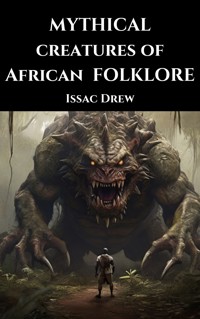
Discover the wonders of African folklore in this enchanting book. Dive into the realm of mythical creatures that have fascinated and inspired for generations. From cunning tricksters to majestic spirits, explore the diverse and vibrant world of African legends. Perfect for those curious about folklore and mythical beasts, this book offers a captivating journey through the heart of African storytelling.
Das E-Book können Sie in Legimi-Apps oder einer beliebigen App lesen, die das folgende Format unterstützen:
Seitenzahl: 54
Veröffentlichungsjahr: 2024
Ähnliche



















MYTHICAL CREATURES OF AFRICAN FOLKLORE
COPYRIGHT ©
Published by Issac Drew
© 2024 Nigeria. All rights reserved.
No part of this publication may be reproduced, distributed, or transmitted in any form or by any means, including photocopying, recording, or other electronic or mechanical methods, without the prior written permission of the publisher, except in the case of brief quotations embodied in critical reviews and certain other noncommercial uses permitted by copyright law.
Table of Contents
Title Page
Copyright Page
DISCLAIMER
INTRODUCTION
THE VIBRANT COLLECTION OF AFRICAN MYTHOLOGY
THE LEGEND OF ANANSI
ANANSI'S ADVENTURE WITH THE BEAN POT
ANANSI AND THE ROPE PULL
ANANSI AND THE TURTLE DINNER OUTING
ANANSI'S JOURNEY TO THE SKY KINGDOM
MAMI WATER- WATER SPIRIT
A TALE OF LOVE BETWEEN THE FISHERMAN AND THE MAMI-WATER
THE TALE OF DAMI AND THE MAMI WATA OF OSAN RIVER
MALIK AND SARAPHINA
THE KISHI
THE AIGHMUXA
EGBERE
AGBAKO
POPOBAWA
AMMIT
IMPUNDULU
NINKI NANKA
ASANBOSAM
TIKOLOSHE
KONGAMATO
DISCLAIMER
The contents of this book are intended for educational and informational purposes only. The author and publisher disclaim any responsibility for the potential misuse or misinterpretation of the content herein, and any actions taken based on the information provided in this work are the sole responsibility of the individuals involved.
INTRODUCTION
This book, "Mythical Creatures of African Folklore," invites you to embark on a journey through Africa's various landscapes, where tales of strange entities have been passed down through oral traditions, forming the continent's cultural foundation. Africa, with its diverse cultures and traditions, has an abundance of folklore that spans generations. These stories, based on the oral traditions of various communities, serve as mediums for wisdom, morality, and entertainment. African storytelling traditions have played an important part in maintaining the history and values of its people, resulting in an intricate combination of myths and legends that represent the continent's cultural variety.
Mythical creatures in African folklore are more than mere figments of imagination; they represent cultural beliefs, moral teachings, and spiritual connections. These beings transcend myth and reality, mingling with societies' daily existence. From shape-shifting tricksters to beneficent spirits, these fabled figures serve as protectors, instructors, and sometimes harbingers of warnings. Understanding these species reveals layers of cultural significance and provides insights into the worldview of African communities. In many African traditional religions, mythical creatures are closely associated with the spiritual realm. They may be seen as messengers, guardians, or manifestations of spiritual forces.
Some mythical creatures are considered divine beings or deities and are central to religious rituals, ceremonies, and worship practices. Myths and stories featuring mythical creatures often convey moral and ethical lessons. These narratives are used as a means of teaching values, ethics, and societal norms to younger generations.
Through the actions and behaviors of mythical creatures in stories, people learn about the consequences of certain actions and the importance of virtues such as courage, wisdom, and compassion. Mythical creatures are sometimes used to explain natural phenomena or occurrences that were not understood by ancient societies. These creatures serve as symbolic explanations for the mysteries of the natural world.
For example, a mythical creature associated with rain may be part of a narrative explaining the origin of rainfall or the changing seasons. Mythical creatures often inspire artistic expressions, including visual arts, music, dance, and rituals. They may be depicted in traditional crafts, masks, and other forms of artistic representation.
Rituals and ceremonies may involve the invocation or appeasement of mythical creatures, emphasizing their role in spiritual practices and cultural celebrations. Many mythical creatures are believed to have protective qualities. They may be seen as guardians of certain places, families, or communities, offering a sense of security and warding off malevolent forces. Some tribes incorporate mythical creatures into their belief systems as protectors of nature, emphasizing the importance of living in harmony with the environment.
The primary purpose of this book is to illuminate the captivating world of mythical beings that inhabit the collective imagination of African cultures. Through this exploration, readers will gain a deeper understanding of the cultural contexts, symbolism, and values embedded in these tales. It connects old storytelling traditions with modern awareness for Africa's unique cultural heritage. It is an invitation to learn about, admire, and celebrate the mythical creatures who have left an indelible impact on the folklore of this wonderful continent.
THE VIBRANT COLLECTION OF AFRICAN MYTHOLOGY
African folklore is a blend of different cultures and old stories that have been passed down over time. From the dry deserts of North Africa to the dense forests of Central Africa, and from the wide plains of East Africa to the coastal areas of the West, Africa has a mix of different landscapes and people. Each cultural enclave contributes a unique context to the rich fabric of African mythology, resulting in an incredible variety of mythical beings as diverse as the region itself.
Stories of powerful spirits and supernatural animals flow through the cultural fabric of Ethiopia's highlands, while tales of nomadic spirits and shape-shifting beings resonate in the breezes of the Sahara desert. The rainforests, with their richness of life, are home to legends of exotic creatures and elusive spirits who dance in time with nature's rhythms. From the Zulu in the south to the Hausa in the north, and from the Yoruba in the west to the Maasai in the east, Africa's cultural diversity births a profusion of mythical entities, each with their own distinct story to tell.
While the cultures and regions of Africa are diverse, an element of commonality runs through the complex structure of African folklore. Themes and motifs, deeply rooted in the shared human experience, connect these tales across the continent. Themes of bravery, trickery, love, and the eternal struggle between good and evil are interwoven into the narratives.
Motifs such as the wise elder imparting knowledge, the journey of self-discovery, and the eternal cycle of life and death resound in the stories told by different communities. Furthermore, Much of African folklore is transmitted orally from one generation to another. Many African cultures embrace animistic beliefs, attributing spiritual significance to natural elements such as animals, plants, rivers, and mountains. Folklore often includes stories about spirits or deities associated with these elements.
Ancestor worship is a common theme in African folklore. Ancestors are often depicted as powerful spirits who continue to influence the lives of their descendants. Rituals and ceremonies are performed to honor and appease these ancestral spirits.




