


Erhalten Sie Zugang zu diesem und mehr als 300000 Büchern ab EUR 5,99 monatlich.
- Herausgeber: Pushkin Children's Books
- Kategorie: Für Kinder und Jugendliche
- Sprache: Englisch
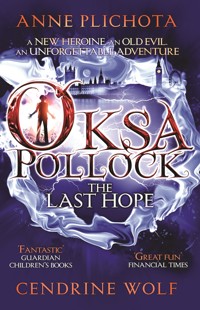
Oksa Pollock is just a normal thirteen-year-old girl, moving with her family from her home in Paris to a new life in London-new friends, a new school and new adventures. But bizarre things start happening around Oksa. Suddenly, she finds she can produce fire from her hands, move objects with her mind, and even fly. As Oksa experiments with her wonderful new powers, her family notice, and an amazing truth is revealed... Along with her best friend, Gus, her loving, powerful grandmother, her wicked new Physics teacher, her mysterious uncles and a whole host of fantastical creatures, Oksa will be thrown into a wilder adventure than she could ever have imagined.And Oksa knows she must triumph over her enemies. A whole world is counting on her. The Last Hope is the first book in the phenomenal Oksa Pollock series, followed by The Forest of Lost Souls. The Heart of Two Worlds, the third book in the series, is coming soon.
Sie lesen das E-Book in den Legimi-Apps auf:
Seitenzahl: 749
Veröffentlichungsjahr: 2013
Das E-Book (TTS) können Sie hören im Abo „Legimi Premium” in Legimi-Apps auf:
Ähnliche













![Tintenherz [Tintenwelt-Reihe, Band 1 (Ungekürzt)] - Cornelia Funke - Hörbuch](https://legimifiles.blob.core.windows.net/images/2830629ec0fd3fd8c1f122134ba4a884/w200_u90.jpg)



Contents
Title Page
PROLOGUE
1 MULTILEVEL MOBILIZATION
2 THE POLLOCK CLAN
3 THE REUNION
4 ST PROXIMUS COLLEGE
5 A TERRIBLE DAY
6 DIFFICULT DAYBREAK
7 A MAGNIFICENT DISCOVERY
8 A WORRYING SECRET
9 CONFRONTATIONS
10 A STORMY TEMPER
11 THE STATUES’ DEN
12 DISTURBING THEORIES
13 AN ENJOYABLE EVENING
14 SUMMIT MEETING
15 EDEFIA
16 THE SECRET-NEVER-TO-BE-TOLD
17 THE GREAT CHAOS
18 CONFUSION
19 UPHEAVAL AT THE POLLOCKS’
20 (UN)CONTROLLED SLIP-UPS
21 PAYING THE PRICE
22 FILE UNDER “TOP SECRET”
23 NOTHING VENTURED, NOTHING GAINED
24 OPERATION MCGRAW
25 THE MYSTERIOUS LIST
26 FAMILY TROUBLES
27 EXPLANATIONS
28 AN INCREDIBLE DISCUSSION
29 HAPPY BIRTHDAY, OKSA!
30 SOME UNUSUAL GIFTS
31 THE LOWDOWN ON GRANOKOLOGY
32 SUSPICION
33 IF YOU GO LOOKING FOR TROUBLE…
34 DESTINATION WALES
35 A VEGETABLE PLOT WITH STRANGE INHABITANTS
36 AN UNCONTROLLABLE REBEL
37 VERTIFLYING ON THE AGENDA
38 A QUESTION OF WILLPOWER
39 AN UNHAPPY FRIEND
40 DISAPPEARANCE ON THE MOOR
41 A STRESSFUL TRIP
42 A STRANGE ENCOUNTER
43 A BLEAK REPORT
44 WORRYING REACTIONS
45 THE BELLANGERS’ SECRET
46 A CRY FOR HELP
47 A NOCTURNAL CHAT
48 A HARE CALLED ABAKUM OR ABAKUM THE HARE?
49 FROM FLOOR TO CEILING
50 SKELETON AND CURBITA-FLATULO GO MAD
51 AN UNFRIENDLY ENCOUNTER
52 THE FAIRYMAN
53 THE REVELATION OF THE SINGING SPRING
54 AN AMAZING ALARM
55 THE SECRET SILO
56 CRASH COURSE IN GRANOKOLOGY
57 PIERCED THROUGH THE HEART
58 EMERGENCY!
59 A CONSPICUOUS RETURN
60 THREE FOR THE PRICE OF ONE
61 THE POISONED GIFT
62 CAUGHT OUT BY THE ALPHABET!
63 THE FELON ATTACKS
64 A SERIES OF SET-UPS
65 WRONG PLACE, WRONG TIME
66 SUPERIOR SEAMSTRESSES
67 A BALL OF WORRIES
68 CAPTIVE IN THE CRYPT
69 FROM BAD TO WORSE
70 THE MEMORY-SWIPE
71 MYSTERY AND LONGEVITY
72 THE OTHER SIDE OF THE PICTURE
73 THE GUARDIAN OF THE DEFINITIVE LANDMARK
74 THE FIFTH TRIBE
75 HEARTS AND CLUBS
76 AN INVITATION FRAUGHT WITH DANGER
77 THE HIDDEN SIDE OF DRAGOMIRA
78 CELLAR RESCUE
About the Publisher
Also Available from Pushkin Press
Copyright
PROLOGUE
ABOY WOULD HAVE RULED OUT ANY POSSIBILITY, destroying their last and final hope.
Pavel Pollock jumped up and, in an attempt to mask his agitation, leant over the cradle where a tiny baby girl lay sleeping. His daughter. Everything now hinged on his little girl—he knew it—and the thought was already eating him up inside. Gloomy joy filled his heart and yet his eyes were shining with happiness at becoming a father. He turned to look at his wife, blinking away a few tears. Marie Pollock smiled back at him. Would he ever learn to be less of a worrier, she wondered. Less anxious? Deep down, though, she knew she loved him just the way he was.
Suddenly a cry from the cradle made them both jump: their baby girl had just expressed herself with surprising force. Eyes wide open, she was trying to prop herself up on her little arms, but despite her fierce determination, her head with its dark, silky curls kept falling back onto the pillow. Her father went over and picked her up, his heart thudding.
“Is this okay? Am I being too rough? I’m not hurting her, am I?” he asked his wife, frowning with concern.
“Don’t worry, you’re doing fine,” she replied easily. “Well, look who’s here! Hello, Dragomira!”
Everything Pavel’s mother’s did had a touch of exuberance and today was no exception: hidden behind the largest bunch of flowers they’d ever seen, Dragomira was also carrying a variety of bulky bags in every colour, overflowing with gifts—bags she dropped as soon as she laid eyes on the baby in her son’s arms.
“Oksa!” she cried. “You’re awake, my little treasure! I’m so happy!” she exclaimed to Marie and Pavel, kissing each of them in turn.
“Hmmm, I think her nappy needs changing,” remarked Pavel, horrified at the thought.
“I’ll deal with it!” volunteered Dragomira. “If you don’t mind, Marie, of course,” she added, with an imploring look.
A few seconds later, little Oksa was wriggling on the changing table while her gran wrestled with her sleepsuit. Pavel stood beside her to watch, careful not to miss a thing.
“Oksa… our last hope,” murmured Dragomira almost inaudibly.
Pavel shuddered and his face darkened with annoyance. He allowed his mother to finish dressing the baby, then asked her firmly to follow him into the corridor of the maternity hospital.
“Mum!” he hissed angrily through his teeth. “You couldn’t help it, could you? You just couldn’t stop yourself! If you think I didn’t hear you—”
“Hear what, my dear Pavel?” asked Dragomira, her blue eyes gazing deep into her son’s.
“I know exactly what you’re all thinking! But you’re basing your hopes on a very slim chance. You might just as well rely on the wind!”
“But ships rely on the wind to sail across the sea,” continued Dragomira in a low voice. “We’ll never give up hope, Pavel, never.”
“You’re not taking my daughter there,” insisted Pavel, placing heavy emphasis on every word as he leant against the wall. “I won’t let you, so get that into your head! I’m her father and I want my daughter to have a normal upbringing. As normal as possible anyway,” he added, correcting himself, looking strained.
They glared at each other silently in the corridor, ignoring the passing nurses and patients in dressing gowns who stole glances at the pair as they locked eyes, each of them trying to convince the other. It was Dragomira who broke the tense silence:
“My dear son, I love you deeply but you mustn’t forget that you’re bound to our land, just as we are. And whether you like it or not, Oksa is too—and there’s nothing you can do about that. If there’s even the slightest chance we might be able to return home, you know very well we’ll grab it with both hands. We owe it to those who stayed behind, those who’ve been living in the grip of Evil since the Great Chaos!”
“Mum,” replied Pavel, finding it hard to hide his resentment, “I have huge respect for you, but I won’t allow it. You have no idea what I’m capable of doing to keep my daughter out of all that. We have to forget. It’s too late now. It’s over.”
“I’m afraid fate is stronger than all of us, Pavel,” concluded Dragomira with a firmness that surprised even her. “There’s no point tearing each other apart, because fate will decide for us, make no mistake.”
1
MULTILEVEL MOBILIZATION
SOME TWELVE YEARS LATER. BIGTOE SQUARE. LONDON. Oksa squeezed between the removal boxes to reach the window of her room. She raised the blind and pressed her nose against the cold glass. The square was filled with activity that morning, and she watched the comings and goings for a moment with a doubtful expression, then gave a deep sigh.
“Bigtoe Square… I’ll just have to get used to it,” she murmured, a faraway look in her slate-grey eyes.
The Pollock family—first, second and third generations—had left Paris for London a few days earlier on what appeared to be a sudden whim by Pavel Pollock. After hours of secret meetings which had been off-limits to Oksa, her father had made a formal announcement with his customary solemnity: for the past ten years, he’d held the coveted job of head chef in a renowned restaurant, but now at long last he had the opportunity to open his own restaurant. In London. This small detail had been added so casually that Oksa had suddenly wondered whether she’d heard correctly.
“You mean… London… England?” she’d asked after pausing for a few seconds.
Her father had nodded with obvious satisfaction and, at the sight of her stunned expression, had added immediately that, of course, if his wife and daughter didn’t want to move, he’d respect their decision, even though it was a dream opportunity.
“This is a once-in-a-lifetime chance for me!” he’d stressed.
Marie Pollock hadn’t taken long to think about it: her husband had been very jumpy of late and she’d told herself that a complete change of scene would do the whole family good. As for Oksa, did she really have a say in any of this? Although she was almost thirteen, the important decisions were out of her hands. She didn’t want to leave Paris, even less France. But she’d get used to it. The main thing was that her gran and her best friend were coming with them. After all, there was no way she could live without Dragomira—her Baba!—and Gus.
After absent-mindedly watching the traffic driving around the square, Oksa turned away from the window. Hands on hips, she looked around and gave a long whistle.
“What a mess! It’ll take months to unpack everything! Such a hassle.”
In every room, umpteen boxes took up what little space wasn’t already occupied by furniture. Although there was less room here than in their Paris apartment, the Pollocks had been incredibly lucky to find a typically English red-brick Victorian house, with steps leading up from street level to the front door, a bow window and a tiny garden enclosed by wrought-iron railings through which you could glimpse the basement windows. The ground floor and first floor were occupied by Oksa and her parents and the second by her gran, Dragomira, who’d lived with them for as long as Oksa could remember. She looked up at the ceiling.
“What on earth is Baba doing?” she wondered, running her fingers through her chestnut hair. “It sounds like she’s skipping or something! Anyway, I should probably start getting ready if I don’t want to be late,” she thought with a start, heading for the wardrobe. Being late on her first day at school would be all she needed!
The scene upstairs where Dragomira had her apartment was much more unusual. The baroque living room, hung with lustrous bronze drapes, was in total chaos. This was the work of the mischievous magical creatures which seemed to be vying with each other to see who could make the most mess. Two tiny golden birds were lending a helping hand; after a few joyful test flights around the crystal chandelier, they were tormenting what looked like a large, frizzy-haired potato as it ambled over the crimson wool carpet, dive-bombing the creature as if they were fighter planes.
“Down with the dictatorship of the gastropods!” chanted the tiny birds. “It’s time to stop living under the yoke! We must play our part in the struggle against mollusc imperialism, my friends!”
“Hey, I might be a little short in the legs, but I’m no mollusc, I’m a Getorix! And I have fabulous hair,” it replied, puffing out its little chest and tossing its hair back to one side.
“Bombs awaaaay! Long live the liberation of oppressed nations!” shouted the birds in reply.
With these fighting words, they dropped their missiles: ten or so sunflower seeds, which bounced off the back of the Getorix.
“Talk about the oppressed,” it grumbled, picking up the seeds and munching them.
The plants, easily upset by this commotion, were wailing and writhing frantically in their pots. One of them, which was perched on an antique gold pedestal table and seemed more nervous than the others, appeared to be trembling and all its leaves were drooping.
“THAT WILL DO!” yelled Dragomira. “Look how stressed the Goranov is now.” The old lady gathered up the folds of her purple velvet dress and knelt on the floor. The terrified plant was sighing pathetically and she massaged its leaves, humming a soft tune. “If you go on like this,” she continued, eyeing the troublemakers severely, “I’ll have to send you all to stay with my brother. And you know what that would mean: a very long journey!”
These words had the immediate effect of silencing the creatures and plants. They had very bad memories of their last journey, when Dragomira had suddenly embarked on what they’d regarded as a totally ridiculous move. None of them could bear any kind of transport. Trains, boats, planes, cars—they were all demonic inventions designed to upset your stomach and make you feel sick. The birds had thrown up for almost the entire journey and the plants had nearly been poisoned by their own chlorophyll, which had curdled like off milk.
“Come on, everyone into the workroom!” ordered Dragomira. “I have to go out—my granddaughter is going to school today. Come, my Lunatrixes, I could do with some help, please.”
Two eccentric creatures in blue dungarees hobbled in as fast as they could. One was plump with a downy head and the other was spindly with a lemon-yellow tuft of hair but they shared certain distinctive features: they were short—two and a half feet tall—with pudgy faces and huge blue eyes full of kindness.
“The orders given by Your Graciousness are an everlasting pleasure. You can be assured of our support and our loyalty,” they said gravely.
Dragomira went over to the huge double-bass case leaning upright against the wall at the far end of the room and opened it. There was nothing inside. She placed her palm flat against the wooden back, murmured a few mysterious-sounding words and the back of the case immediately opened like a door. Dragomira bent down and walked in to reach a spiral staircase which led to her attic and workroom. Obediently following her, the two Lunatrixes each picked up a plant and led the way for the other creatures, which also entered the strange passageway. When everyone was in the workroom, Dragomira went back out through the case and closed it carefully behind her.
2
THE POLLOCK CLAN
“HI DAD, HI MUM!”
Marie and Pavel Pollock were sitting at the table in the functional kitchen. When they heard their daughter come in, they both looked up from their steaming cups of tea at the same time and stared at her in amazement.
“Yes, I know,” sighed Oksa. “I’m unrecognizable.”
“Well… yes, you are, apart from your adorable little face,” said her father, looking at her with curiosity. “It’s hard to believe that this is the intrepid ninja warrior I know and love, although I must admit the change of style is delightful. Drastic, but delightful.”
“It’s certainly drastic, you can say that again,” muttered Oksa.
Her parents couldn’t help chuckling at her irritated expression. She looked at them reproachfully and snapped: “My life has been turned upside down and you think it’s funny? Have you seen how ridiculous I look!”
“You look like a real English schoolgirl,” replied her mum lightly, sipping her tea. “And, to my mind, it really suits you!”
Oksa gazed down at herself again doubtfully and grunted. Who’d have thought that she’d ever be caught wearing a pleated skirt, a white blouse and a blazer inpublic? Certainly not her.
“If I’d been told that I’d have to wear a school uniform, I’d have refused to come to England,” she muttered, crossly loosening the green and black tie displaying her new school colours.
“Oh, please, Oksa,” sighed her mum, studying her with attractive hazel eyes. “It’s just for school. You can wear your jeans and clumpy trainers outside as much as you like.”
“Fine!” said Oksa, resigned, throwing both hands up in the air. “I won’t say another word. But I’ll never forget that you sacrificed me on the altar of your career. And for parents who claim they love their only daughter, that’s pretty low. Don’t complain if I end up suffering from serious psychological after-effects.”
Her parents smiled at each other, well accustomed to Oksa’s fiery outbursts. Marie Pollock stood up, put her arms around her daughter and they stood there for a long moment, hugging tightly. Although Oksa thought she was a bit too old for demonstrations of affection, deep down she had to admit she really enjoyed hugs like this, so she happily buried her face in her mum’s mane of chestnut hair.
“What about me?” Pavel Pollock butted in, pretending to be put out. “No one cares about me. They never have. No one ever gives me a big kiss on my lovely unshaven cheek. No one cuddles me. I’m left all alone in my corner, like a sad, smelly dog!”
Her father’s pronounced features always wore a solemn expression. His ash-grey hair and grey eyes made him look a little less dejected, but those who knew him well knew that his worries ran deep. Even his smile seemed sad. Marie Pollock summed up her husband’s charms perfectly when she affectionately referred to his strangely appealing whipped-dog expression. To which he’d usually reply, “That’s what shouldering life’s painful burden has done to me,” revealing his biggest asset—a robust sense of humour, inherited from his mother Dragomira, which he employed all the time, although no one knew whether he did it in jest or out of desperation.
“Oh! The great Russian tragedian, Pavel Pollock, is making a come-back,” joked Oksa’s mum with a merry laugh. “Aren’t I lucky to have you two around!”
Oksa looked affectionately at her parents. She loved their witty repartee, which both touched and amused her. The alarm on Pavel’s mobile broke in, noisily announcing that it was 7.30 a.m. Time to go.
“Baba, we’re just waiting for you now,” Oksa shouted up the stairs leading to the third floor of the house.
Dragomira Pollock came out onto the landing, immediately prompting cries of admiration. This remarkably imposing woman was respectfully called Baba Pollock by her immediate circle. She had a very straight, almost stiff bearing, but her face, far from being haughty, was always animated, and her piercing dark-blue eyes were enhanced by flushed cheeks and a broad forehead. Her blonde hair, threaded with silver and braided around her head, added a subtle Slavic touch to her arresting appearance. Yet this morning it was not these qualities that sent her family into raptures but her outfit, which was stunning.
“I’m ready, my darlings!” she said, walking downstairs regally. Her long purple dress was patterned with hinds embroidered in black pearls, and it floated around her like the petals of a flower.
“Wow, Baba, you look amazing!” exclaimed Oksa in delight, throwing herself into her arms and giving her a hug.
In her enthusiasm she didn’t pay any attention to the happy cries coming from Dragomira’s earrings. Intricately worked in the shape of perches, they carried two tiny golden birds, about an inch high, who were swinging on them and whispering shrilly about their feats as fighter pilots.
“Oh! I forgot something… give me a minute, I’ll be right back.”
As soon as she said this, Dragomira turned round and ran back upstairs to her apartment, double-locking the door behind her.
3
THE REUNION
GAZING INTO HER MIRROR, DRAGOMIRA BEGAN SCOLDING her reflection, wagging an admonishing forefinger.
“I can’t take you two anywhere! You’re supposed to be quiet, my Ptitchkins, you promised! Otherwise I’ll never take you out of your cage again. Do you understand?”
“Yes, Your Graciousness, we get it! Message received loud and clear. Radio silence!” sang the tiny golden birds at the top of their voices, rubbing against Dragomira’s neck to earn her forgiveness.
She gently patted their little heads and they continued swinging enthusiastically on their golden perches—this time, silently.
“Ahem, Your Graciousness, Your Graciousness…”
Nearby, the creatures in blue dungarees were wringing their hands in distress and coughing softly to attract her attention.
“What’s the matter, my Lunatrixes?” she asked, turning round.
“The Abominari has snapped its nerves,” one of them told her, his eyes impossibly round.
Dragomira went over to the double-bass case and went inside. She hastily climbed the staircase leading to her workroom, which was strictly private. A creature just over a foot tall was standing in front of the skylight, scratching angrily at the glass. It whirled round, growling and glaring evilly at everyone within reach. The Abominari had stumpy legs, long arms and a skeletal body, and its head was covered in a greyish skin which gave off a nauseating stench. An iridescent white substance was dripping from its wide mouth, which revealed two sharp, protruding fangs.
“The Abominari has performed bitings on the Goranov plant,” explained one of the Lunatrixes. “We did attempt to initiate preventative measures but our limbs sustained stinging scratches.”
The two Lunatrixes held out their badly scratched arms as evidence of the violent encounter. When she saw this, Dragomira exploded with anger—anger which doubled in intensity when she saw the poor Goranov, which had been attacked and was writhing in pain. Sap was slowly oozing from one of its stems and pooling on the earth of its pot.
“ABOMINARI!” shouted Dragomira. “This is intolerable, you’ve gone too far! What on earth is the matter with you?”
The creature leapt onto some boxes and growled, revealing its pointed fangs and filthy claws.
“Curse you! Curse you all! You’re not my mistress, old lady, you are nothing to me! You won’t be so full of yourself when my Master comes to get me…”
“No, of course not,” replied Dragomira with cool indifference. “Let me remind you that you’ve been saying the same thing for fifty years or more and your so-called Master still hasn’t come.”
The Abominari gave an angry growl.
“You are nothing to me, do you hear? You’re just a stinking pile of garbage! A dirty speck of blowfly excrement!”
At these words, all the creatures huddling in the four corners of the workroom shuddered with indignation. Dragomira walked over to the boxes on top of which the insolent Abominari was arrogantly perched. But as soon as she came close, the creature leapt down onto the floor and pounced on one of the Lunatrixes, seizing him from behind and tightly squeezing his neck as if to strangle him.
“I warn you, old lady, if you touch me I’ll kill him, then I’ll tear you and your pathetic menagerie to shreds!” the Abominari spat at Dragomira.
Unimpressed, she gazed up at the ceiling with a vexed expression. She took a slim iridescent cylinder about six inches long from the folds of her dress and coolly pointed it at the threatening Abominari. In a weary voice, she said: “Get Set Croakettes!”
Then she blew softly into the cylinder. A flurry of green sparks immediately sputtered from one end with a loud crackle. Two small live frogs with translucent wings appeared and flew at the Abominari, grabbing it firmly beneath its puny arms and lifting it almost three feet into the air. They shook the creature to make it release its hostage and the Lunatrix tumbled heavily onto the parquet floor. Dragomira marched over to the Abominari and seized it by the scruff of the neck, holding her arms out in front of her to avoid being clawed or bitten. When she opened a cage to imprison it, though, the aggressive creature took its chance and viciously scratched her forearms.
“I’ll deal with you later,” she warned imperiously as she double-locked the cage. Then, addressing the Lunatrixes, she held out a small pot and said softly: “My Lunatrixes, I must go out now. Please put this ointment on the Goranov, it should ease its pain. I won’t be long.”
“Our obedience is never in doubt and your return our greatest desire,” they replied, still shaken by the attack.
Just before leaving her apartment, Dragomira readjusted her crown of hair braids. “That’s better,” she concluded, before heading back downstairs. “But I really am going to have to do something about that Abominari.”
“Is everything okay, Dragomira?” asked Marie Pollock a few seconds later. “You look annoyed. Oh! Have you hurt yourself?”
Dragomira looked down at the two bloody stripes on her forearms. She’d been so preoccupied with that insufferable Abominari’s malevolent behaviour that she hadn’t even realized she’d been scratched.
“Oh, it’s nothing, Marie. I had a fight with a pair of scissors when I was unpacking my boxes and I’m afraid I came off worst,” she fibbed with a grin. “But it’s probably time to go now, isn’t it?”
The little group set off for St Proximus, the French school which Oksa was about to see for the first time in a few minutes. She was going to be in Year 8 and, despite her seemingly laid-back attitude, she was feeling a bit apprehensive: everything was so new! Starting with her… Oksa often dreamt of being a heroic adventurer or an invincible ninja warrior, but high on the list of things she hated most in the world, along with leeks, the colour pink and creepy-crawlies, was drawing attention to herself. And new kids, as everyone knows, rarely go unnoticed in lessons. Nervously she put her hand in the pocket of her grey blazer and touched the talisman given to her by Dragomira the evening before—a small flat leather pouch containing seeds with relaxing properties—and remembered her advice: “If you feel tense in body and mind, hold this and gently stroke it. It will make you feel more at peace with the world, the sky will seem clearer and your path more sure.”
As she recalled these comforting words, fat raindrops softly began splashing on the London pavements that were bringing her closer to school with every step.
“Yeah, right! The sky isn’t likely to seem clearer today,” she grumbled to herself.
“OKSA!” She turned round. A boy accompanied by his parents was running towards her, his dark-blue eyes shining with joy.
“Gus! Gosh! Is that really you?” she asked with a laugh.
“Save your sarcasm for yourself,” he replied, looking her up and down. “Have you looked in the mirror lately? I’m finding it hard to believe my eyes—Oksa Pollock in a pleated skirt!” he added, sniggering.
“Yeah, and Gustave Bellanger in a suit and tie!” said Oksa in the same tone. “Stylish or what?! Actually, you look rather classy. Not bad at all.”
“I’ll take that as a compliment,” said Gus, flicking back his long dark hair, “and try to forget that these shirt collars are super-tight.”
“You could begin by loosening your tie. You might not look so flushed,” teased Oksa, watching him out of the corner of her eye.
After Gus had taken this good advice, the two friends picked up the bags they’d dumped on the pavement in the excitement of their reunion and everyone continued walking to the school, chatting.
“So how are you after all this time?” asked Gus, his face glowing. “It’s been a whole week since we’ve seen each other.”
“Great!” replied Oksa, looking just as happy. “I’m now the proud owner of a pleated skirt—have you any idea how long I’ve dreamt of that? And have you seen these ultra-cool grey ankle socks? I wonder how I’ve managed to live without them all this time,” she continued lightly. “Other than that, the house is a complete tip. You have to open thirty boxes to find anything you need. But that’s fine. I love the neighbourhood.”
“Me too… I can’t get over the fact that we’re here. We left France so fast! This place is incredible. It feels like we’ve travelled thousands of miles and ended up on the other side of world.”
As soon as Pavel Pollock had mentioned his plans, Gus’s father, Pierre Bellanger, had jumped at the chance to go into partnership with him and they were about to open up a world-class French restaurant. The Bellangers had been the first to cross the Channel a few days earlier, and had taken up residence a few streets away, right next to the colourful streets of Chinatown.
“I hope we’re in the same class,” continued Gus.
“You can say that again,” said Oksa. “If we’re not, I’ll make a scene. Or have hysterics. I’ll roll around on the floor, foaming at the mouth with my eyes bulging and I’ll bite the calves of anyone who comes near me.”
“I can’t wait to see that!” laughed Gus. “You obviously haven’t changed a bit, despite the uniform of a model student. Or, at least, not for the better.”
At these words, Oksa pounced on him with a roar and pretended to strangle him.
“Ungrateful so-and-so. After all I’ve done for you. You’ll never understand girls,” she growled, shaking him like a pear tree.
“And you’re off your rocker, you loony,” replied Gus, crying with laughter. “Off your rocker and totally OTT.”
“I can’t help that, it’s genetic,” objected Oksa, shrugging in resignation. “You know full well that the Pollocks are over-the-top by nature. It’s all down to our Russian blood. Anyway, I reserve the right to make a scene and have hysterics. All I want is for us to be in the same class! Is that too much to ask?”
4
ST PROXIMUS COLLEGE
THE HEAVY WOODEN DOUBLE DOORS OF THE ENORMOUS entrance were wide open. Under the magnificent stone arch leading into the paved courtyard, two bowler-hatted porters greeted the crowds of schoolchildren and their families. Gus and Oksa made their way hesitantly under the porch, attracting quite a few glances between them. A group of girls seemed particularly interested in Gus, elbowing each other and making remarks. Oksa couldn’t help noticing, once more, that wherever Gus went, girls stopped talking and stared at him, probably fascinated by his good looks. The boy blushed in embarrassment and ran his hand through his hair. The two friends kept walking, reluctantly leaving their families with the parents gathered at the back of the courtyard.
“Great, Cave-Girl is still here,” muttered a schoolboy loud enough to be heard by the two friends.
“Who?” asked Oksa, turning to look at him.
The boy who’d just spoken gazed at her intently. Blond curls framed a face animated by big brown eyes.
“Hi! I’m Merlin Poicassé,” he continued enthusiastically, holding out his hand formally. “How are you? Are you new?”
“Yes,” replied Oksa, instinctively holding out her hand too. “We’ve just arrived in London. I’m Oksa Pollock.”
“I’m Gustave Bellanger. But you can call me Gus.”
“Well, Gus. She’s Cave-Girl,” he said, jutting his chin discreetly towards a remarkably large girl with a bad-tempered expression. “Her real name is Hilda Richard and all I’d say is that no one who’s had any contact at all with that girl is likely to forget the experience in a hurry.”
“Why’s that?” asked Gus.
Merlin sighed, looking serious.
“She’s all about ambushes, bruises and humiliation, if you get what I mean? Well, that’s life… Welcome to St Proximus!”
“I warn you, Gus,” said Oksa through gritted teeth, “if you’re not in my class and I have to be with that girl, I swear I’ll have a fit, a real one.”
“Ah, that’s the roll call,” said Merlin briskly, suddenly standing up straighter. “Let’s go nearer.”
Surrounded by the schoolteachers, Lucien Bontempi, the Headmaster of St Proximus, was perched on a small platform, tapping the microphone in front of him. His chubby cheeks and bulky figure gave him the appearance of a roly-poly clown, an impression enhanced by his apple-green tie and the orange handkerchief in the breast pocket of his jacket. However, as soon as he began giving his short speech, everyone realized that his firm, authoritative tone was in marked contrast to his affable figure.
“Next we’ll come to what you’ve all been waiting for: class allocation. As is customary at London’s French school, the three classes in every year are named after chemical elements: Mercury, Hydrogen and Carbon. We’ll begin the roll call with the youngest: Year 7.”
The names were read out one by one at regular intervals and the uniformed schoolchildren gradually formed lines. But at the end of the second list, Mr Bontempi’s voice suddenly faltered.
“Williams, Alexandre,” he called.
The Headmaster beckoned to a young boy who came over, accompanied by a very pale woman dressed all in black. Visibly upset, the Headmaster placed his hand on the boy’s head, leant over and whispered a few words into his ear.
“Is that his son?” murmured Oksa to Merlin.
“No,” he replied. “That’s the son of the maths teacher who was found dead in the Thames two weeks ago.”
“Oh!” exclaimed Oksa, upset. “How awful—was it suicide?”
“No, he was murdered,” continued Merlin in a confidential tone. “A terrible murder. It was in all the papers.”
“Poor boy,” said Oksa, swallowing with difficulty.
Suppressing a shudder, she concentrated again on the roll call of students.
“Now, the Year 8 Hydrogen class with Dr McGraw,” shouted Mr Bontempi, inviting a tall, thin man to come and stand by his side. “Will the following students please step forward: Beck, Zelda… Bellanger, Gustave…” Gus shouted “Here!” and, giving Oksa one last look and a smile, he went over to the group gradually forming in front of Dr McGraw. Oksa’s heart was beating fit to burst. Her eyelids fluttered nervously over her large grey eyes and she felt as if the heartbeats thumping against her chest were echoing off the walls of the courtyard like the names as they were read out one by one by the Headmaster. She felt terribly alone. She looked around for her parents. They were only a few yards away. Her father was making encouraging signs to her, clenching his fists. Feeling better, she gave him a little wave. At his side, Marie and Dragomira were grinning widely. Oksa’s eyes were suddenly drawn to a movement on her gran’s skirt: for a nanosecond, she thought she saw the embroidered hinds leaping as they frantically chased each other! Her eyes had to be playing tricks on her because of the stress. How she hated feeling stressed. “I can’t start seeing things now… please let this be over soon, let me be in Hydrogen! Please say Pollock, P-O-L-L-O-C-K, say it now,” she thought to herself, closing her eyes and crossing her fingers so hard that she almost dislocated the joints.
The alphabet was completely mixed up in her head, she was hearing names all over the place. She even thought that the letter P had already been read out.
“Prollock, Oksa,” said the Headmaster finally, looking around for her in the courtyard.
Dr McGraw leant over to murmur something in his ear.
The Headmaster began again:
“Sorry… Pollock! Pollock, Oksa, please,” he announced, placing a great deal of emphasis on the Po.
This time Oksa’s heart exploded into a thousand sparks. She managed to splutter “Here”, then, feeling weak with relief, she rushed over to join Gus, darting a joyful look at her parents.
“St Proximus, here we come.”
Following Dr McGraw into one of the school’s lofty corridors, the students in Hydrogen walked along with upturned faces and eyes wide with amazement. “Wow,” murmured Oksa, “this place is unreal!”
Housed in a former seventeenth-century monastery, the school had a highly distinctive atmosphere. The stately entrance hall was adorned with faded coats of arms engraved with Latin inscriptions which Oksa had difficulty deciphering. There were classrooms all along the cloister and on the two arcaded floors giving on to the courtyard. The slender granite colonnades had been preserved, as had the stained-glass arched windows, which gave the daylight a colourful, opaque quality.
“You said it,” agreed Gus in a low voice. “And look! They’re keeping a close eye on us.” He glanced up to point out the many statues lining the high passageways. The students had the strange, unsettling sensation of being unable to escape from their fierce, unwavering vigilance.
“No talking, please!” ordered Dr McGraw sternly. “Do we have some volunteers for an hour’s detention on the very first day?”
Their enthusiasm dampened, the class walked upstairs and entered a bright room with anatomical charts on the walls. The double desks were made of dark wood and smelt of polish.
“Sit down!” shouted Dr McGraw imperiously.
“Wherever we like, sir?” asked a student.
“Wherever you like. As long as it’s within these four walls, obviously,” replied their teacher sarcastically. “You can leave your things at the foot of your desks for now. Later, I’ll show you the lockers where you can keep anything you might find useful: snacks, sports gear, books, lucky charms, comforters, etc.,” he added with a little sardonic laugh. “We’ll be spending the morning together, and I’ll explain school procedures and tell you about your timetable and your teachers. I’m Dr McGraw; I’ll be taking you for maths and physical sciences, and I’ll also be your form teacher. But let me make it quite clear that I haven’t got any time for childish nonsense. You’re no longer in Year 7; you have to take responsibility for who you are and what you do. I’m only prepared to listen to you if you have something valid and important to say, do you understand? I expect you to be highly disciplined and to work as hard as you can. Neither I nor this school will tolerate laziness or mediocrity. You’re only allowed to be mediocre if that’s the very best you can do. Your pinnacle of achievement, your finest effort. We expect you to do your best and nothing less. Understand?”
A polite murmur ran through the class. Sitting beside Gus, Oksa made herself as small as possible. She desperately hoped that she never had to ask Dr McGraw for anything. If she had a problem, she’d find someone else to give her some advice. At that precise moment she wasn’t feeling too good, partly because of Dr McGraw’s speech, which made her feel uncomfortably pressurized. But it wasn’t just that she was overawed. That man was really making her feel ill.
“Now I’ve introduced myself, it’s your turn,” he continued in an icy tone, more likely to encourage them to run for the hills than have a cosy little chat. “Tell us briefly who you are, what subjects you’re good at, your passions if you have any and anything else you’d like your classmates and me to know about you. But don’t get carried away and please don’t feel obliged to tell us your life story… young man, will you begin, please?”
Gus squirmed in his chair, not looking best pleased at being the lucky one to start. “My name is Gustave Bellanger,” he said hesitantly. “I moved to London with my parents a few days ago. Maths is pretty much my forte. I really like manga and video games. I’ve done karate for six years and I also play the guitar.”
“Maths is your forte, is it? That’s good to hear,” remarked Dr McGraw. “Your turn, young man.”
Waiting for her turn as the other students spoke, Oksa studied their teacher while his attention was occupied by the introductions. A beanpole of a man, Dr McGraw was stylish and sombre in appearance, with slicked-back dark hair that showed off his finely lined face and inky black eyes to good advantage. His thin, slightly pursed lips looked as though they had been soldered together. He wore a plain black suit and a charcoal-grey shirt buttoned up to the base of his neck, where it was grazed by his prominent Adam’s apple which kept jumping up and down with every inflexion of his voice. One other detail caught Oksa’s attention: on the middle finger of his right hand the teacher wore a superb twisted silver ring with an amazing slate-grey stone which seemed to shimmer with a shifting light. It was an imposing ring which looked far too heavy for a hand so thin it was almost skeletal.
“Your turn, young lady, we’re listening.”
Dr McGraw stared right at her as he spoke these words in a low voice. Meeting his harsh, inquisitive gaze, Oksa felt sick, as if a pain were growing inside her and cutting off her air. She took a deep breath, the way her mum had taught her to help her relax, but she realized in astonishment that her ribcage had locked the moment she began to breathe in. For a fraction of a second her face contorted in an expression of fear.
“My name is Oksa Pollock—”
She again attempted to breathe, trying to draw some air into her lungs. A trickle of oxygen managed to get through.
“My name is Oksa Pollock and I like astrono—”
Out of air! Panicking, Oksa tried to take another breath. No! She mustn’t let her feelings get the better of her. Bravely she drew another breath, trying to act as though nothing was wrong, but it was no good. She had an enormous bubble of air trapped in her chest. A bubble too large to be dislodged. Feeling panicky, Oksa loosened her tie.
“Yes, Miss Pollock, I think we know who you are now. We’re listening,” added Dr McGraw, clearly growing more impatient.
Oksa could barely hear his voice, which sounded as if it was muffled by cotton wool. The girl was suffocating, unable to breathe, her heart racing like a bolting horse. Then an even more intense, unbearable wave of pain hit her, which felt like a violent punch to the stomach. After resisting it for a few seconds, her body and mind succumbed to the pain and panic. Oksa looked round in the hope that someone would come to her help. No use—everyone was looking at her, but none of the students seemed to realize how distressed she was. And if they had, what could they have done? She had no strength left to fight it—she clutched Gus’s arm and crashed to the floor.
5
A TERRIBLE DAY
EVER SINCE SHE WAS A LITTLE GIRL, OKSA HAD BEEN IN the habit of visiting her gran after school in the evening. Her parents were very busy with work and Dragomira was always there. Oksa could count on her. They’d chat about one thing or another—what had happened during the day and sometimes about more serious matters, such as Oksa’s worries, disappointments or triumphs. That evening had been unusual: when she’d come home after that terrible day—one of the worst she’d ever had—the house had been dead silent, much to her annoyance.
“Mum? Dad? Are you here?” she’d called, already feeling disappointed.
With a sigh, she’d thrown her bag at the bottom of the stairs. Of course they weren’t here; they were at the restaurant, busy getting things ready. She was in Dragomira’s apartment now, though, and it felt so welcoming, despite being messy and old-fashioned. She’d been waiting for this moment all day. As usual, Dragomira immediately bombarded her with questions: “So how did it go? Tell me everything!”
She’d prepared a delicious afternoon snack with all Oksa’s favourites: fresh raspberries with little biscuits and spiced tea, a special home-made recipe. Now that she was here with her Baba, Oksa could relax at long last. She flopped into the small, threadbare pink armchair, the one she liked best, and curled up into a ball. Opposite, a vast wall was lined from floor to ceiling with shelves laden with jars, cans, boxes and books which it had taken Dragomira all day to arrange.
“It went well, Baba, very well,” she said, feigning an enthusiasm she was far from feeling.
“You look awful, Dushka! You seem worn out. Have they been working you so hard on the very first day?” Then, changing the subject completely: “Are you hungry?”
“I’m starving,” replied Oksa, biting greedily into a delicious chocolate biscuit.
“Eat up and tell me everything, even with your mouth full. I can’t wait to hear all about it!”
“Well… inside, the school is totally amazing, it’s an incredible place, you’d love it. Our form teacher is Dr McGraw, who also takes us for maths and physical sciences. He’s very strict, you need to watch your step with him. He’s not exactly a bundle of laughs.”
There was a tense silence. Dragomira waited for her to go on. “And?”
“Well, apart from that, being in the same class as Gus is a dream come true! I’m over the moon, as you can imagine… Otherwise, nothing much else to report,” she added, trying her hardest not to let on that she was upset. “Gus and I met a really nice boy. His name is Merlin. He’s lived in London for five years and I think he’s probably very brainy. The other students seem pretty cool, except for one girl who has a face like a pit bull terrier. She looks as if she hasn’t got two brain cells to rub together.”
“Come with me,” said Dragomira, studying her carefully, not at all convinced by Oksa’s outward cheerfulness. She took her by the hand and led her to a gorgeous red velvet sofa, which she hastily cleared of everything heaped on it.
“Hang on a moment…”
She went to the back of the apartment where there was a massive, cluttered set of shelves and a large work surface made of polished wood, where she indulged her passion for botany and medicinal plants—Dragomira had been a herbalist for some thirty years. With a small key hanging from one of her bracelets she unlocked a bookcase with opaque panes of glass. Instead of books, it contained hundreds of phials lined up on the shelves. Dragomira picked one and locked the door.
“Here’s something that’ll do you good, my darling. A special oil for ‘difficult days’.”
“But the day hasn’t been difficult, Baba.”
“Hush… not another word.”
Oksa obeyed and let her gran massage her temples comfortingly as she stared at the fragrant coils of incense burning in every corner of the living room, which was filled wall-to-wall with knick-knacks, consoles, pedestal tables and sofas upholstered in old gold or crimson velvet. The coils drifted gently towards the stucco ceiling roses, as unpleasant thoughts circled around Oksa’s head. Dragomira couldn’t be more wrong: the day hadn’t been difficult. No. It had been just terrible! And her memories of it, which were still very raw, continued to torment her. Unable to fight them, she was relentlessly taken back in time to the classroom, two hours earlier…
When she’d regained consciousness, she was lying on the classroom floor, her forehead covered in sweat and her blood hammering furiously through her veins. She felt as though she’d hit herself on her chair when she fell, because her stomach was hurting badly. Several faces were leaning over her. A worried-looking Gus was crouched beside her. Merlin, his forehead furrowed and his cheeks scarlet, was murmuring, “Don’t worry, don’t worry about a thing,” and the pretty girl with a penetrating gaze he’d sat next to, Zelda, had also knelt down, but was at a loss what to do to make Oksa feel better.
Dr McGraw, on the other hand, looked annoyed. “You’re easily upset, Miss Pollock, very easily upset,” he remarked coldly.
To prove the teacher and his unsympathetic words wrong, she made a huge effort and struggled to her feet, seething with anger, shame and frustration.
“Sir, sir, should we call an ambulance?” asked one boy in a frightened voice.
Dr McGraw looked at him contemptuously then replied in a curt, mocking tone:
“Why not the special response unit from the Department of Health while you’re at it? But perhaps we should ask Miss Pollock? Should we take you to the infirmary, Miss Pollock, or do you think you’re in a fit state to endure this exhausting morning right through to the end?”
Amazed, Gus glared reproachfully at their teacher, but the man ignored him. With the help of her classmates, Oksa sat down again as best she could, trying to ignore the pain in her stomach and the anger darkening her heart.
“Anyone else planning to collapse? Yes? No? Any volunteers?” asked Dr McGraw, his voice sharp as a knife. To his great surprise, someone raised their hand. “Miss Pollock?” Dr McGraw looked thrown by this sudden, and obviously unexpected, turn of events. Devoid of all sarcasm, his voice was virtually shaking. Perhaps through remorse at being so harsh…
“I’d like to finish what I was saying, sir.”
Just as Oksa said these words in a monotonous but clear and determined voice, a gust of wind cold enough to raise goose pimples swept through the classroom and the half-open windows banged violently shut. Everyone jumped. Except for McGraw, who hadn’t taken his eyes off Oksa.
“My name is Oksa Pollock,” continued the girl, not permitting any interruption, “and I’ve just arrived in London. My favourite subjects are science and maths. I like astronomy and rollerblading and I’ve done karate for six years, like Gus. There, I’m done, sir.”
All the students looked at her, some in amazement, others in admiration. But what none of them could see was the profound exhilaration she was feeling deep inside and which was acting like a bumper dose of vitamins.
“Thank you, young lady,” drawled Dr McGraw in a flat voice. “Shall we continue now? We’ve wasted enough time.”
When the bell rang for break, Oksa felt immediately relieved. At last she could escape from this classroom. Not a moment too soon! Any longer and she’d have begun screaming at the top of her lungs. This had never happened to her before—it wasn’t like her at all. Gus found his friend crouched against the statue of a winged angel in the school courtyard and knelt down in front of her. Seeing how sad she looked, he wanted to put his arms around her and give her a hug, but he didn’t dare.
“What happened?” he said. “I thought you were having a heart attack! You went stiff as a poker, then you fell down. You scared the living daylights out of me.”
“I’ve never felt so ill in my life. Everything was spinning, I couldn’t breathe.”
“Were you in pain? Were you scared of speaking in front of the class?”
Oksa didn’t reply. Puzzled, Gus watched her out of the corner of his eye, not knowing what to say to make her feel better. He thought for a moment then said: “Don’t worry about it! Don’t think about it any more, it’s ancient history!”
“Yes, you’re right,” replied Oksa. “You’re right, of course…”
In the darkness of her room, Oksa was lying on her bed, staring at the phosphorescent stars stuck to the ceiling, which were glowing with a milky light. She was trying and failing to get to sleep. Her headache had vanished—Dragomira’s massage had been very effective—and she could barely feel the pain in her stomach now. Gus had called her during the evening to check up on her. It had given them the chance to tell each other again how glad they were to be in the same class. It was such a relief! The call had done her good, she was so glad she had a friend like Gus. But what a strange day it had been, all the same… she really hoped they wouldn’t all be like that. It was almost midnight and sleep was the last thing on her mind. She turned on her beside lamp and, sitting up in bed, looked around, thoughtfully. Her desk was littered with the contents of a box that she hadn’t had time to put away: trinkets and toys she no longer used but couldn’t bear to part with. Her gaze fell on her Poupette doll with red hair, which had been one of her favourites a few years ago. The happy times of childhood were long gone now; she sighed and shrugged sadly. Her half-closed eyes lingered on the doll before closing. She thought back over the most unpleasant events of the day. The butterflies she’d felt at going back to school. The anxiety, which still churned her stomach and made her feel sick. She reopened her eyes and immediately widened them in surprise: the doll’s long hair was standing up on its little plastic head as though magnetized by some mysterious force! Oksa blinked to convince herself she wasn’t dreaming. Then she leapt out of bed, sending her duvet flying. With her hand stretched out in front of her, she just had time to see a small fireball fly from her palm, heading straight for the doll’s head.
“What on earth is going on?” she thought frantically.
Before her horrified eyes, the synthetic hair began to crackle with flames. Instinctively she grabbed the doll with both hands—a very bad idea which she immediately regretted as the scalding plastic burned her fingers. Stifling a cry of pain, she dropped the doll and—another bad idea—began to blow on the hair, which only made it burn more fiercely. The flames soon reached the wood-panelled wall against which the desk had been placed, emitting alarming, acrid smoke. Her heart thumping painfully in her chest, Oksa’s only option was to grab the vase of flowers put there that morning by her gran and throw it on the fire to douse the flames. Startled by what had just happened, she fell back onto her bed, panting. She felt terribly ill and her stomach was hurting again. She writhed in pain, overcome by feelings of nausea, which soon turned to a violent dizziness. She closed her eyes and slipped into a state of unconsciousness, allowing her to blank out reality.
“Oh no…” she groaned, covering her head with her pillow. Oksa had just woken up and the first thing she noticed was her little doll, which had been the biggest casualty of that strange night. It was missing an eye, its foam body was ripped open and, what was worse, its fire-red hair was now fire-damaged hair.
“What have I done? What have I done?! I burned my Poupette doll!” wailed Oksa, wringing her hands, knowing full well what had actually happened.
Because now she’d woken up, it was obvious she hadn’t dreamt it. This wasn’t a figment of her imagination or her mind playing tricks: something had really happened, something all too real. The poor balding, charred doll lay on the desk, her smile twisted by the melting plastic. Oksa gazed at her toy for ages, feeling terribly ashamed that it had met with such an unhappy end. Ashamed. Terrified. Excited. Filled with wonder. Mainly filled with wonder, if she were completely honest.
6
DIFFICULT DAYBREAK
KNOCK, KNOCK, KNOCK.
“Oksa, are you going to have breakfast with me?”
Oksa jumped: her gran had just knocked three times on her bedroom door. The grand opening of the restaurant was taking place in a few days and her parents had worked very late; they must still be asleep.
“I’m just coming, Baba.”
She rushed over to the mirror on the door of her wardrobe—one of the few unscathed pieces of furniture in the room—and examined herself carefully, certain that she must have turned into a monster overnight. She ran her fingers over her face, checking everything. Nothing had changed—her slate-grey eyes, her cheeks with their prominent high cheekbones, her well-defined lips, her slightly uneven teeth, her dimples, which appeared when she smiled or pouted, and her bobbed hair looked the same as they had the night before. Except she felt more tired than ever. Still… She quickly pulled on her pleated skirt and blouse and popped into the bathroom to run a quick comb through her hair and splash some cold water on her face.
She was heading for the kitchen when a sudden thought made her do a U-turn: the state of her room! She couldn’t possibly let anyone see the burnt wall or the charred doll. She anxiously searched for her thick black felt-tip, which must have landed somewhere in the room when she’d swept everything off the desk with the back of her hand to stop it going up in flames. She eventually found the pen beneath the wardrobe and made a sign on a piece of cardboard, which she stuck to her bedroom door:
WORK IN PROGRESS
No entry under any circumstances at the risk of MAJORLY serious reprisals!!!
Oksa didn’t say a word during breakfast. She was in a state of complete shock. How was she, Oksa Pollock, capable of producing these incredible phenomena? She would never even have dared to dream it. It was mind-blowing.
“Dushka,” said Dragomira, tightening the knot of her granddaughter’s tie, “I don’t want to sound like a prophet of doom or anything, but you look terrible. Did you sleep badly? Are you worried about something? Perhaps you’re sickening for something?”
“I didn’t sleep very well, Baba.”
“Don’t move a muscle, I’ve got just what you need.”
Dragomira pushed back her chair and rushed upstairs to her apartment. She came down a few minutes later with a small bottle.
“Take this.”
“What is it? Another of your odd concoctions?” asked Oksa, intrigued as always by her gran’s eccentric behaviour.
“It’s Elixir of Betony,” replied Dragomira, as she filtered the contents of the bottle through a tiny sieve, humming softly. “This is excellent for getting rid of those ugly circles under your eyes,” she said at last, handing her a brimming cup. “Drink this and you’ll be on top form until tonight, believe me!”
At the thought of that, Oksa gulped the liquid down in one. “Eugh, yuck. That must be the most disgusting thing I’ve ever drunk,” she said, pulling a face.
“Come on, finish your breakfast quickly, otherwise you’ll be late.”
“I’m never late, Baba, you know that,” replied Oksa.




