


2,99 €
Mehr erfahren.
- Herausgeber: Lux Occulta Books
- Kategorie: Abenteuer, Thriller, Horror
- Sprache: Englisch
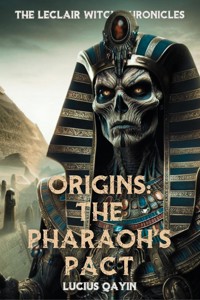
In the ancient sands of Egypt, where gods whisper and the veil between life and death is thin, there reigned a Pharaoh named Kokb'ael, wise, powerful, and beloved by his people. But beneath his golden rule lay a fear darker than the shadowed tombs of the underworld – a fear of mortality and a forgotten legacy.
"Origins: The Pharaoh's Pact" delves into the heart of Kokb'ael's obsession, as a prophecy of doom sets him on a perilous path. Desperate to transcend the grip of death and carve a name that would echo through the ages, Kokb'ael turns to forbidden magic, seeking the knowledge that lies hidden in the cryptic whispers of shadows and ancient texts.
His quest leads him to The Grey, an enigmatic figure bearing the secrets of immortality. But such power comes with a grave cost. As Kokb'ael embraces the dark arts, he transforms not only his fate but also the destiny of his kingdom. His pursuit of eternal life ushers in an era of darkness, casting a shadow over the lands he once nobly ruled.
Journey into a world where the line between hero and villain blurs, and where the pursuit of eternal life comes at an unimaginable price.
Das E-Book können Sie in Legimi-Apps oder einer beliebigen App lesen, die das folgende Format unterstützen:
Veröffentlichungsjahr: 2024
Ähnliche



















Origins: The Pharaoh's Pact
The Leclair Witch Chronicles
Lucius Qayin
ISBNs
978-1-951434-78-6 (Trade Paper)
Copyright © 2024 by Lucius Qayin
All rights reserved. No part of this publication may be reproduced, distributed, or transmitted in any form or by any means, including photocopying, recording, or other electronic or mechanical methods, without the prior written permission of the publisher, except in the care of brief quotations embodied in critical reviews and certain other noncommercial uses permitted by copyright law. For permission requests, write to the publisher via email at the address below.
Visit the official website of the Leclair Witch Chronicles at:leclairwitchchronicles.com
The story, all names, characters, and incidents portrayed in this production are fictitious. No identification with actual persons (living or deceased), places, buildings, and products is intended or should be inferred.
All interior pages artwork : Rasa
All Artwork © 2024 by Rasa. Used with permission.
First edition 2024
Published by:
Lux Occulta Press (an imprint of Bune Holdings)
Contents
The Beloved Pharaoh
Sunlight embraced the towering pillars of the Temple of Amun, gilding each hieroglyph with a halo of divine light. Kokb'ael stood, a figure carved from living stone, at the temple's heart where the sacred obelisk pierced the sky. He raised his arms, draped in linens finer than morning mist, and the gathered throng fell into a reverent hush.
"Children of the Nile," his voice resonated, "we gather under Amun's watchful gaze to honor the eternal cycle that sustains us. As the sun rises and sets, so too do we live by the grace of the gods."
A murmur of assent rippled through the masses like wind over papyrus fields. Kokb'ael's eyes swept across his people—artisans and scribes, soldiers and midwives—all united in veneration. The air was thick with incense, and flickering torches cast shadows that danced upon the sandstone walls.
The high priest approached, an ethereal figure with eyes that held secrets as old as the river itself. He offered Kokb'ael an ankh, its gold surface catching fire in the light. Kokb'ael clasped it to his chest—a silent promise to bridge life and death for his people.
"Great Pharaoh," the high priest intoned, "your wisdom rivals Thoth’s, your strength mirrors Horus’s. You are the shepherd of Ma'at, guardian of truth and order."
Kokb'ael inclined his head, acknowledging the words that wove around him like strands of fate. He turned to face an altar upon which rested offerings of grain and lotus flowers. The rich aroma mingled with the heat that radiated from throngs of bodies and from stones baking under Ra's relentless gaze.
"Let these gifts please you," he proclaimed to the heavens. "Let our hearts be weighed and found pure."
The crowd echoed his prayer, their voices a chorus swelling to fill every crevice of the temple. Kokb'ael could feel their adoration wrap around him like a shroud; it was tangible as the linen on his skin, heady as wine.
As he lowered his arms, silence reclaimed its dominion over noise. The ceremony neared its zenith with only one final act remaining. Kokb'ael approached a sacred pool reflecting a sky as blue as lapis lazuli. He knelt before it and touched his fingers to the surface. Ripples spread outward—a testament to his influence.
"This water," he spoke softly yet every ear caught his words, "is a mirror of Nut’s sky, a vessel for our reflections."
With great care, he lifted water in cupped palms and let it fall back in a glittering cascade. It was an act symbolic of renewal—a pledge for prosperity.
The people watched in awe as their Pharaoh invoked blessings from above and below; they saw not just a ruler but a conduit between them and eternity.
He rose again to his full height and scanned the horizon where desert met sky in an unending embrace. His heart swelled with pride for this kingdom of order amidst chaos—his kingdom.
Kokb'ael had mastered statecraft and war; now he sought mastery over time itself—to etch his name upon eternity's tablet. This ceremony was but one stone in a grand edifice he would build—a legacy that would outshine even these enduring monuments.
Yet as he gazed into that crowd of faces upturned like blossoms to the sun—each life fleeting—he felt an ember of disquiet stir within him. It whispered of impermanence in stark contrast to all this grandeur.
The high priest returned to his side bearing a staff topped with a carved falcon—the symbol of Horus’s watchful protection.
"May you soar above us all," he whispered.
Kokb'ael took up the staff, its weight grounding him amidst flights of ambition.
"Today we celebrate life," he declared to all who could hear him across this land sculpted by divine hands. "Tomorrow we shall strive to be worthy of it."
He descended from the dais amidst applause like thunder rolling across the valley—a sound that spoke both of love for their leader and reverence for forces beyond mortal ken.
As attendants rushed forward to escort him from this hallowed place back into the realm of governance and duty, Kokb'ael allowed himself one final glance at the obelisk reaching toward infinite blue—a pillar against time's relentless march.
And there he stood—Pharaoh Kokb'ael—beloved by those who flourished under his reign yet haunted by whispers that even gods might bow before destiny's might.
* * *
Amunhotep watched from the shadows of the colonnade, his eyes following Pharaoh Kokb'ael as he presided over the royal court with an air of quiet command. The high priest's heart swelled with a mixture of pride and trepidation, for in Kokb'ael's reign, Egypt had known prosperity and peace. Yet, the ever-looming specter of mortality that haunted the Pharaoh seemed to cast a longer shadow with each passing day.
Kokb'ael sat upon his throne, a magnificent edifice carved from ebony and adorned with gold leaf that shimmered in the light streaming through the high windows. His gaze, keen and penetrating, settled upon a petitioner, a farmer who approached with a plea for justice. The man's voice trembled as he recounted how his neighbor had diverted water from his portion of the Nile to irrigate his own fields.
"Great Pharaoh, life-giver like Osiris himself," the farmer implored, his hands outstretched in supplication. "Grant me redress that I may feed my family."
Kokb'ael listened, his expression inscrutable as stone. When he spoke, his voice resonated through the hall, both stern and compassionate. "Your grievance shall be heard," he decreed. "A just measure of water is the right of every tiller of soil in my realm."
Amunhotep marveled at Kokb'ael's ability to weave harmony from discord. The farmer left with gratitude etched into his weary face, assured that fairness would prevail.
The high priest pondered Kokb'ael's actions; such wisdom ensured stability within the kingdom's borders. In Kokb'ael’s judgments, Amunhotep saw reflections of Ma'at – truth, balance, order – principles that were the bedrock of Egypt.
Yet beneath this facade of equilibrium, Amunhotep sensed an undercurrent of unrest within Kokb'ael’s spirit. The Pharaoh’s fear of death was not simply a personal terror but a looming threat to all they had built.
Another petitioner came forward—a young woman with eyes like polished sapphires set against her olive skin. She accused a wealthy merchant of withholding wages for her work on his looms.
Kokb'ael turned to her with a gentleness that belied his imposing presence. "Speak your truth," he urged.
As she presented her case with eloquence that belied her humble station, Kokb'ael listened intently before delivering judgment: "Your labor is sacred as it sustains life and honors Hathor." He ordered restitution and offered the woman protection under his wing.
The crowd murmured their approval. Amunhotep watched their faces light up with reverence for their ruler—a reverence he shared but tempered with caution.
Within the silence of his own thoughts, Amunhotep often conversed with the gods, seeking guidance on how best to support Kokb'ael in these troubled times. It was clear that while Kokb'ael’s mind remained sharp as a spearhead when dealing with matters of state, it was frayed by thoughts of legacy and the relentless march of time.
The high priest knew too well that it was not just earthly guidance that Kokb'ael sought but also assurances against the inevitable decline into Duat—the afterlife. His quest for immortality had become more than a personal journey; it was entwined with the fate of Egypt itself.
As the day wore on and more citizens came forward—merchants disputing trade routes or priests seeking counsel on temple matters—Kokb'ael's responses remained just and measured. His knowledge seemed boundless as the sands of the desert; his rulings as fertile as the Nile’s inundation.
Yet there were moments when Amunhotep caught a flicker in Kokb'ael’s eyes—a distant storm brewing over an otherwise calm sea—and he knew that this quest for eternal life gnawed at him still.
The last petitioner was ushered forward: a scribe whose scrolls had been stolen by tomb robbers seeking treasures for black markets beyond Egypt's reach.
Kokb'ael leaned forward on his throne like Horus surveying his domain from on high. "We shall find these desecrators," he vowed, "for they steal not just from you but from all Egypt."
It was not merely justice Kokb'ael dispensed but protection over Egypt's heritage—over every story etched in stone or papyrus that proclaimed their place in eternity.
Amunhotep retreated further into shadow as dusk approached and torches were lit around the court, casting flickering light upon painted walls where gods and goddesses watched over their earthly domain. He reflected on Kokb'ael’s decisions—their wisdom radiating like sunlight across golden fields—knowing such acumen served as both sword and shield for their civilization.
Yet swords could dull and shields could crack; even Pharaohs were mortal men beneath their divine trappings. The balance they strove to maintain could tip at any moment should Kokb'ael succumb to darker paths in his search for everlasting life.
As night descended upon Thebes and stars emerged like jewels upon Nut’s eternal body arched across the sky, Amunhotep knew he must remain vigilant—for himself, for Kokb'ael, and for all Egypt.
In the recesses of his mind where prayers formed silent words before taking flight to join whispers of ancestors long passed, Amunhotep made an oath to uphold Ma’at in every heartbeat, every breath—even if it meant standing against Pharaoh himself should shadows consume his light.
* * *
Queen Neferu watched from the dappled shade of a sycamore fig, her gaze lingering on Kokb'ael and their young son, Tutankhaten, as they engaged in a rare moment of leisure by the lotus pond. The pharaoh's regal poise gave way to unguarded joy, his eyes alight with a warmth that seldom graced the public eye. She marveled at how the presence of their child could peel away layers of statehood and ceremony, revealing the man beneath the god-king facade.
Kokb'ael knelt beside Tutankhaten, guiding his small hands to fashion boats from papyrus reeds. His voice, usually resonant with decrees and proclamations, softened to a tender murmur that coaxed laughter from the boy's lips. Neferu's heart swelled; this was the Kokb'ael she cherished, whose love had once been as open as the endless skies above.
"Look, Father! The boat sails!" Tutankhaten exclaimed, his creation skimming across the water's surface.
Kokb'ael's laughter mingled with his son's delight. "A fine vessel, my prince. Worthy of Horus himself."
Neferu approached, her linen gown whispering against the sand. She settled beside them, her hand brushing Kokb'ael's shoulder in a familiar caress. His skin held the sun's warmth; his touch was a balm to her growing worries.
"May your days be as long and steadfast as the Nile," she said, her words both a blessing and a plea.
Kokb'ael met her gaze, and for an instant, she glimpsed the shadows that haunted him—the fear that tightened its grip on his heart with each setting sun. But it was fleeting; he masked it well beneath a smile as bright as polished gold.
"And may yours shine as brilliantly as Ra's chariot," he replied.
Together they watched Tutankhaten command his fleet of reed boats. Kokb'ael slipped an arm around Neferu's waist, drawing her close. In his embrace, she felt a fortress against uncertainty—a bulwark of strength and resolve.
The pharaoh spoke of dreams for their son—of a legacy that would outshine those of their forebears. Neferu listened, adrift in thoughts of time's relentless march. How cruel it was to steal moments like these and bury them beneath the sands of ages yet to come.
"My king," she ventured softly, "our people will speak of your deeds for generations. But let us not forget the joy found in simple pleasures."
He considered her words as if weighing them against all the riches in his treasury. "Indeed," he conceded at last. "It is here—in laughter and love—that we truly live."
Tutankhaten yawned, his day of play catching up with him. Neferu lifted him into her arms; he nestled against her chest with a contented sigh. Kokb'ael rose beside them, his silhouette tall and commanding even in this domestic idyll.
"Come," he said gently. "The day wanes; let us retire within."
As they walked back toward their opulent chambers, servants bowed low in reverence. They passed through halls adorned with vibrant frescoes depicting gods and kings—each one a testament to eternity's promise.
Neferu glanced at Kokb'ael; his features were etched with an ancient nobility that belied any semblance of mortality. Yet she knew too well the mortal man beneath—the husband who whispered endearments in the quiet night; the father whose heart swelled at his son's smallest achievements.
In their chamber's seclusion, Kokb'ael lingered by Tutankhaten's side as Neferu tucked him into bed beneath linens softer than whispers. The boy clutched a toy chariot gifted by his father—a miniature of one driven by mighty Pharaohs in triumphal processions.
Kokb'ael brushed a kiss upon Tutankhaten's brow—a benediction bestowed upon future greatness—and then joined Neferu by an open balcony overlooking their domain.
"The stars seem close enough to touch tonight," he mused aloud.
Neferu leaned against him; together they gazed upon the heavens where gods were said to dwell—immortal and unchanging.
"Do you ever dream of touching them?" she asked quietly.
Kokb'ael turned toward her; moonlight danced in his eyes—a luminescent pool deep enough to drown all fears.
"I dream of many things," he confessed with a vulnerability reserved for these stolen moments between dusk and dawn. "But my greatest desire is here before me."
Their lips met—a confluence where passion and tenderness flowed as one—and Neferu lost herself in the embrace of both her king and consort. She prayed silently that such tenderness would anchor him amid turbulent quests for power beyond mortal reach.
Yet even as they parted from their kiss, Neferu sensed an unspoken yearning within Kokb'ael—a thirst unquenched by empire or affection. It was this chasm she feared most—a gap that might one day swallow them whole if left unbridged by human touch.
For now, though, they stood united—a family enshrined within palace walls while outside lay an empire awaiting its ruler’s command at dawn’s first light.
* * *
Kokb'ael stood alone in his private chamber, a sanctuary of solitude within the vastness of his royal abode. The walls, adorned with frescoes of gods and pharaohs, bore witness to his silent contemplation. In the hushed stillness, he ran his fingers over the cool surface of the limestone, tracing the hieroglyphs that told tales of his forefathers—mighty rulers who had become gods in the eyes of their people.
He turned away from the wall and walked to a table where a single flame flickered in an oil lamp, casting shadows that danced like spirits in the dark. His reign had been just and prosperous, a golden era where art flourished and granaries overflowed. Yet beneath the veneer of grandeur, a serpent coiled in his breast—a growing dread that gnawed at him with each setting sun.
He let out a breath he hadn't realized he'd been holding and sank into his chair, carved from ebony and cushioned with leopard skin. It was here, away from prying eyes and honeyed words of courtiers, that he could shed the mantle of god-king and grapple with the man he was—a man who bled, who felt fear.
"Immortality," he whispered into the quiet. The word was a prayer, a curse. How many nights had he spent under the blanket of stars pondering this very notion? His legacy would be chiseled into stone, etched into history—yet what were these but fleeting shadows compared to the eternity he craved?
His thoughts drifted to his son, Tutankhaten—the flesh of his flesh. In him Kokb'ael saw both hope and a haunting reminder of life's inexorable march. He envisioned his son on the throne, basking in adoration; then as an elder statesman, wise but withering; and finally as a memory preserved by scribes for whom Tutankhaten would be but another chapter in Egypt's endless saga.
The lamp sputtered as if in response to his brooding thoughts. Kokb'ael's eyes narrowed on it. "Even you defy me," he murmured to the flame. It flickered again, indifferent to royal ire or sovereign will.
He rose from his seat and paced like a caged lion. The need for permanence consumed him more with each passing day. His achievements—the temples erected, battles won—were they not deserving of an eternal place in this world? The Pharaohs of old claimed godhood through deeds; perhaps it was time for him to forge his own path to divinity.
He stopped before a mirror wrought from polished bronze, its surface shimmering like a pool of water under moonlight. His reflection gazed back at him—a man in his prime with eyes that bore the weight of nations. Yet within those dark pools swirled whispers of mortality that no crown could silence.
"I am Kokb'ael," he declared to his image, to the universe beyond. "I will not be reduced to dust and echoes."
In that moment, something shifted within him—a tectonic grinding of soul against destiny's wheel. He felt both fortified by resolve and fractured by doubt.
The silence stretched on as if time itself had paused to listen to his heart's unrest. A breeze wafted through an open window, stirring papyrus scrolls and ruffling feathers on ceremonial fans—a breath from the gods or perhaps a mocking sigh from death itself.
A servant would have entered soon with wine or news from distant lands—but not yet. This was Kokb'ael's time alone with ambition's whisper and fear's cold touch.
"Legacy," he said aloud once more, tasting the word on his tongue like rare fruit. He wanted more than stone monuments or stories sung by bards; he yearned for life unending—to rule not just an empire but time itself.
A knock at the door interrupted his reverie; it was soft yet insistent—a harbinger that solitude would soon be broken.
"Enter," Kokb'ael commanded without turning from the mirror.
The door creaked open and there stood Nebetah, shrouded in her robes—the Seer whose visions peered through veils unseen by mortal eyes.
"Pharaoh," she intoned with reverence mingled with urgency. "The Chamber of Visions has revealed something you must see."
Kokb'ael regarded her reflection beside his own—a merging of worlds temporal and ethereal. In her presence lay answers—or perhaps deeper riddles wrapped in enigma.
He took one last look at himself—the man who would defy fate—and turned toward Nebetah with determination etched into every line of his being.
"Lead on," he said as they left behind shadows cast by lamplight for truths illuminated by prophecy's glow.
* * *
Kokb'ael stood at the threshold of his chamber, his silhouette etched against the backdrop of a night sky pregnant with stars. The world lay hushed as if in reverence to the hour when gods whispered secrets into the dreams of mortals. He stepped across the cool stone floor, each footfall a muted echo in the expanse of his solitude. With a heaviness settling over him like a mantle, he descended onto the ornate chaise, the gilded patterns glinting dimly in the moonlight.
As slumber claimed him, a restless energy thrummed through his veins, an undercurrent of unease that presaged visions not of this realm. In his dream, Kokb'ael wandered through an endless desert, his feet leaving no trace upon the shifting sands. Above, an indigo sky loomed—a vast canvas painted with constellations that told stories of creation and destruction.
He came upon a river, its waters black as obsidian, flowing with an authority that seemed to command even time itself to halt and pay homage. Upon its banks stood colossal statues bearing his likeness, but their eyes wept tears of blood that stained the golden sand beneath them. Kokb'ael reached out to touch one such figure, and as his fingers grazed the stone, it crumbled to dust before him.
A voice like thunder rumbled across the dreamscape, words weaving through the air: "Pharaoh of eternity, gaze upon your empire of sand."
The horizon erupted in flames; fire devoured his monuments and temples as though they were nothing but parchment in the hands of an indifferent scribe. Kokb'ael turned from the inferno only to behold a shadowy figure draped in regal garb identical to his own. The figure's face remained obscured by darkness, yet Kokb'ael sensed a gaze that bore into his very soul.
"You seek to defy death," the figure spoke with an authority that mirrored Kokb'ael's own when addressing his subjects. "Yet you are but a man."
Kokb'ael's heart pounded against his chest like a war drum calling for battle. "I am Pharaoh," he insisted with all the might his spectral voice could muster. "I shall reign beyond death's reach."
The figure approached until they stood but a breath apart. "To grasp eternity is to hold fire within your flesh," it warned. "Can you endure its searing truth?"
Kokb'ael steeled himself against fear's cold grip. "Show me this truth."
A silence fell heavy upon them as if even the winds dared not disturb this moment of reckoning.
The figure extended its hand—a hand not unlike Kokb'ael's own—and from its palm rose a lotus flower, pure and white as moonlight itself. Yet no sooner had Kokb'ael admired its beauty than it blackened and wilted before his eyes.
"This is your dynasty," said the figure, dropping the decayed bloom into the dark river where it was swallowed by hungry waters.
Kokb'ael felt something inside him fray at the edges like papyrus left too long in the sun. A surge of defiance welled within him; he would not accept this omen of demise.
"No!" His voice echoed across time and space, resonating with all the power vested in him by gods and men alike.
A rumble beneath his feet drew Kokb'ael's attention earthward as sands shifted violently—sand became sea became sky—until he stood amidst a whirlwind of chaos. The air crackled with magic ancient and raw; hieroglyphs danced like living things around him—omens carved by divine hands into reality's fabric.
Anubis emerged from the tempest—guardian of scales that weighed mortal hearts against truth's feather—his jackal head noble and severe as he appraised Egypt's ruler.
"Pharaoh," Anubis intoned solemnly. "You balance on eternity’s edge."
Kokb'ael met those ancient eyes with unyielding resolve. "I shall tip these scales in my favor."
With these words hanging between them like a vow etched into eternity itself, Anubis vanished into wisps of sand that dispersed on ethereal winds.
As dawn’s first light breached Kokb'ael’s chamber, prying open night’s embrace with fingers of gold and rose, he awakened—a gasp escaping lips unused to fear's taste. His heart thrummed against ribs too constricting for its wild cadence; sweat beaded upon skin that remembered flame’s kiss from dreams too vivid to be mere fancy.
He rose from his bed like one reborn from turmoil’s womb, carrying within him seeds of destiny foretold by omens both wondrous and dire. The dream clung to him like myrrh’s sacred scent—an omen wrapped in enigma—a riddle whose answer lay beyond life’s ephemeral veil.
As morning unfurled its radiant banner across Thebes’ waking streets below, Pharaoh Kokb'ael stood before his window gazing into daybreak’s promise. He understood then that dreams served as both portents and challenges—specters haunting tomorrow’s threshold with yesterday’s echoes.
This dream had been no idle fantasy spun by slumber’s loom but rather prophecy etched upon soul’s parchment—a prophecy foretelling dynasty's end yet also heralding journey's dawn.
And so it was that Kokb'ael knew he must embark upon a quest not charted on any map penned by mortal hands—a quest for immortality itself—a quest dictated by The Prophecy of Eternity that now pulsed within him like lifeblood coursing through ancient veins...
For though day had broken anew over Egypt's vast dominion, within Pharaoh Kokb'ael's heart there brewed a storm whose lightning was ambition and whose thunder was resolve—to transcend mortality’s shackles or perish amidst ruins wrought by time’s unyielding march...
The Ominous Prophecy
The Temple of Amun-Ra, a bastion of the divine, loomed over Thebes with an air of imperishable grandeur. Within its sanctified walls, High Priest Amunhotep had spent suns and moons in seclusion, seeking the counsel of the gods through the sacred art of divination. Amidst the flicker of oil lamps and the scent of burning incense, the silence bore down on him like a physical weight. Papyrus scrolls lay scattered around his hunched figure, cryptic hieroglyphs whispering secrets from an age long past.
Amunhotep's heart thrummed in his chest as his fingers traced the lines of an ancient text, its edges frayed with time. His eyes scanned the faded symbols, a growing unease knotting his stomach. He had unearthed a prophecy, one that seemed to claw its way out of obscurity with reluctant urgency.
"The sun shall retreat behind a veil woven by shadows; the falcon will falter in flight, and darkness shall claim the scepter from the hands of eternity."
The words echoed in Amunhotep's mind, a haunting refrain that threatened to fracture his resolve. This prophecy spoke not only of an end to Kokb'ael’s dynasty but of calamity that would shroud their land in sorrow.
Amunhotep pressed his palms against the cool stone floor, seeking balance. He could not unsee what had been revealed; nor could he ignore the tremors of dread that accompanied it. The responsibility to convey this omen to Kokb'ael lay heavy upon him like a shroud. How could he deliver such tidings to a ruler already ensnared by fear? Would it not drive Kokb'ael further down his perilous path?
A commotion outside his chamber drew Amunhotep from his reverie. Voices murmured in urgent tones—footsteps approached with haste. The priest straightened, steeling himself for what was to come.
The door creaked open and before him stood two figures draped in ceremonial linens—Kokb'ael and Nebetah, the Seer. Kokb'ael's presence commanded attention, his aura one of undeniable authority yet tinged with an undercurrent of vulnerability that only those close to him could discern.
"Amunhotep," Kokb'ael began, "your absence has been noted among the council. What dire matters keep you from our side?"
The High Priest rose to his feet with deliberate grace. "My king," he started, his voice steady despite the turmoil within, "I have been communing with the gods, seeking guidance for your quest."
Nebetah's gaze bore into him—a silent sentinel aware of truths yet spoken.
"And what answers do you bring?" Kokb'ael asked.
Amunhotep met Kokb'ael's eyes, a wellspring of loyalty and concern reflected in his own. "The gods have shared their wisdom through ancient texts," he said cautiously. "But their words are enigmatic and troubling."
Kokb'ael stepped forward, impatience etched onto his features. "Speak plainly, Amunhotep."
"The prophecy I have uncovered... it foretells great darkness," Amunhotep confessed. His voice did not waver though it felt as if he were tearing pieces from his soul with each word uttered.
Kokb'ael's expression darkened like storm clouds gathering over the Nile. "Darkness? What manner of darkness?"
Amunhotep hesitated but understood that half-truths would serve no one. "It speaks of an end—an end to your bloodline and a shadow cast over our kingdom."
A hush fell upon them like dusk descending upon the desert sands. Nebetah's lips parted as if to speak but no words came forth.
Kokb'ael turned away from them both, facing an alabaster statue of Amun-Ra that seemed to watch over them with impassive eyes.
"An end?" Kokb'ael murmured almost to himself.
Amunhotep stepped closer but maintained a respectful distance. "Great Pharaoh," he said softly, "the future is not set in stone; prophecies are warnings—not certainties."
Kokb'ael turned back to face him; his gaze had taken on a hardened edge—a flint strike away from igniting an inferno within.
"Warnings..." Kokb'ael trailed off before shaking his head as if to dispel doubt from his thoughts. "Tell me everything—the exact words inscribed on these scrolls."
Amunhotep recounted the prophecy verbatim as Kokb'ael listened intently. When he finished, silence hung between them—a shroud threatening to suffocate hope itself.
"Thank you for your diligence," Kokb'ael finally said, though gratitude seemed absent from his tone.
Amunhotep bowed slightly in acknowledgment but remained vigilant for any signs that might reveal Kokb'ael’s intentions.
Nebetah moved closer to Kokb'ael and whispered something too faint for Amunhotep’s ears—her presence offering solace or perhaps fueling resolve.
"My king," Amunhotep interjected gently, breaking their quiet exchange, "what course shall we chart? The gods may offer us guidance in thwarting this dark tide."
Kokb'ael glanced at Nebetah before returning his attention to Amunhotep. "We shall prepare," he declared with a newfound firmness in his voice.
"And what preparations do you deem necessary?" Amunhotep probed cautiously.
"We will delve deeper into these mysteries," Kokb'ael stated resolutely. "We will consult oracles and scholars alike until we unearth a means to turn aside this fate."
A flicker of relief warmed Amunhotep's heart; perhaps there was still hope to guide Kokb’ael away from the brink.
"As you wish," Amunhotep acquiesced with deference though apprehension lingered like morning mist upon the Nile.
With purposeful strides, Pharaoh Kokb’ael departed from the chamber alongside Nebetah—two figures bound by destiny’s intricate weave. Left alone amidst sacred texts and fading incense smoke, High Priest Amunhotep whispered a silent prayer for wisdom—to steer their king from shadows foretold toward light yet unseen.
* * *
Amunhotep's sandals whispered against the polished stone as he approached the royal court, the hems of his linen garments trailing like the tendrils of a willow in the breeze. His fingers, accustomed to the weight of sacred texts and the cool touch of temple walls, now clenched a papyrus scroll, a harbinger of fate's immutable decree. The court bustled with the usual throng of nobles and scribes, yet to Amunhotep, it felt as though he traversed an echoing chasm alone.
At the far end, Kokb'ael presided over his subjects, a golden figure on a throne carved from black basalt. His countenance bore the serenity of one accustomed to power, but Amunhotep saw past the facade—a ripple disturbed the still waters of Kokb'ael's gaze.
"Great Pharaoh," Amunhotep began, his voice resonating with the depth of his office. "I bear words etched by destiny's hand."
Kokb'ael motioned for silence, and the chatter in the court ceased as if swept away by an unseen zephyr. He beckoned Amunhotep forward with a subtle tilt of his scepter.
"Speak, High Priest. Let not apprehension stifle truth."
The words hung in the air between them like an unfurled banner. Amunhotep approached, and with each step, his heart weighed heavier. He unrolled the papyrus, its surface crackling with portent.
"The Prophecy of Eternity," he intoned, "speaks thus: A Pharaoh shall seek to conquer death's domain, to rule beyond life's sands. Yet in this quest, shadows shall rise—calamity will beset this land."
Kokb'ael leaned forward slightly; a crease formed between his brows as if sculpted by an invisible chisel.
"Calamity? What form does this shadow take?"
Amunhotep met Kokb'ael's eyes. "It is yet obscured," he confessed. "But it is entwined with your pursuit of eternal dominion."
Kokb'ael straightened, his posture regal as the pillars lining the hall. His voice emerged cool and measured. "You speak in riddles, Amunhotep. Shall I halt my search for fear of phantoms?"
"Not phantoms, my king," Amunhotep replied with a respectful bow. "But dire warnings from those who watch from beyond."
Kokb'ael's hand tightened around his scepter; a telltale sign to Amunhotep that his words struck deeper than any spear could pierce.
"Amunhotep," Kokb'ael said after a pause that stretched like the horizon beyond Thebes. "You are my trusted advisor. Your counsel has always guided me well."
Amunhotep dipped his head in acknowledgment but held firm in his resolve.
"And it is that counsel which compels me to caution you against steps that may lead us into darkness unseen."
Kokb'ael stood then; his movement was fluid as the Nile itself. The courtiers drew back as if compelled by an unseen force.
"You believe my desires tempt fate," Kokb'ael murmured as he descended from his dais.
"I believe your desires tempt more than fate alone," Amunhotep replied softly.
A murmur rustled through the court like papyrus reeds in a gentle wind; whispers of omens and prophecies passed from lip to ear among those who watched their Pharaoh confront destiny itself.
Kokb'ael paused mere steps from Amunhotep; their proximity bridged only by air and anticipation.
"You are versed in matters of gods and men," Kokb'ael conceded. "But is it not within my divine right to seek triumph over death? To offer our people a ruler unbound by life's frailties?"
"It is one thing to seek blessings for our people," Amunhotep said carefully. "Another entirely to wrestle with powers that were meant for gods alone."
The Pharaoh considered this, his eyes narrowing ever so slightly—a falcon eyeing its quarry from high above.
"And what would you have me do?" Kokb'ael asked at last. "Abandon my quest because fear whispers in shadows?"
Amunhotep remained steadfast as granite amidst Nile currents.
"Embrace wisdom over whispers," he urged. "Consider what legacy truly means."
A flicker crossed Kokb'ael's face—a brief cloud over a sunlit visage—as if grappling with unseen thoughts that ensnared him tighter than any serpent's coil.
"A legacy borne from fear is but a hollow echo," Amunhotep pressed on gently but firmly.
For a moment longer they stood thus—two pillars of Egypt caught within history's inexorable flow—until Kokb'ael turned away without another word and ascended back to his throne.
The court breathed again as if released from Anubis's grip, yet silence reigned supreme—a silence fraught with unspoken forewarnings and doubts sown upon fertile ground.
Amunhotep retreated without ceremony, knowing well that while today’s words had been heard, tomorrow’s actions remained shrouded within the veils woven by both gods and men.
* * *
The silence of the night wrapped around Kokb'ael's private chambers like a shroud. Moonlight streamed through the open balcony, painting silver glyphs on the stone floor. He sat, motionless, before an ebony desk strewn with papyrus scrolls and dimly lit by the flickering flame of a single oil lamp. The whispers of his own breath mingled with the soft rustle of palm leaves in the night breeze.
He unrolled a scroll—the Prophecy of Eternity—its ancient hieroglyphs seeming to pulse with a foreboding rhythm. Amunhotep's words echoed in his mind, a haunting refrain warning of doom should he persist in his quest for immortality. Kokb'ael’s hand hovered over the text as if to glean some hidden meaning from its curves and lines.
Memories of his ancestors haunted him, their once-glorious reigns reduced to etchings on stone and tales told to pass time. Would his own name one day be tossed carelessly in the wind, spoken with indifference by generations yet to come? The thought tightened its grip around his heart like the coils of Apep, the serpent god of chaos.
A father's love for his son warred with the Pharaoh's hunger for eternity. Tutankhaten, his heir, deserved a legacy free from shadows, yet how could Kokb'ael secure such a future if all he built crumbled into dust with his passing?
"Great Amun," he murmured into the silence, "grant me wisdom to see beyond this mortal veil."
The air remained still; no divine whisper graced his ears.
A shiver traced Kokb'ael's spine as he rose and paced toward the balcony. Below, Thebes lay cloaked in darkness, its people asleep, oblivious to their ruler's turmoil. The eternal stars bore silent witness to his unrest.
He recalled Neferu's gentle touch earlier that day by the lotus pond—their son laughing in her arms—a momentary balm to his roiling thoughts. Yet even as her eyes met his with unspoken understanding, he knew she could not fathom the depths of his fear.
How fleeting was their joy when set against eternity? How brittle their love against the march of time?
Kokb'ael clenched the balcony’s rail, feeling its coolness seep into his flesh. In that moment, he saw himself as a mere mortal—a man whose breath could be stilled by time’s relentless advance. His temples could crumble; his deeds could fade into obscurity.
No.




