



1,99 €
Niedrigster Preis in 30 Tagen: 0,00 €
Niedrigster Preis in 30 Tagen: 0,00 €
Mehr erfahren.
- Herausgeber: Musaicum Books
- Kategorie: Gesellschafts- und Liebesromane
- Sprache: Englisch
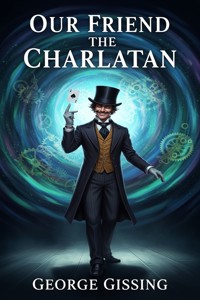
George Gissing's 'Our Friend the Charlatan' is a captivating exploration of the complexities of human nature and the struggles of individuals against societal expectations. Set in late 19th century England, the novel delves into the themes of deception, self-discovery, and the masks we wear in different social circles. Gissing's prose is reflective of the realist tradition, showcasing his keen eye for detail and insightful character portrayals. The literary context of the novel highlights the tensions between appearance and reality in a rapidly changing society. Each character is masterfully developed, adding depth and nuance to the narrative. Gissing's work stands out as a poignant commentary on the facades we present to the world and the consequences of living a life built on lies. George Gissing, known for his realistic depictions of English society and insightful character studies, drew inspiration from his own experiences to craft this novel. Recommended for readers interested in compelling storytelling and intricate character dynamics in a historical setting. In this enriched edition, we have carefully created added value for your reading experience: - A succinct Introduction situates the work's timeless appeal and themes. - The Synopsis outlines the central plot, highlighting key developments without spoiling critical twists. - A detailed Historical Context immerses you in the era's events and influences that shaped the writing. - A thorough Analysis dissects symbols, motifs, and character arcs to unearth underlying meanings. - Reflection questions prompt you to engage personally with the work's messages, connecting them to modern life. - Hand‐picked Memorable Quotes shine a spotlight on moments of literary brilliance. - Interactive footnotes clarify unusual references, historical allusions, and archaic phrases for an effortless, more informed read.
Das E-Book können Sie in Legimi-Apps oder einer beliebigen App lesen, die das folgende Format unterstützen:
Veröffentlichungsjahr: 2020
Ähnliche













Our Friend the Charlatan
Books
Table of Contents
Introduction
In Our Friend the Charlatan, George Gissing examines how, in a society hungry for grand schemes and persuasive personalities, the glitter of confidence and intellect wrestles with the patient, less marketable claims of honesty and duty, as ambition threads its way through drawing rooms, newspapers, and party offices, testing the limits of self-invention while exposing the costs of performance—for those who dazzle, those who believe, and those who suspect but still hope—so that every conversation, favor, and flirtation becomes a negotiation between appearance and substance, practical opportunity and moral steadiness, private desire and the public theatre that rewards the boldest pose.
First published in the early twentieth century, this novel belongs to Gissing’s late phase as a major practitioner of English realism, and it unfolds across the social geography of England, from provincial households to metropolitan offices where influence is brokered. Without resorting to melodrama, Gissing applies the instruments of social comedy and psychological scrutiny to a world shaped by class expectations, money, and political ambition. The book is recognizably of its moment—poised between the Victorian and the emerging Edwardian eras—yet it carries the cool exactitude and moral curiosity that characterize his work, offering a study of character under pressure within a changing public culture.
The premise follows a clever, self-assured man who advances a brisk doctrine for national improvement and sets about turning his originality into a career, seeking patrons, platforms, and a partner whose resources or standing might accelerate his rise. He arrives in circles where hospitality, conversation, and discreet calculation coexist, and he quickly becomes the guest everyone watches, admires, or questions. The plot traces his maneuvers, the friends and hosts who facilitate or challenge them, and the women who must read his mixture of charm and purpose. The early chapters establish the delicate transactions on which reputations, alliances, and futures precariously depend.
Readers encounter a measured, urbane narrative voice that keeps irony close but seldom cruel, layering scenes with careful dialogue, social detail, and interior hesitation rather than sensational turns. Gissing’s sentences are exact and quietly tensile; the effect is cumulative, as rooms, roads, and conversations gather significance. The tone oscillates between amused detachment and poignant sympathy, permitting readers to feel the attraction of panache while noticing the seams of calculation. The novel moves at a judicious pace, attentive to small shifts of motive or opportunity, and its suspense arises less from shocks than from the slow clarification of what people mean, want, and dare.
At its center stands the theme announced by the title: the cultural uses and personal costs of charlatanism, not as crude fraud but as a pervasive social tactic in which self-promotion, half-belief, and rhetoric achieve tangible results. The novel explores how ideas travel when attached to an attractive personality, how money and marriage mediate principle, and how friendship can serve as both conscience and convenience. Questions of gender surface in the negotiations surrounding courtship and influence, where admiration risks becoming investment. Around these run Gissing’s steady concerns with class mobility, intellectual fashion, and the ethics of expediency in a political environment built on persuasion.
As a document of its time, the book registers the pressures of an expanded public sphere in Britain, where reputation could be manufactured through talk, print, and the right addresses, and where political life courted cleverness as much as conviction. It anatomizes the intermediary spaces between private feeling and public performance, showing how polite society can incubate policy as readily as gossip. In this light, the novel offers more than a cautionary tale; it is an anatomy of a culture learning to reward style as a form of authority. That diagnosis, rendered with restraint, makes its historical scrutiny enduring rather than quaint.
For contemporary readers, the portrait is bracingly familiar: the calibration of persona, the trade in influence, the allure of a system that promises reform while advancing the reformer. In an age of personal branding, opinion platforms, and accelerated advocacy, Gissing’s study of sincerity under the spotlight remains incisive, inviting scrutiny of how we evaluate leaders, experts, and even friends. Yet the novel also attends to sympathy and fallibility, recognizing that the wish to excel or persuade need not cancel the wish to be good. Its enduring value lies in that tension, which urges readers to test charisma against character, and success against responsibility.
Synopsis
George Gissing’s Our Friend the Charlatan follows Dyce Lashmar, a poised and persuasive young man determined to rise without the ballast of achievement. Entering a provincial world of estates, committees, and drawing rooms, he advances a fashionable, vaguely “scientific” social doctrine as the badge of his originality. His ambitions find a stage at the house of an aging grande dame, whose interest in modern ideas and local influence offer him a path toward Parliament. Around this setup, Gissing surveys the mechanisms of patronage, the brittle courtesies of respectability, and the way intellect—real or simulated—can be traded as social capital.
Lashmar’s first success is to impress the formidable Lady Ogram, a woman whose imperious will and long memory dominate county society. She delights in the promise of a new man who might embody her views and outmaneuver old rivals. Through sustained conversation and strategic flattery, Lashmar secures her sponsorship, and with it the possibility of a parliamentary candidacy in a contested borough. He positions his doctrine as practical reform while keeping it conveniently elastic. The household’s clear-eyed secretary, indispensable to Lady Ogram’s affairs, recognizes both Lashmar’s fluency and his evasions, and becomes a quiet counterweight to his self-promotion.
The social circle around the estate expands to include a wealthy young heiress, earnest and impressionable, whose enthusiasm for progress dovetails with Lady Ogram’s plans. Lashmar, keenly alert to advantage, calibrates his charm to capture both political momentum and personal security. Gissing sets a delicate triangle of motive and perception: an heiress eager for a cause, a patroness hungry to shape events, and a secretary who weighs appearances against character. The novel’s drawing-room debates and country walks become tests of sincerity, where the tones of courtship and the language of reform blur, and the risks of self-fashioning multiply.
Beyond the estate, Lashmar attends to his origins and necessities. Visits to his modest family background reveal the pressure of income and the embarrassment of dependency—a spur to his rhetoric about efficiency, vitality, and leadership. He seeks allies among provincial notables and metropolitan acquaintances, cultivating journalists and clubmen disposed to celebrate modern “thought.” Gissing’s satire coolly observes how jargon and confidence create the impression of system. As Lashmar’s doctrine gains a hearing, so do rumors and half-forgotten missteps that could puncture his image. The narrative weighs the durability of personal myth against the stubborn record of past conduct.
Campaign machinery begins to turn: canvassing lists, committee rooms, and careful positioning before local factions. Lady Ogram’s network mobilizes, while the secretary’s organizational acumen keeps promises and personalities from colliding—at least for a time. Public meetings showcase Lashmar’s oratory, and Gissing renders electoral politics as theater, rehearsed in salons and performed from platforms. The eager heiress lends glamour and attention, further fusing private aspiration with public ambition. Yet each display sharpens the question at the novel’s core: whether a creed designed to impress can bear the scrutiny of those who expect substance, and whether charisma can substitute for character.
With expectations rising, so does scrutiny. Correspondence, confidences, and long-standing loyalties threaten to intersect at awkward angles. The patron’s health and intentions cast a legal and moral penumbra over every promise. The secretary confronts the obligations of service against the claims of truth, measuring the costs of intervention. The heiress, stepping into the glare of politics, must learn to distinguish zeal from judgment. Lashmar’s maneuvering tightens around him: to retain patronage, to secure money, to preserve a reputation for originality without committing to hard particulars. Gissing maintains tension while holding major turns in reserve, emphasizing the incremental price of expedience.
Our Friend the Charlatan endures as a clear-eyed study of ambition in a society that rewards style, connections, and ready slogans. Gissing probes how ideas become currency, how patronage shapes public virtue, and how intelligent women navigate structures that often misprize their discernment. Without relying on melodrama, the novel dissects the fragile compact between private motives and public claims. Its restraint about outcomes keeps attention on the abiding questions: what integrity can survive under the glare of expectation, and what remains when the performance ends. The result is a quietly unsettling portrait of charisma tested by credibility and time.
Historical Context
Published in 1901, George Gissing’s Our Friend the Charlatan is set amid the closing years of late Victorian Britain and the threshold of the Edwardian era. Its action unfolds largely in provincial England, where country houses, borough councils, and party associations shape public life. The House of Commons remains the national stage, yet local institutions—county councils (created 1888) and elected parish and district councils (1894)—mediate ambition and patronage. The ongoing Second Boer War (1899–1902) permeates newspapers and drawing rooms, sharpening talk of duty and empire. Against this backdrop of respectable institutions and heightened public opinion, Gissing examines aspiration within a changing political society.
British politics in the 1880s–1900s had been reshaped by the Third Reform Act of 1884 and the Redistribution of Seats Act of 1885, which expanded the electorate and redrew constituencies. Local party “caucuses” and constituency associations professionalized selection and canvassing, while national leadership rested with Conservative governments under Lord Salisbury for most years from 1886 to 1902. The Liberal Party remained divided after the Home Rule crises, and organized labour took a new form with the Labour Representation Committee in 1900. In the shires and market towns, prospective candidates relied on local patrons, subscriptions, and press favor to manufacture credibility.
The social landscape combined entrenched landed power with the assertiveness of industrial wealth. Country estates, hunting seasons, and county society still conferred status and the means to influence elections, yet prosperous manufacturers and financiers increasingly purchased houses, sponsored charities, and sat on councils. Philanthropy, dinners, and drawing-room alliances offered paths into public life, especially in provincial settings where personal reputation counted heavily. Class mobility was visible but constrained by etiquette, educational credentials, and expectations of deference. Such conditions made charismatic self-presentation valuable, enabling newcomers to court patrons while professing public service—an atmosphere that a novelist like Gissing could observe with skeptical precision.
The intellectual climate of the fin-de-siècle prized science, system, and public lecturing. Evolutionary explanations and the sociology of Herbert Spencer had a wide lay readership; Francis Galton had coined “eugenics” in 1883; and popular journals relayed debates over heredity, determinism, and social reform. As literacy increased and mechanics’ institutes, debating societies, and extension lectures spread, audiences sought sweeping schemes for national improvement. The Fabian Society (founded 1884) promoted gradual reform through ideas and administration, while many politicians borrowed scientific rhetoric to certify their programs. This environment rewarded confident theorists who could translate fashionable generalities into platforms, pamphlets, and applause.
Women’s status was evolving in law, education, and civic participation. The Married Women’s Property Acts (1870, 1882) allowed wives to own and control property, while universities and women’s colleges expanded access to degrees and examinations. Women had served on elected school boards since 1870, and the Local Government Act of 1894 enabled women, including some married women, to vote in and sit on parish and district councils. The National Union of Women’s Suffrage Societies formed in 1897 to coordinate constitutional campaigning. Hostesses, philanthropists, and wealthy widows exercised considerable informal influence in candidate selection, charitable agendas, and the tenor of provincial politics.
Economic and spatial shifts framed provincial life. The long agricultural depression (c. 1873–1896) weakened many rural incomes, even as towns grew with industry, retailing, and services. Municipal improvement—street lighting, sanitation, libraries—was a civic ideal; Birmingham under Joseph Chamberlain in the 1870s had pioneered municipalization of gas and water, a model widely discussed thereafter. Railways knitted market towns to London; the telegraph and an expanding postal system quickened correspondence and political organizing. Such infrastructure widened the reach of reputation: a local speech or controversy could travel nationally within days. The country house, however, still supplied gatekeeping, hospitality, and electoral networking.
Imperial affairs exerted a strong pull on opinion. The Second Boer War stirred patriotic rallies, recruiting, and heated debates over conduct and cost; celebrations like “Mafeking Night” in May 1900 became emblems of jingoism. The 1900 “Khaki election” returned a large Conservative majority, confirming how wartime sentiment could shape careers. Mass-circulation dailies—the Daily Mail (founded 1896) and Daily Express (1900)—amplified personalities and slogans, rewarding those who supplied memorable copy. With foreign policy, tariffs, and national efficiency under discussion, ambitious figures learned to align public utterance with the mood of the halfpenny press, a lesson Gissing’s milieu makes unmistakable.
Literarily, the novel belongs to the late-Victorian realist tradition that anatomized professional ambition and social pretense, akin to Anthony Trollope’s political novels yet sharpened by Gissing’s austerity. Gissing, a meticulous observer of class and the pressures of the literary market, often criticized the commodification of culture and the sway of superficial success. Our Friend the Charlatan deploys provincial politics, salons, and schemes to scrutinize the allure of system-building and the temptations of patronage. Without rehearsing plot, its satire reflects fin-de-siècle Britain’s fusion of aristocratic gatekeeping, new money, mass media, and ideological fashion, questioning how conviction survives in a culture of advancement.




