


0,99 €
Mehr erfahren.
- Herausgeber: Maria Peitcheva
- Kategorie: Geisteswissenschaft
- Sprache: Englisch
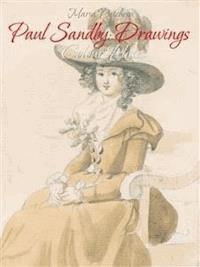
Paul Sandby (1731 – 1809) was an English map-maker turned landscape painter in watercolors, who, along with his older brother Thomas, became one of the founding members of the Royal Academy in 1768.His skills were applauded by fellow artists such as Thomas Gainsborough: if one wanted "real Views from Nature in this Country", declared Gainsborough in 1764, there was no better artist than Sandby, who frequently "employ'd his pencil that way."He also etched a large number of plates after his own drawings, a hundred of which were published in a volume in 1765. In 1760 he issued twelve etchings of The Cries of London. Sandby made extensive journeys around Britain and Ireland, sketching scenery and ancient monuments. He made his first recorded visit to Wales in 1770, later (1773) touring south Wales with Sir Joseph Banks, resulting in the 1775 publication of XII Views in South Wales and a further 12 views the following year, part of a 48-plate series of aquatint engravings depicting Welsh scenery commissioned by Banks.Sandby was described in his obituaries as "the father of modern landscape painting in watercolors"
Das E-Book können Sie in Legimi-Apps oder einer beliebigen App lesen, die das folgende Format unterstützen:
Veröffentlichungsjahr: 2015
Ähnliche
Paul Sandby: Drawings
Colour Plates
By Maria Peitcheva
First Edition
*****
Paul Sandby: Drawings Colour Plates
*****
Copyright © 2015 Maria Peitcheva
Foreword
Paul Sandby (1731 –1809) was an English map-maker turned landscape painter in watercolors, who, along with his older brother Thomas, became one of the founding members of the RoyalAcademy in 1768.
Sandby was born in Nottingham, and baptised there in 1731. In 1745 he moved to London where he followed his brother Thomas in obtaining an appointment in the military drawing department at the Tower of London. Following the suppression of the Jacobite rebellion of 1745, Sandby was employed to assist in the military survey of the new road to FortGeorge, and of the northern and western parts of the Highlands, under the direction of Colonel David Watson. He was later appointed draughtsman to the survey.
While undertaking this commission, which included preparing designs for new bridges and fortifications, he began producing watercolor landscapes documenting the changes in Scotland since the rebellion, and making sketches of Scottish events such as the hanging in Edinburgh of soldier-turned-forger John Young in 1751.
He left his post with the survey in 1751, and spent some time living with his brother, who had been appointed Deputy Ranger of WindsorGreatPark. There he assisted his brother, and made a series of drawings of the castle, the town, and its neighborhood, which were purchased by Sir Joseph Banks. His skills were applauded by fellow artists such as Thomas Gainsborough: if one wanted "real Views from Nature in this Country", declared Gainsborough in 1764, there was no better artist than Sandby, who frequently "employ'd his pencil that way."
He also etched a large number of plates after his own drawings, a hundred of which were published in a volume in 1765. In 1760 he issued twelve etchings of The Cries of London. He also made many plates after other artists, including his brother. In 1753–4 he published, anonymously, several single caricatures satirising William Hogarth. He returned to the attack in 1762, and produced other satirical work sporadically throughout his career.
It is not recorded how long Sandby lived with his brother at Windsor, but he is said to have spent part of each year in London, and much of his time was probably spent on sketching excursions. On 3 May 1757 he married Anne Stogden, and by 1760 he was settled in London.
In 1760 he contributed to the first exhibition of the Society of Artists. He exhibited regularly with the society until the foundation of the RoyalAcademy eight years later, and was one of its first directors when it was incorporated in 1765. In 1768, he was appointed chief drawing master to the RoyalMilitaryAcademy at Woolwich, a position he retained until 1799. On the formation of the Royal Academy in the same year he was one of the 28 founder-members nominated by George III. He often served on its council, and contributed to all but eight of the exhibitions held between 1769 and 1809.
Sandby made extensive journeys around Britain and Ireland, sketching scenery and ancient monuments. He made his first recorded visit to Wales in 1770, later (1773) touring south Wales with Sir Joseph Banks, resulting in the 1775 publication of XII Views in South Wales and a further 12 views the following year, part of a 48-plate series of aquatint engravings depicting Welsh scenery commissioned by Banks.
He died at his house in Paddington on 7 November. 1809, and was buried in the burial-ground of St George's, Hanover Square. He was described in his obituaries as "the father of modern landscape painting in watercolors"
Drawings and Prints
A Dead Bird
Watercolor and graphite on medium, cream, slightly textured laid paper
Detail
A Family in Hyde Park
Gray wash, graphite with pen and gray and black ink on medium, cream, slightly textured laid paper
Detail
Detail
Detail
A Girl with a Watering Can facing left: Sarah Hough, Mrs. T.P. Sandby's Nursery Maid
1805, Gray wash, pen and gray ink and graphite on moderately thick, cream, slightly textured laid paper




