


24,99 €
Mehr erfahren.
- Herausgeber: via tolino media
- Kategorie: Geisteswissenschaft
- Sprache: Englisch
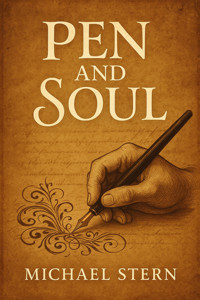
Pen and Soul is a profound journey into the art of handwriting as a gateway to inner transformation and timeless wisdom. In this evocative work, the reader is invited to explore how the simple act of placing pen to paper becomes a sacred ritual—a melding of the physical and the spiritual that transcends mere communication. The book delves into the history of handwriting, from ancient scripts etched in stone and clay to the luminous calligraphy of monastic traditions, revealing how each stroke of ink carries with it the echoes of personal emotion, cultural heritage, and philosophical inquiry. Drawing upon a rich tapestry of historical anecdotes, spiritual practices, and personal reflections, Pen and Soul offers a meditative examination of the power inherent in our handwritten words. It shows how handwriting not only records fleeting thoughts but also crystallizes the essence of our innermost selves, acting as a mirror of our soul. The narrative seamlessly weaves together themes of mindfulness, self-reflection, and creativity, encouraging readers to reclaim the lost art of manual writing in a digital age. Each chapter unveils a different dimension—be it the ritualistic copying of sacred texts, the transformative impact of personal diaries, or the mystical resonance found in ancient calligraphic symbols. The book is a heartfelt invitation to rediscover the personal intimacy of handwritten expression. Whether you are a lover of history, a seeker of spiritual depth, or simply someone yearning for a more mindful, creative life, Pen and Soul promises to enrich your perspective. Its eloquent prose and engaging narrative will transport you into a world where every letter, every curve of the pen, is imbued with purpose and meaning. If you long for a deeper connection to your own thoughts and emotions, or if you wish to explore the intricate interplay between art, memory, and spirituality, this book is your gateway. Pen and Soul not only teaches you about the enduring legacy of handwriting but also inspires you to let your own pen become a tool of transformation. Embrace the journey, let your soul flow onto the page, and discover the power of your own written words. Enjoy reading!
Das E-Book können Sie in Legimi-Apps oder einer beliebigen App lesen, die das folgende Format unterstützen:
Veröffentlichungsjahr: 2026
Ähnliche

















Introduction
Handwriting weaves a quiet thread through human history, a distinct reminder that each generation clings to the tangible power of ink meeting surface. Even as technologies rapidly evolve, this gentle art—anchored in the subtle press of pen to paper—continues to reverberate through our collective memory. People across the world, from ancient scribes carving cuneiform into clay tablets to modern enthusiasts exploring digital pens, have always sought to transform intangible thought into visible script. This capacity to mold consciousness into shapes, loops, and lines has carried everything from epic chronicles of empires to tender letters of love. Yet beyond these purely practical functions, handwriting carries a spiritual, philosophical, and emotional force that beckons those who slow down long enough to watch each letter unfold under the hand’s guidance.
In a world often defined by instant messaging and typed text, one might question the relevance of pen and paper. But when we investigate the deeper layers of writing, we discover that handwriting offers something more elemental and untranslatable. The same physical friction that differentiates pen from keyboard also fosters a sense of deliberation and sincerity. The subtle quirks of each line—slants, thicknesses, swirls—reflect emotional undercurrents that typed words often flatten. Within the carefully curved letters, something intangible emerges: an echo of the body’s presence, a breath of the writer’s inner state, and a direct route from heart to text.
Across civilizations, handwriting has served as both guardian and vessel of vital knowledge. Ancient scribes recognized that the ephemeral nature of speech demanded a stable medium to ensure continuity. Their clay tablets and etched inscriptions far exceeded the ephemeral moment of conversation. Monks in medieval scriptoria believed that each stroke within an illuminated manuscript functioned as a devotional act, merging prayer and artistic discipline. In the Islamic world, calligraphers approached the script of Qur’anic verses with reverence, perceiving it as a direct manifestation of divine revelation in visual form. Chinese or Japanese scholars saw the brush’s ink as an outflow of qi, the life force that unites body, mind, and cosmos. In each instance, handwriting became a doorway, merging the ephemeral swirl of thought with the timeless realm of tradition, spirit, and memory.
People reading these texts throughout history often felt an uncanny intimacy, touching not just the words but also glimpsing the scribe’s individuality. The loops and angles of a letter, the faint corrections or uncertain strokes, could convey emotional texture in ways that standardized print never could. Within diaries and personal letters, handwriting gave shape to the writer’s vulnerability. Those who later encountered such manuscripts sensed the original soul behind the script, bridging centuries through the personal signatures of fear, hope, or longing. Indeed, diaries of explorers crossing polar ice, soldiers stationed in muddy trenches, or ordinary people documenting nights of quiet heartbreak continue to resonate. The physical immediacy of each page ties the text firmly to the unique moment in which it was created, forging a bond that purely digital forms struggle to replicate.
Yet handwriting is not confined to preserving the past. In contemporary contexts, it continues to form the heartbeat of personal introspection, activism, communal rites, and creative breakthroughs. The bullet journal phenomenon merges daily scheduling with mindful reflection, each penned line uniting the rational structure of calendars with the personal flair of doodles and decorative script. Handwritten letters in times of crisis can restore a sense of shared humanity. The personal voice that emerges, shaped by the writer’s hand, speaks to readers in an unfiltered, deeply authentic tone. Even in a single child’s wobbly attempt at forming words, there is a testament to the labor of learning that each generation undertakes, a vow of continuity in how knowledge and identity are shaped.
Many reflect on the spiritual potential of writing by hand. Mystics in various traditions talk about “automatic writing” or experiences where the pen seems moved by a greater force—be it angels, cosmic intelligence, or the depths of the unconscious mind. Calligraphers disciplined by years of practice may slip into meditative states, describing how each brushstroke transcends conscious manipulation to become an expression of universal harmony. Researchers speak of “flow states” that unify body and mind, a phenomenon that can surface when handwriting demands enough focus to quiet mental chatter. In these moments, the pen becomes a channel, and the words emerge with an ease that verges on the mystical. Whether one attributes such experiences to neurological processes or metaphysical energies, the result feels deeply transformative, as though the lines on paper crystallize truths that might remain forever elusive if left swirling in ephemeral thought.
Historically, handwriting played a critical role in shaping social movements. Before printing was ubiquitous, clandestine letters, diaries of dissenters, or penned pamphlets circulated surreptitiously, fueling debates and inspiring moral stances that powered revolutions. The intangible moral force behind these personal lines often outweighed the complexities of mass-printed tracts, precisely because of their raw authenticity. The knowledge that a real individual risked censure or punishment to convey these lines added weight to each sentence. Even in modern activism, heartfelt letters to politicians or calligraphically styled protest signs can cut through impersonal bureaucracies, reminding officials and onlookers of the personal realities behind abstract policy.
Handwriting also intersects intimately with memory. The diaries of explorers or soldiers, the scribbled logs of scientists, or the personal daybooks of grandparents stand as crucial threads tying together collective knowledge. Reading them, we do not only glean data—though the data can be invaluable—but also sense the emotional tenor shaping that data’s recording. The shaky script of a weary traveler or the bold scrawl of a triumphant inventor can convey contextual clues about the mindset animating each observation. When archivists preserve these texts, they preserve entire mental universes that might otherwise fade. Each page becomes a time machine, whisking future eyes into the private vantage of someone who lived centuries before, bridging ephemeral personal existence and a universal timeline.
In spiritual contexts, the copying of scripture or mantras by hand often stands as an act of devotion or meditation. Across traditions—Buddhist sutra-copying, Jewish scribes forming each letter of the Torah with precision, Christian monks transcribing biblical passages, Islamic calligraphers crafting Qur’anic verses—there is a shared conviction that the physical motion of writing merges with spiritual reverence. The act becomes ritualized, shaping a hallowed space where body, mind, and sacred text unify. A single misdrawn stroke might prompt the scribe to recheck the text or realign posture, acknowledging the moral weight of each letter. Observers who see these scribes at work describe a profound stillness that envelops the scriptorium or calligraphy studio, as though an invisible presence rests within the interplay of pen, ink, and prayer.
Even in wholly secular forms, personal diaries can embody a quasi-sacred dimension, capturing the raw process of self-exploration. Writers returning to old diaries often recall the version of themselves who penned those lines—perhaps younger, more naive, or brimming with lost passions. It can be humbling to reread confessions of heartbreak or euphoria, to revisit ephemeral dreams that have since been fulfilled or abandoned. The text thereby acts as a mirror that transcends time, unveiling illusions once held or showcasing the seeds of present accomplishments. The intangible effect can be a deepening sense of self-understanding, a continuity that extends through the writer’s evolving identity.
Cultural identity, too, finds anchorage in handwriting. Nations or ethnic communities sometimes champion distinctive scripts, seeing them as markers of collective pride and identity. The resistance to purely typed or Romanized forms arises from a desire to preserve intangible cultural flows encoded in older alphabets. The shape of each letter, the direction of each stroke, and the required pen movements reflect centuries of aesthetic and linguistic evolutions. When taught to children in diaspora communities, these scripts become more than language tools—they are vessels of ancestry that forge emotional ties to one’s homeland or lineage. The intangible hush in a classroom where children labor over these scripts signals an inherited dignity that transcends the mechanical skill of letter formation.
In creative writing contexts, some authors prefer to draft by hand. They speak of a synergy that emerges when the hand’s pace matches the mental flow, preventing the rapid corrections that might hamper imaginative leaps. The slowness can lead to deeper authenticity, as the writer has time to feel each sentence’s emotional color. This approach is not universal—plenty of authors thrive on keyboards—but it remains a treasured method for those who prize the intimate dance of manual composition. Posthumous studies of famous writers’ notebooks often reveal the messy scrawl of initial ideas, side notes, or doodles that eventually crystallized into beloved narratives. Observers see that these ephemeral scribbles, though seemingly chaotic, served as stepping stones for creative brilliance.
Psychological well-being also ties intimately to handwriting for many. Therapists advise clients to maintain “stream-of-consciousness” journals, letting the pen race without pause for judgment or editing. The act is said to release pent-up anxieties, granting them physical shape on paper. Once externalized, these worries or confusions can be more calmly examined, akin to confronting shadows that melt under the light of conscious scrutiny. The intangible result is emotional relief, insight, or the impetus for constructive change. Over time, the daily discipline of journaling fosters mental resilience, reminding people that the simplest lines can hold the key to unraveling internal knots.
In activism or volunteer work, writing letters to isolated individuals—like prisoners, seniors, or the terminally ill—demonstrates how the intangible empathy behind each letter can brighten lonely hours. Recipients consistently highlight the difference between an emailed note and a physically handwritten card: the latter carries evidence of time spent, of warmth pressed into pen lines. This intangible “human presence” can combat alienation, forging real psychological support. Volunteers realize that, though they may never meet the person receiving their letter, a bridge of caring has been erected, intangible yet undeniably felt. That sense of bridging is precisely where handwriting thrives.
When communities face crises—natural disasters, mass conflicts—grassroots letter-writing campaigns can unify hearts, gather global attention, or provide moral scaffolding for those afflicted. Strangers pour out comfort or solidarity in penned messages, each letter physically traveling to a region in need. Recipients read these messages and discover that the world outside their suffering acknowledges them. The intangible synergy of that support can re-instill hope, forging small but crucial changes in morale. Over time, these gestures can accumulate, shaping how entire communities recover or galvanizing further humanitarian action.
Scholars also see that handwriting fosters discipline and introspection in schools. Students who copy out poems or historical texts by hand may find themselves absorbing the deeper resonance of the content. The slow, measured shaping of each line invites a more contemplative relationship to the text. That intangible hush fosters mindfulness. Whether the poem is mystical or the historical text is a grave account of war, the pen’s demands for attention can catalyze intellectual and emotional engagement. Educational systems that continue to champion handwriting in some capacity do so because they recognize these intangible gains—focus, reflection, an embodied sense of language mastery.
From a philosophical standpoint, one could argue that handwriting stands at the intersection of matter and spirit. The intangible realm of ideas or emotions, fleeting as clouds, meets the physical realm of ink and fibers. Each letter embodies that meeting, forging a small miracle of transformation—what was purely conceptual finds shape that can endure. This metamorphosis also illuminates the fragility of text: it can be smudged, torn, or burned, echoing mortality. Yet the act of writing reaffirms a longing for permanence, for continuity that outlives the evanescence of daily life. The tension between ephemeral flesh and the durability of written words intensifies the significance of each pen stroke.
Even ephemeral calligraphy—painted with water on stone in certain Zen practices—demonstrates a heightened awareness of impermanence. The lines vanish within moments, but the intangible serenity remains, a testament to the fleeting nature of form. Observers might stand transfixed as the letters fade, feeling an immediate recognition of life’s transience. This ephemeral approach reveals that handwriting need not always aim for immortality to deliver meaning; sometimes, the lesson lies in practicing devotion to the present instant. The intangible effect is a gentle acceptance of life’s ongoing flow.
Looking toward the future, the synergy of handwriting with technology suggests new frontiers. Wearable devices that track biometric data might overlay emotional or physiological cues onto digital images of one’s script, forging “mood calligraphy.” In education, VR platforms could let students practice pen strokes in three-dimensional space, receiving haptic feedback. Artists might combine neural input with a stylus, letting brainwaves modulate letter shapes. In each scenario, the intangible core—personal expression shaped by bodily motion—remains the wellspring of authenticity. The ephemeral nature of consciousness continues to find grounding in each formed line, ensuring that handwriting’s infinite horizons adapt to every shift in media or interface.
The unstoppable tide of digital communication might overshadow daily handwriting, but that overshadowing does not equate to obsolescence. Instead, handwriting reclaims its niche as a choice, a deliberate act that invests messages with emotional weight. People scrawl quick thanks or share diaries for major life events precisely because it conveys seriousness or affection beyond typed phrases. This intangible “aura” that handwriting bestows cannot be mass-produced. It emerges from the irreducible interplay of pen, hand, and heart. Those who experience it realize that no device can replicate the subtle irregularities that reveal the writer’s presence.
Consequently, practitioners from many walks—teachers, activists, spiritual leaders, artists, historians—continue to champion handwriting’s place as a living tradition. It fosters discipline in children, authenticity in relationships, historical continuity in archives, moral persuasion in activism, creative expansiveness in art, and introspective calm in spiritual practice. The intangible threads that stretch beyond the page confirm that each letter shaped in ink can cast far-reaching ripples across time, bridging ephemeral existence with the promise of continuity and meaning. Far from an archaic footnote, handwriting remains an open invitation for each new hand to discover deeper layers of connection.
Thus, the “eternal art” of handwriting pulses with life because it resonates with fundamental human desires: to preserve fleeting insights, to convey personal warmth, and to root intangible quests in physical form. Each generation finds fresh ways to tap into these desires—sometimes turning to stylus-based tools, sometimes embracing ancient calligraphic methods. Despite the storms of technological change, handwriting endures as a grounded, richly layered expression of who we are. It is, at its core, a medium that transcends its apparent simplicity, bridging ephemeral consciousness with the vast potential of shared knowledge and creativity.
As we reflect on the infinite horizons still open before handwriting, it becomes evident that the pen’s arc across paper is much more than a mechanical gesture. It is an act of creation, of forging cosmic breath into legible lines. And so, each stroke—however small or unassuming—can open new realms of insight and empathy, ensuring that this art, shaped by flesh and spirit, remains an ever-flowing current in the river of human expression.
Chapter 1 – The Essence of Ink and Paper
There is a remarkable interplay between the simplest materials and the deepest corridors of the human spirit. Ink, dark and fluid, glides across a surface that appears deceptively plain, yet within those fibers lie centuries of history, culture, and personal exploration. Paper has been known in various forms across civilizations, whether as papyrus in the ancient lands along a famous river or as scrolls that carried the wisdom of distant eras. Before the modern era of printing and digitization, people relied on the delicately woven tapestry of fibers to store not only facts, statistics, and governmental orders but also the emotional outpourings of their hearts. The medium itself has been cherished and sometimes revered, transcending its status as a mere tool of communication. By applying ink to paper, individuals have embarked on countless journeys into themselves and beyond, forging connections that traverse both time and space.
The construction of paper can seem mundane at first glance, but at a microscopic level, one can discover intricate interlacings of fibers that form a strong yet flexible plane. Historically, people used everything from animal skins to pressed bark or seaweed, each chosen for its ability to contain markings that could endure. Scholars across various cultures learned to refine this process. In certain ancient societies, large vats would hold pulps derived from plants soaked and beaten into fine consistency. When a mesh screen was dipped into these vats, water would drain away, leaving a thin mat of interconnected fibers. After pressing and drying, a sheet of paper emerged, ready to house entire worlds of imagination or documentation. Each sheet was the product of labor, patience, and skill, embodying not only the resources of nature but the careful stewardship of those materials into a communicative vessel.
The notion that a blank sheet could hold the potential for infinite words, sketches, and diagrams has always enthralled the human mind. It is like a silent canvas, inviting expression yet standing apart as a neutral witness to whatever is laid upon it. With just a few drops of ink, entire universes can be created, governed by the constraints of language or the liberation of freehand artistry. There is an undeniable magic in observing the flow of ink from a pen’s tip: a moment of transformation, where intangible thoughts migrate into the physical realm, forging a lasting trace of mental activity. This metamorphosis from thought to tangible inscription is at the heart of the art of handwriting, a process that merges the intangible realms of the mind with the tangible presence of written characters.
Ink itself, like paper, has a storied past. Various cultures discovered pigments from minerals, plants, and even animal sources. Some forms of ink have been treasured for their longevity and resistance to fading, such as iron gall ink, which was popular in certain regions for official documents. Others have prized the deep black hue achieved by the soot from controlled flames. Over time, the chemistry of ink production advanced, leading to a vast array of colors and consistencies. Yet, at its core, ink remains an element that transforms intangible human thought into a visible shape. It is a binding agent between mind and medium, an alchemical substance that joins imagination to the physical world.
In many ancient traditions, the act of writing itself carried weighty significance. Entire ceremonies were devoted to copying sacred texts by hand, with scribes seeing their labor as a form of devotion or spiritual exercise. The materials they used, from meticulously prepared parchment to well-crafted quills, became sacred objects. Writing was not merely a means of communication; it was a ritual that demanded focus and reverence. Through the tension of the hand and the controlled flow of ink, scribes felt they were channeling something greater than themselves. One might imagine them bowed over a wooden desk in a candlelit chamber, each stroke of the pen guided by a profound sense of responsibility and awe. The visual harmony of each letter was intertwined with the essence of the text’s message, resulting in manuscripts that were as much artistic creations as they were conveyors of knowledge.
The presence of ink on paper can also be understood as an imprint of the self. Handwriting is personal, with variations in slant, pressure, and loop size reflecting individual temperament. When one observes the script of someone else, it can evoke an almost eerie intimacy, as though peeking into a private dimension of the writer’s mind. This sense of connection is amplified when reading historical documents, diaries, or personal letters. The handwriting that once danced across the page stands as a silent testament to the unique presence of another human being, bridging centuries or miles. In that sense, handwriting can transcend linear time, carrying the author’s essence forward.
Philosophical inquiries often linger around this juncture: how does the material nature of ink and paper impact the immaterial flow of thought? Some perspectives might suggest that by shaping letters with one’s hand, the intangible is momentarily captured in a realm of form. The primal aspects of expression—emotions, insights, discoveries—become ink marks. Though intangible in their source, they acquire tangible form, allowing them to be shared, stored, or contemplated repeatedly. The ephemeral spark of creativity or introspection thus finds a lasting home. This notion can stir reflections on embodiment, the interplay between spiritual energy and physical manifestation. It sparks questions about whether the act of writing can be viewed as an outward ritual of the inward journey.
Beyond the mystical lens, the practical dimension is equally captivating. The friction of pen against paper, the angle of the wrist, the smooth or rough texture of the sheet—these are sensory experiences that connect writer and medium. In an increasingly digital age, these tactile sensations become a reminder of our physical presence. The gentle scratch of a pen nib traveling across a blank surface can be soothing, reminiscent of slow, deliberate effort. This sense-based approach to writing can be a potent grounding mechanism, helping an individual remain present, mindful, and keenly aware of the synergy between body and mind. It underscores the holistic nature of handwriting, transforming it from a mere mechanical process into a multi-layered engagement of muscles, nerves, and consciousness.
In discussions of ink and paper, there is often an emphasis on the historical or nostalgic aspect. But what can be equally compelling is the perspective that these timeless materials continue to hold power in the modern world. Even with the convenience of electronic communication, countless individuals still find solace or creative impetus in journaling by hand, writing personal reflections, or drafting initial ideas on paper before transferring them to digital devices. The pace of handwriting often contrasts with the rapid swirl of modern technology, offering a space for reflection and measured thought. The time it takes to shape each letter can act as a safeguard against impulsive expression, fostering clarity and deliberation.
In many cultures, there remains a communal or ceremonial aspect to the use of ink and paper. Whether it involves signing official documents in the presence of witnesses, penning personal messages in cards meant to celebrate life’s milestones, or crafting calligraphy for special rites, the physical manifestation of writing can weave symbolic threads through shared experiences. The handshake of pen to paper affirms commitment, underscores sincerity, or seals partnerships. Observing the flourish of a signature, one might sense the gravity of the moment and the weight of tradition that undergirds it.
Another dimension that emerges from the essence of ink and paper is the role of limitation. While digital text can be erased, reworked, or replaced at will, ink on paper often holds traces of mistakes or corrections. Stray marks, smudges, or cross-outs remain on the page unless carefully altered. These imperfections speak to the organic nature of the process. They reveal the incremental steps of thought, the exploration of possibilities, and sometimes the struggle to articulate precisely. Paradoxically, these flaws can enhance the authenticity and beauty of the piece, reminding us that creation is rarely an unblemished progression but rather a dynamic interplay of attempts, insights, and revisions. Observers who leaf through old notebooks or diaries often find these layers of revision and raw expression to be deeply moving, as they mirror the unfolding of the writer’s mind.
The embodiment of creativity in material form has long fascinated philosophers who explore how humans interact with their environment. Ink and paper can be seen as an extension of our cognitive landscape. When we write, we project intangible ideas onto a tangible surface, effectively expanding the domain of the mind. The page becomes a mirror for our internal dialogues, capturing fleeting concepts that might otherwise dissolve. This externalization of thought can serve as a tool for problem-solving, reflection, and emotional regulation. By visually organizing words, we can better grasp their interconnections, identify patterns, or uncover hidden assumptions.
In contemplative practices, the rhythmic dance of handwriting can function as a meditative anchor. The writer can focus on the formation of each letter, the spacing between words, or the subtle pressure required to maintain the flow of ink. Such deliberate attention can foster a state of centered calm, akin to the mindfulness cultivated in other spiritual disciplines. Many traditions around the world have recognized that the manual transcription of sacred or significant texts can deepen one’s understanding and connection to the material. By spending time with each word, the scribe internalizes its meaning in a more personal and reflective way. It is in these moments that the essence of ink and paper reveals itself not merely as a means of communication but as a spiritual path.
Handwriting can also serve as a vessel for memory. Physical letters, diaries, or hand-scrawled notes become tangible anchors to events and emotions from the past. The stains of tears, smears of ink, or slight discolorations from being pressed between the pages of a book can speak volumes about the circumstances under which the words were crafted. Observers might discover an old letter in the attic that was penned by an ancestor who wrote by the light of an oil lamp. Such a find offers more than just the text’s content; it offers a window into an era, a person’s character, and their emotional world. The crinkled edges and faded lines form a tapestry of historical evidence, bridging gaps in the family’s narrative or the context of the writer’s life. In this sense, every piece of paper that bears ink is a snapshot of a moment in time, preserving an aspect of the human condition for posterity.
While exploring the essence of ink and paper, it can be illuminating to consider the idea of permanence. Digital data, though easily stored and widely shared, relies on the continuity of technology. With a crash or obsolescence of a device, entire archives can become inaccessible. In contrast, a handwritten letter or manuscript can endure for centuries if preserved under the right conditions. Some of the world’s most treasured documents have survived wars, natural disasters, and countless changes in political or social landscapes. They persist as silent witnesses, carrying forward the voices of those who penned them long ago. Even when partially damaged, fragments of manuscripts can yield valuable insights into past cultures, languages, and belief systems.
When discussing the essence of ink and paper, one might also look at how they encourage a relationship with time. The pace of writing, compared to typing, is slower. This deliberate cadence can help the mind develop ideas more thoroughly, or allow deeper emotional processing. It is possible for the writer to pause and reflect, feeling the texture of the paper or noticing the subtle shift of ink density as the reservoir in the pen adjusts. The absence of instant backspace or copy-and-paste features can yield a sense of authenticity that resonates with a more organic flow of thought. There is a texture to mistakes made and corrected on the page, an artifact of genuine human exploration rather than a sanitized digital revision.
The interplay of simplicity and complexity in handwriting is another important facet. At a glance, forming letters might seem like a straightforward task. Yet, behind each written mark lies a complex coordination of the nervous system, the motor skills of the hand, and the mind’s intention. Even the aesthetic quality of the script can vary depending on an individual’s emotional state or physical condition. A shaky hand might indicate excitement or age, whereas bold, confident strokes might reveal determination or energetic enthusiasm. These subtle nuances in the style of writing become windows into the heart and mind of the scribe.
Moreover, various cultures have approached the idea of the written word with different levels of artistry. Certain traditions have developed highly stylized calligraphy, turning each stroke into a carefully choreographed movement. This artistic inclination transforms writing into a performance, where each gesture reflects cultural values and personal discipline. Observers often find themselves drawn into the world of calligraphy, marveling at the fluid lines and the skill required to maintain consistency. The spiritual dimension of such a practice emerges from the level of intentionality involved, as well as the reverence for the act of creating beauty through letters. In these contexts, ink and paper serve as conduits for expression, bridging the gap between artistic creation and linguistic communication.
In more contemporary circles, the essence of ink and paper can be seen in personal diaries or journals, where individuals record their daily thoughts, triumphs, and struggles. The process of handwriting can become a form of therapy, allowing people to articulate their feelings in a private, tactile manner. The physical act of pressing pen to paper can provide a sense of release, as though transferring the weight of one’s inner burdens onto the page. There is a cathartic quality to observing the words spill out, each letter a testament to the complexity of internal landscapes. In some cases, re-reading these entries later can illuminate patterns or shifts in perspective, offering an introspective map of personal growth.
Even when technology dominates much of modern life, many educational systems still insist on teaching children the fundamentals of handwriting. This persists partly because of tradition, and partly because handwriting supports cognitive development in unique ways. By engaging fine motor skills and requiring a degree of concentration, the physical act of writing by hand can strengthen memory retention, comprehension, and even creativity. It can encourage a deeper level of engagement with the subject matter, an effect not always replicated through typing on a keyboard. In this way, ink and paper persist as valuable tools for learning, even as digital devices continue to transform the educational landscape.
In an age where speed and convenience often overshadow slower, more reflective practices, ink and paper represent a deliberate contrast. There is a serene quality to writing a letter by hand, sealing it in an envelope, and sending it to someone across the globe. The recipient’s experience of opening the envelope, unfolding the letter, and witnessing the unique script evokes a sense of wonder that electronic communication struggles to replicate. These tangible aspects of correspondence maintain an aura of intimacy and personal touch, highlighting the ways in which ink and paper foster a sense of presence. The knowledge that another individual spent time shaping each word can invoke appreciation and emotional resonance.
Reflecting on the roots of language, one can see that the written word was not always as standardized as it is today. Early alphabets and writing systems emerged from pictographs, symbols, or ideograms that gradually evolved to represent sounds or ideas with increasing clarity. The physical tools people used, whether chisels, brushes, or reed pens, shaped the resulting forms of script. This interplay between instrument and medium gave rise to a rich diversity of writing styles, each with its own cultural significance. Some civilizations prized the calligraphic flourish, while others leaned toward more utilitarian, compact forms. Regardless of style, the act of placing characters on a surface brought intangible notions into a shared, observable format. This process, repeated across centuries, underscores how ink on paper can embody communal identity and historical development.
The essence of ink and paper can be further explored by examining how writing fosters a dialogue with both the internal self and the external world. Internally, the act of writing can clarify or bring structure to otherwise nebulous reflections. Externally, the written text can be shared or published, influencing other minds and contributing to collective knowledge. Scholars, authors, poets, and visionaries have relied on the synergy of ink and paper to shape and distribute their visions. Manuscripts compiled across generations have formed the basis of entire fields of study, from philosophy and mathematics to medicine and law. In each instance, the material reality of a written document allows for continuity and the accumulation of wisdom.
One must also consider the role of sensory aesthetics in understanding the essence of ink and paper. Some people relish the crisp sound of a page turning, the scent of fresh paper, or the texture of a well-bound journal. These sensory elements can be part of the ritual of handwriting, creating a pleasing environment that nurtures creativity or introspection. The choice of a pen, the thickness of the paper, or the hue of the ink all contribute to a personalized experience that can transform a routine note-taking session into a cherished moment of reflection. This multi-sensory engagement can imbue the act of writing with a form of tactile and olfactory nostalgia, drawing the writer back to certain memories or associations.
In certain modern creative circles, there has been a revival of interest in handwriting, calligraphy, and hand-lettering. Workshops, classes, and gatherings offer opportunities to explore the aesthetic and meditative qualities of these practices. This resurgence can be linked to a desire to reconnect with a more analog, slow-paced method of expression in response to digital overload. The subtle variations in lettering, the potential for artistic improvisation, and the sense of accomplishment from creating a finished piece all contribute to a renewed enthusiasm for the physical craft of writing. This movement underscores that even in a rapidly changing world, the fundamental allure of ink meeting paper remains compelling.
When people speak of the intangible spirit of handwriting, they often focus on the idea that each stroke is a personal mark, a fingerprint of sorts that ties the writing to the writer’s individuality. The shape of the letters, the spacing, and the flair of punctuation can all reflect moods or personal styles. This uniqueness can be cherished as a way to preserve authenticity and emotional resonance. The ink becomes a conduit for personal presence, making each letter or note a subtle portrait of its originator. While typed text might appear uniform across devices, handwriting preserves the intricacies of a person’s movement and intention.
This concept of handwriting as an extension of the self has philosophical and spiritual implications. Some philosophies propose that any creative act is a manifestation of deeper inner currents, and handwriting fits neatly into this framework. By externalizing thoughts and feelings through the manual act of writing, individuals engage in a form of introspective dialogue. The paper, silent and receptive, becomes a confidant that holds no judgment. The ink, shaped by personal choice and physical gesture, manifests the writer’s essence in a manner that is neither purely mental nor entirely material. It is a nexus of mind, body, and spirit, yielding a tangible imprint of intangible consciousness.
The interplay of permanence and impermanence can also be contemplated when discussing ink and paper. Although a handwritten text can last for a very long time, it is also subject to wear, potential loss, or accidental destruction. This fragility can heighten the sense of value and care bestowed upon handwritten artifacts. Like many facets of human life, they stand as testaments to both our desire for lasting impact and the reality of change over time. The ephemeral nature of paper, combined with the persistent nature of ink stains, echoes the human condition of seeking to leave something behind, even as time inevitably marches forward.
Philosophically, the question might arise: does the material transformation of thought into script alter the very nature of that thought? Some argue that the act of selecting words, structuring sentences, and physically committing them to paper crystallizes ideas in a way that thought alone cannot achieve. Others might contend that capturing a thought in writing fixes it in time, potentially limiting its fluidity or evolution. Still, these considerations highlight the dynamic interplay between the intangible realm of the mind and the tangible realm of physical expression. Ink and paper become the site of negotiation between these spheres, granting form to ideas while subjecting them to the constraints and possibilities of written language.
This inquiry can broaden to encompass cultural norms around the written word. Certain societies have placed a premium on literacy and writing, seeing it as a key to preserving knowledge or legitimizing authority. Others, with strong oral traditions, might approach writing differently. The adoption of paper-based literacy can reshape cultural values, shifting emphasis from the memorization of narratives to the ability to record and reference them. In that sense, the essence of ink and paper extends beyond personal introspection to encompass broader social transformations. Libraries brimming with written works represent communal reservoirs of knowledge, and the synergy of ink and paper underlies that collection of human endeavor.
When exploring the timeless bond between the writer’s hand and these materials, one might also ponder the silent conversation that unfolds. The hand receives impulses from the brain, the pen responds by releasing ink, and the paper receives the ink, forming letters. Each step is part of a continuum of intention and manifestation. The writer observes the evolving text, shaping the next thought in response to what has already appeared. This cyclical feedback loop can generate a feeling of immersion, as though the act of writing is a collaborative dance between mind, body, and matter. The pages fill up, one after another, each line a record of shifting thoughts, emotions, and energies.
In various corners of the world, certain communities uphold long-standing rituals that revolve around handwriting. These might include the creation of decorative texts for ceremonial events, the copying of spiritual verses onto amulets, or the preparation of carefully inscribed blessings. The reverence for ink and paper in such contexts can be profound. The materials become vessels for collective hopes, protective incantations, or expressions of gratitude. The labor involved in crafting each character is sometimes seen as part of the prayer or offering itself, imbuing the physical act of writing with spiritual significance. Through these practices, the essence of ink and paper is woven into the cultural and religious tapestry, illustrating how something as simple as writing can embody tradition, identity, and aspiration.
Contemporary artists often experiment with ink and paper in unconventional ways, blending painting, collage, poetry, and calligraphy to create hybrid forms of expression. In these works, the boundaries between text and image blur, challenging viewers to engage with the piece as both a visual and linguistic artifact. The layering of ink, the deliberate use of certain paper textures, and the interplay of negative space can evoke emotional responses that transcend straightforward reading. This creative fusion underscores that ink and paper, though historically functional media, remain ripe for artistic exploration in the modern era.
The journey of the scribe, poet, diarist, or even casual note-taker is one that is intimately bound to these materials. Each time a person uncaps a pen or lifts a pencil to a fresh page, they initiate a dialogue with countless scribes and writers across time. Through the shared language of lines and curves, each participant in this grand tradition contributes a unique voice to the ongoing narrative of human expression. The tools may evolve, the style may shift, but the fundamental essence remains: ink and paper serve as catalysts for intellectual and spiritual engagement. Their presence can anchor an individual in the present moment, bridging the gap between ephemeral thought and lasting imprint.
Chapter 2 – The History and Evolution of Handwriting
The story of handwriting unfolds across millennia, encompassing diverse cultures, inventions, and artistic traditions. It is a narrative that weaves together the aspirations and needs of countless people who sought a reliable method to record thoughts, preserve knowledge, and express individual creativity. Tracing these developments reveals the ways in which handwriting has served not only as a means of communication but as a reflection of cultural values, spiritual beliefs, and social structures. Through the centuries, handwriting underwent profound transformations, influenced by the materials available, the political dynamics of empires, and the spiritual inclinations of communities. This chapter explores these historical threads, revealing the magnitude of a craft that is simultaneously personal and universal.
Historians often look to the earliest known writing systems for insights into how humans first captured language in a visual form. Some ancient scripts relied on pictographic representations, where images directly mirrored the idea or object being described. Over time, these pictographs evolved into more abstract symbols, giving rise to ideographic systems. In certain regions, ideographic writing eventually developed into phonetic alphabets, which allowed for a more direct encoding of spoken language. As these scripts took root, writing became a crucial tool for governance, trade, and diplomacy. Clay tablets, stone inscriptions, and carved monuments provided some of the earliest glimpses into the societies that created them. Each inscription, whether it was a tax record or a royal edict, served as an anchor in the timeline of humanity’s collective journey.
However, the term “handwriting” generally conjures images of a pen, brush, or stylus gliding over a portable surface like papyrus, parchment, or paper. True developments in handwriting emerged alongside the materials that could be conveniently carried and used for everyday tasks. One of the earliest widespread writing materials was papyrus, cultivated in some ancient regions where riverine ecosystems supported the growth of specific plants. By processing and layering the thin strips from these stalks, early civilizations created sheets suitable for ink-based inscriptions. Scribes trained in specialized schools learned to control reed pens dipped in ink made from soot and binders. This allowed them to create manuscripts that ranged from mundane inventories to revered sacred texts.
In other parts of the world, individuals relied on different resources. Certain communities employed silk or bamboo slips, while others turned to animal skins painstakingly prepared as parchment. Each surface brought its own challenges and required distinct techniques. Over time, the quest for more standardized, durable, and cost-effective media led to advancements in paper-making. The introduction of paper into various regions influenced the democratization of writing, facilitating broader literacy when the cost of writing materials dropped. In certain historical moments, the availability of paper coincided with cultural renaissances, fueling the spread of ideas, the establishment of schools, and the blossoming of new literary forms.
These developments in writing media, however, were not merely technological; they also intertwined with spiritual and cultural shifts. Monastic traditions in specific regions became guardians of handwriting practices, meticulously copying religious texts to preserve spiritual teachings. Many monastic scribes considered their tasks an act of devotion, believing that the process of forming each letter was an opportunity for inner contemplation. These illuminated manuscripts, adorned with elaborate decorations and marginal art, illustrate how handwriting transcended its functional roots to become a sacred art form. In medieval European monasteries, for instance, scribes labored over large volumes, often working under candlelight, aiming to replicate holy scriptures with both textual accuracy and visual splendor.
Meanwhile, other parts of the world nurtured their own traditions of calligraphy, which integrated profound philosophical and spiritual dimensions. In certain Far Eastern cultures, the discipline of ink-brush writing became intertwined with ideas of harmony and personal cultivation. Practitioners were taught that the quality of their strokes revealed the state of their mind, encouraging them to approach calligraphy with sincerity and focus. Each brushstroke was a conduit of vital energy, linking physical dexterity with mental clarity. This perspective turned handwriting into a contemplative practice. The result was a vast repertoire of scripts that varied from formal, standardized styles used for official documents to more expressive cursive forms employed in artistic and personal contexts.
Over time, handwriting also became a marker of social distinction. Within certain historical settings, those who could write or possessed refined penmanship were placed in positions of influence or authority. Scribes, clerks, and secretaries formed the backbone of bureaucratic administrations, ensuring that records, tax documents, and letters were maintained in legible form. This entrenchment of handwriting skills among the educated elite often shaped the distribution of power and resources. Furthermore, the styles taught in official academies or scriptoria became standardized, influencing how people across vast regions wrote. Consequently, calligraphic norms spread, reinforcing uniformity and reinforcing political cohesion. In more stratified societies, the ability to read and write might be restricted to a privileged few, rendering handwriting a gatekeeper of social mobility.
As centuries progressed, handwriting continued to evolve in tandem with cultural and political transformations. New scripts emerged or existing ones were adapted to reflect the linguistic needs of expanding territories or changing vernaculars. In some cases, empires supported the creation of universal scripts to unify diverse populations under a single system of administration. In other regions, local scripts flourished as part of national identity movements, symbolizing cultural pride and resistance against foreign rule. This interplay between script and identity can be seen in historical attempts to standardize orthography or revitalize indigenous writing systems that had fallen into disuse.
With the advent of the printing press, handwriting faced a new companion. Printed material began to dominate large-scale dissemination of texts, but handwriting remained essential for personal correspondence, record-keeping, and the writing of manuscripts not yet deemed important enough for print. In some cultures, printing was slow to replace the age-old tradition of copying texts by hand, particularly in religious or ceremonial contexts. Even as the mechanized presses revolutionized knowledge distribution, the craft of handwriting persisted as a skill taught in schools and valued for its personal dimension. Individuals continued to keep journals, write letters, and annotate the margins of their books with personal notes, forging an intimate relationship with the written word that transcended mass production.
As educational models spread during the modern era, various systems of penmanship instruction came into being. Some were highly rigid, emphasizing identical letterforms and consistent angles. These systems aimed to produce a uniform style that would be recognizable in official documents and personal correspondence. Manuals detailing how to form loops, strokes, and flourishes proliferated, turning penmanship into both an art and a science. Teachers drilled students on the proper posture, grip, and rhythm needed for neat handwriting, reflecting the prevailing cultural values of discipline, order, and clarity. In certain contexts, good penmanship was considered an indicator of good character, and individuals who wrote sloppily might be viewed as careless or disorganized.
Modern industrialization and the rise of mechanized writing tools, such as the typewriter, introduced yet another chapter in the evolution of handwriting. For business and administrative purposes, typed documents offered speed and consistency, reducing the reliance on laborious hand copying. Nevertheless, handwriting retained its place in personal use, creative expression, and formal occasions where a signature or hand-penned note remained a symbol of authenticity. Typewriters and later computers did not eliminate handwriting but placed it in a new context, where convenience sometimes overshadowed the older methods.
The digital revolution of recent decades has brought handwriting into a complex era. Typing on keyboards or tapping on touchscreens has become the norm for many forms of communication. Email, messaging applications, and electronic documents now facilitate instant global exchanges of information. Voice recognition and texting have altered the relationship between speech, writing, and reading. Yet, amid this technological shift, handwriting persists, though it competes with digital tools for relevance. Some argue that the skill of cursive writing, once taught rigorously in schools, has declined as curricula pivot to emphasize digital literacy. Others, however, champion the cognitive and developmental benefits of learning to write by hand, citing research that suggests handwriting engages the brain differently than typing.
In certain educational systems, handwriting remains integral, encouraging children to develop fine motor skills, better spelling, and a more thorough grasp of language structure. Parents and educators debate the need to balance these traditional methods with the realities of an increasingly digital world. Some institutions have attempted to compromise, teaching both cursive writing and keyboarding skills, recognizing that each method has distinct advantages. This tension between old and new technologies adds another layer to the historical narrative of handwriting, as societies collectively decide how best to incorporate both digital and analog tools for communication and learning.
Reflecting on the journey of handwriting reveals that it has never been a static or purely functional phenomenon. Whether in the form of hieroglyphs on ancient temple walls or cursive scrawl in a modern notebook, handwriting reflects a fusion of personal expression, communal identity, and technological adaptation. The shape of letters, the direction of strokes, and the choice of writing utensils have all been influenced by changing cultural standards and evolving ideologies. Scripts that once dominated vast empires have sometimes faded into obscurity, replaced by new systems adapted to shifting linguistic realities.
This long arc of transformation has prompted philosophical and spiritual contemplation about the power of handwritten text. Across numerous traditions, the manuscript as a physical object carries an aura of authenticity. The scribe’s labor, the personal investment of time, and the inevitable imperfections in letter formation all contribute to a sense of uniqueness. This singular quality can foster a heightened sense of respect and veneration. In some monastic or scholarly circles, the act of copying texts by hand is understood as a path toward deeper understanding, enabling the scribe to internalize the material more fully than they might through passive reading. This intimate engagement with words can foster reverence for the content, forging a spiritual bond between the writer and the wisdom enshrined in the text.
Calligraphy in particular stands out as a melding of aesthetics, technique, and spirituality. Regions that embraced calligraphy often developed multiple script styles, each suited to specific contexts. Formal scripts used for imperial decrees or sacred manuscripts had strict rules, ensuring uniformity and solemnity. In contrast, more expressive scripts allowed for personal flourishes, revealing the temperament of the writer. Each stroke carried emotional weight, and the overall composition was appreciated as an art piece that transcended literal meaning. Thus, handwriting moved beyond mere functionality, becoming a sublime language of line and space that could evoke feelings akin to viewing a painting or listening to a musical composition.
During certain historical epochs, the spread of handwriting technologies intersected with major cultural shifts. The introduction of paper in some regions revolutionized literacy, granting merchants, officials, and even commoners easier access to writing materials. This, in turn, fueled the growth of commerce, as written records and contracts became more prevalent. Intellectual exchange also flourished, as scholars could write and copy manuscripts more affordably, facilitating the circulation of new ideas. Societies that embraced handwriting and paper-making technologies often experienced surges in administrative efficiency, educational opportunities, and cultural production.
One cannot overlook the gender dynamics in the history of handwriting. In some eras, formal education was predominantly reserved for males, making handwriting a skill that signified privilege and power. Women who did learn to write sometimes utilized their skills in more private spheres, such as letter writing or journaling. Over time, as access to education broadened, handwriting became a more universal skill, though disparities persisted in different regions. The emergence of diaries and personal memoirs written by women, for instance, provided invaluable historical perspectives that had previously been overshadowed by official documents penned by men. This expansion of who wrote, and how they wrote, contributed new voices to the evolving tapestry of handwriting.
The Industrial Revolution further transformed the tools and techniques of handwriting. Fountain pens, metal nibs, and more accessible paper stocks ushered in an era of increased convenience for scribes of all backgrounds. Mass production made these tools more affordable, which in turn supported the rising emphasis on public education. As literacy rates soared, handwriting became an everyday skill for more people than ever before. Manuals and guides for proper penmanship flourished, and some even became bestsellers, reflecting the public’s desire to master the art of neat and effective handwriting. Advertisements depicted well-dressed individuals confidently writing letters, suggesting that good penmanship was linked not only to personal refinement but also to social respectability.
Even amid contemporary digitalization, the tradition of handwriting continues to be cherished in many contexts. Diplomatic ceremonies sometimes require handwritten signatures or calligraphed invitations as symbols of formality. Artwork that features hand-lettered text remains popular, appealing to those who appreciate the human touch embedded in each stroke. Journaling communities thrive, with individuals finding solace in bullet journals or illustrated diaries that merge creativity with reflection. The slow, deliberate pacing of handwriting in these contexts can serve as an antidote to the rapid pace of online communication. In an interconnected world where messages can be fired off instantaneously, the act of crafting a handwritten note seems almost luxurious, a testament to thoughtfulness and personal presence.
Throughout its extensive journey, handwriting has been shaped by both continuity and change. Continuity resides in the fundamental impulse to record and share ideas with tangible marks. Change is evident in the evolution of scripts, materials, and techniques, each reflecting broader shifts in society and technology. At every stage, handwriting has embodied more than just the transmission of words; it has echoed the values, aspirations, and beliefs of those who practiced it. Whether through sacred scrolls, courtly decrees, personal letters, or contemporary artistic expressions, handwriting has proven to be a dynamic force that unites the intellectual, emotional, and spiritual realms of human existence.
Handwriting’s historical trajectory underscores the delicate balance between tradition and innovation. In eras where established scripts served as cultural cornerstones, new writing styles or tools could spark controversies and debates. Scholars might have resisted changes that threatened to dilute the gravitas of a revered script. Nevertheless, innovations sometimes won acceptance by offering increased efficiency or aesthetic advantages, demonstrating how handwriting cultures could adapt while preserving core elements. This tension between preservation and adaptation continues to play out in the modern world, where the role of handwriting in education, communication, and art is consistently reexamined.




