


0,49 €
Niedrigster Preis in 30 Tagen: 1,99 €
Niedrigster Preis in 30 Tagen: 1,99 €
Mehr erfahren.
- Herausgeber: Booksell-Verlag
- Kategorie: Für Kinder und Jugendliche
- Sprache: Englisch
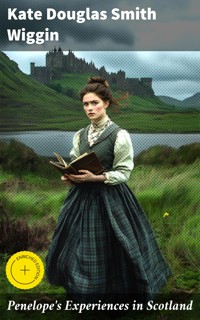
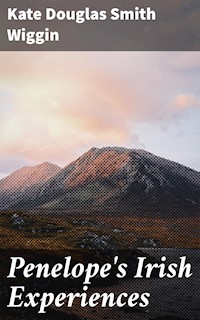
In "Penelope's Experiences in Scotland," Kate Douglas Smith Wiggin crafts a delightful narrative that blends travelogue with social commentary, enveloping readers in the charm of Scottish landscapes and culture through the eyes of the spirited protagonist, Penelope. Released in the late 19th century, the book embodies Wiggin's signature style, characterized by witty prose and vivid descriptions that evoke a sense of place and character. This work offers a poignant exploration of identity, belonging, and the complexities of cultural encounters, making it a quintessential piece of Victorian literature that resonates with both humor and depth. Wiggin, an influential author and educator, was deeply invested in the welfare of children, which can be reflected in her well-crafted characters and their relatable journeys. Having spent formative years associated with various charitable initiatives and schools, Wiggin's passion for storytelling was intertwined with her advocacy for social change. Her travels and experiences in Scotland provided rich material, inspiring her to weave personal observations into a broader narrative of social reflection and connection. "Penelope's Experiences in Scotland" is a must-read for those who appreciate travel literature infused with keen social insights. Wiggin's ability to portray her experiences with warmth and humor invites readers to embrace the beauty and complexity of the Scottish experience while provoking thoughtful reflections on their own journeys. In this enriched edition, we have carefully created added value for your reading experience: - A succinct Introduction situates the work's timeless appeal and themes. - The Synopsis outlines the central plot, highlighting key developments without spoiling critical twists. - A detailed Historical Context immerses you in the era's events and influences that shaped the writing. - A thorough Analysis dissects symbols, motifs, and character arcs to unearth underlying meanings. - Reflection questions prompt you to engage personally with the work's messages, connecting them to modern life. - Hand‐picked Memorable Quotes shine a spotlight on moments of literary brilliance. - Interactive footnotes clarify unusual references, historical allusions, and archaic phrases for an effortless, more informed read.
Das E-Book können Sie in Legimi-Apps oder einer beliebigen App lesen, die das folgende Format unterstützen:
Veröffentlichungsjahr: 2019
Ähnliche










Penelope's Experiences in Scotland
Table of Contents
Introduction
A sharp-eyed traveler discovers that crossing borders changes the traveler as surely as it maps a new landscape. Kate Douglas Smith Wiggin’s Penelope’s Experiences in Scotland follows an American observer whose lively intelligence meets the bracing air of Scottish history, custom, and countryside. The book offers a portrait of curiosity tested by difference: how to admire, question, misunderstand, and finally appreciate a place that resists easy summary. At once playful and reflective, it balances warm-hearted amusement with an ethic of attentive looking, inviting readers to watch a mind learn its way through unfamiliar ground without losing its humor or humility.
Written by a prominent American novelist of the late nineteenth and early twentieth centuries, this volume belongs to Wiggin’s Penelope series and appears within the era’s flourishing market for travel narratives. Published in the late 1890s, it blends social comedy and travel writing, situating its episodes across Scottish towns and countryside. The book draws on the period’s transatlantic curiosity—Americans reading about Britain, Britons reading about Americans—while maintaining a distinctly personal, first-person perspective. That combination of genre, setting, and historical moment gives the work both its bright surface charm and its underlying interest in how nations perceive one another.
The premise is disarmingly simple: an American woman and her companions tour Scotland, and she records what she sees, hears, and feels. The narrative moves through encounters with local traditions, sights, and social rituals, using everyday situations as lenses for character and culture. Rather than advancing a tightly wound plot, the book offers a sequence of episodes, each colored by the narrator’s wit and sympathy. Readers can expect lively observation, understated tension between expectation and reality, and a measured romantic undercurrent that never overwhelms the humor. The reward is experiential: gentle surprises, shifting perspectives, and a steady accumulation of insight.
Among its central themes is the negotiation between national myth and ordinary life. The narrator approaches emblems—history-haunted castles, storied landscapes, celebrated frugality and pride—with enthusiasm, then tests them against the particulars of daily experience. Another theme is the ethics of looking: what it means to be a guest, to translate customs without flattening them, and to let people surprise preconceived images. Friendship and companionship provide ballast, showing how conversation sharpens perception and softens misstep. Throughout, the book asks how travel can deepen, rather than merely consume, a culture’s richness, making curiosity a form of respect rather than a pretext for caricature.
Wiggin’s style is light on its feet yet attentive to detail. The first-person voice guides readers through scenes with a playful candor that encourages complicity without demanding agreement. Humor is the instrument of insight: gentle irony exposes vanity and provincialism—American, Scottish, and otherwise—while preserving genuine affection for place and people. The episodes unfold with an easy rhythm, alternating social vignettes and scenic passages, so that landscape and conversation illuminate one another. The result is a tone that feels intimate but never cloying, confident yet open to correction, and perfectly suited to a traveler who is as interested in listening as in speaking.
Contemporary readers will find the book resonant for the way it treats travel as a moral as well as aesthetic practice. It anticipates questions that still matter: How do we meet the unfamiliar without reducing it to a checklist? What responsibilities accompany storytelling about other people’s homes? The narrator’s blend of admiration, self-scrutiny, and good humor models a stance that suits today’s debates about cultural representation and responsible tourism. It also offers a historical snapshot of women moving, observing, and writing in public, reminding us that curiosity and companionship have long been engines of both pleasure and understanding.
Penelope’s Experiences in Scotland promises an engaging journey for readers who prize characterful observation over spectacle. It offers the pleasures of armchair travel—fresh air in the prose, crisp vistas in the mind’s eye—while quietly charting how attention, patience, and kindness change a traveler’s point of view. Without leaning on melodrama, it sustains interest through wit, situation, and the subtle weather of feeling. Above all, it invites readers to share the narrator’s discipline of looking closely and laughing lightly, and to carry that discipline beyond the page, wherever curiosity next leads.
Synopsis
Penelope's Experiences in Scotland by Kate Douglas Wiggin, presented as extracts from Penelope Hamilton's commonplace book, follows three American friends traveling through Scotland. Penelope records their impressions in letters and notes that blend observation, anecdote, and comic detail. With Salemina acting as prudent chaperone and Francesca as the spirited younger companion, the group seeks to see cities and countryside without presumption. Their route builds on earlier English experiences and prepares a later Irish journey, yet this volume stands alone. The narrative purpose is to render places, customs, and people faithfully, tracing how new surroundings shape the travelers' days and conversations.
Arriving in Edinburgh, the travelers settle into rooms that look over contrasting quarters of the city. They walk between New Town elegance and the steep closes of the Old Town, learning the geography by foot and coach. Guidebooks frame the itinerary, but chance encounters with shopkeepers, students, and servants supply livelier commentary. Early social calls introduce ideas of thrift, wit, and reserve that color later episodes. The party notices how history lingers in streets and speech, yet how practical modern life presses forward. Small misreadings of idiom and etiquette produce gentle humor without malice, while respect for local pride remains constant.
In visits to Holyrood, the Castle, and nearby monuments, Penelope traces a continuity of legend and fact without attempting a historian's survey. The account registers what a curious outsider sees: royal apartments, battlefields recalled in story, and vistas that bind present neighborhoods to famous names. References to poets and chroniclers appear as signposts rather than lessons. The effect is to keep motion moving from site to site while noting how narrative traditions shape what is seen. Moments of solemnity sit beside practical concerns such as tickets, weather, and crowds, giving a balanced sense of how heritage intersects with daily travel.
Social life forms a second thread. The travelers observe the Scottish Sabbath, attend kirk services, and negotiate expectations about music, dress, and hours. Conversation at tea tables introduces debates on education, charity, and temperance, revealing a national character that prizes candor moderated by courtesy. Salemina often manages arrangements and misunderstandings; Francesca tests boundaries with quick wit; Penelope records both. Encounters with ministers, matrons, and young professionals sketch a range of views without caricature. Through these exchanges the book traces the interplay between personal independence and communal standards, noting how hospitality coexists with economy and how humor coexists with seriousness.
Excursions beyond the capital broaden the canvas. A tour through the Trossachs and Loch Katrine links scenery to literary associations, with guides invoking Scott while the travelers weigh literature against weather and logistics. Visits to Stirling and Bannockburn highlight martial memory beside schoolroom recollection. An unhurried pace allows side glances at inns, ferries, and coaching customs that shape the experience of distance. Mishaps remain light and illustrative, serving to show how adaptation works on the road. Throughout, the narrative keeps attention on what is seen and said, reserving conclusions while indicating how landscapes suggest temper and identity.
Further north, the party samples Highland life, from small crofting communities to estates administered with visible tradition. Music, dance, and costume appear at gatherings where clan histories are recounted in speech and song. Conversations about the land, emigration, and opportunity remain summary and observational, avoiding argument while acknowledging felt realities. The text notices how remoteness and hospitality combine, and how seasonal work sets the rhythm of households. Natural description emphasizes light, water, and heathered slopes rather than technical detail. The chapter sequence builds a sense of breadth, suggesting how the Highlands both complicate and confirm earlier impressions of Scotland.
Relationships evolve as acquaintances deepen into friendships and tentative courtships. The book presents these developments through conversation and shared outings rather than intimate disclosure, in keeping with its restrained tone. Differences in custom around chaperonage, letters, and calling are noted without judgment. Penelope registers how attention is expressed, how humor masks feeling, and how reticence can signal sincerity as easily as hesitation. A few misunderstandings, comic and brief, show how national temperaments can cross wires. Outcomes are not the focus; instead the emphasis rests on manners and mutual respect, leaving the particulars of attachment for readers to infer.
Later chapters gather strands in a sequence of community occasions, charitable efforts, and farewell visits. The travelers learn when to speak and when to listen, applying lessons from earlier missteps to practical decisions. A minor crisis tests their tact and resolve without altering the overall lightness of tone. The outcome affirms goodwill between guests and hosts and clarifies plans for the next stage of travel. By keeping thresholds vague and conclusions understated, the narrative preserves privacy while indicating growth. The emphasis remains on experience accumulated, not dramatic reversal, aligning the close with the book's prevailing observational method.
Overall, Penelope's Experiences in Scotland offers a lightly satirical yet respectful portrait of a nation seen through alert, friendly eyes. Its central message is that sympathetic attention bridges differences of speech, habit, and history, allowing visitors to honor what they cannot fully possess. The book values steadiness, kindness, and humor as travel virtues and suggests that places shape people as much as people shape places. Structured as episodes that follow an itinerary from Edinburgh to the Highlands and back again, it delivers character, scenery, and custom in measured proportion, concluding with departure and a widening horizon rather than finality.
Historical Context
Set in late Victorian Scotland and published in 1898, the work unfolds amid the intersecting geographies of Edinburgh, the Trossachs, and the Highlands and Islands. The period is marked by modern transport, a flourishing tourist trade, and the lingering social consequences of nineteenth century land reform. American travelers move with new ease through rail and steamer networks, encountering crofting communities shaped by past evictions and contemporary rent politics. The linguistic borderlands of English and Gaelic, strict Sabbath customs, and the theatricality of tartan culture frame daily life. The narrative’s time and place thus fuse a romanticized national image with the realities of rural poverty, religious rigor, and commercialized heritage.
A powerful historical current running beneath the book is Jacobite memory and its reinvention in the nineteenth century. The failed rising of 1745 and defeat at Culloden in 1746 led to the 1747 Dress Act, curbing Highland dress, repealed in 1782. Romantic rehabilitation followed: Sir Walter Scott orchestrated King George IV’s tartan clad visit to Edinburgh in 1822, and Queen Victoria’s purchase of Balmoral in 1852 cemented royal patronage of Highland pageantry. Place names such as Glenfinnan, Culloden, and Deeside became sites of memory. The book mirrors this reimagined past through scenic itineraries, relics, and the ceremonial use of tartan, exposing how tourism profits from a softened martial history.
The Highland Clearances, from the late eighteenth century into the mid nineteenth, transformed landholding and population. In Sutherland, evictions peaked between 1814 and 1820 under the Duchess of Sutherland, with factor Patrick Sellar; tenants were removed for large scale sheep farming, and many emigrated to Canada and the colonies. Similar disruptions occurred on Skye, Lewis, and across Wester Ross. By the 1860s, crofts had been restructured into smaller holdings, leaving communities dependent on insecure rents and seasonal labor. The narrative’s encounters with scattered townships, sparse arable strips, and emigration stories echo this legacy, using dialogue and observation to register the social memory of dispossession and its moral ambiguities.
The crofter agitation of the 1880s is central to the social landscape the travelers meet. The Napier Commission (1883) investigated Highland grievances; land raids at Glendale on Skye (notably 1882) and on Lewis at Aignish (1887) dramatized demands for fair rents and security. The Crofters’ Holdings (Scotland) Act of 1886 created the Crofters Commission, granting fixity of tenure, judicially determined fair rents, and compensation for improvements. Yet landlord power and limited access to additional land continued to fuel tensions. References to factors, rent days, and modest croft improvements in the book reflect these reforms’ partial relief, while highlighting the enduring fragility of rural livelihoods in the western seaboard and islands.
The late nineteenth century tourist infrastructure reshaped Scotland’s mapped experience. Rail reached Inverness by the 1850s; the Highland Railway extended to Wick and Thurso by 1874. The Callander and Oban Railway opened the west in 1880, and the West Highland Railway reached Fort William in 1894. Steamers operated by David MacBrayne (established 1879) connected Oban, Skye, and the Hebrides, while the Caledonian Canal (completed 1822) and Trossachs routes popularized circuit travel. Organized excursions by Thomas Cook proliferated from the 1860s. The book embeds this network in its plot, moving with timetabled precision through inns, lochs, and glens, and observing how rail and steamer schedules, guidebooks, and hotel culture standardize and commodify Highland experience.
Religious history lends texture to social habits encountered on the road. The Disruption of 1843 split the Church of Scotland and created the Free Church, embedding strict Sabbath observance and lay control in many Highland parishes. Musical innovation and recreation were often restrained, and commercial activity on Sundays curtailed. Later, the 1892 Declaratory Act softened Calvinist doctrine in the established church, and the 1900 union formed the United Free Church, though regional practices persisted. The narrative’s depictions of closed shops, austere kirk life, and moral admonitions capture the lived effects of these ecclesiastical divisions, showing how denominational identity shaped timekeeping, hospitality, and communal sanction.
Language and cultural movements inform the book’s portrayal of song, story, and place. The Education (Scotland) Act of 1872 standardized schooling, often sidelining Gaelic; school fees were abolished in 1890, increasing attendance but not Gaelic provision. Census data record over 200,000 Gaelic speakers in 1891, concentrated in the Hebrides and western Highlands. Cultural organizations rallied: the Gaelic Society of Inverness (1871) promoted scholarship; An Comunn Gaidhealach was founded in 1891, launching the National Mod in 1892. The book’s interest in local speech, proverb, and music reflects this contested terrain, acknowledging both the decline of everyday Gaelic use and the contemporaneous civic efforts to preserve it.
The work functions as a mild yet pointed social critique by juxtaposing picturesque surfaces with structural inequities. It registers the commercialization of Jacobite memory, the persistence of landlord authority despite the 1886 Act, and the precarity of crofting economies dependent on migratory labor. Observations of Sabbath regulation and communal discipline question the social costs of rigid religiosity. The American female traveler’s autonomy highlights gendered expectations in public space while exposing class coded hospitality and service hierarchies in hotels and estates. By staging encounters between tourists and residents, the book interrogates how railways, guidebooks, and royal mythmaking refashion a living culture into consumable spectacle, often eliding ongoing rural hardship.




