


9,59 €
Mehr erfahren.
- Herausgeber: Europa Editions
- Kategorie: Abenteuer, Thriller, Horror
- Sprache: Englisch
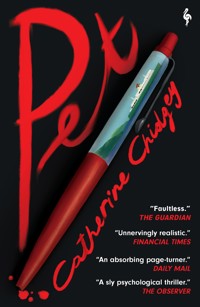
"FAULTLESS." —The Guardian *** "A SLY PSYCHOLOGICAL THRILLER." —The Observer Like every other girl in her class, twelve-year-old Justine is drawn to her glamorous, charismatic new teacher and longs to be her pet. However, when a thief begins to target the school, Justine's sense that something isn't quite right grows ever stronger. With each twist of the plot, this gripping story of deception and the corrosive power of guilt takes a yet darker turn. Young as she is, Justine must decide where her loyalties lie. Set in New Zealand in the 1980s and probing themes of racism, misogyny and the oppressive reaches of Catholicism, Pet will take a rightful place next to other classic portraits of childhood betrayal: The Prime of Miss Jean Brodie, The Go-Between, Heavenly Creatures and Au Revoir Les Enfants among them.
Das E-Book können Sie in Legimi-Apps oder einer beliebigen App lesen, die das folgende Format unterstützen:
Seitenzahl: 470
Veröffentlichungsjahr: 2023
Ähnliche















ALSO BY CATHERINE CHIDGEY
In a Fishbone Church
Golden Deeds(The Strength of the Sun in the United States)
The Transformation
The Wish Child
The Beat of the Pendulum
Remote Sympathy
FOR CHILDREN
Jiffy, Cat Detective
Jiffy’s Greatest Hits
Europa Editions 8 Blackstock Mews London N4 2BT www.europaeditions.co.uk This book is a work of fiction. Any references to historical events, real people, or real locales are used fictitiously. Copyright © 2023 by Catherine Chidgey First publication 2023 by Europa Editions All rights reserved, including the right of reproduction in whole or in part in any form. Catherine Chidgey has asserted her right to be identified as Author of this Work Art direction by Emanuele Ragnisco instagram.com/emanueleragnisco Cover design and illustration by Ginevra Rapisardi ISBN 9781787704749
Catherine Chidgey
PET
PET
2014CHAPTER 1
I know it’s Mrs Price, and I know it can’t be Mrs Price: that’s what I keep thinking. My eyes are playing tricks on me, or the light is, or my memory is. For one thing, this woman looks to be in her thirties, which makes her far too young . . . apart from anything else. And yet she has the same wavy blond hair, the same high cheekbones. Even the voice could be hers.
‘Let’s get you settled in your chair, Mr Crieve,’ she says, leading my father to his recliner. She’s just showered him, and his skin is pink and soft, his face freshly shaved. I can smell Old Spice. He leans heavily on her arm as he takes step after slow step across the tiny room. She is stronger than she looks. ‘You’ll feel better now you’ve had a shower,’ she says, positioning him in front of his chair. ‘All nice and clean for your visitors.’
‘I’m his daughter,’ I say. ‘Justine.’ Stupidly I hold out my hand, but of course she can’t shake it; she is still holding on to my father.
‘I know all about you,’ she says, and flashes me a smile, her warm brown eyes crinkling at the corners. The same smile I remember. The same eyes.
My daughter Emma, twelve years old, sits on the bed and picks at her nail polish, peeling away shreds of bubblegum pink. Dad eyes her.
‘Have you hung up your school uniform?’ he says.
‘Always,’ says Emma, which is true: she never needs reminding to keep her things tidy.
He points a wobbly finger at her. ‘This is my daughter Justine,’ he says to the woman. ‘I bet she’s telling fibs. I bet if I checked her room, the uniform would be in a heap. We’re always on at her.’
Emma just smiles. ‘I made you some gingerbread,’ she says, sliding the container onto the bedside table. ‘Your favourite.’ She has such kindness in her – from her father, I suppose.
‘Now feel for the chair with the back of your legs, Mr Crieve,’ says the woman. ‘Reach for the arms . . . that’s right . . . and down we go. Good.’
I sit next to Emma on the bed and watch, feel the familiar guilt rise in my throat – but I can’t look after him myself. I can’t comb his hair and cut his toenails, dress him and undress him. I can’t wash him. Most of all, perhaps, on the bad days I can’t keep explaining that he doesn’t have to get back to the shop, that nobody has robbed him, that Emma isn’t his daughter and I am not his wife returned from the dead. Everyone agrees he is in the best place.
‘So handsome,’ says the woman, tucking the tips of his collar inside his cardigan – although it’s not his cardigan. The laundry is always mixing up his clothes with those of the other residents. ‘You look like you’re ready to hit the town,’ she says. ‘Get up to no good.’
‘You never know,’ he says. ‘Maybe I’ll sneak out after dark.’
She laughs. ‘Naughty man! Off to the casino, is it? Off to the nightclubs, wowing all the girls? You’d better watch out for this one, Justine.’
‘I will,’ I say. ‘I do.’
She nods, pats my hand. ‘He’s lucky to have you.’
I can’t take my eyes off her. Surely Dad sees it too. Surely some part of him remembers. Sonia, says a badge pinned to her smart floral tunic. One of those uniforms that’s meant to look like normal clothes. The retirement community prides itself on its personal approach, so the residents really feel they’ve come home. Those in the stand-alone townhouses can even bring a cat or a bird when they move in, if they have an existing cat or bird. No replacement cats or birds can be acquired after the old ones die, though – and Dad isn’t in a stand-alone townhouse, he’s in a premium room.
‘I’ll leave you three to it, then,’ says Sonia.
I want to talk to her, ask her if she knew Mrs Price – but what can I say? How can I ever explain that story? Though I’ve had thirty years to think about it, thirty years to go over every detail. The great dark hulk of it always adrift in me.
‘Curious Questions in the main lounge at three, don’t forget,’ she says. ‘You need to defend your title.’
‘Too right,’ says my father.
And then she is gone.
‘She’s new,’ I say.
‘Someone new every few months,’ he says. ‘They don’t pay them enough.’
‘Doesn’t she remind you of anyone?’
‘Who?’
‘You really don’t see it?’
‘Who?’ says Emma.
‘I don’t know what you’re getting at,’ he says, and picks up his newspaper, hands me the real-estate section. I’m always looking for a new place.
‘Brick,’ he says, tapping a property he’s circled. ‘Nice and solid. Won’t rot.’
He’s having a good day, then, and we’re supposed to make the most of the good days. I should stay and chat in his premium room, or take him for a walk in the grounds, which really are lovely, with their benches in the shade of oaks and maples and their heady beds of roses. Polite gardeners who nod hello while they clip away at something, train something, keep it all in check.
But I am twelve years old again.
1984CHAPTER 2
I was lying on my stomach in the late afternoon, running my fingers through the straw-dry grass and unknotting the tousled weeds that grew along our fence line. Down deep, where the sun didn’t reach, the stalks were as white as exposed bone. Slaters hurried about in their segmented armour, while a centipede, dislodged from under its dead leaf, looked for a new place to hide. Gently I covered it over again. There at the bottom of our hilly garden you couldn’t see the harbour but you could smell it. Arum lilies and hydrangeas grew in great clusters, and the apple tree dropped its sour little windfalls, and nobody could ask me how I was coping. I poked at an empty snail shell, blew on it so it skittered away. Up in the spotless house, curtains drawn, my father listened to his sad records and drank his sad drinks. The sun, still searing just past the end of summer, scraped at my shoulders and neck, and I knew I should go back inside and make my father’s dinner while he sat in the darkened living room mumbling Beth, Beth, Beth. I should bring him corned beef with a dob of mustard, just the way he liked it, and potatoes boiled in their skins, and ice cream with tinned peaches, the syrup pooling at the bottom of the plate. I should let him tell me I was his best girl, and how lucky was he? And then I should scour the kitchen sink until it gleamed, and polish the taps that showed me my own face all misshapen and wrong, and iron the tea towels with their pictures of birds and maps and castles, folding them into squares to fit on the tea-towel shelf – but not yet. Just a bit longer with the weeds and the dirt, the empty shells and the dead leaves and the frantic hiss of cicadas. The sunburnt grass as light as nothing.
A twinge in my temple. I sat up, sat back on my heels, steadied myself. I was fine. Fine. But was it the sun? My head felt high and hollow, and I could taste burnt sugar, and no, it wasn’t the sun but my own body about to turn on me again. Hadn’t I grown out of it? Hadn’t the pills worked? I looked at my hands, and they were strange hands, and the garden was a strange garden, the arum lilies looming at me like birds with skinny yellow beaks, the sky hazy, covered with plastic, and I could hear my mother’s voice though I knew it was not real: I’m home. And here it came, the seizure, thundering through the hot air, knocking me to the ground.
When I opened my eyes I was lying on the couch, facing the deep-buttoned back. I blinked. Slowly the threads of pale blue and dark blue and white joined into their upholstered pattern: an old-fashioned lady sitting on a swing in a flouncy dress, her waist pulled in tight, her feet the tiniest slippered nubs. Ribbons trailing in the breeze. Cherubs. Butterflies.
I touched my fingers to the bump on my temple.
‘Oh, love,’ said my father.
‘I was in the garden,’ I said. ‘Wasn’t I?’
‘You’re fine, everything’s fine,’ he said.
‘How did I get inside?’
‘I helped you. Here, drink this.’
‘I don’t remember.’
The water swishing the taste of blood across my tongue.
Once, when I was little, I’d held a stolen coin in my mouth so no one would take it from me: that was the taste.
‘I thought the pills had worked,’ I said. ‘I thought I’d grown out of it.’
‘We’ll go back to Dr Kothari. I imagine it’s trial and error.’
‘What does that mean?’
‘Well, we might have to try the pills again.’
‘No. They make my mouth dry and give me the shakes. Can’t we just see how it goes?’
‘Maybe he can give us something different to try, until we get it right.’
‘It was right, though. I thought I didn’t need the pills any more.’
‘I’m sorry, love.’ He poured himself another drink.
In a small voice I said, ‘What if it happens at school?’
‘Mrs Price will look after you.’
‘They’ll think I’m a freak.’
‘Mrs Price won’t let them.’
I was silent for a moment. Then I said, ‘Can we see how it goes?’
He sighed, nodded. ‘One more seizure, though, and it’s back to Dr Kothari. You could hurt yourself, love, and we can’t have that. We just can’t.’
I don’t recall much about the rest of that day – I usually suffered memory loss from a seizure and sometimes couldn’t account for hours of time – but one detail has stayed with me through the years: watching The Love Boat while I lay with my head on my father’s lap. As the opening song played, Captain Stubing looked through his binoculars, and Isaac the bartender put fruit on the rim of a glass, and Julie the cruise director beamed in front of the Sydney Harbour Bridge because she was supposed to be marrying an Australian, though he sounded nothing like an Australian and would in fact leave her at the altar because he was dying and loved her too much. And Vicki, the captain’s daughter, who had the same haircut as I did, stood on the deck in her sailor suit with all the blue ocean behind her. Vicki, who lived on the ship and got to visit Puerto Vallarta and Acapulco and Mazatlán, and what would that be like, to live in so many different places but also no place at all?
‘Where are they?’ I said.
‘What?’ said my father.
‘When they’re sailing, which country are they in?’
‘Hmm,’ he said.
‘And what if someone dies on board? What happens then?’
‘No one dies on The Love Boat.’
‘But in real life.’
‘A captain can bury people at sea,’ he said. ‘He can marry people, and he can bury people.’
‘You can’t dig a hole in water,’ I said. I felt too heavy to move.
‘It’s an expression.’
I knew that Vicki was actually much older; if you watched the credits at the end of the programme, and squinted to read the year in tiny Roman numerals, you could tell that New Zealand was years behind and we were watching the past.
And my father stroked my ear as the passengers filed on board, the sound of his hand the sound of the ocean.
CHAPTER 3
In the morning I could still feel the remains of the seizure: mud in my head, mud in my legs. My father said I could stay home if I liked, but I wanted to go to school because Mrs Price had promised us a surprise – a surprise and a test, though not one we could study for. I made sure I had my special pen. My mother had bought it for me when she took the ferry to the South Island, just before she was diagnosed. I could keep it as a souvenir, she’d said, and she showed me the tiny white ship inside that slid back and forth when you tilted it, gliding into the green of the Sounds, gliding into the open ocean. I tried not to use it too much, because I didn’t want the ink to run out, but I always wrote my tests with it. I thought it brought me luck. The talismans we cling to.
‘What do you think the surprise is?’ I whispered to my best friend Amy as we took our places at our desks.
‘Maybe something to eat?’ said Amy. ‘Some more of her Russian fudge?’
Mrs Price had brought a batch to class in the first week of term. If we were good, she’d said, there’d be more treats, because good things happened to good people. And every boy and girl had sat up straight then, and nodded, and listened, and spoken when it was their turn to speak, not just because of the good things in their future, the treats, but because they wanted to please her. She was new to town and new to St Michael’s that year, and younger than our parents, and prettier than our mothers, who wore fawn slacks and plastic rain bonnets. She made us feel special just by the way she looked at us, as if we had something important to say and she couldn’t wait to hear it. Often she’d rest a hand on our shoulders like an old friend, then lean in and listen. Laugh when we wanted her to laugh. Offer kind words before we knew we needed them. Tell us how bright we were, what original thinkers. If we came to school with a new haircut we really weren’t sure about, she’d put her hands on her hips and say, ‘Look out, David Bowie!’ or ‘Christie Brinkley, eat your heart out!’ When she sent home a note asking if one or two fathers could come on Saturday to fix up the wobbly desks and chairs, a dozen men showed up, hammers and drills at the ready. The story was that her husband and daughter had died in a car accident, though nobody quite knew when or how, or whether she had been in the car at the time, and nobody liked to ask. Each morning she arrived at school in a white Corvette with the steering wheel on the wrong side, the American side, and it had no back seat and no boot, so where on earth did she put her groceries? But perhaps she ordered takeaways like people on TV; perhaps she ate in French restaurants where candlelight caught in gigantic mirrors. Glass bangles clicked at her wrists, and she wore her wavy blond hair with a deep fringe like Rebecca De Mornay in Risky Business – not that we’d been allowed to see the film, because it wasn’t suitable. Around her neck a gold crucifix with a tiny gold figure of Jesus, all ribs and thorns.
I lifted the lid of my desk and put away my exercise books. At the start of term I’d covered them with leftover wallpaper from home: the stripes from my bedroom for Religion, Maths, Social Studies and Science, the bunches of fuchsias from the dining room for Language and Reading. My mother had chosen the patterns when she first got sick, pinning the samples to the wall and scrutinising them at different times of day, in different lights. She wanted the house to be perfect, she’d said. I hadn’t understood.
I double-checked that I had my special pen in my Care Bears pencil case.
‘What’s that?’ said Melissa Knight, who sat on the other side of me.
I showed it to her, tilting it to make the ship move.
‘Can I have a go?’
I hesitated, then handed it over. ‘Careful,’ I said. ‘It’s very valuable.’
Melissa had long caramel-coloured hair and pierced ears and a spa pool, and I could never be her, though Amy and I practised her walk and her laugh. One lunchtime, too, we folded down the tops of our tunics and knotted our blouses above our belly buttons like Melissa did. When Paula de Vries saw us she whispered something in Melissa’s ear, but Melissa didn’t even care, because she wasn’t mean the way some pretty girls with pierced ears could be mean.
Mrs Price was standing at the front of the classroom, watching us, waiting for us all to settle down. Melissa gave me back the pen.
‘Today, people,’ said Mrs Price – she called us people instead of children, which made us feel responsible – ‘we’re learning about the eye.’
She asked Melissa to hand out a cyclostyled diagram, because Melissa was one of her pets. It wasn’t fair, but what could anyone do? The tingly smell of the purple ink rose from the newsprint sheets, and we followed with our fingers as Mrs Price pointed out the cornea, the sclera, the retina, the optic nerve, and then we wrote the names in our neatest handwriting and added arrows to show the right spots on the drawings that didn’t look much like eyes. I forced myself to concentrate; I was still groggy from the seizure.
‘Of course,’ said Mrs Price, as if she knew what we were thinking, ‘the best way to learn is to see the thing for ourselves, isn’t it?’
She smiled her special smile and walked to the back of the classroom, and there on the activity tables, hidden under a cloth so as not to ruin the surprise, were rows of scissors and scalpels and sharp little tools like the dental nurse used in our mouths. She took the lid off an ice-cream container, and Karl Parai said, ‘Strawberry ripple!’ in his deep new voice that had arrived over summer, but Mrs Price laughed and said no, definitely not strawberry ripple, and inside the container sat a pile of eyes. Cows’ eyes. Enough for one between two.
‘Mr Parry was kind enough to supply these,’ she said, ‘so make sure you thank him next time you’re in his shop.’
Leanne Parry beamed; she had kept the surprise to herself, the secret, and now Mrs Price was singling her out for it. Mr Parry was the local butcher who gave every child a slice of luncheon sausage whenever they went with their parents to buy their meat. ‘You look like you could do with some fattening up,’ he’d say, winking as he weighed chops or sharpened his big silver knife. He gave out pencils sometimes, too: metallic green, with Parry’s Meats High Street running down the side, but I’d never used my one – never even sharpened it – because it was too nice. Then I’d lost it.
‘All right, people, find a partner,’ said Mrs Price, and Amy grabbed my hand and held on tight, too tight.
‘I don’t think I want to do this,’ she whispered, but already Mrs Price was handing out the eyes with a soup spoon and the pairs of children were taking their places at the dissecting trays. I had the feeling I had seen this moment before: the trays, the rows of glittering tools. The dead eyes looking in all directions. My own hand reaching for something sharp. Strange thoughts often followed a seizure; I tried to blink them away.
‘First of all,’ said Mrs Price, ‘let’s trim off what we don’t need – all the scraggy bits from around the edges, yes? Use your scissors to snip them free, or your scalpel. These are the remains of the eyelid, and the muscles that move the eye.’
I offered the scissors to Amy, but she shook her head.
‘Don’t be afraid to handle it firmly,’ said Mrs Price, walking around the tables. ‘You’d be surprised how tough it is. Good, Melissa. Good, Leanne.’ She rested a hand on Leanne’s shoulder and watched as she neatly removed the trailing pieces of flesh.
Picking up our specimen, I began to cut. I still felt so heavy in my limbs.
‘Careful to leave the optic nerve,’ said Mrs Price. ‘The little stump at the back. Your cow can’t see without it.’
The eye was slippery under my fingers, like the grapes Amy and I peeled when we played Slaves. I thought I could make out some eyelashes. I pushed the scraps to the edge of the tray.
‘Now, look at the cornea. Can everyone find the cornea? You’ll see that it’s cloudy blue – this is what happens in death. In life it’s clear, like a plastic bag filled with water, to let the light through.’
‘Death?’ said Amy. ‘Death?’ She pushed her thick black plait over her shoulder as if it might touch something dreadful.
‘Duh,’ said Karl, and he waggled his cow’s eye at her and made a mooing sound.
Mrs Price showed us how to snip right around the eyeball to cut it in half, though we mustn’t push the scissors in too deep because that would damage the lens. I had worried I might feel disgusted, might even have another seizure, but it was no different from chopping up chicken for a casserole or touching the muscular foot of a snail, and the jelly inside the eye no worse than egg white. And how easily it all came apart, one hemisphere detaching from the other, a severed world. Mrs Price pointed out the blind spot, where the optic nerve attached to the back of the eye and there were no light receptors. We couldn’t see anything at that point, she said, but our brains filled in the gaps for us without our even noticing, and wasn’t that amazing? Wasn’t God amazing?
Amy was leaning in now, poking the lens with the probe.
‘Make sure you’re taking note of all this, people,’ said Mrs Price. ‘Make sure you’re remembering. It’s important.’
Next we cut out the cornea and studied the pupil, which she told us meant orphan – a child looked after by an adult, taught by an adult – but it also meant little doll, because of the tiny reflections of ourselves we saw in another person’s eyes. I checked: and yes, there I was in Amy’s pupils, a shadow girl caught in the curve of black.
‘Do you see that the pupil is just a hole?’ said Mrs Price. ‘We think it’s something solid, that black dot, don’t we, but in reality there’s nothing there.’
Next to me Melissa had turned pale, all the blood gone from her lips and cheeks. When she started to gag I leapt away, and the vomit just missed my foot. The puddle glistened on the floorboards between us, full of bad and bitter things.
‘Oh sweetheart,’ said Mrs Price. ‘Come away. Come and sit down.’ She led Melissa to the front of the classroom and settled her in the story chair, brought her a glass of water.
‘I’m really sorry,’ said Melissa.
‘Nonsense,’ said Mrs Price, stroking her hair. ‘God made some of us more sensitive than others, and that’s a beautiful thing – yes? Never apologise for it.’
Melissa nodded, her face as white and lovely as a saint’s, while the rest of us watched and wished we were sitting in the story chair, and that Mrs Price was stroking our hair and talking to us in her kind and quiet voice, and if only we’d thought to vomit.
‘Hey Justine,’ whispered Karl, and when I turned to him he lunged for my chest, shoved his hand inside my blouse. Something slithered down my skin, a cool wet mass that came to rest at the waistband of my tunic. I knew he wanted me to scream.
‘Is that a cow’s eye?’ I said.
He was laughing too hard to answer.
I untucked my blouse and the thing plopped to the floor like some kind of clot, some awful part of me expelled from my body.
‘You’re such a moron, Karl,’ said Amy, but I didn’t think she meant it, because we had both agreed he looked like a Māori John Travolta, and we’d written his name in biro on our shoulders and thighs where nobody could see. I tucked myself in again and returned to my work, picking up my probe and starting to ease the retina away from the blind spot behind it.
‘All right, people, I need a volunteer,’ said Mrs Price. ‘Who’s going to clean this up for us?’ She waved at the vomit.
No one raised their hand.
‘You know we’re a team,’ she said. ‘A family. We help one another.’
Silence.
‘Do I need to choose someone myself?’
‘I’ll do it,’ said a voice next to me.
And there was the smile we all lived for, spilling across Mrs Price’s beautiful face.
‘Amy! Thank you, my darling. Go and see Mr Armstrong for a cloth and bucket.’
At lunchtime we went to the adventure playground where everything was immense, like the contents of a giant’s garden: huge tractor tyres set in concrete, and a row of stormwater pipes we could crawl right inside, and great wooden spools that had once held steel cable, and a climbing rope that stretched higher than was safe, surely, and that burned our hands and legs when we shinnied back down to the ground. Some of the younger girls were playing elastics, jumping in and out of the long stretchy band they hooked around their ankles, then knees, then thighs. England, Ireland, Scotland, Wales, they chanted. Inside, outside, puppy-dogs’ tails. Tangling and untangling themselves. Over on the field, other children gathered up handfuls of dry grass clippings and built them into hand-high walls. This is the living room. This is the bedroom. Here’s the kitchen. That’s the front door. The bossier ones assigned roles: I’m the mum and you’re the baby. I’m the big sister and you’re the grandma. You’re the dad and I’m a robber. You have to do what I say. Amy and I climbed into the stormwater pipes and leaned back against the cool interior. We opened our lunchboxes, and I gave Amy one of my cheese and Vegemite sandwiches, and she gave me one of her pork dumplings. Mostly she brought sandwiches or a filled roll, like the rest of us – she’d told her mother not to give her foreign things – but now and then Mrs Fong insisted on using up the leftovers. I loved those days; we always swapped. We could hear Melissa and Paula talking on top of the pipes, where they were trying to get a suntan.
‘Oh my gosh,’ Paula was saying, ‘are you okay? Maybe you should go to the sick bay. Make sure it’s nothing serious.’
‘It was the eyes, that’s all,’ said Melissa. ‘When we opened them up. The smell of them.’
‘I didn’t think they smelled of anything,’ said Paula.
‘What? It was in my hair and clothes, on my skin . . . you couldn’t get away from it.’
‘I really don’t remember that.’
‘Let’s talk about something else.’
‘Do you remember a smell?’ I whispered, and Amy shook her head. Maybe Melissa’s brain was sending her a false message, the way mine did when a seizure was coming and I swore I could taste burnt sugar – but I didn’t want to think about the seizures. They couldn’t be starting up again. They couldn’t.
‘She called me her darling,’ said Amy.
Even now I can see her hugging her knees to her chest. Though I wish I couldn’t.
‘What?’ I said.
‘Mrs Price. She called me her darling. First time ever.’
We would have done anything for her.
After lunch Mrs Price said, ‘I hope you were paying attention this morning, people. We’re going to do a little test now – just a little check to see if you remember the new words we learned. Amy, would you pass these around, please?’
And everyone knew why she chose Amy: Amy had cleaned up the vomit. And I thought that perhaps I should have volunteered to clean it up myself, because who knew what privileges might now come Amy’s way? But when she gave a sheet to Karl Parai he sniffed the place where her hand had been and said he could smell sick, and the whole class laughed even though Mrs Price said it wasn’t funny.
‘So all you need to do is label the parts of the eye,’ she said. ‘It shouldn’t take long – five minutes at the most.’
I looked in my pencil case for my special pen, but I couldn’t find it. Not in my pencil case, not in my desk, not on the floor. Nowhere.
‘Off you go,’ said Mrs Price, and everyone started to write. Everyone except me. I raised my hand. My arm twice as heavy as it should have been.
‘Yes, Justine?’
‘I’ve lost my pen.’
Titters from around the classroom.
‘Don’t you have a spare? Or a pencil?’
‘It’s my special pen.’
More titters.
‘Are you being smart, Justine?’
‘No, Mrs Price.’
‘Do you have another pen?’
‘Yes.’
‘Then use that.’
I stared at the diagram of the eye, the empty lines waiting for their labels. I couldn’t remember a single answer. Mud in my head, my hands, my arms, my legs. Next to me Amy was filling in the last gap and sitting back. I could have turned my head to read the answers – I could have, I could have, and Amy wouldn’t have minded – but I was no cheat. Outside the classroom window the sunflowers swayed on thick green stems, and bees heavy with heat circled the dark centres. And still I couldn’t remember, and Mrs Price was saying, ‘Just one more minute,’ and there was not enough time. I wrote my name at the top of the page. Underlined it. At the front of the room the Virgin Mary gazed out from her picture frame, her heart full of roses and fire.
‘All right, people, you’ll be marking your neighbour’s work, so pass your tests to the left, please,’ said Mrs Price.
Melissa handed hers to me, and I handed my own to Amy. Karl made to pass his out the open window.
‘Obviously,’ said Mrs Price, ‘if you’re on the end of a row, you stand up and take your test to the person at the start. I shouldn’t have to tell you these things. You’re not little children any more.’ But she wasn’t angry with us the way our other teachers used to get angry with us. It was like we were sharing a joke, like we were part of a special club.
Karl grinned at me as he passed. Black hair flopping over his forehead. Eyes flecked with gold.
‘All right, what’s the first answer?’ said Mrs Price, and the class said, ‘Cornea.’
‘Correct,’ she said, and I ticked Melissa’s work. ‘And the second?’
‘Sclera,’ everyone except me said. Another tick. Out of the corner of my eye I could see Amy putting big crosses on my empty test, racing ahead to the last gap, because it was clear I hadn’t written a thing.
‘Excellent,’ Mrs Price was saying. ‘I’m very pleased with you, class.’
When they’d finished she got everyone to call out the marks so she could enter them into her blue book, which meant it was a real test, though she hadn’t told us so. Most people scored five out of five; there were a few fours and one three.
‘And Justine?’ said Mrs Price.
‘Nothing,’ said Amy.
‘What do you mean, nothing?’
‘Nothing. Zero. She didn’t write anything.’
‘Oh dear,’ said Mrs Price.
‘Well, she wrote her name at the top,’ said Melissa, leaning across to peer at the page. She patted my arm. ‘You got that right.’
Everyone laughed.
‘All right, thank you,’ said Mrs Price. ‘There’s no need to make fun of someone when they fail.’
‘I wasn’t making fun,’ said Melissa, but Mrs Price held up her hand and said, ‘Let’s move on,’ and Melissa was no longer part of the special club, which was the worst feeling ever.
‘I wasn’t making fun,’ Melissa whispered to me as she returned my test.
I nodded and shoved it deep inside my desk, underneath the exercise books that looked like bits of home, the little walls of a dismantled house. I took a deep breath in and held it. Dr Kothari had said that moments of high emotion could trigger a seizure; I wasn’t going to let myself cry.
When the bell rang I could hardly wait to escape. I put away my books, lifted my chair on top of my desk and headed for the door with Amy, but Mrs Price said, ‘Justine? May I see you for a moment?’
And hadn’t I longed for that? Hadn’t I dreamed of Mrs Price asking me to run an errand for her, or help her in the classroom after school? Every day her favourites – her pets – stayed behind and clapped the blackboard dusters together, closed the top windows with the long, long cords which they looped around hooks so nobody choked themselves. They polished the brass candlesticks on the altar to Mary and picked fresh flowers from the convent garden to put in her cut-glass vase. The really lucky ones got to go to the shops at lunchtime to collect things for Mrs Price: her dry cleaning, her prescriptions, her tins of diet milkshake powder that made you feel full. She’d give them money from her wallet – and sometimes even the wallet itself – and if there was any change they were allowed to stop at the dairy for sweets: paper bags crammed with chewy milk bottles and jet planes and spearmint leaves and Eskimos, or little boxes of sugary white sticks with a red dot on one end to make them look like lit cigarettes. Elegantly the pets held these between their fingers, strolling through the playground past less favoured children, flicking away imaginary ash.
‘I need to see you too, Melissa,’ said Mrs Price. ‘Leanne, you can clean the blackboard dusters outside, please. No one else today.’ She waited until the others had left the classroom and then she said, ‘Melissa, I think you owe Justine an apology.’
‘Sorry, Justine,’ said Melissa.
‘Why are you apologising to the floor?’
Melissa raised her eyes to me. ‘Sorry, Justine.’
‘For?’ said Mrs Price.
‘For, um, hurting your feelings?’
‘For making fun of you,’ said Mrs Price.
‘For making fun of you,’ said Melissa.
‘And I know it was wrong, and I promise not to do it again.’
‘And I know it was wrong, and I promise not to do it again.’
‘Justine, do you accept Melissa’s apology?’
Melissa looked like she wanted to cry. It was horrible – and yet I paused before I answered. Watched her fidget with her pretty hairband, the collar of her blouse. ‘I suppose so,’ I said at last.
‘All right then,’ said Mrs Price. ‘Melissa, you can go, but you’ll need to do some serious thinking about your behaviour. About the kind of person you want to be. Yes?’
‘Yes. Thank you,’ said Melissa, her face burning red. She all but ran from the classroom.
Mrs Price waited until she’d gone and then motioned for me to sit down in the story chair. I’d never sat there before. ‘What happened this afternoon, my darling?’ she said, settling herself on the edge of her desk. ‘With the test?’
‘Am I in trouble?’ I said.
‘Trouble? No – I’m just a bit worried. From what I’ve seen so far, you’re one of the brightest in the class. What happened?’
‘I . . . I had a seizure yesterday,’ I said.
‘Oh,’ she said. ‘I didn’t realise.’
‘Sometimes I feel strange afterwards . . . sleepy and, and heavy . . . not myself. Like my body isn’t mine and my memory isn’t mine.’
‘My poor darling,’ she said. ‘I’m glad you’ve told me. You know you can tell me anything, yes?’
I nodded.
Leanne burst back in with the blackboard dusters, her hands powdery with chalk.
‘Finished!’ she said. ‘Is there anything else?’
‘Just pop them on the ledge, thanks, Leanne,’ said Mrs Price.
‘Sure! Any other jobs?’ It was the first time she’d been asked to help, and I could see the hunger shining in her eyes.
‘Not today, thanks.’
‘Okay.’ Leanne didn’t move.
‘I need to talk to Justine now.’
‘Oh, okay. Thank you. Thanks.’
‘We thought I’d grown out of the seizures,’ I said when Leanne had left. I felt very small, sitting there in the story chair, Mrs Price looking down at me from above. The light was behind her, and her hair glowed buttery soft; I wanted to reach up and touch it.
‘What was all that about the pen?’ she said.
‘I couldn’t find it. I know it was in my pencil case this morning – I showed it to Melissa.’ My voice began to shake.
‘But you had another one. I don’t understand.’
I studied my hand. The mole on the first knuckle, the branching veins. The hangnail that hurt when I pressed it. I pressed it. ‘My mother gave it to me,’ I said. ‘As a souvenir.’
‘Oh yes?’ said Mrs Price, and waited.
‘My mother . . .’ I began. The scar on my thumb from when I’d picked up broken glass before I knew better. The half-moons rising from my nail beds. The hangnail that hurt. I pressed it again.
‘Your mother?’ she said.
‘She died last year.’
‘Oh my love. Oh my sweetheart.’ She was crouching next to the story chair, putting her arm around me. I could smell her perfume: jasmine and honeysuckle, or something like it. ‘They should have told me,’ she said. ‘All these things I don’t know about you. All these important things.’ She squeezed my shoulder, and we sat there for a moment. She didn’t say that everything happens for a reason, and she didn’t say that time heals – I knew it couldn’t, because the more of it that passed, the further away from me my mother slipped. The corridor outside the classroom was quiet now, the school grounds empty, though I could see one of the nuns in the convent garden behind the adventure playground: Sister Bronislava, just visible through the gap in the cypress hedge, cutting a head of lettuce. Mrs Price said, ‘You’re a very strong person, Justine, I can tell. You don’t even know what’s inside you.’
‘I want my pen back,’ I said. I knew I sounded like a baby, but it was true.
‘Of course you do, my darling.’ She paused. ‘You said you showed it to Melissa this morning?’
‘Yes, before school.’
‘Hmm,’ she said. ‘You’re not friends with Melissa, are you?’
‘Not really.’
‘But you’d like to be?’
I nodded.
‘Girls like Melissa . . .’ she said. ‘Everyone wants to be their friend. They don’t have to try.’ She patted me on the knee. ‘Now, this mark of yours. This zero. It won’t do.’
‘No, Mrs Price. I’m sorry.’ I had disappointed her, I could tell.
She opened her blue book, tapped her finger on the zero next to my name – and then she took a bottle of Twink, whited out the zero and wrote a five in its place. ‘There,’ she said. ‘All fixed.’
‘But . . . is that allowed?’ I said, and she laughed.
‘My classroom, my pupils,’ she said. ‘My rules.’
‘Thank you.’
She waved a hand. ‘I know you’ll earn it.’
‘I will. I will,’ I said.
‘You do look sleepy, though. Shall I give you a lift home? You’re not far from me, I think.’
‘I help Dad in the shop after school on Fridays.’
‘Which shop is that, my darling?’ She was taking a little brown bottle from her handbag and swallowing a pill, then hitching the bag over her shoulder, ready to go.
‘Passing Time Antiques.’
Dad was talking to a customer, examining a figurine she wanted to sell: a little girl dressed as a shepherdess.
‘She was my mother’s,’ the woman was saying. ‘She always sat on the mantelpiece. We were never allowed to touch her.’
My father tented the figurine under a thick dark cloth he kept behind the counter and shone his black light over the piece, looking for damage invisible to the naked eye. ‘Here, you see?’ he said, pointing to the back of the shepherdess’s head. ‘A repair. She must have taken a knock.’
‘Not that I remember,’ said the woman. ‘We’ve always been so careful.’
‘Maybe someone dropped her and didn’t own up. She’s not worth much in this condition, I’m afraid.’
Those were the words he used whenever he had to deliver bad news to a customer: I’m afraid. I’m afraid this is a reproduction. I’m afraid nobody wants these now. I’m afraid this is of little value. I’m afraid this is beyond repair. He seemed genuinely sad for the woman – but then, he’d seemed sad most of the time since my mother had died. ‘Come here, love,’ he’d say to me when he was drinking. ‘You’re not going anywhere, are you?’ And I’d tell him no, I wasn’t going anywhere. He’d tuck my hair behind my ears and call me his best girl, and ask why my mother had to leave, which was a question I couldn’t answer, but that didn’t stop him asking. He was sorry, he said, for being such a mess, and he knew he was the parent and I was the child and not the other way round, and soon, he promised, he’d pull himself together and get on with life, because there was nothing else for it, just nothing else. Then, in the morning, he’d shower and shave, gulp two coffees and head for the shop, almost back to normal, as far as most people could tell.
Mrs Price was looking around, peering in chests of drawers, touching the hair of a porcelain doll and making its glass eyes close. Another customer – a man about my father’s age, wearing a navy-blue suit and a big showy wristwatch – sidled over to her and said, ‘You seem like a lady with excellent taste. Do you reckon I should blow six hundred bucks on that?’ He pointed to a stag’s head mounted on the wall.
‘For yourself?’ she said.
‘Yeah,’ he said. ‘For the dining room. A conversation piece, you know?’
‘Hmm,’ she said, reaching up to feel the stag’s dusty fur as if to assess its quality. ‘That depends on what sort of conversation you want to have.’
‘Well, how about, Will you have a drink with me?’ His eyes were all over her, darting from her lips to her legs to her chest.
She laughed. ‘That’s a strange thing to ask someone who’s already in your dining room.’
‘Sense of humour,’ he said. ‘Like it.’
‘To be honest,’ she whispered, ‘I think it’s a steal.’
‘Yeah? I mean it’s small change to me, right, six hundred, but I was planning on making a lowball offer. You see how faded that is?’ He pointed to the price tag. ‘Been here for ages.’
‘Not much call for stags round here, maybe.’
‘Three-fifty tops, I reckon,’ he went on. ‘Maybe that’s an insult, but do I look like I care? Thrill of the chase, etcetera.’
‘Cheeky,’ she said.
‘Oh I can be. I can be.’ He was smirking, sliding a business card from his wallet. ‘Maybe you can help me get it up,’ he said. ‘The stag.’
‘Maybe I can,’ she said. ‘I’ll check with my husband.’ And she turned away, rolling her eyes at me across the shop.
‘Hey, wait on,’ said the man, the hand with the big showy watch reaching out to grab her elbow. ‘You didn’t say anything about a husband.’
‘Sure I did. Just now.’
‘Yeah, but before that.’
She shrugged, shook him off.
He paused, then said, ‘Not a deal breaker, as far as I’m concerned.’
She laughed again, but it sounded different this time. ‘I hope you and the stag have many happy years together,’ she said.
His eyes narrowed. ‘You know,’ he hissed, ‘it’s bitches like you that give women a bad name.’
And he left.
‘Are you all right?’ I said, rushing over.
‘Absolutely fine,’ she said. ‘But thank you, my darling. It’s sweet of you to look out for me.’
‘He shouldn’t have called you that.’
‘He showed his true colours. They always do, one way or another.’
‘Who?’
‘Men, my darling!’
‘Oh.’ I supposed she must have had to deal with that sort of thing all the time. But she’d enjoyed it, hadn’t she? Teasing him in that clever way?
‘So many beautiful things,’ she said, opening an Edwardian lady’s travelling case. She ran her fingers over the silver-topped bottles, the sky-blue silk lining.
‘It has a secret compartment,’ I said. ‘See, there’s a little button here, and when you press it—’ The mirror in the lid lifted away, revealing a narrow storage space.
‘For money?’ she said.
‘Or love letters.’
The woman with the shepherdess was wrapping her up in a pillowcase and saying, ‘No no, it’s not your fault, we should have realised,’ and my father was saying, ‘If there’s ever anything else . . .’
On her way out of the shop the woman paused in front of a similar figurine – an undamaged milkmaid. She turned it upside-down to check the price, stared at it for a moment. Placed it gently back on the shelf.
‘Hi darling,’ said Dad, kissing me on the forehead. ‘Who’s this?’
‘Mrs Price,’ I said. ‘She gave me a lift.’
‘Ah, the famous Mrs Price.’ He held out his hand. ‘Everything all right?’ He looked worried.
‘Everything’s fine,’ she said. ‘Justine was just a bit tired. And please, call me Angela.’
‘Neil.’
His fingers were black with silver polish; they usually were. All these years later, decades after he had to let the shop go, I can still see the stuff caught in the whorls of his skin. I was embarrassed, but Mrs Price didn’t seem to mind. As his eyes flicked up and down her body, she smiled a lingering half-smile. The air around her felt charged. Something was happening, and I was no part of it.
‘It’s kind of you to drop her off,’ he said.
‘My pleasure.’ She stroked one of the crystal spears hanging from a Victorian lustre vase, and it tinkled against the others. ‘My grandmother had a pair of these,’ she said. ‘She called them her earthquake vases because you could see them trembling at the slightest movement, even if you couldn’t feel anything.’
‘An early warning system?’ said Dad.
‘Yes!’ She laughed. The spear was still swinging, scattering little bits of rainbow across the wall. How beautiful she looked, standing there in her cork-wedge sandals and her batik skirt, smoky sunglasses hooked in the V of her top. She began to fiddle with the tiny crucifix around her neck, the chain so fine it almost disappeared against the gold of her skin. ‘I was very sorry to hear about Justine’s mother,’ she said. ‘About your wife.’
My father nodded, back to his solemn self. ‘Thank you.’ There was nothing else to say.
CHAPTER 4
Amy and I were walking her cocker spaniel on the cliffs above the rocky beach – we went there most weekends, to let Bonnie have a good run around. Stunted, prickly shrubs flanked our way, blown into the shape of the slopes by the relentless wind, and clusters of feathery fennel swished and bobbed. Bonnie darted through the flax bushes that shook their hooked black seed pods like beaks. We knew never to stray far from the track, and certainly never to get anywhere near the edge; it was a long way down to the shore, where the kelp made shifting shadows in the water. Old gun emplacements and observation posts dotted that part of the coastline, looking out to the harbour’s mouth for an enemy that never came. Sometimes we climbed inside them to feel the strange hush of the thick concrete walls, to run our fingers over the steel beams clotted with rust. A few times we’d seen Mrs Price jogging along the cliff track in her lime-green leggings, her candyfloss-pink crop-top, bright as some sleek tropical fish. That day we’d timed our walk for when we thought she might be there, and we were both keeping an eye out for her, wanting to be the first to say hello.
‘Tell me what her car was like again,’ said Amy.
‘Black seats,’ I said. ‘Boiling hot when I first climbed in – I burned my legs.’
‘What else?’ Amy threw Bonnie’s old chewed tennis ball, and the dog brought it straight back. Above us the seagulls glided on the wind, their bellies flashing white.
‘A tape deck that played music when she pressed the button,’ I said.
‘What was the song?’
‘The one about getting physical and hearing your body talk.’
Amy giggled, threw the ball into the wind again. ‘What else, though?’
‘A Saint Christopher medal stuck to the dashboard. And she looked in the mirror before we left school and put on some fresh lipstick. Pink, with little sparkles in it.’
‘But what was the main thing about the car? What was the thing you did wrong?’
Amy knew already; she’d made me repeat the story a dozen times that week.
‘I went to get in the wrong side, because it’s an American car.’
‘And what did Mrs Price say?’
‘She said, Do you want to get me arrested?’
We laughed, but I could see myself in the driver’s seat: smoky sunglasses shading my eyes, my lips shimmering as I sang along to the getting physical song and made up words for all the ones I didn’t know.
I threw Bonnie’s tennis ball, and she shot off after it. The wind lifted our light cotton skirts, and we had to keep holding them down for modesty’s sake, though I liked the push and gush of it. I snatched at a fennel frond, crushed it in my palm to release the thick aniseed scent, while somewhere below us the waves destroyed themselves on the rocks.
‘Not even Melissa’s had a ride in that car,’ said Amy.
‘It was just because I wasn’t feeling well,’ I said.
‘No. You’re the new pet.’
‘Don’t be stupid.’
But Amy had been keeping watch, keeping count. ‘She let you clean the blackboard on Wednesday, and you’ve read the morning prayer twice.’
Bonnie dropped the tennis ball at my feet and nudged my shoe, then looked up at me, waiting.
‘I haven’t really thought about it,’ I said. A lie.
‘Are you blind?’ said Amy.
Bonnie nosed the ball closer to me, and I flung it ahead of us, all my weight behind it. I was aiming along the track, but the wind seized it and it veered towards the cliffs, bounced once, bounced twice, then disappeared over the edge. The dog streaked after it, her paws churning up the grass, and I heard Amy yell, ‘No! Bonnie, no!’ while I just stood there. Every gull in the sky began to shriek, as if they could see something terrible coming, something unstoppable. And on Bonnie ran, heading straight for the edge, and I shut my eyes while the gulls wheeled and screamed, and it was all my fault, my own stupid fault, and what would we tell our parents? Amy would hate me now, she would hate me forever, and I could never make it right – and then I heard her sobbing, ‘Good girl. Good girl,’ and I opened my eyes and saw her burying her face in Bonnie’s neck. And of course she hadn’t leapt to her death: of course pure dumb instinct had stopped her. Though Mum and Dad had warned me to keep close to the track at all times, I ran for Amy and Bonnie, and the three of us pressed ourselves low to the ground and gazed over the edge, tracing the path of a loosened stone as it tumbled down to the rocks, down to the waiting water.
I still dream about that sometimes.
Amy didn’t speak to me on the way home. She clipped Bonnie’s leash to her collar and strode off down the track, and I had to rush to keep up.
‘It wasn’t on purpose,’ I said. ‘Amy? I’d never do anything like that on purpose. You know I love Bonnie. I love her so much, she’s like my own dog. Dad won’t let me have a pet because I’ll only get attached. Amy? Amy?’ I was gabbling, I knew, but she gave no indication she even heard me. On she marched, her mouth a hard line.
‘I’m sorry. I’m so sorry,’ I kept saying. ‘Will you just look at me? You can have my Care Bears pencil case if you like. You’ve always wanted one. Please, Amy!’
Whenever Bonnie stopped to sniff at something, Amy yanked on her leash. I was supposed to be staying at her house that night: what if she didn’t speak to me the whole time? What would her parents think?
We were at the corner of their street when the idea came to me. She was still hurrying on ahead, but I grabbed at her hand, and when she tried to shake me off I said, ‘I’ll tell you something else about Mrs Price’s car.’
She paused for a moment, shot me a sideways look. ‘Like what?’
‘It has a cigarette lighter, underneath the tape deck.’
‘So?’ she said. ‘My dad’s car has one of those.’
‘Oh,’ I said. ‘Well, but I bet he doesn’t let you smoke.’
‘What?’
‘She told me not to tell anyone.’
‘Not to tell anyone what?’
Bonnie was whining, nudging Amy’s foot for the lost tennis ball.
‘After she put on her pink lipstick,’ I said, ‘she lit a cigarette. One of those menthol ones.’ I was making it up as I went, but it felt true – Mrs Price wouldn’t smoke just any cigarettes. ‘Then she asked me if I wanted a try,’ I said. That felt true too.
‘She did not!’ said Amy, but I knew I had her.
‘She passed it to me, and I took a puff and blew it out like they do on TV.’ I mimed this for Amy, my mouth a softly puckered O. ‘It tasted pepperminty. Her lipstick was on it, but I didn’t mind. I flicked the ash out the window and gave it back to her, and she said I mustn’t tell anyone. So you can’t either, okay?’
‘Okay,’ said Amy. ‘Wow. Okay.’




