


1,99 €
Mehr erfahren.
- Herausgeber: DigiCat
- Kategorie: Fantasy und Science-Fiction
- Sprache: Englisch
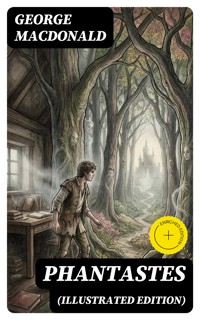
In "Phantastes (Illustrated Edition)," George MacDonald weaves a rich tapestry of fantasy and allegory that explores the intricate landscape of the human psyche and soul. This seminal work, often regarded as one of the forerunners of modern fantasy literature, is characterized by its lyrical prose and dream-like narrative style. Set in a magical realm that mirrors the protagonist's inner journey, MacDonald employs symbolism and vivid imagery to tackle profound themes such as self-discovery, morality, and the nature of reality, making it both fantastical and philosophically engaging. George MacDonald (1824-1905) was a pioneering Scottish author, poet, and theologian whose works profoundly influenced contemporaries such as C.S. Lewis and W.H. Auden. His deep Christian convictions and interest in the supernatural shaped his literary voice, giving rise to a distinctive blend of fantasy grounded in spiritual wisdom. MacDonald's own transformative experiences with faith and imagination imbued his storytelling with a sense of wonder and a quest for deeper truths, evident in the profound layers of "Phantastes." This illustrated edition of "Phantastes" is a must-read for those intrigued by the intersection of imagination and spirituality in literature. Readers are invited to embark on a journey through its enchanting landscapes, where they will not only encounter captivating characters and adventures, but also engage with the universal quest for meaning. A treasure for lovers of fantasy and philosophy alike, MacDonald's work remains a timeless exploration of the soul. In this enriched edition, we have carefully created added value for your reading experience: - A succinct Introduction situates the work's timeless appeal and themes. - The Synopsis outlines the central plot, highlighting key developments without spoiling critical twists. - A detailed Historical Context immerses you in the era's events and influences that shaped the writing. - A thorough Analysis dissects symbols, motifs, and character arcs to unearth underlying meanings. - Reflection questions prompt you to engage personally with the work's messages, connecting them to modern life. - Hand‐picked Memorable Quotes shine a spotlight on moments of literary brilliance. - Interactive footnotes clarify unusual references, historical allusions, and archaic phrases for an effortless, more informed read.
Das E-Book können Sie in Legimi-Apps oder einer beliebigen App lesen, die das folgende Format unterstützen:
Veröffentlichungsjahr: 2022
Ähnliche




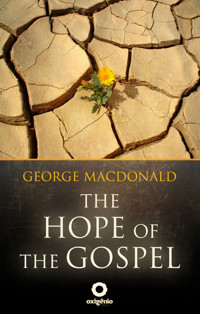
Phantastes (Illustrated Edition)
Table of Contents
Introduction
Set on the tremulous border between waking certainty and the unruly claims of imagination, Phantastes explores how yearning is educated into love, how beauty unsettles possession, and how a self learns to walk by conscience within a world where appearances change as quickly as desire. In George MacDonald’s faerie romance, the journey inward takes the shape of a landscape outward, so that forests, halls, and streams mirror choices and failures, and every encounter presses a young traveler toward the recognition that growth requires both surrender and courage. Its drama is the soul’s apprenticeship under wonder.
First published in 1858, during the Victorian era’s experimental surge in narrative forms, Phantastes stands as an early modern fantasy written for adults, a dream-quest told in the first person by a young narrator named Anodos. The book unfolds between a recognizable domestic point of departure and the otherworld of Faerie, a setting without fixed borders or chronology, where the logic of ordinary travel yields to metamorphosis and symbol. MacDonald, a Scottish novelist and poet, adapts romantic motifs to a post-Romantic age, shaping a narrative whose emphasis lies not on worldbuilding for its own sake but on interior discovery.
The story begins when Anodos steps from the ordinary into Faerie around the threshold of adulthood, drawn by a summons that is more felt than seen. What follows is a wandering initiated by wonder rather than by map, a procession of glades, chambers, and voices that offer aid or peril according to the truth of the heart that meets them. The tone is rapt, earnest, and at times playful; the voice remains intimate and contemplative, sustaining a pace that lingers on image and mood. Readers encounter perils without graphic violence and marvels without exhaustive explanation.
MacDonald’s prose is lyrical, occasionally archaic to modern ears, and threaded with songs, inset tales, and descriptions whose sensuous detail invites slow reading. Scenes often pivot through intuitive transitions rather than strict causal links, producing a dreamlike continuity that privileges significance over mechanics. The result is not a riddle to decode once, but a fabric of correspondences that rewards return visits. The illustrated edition complements this texture by foregrounding shapes, gestures, and contrasts that the language suggests, assisting the eye in dwelling where the narrative itself is most at home: in the meeting of image and inward response.
At the heart of the book lies the testing of desire: the difference between grasping and receiving, between worship of an image and service to the good. Motifs of doubling and shadow ask what we carry with us into every encounter, and how fear or pride may distort even noble aims. Beauty beckons, yet the narrative steadily interrogates whether beauty is an ornament to possess or a call toward transformation. MacDonald’s moral imagination embraces humility, compassion, and attention, articulating growth as a movement away from self-absorption toward relational fidelity, without reducing mystery to a lesson plan.
For contemporary readers, Phantastes remains relevant not only as a landmark in the development of modern fantasy but as a meditation on interior life amid distraction. It influenced later writers, notably C. S. Lewis, and helped expand the possibilities of the genre beyond mere escape. Its portrayal of ethical imagination—how choices shape perception and how perception, in turn, reshapes the world we can inhabit—speaks to readers navigating rapidly changing realities. An illustrated edition can further anchor abstraction in contour and rhythm, offering entry points for newcomers while giving seasoned readers fresh angles on scenes that have always lived through suggestion.
Approach this faerie romance as a pilgrimage rather than a puzzle: let its episodes breathe, accept that meanings arrive by resonance, and allow uncertainty to act as hospitality rather than obstacle. The narrative’s early threshold opens onto encounters that are formative without insisting on a single moral or map, preserving surprise for those who travel with patience. To read Phantastes today is to practice attention to both beauty and conscience, to receive wonder not as distraction but as discipline, and to discover how imagination can tutor hope without denying sorrow. The journey begins, and its work is inward.
Synopsis
George MacDonald’s Phantastes, first published in 1858, presents a faerie romance in which the young narrator, Anodos, crosses from ordinary life into Fairy Land on the eve of adulthood. A fairy’s visit in his chamber unsettles his assumptions, and he awakens to find his world opening into a living forest. The narrative adopts a dreamlike, episodic movement, following his inward as much as outward journey. MacDonald interlaces marvels with moral testing, allowing landscapes, creatures, and houses to mirror states of mind. Anodos seeks meaning, beauty, and guidance, yet quickly learns that desire in Fairy Land can mislead as easily as it can inspire.
Early wanderings reveal a realm at once hospitable and hazardous. Trees speak, streams sing, and paths appear or vanish according to his temper. He receives kindness from simple households and warnings against presumption. Drawn by an idealized vision of feminine beauty, he discovers a carved marble figure, sings, and sees it stir into life before fleeing his grasp. This encounter crystallizes his longing and sets his questing course: he pursues the elusive “Marble Lady,” hoping to transform admiration into union. Along the way, alluring spirits and ominous presences test whether his devotion is reverent love or possessive craving.
Anodos’s trials revolve around discernment. He repeatedly meets guides who urge patience and self-forgetfulness, as well as tempters who promise delight at the cost of integrity. Hospitality in cottages, cryptic counsel from wise women, and brushes with predatory enchantments dramatize the book’s central tension between imaginative openness and credulous surrender. Each reassurance is countered by a seduction; each deliverance, by a fresh misstep. Encounters with the Marble Lady remain fragmentary, revealing more about Anodos’s readiness than about her nature. Gradually he perceives that beauty cannot be seized, and that wonder requires humility if it is to deepen rather than corrode his sight.
Midway, Anodos enters a vast, serene palace where books seem to breathe and rooms contain symbolic histories. There he reads an inset tale—most notably the story of Cosmo of Prague—whose tragic longing refracts his own pursuit, turning admiration into a mirror of responsibility. In a forbidden chamber he acquires a Shadow that dogs him hereafter, chilling joy and tainting perceptions with suspicion. The Shadow does not destroy wonders so much as disenchant his vision of them, exposing vanity and sowing restlessness. Forced back onto intention rather than sensation, he departs the palace sobered, aware that insight and illusion may look alike until tested by action.
Subsequent episodes take on a chivalric cast. Anodos labors alongside noble companions, confronting marauding giants and hidden tyrannies that threaten quiet folk. He endures captivity and hardship, learning steadiness through service as much as through questing. Acts of courage increasingly require not cleverness but self-denial, and small fidelities prove weightier than grand gestures. Even where his Shadow lingers, honest work and kindness open partial clearings of light. Communities he meets—a hermit here, a family there—embody ordinary goodness that counters his romantic absolutism, showing that constancy and care can disclose beauty no less than marvel or song.
The narrative arcs toward relinquishment rather than conquest. Anodos’s pursuit of the Marble Lady softens into reverence; his need to possess yields to a willingness to protect, bless, or simply behold. In a culminating act that favors self-forgetfulness over display, he finds a passage home, bringing Fairy Land’s lessons into time-bound life. The return is neither triumphant nor bitter but reflective, suggesting that the border between worlds runs through the heart. He resolves to live awake to the ordinary as if it were enchanted, to test feelings by deeds, and to keep imagination allied with truth.
Phantastes endures as an early landmark of modern fantasy, fusing dreamlike travel with moral allegory without reducing either to mere parable. Its shifting scenes model how inward change alters what one can perceive and cherish. The book’s gentle gravity, musical imagery, and episodic design invite rereading, while an illustrated edition underscores its visual suggestiveness. By posing searching questions about beauty, desire, humility, and vision, it offers a quest that continues beyond its final page, asking readers to cultivate imagination that serves goodness and to find wonder not only in marvels but in the daily textures of a faithful life.
Historical Context
Phantastes: A Faerie Romance for Men and Women appeared in London in 1858, in the heart of mid‑Victorian Britain’s intellectual and industrial ferment. Its Scottish author, George MacDonald (1824–1905), had recently shifted from the pulpit to the pen, joining a literary marketplace dominated by powerful publishers and circulating libraries. Set against a society confident in material progress yet searching for spiritual meaning, the novel presents a dreamlike quest in Fairy Land addressed explicitly to adults. Its commitment to moral imagination rather than spectacle mirrors a culture negotiating between empirical certainties and the enduring appeal of romance.
MacDonald’s early formation lay in Scottish Presbyterian environs and Dissenting institutions. He studied at King’s College, Aberdeen, before training for the Congregational ministry at Highbury College in London and serving at Trinity Congregational Church in Arundel (1850–1853). Doctrinal tensions—especially over his generous, near‑universalist soteriology—led to his resignation and turn to literature and lecturing. Mid‑century Britain wrestled with German biblical criticism and widening theological pluralism after the Scottish Disruption of 1843. Phantastes transforms such debates into symbolic travel: its inward pilgrimage privileges conscience, grace, and transformation over creedal boundary‑keeping, offering a theologically liberal, imaginative counterpoint to stricter Victorian orthodoxies.
Phantastes emerged when British letters were reinterpreting Romanticism through Victorian lenses. Coleridge’s theories of imagination, Wordsworth’s inward turn, and the German Romantics—especially Novalis and Tieck—shaped MacDonald’s aesthetics. Simultaneously, the Pre‑Raphaelite Brotherhood (founded 1848) and a broader medieval revival redirected taste toward spiritualized chivalry and symbolic nature. Tennyson’s experiments with Arthurian material and contemporary fairy painting primed readers for visionary narrative. MacDonald fuses these currents into a faerie romance that declines conventional realism in favor of archetypal encounters, inviting readers to treat fantasy as a serious ethical discourse rather than escapist amusement.
In the 1850s, British public debate balanced scientific confidence with metaphysical unease. Geology had deepened time through Lyell; popular works like Vestiges of the Natural History of Creation (1844) stirred controversy; and Darwin’s Origin of Species (1859) was imminent. The Great Exhibition of 1851 celebrated industrial ingenuity and imperial reach, promoting utilitarian ideals of progress and display. MacDonald’s romance resists such triumphal metrics. By staging a subjective quest that values humility, charity, and imaginative perception over mechanical power or catalogued knowledge, Phantastes functions as a quiet critique of positivist narratives ascendant in mid‑Victorian culture.
Victorian publishing shaped what the middle classes read. Major London houses courted respectable audiences, while Mudie’s Select Library favored lengthy, morally vetted fiction. Fantasy had no fixed commercial category; the phrase faerie romance signaled literary pedigree through Spenser and medievalism rather than nursery fare. Illustrated gift books and wood-engraved frontispieces guided readers’ imaginations within accepted decorum. Against this backdrop, Phantastes offered a self-consciously adult fairy narrative that remained chaste yet searching, threading the needle between market propriety and visionary experiment and thereby securing a space for serious imaginative prose within mainstream Victorian print culture.
Fairy lore was a lively Victorian preoccupation. English translations of the Grimms’ tales circulated widely from the 1820s; antiquarians collected British folklore; and artists such as Richard Dadd and John Anster Fitzgerald painted intricate fairy scenes. Scholarly and popular interest extended to Celtic and Norse traditions, exemplified by George Webbe Dasent’s Popular Tales from the Norse (1859). This climate validated adult engagement with the marvellous. Phantastes draws on that shared repertoire while rejecting twee sentimentality, using folkloric beings and enchanted woods to probe conscience and desire. The novel thus channels fashionable fairy culture into a morally serious, introspective itinerary.
Victorian domestic ideology, crystallized by Coventry Patmore’s The Angel in the House (1854–1862), idealized feminine purity and influence, while chivalric revivalism reimagined male virtue as self‑restraint and service. Literary culture frequently cast women as moral beacons within a sentimentalized household sphere. Phantastes adapts these codes without simply endorsing them: it stages revered female figures and knightly motifs to examine possessiveness, self‑forgetfulness, and the discipline of love. The romance’s ethic of self‑giving critiques acquisitive courtship and the commodification of desire, aligning its fairy adventures with contemporary debates about character, gendered virtue, and the education of the heart.
MacDonald’s Scottish upbringing in Aberdeenshire and his university training fostered a habit of serious reading that included German poetry and philosophy. Like many mid‑Victorian writers, he lectured widely and contributed to magazines, sustaining himself in a culture that prized improvement through adult education, mutual instruction, and literary societies. The resulting blend of pastoral memory, scholastic curiosity, and cosmopolitan reading informs the romance’s interlaced songs, embedded tales, and reflective pauses. In tone and structure, Phantastes models an introspective Bildung amid the noise of modern Britain, proposing the imaginative life as a corrective and complement to the century’s industry, utility, and disputation.
Phantastes (Illustrated Edition)
List of Illustrations
The meeting of Sir Galahad and Sir Percivale
Suddenly there stood on the threshold a tiny Woman-Form
The branches and leaves on the curtains of my bed were in motion
I saw a country maiden coming towards me
Headpiece to chapter iv
Two large soft arms were thrown around me from behind
I gazed after her in a kind of despair
I found myself in a little cave
The ash shuddered and groaned
Tailpiece to chapter vi
I could hardly believe that there was a fairy land
I did not believe in fairy land
A runner with ghostly feet
The maiden came along, singing and dancing,happy as a child
The goblins performed the most antic homage
The fairy palace in the moonlight
Too dazzling for earthly eyes
In the woods and along the river banks do the maidens go looking for children
She lay with closed eyes, whence two tears were fast welling
Headpiece to chapter xiv
I sprang to her, and laid my hand on the harp
A white figure gleamed past me, wringing her hands
They all rushed upon me, and held me tight
A wintry sea, bare, and waste, and gray
Show me the child thou callest mine
The time passed away in work and song
Headpiece to chapter xxi
We reached the palace of the king
I saw, leaning against the tree, a beautiful woman
Fastened to the saddle, was the body of a great dragon
I was dead, and right content
A valley lay beneath me
The meeting of Sir Galahad and Sir Percivale
“In good sooth, my masters, this is no door. Yet is it a little window, that looketh upon a great world.”
Preface
For offering this new edition of my father’s Phantastes, my reasons are three. The first is to rescue the work from an edition illustrated without the author’s sanction, and so unsuitably that all lovers of the book must have experienced some real grief in turning its pages. With the copyright I secured also the whole of that edition and turned it into pulp.
My second reason is to pay a small tribute to my father by way of personal gratitude for this, his first prose work, which was published nearly fifty years ago. Though unknown to many lovers of his greater writings, none of these has exceeded it in imaginative insight and power of expression. To me it rings with the dominant chord of his life’s purpose and work.
My third reason is that wider knowledge and love of the book should be made possible. To this end I have been most happy in the help of my father’s old friend, who has illustrated the book. I know of no other living artist who is capable of portraying the spirit of Phantastes; and every reader of this edition will, I believe, feel that the illustrations are a part of the romance, and will gain through them some perception of the brotherhood between George MacDonald and Arthur Hughes.
GREVILLE MACDONALD.
September 1905.
“Phantastes from ‘their fount all shapes deriving,
In new habiliments can quickly dight.”
FLETCHER’S Purple Island
“Es lassen sich Erzahlungen ohne Zusammenhang, jedoch mit Association, wie Traume dengkeennohgneedizhusamdimenhang; jedoeh mit und voll schoner Worte sind, aber auch ohne allen Sinn und Zusammenhang, hochstens einzelne Strophen verstandlich, wie Bruchstucke aus den verjschledenartigsten Dingen, Diese svahre Poesie kann Wlrkung, wie Musik haben. Darum ist die Natur so rein poetisch wle die Stube eines Zauberers, eines Physikers, eine Kinderstube elne Polterund Vorrathskammer
“Ein Mahrchen ist wie ein Traumbild ohne Zusammenhang. Ein Ensemble wunderbarer Dinge und Begebenheiten, z. B. eine dMusNkalische Pbantasie, die harmonischen Folgen einer Aeolsharfe, die Natur slebst. . . .
“In einem echten Mahrchen muss ailes wunderbar, geheimnissvoll undzusammenhangendsein; alles belebt, jeder auf eineandereArt Die ganze Natur muss wunderlich mit der ganzen Geisterwelt gemiseht sein; hier tritt die Zeit der Anarehie, der Gesetzlosigkeit Frelheit, der Naturstand der Natur, die Zeit von der Welt ein entgegengesetztes und eben daruel’ndiehr Weld der Wahrheit durehaus Chaos der vollendeten Sehopfung ahnlich ist.”— NOVALIS.
Chapter 1
“A spirit . . .
. ... . .
The undulating and silent well,
And rippling rivulet, and evening gloom,
Now deepening the dark shades, for speech assuming,
Held commune with him; as if he and it
Were all that was.”
SHELLEY’S Alastor[1].
I awoke one morning with the usual perplexity of mind which accompanies the return of consciousness. As I lay and looked through the eastern window of my room, a faint streak of peach-colour, dividing a cloud that just rose above the low swell of the horizon, announced the approach of the sun. As my thoughts, which a deep and apparently dreamless sleep had dissolved, began again to assume crystalline forms, the strange events of the foregoing night presented themselves anew to my wondering consciousness. The day before had been my one-and-twentieth birthday. Among other ceremonies investing me with my legal rights, the keys of an old secretary, in which my father had kept his private papers, had been delivered up to me. As soon as I was left alone, I ordered lights in the chamber where the secretary stood, the first lights that had been there for many a year; for, since my father’s death, the room had been left undisturbed. But, as if the darkness had been too long an inmate to be easily expelled, and had dyed with blackness the walls to which, bat-like, it had clung, these tapers served but ill to light up the gloomy hangings, and seemed to throw yet darker shadows into the hollows of the deep-wrought cornice. All the further portions of the room lay shrouded in a mystery whose deepest folds were gathered around the dark oak cabinet which I now approached with a strange mingling of reverence and curiosity. Perhaps, like a geologist, I was about to turn up to the light some of the buried strata of the human world, with its fossil remains charred by passion and petrified by tears. Perhaps I was to learn how my father, whose personal history was unknown to me, had woven his web of story; how he had found the world, and how the world had left him. Perhaps I was to find only the records of lands and moneys, how gotten and how secured; coming down from strange men, and through troublous times, to me, who knew little or nothing of them all. To solve my speculations, and to dispel the awe which was fast gathering around me as if the dead were drawing near, I approached the secretary; and having found the key that fitted the upper portion, I opened it with some difficulty, drew near it a heavy high-backed chair, and sat down before a multitude of little drawers and slides and pigeon-holes. But the door of a little cupboard in the centre especially attracted my interest, as if there lay the secret of this long-hidden world. Its key I found.
One of the rusty hinges cracked and broke as I opened the door: it revealed a number of small pigeon-holes. These, however, being but shallow compared with the depth of those around the little cupboard, the outer ones reaching to the back of the desk, I concluded that there must be some accessible space behind; and found, indeed, that they were formed in a separate framework, which admitted of the whole being pulled out in one piece. Behind, I found a sort of flexible portcullis of small bars of wood laid close together horizontally. After long search, and trying many ways to move it, I discovered at last a scarcely projecting point of steel on one side. I pressed this repeatedly and hard with the point of an old tool that was lying near, till at length it yielded inwards; and the little slide, flying up suddenly, disclosed a chamber — empty, except that in one corner lay a little heap of withered rose-leaves, whose long-lived scent had long since departed; and, in another, a small packet of papers, tied with a bit of ribbon, whose colour had gone with the rose-scent. Almost fearing to touch them, they witnessed so mutely to the law of oblivion, I leaned back in my chair, and regarded them for a moment; when suddenly there stood on the threshold of the little chamber, as though she had just emerged from its depth, a tiny woman-form, as perfect in shape as if she had been a small Greek statuette roused to life and motion. Her dress was of a kind that could never grow old-fashioned, because it was simply natural: a robe plaited in a band around the neck, and confined by a belt about the waist, descended to her feet. It was only afterwards, however, that I took notice of her dress, although my surprise was by no means of so overpowering a degree as such an apparition might naturally be expected to excite. Seeing, however, as I suppose, some astonishment in my countenance, she came forward within a yard of me, and said, in a voice that strangely recalled a sensation of twilight, and reedy river banks, and a low wind, even in this deathly room:—
“Anodos, you never saw such a little creature before, did you?”
“No,” said I; “and indeed I hardly believe I do now.”
“Ah! that is always the way with you men; you believe nothing the first time; and it is foolish enough to let mere repetition convince you of what you consider in itself unbelievable. I am not going to argue with you, however, but to grant you a wish.”
Here I could not help interrupting her with the foolish speech, of which, however, I had no cause to repent—
“How can such a very little creature as you grant or refuse anything?”
“Is that all the philosophy you have gained in one-and-twenty years?” said she. “Form is much, but size is nothing. It is a mere matter of relation. I suppose your six-foot lordship does not feel altogether insignificant, though to others you do look small beside your old Uncle Ralph, who rises above you a great half-foot at least. But size is of so little consequence with old me, that I may as well accommodate myself to your foolish prejudices.”
So saying, she leapt from the desk upon the floor, where she stood a tall, gracious lady, with pale face and large blue eyes. Her dark hair flowed behind, wavy but uncurled, down to her waist, and against it her form stood clear in its robe of white.
“Now,” said she, “you will believe me.”
Overcome with the presence of a beauty which I could now perceive, and drawn towards her by an attraction irresistible as incomprehensible, I suppose I stretched out my arms towards her, for she drew back a step or two, and said—
“Foolish boy, if you could touch me, I should hurt you. Besides, I was two hundred and thirty-seven years old, last Midsummer eve; and a man must not fall in love with his grandmother, you know.”
“But you are not my grandmother,” said I.
“How do you know that?” she retorted. “I dare say you know something of your great-grandfathers a good deal further back than that; but you know very little about your great-grandmothers on either side. Now, to the point. Your little sister was reading a fairy-tale to you last night.”
“She was.”
“When she had finished, she said, as she closed the book, ‘Is there a fairy-country, brother?’ You replied with a sigh, ‘I suppose there is, if one could find the way into it.’”
“I did; but I meant something quite different from what you seem to think.”
“Never mind what I seem to think. You shall find the way into Fairy Land tomorrow. Now look in my eyes.”
Eagerly I did so. They filled me with an unknown longing. I remembered somehow that my mother died when I was a baby. I looked deeper and deeper, till they spread around me like seas, and I sank in their waters. I forgot all the rest, till I found myself at the window, whose gloomy curtains were withdrawn, and where I stood gazing on a whole heaven of stars, small and sparkling in the moonlight. Below lay a sea, still as death and hoary in the moon, sweeping into bays and around capes and islands, away, away, I knew not whither. Alas! it was no sea, but a low bog burnished by the moon. “Surely there is such a sea somewhere!” said I to myself. A low sweet voice beside me replied—
“In Fairy Land, Anodos.”
I turned, but saw no one. I closed the secretary, and went to my own room, and to bed.
All this I recalled as I lay with half-closed eyes. I was soon to find the truth of the lady’s promise, that this day I should discover the road into Fairy Land.




