


1,99 €
Mehr erfahren.
- Herausgeber: Maria Peitcheva
- Kategorie: Geisteswissenschaft
- Sprache: Englisch
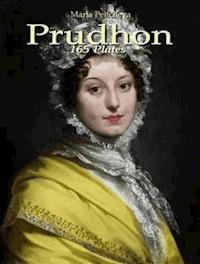
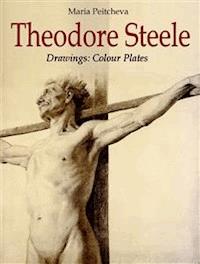
The highlights of this book are the 85 color plates of Prud'hon's academic figure drawings, or "acadamies" as they are known. These drawings dignified and stunningly beautiful. Unfortunately, Prud'hon's drawing techniques have been lost and there is no definitive work describing how they were produced. Many of these drawings have unfinished sections and you can see not only the basic structure, but the construction process as well. This context of Academy training in drawing is particularly important in the case of Prud’hon. Delacroix noted how, even late in life, Prud’hon “habitually spent all his evenings in the studio of his student, M. Trezel, drawing after live models ... as if himself were the student.” Prud’hon was not so unusual in making académies throughout his entire career; he was extremely unusual in making more and more académies as his career advanced, especially as a substitute for finished paintings.
Das E-Book können Sie in Legimi-Apps oder einer beliebigen App lesen, die das folgende Format unterstützen:
Veröffentlichungsjahr: 2016
Ähnliche
Prudhon:
165Plates
By Maria Peitcheva
First Edition
*****
Prudhon: 165 Plates
*****
Copyright © 2015 by Maria Peitcheva
Foreword
Pierre-Paul Prud'hon (1758 – 1823) was a French Romantic painter and draughtsman best known for his allegorical paintings and portraits. Prud'hon's artistic style contrasted starkly with the dominant version of Neoclassicism under Jacques-Louis David. Prud'hon's paintings were based on classical texts and ancient prototypes, but his dreaminess and melancholy were more akin to Romanticism. His drawings, often black chalk on blue paper, were widely admired.
Born the tenth son of a stonecutter in Burgundy, Pierre Prudon transformed both halves of his name and became Pierre-Paul Prud'hon, as if to relate himself to Peter Paul Rubens and to evoke landed gentry. He began studying painting in Dijon at age sixteen. Prud'hon arrived in Paris in 1780, but his experience in Italy from 1784 to 1787, when he absorbed the softness and sensuality of Correggio's works and Leonardo da Vinci's sfumato, gave his art its distinctive style.
Upon his return to Paris, Prud'hon enthusiastically supported the French Revolution. In 1801 Napoleon favored him with commissions for portraits, ceiling decorations, and allegorical paintings. His painting of Josephine portrays her, not as an Empress but as a lovely attractive woman which led some to think that he might have been in love with her. After the divorce of Napoleon and Josephine, he was also employed by Napoleon's second wife Marie-Louise.
In 1816 Prud'hon gained membership in the Institute de France. An ill-fated love affair with a pupil and collaborator who committed suicide in his studio caused Prud'hon's depression and subsequent death.
Lesen Sie weiter in der vollständigen Ausgabe!
Lesen Sie weiter in der vollständigen Ausgabe!




