


6,99 €
Mehr erfahren.
- Herausgeber: Open Book Publishers
- Sprache: Englisch
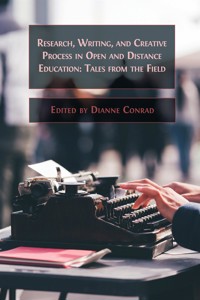
This collection of reflective essays is a treasure trove of advice, reflection and hard-won experience from experts in the field of open and distance education. Each chapter offers tried-and-tested advice for nascent academic writers, delivered with personal, rich, and wonderful stories of the authors’ careers, their process, their research and their writing, and the struggles and triumphs they have encountered in the course of their careers.
The contributors explore the philosophies that guide their work, the conflicts and barriers they have overcome and the mentors and opportunities that sustain and stimulate them, always focused on making their experiences relevant and useful for scholars who are in the early stages of their writing lives. These rich and informative essays will appeal to anyone who wants to learn more about the crafts of research and writing, and the unseen struggles involved in publishing and “being heard.”
Das E-Book können Sie in Legimi-Apps oder einer beliebigen App lesen, die das folgende Format unterstützen:
Veröffentlichungsjahr: 2023
Ähnliche















RESEARCH, WRITING, AND CREATIVE PROCESS IN OPEN AND DISTANCE EDUCATION
Research, Writing, and Creative Process in Open and Distance Education
Tales from the Field
Edited by Dianne Conrad
https://www.openbookpublishers.com
©2023 Dianne Conrad (ed.) Copyright of individual chapters is maintained by the chapter’s authors
This work is licensed under an Attribution-NonCommercial 4.0 International (CC BY-NC 4.0). This license allows you to share, copy, distribute and transmit the text; to adapt the text for non-commercial purposes of the text providing attribution is made to the authors (but not in any way that suggests that they endorse you or your use of the work). Attribution should include the following information:
Dianne Conrad (ed.), Research, Writing, and Creative Process in Open and Distance Education: Tales from the Field. Cambridge, UK: Open Book Publishers, 2023, https://doi.org/10.11647/OBP.0356
Copyright and permissions for the reuse of many of the images included in this publication differ from the above. This information is provided in the captions and in the list of illustrations. Every effort has been made to identify and contact copyright holders and any omission or error will be corrected if notification is made to the publisher.
Further details about CC BY-NC licenses are available at http://creativecommons.org/licenses/by-nc/4.0/
All external links were active at the time of publication unless otherwise stated and have been archived via the Internet Archive Wayback Machine at https://archive.org/web
Any digital material and resources associated with this volume will be available at https://doi.org/10.11647/OBP.0356#resources
ISBN Paperback: 978-1-80511-094-1
ISBN Hardback: 978-1-80511-095-8
ISBN Digital (PDF): 978-1-80511-096-5
ISBN Digital ebook (epub): 978-1-80511-097-2
ISBN XML: 978-1-80511-099-6
ISBN HTML: 978-1-80511-100-9
DOI: 10.11647/OBP.0356
Cover image: Thom Milkovic, ‘Vintage Words’ (2017), https://unsplash.com/photos/FTNGfpYCpGM
Cover design: Jeevanjot Kaur Nagpal
another book for Ray, who keeps his words and his process close to his chest,preferring instead to exercise his artistry with paint and brushes
Contents
Acknowledgement xi
Contributing Authors 1
Foreword: The Way of Academic Writing 7
Terry Anderson
1. Introduction and Welcome 13
Dianne Conrad
2. The Way of Academic Writing: Reflections of a Traveller 19
David Starr-Glass
3. On Being Written 33
Jon Dron
4. What Lies Beneath 47
Pamela Ryan
5. Reminiscences and Reflections: No Regrets 59
Dianne Conrad
6. Intrinsic Motivation, Agency, and Self-Efficacy: Journeying From “Quasi-University” Student to Steward of the ODE Community 71
Junhong Xiao
7. 1001 Nights of Research: The Good, Bad, and the Ugly Magic Carpet Ride 87
Jennifer Roberts
8. Creative Academic Writing and Anatomy of a Scholarly Paper 101
Aras Bozkurt
9. Writing and Making the World 119
Catherine Cronin
10. A Collaborative Approach to Research and Writing 129
D. Randy Garrison
11. Serendipity: Becoming a Specialist in Online Learning 141
Tony Bates
12. Writing in the Margins: Maintaining a Scholarly Voice as an Executive 155
Mark Nichols
13. Indigenous, Settler, Diasporic, and Post-colonial: The Identities Woven Through our Academic Writing 173
Marguerite Koole, Michael Cottrell, Janet Mola Okoko, and Kristine Dreaver-Charles
14. Born Curious and in Trouble: Making Sense of Writing 197
Paul Prinsloo
15. A Few Words in Conclusion 213
Dianne Conrad
Index 217
Acknowledgement
With many, many thanks, I would like to acknowledge the supportive guidance of the Open Book Publishers press. From my initial contact with Dr. Alessandra Tosi, to the wonderful work of Lucy Barnes and the production team of designers and copy editors, OBP has been prompt, efficient, and lovely to work with. I am so grateful.
Contributing Authors
Aras Bozkurt is a researcher and faculty member in the Department of Distance Education, Open Education Faculty at Anadolu University, Turkey. He holds MA and PhD degrees in distance education. Aras conducts empirical studies on distance education, open and distance learning, online learning, networked learning, and educational technology to which he applies various critical theories, such as connectivism, rhizomatic learning, and heutagogy. He is also interested in emerging research paradigms, including social network analysis, sentiment analysis, and data mining. He shares his views on his Twitter feed @arasbozkurt.
Catherine Cronin is an independent scholar focusing on critical and social justice approaches in digital, open and higher education. She is co-editor of Higher Education for Good: Teaching and Learning Futures (forthcoming with Open Book Publishers, https://doi.org/10.11647/OBP.0363) and was a 2022 Global Open Education Graduate Network (GO-GN) Fellow. Catherine has worked in both the higher education and community education sectors, most recently as Digital and Open Education lead in Ireland’s National Forum for the Enhancement of Teaching & Learning in Higher Education. A born New Yorker who has made her home in Ireland, you can find Catherine at https://catherinecronin.net.
David Starr-Glass is a mentor with the International Education (Prague) at SUNY Empire State College. He teaches a range of business and cross-culture courses online and is also a dissertation supervisor for undergraduate dissertations in business and economics. Over the last twenty years, he has published more than 120 book chapters and peer-reviewed articles. He has earned master’s degrees in business administration (University of Notre Dame de Namur, California), occupational psychology (Birkbeck College, University of London), and in online education (University of Southern Queensland). When not in Prague, he lives in Jerusalem and teaches economic and business-related courses with a number of local colleges.
Dianne Conrad has spent her post-secondary career firstly in adult education, specializing in prior learning assessment; and after that, in online, open and distance education, with an emphasis on learning, community, and assessment. Since retirement from Athabasca University, she has published five books (including this one) on several topics dear to her heart: online assessment, open learning, online doctoral potential, and seniors’ learning in today’s digital age. She has taught all manner and levels of distance education courses, published many journal articles, and served as co-editor of the International Review of Research in Open and Distributed Learning (IRRODL). She hopes to keep going.
Jennifer Roberts is an associate professor in the Institute for Open Distance Learning (IODL) in the College of Education at the University of South Africa (Unisa). A truly interdisciplinary scholar, she has undergraduate studies in statistics and sociology, and graduate degrees in tourism development and management, and in distance teaching and curriculum design. She is widely published in distance education, discipline in education, metacognition, research trends and staff development and has presented papers around the world. Jennifer was the first South African to be elected to the executive committee of the Open and Distance Learning Association of Australia (ODLAA), where she was vice president and publications officer and has also twice guest-edited the Distance Education Journal. In 2021, she was acknowledged by the AD Scientific Index as a member of the top 10,000 influential scientists on the African continent and occupied the number three position in Africa for DE research.
Jon Dron is a full professor at Athabasca University, based in the School of Computing and Information Systems. He has received national and institutional awards for his teaching, is author of various award-winning research papers, and is a regular keynote speaker. His research is cross-disciplinary, including social, pedagogical, technological, systemic and philosophical aspects of technology, learning, and education, about which he has authored three books. Prior to becoming an academic, he sang swing for a living for ten years, before becoming an IT support manager. He has qualifications in philosophy, information systems, university education, and learning technologies.
Junhong Xiao is a professor at the Open University of Shantou (formerly known as Shantou Radio & Television University), China; founding member of the Center for Open Education Research (COER) of the University of Oldenburg; co-editor of SpringerBriefs in Open and Distance Education series (https://www.springer.com/series/15238); editor of Section I, History, Theory and Research in ODE, Handbook of Open, Distance and Digital Education (https://link.springer.com/referencework/10.1007/978-981-19-0351-9#toc); editorial board member of several journals; co-author of over 250 publications in Chinese and English; and reviewer of numerous journals and conferences. He has been engaged in open and distance education for thirty-five years as a practitioner and researcher.
Marguerite Koole is an associate professor in educational technology and design in the College of Education, University of Saskatchewan. Her PhD thesis, completed in 2013 at Lancaster University, UK, is entitled “Identity Positioning of Doctoral Students in Networked Learning Environments”. She holds a Master of Education in Distance Education (MEd) with a focus on mobile learning and a BA in modern languages. She also completed a college diploma in multimedia production with training in web development, audio, video, animation, 3D animation, marketing, and business. Marguerite has been involved in teaching, instructional design, multimedia programming, content management, e-portfolios, and social software. She has designed interactive, online learning activities for various learning purposes and platforms — including print, web, and mobile devices. Email: [email protected]
Mark Nichols is, at time of writing, executive director of learning design & development at Open Polytechnic, a subsidiary of Te Pūkenga in New Zealand. Mark is a principal fellow of the Higher Education Academy and a European Distance and e-Learning Network (EDEN) fellow, and he has served on the executive committees of the Flexible Learning Association of New Zealand (FLANZ), Australasian Society for Computers in Tertiary Education (ASCILITE), and currently the International Council for Open and Distance Education (ICDE). His research work includes outputs related to studying on screen, student retention, indigenous courseware development, teaching and learning models, and open, distance and flexible (ODFL) systems and change. Mark hosts the Leaders & Legends of Online Learning podcast.
Pamela Ryan has retired from full-time academia and now works as an academic consultant helping young academics with their research papers and research funding applications. She also serves as an editor for theses, dissertations and academic books. She was appointed as research fellow at St Edmund’s College, University of Cambridge in 2003, and fulfilled this role annually until 2017. Originally from the Department of English Studies, her interests are in Sylvia Plath, modern women’s fiction, psychoanalysis, postcolonial studies, open learning, and digital literacy. Pam lives in a small village two hours from Cape Town, South Africa, and spends her time walking, reading, gardening and just generally staring in awe at the mountains.
Paul Prinsloo is a research professor in Open and Distance Learning (ODL) in the Department of Business Management, College of Economic and Management Sciences, University of South Africa (Unisa). He is a visiting professor at the Carl von Ossietzky University of Oldenburg, Germany, a research associate for Contact North/Contact Nord (Canada), a fellow of the European Distance and E-Learning Network (EDEN), member of the Executive Committee for the Society of Learning Analytics Research (SoLAR) and serves on several editorial boards. Paul’s recent research focuses on the ethical collection, analysis, and use of student data in learning analytics. He was born curious and in trouble and nothing has changed.
Randy Garrison, professor emeritus at the University of Calgary, has served as dean of extension at the University of Alberta and Director of the Teaching and Learning Centre at the University of Calgary. He has published extensively on teaching and learning in adult, higher and distance education. Randy has authored, co-authored, or edited fifteen books and over 100 refereed articles/chapters. He currently has two books in press: Vaughan, Dell, Cleveland-Innes, and Garrison (2023), Community of Inquiry: Seven principles of blended learning; and Cleveland-Innes, Stenbom, and Garrison (eds) (2023), Community of Inquiry applications: Introduction, design, delivery.
Tony Bates is a senior advisor at the Chang School of Continuing Education, Ryerson University, Toronto and is also a research associate at Contact North, Ontario. He was chair of the Board of the Canadian Digital Learning Research Association from 2018 to 2022 and is a consultant assisting with the implementation of the British Columbia Institute of Technology’s e-Learning Strategy. He is the author of twelve books, including his latest online, open textbook for faculty and instructors, Teaching in a Digital Age, which has been downloaded over one million times and translated into ten languages. He has honorary degrees from two Canadian universities (Laurentian and Athabasca) and four foreign universities for his research into online learning and distance education.
*Using an innovative format in her chapter, Dr Koole included three colleagues in a discussion designed to address chapter themes through several interconnected lenses. Her co-writers’ biographical notes are here, also alphabetized by first name:
Janet Mola Okoko is an associate professor in the Department of Educational Administration, College of Education at the University of Saskatchewan in Canada. She holds a Bachelor of Education from Kenyatta University in Kenya, a Master of Education, and a PhD in educational leadership from the University of Calgary. Her research focuses on school leadership preparation and development. She is currently studying how school leaders’ capacity to use practitioner-oriented and technology-mediated research to support student learning can be enhanced. Her recent publications report on cross-cultural perspectives on teacher leadership and contextual perspectives of qualitative research methods. Email: [email protected]
Kristine Dreaver-Charles is a member of the Mistawasis First Nation, and she grew up in Prince Albert, Saskatchewan. Her early career was spent teaching middle years and high school students in northern Saskatchewan. A position teaching online led to a master’s degree in instructional media from Wilkes University. Kristine works at the University of Saskatchewan and in 2022 began a new position as an academic innovation specialist with the information and communications technology portfolio. As a PhD candidate, Kristine’s areas of interest are decolonization in distance education, Indigenization, and reconciliation in higher education. She also has a related area of interest in Indigenization and internationalization in study abroad — a part of this work includes Indigenous assessment. Email: [email protected]; https://orcid.org/0000-0003-2550-163X
Michael Cottrell is associate professor and graduate chair in the department of Educational Administration, College of Education at the University of Saskatchewan. Michael’s research and teaching areas include Indigenous-Newcomer relations, Indigenous education, international and comparative education, and Irish diasporic studies. In addition to peer-reviewed scholarship he has conducted a significant body of social-justice oriented applied and advocacy research, frequently on behalf of Indigenous communities. Email: [email protected]
Foreword: The Way of Academic Writing
Terry Anderson
A year ago, Dianne Conrad asked me (along with the authors of this text) to write a “reflective chapter” on research. At times in my career, I would have been thrilled to be invited to write and publish in an academic book — especially on a topic that did not require any original data collection. However, I declined as I had officially retired (a great excuse for not committing to projects). But more importantly, I was still getting over a chapter I had recently submitted to an ambitious encyclopedia project. I did not know a great deal about the topic I was asked to write on, but it inspired my curiosity and it was an important development in our field. I thought, well, all I must do for an encyclopedia article is document and try to make sense of the relevant research, which I did. The first draft came back with the reviewers’ comments that stated that, among other deficiencies, “the article was rudderless.” I am a sailor and I have a managed a boat with a damaged rudder; I was not flattered. Worse, I could see the problem — but I couldn’t see a solution. Fortunately, a co-author helped save the day and while we were left with an acceptable, perhaps even a good chapter, I was left with a bruised ego and yet another incident of “Imposter Syndrome.” Even after a celebrated career, ten books and over 100 peer-reviewed articles, I felt yet again that I was a phony academic — an imposter. Thus, I declined Dianne’s request.
The story did not end there as twelve months later, Dianne asked me to write this foreword. How could I say no twice? Fortunately, this time I had the benefit of being able to read the chapters (standing on the shoulders of real giants) and I gained not only tips and techniques, but, more importantly, insights into the craft and into the personalities of these distinguished academic authors.
The authors have common interests and proven publication records in the swiftly growing field of open and distributed education. From this commonality, one might conclude, based on the notion of “academic tribes,” that they would hold common views on writing methodologies, formats, styes, voice, publishing outlets, and writing perspectives. However, after reading the chapters, it became clear that this particular academic tribe is more like an old-fashioned zoo than a homogenous cohort. The animals (authors) on display hail from many countries, come in many academic sizes, and share a common audience; but they have each found a distinct voice in the eclectic world of teaching and learning in ways that extend beyond the classroom. Thus, in this text we find qualitative and quantitative researchers. We find authors for whom issues of racial and social justice are critical and central while others don’t go there. We find authors, those who, until this text, have never written an academic paper in the first person; and those who can’t imagine writing from any other point of view. This eclectic yet connected context provides a very rich tapestry of knowledge honed by the experience and skill of successful writers.
Even prior to COVID-19 times, the educational world was waking to the reality and need for lifelong education that spanned both geography and time. This sense of opportunity, coupled with a commitment to being a part of something; as well as possession of the skills and, just as importantly, the opportunity to write and research, further defines the animals in this zoo. I hope each reader takes the opportunity, not only to read each chapter closely, but to carefully note which of the approaches, challenges, perspectives and contexts most matches their own. Equally valuable is noting how authors who have many different contexts, styles, and approaches to writing produce a stimulating academic work. Of course, all these authors have multiple products available for scrutiny in the academic press and a trip down a Google Scholar-inspired rabbit hole will provide a deeper context and understanding of these writers. The reader can be confident that exploring and following many of the paths and actual suggestions from the authors will result in both improved writing and likely more success at having their work published. After all, if the authors in this book were not good at these tasks, they would not be included here!
I also assume that readers of this book are engaged in some sort of academic enterprise, and many are likely researchers in open and distance education. Thus, they too have commonalities. All university academics are required to research and share (publicize) the results of their work. Though this is well known and generally perceived to be a reasonable expectation, there are many who come to higher education with neither the desire nor the skills to both conduct research and to disseminate that work which is most often achieved through writing. For them, following Rilke’s advice (from Paul Prinsloo’s chapter) they must “examine the reasons they write and check whether it reaches its roots into the deepest region of your heart, admit to yourself whether you would die if it should be denied you to write.”
For many, publishing means communicating in a language that it is not native to them. For others, it is teaching and mentoring, programming, or researching — and not writing — that inspires and energizes them. Through a careful reading, the chapters in this text will provide comfort, technique, and inspiration for those for whom writing is not an enjoyable activity. Few of us will match the quantity and quality of the writers in this text, but we all can learn. Fortunately, those attracted to the academy are usually good learners and thus most will find this book both useful and very, very interesting. There is also hope in this book — even for those for whom writing deadlines and expectation hang like Damocles’ sword waiting to destroy their academic careers — that they will find at least one chapter with sound advice that speaks to them.
In Canada, we are struggling to come to terms and deal with a history of poor treatment of the first inhabitants of this continent. One of the cultural norms we are coming to appreciate is the value of acknowledging and listening to elders. Certainly, and chronologically, many of these authors are old and grey enough to be called “elder.” However, Chief Clarence Louis notes that elders become elders not by thinking of themselves as such but by recognition of their unique worth and wisdom by others. Further, an elder is one who has special knowledge — whether of hunting, homemaking, healing, or husbandry. You are thus holding a book of wisdom written by elders, honed by Dianne’s considerable editing skills, and forged in the fire of real-world experience of practicing education research. Each of these chapter’s authors gives us an elder’s wisdom — often a brief chronological overview of the important events, people (mentors, colleagues, and students) and the ideas that inspire and motivate them.
Many of the authors’ names and work will be familiar to those working in open and distance learning. Only choosing successful scholars has its advantages in that these authors have had their work revised, edited, copy-edited, and both published and rejected. They’ve walked the talk. One of the joys (burdens?) of publishing widely is that your name pops up regularly in the reviewer databases. This means that you have a chance to see others’ initial efforts, and you are allowed and indeed required to work to not only help the author move to a better work, but also to winnow the crop, sorting the grain from the chaff.
Assuming that readers of this volume are researchers, potential researchers, or those who feel guilty because they are not writing and publishing enough makes me confident that this volume is a useful work. Some of the authors note specific do’s and do not’s; others narrate what forces and personal idiosyncrasies compel and fuel their research journeys. The remainder celebrate the joys and insights of writing. Or as Jon Dron eloquently expresses it: “Writing for me, personally, is both a cognitive and emotional prosthesis, something that helps to form my identity as much as it emerges from it. I am the maker and the made, the writer and the written.” Thus, this work offers tools and tricks for the pragmatic as well as visions and inspiring dreams for the visionary.
Let me end this “blurb” with a comment about the editor herself. Dianne Conrad is a most amazing woman. At what would be the end of very successful career as an administrator, a teacher, researcher, editor, mother, grandmother, and recently wife, Dianne decided to be a be a full-time writer. I recall a comment from the famous Canadian author Margaret Atwood, who commented (while rolling her eyes) about professionals who described their plan to become writers in their retirement, if they could match the skills, training, perseverance, and luck of the many professional authors that Atwood had taught and mentored over her career, not to mention having the skill and tenacity to author the many works of fiction, poetry and essays that Atwood has produced.
In “retirement,” Dianne has published five books as well as articles, book chapters, and journal reviews. This volume is perhaps her most important (but knowing Dianne, it is likely not the last) in that it provides the meta-thinking in addition to the nuts and bolts of writing for academic publication. Dianne, along with these chapter authors, teaches us to fish — obviously more useful than selling us a fish. On behalf of all those who dream, plan, and look forward to experiencing the thrill of reading one’s own work in press, congratulations, and thanks Dianne!
1. Introduction and Welcome
© 2023 Dianne Conrad, CC BY-NC 4.0 https://doi.org/10.11647/OBP.0356.01
Dianne Conrad
I embarked on this project with great excitement. The topic of research and the writing process has fascinated me for years and continues to do so; additionally, literature on this topic seems to be much needed. It is well known in academe that doing research and publishing that research are important and necessary activities for advancement and recognition in the field. Our field of open, online, and distance learning (ODL) is multi-faceted, global, and progressive, thanks, in no small measure, to the inclusion of technical functionality and affordances at the heart of what we do.
Over the past many decades of growth in ODL, our field has expanded to include myriad journals hosted by organizations and institutions all over the world. Scholars’ initial choices of a few print-based journals have grown to feature a wide range of online and open journals covering micro, meso, and macro levels of research. For the new scholar, challenges to publishing can include a range of decisions, from locating a research topic to choosing an appropriate publication venue. And of course, in between lies the mountainous task of writing.
As I describe in my chapter that follows, I was once a novice writer who anguished for too long over how to get started! And then… I put fingers to keyboard and began. From that point on, I was learning, honing, gathering, and, to the best of my ability, perfecting. Writing is a craft that requires endless skill, labour, and repetition. At times, I look back at a piece published years earlier and realized that I could have written it differently — perhaps better or more concisely. One can always improve.
Much of my writing “know-how” comes from a period of six years when I served as editor of the prestigious International Review of Research in Open and Distributed Learning (thank you, Terry Anderson for that precious opportunity and thanks to Rory McGreal for co-editing with me). It was indeed a privilege to be privy to so many scholarly works — so many topics, so many styles. But I must also credit my elementary school education which, in the 1950s, included a rigorous focus on grammar and punctuation. In high school, I studied Latin, French, and Spanish; those pleasant excursions into other languages, especially the dead one, firmed up a strong sense of sentence structure and verb tenses. English was my first undergraduate degree at university, although I do not think it contributed to a sense of “writerly-ness” as the curriculum was all literature and I’m fairly certain that teaching assistants marked my essays in a perfunctory manner, not being too concerned with the mechanics of the work.
There were two occasions in graduate school that I recall as instructional. The first, in my master’s programme, involved a professor sitting down with me and attacking my use of punctuation in a paper. “Pull up your socks, Missy” is actually what she said. I was appalled; and I knew the scolding she gave me was not deserved. Her own success with writing was less than superb. Her publications were minimal. From that experience, I learned to have faith in myself and not to invest trust or respect willy-nilly in the professoriate.
The second occasion was more constructive. I was writing my first piece for publication and I passed the paper before the keen eyes of my doctoral supervisor for input. She promptly slashed the first eight pages of the document. “Not necessary!” she barked. Apparently, I had greatly surpassed the appropriate amount of context and history for my argument! That lesson in topic-honing and the resulting humiliation was an important one.
To construct this book, I reached out to many colleagues and scholars with whose work I was familiar and asked them to contribute their stories of creativity, research, and writing process. Some well-respected colleagues were too busy to comply, understandably. But the roster of authors who are contained here is impressive and this book is filled with amazing and humbling stories. The pages herein offer considerable and valuable input from these excellent writers.
On Reflection
It has been my experience that the technique of writing reflectively has either been taken for granted, not exercised well, or perhaps not taught well. I have encountered many doctoral students who had not engaged in reflective writing prior to my asking them to do so. Perhaps, too, the difficulty could be that of language, as is often the case. I, myself, have been puzzled by the occasional reference to reflexivity (as regards cognition and thought and not science) as opposed to reflection. Even dictionary advice differs (English Language and Usage, n.d.); in the long run, the terms appear to mean essentially the same thing, reflection being the modern and more commonly used term; hence its use here.
Schön has been a primary source for understanding reflection, both reflection-in-action and reflection-on-action. As is implied by the prepositional use of “in” and “on,” the latter refers to thinking back, retrospectively, to actions or practices that have been completed; and trying to make sense out of them in some way — to interpret, to learn, to improve or change.
Not everyone is comfortable writing reflective material and not everyone has the time, either personally or academically (see Prinsloo’s chapter for a detailed description of how academic time vis-à-vis writing is measured and valued), to do so. Ellen Rose, in her thoughtful book On Reflection: An essay on technology, education, and the status of thought in the twenty-first century, argues that we must reconsider the value of, the meaning, and the practice of reflection in order to halt the technological juggernaut of our times. Slow down, she says, and take the time to “simply stop and think” (2013, p. 108). She suggests that reflection is, or can be, a “way of being,” a way that we can move forward in our practises with integrity and creativity.
Realizing then, that there is an important and necessary role for pondering one’s writing process, I asked contributors to this book to consider the following: background and scholarly training; scholarly interests; reasons and motivation for researching and writing; guiding philosophies; conflicts, barriers, mentors; opportunities, insights, and sorrows. Contributing authors responded to each facet of my request in varying degrees. This, I found fascinating — noting, as I did, the influence of socio-economic, geographical, and political backgrounds, education, and personal choices in their stories, mediated by just plain luck. There is no “one size fits all” here.
A sterling example of authors responding to “place and space,” as described above, can be found in Koole’s chapter. Taking stock of the history and heritage of their Canadian province, Saskatchewan, Koole invited three colleagues to a guided discussion wherein they addressed my seed questions through each writer’s particular lens. The resulting polyvocality demonstrates an intriguing mix of voices in the narrative. Not surprisingly, the chapter is very long, but rivetingly informative.
I also asked for words of wisdom: advice and takeaways. To that end, there is a wonderful collection of tips and advice for novice or struggling writers provided in these pages. Among others, Bozkurt has provided a clear outline of his writing process, certain to be of use to those who are trying to find their own way. In these sections of the chapters, similarities can be noted. I take this as a prized agglomeration of seasoned wisdom from “the folks who know,” those whose mentoring is invaluable.
On the topic of mentors, I see this text as a mentoring opportunity not only for me but also for the contributing authors. It takes the passing of years and the accumulation of experience to wake up one morning and realize that one is now equipped — now mature enough — to serve as a mentor to others. At least it did for me! My sense is that this realization creeps up on an individual, perhaps hastened by others asking for advice, guidance, or assistance; perhaps encouraged by a sterling performance review or reflection for a tenure application. Whatever the circumstances, there comes a time for giving back. (For more insight into mentoring and its value, see Starr-Glass’s and Roberts’ chapters; and see Xiao’s chapter for “giving back.”)
The contributing authors in this text span a remarkable breadth of experience, history, and geography. I am indebted to each of them for sharing their stories so articulately, so honestly. Each one is unique; many are disarming, even shocking. The scope of approach to the task can be perceived from chapter titles — an interesting balance of functionality and personality. But all are incredibly informative and, in my opinion, extraordinary fodder for novice writers and scholars.
Given the diversity described above, I did not struggle to try to identify themes or likenesses. Each story stands alone, although you will find some of the same hurdles and barriers described as they were experienced by our contributors in diverse ways. And, on the positive side, you might also notice several references to curiosity, passion, and the quest for knowledge. On the negative side, authors enumerate hardships both professional and personal, often in startling detail.
That said, what was of great interest to me, as I think it will be for you, was the variety of ways in which these well-known and celebrated contributors to our field framed the exercises of “looking back” and “giving back” — giving back in the sense of digging deep into their experiences to share insights arising from their own histories and advice based on those histories. To trace the journeys described in several of these chapters (see, for instance, Bates, Garrison, Cronin, Ryan, Dron) has provided humbling reading for me. I have worked with, and know personally, the majority of this book’s authors; however, hearing their own thoughts and words on the topic of “self” and the self’s relationship to the crafts of research and writing opened up many new portals of information — personal information, philosophical musings and stances, and great dollops of humour. This is what these pages are intended to share.
Enjoy these reflections and musings from these colleagues in the field. They are so precious; and perhaps even rare in that many contributors have not written before about their own writing or creative experiences. So many of the authors confessed this to me and, better yet, told me that they had found it a very enjoyable activity, perhaps even liberating. For those revelations, I am extremely grateful.
In the most positive and appreciative sense, I enjoyed reading the stories of early struggles, wrong turns, and barriers. I suffered these myself. I had come to graduate work freshly out of a marriage; my children and I lived in semi-poverty in somewhat less-than-attractive student family housing in a large, strange city. Eventually, my cheques bounced. An early research grant, the proposal designed and submitted by my then boss and mentor, Walter Archer, saved the day. As his research assistant, I happily accepted my share of the funds.
My master’s thesis was written at night on an Apple 2e in a dingy kitchen after the kids had gone to bed. My twelve-year-old was entrusted with the care and feeding of his eight-year-old brother while I attended classes. I rode the bus, which made the journey home even longer. The boys fought insufferably; tears all around. (But I am happy to say that they are best friends now, in their maturity.)
Because of my financial situation, I always wore two hats: administrator (day job), and university teaching (part-time-when-available job). I taught, co-taught, tele-taught, video-taught, summer-course-taught… and then, as described in my chapter, I finally began to write. My writing enabled me to consort with “real” academics at conferences, allowed me to be invited to contribute chapters and articles here and there. Other contributors have also described “late” entries into the field, and Brookfield’s (1990) description of Imposter Syndrome is also mentioned. Perhaps we have all experienced that.
Occasionally, I regret not taking up an offer to join a faculty as a “real” academic. (See also Nichols’ views on this positionality.) Most of the time, however, I am content with my dog-legged journey to retirement. I have been privileged to meet so many inspiring and wonderful people, truly pioneers and innovators in our field. I have enjoyed so many fruitful, exciting conferences and had the opportunity to speak my piece. I have travelled. I have had fun.
Best of all, though, I recently found myself in a position to tell not only my own story, but the stories of many of my colleagues, in this book. I sincerely hope that readers enjoy and benefit from the wealth of experience and honesty contained in these pages.
References
Brookfield, S. D. (1990). The Skillful Teacher. Jossey-Bass.
English Language and Usage. (n.d.). Difference between “reflection” and “reflexion”– English Language & Usage Stack Exchange
Rose, E. (2013). On Reflection: An essay on technology, education, and the status of thought in the twenty-first century. Canadian Scholars’ Press.
Schön, D. (1984). The Reflective Practitioner: How professionals think in action. Luria.
2. The Way of Academic Writing: Reflections of a Traveller
© 2023 David Starr-Glass, CC BY-NC 4.0 https://doi.org/10.11647/OBP.0356.02
David Starr-Glass
What the Way is to the world, the stream is to the river and the sea.
Lao Tzu,
Tao Te Chin
, Chapter 32
This chapter touches on many issues, but it has one main purpose — to encourage interested members of academic communities to consider writing and publishing, especially if they have not done so previously.
Writing and publishing are realistic goals for all members of the academic community — for those who are passionate about their disciplinary area, their research, and their teaching. A self-perceived inability to write might deter some, but the greatest blocks to successful writing and publishing are low motivation and a lack of encouragement. Successful scholarly writers must be dedicated, resourceful, and encouraged.
It might be argued that writing only makes sense for those in the early stages of their academic journeys, with writing and publication being seen as necessary prerequisites for a scholarly career. It is certainly advantageous to begin writing early; however, cultivating an interest in writing can be just as rewarding for those who have seen their careers blossom, gained considerable disciplinary knowledge, but who have published little or even not at all.
Before Embarking on the Way
Writing is a craft that requires ongoing effort, focused commitment, and a dedication to refinement. It consumes but does not waste time, especially when the writing explores issues with which we are involved in our professional practice. Academic writing (which in this chapter is considered synonymous with scholarly writing) provides an additional dimension — an expanded and extended dimension — for disciplinary engagement and professional development. Writing is a formal and dedicated practice that can potentially heighten awareness and stimulate deeper reflection about the what, why, and the how of our academic activities.
Some academic writers emphasize the importance of the final product: the published manuscript. Others — including the present writer — recognize that it is the process of writing that is perhaps of even greater value. The process of creating and communicating new meaning can significantly complement the other areas of our academic lives. It can infuse them with a fresh and synergistic energy and, of course, it can increase our interest, awareness, and satisfaction. Academic writing has inherent value and pragmatic utility, but perhaps its enduring worth is when it is recognized as an extension of self.
This chapter is a personal reflection on practice. I hope that it will be appreciated as a sharing of thoughts that might help and encourage, not as an exercise in self-indulgence or the manifestation of late-onset reminiscence.
A little contextual background might be in order. My areas of academic interest are business, organizational behaviour, and occupational psychology. I have advanced degrees in these areas and a master’s in open and distance learning. I identify as an eclectic scholar, a transdisciplinary explorer, and an attentive teacher and mentor. I strive to guide students in their exploration and construction of knowledge. As an academic and researcher, I self-categorized as a bricoleur — bricolage is a recurring theme in my published work (Starr-Glass, 2010; 2019).
Over the last twenty-five years, I have published over 100 peer-reviewed works divided more or less equally between peer-reviewed journal articles and edited book chapters. I have also written dozens of reflections and opinion pieces for academic and non-academic journals and published three non-fiction books. I greatly enjoy writing and have benefitted from it. For me, writing is a challenging but pleasurable experience that provides an opportunity to pause, reflect, and communicate what is important to me and what might be of interest to others. Writing is a voice — my unique voice — and I always understand that what I write is the starting point of a new conversation with the “other.”
Early Steps on the Way
Academic writing provides voice for those within the disciplinary area: voice at both a communal and a personal level. Potentially, academic publications contribute to three separate but connected processes:
Defining and shaping the disciplinary community.
Defining and shaping the individual, or individuals, within the community who have authored the work.
Creating bridges between the community and those beyond and outside it — scholars in other disciplines, novices in related fields of practice, and those who are interested in entering or exploring the subject domain.
Each academic discipline develops its own unique norms, culture, language, and modes of communication. Academic disciplines have been perceptively seen as distinctive tribes occupying and defining distinctive territories (Trowler et al., 2012). In some disciplines — and in some institutions of higher education — there is an expectation of communicating research and/or teaching experience: the “publish or perish” imperative. Here, although other facets of writing and publishing are recognized, the prime concern is to expand and consolidate disciplinary territory. Although academic publications certainly shape and strengthen the community, they also provide benefit for the individual author: enhancing professional reputation, facilitating future research grants, and working towards promotion and tenure (Korkeamäki, et al., 2018).
However, in many other disciplinary areas — and especially outside the research university — publications are desired and appreciated but are neither required nor forced. In these settings, writing and publication are viewed as laudable peripheral activities but not at all central to the overall academic enterprise. Significant teaching commitments and academic obligations often leave little time for writing and institutions themselves may provide little by way of reward or recognition for those who publish. Even where academic writing is valued and encouraged, publishing is usually skewed — a small number of prolific writers produce most work, most faculty members publish little and only occasionally (Rørstad & Aksnes, 2015).
Perhaps, in these low-publishing disciplines and institutions, faculty members come to doubt whether they have a voice — whether they have knowledge, experience, or perspectives that are novel or significant enough to communicate. Otherwise, thoughtful and highly competent academics are often prone to what has been termed “Imposter Syndrome,” and they may seriously doubt their own competency, professional ability, or scholarly worth. Writing is perceived as the specialized activity of special people. When teaching loads are heavy, time is at a premium, and the work-life balance is significantly out of balance, writing is just not seen as a realistic or viable option.
That was the context within which I worked. I had been teaching undergraduates for many years, but the idea of writing a journal article never occurred to me. Not, that is, until I was teaching a management course in which all of the students happened to be Belgians — a truly international venture: an American college, located in Jerusalem, which (at that time) served a predominantly European student body. My students were bright, articulate, and communicated exceedingly well in English (for most of them, their third language). But there was a problem.
The subject matter was uncomplicated, but it did not resonate with students. The textbook was a well-known American one, but students had difficulty in fully appreciating the nuanced assumptions, values, and beliefs that permeated it. They had difficulty in understanding what “American” businesses did and what preoccupied “American” managers. After much discussion, it emerged that a very real and palpable national cultural divide existed between my students (Belgian) and the learning material (American).
I wrote a short article for a management journal, reflecting on the teaching/learning challenge and outlining how I had attempted to bridge the cultural divide. After many weeks, the reviewers’ observations finally arrived (this was in the era prior to email). I read the first page of blistering comments and cringed. I felt that my audacity in submitting a manuscript had been called out. I really had nothing to say and what I had said was patently foolish, or at least ill-advised. I was an imposter and the reviewers had recognized me as such. The review was about four pages long, but I only made it through the first two. I was deflated, chastised, and dejected. I put the reviews aside and resumed my day.
Only later, on re-reading the summarized reviews, I found that the editor had added a short note at the very end: “If you address the minor points raised by our reviewers, we would be pleased to publish your work in our next edition.” I read the reviews again but could not reconcile them with the editor’s optimistic note. Of course, I took the editor’s advice, rewriting the manuscript and carefully addressing each “failing” raised by the reviewers. The revision was accepted without comment and my first published article saw the light of day. In the process, I learned something very important about peer-reviews, peer-reviewers, and editors. This was my first somewhat shaky step on the way and I was in my late forties (Starr-Glass, 1996).
Thoughts Along the Way
There is an extensive literature on the purpose of academic writing: what it is considered to do, how it can be recognized, and how it might be evaluated (Boyer, 1990; 1996; Glassick et al., 1997; Tight, 2018). It might be a good idea for the prospective academic writer to review this literature. However, it should be appreciated that much of this work centres on the creation of academic writing in newly established disciplinary areas (such as the Scholarship of Teaching and Learning) and the intent of these authors is to utilize writing and publication as a means of advancing and consolidating these new disciplinary domains.
There is a much more limited literature on how to produce academic writing. The present chapter is not intended to be an extensive or comprehensive how-to manual; nevertheless, the following points — gained from personal experience and ongoing involvement — might be of use for those contemplating academic writing and publishing.
Consider Content
Writing for publication only materializes if there is content. There are two obviously linked issues. First, the writing — what appears on the printed page — must contain ideas, concepts, and observations that are accessible and potentially useful to the reader. This content is created by the writer, but it is ultimately identified and utilized by the reader. Content is what the reader decodes, recognizes, and remembers. Content, in this sense, is what the reader engages with and considers — it is from the content presented that the reader will construct his or her own narrative and new understanding.
But this public presented content is grounded in a second domain: the unique and personal content of the writer. This content is the writer’s inner reservoir of knowledge, appreciation, reflection, and expression. It is the existence of this internal content that initiates communication, even if that communication is only with the self. In order to write there needs to be something to write about — something in the writer’s interiority that is capable of identifying itself and demanding articulation.
Communication is not simply about the transmission of a message. It begins with the writer who encodes the message, which is considered significant, and ends with the reader who attempts to decode this and bring it into his or her world. Communication always involves people and is always personal. In the academic world, writing for publication is often narrowly considered to be “appropriate” when it is impersonal, judiciously sterile, and remote from the human source of its origin. Academic writing may well be a place for distance, detachment, and objectivity; however, it cannot avoid being a place for personal connection and human communication. That connection is with you, the writer. That content is from you. Search within you for things that are important to you. Search for your authentic voice. Find it and engage with it. Ensure that your distinctiveness permeates what you write.
Reflect on Experience
Academic writing seeks to convey knowledge: new consideration of theory, novel applications of principles, and consolidations of what is currently known. Knowledge is a fluid and personal construction. Experience is the process through which knowledge becomes recognized, tested, and understood to be relevant at both a personal and disciplinary level. Schön (1991) distinguishes between two complementary reflective practices: reflection-in-action (which takes place as we are actively engaged in the practice) and reflection-on-action (which is a retrospective reflection on what has been done). It is through reflection both in and on our practice — and the articulation and communication of those reflections — that new knowledge is created, affirmed, and revised (Eraut, 1985).
All academic writing is implicitly a reflection on experience. Be willing to share your own reflections, not just on knowledge but on practice. The two are always contested — they are in a process of dynamic evolution, not of static certitude. Your writing will contribute to the process of disciplinary vigour and evolution, just as it will contribute to your own growth.
Be Mindful of the Journey
When you read a published article, you are engaging with a final product. In a metaphorical sense, this was the writer’s destination. Destinations, however, are only part of the journey. As a writer, it is the whole journey with which you will be preoccupied. You have to know where you want to go, but you also need to appreciate that there is no clear and obvious way of reaching that place. Structure the journey: know where you are going. Tentatively map out the journey: know how you will reach your destination.
Set out and do not be afraid to explore the territory: you might find that it is simply not shown or not accurately depicted on your map. Some pathways will quickly appear but then prove to be dead ends; other routes may suggest themselves slowly but be more productive. The published article shows no trace of these explorations. It shows no sign of the way in which the journey was changed, the multiple drafts that were created, or the continual reiterations and refinements that are part of the article’s literary history. All of these remain with the writer but are not evident to the reader.
Personally, when starting to write a new academic work, my destination is usually somewhat vague and covered in shifting mists of possibility. Over time, there is a growing sense of where I want to go and then a tentative idea of the way in which that destination might be reached. For me, this process takes time and ongoing reconsideration. It cannot be rushed but — usually in a rather sudden and unexpected manner — things begin to crystallize and pathways become visible. This crystallization usually begins with a title that seems to encapsulate the central idea of the work: my titles are conceived first, just as my abstracts and introductions are always written last.
The process is undoubtedly different and unique for other writers, but the point is that all academic works are actively constructed and reshaped: they do not magically materialize. Some writers of academic works might claim that their final articles “wrote themselves.” Many more acknowledge that the art and craft of the writer lies in a process of construction and reconstruction: the final publishable article takes shape gradually; it does not appear in an instant. Acceptance of this at the outset might be particularly valuable for new writers, focusing them more on the journey that lies ahead rather than the destination.
Mine the Unknown
There is a common adage that you should write about what you know. This seems intuitive and makes a great deal of sense, especially in academic writing. Readers of academic works want to be informed, not necessarily entertained. For the writer, however, there can be advantages and pleasure in learning about a new topic — a topic about which little or nothing is presently known — through the process of writing. As scholars and practitioners, we are constantly involved in creating and absorbing new knowledge. One of the tests of whether new knowledge has been acquired is whether you can successfully explain it to someone else, especially to someone familiar and competent with the general subject matter of the disciplinary area.
You might want to consider writing as part of your learning experience. Through writing you have not only attempted to inform your reader but, in doing so, you will also be challenged to acquire a greater understanding about something that was previously little known to you. To do this, immerse yourself in the unknown material, construct your own knowledge from it, and learn more in order to anticipate and answer the questions that your reader will have. Continue to exploit that double learning-feedback loop until you believe that you have acquired some degree of competency with the subject matter.
Share your growing understanding of the subject with interested colleagues and knowledgeable peers. Continue to read extensively and eclectically. Reflect on what you are learning and on how you are beginning to form new outlooks, perspectives, and connections. At this stage, you might like to communicate your new understanding by writing an article, or book chapter, from which your readers can, in turn, gain a deeper understanding of the topic. Academic writing is a powerful process through which the presently unknown is mined, brought to the surface, and shared with others who might have a nascent interest in the subject but who have not themselves become miners.
Target Journals
It might seem logical to write what you considered a stellar manuscript and then seek a publisher. That can work, but it is often more effective and rewarding to think backwards — first target the journal that seems like a good vehicle for the work before writing. Start by researching outlets that seem relevant and appealing. Look for a journal in which you would be happy to be published. Check the journal’s scope, its intended readership, the composition of its editorial board, the kinds of people who are published, and manuscript submission requirements.
You may aspire to publish only in high-impact journals with impressive disciplinary profiles and citation rates: many people do. But, as you contemplate writing your first few manuscripts, keep in mind that these journals are aggressively competitive, receiving large volumes of submissions and rejecting most (perhaps more than 90%). Citation rates are important and impact factors have a place, but they do not exclusively define a journal and may not provide you with the outcomes that you really desire in publishing.
Select three or four journals that attract you. Browse content, read editorials, and see who is publishing what. Is there a fit between you, your proposed manuscript, and this publication? Would you be pleased to see your work in this journal alongside the works of these other scholars? Keep in mind that the acceptance rate for high-quality journals is traditionally maintained at about 15%. Assiduously avoid journals that have higher acceptance rates, “expedited publishing pathways,” or which require publishing or open access fees. Remember that when you are published, your work (and you as the author) will be forever connected with this journal — its quality, reputation, and standing in the academic world. There are many people desperate to be published and there are also many predatory publishing houses only too happy to profit from their desperation or their vanity.
Submit for Acceptance
Once the best outlet has been selected — write and submit. When overworked editors receive a hundred new manuscripts, they do not select the best thirty for subsequent peer review: they reject the least promising seventy, and they do so very quickly. Many “ifs” come into play: if the subject matter is inappropriate for the journal, if the length is excessively long or short, if there are five references in a 7000-word literature review, if the English usage is obscure or problematic, if the submission requirements stipulated APA but the manuscript is crafted in exemplary MLA style, if the manuscript lacks any coherent structure, etc.
Any one of these points does not guarantee automatic rejection, but it significantly increases the chance of the manuscript ending in the larger pile. Your strategy — your responsibility as an author seeking publication — is to ensure that none of these “ifs” apply to your submission. Never submit to be rejected. Never contest an editor’s decision to reject. If your manuscript is rejected, always learn lessons from that rejection. If your work does happen to be rejected by the first targeted journal, submit to the next one on your list.
Never simultaneously submit the same manuscript to multiple journals — it only underscores a lack of confidence, commitment, and determination to allow the submission to your targeted journal to be successful. Simultaneous submissions may make a great deal of sense for writers, but they are frowned upon by the publishing world, consume unnecessary and pointless reviewer time, and are explicitly forbidden by most academic journals.
Appreciate Criticism
Your manuscript will be reviewed. Reviewers are expected to provide critical feedback about the manuscript; it is not an assault on you as a person, although it can sometimes feel that way. Reviewers gauge the academic quality of the manuscript, the level of the author’s subject area competence, and the appropriateness and integrity of research methodology. I review manuscripts for about a dozen journals and book proposals for a number of publishers. I anticipate that reviewers will be thoughtful, critical, and competent. They should be able to assess whether a manuscript can be published or whether it might be reworked in ways that will benefit the author, the journal, and the readership. If reviewers see potential, they should be constructive and supportive.
Unfortunately, some reviewers fall short of these expectations. Some are novices, who have not acquired these skills; others present themselves as overburdened, jaded, and sourly cynical. Yet all reviewers — even the less agreeable and the less than competent — can help you see things that were previously unseen and prompt you to communicate more effectively.
Never argue with reviewers — make the effort to appreciate their comments and respond constructively to them in your revised manuscript. In the past twenty-five years, I have only challenged a single reviewer (via the editor). The reviewer summarily rejected my manuscript and advised me to have a native English-speaker help me in the future. It turned out that she was a graduate student, performing her first review. She had assumed that, given the international context and setting of the paper, I was a “foreigner.” Her characterizations were unreasonable and incorrect. It was clear that she had not actually read the manuscript — or if she had, her reading was distorted by her initial stereotyping. I had published previously with that journal and knew the editor. I objected to the review and she, somewhat embarrassed and apologetic, reassigned the manuscript to several other reviewers. A few minor changes were requested and the manuscript was subsequently published.
Think about Book Chapters
Academic writing is not restricted to peer-reviewed journals; it also encompasses chapters in edited books. There are numerous calls for such chapters and these calls require the submission of a chapter proposal. The focus and scope of the book are clearly stated in the call, as is the chapter format. Writing a book chapter is a satisfying way of reviewing subject matter in depth, engaging with the literature, consolidating prior knowledge, exploring new areas of interest, and producing a novel perspective and understanding. If the chapter proposal is a good fit with the book’s purpose, the odds of acceptance are high. If the first review of the submitted chapter is positive, publication is almost guaranteed.
Over the years, I have come to appreciate the wide scope and flexibility associated with chapter writing. Characteristically, book chapters are usually longer than peer-reviewed journal articles and this length allows for a more extensive, creative, and compelling narrative.
Writing a book chapter is always an option, but it can be particularly valuable at two points in the academic writer’s career: beginning and maturity. At the beginning, the chapter can be a wonderful way of exploring new academic territory and providing a relatively low-risk entrée into academic writing. For the mature writer, book chapters provide a valuable vehicle for integrating and consolidating accumulated knowledge, experience, and practice. There is a caveat. Book chapters generally have a much lower readership and citation rate than journal articles. They may be helpful in starting your writing and publishing trajectory, but they will make little significant impact on your citation metrics (h-index, i-10 index, etc.).




