


0,49 €
Mehr erfahren.
- Herausgeber: Booksell-Verlag
- Kategorie: Für Kinder und Jugendliche
- Sprache: Englisch
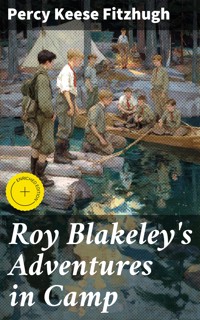
In "Roy Blakeley's Adventures in Camp," Percy Keese Fitzhugh crafts a delightful narrative that captures the exuberance and mischief of youth during the early 20th century. Set against the backdrop of a summer camp, this novel blends adventure, camaraderie, and the trials of adolescence with a humor that resonates across generations. Fitzhugh's straightforward yet engaging prose invites young readers into the vibrant world of Roy Blakeley and his friends, portraying the richness of camp life and the lessons learned through friendship and exploration. Fitzhugh, an acclaimed author known for his contributions to juvenile literature, imbued his works with the spirit of his own youthful experiences. Having spent his formative years in the outdoors and understanding the joys and tribulations of growing up, he brings authenticity to Roy's character. Furthermore, his background in family-oriented stories allowed him to resonate with both young readers and adults, making his adventures both relatable and timeless. This charming tale is highly recommended for readers seeking an immersive dive into a world where adventure meets life lessons. Ideal for children and nostalgic adults alike, Fitzhugh's work encourages imagination and camaraderie, making it a delightful addition to any reader's collection. In this enriched edition, we have carefully created added value for your reading experience: - A succinct Introduction situates the work's timeless appeal and themes. - The Synopsis outlines the central plot, highlighting key developments without spoiling critical twists. - A detailed Historical Context immerses you in the era's events and influences that shaped the writing. - A thorough Analysis dissects symbols, motifs, and character arcs to unearth underlying meanings. - Reflection questions prompt you to engage personally with the work's messages, connecting them to modern life. - Hand‐picked Memorable Quotes shine a spotlight on moments of literary brilliance. - Interactive footnotes clarify unusual references, historical allusions, and archaic phrases for an effortless, more informed read.
Das E-Book können Sie in Legimi-Apps oder einer beliebigen App lesen, die das folgende Format unterstützen:
Veröffentlichungsjahr: 2023
Ähnliche



















Roy Blakeley's Adventures in Camp
Table of Contents
Introduction
In Roy Blakeley's Adventures in Camp, Percy Keese Fitzhugh turns a season of scouting into a lively proving ground where quick wit, loyal friendship, and can-do resourcefulness meet the everyday trials of tents, trails, and teamwork, revealing how cheerful resilience and a spirit of service can transform mishaps into memories, rules into self-direction, and ordinary chores into shared triumphs, while the laughter of boys at camp carries the deeper lesson that character is forged not only by dramatic challenges but by the small, persistent choices that hold a troop together and make adventures truly worth having.
This book belongs to the tradition of early twentieth-century American juvenile adventure and humor, set primarily in and around a scout camp and the routines that define outdoor life. Percy Keese Fitzhugh, a prolific writer of scouting tales for young readers, published the Roy Blakeley stories during the broader boom in Boy Scout fiction in the 1910s–1920s. The result is a compact, episodic narrative grounded in camp experiences that were familiar to contemporary audiences and remain legible today: making do with limited supplies, organizing patrols, and finding fun and meaning in the shared rhythms of camping life.
Readers encounter Roy as a spirited narrator whose conversational storytelling and sly humor frame a sequence of practical problems, games, and small-scale crises that punctuate a stay at camp. The book offers light-hearted escapades without sensational peril, favoring quick-thinking solutions, playful banter, and the pleasure of shared enterprise. Its mood is buoyant and good-natured, and its style brisk, with scenes that move from setup to payoff in confident strokes. The premise is simple and inviting: a summer of scouting becomes a canvas for resourcefulness, companionship, and the kind of leadership that grows naturally among peers.
At the center are themes that have animated scouting literature since its inception: loyalty to friends, responsibility for one’s promises, ingenuity under pressure, and the ethics of cooperation. Fitzhugh uses humor not to undercut these ideals but to make them approachable, allowing mistakes to become teachable moments and friendly competition to sharpen character rather than egos. Camp life tests patience as often as skill, and the book shows how fairness, perseverance, and empathy turn minor snags into opportunities for growth. The emphasis remains on doing the right thing in small ways, consistently, and discovering that this is the stuff of real adventure.
Situated within the broader culture of youth organizations, the story reflects an era that prized outdoor education as a pathway to citizenship and self-reliance. The camp setting functions as a miniature community where rules are learned by doing, leadership is earned through service, and independence flourishes alongside accountability to the group. Readers see how simple structures—chores, patrols, schedules—invite initiative rather than stifle it. The narrative offers a window onto early twentieth-century ideals while remaining accessible as a portrait of adolescents testing boundaries with good intentions and a sense of fair play.
Fitzhugh’s craft lies in his easy pacing and ear for lively talk, which keep the tone bright without sacrificing clarity. Episodes tend to build on recurring jokes, callbacks, and the familiar rhythms of camp routine, creating a pleasing continuity that rewards sustained reading. The language is direct and uncluttered, and the scenes come alive through action and quick turns of thought rather than extended description. This makes the book particularly welcoming to younger readers and to anyone drawn to character-driven humor, while the underlying seriousness of purpose gives the fun a steady, satisfying ballast.
For contemporary audiences, Roy Blakeley’s Adventures in Camp offers both a spirited escape and a thoughtful reminder that character is practiced, not proclaimed. Its questions—what makes a good friend, how to lead without bluster, how to turn chores into shared victories—remain timely in classrooms, households, and teams. The book can spark conversations about cooperation and integrity, and it also invites appreciation as a cultural artifact of the scouting movement. Readers who value light, well-paced storytelling with an ethical core will find here a campfire’s worth of warmth, laughter, and the quiet courage of everyday decency.
Synopsis
Roy Blakeley narrates a light, fast-paced account of a summer spent with the Silver Fox Patrol at a mountain lake camp. The story opens with preparations, as Roy, Pee-wee Harris, Westy Martin, and their friends gather gear, trade jokes, and anticipate challenges. Mr. Ellsworth, their scoutmaster, sets expectations rooted in the Scout Law, emphasizing service, resourcefulness, and safety. The tone is humorous yet orderly, with Roy’s quick wit balanced by clear responsibilities. The patrol departs with a sense of camaraderie and purpose, ready for tent life, outdoor skills, and the small tests that turn routine days into memorable adventures.
The journey to camp introduces the broader scouting world. On trains and boats, the boys encounter other troops and learn the rhythms of travel with shared gear and schedules. Arriving at a lakeside site ringed by woods and hills, they pitch tents, establish their patrol area, and receive camp rules. Early tasks include fire safety, water duties, and the daily schedule of drills and mess. The first campfire sets the community’s tone, with songs, stunts, and the outline of competitions that will run throughout the season. Roy’s narration sketches the place and people quickly, keeping focus on action and routine.
As days settle, the Silver Foxes balance fun with orderly teamwork. Cooking details, flag ceremonies, and inspection scores frame their mornings. Pee-wee’s boundless enthusiasm and appetite provide recurring comic relief, while Westy and others demonstrate steady competence. Friendly rivalries with neighboring patrols raise stakes without souring relations. Merit badges and points become practical goals tied to actual camp work. The troop’s camaraderie deepens over shared chores and short treks around the lake. Roy’s voice remains brisk and cheerful, but the narrative keeps to tangible tasks, showing how camp life’s structure supports self-reliance, fairness, and the quiet pride of well-done jobs.
The first hint of larger trouble appears in small, puzzling incidents. A light flickers at odd hours across the water. Minor supplies go astray, then reappear. Tracks on a side trail suggest a visitor avoiding main paths. Roy’s patrol notes details without jumping to conclusions, comparing observations after taps and checking them against camp rules. Mr. Ellsworth cautions patience and accuracy, reinforcing that curiosity should not override safety or discipline. The boys agree to keep their eyes open while maintaining daily routines. This careful build introduces a mystery element that fits within the camp’s normal rhythms and the Scouts’ code.
A sudden storm tests skills and resolves. Wind whips the lake, a small craft needs assistance, and the Silver Foxes respond with practiced knots, steady paddling, and calm communication. First aid procedures are followed methodically, and responsibilities are shared without fuss. The incident earns quiet acknowledgment and, more importantly, knits the patrol tighter, sharpening their awareness of weather, water, and teamwork. In its wake, the earlier oddities feel more pressing, as the boys recognize how quickly minor problems can become serious outdoors. The episode also underscores the book’s practical focus: readiness, clear thinking, and helping others whenever possible.
A longer patrol hike expands the mystery. Roy leads a planned route along a ridge and into cutover woods, navigating with map and compass. A detour for a washed-out trail brings unexpected signs: a small, hidden camp, footprints leading to shoreline coves, and indirect evidence of someone avoiding main campsites. The boys practice tracking carefully and leave things undisturbed, recording details to report back. An overnight in a simple shelter demonstrates efficient campcraft under mild stress. The sequence moves deliberately, showing how observation, restraint, and note-taking serve better than guesswork, and setting up the next steps without revealing conclusions.
Camp competitions arrive in earnest, from signaling and pioneering to cooking and relay events. The Silver Foxes build structures, exchange messages by semaphore, and balance speed with accuracy. Pee-wee’s culinary ambitions meet practical constraints, adding humor without derailing results. Inter-patrol rivalry stays friendly, with shared tools and mutual congratulations after close finishes. In the background, Roy’s patrol refines a plan to address the lakeside oddities, coordinating with camp staff and keeping within rules. The dual track—contests by day, quiet observation by night—keeps momentum high, while emphasizing that discipline and good sportsmanship matter as much as wins and points.
Clues align, and cooperation brings resolution. Rather than dramatic confrontation, the boys organize a watch, notify leaders, and approach the situation with tact. What seemed suspicious becomes a chance to offer assistance and set things right, including returning misplaced items and addressing concerns that drove someone to the margins of camp life. The outcome affirms the Scouts’ duty to help, not judge. Meanwhile, the season’s contests conclude with results reflecting effort and unity more than showy victories. Roy’s narration keeps events brisk and cheerful, highlighting how methodical observation, clear reporting, and kindness can resolve tension without spoiling the spirit of camp.
As camp ends, Roy reflects on friendships, skills gained, and the satisfaction of steady service. The narrative closes on orderly departures, farewells to neighboring patrols, and a last look at the lake that framed their season. The central message is clear: scouting blends fun with responsibility, and small good turns accumulate into meaningful outcomes. Without dwelling on heroics or secrets, the book underscores cheerfulness, teamwork, and leadership practiced in everyday tasks. Roy’s voice remains light, but the accomplishments are concrete: safer habits, better judgment, tighter bonds. The boys head home ready for new adventures, carrying camp lessons into ordinary life.
Historical Context
Roy Blakeley’s Adventures in Camp unfolds in the northeastern United States during the late 1910s and early 1920s, a period marked by Progressive Era ideals and, soon after, the immediate aftermath of World War I. The stories center on the fictional town of Bridgeboro, New Jersey—echoing real suburban-river towns in the New York metropolitan orbit—and on a lakeside summer camp reminiscent of the Catskills and Hudson Highlands. Trolley lines, commuter railroads, and early automobiles enabled youth to reach wooded preserves and reservoirs, while nearby industrial cities supplied the contrasts of urban bustle and rural escape. The setting mirrors a nation investing in parks, civic youth programs, and supervised recreation as antidotes to crowded city life and juvenile delinquency concerns.
The Scouting movement is the primary historical engine behind Fitzhugh’s narrative world. Robert Baden-Powell’s 1907 camp at Brownsea Island launched Scouting, and the Boy Scouts of America (BSA) was founded in 1910 by William D. Boyce, with early leaders including Ernest Thompson Seton, Daniel Carter Beard, and James E. West as Chief Scout Executive. Congress granted the BSA a federal charter in 1916, formalizing its civic mission. The patrol method, merit badges, first aid, signaling, and woodcraft shaped everyday troop life. Roy Blakeley’s patrol experiences, competitions, and service projects reflect this institutional framework, presenting camp as a site where citizenship training, practical skills, and camaraderie translate national Scouting ideals into routine episodes.
Progressive Era youth reform provided the broader social rationale for camping and organized boys’ work. Reformers fought child labor, expanded compulsory schooling, and built urban playgrounds; the Playground Association of America formed in 1906, and the U.S. Children’s Bureau in 1912. Parallel movements promoted “muscular Christianity” and character formation through the YMCA and settlement houses. Summer camping traditions preceded Scouting—The Gunnery Camp in Connecticut began in 1861, and YMCA’s Camp Dudley opened in 1885—but the 1910s saw mass participation by urban boys. The book’s emphasis on supervised adventure, team rules, and moral tests reflects this reform matrix, in which outdoor recreation was engineered to channel youthful energy into disciplined, civic-minded conduct.
Conservation and park development created the physical stage for camp life. Theodore Roosevelt’s presidency (1901–1909) expanded federal conservation, supported by the 1906 Antiquities Act; the Weeks Act of 1911 enabled eastern forest restoration; and the National Park Service formed in 1916. In the New York–New Jersey region, the Palisades Interstate Park Commission (1900) and Mary Averell Harriman’s 1910 gift establishing Harriman State Park produced vast, accessible preserves. Bear Mountain facilities welcomed thousands of city youths by the mid-1910s, including Scouts. Roy Blakeley’s woodland hikes, lake activities, and trailcraft echo this public-spirited conservation ethos, presenting forests and lakes as civic classrooms where American boys learned stewardship, mapping, and safety alongside recreation.
World War I (1914–1918; U.S. entry 1917) powerfully shaped youth culture and Scouting’s public role. On the home front, the Food Administration (Herbert Hoover) promoted conservation, while Liberty Loan and War Savings drives mobilized communities; the Junior Red Cross formed in 1917. The BSA, federally chartered in 1916, was enlisted for messenger work, bond sales, and public health campaigns, winning national praise. Military drills, flag ceremonies, and preparedness were integrated into youth programs without militarizing them. In Fitzhugh’s camp episodes, patriotic rituals, service-oriented “Good Turns,” and practical tasks (first aid, signaling, and community help) align with the war-era expectation that boys should train for citizenship, reliability, and disciplined teamwork under adult civic supervision.
Mass immigration (c. 1900–1914 peak) through Ellis Island transformed northeastern towns, prompting Americanization drives. Reformers created English-language classes, civics instruction, and flag etiquette programs; a literacy test entered U.S. law in 1917, and the Emergency Quota Act (1921) and Johnson–Reed Act (1924) later restricted immigration. The BSA promoted civic rites, local service, and an inclusive but assimilationist ideal of American boyhood. Fitzhugh’s New Jersey setting, with ethnic neighborhoods and working-class families, mirrors this social mosaic. Patrols that prize fairness, shared rules, and common projects model an Americanization-by-practice: boys from varied backgrounds earn status through skill and service, dramatizing the period’s aspiration to build unity across class and origin in civic spaces like camp.
Public health modernization and safety education also left their mark. Progressive reforms after the 1906 Pure Food and Drug Act and municipal sanitation drives brought hygiene into schools and youth organizations; Scouts drilled in first aid, water safety, and camp sanitation. During the 1918 influenza pandemic, youth groups helped distribute notices and assist communities, reinforcing a link between health and citizenship. In Roy Blakeley’s camp routines—latrine placement, clean cooking, safe swimming, and emergency response—one sees the translation of public health doctrine into daily habit. Merit badges, inspection scores, and clear protocols turn recreation into structured training, harmonizing fun with emerging scientific standards of hygiene and accident prevention in the woods and on the water.
The book operates as a gentle social critique by dramatizing the need for democratic spaces where class, ethnicity, and urban-rural divides can be bridged through shared rules and service. It challenges industrial-era indifference by valorizing volunteerism, conservation-minded leisure, and public-spirited discipline, implying that civic health requires investment in parks, camps, and youth leadership. Episodes that reward practical skill over wealth contest status hierarchies, while the stress on safety and cooperation exposes the risks of neglecting public health and infrastructure. In foregrounding a benefactor-supported camp and troop governance, the narrative also interrogates Progressive paternalism, suggesting its benefits yet reminding readers that fairness, stewardship, and inclusion must be actively practiced.




