


0,99 €
Mehr erfahren.
- Herausgeber: Daniel Coenn
- Kategorie: Geisteswissenschaft
- Sprache: Englisch
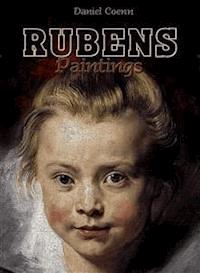
International diplomat, savvy businessman, devout Catholic, fluent in six languages, an intellectual who counted Europe's finest scholars among his friends, Peter Paul Rubens was always first a painter. Few artists have been capable of transforming such a vast variety of influences into a style utterly new and original. From his workshop, with its many assistants, came quantities of book illustrations, tapestry designs, festival decorations, and paintings on every subject, which his engravers reproduced. He maintained control of the quality, while charging patrons according to the extent of his involvement on a picture. Frans Snyders, Jacob Jordaens, and Anthony van Dyck each assisted him. Rubens's impact was immediate, international, and long lasting.
Das E-Book können Sie in Legimi-Apps oder einer beliebigen App lesen, die das folgende Format unterstützen:
Veröffentlichungsjahr: 2015



Rubens Paintings
By Daniel Coenn
Foreword and Annotations by Daniel Coenn
First Edition
Copyright © 2013 by Daniel Coenn
*****
Rubens Paintings
*****
Foreword
Rubens received a classical education; his artistic training was entrusted to Tobias Verhaecht, Adam van Noort and Otto van Veen; he became a master of the Antwerp Guild of St. Luke in 1598. Between 1600 and 1608 he stayed in Italy, traveling in the service of Vincenzo Gonzaga in Mantuaon on a diplomatic mission to Spain in 1603-04. He became aquatinted with the works of Classical antiquity, compositions of the great Renaissance masters and with those of his contemporaries.
In 1608 he returned to Antwerp and in 1609 married Isabella Brant. In the same year he was appointed court painter to the governor (Stadholder), Archduke Albrecht, and his wife, the Infanta Isabella. In 1610 he purchased a piece of land on which he built a large house with studios. In the following decade he received a number of major commissions, including the cycle of paintings for the gallery of the Palais du Luxembourg in Paris (1622-25), commissioned by the widowed queen mother of France. In 1626 Isabella Brant died. In 1628 Rubens again visited Spain on a diplomatic mission to the court of Philip IV. In 1629-30 he was at the court of Charles I in England. Rubens married the 16-year-old Helene Fourment in 1630.
Amongst the major works he executed in the course of the following years were cartoons for several series of tapestries, the ceiling frescoes in the Banqueting House, Whitehall, London (1630-34), for Charles I, and his collaboration (1634-35) on the festive decorations for the entry of the Cardinal-Infante Ferdinand into Antwerp (1634-35). His last important commission consisted of the designs for paintings for Philip IV's hunting lodge "Torre de la Parada" near Madrid. Rubens died in Antwerp 1640.
International diplomat, savvy businessman, devout Catholic, fluent in six languages, an intellectual who counted Europe's finest scholars among his friends, Peter Paul Rubens were always first a painter. Few artists have been capable of transforming such a vast variety of influences into a style utterly new and original. From his workshop, with its many assistants, came quantities of book illustrations, tapestry designs, festival decorations, and paintings on every subject, which his engravers reproduced. He maintained control of the quality, while charging patrons according to the extent of his involvement on a picture. Frans Snyders, Jacob Jordaens, and Anthony van Dyck each assisted him. Rubens's impact was immediate, international, and long lasting. The works of Thomas Gainsborough and Eugene Delacroix, among others, testify to his posthumous influence.
Annotated Paintings
The Judgment of Paris




