



1,99 €
Mehr erfahren.
- Herausgeber: Quickie Classics
- Kategorie: Gesellschafts- und Liebesromane
- Sprache: Englisch
Rudin (1856) inaugurates Turgenev's gallery of the "superfluous man," portraying the eloquent yet ineffectual Dmitrii Rudin on a provincial estate. With limpid, economical prose, shaded dialogue, and lyrical landscapes, Turgenev stages the clash between idealism and action, reason and feeling. Salon debates, a restrained love plot, and a quietly devastating farewell distill the intellectual atmosphere of the 1840s, when Westernizing ideas unsettled gentry routines. Classical design and psychological tact mark a mature, understated realism. Ivan Sergeevich Turgenev—educated in Moscow, St. Petersburg, and Berlin—combined European intellectual training with intimate knowledge of gentry estates and serfdom. Encounters with reformist circles and periods of enforced residence in the country honed his portrait of the "men of the forties," brilliant talkers disabled by circumstance and temperament. Rudin is often read as a composite of that cohort, sometimes linked to figures like Bakunin or Granovsky, filtered through Turgenev's humane skepticism. Readers of nineteenth‑century realism and Russian intellectual history will find in Rudin a compact, lucid meditation on promise and failure. It rewards close reading and invites debate about charisma, responsibility, and the costs of ideas. Quickie Classics summarizes timeless works with precision, preserving the author's voice and keeping the prose clear, fast, and readable—distilled, never diluted. Enriched Edition extras: Introduction · Synopsis · Historical Context · Author Biography · Brief Analysis · 4 Reflection Q&As · Editorial Footnotes.
Das E-Book können Sie in Legimi-Apps oder einer beliebigen App lesen, die das folgende Format unterstützen:
Veröffentlichungsjahr: 2026
Ähnliche








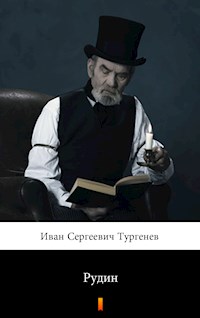




Rudin (Summarized Edition)
Table of Contents
Introduction
In Rudin, Turgenev explores the unsettling gap between the power to dazzle with words and the capacity to transform a life or a society through deeds, tracing how ideals flare in conversation yet falter before the drag of circumstance, how a gifted mind can quicken a room and unnerve it at once, how the desire for meaning collides with provincial routines, and how admiration, friendship, and nascent love gather around a figure who seems to promise change, inviting readers to ask whether eloquence is a bridge to action or a refuge constructed to avoid responsibility.
Rudin is a realist novel by Ivan Sergeevich Turgenev, first published in the mid-1850s and set among the estates and drawing rooms of provincial Russia in the years before the emancipation of the serfs. Its world is one of salons, tutors, and visiting intellectuals, where literature and philosophy circulate alongside gossip and custom. Within the emerging tradition of Russian realism, the book stands as an early, influential exploration of the educated nobleman’s role in a constrained society. Turgenev’s concentration on psychological nuance and social atmosphere situates the story within a recognizably lived milieu rather than a schematic battlefield of ideas.
The premise is simple and tactful: an eloquent, impecunious gentleman appears as a guest at a country estate, where his conversation and presence spark expectations among a circle of provincial landowners, dependents, and young listeners. From this arrival, Turgenev builds scenes of talk, letters, lessons, and walks that allow character to emerge under the pressure of ideals. The reading experience is calm but absorbing, guided by an omniscient narrator who withholds judgment even while registering irony. The tone remains sympathetic yet clear-eyed, letting admiration, skepticism, and quiet yearning coexist without forcing the reader toward an approved conclusion.
Stylistically, the novel exemplifies Turgenev’s lucid economy: sentences flow with unshowy rhythm, descriptions pick out a gesture, a vista, or a voice rather than catalogue detail, and dialogue carries the tension of mind meeting mind. Scenes unfold as poised set pieces—a salon exchange, a garden conversation, a letter read by lamplight—whose cumulative weight is moral rather than merely plot-driven. The pacing is deliberate, allowing time to test speeches that shine at first hearing. A composed, humane narrative distance prevails, granting even dubious actions an intelligible motive, while preserving a quiet, steady irony that keeps every certainty provisional.
Central themes assemble around the figure later termed the superfluous man, whose verbal brilliance and high ideals outstrip his power to act. Turgenev probes charisma as social capital, the ethics of seduction by ideas, and the compromises imposed by class, money, and custom. Education, in this world, is more than curriculum: it is the awakening of responsibility, the testing of conviction against risk. Love complicates rather than resolves these pressures, exposing the difference between admiration and commitment. Generational contrast matters, as youthful ardor encounters seasoned pragmatism. Sincerity coexists with self-deception, and aspiration strains against the stubborn texture of life.
Contemporary readers will recognize in Rudin a portrait of charisma that resonates with public life today, where fluency and visibility often travel faster than accountability. The novel asks what responsibility attaches to the power to persuade, and what happens to admirers when inspiration is not matched by follow-through. It examines performative conviction, institutional constraint, and the ethics of mentoring without guarantee of outcomes. Just as crucially, it honors listeners who refine their aims after exposure to compelling speech. In workplaces, classrooms, and civic movements, the old contest between eloquence and action remains urgent, shaping hopes and disappointments alike.
Read as a compact study of character and milieu, Rudin offers an elegant entrance to Russian realism and a clear window onto social life before emancipation. Its rewards lie in quiet recognitions: the slippage between intention and deed, the subtle shifts of esteem, the lingering aftertaste of persuasive talk. Without resorting to melodrama, Turgenev stages a drama of conscience, showing how ideas require stamina as well as brilliance to become fate. The novel endures not as a period curiosity but as a mirror, inviting readers to consider how they speak, whom they influence, and what they are prepared to do.
Synopsis
Rudin, published in 1856, is an early novel by Ivan Sergeevich Turgenev that presents a portrait of Russian provincial society in the 1840s while probing the intellectual restlessness of the era. The book centers on Dmitry Rudin, an eloquent, well-read wanderer whose presence in a country household sets ideas and emotions in motion. Turgenev builds the narrative with restraint, moving from drawing-room conversations to personal choices that reveal character. The story’s interest lies less in outward action than in the clash between thought and deed, a conflict that would define the figure later known as the superfluous man in nineteenth-century Russian literature.
In the opening chapters, the scene is a spacious estate owned by Darya Mikhailovna, a worldly widow who presides over a salon-like circle of relatives, dependents, and neighboring gentry. The rhythms of country life—meals, music, hunting plans, and afternoon calls—frame spirited debates about literature, philosophy, and the proper aims of education. Among the guests are a thoroughgoing skeptic, a careerist eager to ingratiate himself, and a straightforward landowner who values practical usefulness over rhetoric. Into this environment of comfort, pose, and occasional boredom arrives a new voice that both unsettles and attracts, promising more serious conversation and perhaps some direction.
Rudin enters as a traveler bearing letters of introduction and a reputation for brilliance forged in student circles and metropolitan salons. He speaks with unusual confidence and sweep, invoking European thinkers and lofty ideals in language that captivates his hearers. The cynic bristles, the conformist flatters, and the pragmatic landowner keeps his reservations, yet most concede that he brings rare energy to their gatherings. Turgenev carefully screens Rudin through the perceptions of others, letting the cadence of his arguments impress even those who doubt his usefulness. The household’s younger members, especially, feel awakened to possibilities beyond their habitual provincial routines.
Among the newly attentive is Natalia, Darya Mikhailovna’s thoughtful daughter, whose quick mind and moral seriousness find a counterpart in the visitor’s aspirations. Their conversations, conducted under the watchful order of the household, move from books to questions of duty and personal freedom. A quiet officer close to the family regards Natalia with steady affection, and her mother favors matches that would secure worldly stability. As Rudin’s influence expands, polite entertainments take on weight, and the drawing room becomes a forum where persuasion and feeling interlace. The delicate balance between filial obedience and inner conviction begins to tilt toward conflict.
Turgenev introduces an older acquaintance of Rudin who supplies a measured account of his past. As a student, Rudin excelled in argument and displayed a capacity to inspire, yet he drifted from project to project, leaving unrealized schemes and strained friendships behind him. He admired great systems of thought and spoke passionately about public service, but when practical demands arose, circumstances or hesitations intervened. The portrait is not malicious; it recognizes Rudin’s generosity, his ascetic habits, and the genuine elevation of his mind. It also hints at a pattern that any new relationship with him must eventually confront.
The center of the novel gathers around several decisive conversations in which declarations are weighed against consequences. Natalia’s clarity and courage sharpen the situation, while Darya Mikhailovna asserts her authority with the certainty of someone who knows how society operates. Rudin, caught between zealous ideals and the expectations of his hosts, faces requests for action that would test both character and resolve. Turgenev stages these moments without melodrama, allowing pauses, glances, and misread signals to carry the drama. The results do not depend on outward scandal so much as on subtle retreats and advances in which each figure reveals true measure.
After the strain on the estate subsides, the narrative offers further glimpses of Rudin in other places and at later times. He seeks occupations that might harness his talents—tutoring, journalism, association with reform-minded circles—but the old discrepancy between oratory and execution persists. Friends and acquaintances meet him again by chance, noting the undiminished power of his speech and the same restlessness that keeps him moving. He remains committed to noble ideas and ready to sacrifice comfort, yet he seldom finds the concrete circumstances that would let him realize his program. The pattern lends the book its elegiac undercurrent.
Turgenev’s artistry lies in his tact and equilibrium. He refrains from caricature, granting even the skeptic and the self-seeking courtier motives that ring true in the provincial context. The officer’s quiet steadiness and the practical landowner’s decency counterbalance eloquence with duty, while Natalia’s discernment illuminates the moral stakes without sermonizing. Dialogues unfold with the naturalness of lived speech, and settings—gardens, lanes, drawing rooms—register changes of mood as much as seasons. Ideas circulate in concrete situations, never detached from social position or temperament, so that the novel’s debates about progress, culture, and personal responsibility acquire the texture of life.




