


8,99 €
Mehr erfahren.
- Herausgeber: resourceinternet
- Kategorie: Fachliteratur
- Sprache: Englisch
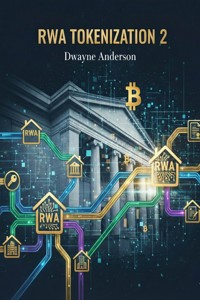
RWA Tokenization 2 builds on the foundation of the first volume, moving from explanation to execution. While Book 1 introduced the concept of bringing real world assets on chain, this book examines how tokenization is being implemented across property, government debt, commodities, and private credit.
For decades, these assets have been constrained by slow settlement, limited access, and structural inefficiencies. Tokenization offers a practical evolution. By representing real world assets on blockchain infrastructure, ownership becomes programmable, liquidity improves, and settlement accelerates without abandoning legal or regulatory frameworks.
This book explores how tokenized markets are being constructed, how custody and compliance are embedded, and why institutional capital is beginning to engage with these systems. The focus is not on speculation, but on infrastructure, yield, and long term market integration.
Readers will gain insight into how tokenization improves liquidity for traditionally illiquid assets, how real world collateral is reshaping decentralized finance, and how to evaluate opportunity and risk in a maturing tokenized economy.
RWA Tokenization 2 is a practical guide to understanding the next phase of financial infrastructure as real world assets move from concept into live, regulated markets.
Das E-Book können Sie in Legimi-Apps oder einer beliebigen App lesen, die das folgende Format unterstützen:
Veröffentlichungsjahr: 2025
Ähnliche



















Table of Contents
RWA Tokenization 2.0 | Financial Markets Aren’t Playing by Old Rules Anymore
Table of Content
Foreword
Prologue | From Concept to Construction
Introduction | From Potential to Practice
Chapter 1 | Mapping the RWA Landscape
Chapter 2 | Building the Tokenized Portfolio
Chapter 3 | The Infrastructure Stack
Chapter 4 | Token Engineering
Chapter 5 | Legal & Regulatory Structures
Chapter 6 | Real World Compliance Tech
Chapter 7 | AI Meets RWA
Chapter 8 | Retail Access
Chapter 9 | Yield Rotation & Liquidity Mining with RWA Protocols
Chapter 10 | Stablecoins, Tokenized Cash, and DeFi’s Role in the RWA Ecosystem
Chapter 11 | Case Studies
Chapter 12 | Risk Management in the Tokenized Era
Chapter 13 | The RWA Thesis Beyond 2025
Epilogue | The Tokenized Economy
Conclusion | The Institutional Era Has Already Begun | Let’s be clear: this is not a drill.
Glossary & Investment Appendix | RWA (Real-World Asset)
RWA Tokenization 2.0
Financial Markets Aren’t Playing by Old Rules Anymore
Disclaimer :
This book, "RWA 2.0: The Investor's Playbook," is intended for informational and educational purposes only. The content provided herein is not, and should not be construed as, financial, investment, legal, tax, or any other form of professional advice.
The author and the publisher are not licensed financial advisors, and the information presented in this book is not a solicitation or recommendation to buy, sell, or hold any digital assets, securities, or financial instruments. All investment strategies and discussions of specific assets, protocols, or platforms are provided for illustrative purposes only.
The digital asset and cryptocurrency markets, including Real-World Assets (RWAs), are highly volatile, speculative, and subject to significant risk, including the potential for a complete loss of invested capital. The information, views, and opinions expressed in this book are based on sources believed to be reliable and are current as of the date of publication, but they are subject to change without notice.
The markets are wild and unpredictable. The world of crypto and tokenization moves incredibly fast. The information, data, and even the names of the protocols mentioned were current as of mid-2025, but things can and will change. A project that is a leader today could be gone tomorrow.
The author and publisher make no representations or warranties as to the accuracy, completeness, or timeliness of the information contained herein.
Readers are solely responsible for their own investment decisions. Before making any financial decisions, you should conduct your own due diligence and consult with a qualified and licensed financial advisor, legal counsel, and tax professional to assess your individual situation and risk tolerance.
By reading this book, you agree that the author and the publisher shall not be held liable for any direct, indirect, consequential, or incidental damages or losses arising from the use of the information presented.
Copyright©Dwayne Anderson 2026
Table of Content
Foreword
Prologue
Introduction
Chapter 1: Mapping the RWA Landscape
Chapter 2: Building the Tokenized Portfolio
Chapter 3: The Infrastructure Stack
Chapter 4: Token Engineering
Chapter 5: Legal & Regulatory Structures
Chapter 6: Real-World Compliance Tech
Chapter 7: AI Meets RWA
Chapter 8: Retail Access
Chapter 9: Yield Rotation & Liquidity Mining with RWA Protocols
Chapter 10: Stablecoins, Tokenized Cash, and DeFi’s Role in the RWA Ecosystem
Chapter 11: Case Studies
Chapter 12: Risk Management
Chapter 13: The RWA Thesis Beyond 2025
Epilogue: The Tokenized Economy
Conclusion
Glossary
Foreword
When the first book on real world asset tokenization was published, many readers were encountering the concept for the very first time. The goal then was to explain a new idea, one that promised to link traditional financial instruments with the efficiency and reach of digital networks. At that time, tokenization felt bold yet unproven. It created interest, questions, and cautious optimism.
Since then, a great deal has changed. We have moved from curiosity to construction. Early models and pilot programs have grown into structured platforms. What began as an intriguing theory is becoming a working component of the financial landscape. The conversations around tokenization are no longer rooted in possibility alone. They are now focused on methods, safeguards, and practical use.
This shift is the reason this second volume titled RWA 2.0 The Investors Playbook exists. It recognizes that the subject has entered a new phase. The world no longer needs another introduction. It needs a guide for what comes after. Readers today are asking different questions. They want to know how tokenization functions at scale, how custody and compliance are handled, how risk is evaluated, and how investors can participate responsibly.
––––––––
RWA 2.0 is written for that audience. It builds on the foundation of the first book, but it does not repeat it. Instead, it focuses on execution and design. It examines the systems that support tokenized assets, the legal and regulatory patterns that have begun to take shape, and the strategic decisions that can help investors navigate a market that is developing in real time.
The purpose of this book is not to persuade. It is to clarify. It aims to separate noise from progress and speculation from structure. Tokenization remains an innovative idea, but it is also steadily becoming an ordinary part of financial architecture.
If the first volume introduced a new path, this one is written for those ready to walk it with informed awareness. The transformation is not dramatic or sudden. It is steady, careful, and practical. And it is happening.
Welcome to the next stage of real world asset tokenization. A stage shaped not by theory, but by application. Not by early excitement, but by measured development. This book begins where the first one left off, at the moment when a promising idea turns into a working system and when understanding becomes participation.
Prologue
From Concept to Construction
When the first volume introduced the idea of real world asset tokenization, the space was still in its formative stage. The discussions were centered on what could be built, not yet on what had been built. Many early efforts were exploratory and often limited in scope. The concept captured attention, but wide adoption remained a distant goal.
In that earlier period, tokenization represented potential. It demonstrated that traditional financial instruments could be represented on a digital ledger with greater clarity and accessibility. Yet most of the world was watching from the sidelines, unsure whether this shift would take root or remain an interesting theory.
Time has moved the conversation forward. Tokenization is no longer an abstract ambition. It has entered a stage where practical systems are being tested, refined, and adopted. Platforms are beginning to handle real transactions rather than simulated ones. Institutions are no longer treating tokenization as a novelty.
They are examining it as a possible extension of their own financial processes.
We now stand in a moment where the question has changed. The discussion is no longer focused on whether tokenization has value.
The discussion is focused on how to capture that value and how to build frameworks that protect and scale it. There is a visible shift from curiosity to planning, and from planning to implementation.
This progress is steady rather than dramatic. It does not require sensational claims. It is reflected in practical decisions made by investors, regulators, and builders who recognize that digital representation of real assets can create efficiency and access that older systems struggle to provide.
This book begins at that intersection. It does not attempt to repeat the introduction delivered in the first volume. Instead, it addresses the stage that follows. It examines the real work involved in creating infrastructure, establishing trust, and designing products that can function within both digital and traditional frameworks.
The journey from idea to execution is not simple. It requires attention to detail, respect for existing financial structures, and a willingness to accept that innovation must be paired with responsibility.
The promise of tokenization remains significant, but the path forward demands discipline and clarity.
This prologue sets the tone for a book that deals with that reality. The aim is not to predict a sudden transformation. It is to understand the gradual construction of a system that may shape finance for many years.
The next stage is not defined by slogans. It is defined by structure. It is defined by the decisions made today that will influence who benefits and how securely they do so.
We begin this volume at the moment where theory gives way to practice and where ambition gives way to design. The foundation has been laid. The work of building begins now.
Introduction
From Potential to Practice
When the first volume explored real world asset tokenization, much of the conversation centered on anticipation. The idea was compelling. The logic was sound. Yet the market had not reached a point where widespread participation felt realistic. The concept lived in the early stages of innovation, where enthusiasm was strong but proven models were few and far between.
Today, the environment is noticeably different.
Tokenization has moved beyond speculation and early prototypes. There are working systems under evaluation and implementation. Institutional interest is no longer limited to curiosity. It is reflected in research teams, pilot programs, and internal discussions about how traditional products might be adapted for digital environments.
This shift does not mean the journey is complete. Far from it. Tokenization is still evolving. However, the phase we enter now is marked by a transition from theorizing to building. The central question has changed. Instead of asking why tokenization matters, we now ask how it can be executed with reliability and scale.
That shift in focus forms the purpose of this volume.
RWA 2.0 is designed to offer structure and clarity for readers who want to move from understanding to application.
It aims to explain how tokenized assets fit within existing financial systems, how risk can be managed responsibly, and how investors can position themselves in a market that is steadily expanding.
This book does not assume that tokenization is a solution without challenges. It acknowledges technical, legal, and operational considerations. It examines the need for trusted custodial models, transparent regulation, and mechanisms that protect both value and access. It takes a grounded perspective rather than an idealistic one.
We are still early enough that the shape of the market is not fully defined, but we are far enough along that the conversation is no longer speculative.
This creates a distinct moment. It is a moment when informed participation can bring meaningful advantage. It is also a moment when thoughtful evaluation is more important than excitement.
Readers do not need to be technologists. They do not need to write smart contracts or design new protocols. What they do need is a clear lens through which to view opportunity and risk.
They need to understand how tokenization alters access, liquidity, and transparency. They need to recognize what is genuinely changing and what remains constant.
RWA 2.0 seeks to provide that lens. It explains what is being built, what remains to be solved, and how investors can engage with confidence instead of guesswork.
It builds on the foundation laid by the first book, but it does not repeat its mission. The first volume introduced potential. This volume explores practice.
As we enter this stage, it becomes clear that tokenization is not a trend that will vanish when narratives shift. It is a gradual transformation. It moves at the pace of regulation, infrastructure, and trust. And it grows in places where practical value exceeds theoretical appeal.
This book begins at that point of maturity. It is written for readers who are ready to move beyond awareness and into informed action. The opportunity is present. The responsibility is clear.
The work now is to understand, evaluate, and engage.
The next chapter of tokenized finance does not promise sudden disruption. It offers gradual adoption, thoughtful design, and the potential for lasting change.
This introduction invites you to explore that stage with clarity and purpose.
Chapter 1
Mapping the RWA Landscape
If you step back and look at the evolution of finance and digital assets over the past few years, you can clearly see a quiet transformation taking place. It is not dramatic. It does not rely on speculative promises. It is not driven by celebrity influence or viral marketing. It is driven by trust, regulation, and the search for reliable yield. Real world asset tokenization has begun to mature, and this chapter will explore how that landscape has developed, why it matters, and where it is heading.
In the earlier stages of digital asset conversation, most attention was centered on experiments that were fascinating but speculative. Digital art collections traded for enormous sums. Marketplaces for rare collectibles were built almost overnight. Some protocols promised new forms of borrowing and lending based on complex incentive models. These ideas were bold and expressive, but they did not always connect to the broader financial system.
Real world asset tokenization is different. It links digital networks with tangible value. It offers a bridge between new technology and familiar instruments. Bonds, real estate, corporate debt, and private credit are not new creations. They are well understood and widely used. The difference now is the attempt to represent them in a digital form that is more efficient and accessible.
This shift signals something important. Tokenization is no longer a conversation about novelty. It is becoming a conversation about infrastructure. It is being shaped by capital markets rather than cultural trends. As a result, the tone has changed. Investors who once dismissed digital assets as too volatile or too experimental are now observing platforms that offer real yield, audited reserves, and compliance mechanisms.
To map this landscape, we need to examine its foundations. We need to understand how institutions and regulators view the space. We need to study the motivations behind adoption. We need to look at the systems and technologies that support tokenization. And we need to understand the expectations of investors who are entering this environment not for speculation, but for long term value.
The story begins with trust. Finance has always relied on trust. Contracts, custody services, regulatory oversight, and legal frameworks all exist to protect investors and ensure that value is real. Early digital assets challenged those systems by proposing alternatives with varying degrees of decentralization. While these experiments were important, they sometimes lacked the clarity required for widespread acceptance.
Real world asset tokenization responds to that gap. It acknowledges existing systems and seeks to improve them rather than replace them entirely. It offers the promise of faster settlement, broader access, and clearer transparency. At the same time, it remains grounded in established financial instruments.
This approach has created a more comfortable entry point for institutions and conservative investors.
The next element is technological maturity. Digital networks have grown more capable. Transactions can be executed more quickly. Data can be verified more easily. Identities can be validated through digital means without exposing personal information.
Custodial solutions have matured from basic wallet interfaces to sophisticated systems that support regulatory compliance. All of these developments contribute to meaningful progress.
To truly appreciate the scale of change, consider how traditional finance operated for decades. Settlement processes were slow. Paper based documentation was standard. International transfers could take days or even weeks. Transparency was limited, making it difficult to verify asset ownership without intermediaries.
These inefficiencies were simply accepted as part of the system.
Tokenization challenges that acceptance. It proposes a model where settlement can occur within seconds, not days. It allows fractional ownership of assets that were once out of reach for smaller investors. It offers clear and real time visibility into asset status and movement. And it opens the possibility of global access without geographic restrictions.
Another crucial component of this landscape is regulatory involvement. Early digital assets grew faster than regulation could adapt.
This mismatch created friction, uncertainty, and in some cases outright conflict.
Over time, regulators began to examine digital asset infrastructure with greater seriousness. Instead of dismissing it, some jurisdictions explored avenues for legal oversight.
The result is a more credible environment for real world asset tokenization. Clear rules do not hinder adoption. They encourage it. Institutions that once waited on the sidelines now have guidance on how to participate responsibly. Compliance in this context is not a barrier. It is a catalyst for trust.
Institutional interest is perhaps the strongest indication of progress. When banks, asset managers, credit firms, and public institutions explore tokenization, it signals a shift in perception. It suggests that tokenization has moved beyond speculation and into strategy. It indicates that real value is being recognized, not merely imagined.
This movement also reflects broader macroeconomic conditions. When interest rates are uncertain, when inflation raises questions about long term purchasing power, and when global markets seek efficiency, real world assets offer stability.
Tokenization of these assets creates an avenue for secure yield within a modern digital system. The appeal is not restricted to retail investors. It captures institutional attention.
Geography plays an important role as well. Adoption is not uniform. Some regions have embraced tokenization faster than others. Jurisdictions that prioritize innovation and regulatory clarity have become testing grounds for new models.
Other regions watch and learn before implementing their own frameworks. This diversity of adoption creates a dynamic global map.
We also need to examine the role of technology platforms. Networks that support settlement, custody, and compliance will influence adoption. Some platforms emphasize speed. Others emphasize regulatory compatibility. Still others focus on interoperability. The landscape is shaped by these choices, and investors must understand how they differ.
The education gap cannot be ignored. Many investors are still learning about tokenization. Understanding the benefits requires time, exposure, and clear communication. Because this field touches both traditional and digital finance, it often demands knowledge from both worlds. Closing that gap is essential for broader adoption.
As we map this landscape, it is also valuable to recognize the challenges that remain. Tokenization must address issues such as liquidity, legal enforceability, cross border compliance, and custodial integrity. It must work within existing frameworks while seeking gradual improvement. These challenges do not diminish the potential. They simply highlight the work that remains.
The most compelling aspect of real world asset tokenization is its potential scale. The global financial system includes tens of trillions of dollars in assets that are currently held in traditional formats. If even a modest percentage of these assets migrate to digital representation, the impact would be significant. This potential sets tokenization apart from speculative models with limited real world relevance.
The landscape is not defined by a single catalyst. It is shaped by many forces. Technological progress, regulatory involvement, institutional participation, macroeconomic context, global adoption, and infrastructure development all contribute to forward momentum.
Mapping the landscape requires acknowledging both the progress and the complexity. Tokenization is not a simple shift. It is a gradual transformation with many moving parts. It demands patience, insight, and careful evaluation.
This chapter has explored the context in which real world asset tokenization is emerging. In the next sections, we will examine the specific components that shape this landscape, including regulatory patterns, investor motivations, and infrastructure requirements. We will look at the challenges ahead and the opportunities that arise from them.
Real world asset tokenization represents a quiet but powerful shift in the financial system. It moves with intention rather than urgency. It is guided by trust rather than speculation. And it is supported by technology that is finally capable of delivering meaningful improvement.
We stand at the beginning of a process that may shape the next chapter of finance. The landscape is still forming, but the outlines are clear. The opportunity is substantial, and the groundwork is being laid. Investors who understand this terrain will be positioned to navigate it with confidence.
––––––––
To understand the present landscape of real world asset tokenization, we must explore the forces that shaped it. No financial system evolves in isolation. Every shift in market behavior reflects broader social, economic, and technological influences. Real world asset tokenization is not an exception. It exists at the intersection of modern technology and long standing investment practice.
Let us begin with the most obvious influence. Technology has reached a point where digital representation of value is no longer a theoretical concept. In earlier decades, financial instruments depended on physical paperwork and manual settlement. Even when digital records replaced paper files, the core mechanisms remained slow and fragmented. This inefficiency was accepted because alternatives were not available. Today that has changed. Distributed digital networks can verify ownership, settle transactions, and record history with a level of clarity that was not possible before.
This development has allowed real world asset tokenization to flourish. Investors can hold digital proofs of ownership with confidence. Auditors and regulators can examine records with transparency. Settlement can be completed in a fraction of the time required by traditional systems. For decades, innovators discussed the possibility of modernizing finance. Now those ideas have begun to take shape.
Economic conditions have also played a role. When interest rates fluctuate and inflation concerns rise, investors look for instruments that combine security with yield. Government bonds and high grade corporate credit have always served this function.
Tokenization does not change the nature of these assets. It changes the method of access. Investors who might have faced barriers due to geography or minimum investment thresholds now find these instruments more accessible.
Another factor is the shift in investor mindset. The earliest wave of digital asset adoption was driven primarily by curiosity and speculation. People entered the market to explore new possibilities or to chase potential gains. Institutions were hesitant. Regulators were cautious. That environment limited the scope of adoption. Over time, the appetite for structured and compliant financial products increased. Investors sought instruments that could provide reliable returns rather than dramatic speculation. Real world asset tokenization aligns with this mindset.
Regulation deserves particular attention. In the first wave of digital finance, many viewed regulation as a threat. They feared it would restrict innovation or limit opportunity. Real world asset tokenization challenges that belief. In this context, regulation provides clarity. It establishes rules that allow institutions to participate without risking legal uncertainty. It encourages responsible development and increases investor trust. Jurisdictions that create supportive regulatory environments attract capital and talent. As a result, the landscape is shaped not only by technology, but also by legal frameworks.
We must also acknowledge the cultural aspect of financial adoption. Public perception matters. When digital assets were associated primarily with volatility and speculation, they were easy to dismiss. Now that real world assets are entering the space, perceptions are shifting.
When investors see government bonds, real estate, credit facilities, or commodity reserves represented on digital networks, they recognize instruments they understand and trust. This familiarity bridges the gap between traditional and digital finance.
To map the landscape, we must also examine the role of institutions. Banks, asset managers, credit funds, and custodial services are entering the conversation. Their participation signals legitimacy. It also signals scale. When an institution allocates capital to tokenized assets, it does so with a long view. It considers compliance, settlement, risk, and return. This approach strengthens the foundation of the tokenized ecosystem.
Another important aspect of the landscape is infrastructure. Digital networks that support real world asset tokenization are evolving. Settlement layers, identity verification services, custodial solutions, and compliance tools all contribute to the functioning of this system. In the early days of digital assets, many platforms focused on novelty rather than durability. Now the focus is on reliability. Investors need systems they can trust for years, not months.
It is worth acknowledging that the landscape is uneven. Adoption varies across regions. Some governments actively support tokenization. Others remain cautious. This diversity creates opportunities for experimentation. It also creates challenges for cross border activity. The global map of real world asset tokenization reflects these differences. Understanding this variation is critical for investors who seek international exposure.
Market education is another part of the landscape. Real world asset tokenization involves both financial and technological concepts. Investors who are fluent in traditional finance may lack experience with digital systems.
Investors who understand digital networks may lack familiarity with credit ratings or settlement cycles. Bridging this knowledge gap is essential for widespread adoption. Education supports confidence. Confidence supports participation.
Despite the progress made, challenges remain. Liquidity is one of the most significant. Tokenized assets promise improved liquidity compared to traditional formats, but secondary markets are still developing. Some instruments trade frequently. Others do not. Investors must understand these dynamics before allocating significant capital.
Legal enforceability is another area that requires careful attention.
Ownership rights, claim structures, and redemption processes must be clearly defined. Digital representation does not eliminate the need for legal frameworks. It simply changes the method of record keeping.
Infrastructure security must also be considered. Digital custody introduces new risks and responsibilities. Whether investors use self custody or institutional custody, they must understand how control is maintained and how assets are protected.




