


6,49 €
Mehr erfahren.
- Herausgeber: Ingwe Publishing
- Kategorie: Gesellschafts- und Liebesromane
- Sprache: Englisch
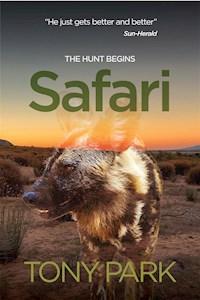
A deadly game of hunters and the hunted in the wilds of Africa.
An increasingly volatile Zimbabwe and the jungle-clad mountains of the Democratic Republic of Congo is where a dangerously charged game of cat and mouse plays out in Africa’s wildlife wars.
Canadian researcher Michelle Parker cannot resist the opportunity to make contact with the famed mountain gorillas, but she is wary of the man giving her this chance – professional big-game hunter, Fletcher Reynolds.
Fletcher represents all Michelle has fought against, but she finds herself increasingly drawn to his power and is reassured by his determination to stamp out of poaching.
Into this mix steps ex-SAS officer Shane Castle, recruited by Fletcher to spearhead the anti-poaching campaign. Shane is a man who has seen what bullets can do – to both human and animal – but is also a man who makes Michelle start to doubt the choices she has made…
Das E-Book können Sie in Legimi-Apps oder einer beliebigen App lesen, die das folgende Format unterstützen:
Veröffentlichungsjahr: 2021

About Safari
A deadly game of hunters and the hunted in the wilds of Africa.
An increasingly volatile Zimbabwe and the jungle-clad mountains of the Democratic Republic of Congo is where a dangerously charged game of cat and mouse plays out in Africa’s wildlife wars.
Canadian researcher Michelle Parker cannot resist the opportunity to make contact with the famed mountain gorillas, but she is wary of the man giving her this chance – professional big-game hunter, Fletcher Reynolds.
Fletcher represents all Michelle has fought against, but she finds herself increasingly drawn to his power and is reassured by his determination to stamp out of poaching.
Into this mix steps ex-SAS officer Shane Castle, recruited by Fletcher to spearhead the anti-poaching campaign. Shane is a man who has seen what bullets can do – to both human and animal – but is also a man who makes Michelle start to doubt the choices she has made…
For Nicola
Contents
1
He killed to feed his family, and to make some money to buy clothes for his children and to pay their school fees.
He broke the law because it no longer existed in the country he had proudly served for more than thirty-five years. He had worn the green and khaki uniform of the national parks and wildlife service and he had been as proud and as well turned-out as any soldier on a parade ground, right up to the day he was compulsorily retired, on his fifty-fifth birthday.
He had taken a bullet from a poacher’s rifle defending the black rhinos up in the Matusadona on the shores of mighty Lake Kariba. And then the bastard government that he had served for most of his life had taken his job and given it to a wild-eyed city boy from a different tribe, because he was a member of the party. They scared him, these youngsters, so full of hate and intolerance for other tribes, for other political beliefs. He prayed that when the government fell, as surely it must, these boys and girls would see sense again.
The scar still itched sometimes. He scratched it and thought it ironic that now he was the enemy of the state. Now it was him in the ragged trousers, carrying a black-market AK 47. He had become what he had despised for thirty-five years.
A poacher.
He knew this countryside like the wrinkles on the back of his hand, the furrows and clefts of his wife’s ample body, the smiles of each of his children. The dry golden grass swayed with the wind that had long since sucked the moisture from every blade and leaf. What the wind had spared, the elephants had devoured, like a plague of seven-tonne locusts, eating everything in their path in their annual contest to survive until the rains came. In the old days they had culled the elephant – slaughtered them by the hundreds to keep the population under control, to spare some vegetation for the other animals, and to feed the poor people of his country. Culling had long ago gone out of fashion, because of the emotions it stirred in people half a world away from Africa, and the government and the party had long since stopped caring about feeding the hungry. Patrick shook his head. The world had gone crazy.
Four months ago he had made his decision to sacrifice his pride, his values, his honour and his honesty. A year into his retirement and he was starving. The pension the government paid him didn’t increase fast enough to keep pace with the rampant inflation that was crushing the life out of the economy, like a python squeezing its prey to death. He had no trade – other than scouting for animals and tracking and killing Zambian poachers. The only other skills he’d picked up in the service of his country’s wildlife were a basic knowledge of mechanics and, most important of all, tyre mending. How many punctures had he repaired on Land Rover tyres in thirty-five years? Hundreds, for sure, maybe thousands. He had scoured the roadsides and dumping grounds for old inner tubes and two pieces of flat bar to use as tyre levers and bought himself some glue. Patrick Mpofu, senior ranger, holder of a bravery commendation for being wounded in the line of fire, vaunted tracker and scout, had found an old piece of cardboard and nailed it to a tree on the outskirts of the town of Victoria Falls and written the words Tyre mending.
His first business venture had proved spectacularly unsuccessful. There was no diesel or petrol in the country, so few people were driving. No driving, no punctures. Then, on a winter’s night, the police had come. With bulldozers.
Patrick and his wife and four children had lived in a nice, albeit basic, house after he had lost his job, but the inflation meant they could not continue to pay the rent. They moved, with hundreds of others, to a shantytown on the outskirts of the Falls and constructed a home out of offcuts of corrugated iron and crumbling asbestos sheeting.
The government called it Operation Murambatsvina – a Shona word for ‘drive out trash’. The untidy rows of makeshift homes were a breeding ground for criminals, state television had said. There were criminals living amidst the squalid settlement, of that there was no doubt, for many people had turned to thieving to feed themselves. Most, however, were people like Patrick, displaced from their normal lives because of the shambolic economy and government mismanagement. Some of the people broke the law, but all of them were against the government and for the opposition. To survive, they made household goods out of scrap metal, wove baskets, carved curios out of wood and soapstone, and mended tyres. And they hated the government.
The police, who were supposed to be dedicated to the rule of law and the preservation of peace, had come with the bulldozers and destroyed what passed for Patrick’s home. His youngest daughter had broken free of her mother’s arms that night and raced back, into the dozer’s path, to retrieve a rag doll. The police had apologised afterwards, but that would not bring back a seven year old’s leg.
He sniffed the dusty, musty air. Elephant. He had no interest in killing one of them. Of course, there was money to be made in ivory, if you had the right connections, but Patrick knew from his time in the parks service that the poacher made a pittance from shooting an elephant, compared with the fortunes exchanged by the middlemen in the trade in white gold. He was not going to risk his life or a prison sentence, and leave his family destitute so that some wealthy Japanese businessman would have a nice seal with which to ink his letters. Nor would he hunt rhino. To kill a bejane would mean giving up his soul as well as his principles. It would make a mockery of the blood he had spilled, to cut off a horn of matted hair so that a Chinese millionaire could relieve the symptoms of a fever, or a rich Arab could have a new handle for his dagger.
On the low rise, on the far side of the dry pan, he saw a branch move in the opposite direction to which the wind was blowing. His joints were stiff and his knees clicked as he walked, but he had the eyes of a boy, focused with the experience of a lifetime in the bush. He saw the telltale flick of the big ear. Hearing was a kudu’s best defence, but its overly large antennae were also its biggest giveaway. It was a bull – alone, by the look of it – and he had hooked one curly horn into the branch of an acacia in order to pull it down to his mouth.
In his mind’s eye, Patrick saw a day when his son could wear the uniform of the Zimbabwean Parks and Wildlife Service, when the government’s madness had passed, and when his few months as a criminal could be forgotten, even atoned for.
For now, though, he dropped to a crouch and, as he watched the kudu feeding, his thumb slowly, silently, moved the safety catch. He told himself again he was hunting only for the pot, to feed his family. The money he’d make from selling the rest of the carcass would pay another month’s school fees, so his son wouldn’t have to grow up to be a criminal, like his father.
‘Too young for Vietnam, too old for Iraq,’ the American sighed.
‘You sound like you’re upset about it,’ Fletcher Reynolds said. He dropped to one knee and pointed to an imprint in the dust the shape of two elongated teardrops, fanning out from the narrowest points into a ‘V’. ‘Kudu.’
The other man took off his khaki bush hat and mopped his scarlet brow. ‘Should have worn this damn hat yesterday. No, it’s not so much that I’m upset, Fletch, more, I guess … unfulfilled.’
Fletcher wouldn’t have described war as a fulfilling experience, but he supposed he knew what the overweight, overindulged, overpaid dentist from Chicago was trying to say. They had been discussing military service – the American’s time as a member of the Illinois National Guard, as opposed to Reynolds’ four years on operations with the Rhodesian Light Infantry in the late seventies. The two men were of a similar age, and both lived for hunting, but that was where the similarities ended. ‘You didn’t miss much, Chuck.’
‘Yeah, I know. But all the same, as one hunter to another, you’d have to say, Fletch, that there’s nothing like the ultimate contest – man versus man.’
‘Nothing like surviving an airline crash either, I suppose, but that doesn’t make it right, or something you should feel bad about having missed out on. Quiet now, we’re closing on him. Looks like a big bull from the size of the spoor.’
The American nodded and seemed to tighten the grip on his Weatherby Safari rifle. Reynolds was grateful for the momentary lull in the banal conversation. Occasionally he met a client he actually liked. All too occasionally. He heard the snapping of branches in the distance. Elephant. Best they steer well away from the herd. The dentist had at least been honest enough to say that buck and zebra were more his league, rather than buffalo or elephant, which could do a man some real damage if things went pear-shaped. Talk of the war didn’t usually bother him, but it irked him that the American thought that killing another man was something to aspire to – a rite of passage of which no man should be deprived. What a load of shit.
‘Can you see it yet, Fletch?’ the dentist whispered.
Mother of God, the man couldn’t be quiet for two blessed minutes. He’d tried to tell him, on day one, that his name was Fletcher, not Fletch. He turned and glared at the overdressed, sweating millionaire. He was rewarded with a grimace and a mouthed ‘Sorry’ from the client. Reynolds forced a smile and winked at him. He couldn’t afford to offend the man. He could barely afford to keep the hunting lodge running, in fact, so he needed to send Chuck the dentist home to Chicago with a smile on his face and a kudu’s head with a magnificent set of horns. He squinted and peered through the thornbushes towards the low rise this side of the dry pan.
The dentist fidgeted behind him, breathing hard in the African heat and dust. Fletcher reminded himself that he hunted for a living, to feed the two teenage children he saw once a year, to pay their school fees, and to fund the jewellery and fashionable clothes his ex-wife wore to please another man. He shook his head at the absurdity of it all.
The kudu roamed alone. His brothers were dead – one taken by a lion, the other shot. He walked with a limp, his left rear leg having been savaged by a big cat just days earlier. He had escaped the predator and the wound was not bad – it would probably heal well in the dry heat. But even if he did regain full use of it, he would not live long by himself.
He stood as tall as a grown man at the shoulder and his twin horns had three twists each, marking him as a veteran of twenty or more dry seasons like this one. The long shaggy beard that hung beneath his chin and chest had impressed the females once – now it just snagged on the acacia thorns. As impressive in stature and looks as he still undoubtedly was, he was getting older and slower as time wore on. The loss of his brothers meant his continued existence relied on one pair of eyes and ears, rather than three.
Patrick moved as a leopard – low and slow through the waist-high yellow grass. He paused and scooped up a handful of powdery earth and then let it trickle through his fingers, watching the fall of the grains and dust. The wind had changed direction, as he knew it would. He circled the antelope until he was on the rise, level with it, a hundred metres off.
Fletcher Reynolds put a finger to his lips. He couldn’t believe they were this close to the prey and the dentist had been about to speak again.
He pointed to the kudu, which was still up on the rise. A warthog was ferreting in the black mud at the edge of the waterhole, its fat little bottom pointing skywards as it rested on its front knees and searched for tubers. Other than that, there was no other sign of life. Fletcher chewed his lower lip. He knew exactly where they were. He knew this country like the faces of his two estranged children, who now called another man Dad.
As they tracked the kudu he had been acutely aware that they were straying closer and closer to the border of Hwange National Park. The dry pan was in a shallow valley, a natural watercourse that marked the park’s boundary, and the kudu had crossed it. Even though he and the dentist were outside the reserve – just – the animal was within it. It was illegal for him to let his client bag this magnificent trophy animal. To make matters worse, the American was leaving the next day. Chuck raised his rifle to his shoulder.
‘No!’ Reynolds hissed.
‘Why not? It’s a clear shot.’
Reynolds explained in a whisper.
‘Aw, damn it to hell!’ the American said.
The kudu’s ears twitched and turned like revolving satellite-tracking dishes as it fixed the source of the noise. Startled, it leapt a metre into the air, its short white tail curled over its rump.
Reynolds saw the sun glint on something metallic, shielded his eyes from the momentary dazzle, processed what he realised he had just seen and yelled, ‘Down!’ He grabbed Chuck Hamley by the collar of his expensive khaki safari shirt and yanked him to one side as the gunshot echoed across the pan.
The bullet zinged through the air a metre to the right of the dentist, leaving a shower of twigs, thorns and leaves in its path and carving a splinter from a tree which embedded itself in the American’s cheek, causing him to howl in pain as he dropped to his knees.
Reynolds stood over his client, rifle raised, scanning the bush for another sight of the poacher.
Patrick realised his first shot had missed, so he continued to follow the kudu’s arcing bound and squeezed off a second. As he did, he heard a voice. Fear welled from his stomach to his throat, almost making him gag. He looked past the fleeing antelope to where he thought the voice had come from.
The second shot was close enough for Reynolds to feel the air being displaced as the round passed his left ear. He hadn’t been on the receiving end of a bullet for more than twenty-seven years, but his old reflexes kicked in and he dropped face-first to the ground.
Chuck, his face bleeding from the timber dart that hung from his cheek, was getting to his feet beside him.
‘Get down!’ Reynolds yelled.
The American ignored him. ‘Dear Lord, I see him!’ He raised the Weatherby to his shoulder, centred the black man in the crosshairs of his telescopic sight and pulled the trigger. Nothing.
The African had seen him now. The dentist locked eyes with the man who had tried to kill him and his professional hunter. He realised that in his haste, he had forgotten to chamber a round. A sudden calmness came over him as he lowered the rifle and worked the bolt. He brought the weapon back to his shoulder and took another sight picture. ‘Die,’ he whispered.
Reynolds was on his knees now and could see the African. The man looked oddly familiar. He saw the man start to raise his rifle high in the air with one hand. It looked like he wanted to surrender. ‘Chuck; wait, man, he’s …’
The Weatherby boomed. The single shot echoed up the valley. The African was knocked backwards with the force of a stallion’s kick. Reynolds was on his feet. ‘Jesus Christ,’ he panted as he ran forward. ‘Stay there, damnit,’ he ordered the American.
When he reached the man, the life force was oozing out of him, his breathing shallow and ragged. He looked up, into the sun, and the heavy-breathing white man. ‘Mister Reynolds,’ he croaked.
Fletcher dropped to one knee and took the man’s hand in his. ‘Patrick … it’s you.’ He swore under his breath. He had known the old ranger from his days at Robins Camp in the north of the national park. He had eaten with him, drunk with him, run him into the Falls occasionally on leave. Reynolds knew the government had been getting rid of the older rangers, but he had not given a second thought to what had happened to Patrick after his forced retirement.
‘I … tell them I am … sorry, sah.’
Reynolds was a hard man who hadn’t cried in thirty years, not since the loss of his first friend during the war. He felt his throat tighten and the tears well behind his eyes as a series of violent spasms rocked Patrick’s body. He heard heavy footsteps behind him. ‘I told you to stay put, Chuck.’
‘Praise be!’ the American bellowed. He hopped from foot to foot, the adrenaline still coursing through his veins. ‘Try and shoot us, you godless heathen, and you’ll see what happens. That’s right!’ He lashed out with his right boot and delivered a hard, fast kick to the lifeless man’s rib cage.
Reynolds was on his feet faster than a striking cobra. He dropped his rifle and grabbed the dentist by the lapels. ‘Shit, man! He was trying to surrender!’
The American met his stare, not flinching, a new hardness to his reedy voice. ‘I just saved our lives, Fletcher. That man was carrying a weapon inside the national park. If the rangers had seen him they would have shot him on sight – that’s what you told me.’
‘Yes, the bloody rangers could have shot him, but not us. He was probably hunting the same kudu that we were!’ Reynolds let go of his client and ran a hand through his thick mane of silver hair. He had to start thinking.
‘It was self-defence. I never saw a kudu, did you?’
Reynolds bit his lower lip. The Yank was right, damn him. It was their only defence, and it would work. The local cops might try to shake down South African tourists and local whites, but they’d have a hard time locking up a rich American. If needs be, a small ‘favour’ could ensure the desired result. ‘At least let’s make sure we get our stories straight.’
Reynolds looked down at the body of Patrick Mpofu, his blood pooling in the dust and dried grass, and wondered how his country had descended so quickly into hell.
The CID detectives from the town of Hwange exuded an air of professionalism but Reynolds reckoned most of it was show. One had a shaved head and mirrored wraparound sunglasses, the other a knock-off Kangol cap on backwards. The Samuel L Jackson and Will Smith dos and accessories were Hollywood, but their cheap, scuffed leather shoes were pure Republic of Zimbabwe.
Chuck’s earlier bravado had waned on the trip back to Isilwane Lodge in the Land Rover that Reynolds had radioed for on his walkie-talkie. They’d placed Patrick’s body in the old refrigerated railway container Reynolds used to store game meat, among sides of impala and buffalo haunches. Seeing those soulless eyes had reminded him again of the war, and how easy it had been for him to kill, when he had to. He’d given the American a brandy to steady his nerves, then told him to brush his teeth as the police Santana, a Spanish-built Land Rover, raised a dust cloud on the access road. They had quickly gone over their stories once more.
‘This man was clearly breaking the law by being in the national park with a weapon. We investigated the scene where the shooting took place and confirmed that he was across the park boundary,’ the bald detective said.
‘And he fired on us first,’ Chuck chimed in, repeating part of his earlier statement.
‘So you say, Doctor Hamley,’ the designer-cap cop said. ‘But I am still concerned that you and Mister Reynolds were so close to the border of the park.’
‘And as I said before,’ Reynolds interjected, ‘we’d given up on finding a good trophy. My concession has suffered severely from poaching and this hunt had turned out to be more of a walk in the bush. I was hoping to show my client some game in the park, even if we couldn’t shoot anything.’ Chuck nodded vigorously in agreement. The part about the poaching, at least, was the truth.
It was cool inside the airy, open lounge area. The steeply pitched thatched roof rose cathedral-like above them. The only sound was the ticking of an antique grandfather clock as the police reread their notes and waited, in vain, for the American or the professional hunter to fill the silence. Reynolds looked around his home. He had spent twenty-seven years since the end of the bush war building up his business, developing a rapport with officials who had once fought against him – bribing those who couldn’t be sweet-talked or satisfied with permits and paperwork. The business had cost him his marriage. He had weathered drought and fire, political upheavals, invasion by disaffected veterans of the liberation war who coveted the lodge and his apparent wealth, and the country’s slide into economic ruin. The truth was that the bottom had fallen out of the hunting business, as most of the well-heeled clients from Europe and America forsook strife-torn Zimbabwe for more stable countries such as Zambia and Tanzania. If the police revoked his hunting licence, or even slapped a fine on him, he would go under in a heartbeat.
The bald detective, outwardly the friendlier of the two, pushed back his heavy mahogany chair. It scraped on the slate tiles. He extended a hand and said, ‘Mister Reynolds, thank you for your time. It will be our recommendation that no charges be laid against you or your client. In fact, you have done us a service. These poachers are ma-tsotsi.’ He turned to the American and translated, ‘Criminals. Without the foreign exchange that visitors like yourself bring to this country we would be in great peril.’
Reynolds had to bite his tongue. The government, ably abetted by its police force, had done everything it could to imperil the country economically, politically and socially. A good man was now lying cold and dead in the back of a police vehicle as proof of that fact.
‘I am sorry for any inconvenience,’ the policeman said to the dentist. ‘Please enjoy the rest of your stay in Zimbabwe.’
2
Shane Castle dressed for work in Iraq.
Boots. American Army issue, suede, desert tan with chunky rubber soles for good grip.
Trousers. Khaki cargo pants. In the right leg pocket, as per company standard operating procedures, were two field dressings – bulky pads for sticking in holes and soaking up blood. The left pocket contained a portable GPS.
PPE – personal protective equipment. A nylon vest with Kevlar chest and back plates inserted in pockets fastened with Velcro. The flak jacket was company issue, but Shane, like the other members in his team, had bought side plates as well. They spent most of their time in the car, and if a bullet were going to get you it would most likely come from the side of the road, rather than from the front or back.
Webbing. He wore the same Australian-designed chest rig he’d bought in Perth prior to his tour in Afghanistan in 2002, when he’d served with 1 Special Air Service Squadron. The gear had originally been supplied in the dappled green and brown disruptivepattern camouflage of the Australian Defence Force, but he’d spray-painted it desert tan with an aerosol can. The paint job hadn’t been wasted, as he’d dusted off the same piece of kit a year later when the SAS had crossed the border into Iraq. Here he was back again, in the same shit hole. Only this time the pay was better.
Ammunition. Two hundred and fifty eight rounds of 5.56 millimetre in nine magazines in the chest rig. Twenty-one rounds of spare .45 calibre pistol ammo in three single-stack mags.
Weapons. The tools of his trade. M4 carbine with a Wildcat sight and a night-aiming device. The rifle was a cut-down version of the long-barrelled M-16 still in general service with the US Army. In the black nylon holster slung low on his right thigh was a design relic from before the First World War – an M1911 Colt .45 automatic with seven rounds in the magazine and another up the spout. He’d bought the pocket cannon from an American contractor who had cashed in and gone home. The Yank, like many of his SF colleagues still in uniform, had swapped his standard nine millimetre pistol for the older, heavier .45 after it became clear on the streets of Fallujah and Baghdad that the newer, lighter bullets weren’t enough to put down a hyped-up fundamentalist who was probably also wearing body armour and not averse to taking a few slugs on his way to his date with Allah and a bevy of virgins.
On his belt was a Leatherman Wave, which he mainly used for opening bottles and cleaning his fingernails; a US Marine Corps K-Bar combat knife, and an MBITR tactical radio. Around his neck on a chain with his company dog tags was a syrette of morphine.
He inserted the radio’s earpiece into his left ear – he’d be sitting in the front passenger seat so he didn’t want it visible to pedestrians on his side of the road – and taped its cord to the left side of his neck. Over the top of his webbing he pulled on a plain white cotton business shirt, a size too big for him and left unbuttoned to accommodate the bulk of his webbing. They were taking the blue Landcruiser today, the one with the CD dangling from the rear-view mirror, a garish strip of offcut carpet on the dashboard and a prayer in Arabic on the rear window beseeching Allah to take care of all on board. With his thick, wavy jetblack hair cut short, Saddam black moustache and white shirt he hoped he would be mistaken for an Iraqi civilian by a casual observer.
Shane checked his watch. Still twenty minutes to go. It was his military background that made him habitually early. He lowered his bullet-draped body into the fold-out camping chair that he’d bought from the US Army PX, like most of the furnishings in the airconditioned portacabin he called home for three months at a time. He lit a Marlboro and punched the button on the remote. The flat screen beeped to life. It was tuned to the Satellite News Network, SNN – twenty-four hour news, though usually it was the same thing rehashed twenty-four times a day. Mercifully the story was about somewhere other than Iraq. An earthquake in Turkey. Pictures of body bags. He shut his eyes and remembered the last car bomb, and the one before. His nightmare – everyone’s on the team. The pictures cut back to the pretty Indian presenter, upper-class voice and pearls, a map of Africa behind her signalling a new story, more tragedy somewhere else in the world.
‘InZimbabwe, it’s notonlythecountry’shuman inhabitantswhoare feeling the effects ofnaturaland man-made disasters. A worsening drought situation, political instability and economic ruin have lead to an increase in poaching of endangered wildlife. SNN’s Africa correspondent, Sarah Thatcher, has more …’
He knew the location even before the blonde correspondent said it. Hwange National Park. Sweeping vistas of parched golden grass reaching for skies tinged blue-grey by the dust that hung over the place during the dry season. Pans that looked like a moonscape of dust after tens of thousands of elephant had passed through; mopane trees reduced to little more than ragged pachyderm toothpicks. A tight shot of a dry waterhole, Africans in parks uniforms carrying a mix of AK 47s and SLRs. An anti-poaching patrol according to the reporter ‘… thisthingreenlineis fighting a losing battle’. The carcass of a rhino, its horn hacked off, vultures inside a belly hollowed out by hyenas.
Shane leaned forward in his chair, subconsciously trying to bridge the gap between past and present, and teleport himself back to Africa.
The reporter was talking about an American hunter getting involved in a fire fight with a poacher and nailing him. Bully for the Yank. The ‘war on poaching’ story was an old chestnut. The words didn’t concern him, but the pictures of Africa hurt like a hook thorn branch wrapped around his soul. Like a child, he wanted to reach out and touch the screen, to reconnect with those tragically alluring flickering images. He was in Iraq for one reason only – to make enough money to get back to the continent of his birth. Africa.
His schoolteacher parents had left Zimbabwe for Australia in the mid-eighties, when he was fifteen. He’d been old enough to realise he belonged in Africa and the relocation was as much of a wrench for him as it was for his folks. His mother and father had wanted a better future for Shane and his younger sister, but all the boy wanted was to get a job as a game ranger and live in the African bush.
His parents had found jobs in the public school system in Australia, but hadn’t earned enough for the family to return to Zimbabwe on holiday. He sensed, anyway, that having taken the decision to leave, they couldn’t bear to see the country they had loved slide further into ruin.
Africa had its problems – the story on the TV concerned only one – but the continent was a model of peace and prosperity compared with Iraq. Shane had believed, when he’d taken his SAS patrol across the border in 2003, that whether Saddam Hussein was hiding weapons of mass destruction or not, the man was genuinely evil and needed to be taken down. Politicians and do-gooders could rail as much as they liked about what Saddam did or did not have hidden in his bunkers, but the simple fact was the tyrant had murdered thousands of his own people. That was where the straightforwardness stopped.
Sunnis, Shiites, Kurds, Christians, Iraqis, foreign Arabs, Americans, Australians, Britons, and a whole host of other nations for and against the Yanks, were all still trying to keep the peace or keep the war going, depending on whose propaganda you listened to. In the middle of it were people like himself – former soldiers from around the world working as contract security operators, and he wasn’t the only one born in Africa. He’d met guys in their late forties and fifties who had served in the Rhodesian Army while Shane was a child.
Shane had done well at school, and transferred his love of the African bush to the Australian outback. The family could, at least, afford camping trips around Perth, where they lived. They wanted him to take a university degree, but he had his sights set on an outdoor life. The army seemed like a good compromise, and he’d studied science – with a view to specialising in zoology later in life – while learning to become an officer at the Australian Defence Force Academy in Canberra. He soon learned, however, that a life in uniform would be more rewarding and more exciting than sexing frogs in a lab or counting kangaroos in the outback.
Physically fit, intelligent and determined to succeed at whatever task was set him, Shane had naturally drifted from his first posting in an infantry battalion to special forces. The Special Air Service Regiment was based at Swanbourne, on the West Australian coast, not far from where he had spent his late teens.
His parents had been proud of his service in the army of their adopted country, but he knew they disapproved of his decision to follow many of his comrades and leave to work as a civilian in Iraq. In their eyes, he was now little more than a mercenary. Today he and the other members of his team would be providing an escort for a senior female diplomat from UNICEF who was coming to Baghdad to announce more UN funding for schools. Didn’t sound like a particularly sexy gig for a mercenary. There were others who had left the regiment to do things a lot worse. He slept okay at night, apart from the nightmares about car bombs – and that was just an occupational hazard, right? He stubbed the cigarette out and, without thinking about it, lit another.
The story on the television ended with a classic African scene – a herd of jumbos passing along a ridge at sunset, the big red ball sinking behind a flattopped acacia. He could almost smell the dust and the musty tang of elephant. He switched the set off and sat there in the cool, dark cabin, the hum of the aircon the only sound now.
Another year in Iraq and he reckoned he’d have enough money to live his dream and buy his own piece of Africa. If Zimbabwe ever came good he would settle there, but for the moment he’d been eyeing properties on the Net in South Africa’s Limpopo Province, in the hot, dry north of the country, around Musina. He had returned to Zimbabwe and travelled to South Africa and Namibia on half-a-dozen occasions over the years, at his own expense, on leave from the army. On one trip he had paid to attain a basic field guide’s qualification, refreshing and enhancing the knowledge of the African bush he had gained as a child.
The years, he realised now as he smoked, had slipped away too fast. There had always been the dream of returning to Africa one day but, as the twentieth century drew to a close, the Australian Army had suddenly found itself busy. Shane’s run of overseas deployments started with Australia’s military intervention to restore peace to East Timor, which seceded from Indonesia with bloody consequences. After September 11, Shane knew his world would be changed irrevocably. First it was Afghanistan, then Iraq, as a soldier and now as a hired gun.
There was a knock at the door. ‘It’s open,’ Shane called, stubbing out the cigarette.
‘Ready?’ Geezer, the Englishman, ex Special Boat Service, filled the doorway. Sunlight bright enough to make him squint peeked around the huge frame. The M4 looked like a toy in his meaty hand.‘See that shite on the telly about Zimbabwe?’
‘Yeah.’
‘Homesick?’
‘Very funny.’
‘Maybe you can find yourself a job back in Africa slotting poachers for a living.’
‘I wish. I’d do anything to get back there.’
‘Who’d want to live in such a fucked-up part of the world?’ Geezer asked.
‘What do you call what we’re doing here?’ Shane grabbed his rifle and slid in a magazine. He tapped the base with his palm to make sure it was well seated. ‘Touché. Come on, sunshine, we’ve got work to do.’
*
Michelle Parker cried as though it were her child who had died.
She sat in the cab of her old Landcruiser, the tears cleaning streaks on her dusty face, as the lion glared at her and delivered the killing bite to the dog. It was stupid, she knew, and she was angry at herself for being so emotional. But Rembrandt had been the first African wild dog she had collared, nearly two years ago, and she had watched her mature into a fine alpha female who had led and protected her pack with courage time and again, and had cared as lovingly as any human mother for her litters of puppies. Michelle had decided, from the outset, that as the dogs were also known locally in Zimbabwe as painted hunting dogs, the new pack should all be named after artists.
Lycaon pictus, the scientific name for the dogs, once roamed all over sub-Saharan Africa, although now viable populations existed only in South Africa, Botswana, Kenya, Tanzania, Zambia and Zimbabwe. All up there were probably only between two and three thousand of them left in the wild, making them the continent’s most endangered mammal.
Michelle wiped her eyes with her fists and, with a shaking hand, recorded the time and place of Rembrandt’s death. Nantwich Pan, Hwange NP. This was, in her view, the most beautiful setting in Africa, but today it was a place of sorrow. A couple of tourists – a rare enough sight in the troubled country these days – sat in armchairs on the veranda of one of the lodges that overlooked the pan from a ridge, watching through binoculars the drama unfold below them. Michelle could hear their cooing and excited chatter from her position in the tree line, on the edge of the vlei that surrounded the twin concrete water troughs. The tourists were ecstatic at having the exceedingly rare double experience of seeing Africa’s most endangered mammal, the wild dog, and witnessing a lion kill take place.
For Michelle, Rembrandt’s death marked not only the loss of a creature she cared about, but the end of a dream and thousands of hours of work.
That morning she had checked her emails via a satellite phone connected to her laptop and downloaded the message she had been fearing, yet expecting, for several weeks. The funding for her wild dog research program had officially been ‘redirected’ to another project. What or where, the message didn’t specify, but she expected it would be somewhere like South Africa, or Kenya or Tanzania. With little support from the host government, researching animals in Zimbabwe was difficult and expensive. Also, there was little public pay-off for the wildlife organisation that sponsored her, given the reluctance of the local authorities to let foreign media crews into the country.
She had four weeks to wrap things up and return to Canada. At least they were paying for her air ticket. The trouble was, she did not want to leave Africa. She had seen the warning signs and had already been sounding out potential donors in case her principal funding source dried up. She had contacted local private lodges and safari operators, but all of them seemed on the brink of bankruptcy given the parlous state of the tourism industry. Thanks to the government’s evictions of white farmers and black squatters alike, foreign tourists and hunters had all but stopped coming to Zimbabwe.
The sight of Rembrandt and her pack of eighteen other dogs at Nantwich just after dawn had momentarily lifted her spirits. At least she could leave the country knowing she had achieved something, having watched and recorded the creation of a new, viable group of dogs from the time Rembrandt had found another lone dog, a male Michelle had named Picasso. Rembrandt, long since accustomed to the sight of the old white Landcruiser, had trotted towards Michelle, sniffed the air and then returned to her latest litter of tiny pups. Michelle had smiled to herself, noted the behaviour and started to pour a cup of coffee from her flask, when she noticed the lionesses.
She had wanted to honk her horn or shout out to the dogs, but the tourists were up early, on their feet, watching in excited awe at the arrival of two types of predators at the pan. She asked herself whether she would have tried to intervene to save the dogs if she had been the only human on the scene. She shook her head. No.
The lionesses had seen the dogs first and all four had lowered themselves as one in the long yellow grass, their actions synchronised – a lethal killing team. Rembrandt had been shepherding her pups towards a flock of guineafowl and the young ones had yelped with delight as they chased the fleeing, clucking birds. Michelle’s gaze flitted between the dogs and the cats, her binoculars swinging back and forth as the fear pumped through her body like a spreading sickness.
‘No!’ she whispered as the lionesses charged.
Rembrandt was the first to see them. She yelped her warning cry, scattering the sub-adults and the pups in a dozen different directions. Picasso raced away. ‘Run, baby,’ Michelle called futilely from the sidelines. The tourists up at the lodge had their cameras whirring away. They whooped in delight like Roman spectators at the gladiatorial games. Michelle bit her lip.
Three of the lionesses peeled off to follow individual dogs. Rembrandt ran from the drinking trough, straight across their paths. Michelle screamed, startling the tourists. The cats were confused by the dog’s tack, and slowed to a halt as Rembrandt turned on them and started running towards the biggest feline.
Michelle had seen buffalo, in numbers, turn on a pride of lion and chase them away, and had even heard of a troop of baboon seeing off an attack by three lions. But one dog on her own stood no chance. Rembrandt stopped, bringing up a tiny puff of dust in the process. She bared her teeth and snarled. In the distance, Picasso, the juveniles and the pups disappeared into a line of bushy immature leadwood trees. Michelle had closed her eyes and heard a single yelp of pain as Rembrandt died.
The lionesses stood over her body now, looking in four different directions for the other dogs, who had long since gone. They didn’t feast on Rembrandt – that was not their way. Michelle knew lions and hyenas killed wild dog and their pups simply to take them out of the hunting game, not for food. Of all of Africa’s large carnivores, the painted dogs had the highest ratio of successful kills to attempts. They took game ranging in size from small buck up to zebra and wildebeest. Because they were so lethal they were a threat to other predators.
Michelle started the Cruiser, put it into gear and bumped and jolted her way out onto the pan. The lionesses stood their ground for a few seconds and then turned and trotted away. She could hear the tourists’ curses from two hundred metres off. She didn’t care about them. She wasn’t depriving the lionesses of a meal, and she had to get the collar and valuable transmitter off Rembrandt’s torn and broken body before some hyena crunched it into tiny pieces.
She stopped the truck and watched the tawny killers melt into the long grass. She eased herself out of the cab, long legs almost touching the ground from the driver’s seat. She’d been sitting in the vehicle for nearly three hours and was grateful of the opportunity to stretch at last. She told herself to be strong, checked left and right and behind her in case there was anything lurking, and waded through grass as golden as the wheat on the prairie she had worked and studied so long and hard to escape. Now she’d probably end up back there, for a time at least. Her heart sank. No money, no research, no job back in Canada. The sum total of her last two years’ work lay crumpled and mangled at her feet. She parted a clump of grass and felt the warm, sticky blood. That made her lose it again. Tears streamed down her cheeks as she used her pliers to unfasten the radio collar she had fitted. She’d known every brown and white and black blotch on Rembrandt’s stunning patchwork coat. Now it was a mess of blood and gore. She reached out and ran her hand over the still-warm snout, closed the dog’s eyes and smoothed back the distinctive, beautiful, oversized ears. Michelle took the collar back to the truck and returned with her digital camera. She sniffed and wiped her eyes with the back of her shirt sleeve, then took a series of photos of the body. She was a scientist, after all.
Charles Ndlovu coughed into his hand and bent forward at the waist to ease the weight on his legs. The canvas straps of the heavy pack dug into his shoulders and he ached all over, as though he had a fever. He used his self-loading rifle, the SLR, like a walking stick to steady himself.
‘Come, old man, or would you rather us call the vehicle?’ the young ranger said as he slapped Charles on the back.
If he hadn’t been so incredibly tired he would have said something back to the man, or, in his youth, challenged him to a fight. Instead, he straightened himself and started to walk again. Had he been offered a lift home in a Land Rover he might very well have taken it, but that was part of the young man’s joke. There was no diesel in the national park – virtually none in the country – so even if someone were taken seriously ill on the patrol, or wounded in a gunfight with a poacher, there was no prospect of a quick evacuation.
The callsign had been out for three days now. They had hitched a ride part of the way on a trailer towed by a tractor that was ferrying a broken diesel engine, one of those used for pumping water at the pans where the animals drank, from Sinamatella to Main Camp for repair. The irony that the tractor driver was using the last of the camp’s precious reserves of fuel to try to fix a piece of equipment that might not run again for weeks or months because the tanks were now dry, was not lost on Charles. At the Mandavu Dam picnic site the four men who made up the antipoaching patrol, known in radio parlance as a callsign, had jumped off and spent their first night camped around the empty shelters that once brimmed with families on weekend outings and foreign tourists on safari.
An intrepid family of South Africans in a fourwheel drive, the only visitors to this part of the national park in the past fortnight, had reported seeing a campfire on the Sinamatella River three nights earlier. There were no tour operators in the park at the time, and no other callsigns in the area, so it was likely the fire had been lit by a careless or arrogant band of poachers.
Charles Ndlovu and his comrades had circled the dam in search of spoor, scattering a herd of grazing impala and arousing the curiosity of a lone bull elephant in the process. Charles had held his rifle above his head and tapped on the tin box of the magazine. Elephant were not stupid. The animal had seen the gun and knew it was wise to depart. After an hour of scanning the dirt, the dry grass and the tips of thornbushes, Charles had picked up their quarry’s tracks. Four men, two wearing rafter sandals; the other pair, new running shoes. This was normally the footwear of whites and tourists, though the poachers would be men of his colour. He guessed the men were from Victoria Falls or, more likely, its twin town on the Zambian side of the Zambezi River, Livingstone. The men with the shoes had money, which told Charles two things. These were commercial poachers – not starving men looking for food – and they were not Zimbabwean. At least one was armed with an AK 47 and he, as Ndlovu had just done, had rested the butt plate of the rifle on the ground when he’d stopped to rest, leaving a telltale imprint in the dust.
Now, on day three of the patrol, the callsign had picked up a new set of tracks, hence the urgency of the boy who chivvied Charles along.
‘Take a look, old man,’ the whelp, whose name was Lovemore, said.
Charles dropped slowly to one knee and wiped the sweat from his brow. The grey dust was as fine as talcum powder and smelled strongly of the Ndlovu, the elephant that had stripped the land bare and pulverised it underfoot. The animal was his family’s totem, but Charles despaired at the damage they were doing to the park. ‘Bejane,’ he said.
‘Chipmberi,’ Lovemore countered.
The third member of the callsign, Noah, broke the tension and the deadlock. ‘Diceros bicornis!’
Charles smiled. ‘See what a good education does for you, Lovemore?’ Whether in his native Ndebele tongue, Lovemore’s Shona or Noah’s Latin, it was still the same thing. A black rhinoceros. But Charles knew more than the other members of the team – he knew this one’s name. ‘They call her Chewore.’
He had known Chewore since she was quite young. His good friend Patrick Mpofu had cared for and guarded the female rhino from the time she was a baby, and not much bigger than a pig. Chewore had been orphaned by poachers about eight years earlier and, along with other rhinos who shared her fate, been relocated to Matusadona National Park in the north of Zimbabwe, on the shores of Lake Kariba. There she had been hand-reared and progressively reintroduced to life in the bush. Two years ago Chewore had been darted, captured and driven to Hwange National Park, on the western side of the country.
Charles was still amazed that Patrick, who had followed his horned charge on a posting to Hwange, was dead – shot committing the crime he had fought against all his adult life. He was certain, though, that Patrick would never have been involved in rhino poaching, unlike the men they were tracking now.
‘You know this animal by name?’ asked Lovemore, who was new to the park, having spent most of his career so far working in an office in Harare. He needed field experience to secure further promotion. However, being a member of the President’s ruling Shona tribe, Charles doubted Lovemore needed to spend too much time in the bush to get his next pay rise.
‘You can tell her by the nick on the sole of her right front foot. She likes to roam, this one. We’ve had to bring her back from Botswana twice before. She is smart, this animal.’
‘Why smart?’ Lovemore asked.
‘She knows there is no future in Zimbabwe,’ Charles said. Noah, and the fourth man, Christopher, smirked behind Lovemore’s back.
‘Get on with your job.’
Charles straightened again. ‘The rhino spoor is only a day older than that of the Zambians.’ They had agreed the poachers were from across the border, as it was well known all Zambians were criminals. Their enemy, at least, united the members of the callsign. ‘That means they will close on her in the next day or so.’
Lovemore nodded, as though he had already reached the same conclusion. He took a map from his pocket, unfolded it and studied it intently.
Charles leaned over his shoulder. He knew exactly where they were and did not want to antagonise the younger man any more than was necessary. ‘Here,’ he said, smudging the paper with his dirty fingerprint. ‘Just north of Manzi Chisa.’ While the rhino were theoretically concentrated in the Sinamatella Intensive Protection Zone, there was no fence around the IPZ and it was not unusual for the bejane to wander further west in search of water at this time of the year. The worry was that Chewore would run true to form and continue westwards, out of the national park and into Botswana.
‘I know where we are,’ Lovemore said testily. ‘We need to catch these men before they leave the park, so we can shoot them.’
Charles imagined it would be a big feather in the young man’s cap if he could claim responsibility for the deaths of the Zambians. All he wanted was to see the men arrested, for then he could go home to his wife for a rest.
Good lord, I am tired, he said to himself.
3
Michelle Parker brushed her long auburn hair and tried to imagine life after Africa. It was a grim prospect.
A ray of afternoon sun lanced through a chink in the curtains with the heat and intensity of a laser beam, warming the interior of the sparsely furnished national parks lodge at Robins Camp. Michelle had bathed and wore only a brightly patterned sarong, knotted above her breasts. The hot, dry breeze whistling through the gauzed windows on the shadowed side of the building cooled her still-wet body, producing a fleeting chill to be savoured. She’d grown accustomed to Africa’s year-round heat and did not relish returning to Canada in the fall.
She pulled back her hair into a simple ponytail and scrounged in her toiletry bag for what little makeup she still had. She rarely wore the stuff, but tonight she was going to dinner. With a man.
Michelle had met Fletcher Reynolds earlier on in her time in the national park. There were few whites living in the area, their numbers having dwindled in recent years when the so-called war veterans invaded the white-owned farms, game ranches and hunting concessions, so it was inevitable that she would make contact with him. His hunting lodge was only a few kilometres outside the park’s northern boundary and she was often in this area following her beloved wild dogs.
She hated hunting but, to her surprise, Fletcher had seemed genuinely concerned about wildlife conservation. However, she realised his overriding interest was ensuring a lifetime’s supply of animals for his rich Americans and Europeans to kill at a later date.
At past fifty he was much older than she – maybe by as much as twenty years, though she had never asked – but she had to admit he was also a ruggedly handsome man. Age hadn’t mattered to her in previous relationships – she had been with men older and younger than she. He was tall, too, which was of more than passing interest to a girl who stood perilously close to five-eleven. Tanned, strong-jawed with blue eyes the same colour as hers; and he seemed to be smart and witty. If he’d been a dog, she would have classed him as an alpha male – just as she would have said, to anyone who would listen, that human relationships should mirror those of the African wild dog. It was the alpha female who ruled the pack.
Fletcher had never made a pass at her, nor even asked her to come to dinner alone with him – until two days ago, when she’d stopped her Landcruiser beside his old Land Rover. In the past she’d been invited to Isilwane Lodge for parties, such as at New Year’s, or when he’d had big groups of hunters in residence. He’d told her, candidly, that many hunters were looking for wildlife conservation projects they could contribute towards. She’d swallowed her pride and bitten her tongue at more than one such gathering and been rewarded with a few cash donations, which she was able to use to buy fuel, and batteries for her radio tracking equipment.
It had felt odd, though, accepting money from the hunters – almost as though she were prostituting herself on behalf of the animals she cared for. To his credit, Fletcher had sensed this, telling her on one occasion,‘Don’t feel bad. We do what we have to do to survive in Africa these days. There’s no shame in surviving, or honour in failing.’ She had seen the sadness behind his eyes then, for the first time. Or perhaps it was loneliness, as she knew his wife and children had left him.
She wondered, as she stood in front of the mirror, what was behind this one-on-one invitation for dinner tonight. Perhaps he fancied her. Critically, she appraised herself, and frowned at the reflection. Too tall. Small boobs. She had a nice tan, though, and it had brought out her freckles, which she kind of liked. The funding for her project had never been lavish and she’d learned to survive on less food than she’d ever before had to in her life. Shortages of basic commodities such as sugar and flour had meant no sweet tea and no bread for months. That, at least, had been a blessing in disguise. She pirouetted slowly in front of the mirror, and stood up on her tiptoes. If nothing else, she’d lost a dress size or two in Zimbabwe. She sighed. If Fletcher were interested in her, he had left his run too late. She would have to tell him, tonight, that she would be leaving for Canada in a few short weeks. Silly, anyway, she mused, as she could never imagine herself seriously interested in a hunter.
Michelle rummaged through her pack and found the only dress she possessed. She dropped the sarong and pulled the simple flowered frock over her head. She riffled through her meagre supply of underwear and laid a pair of cotton briefs beside one of her two g-strings. ‘What the hell,’ she said out loud.
Fletcher Reynolds heard the rumble of the four-litre diesel and walked out onto the stone flagged veranda at the front of Isilwane Lodge. He saw the headlights bouncing up the dirt road from the gate. A nightjar winged its way out of the vehicle’s path. His mouth was dry, his palms sweaty.




